

P0877 on 2011-2013 Chevrolet Silverado: Causes and Fixes for Transmission Pressure Faults
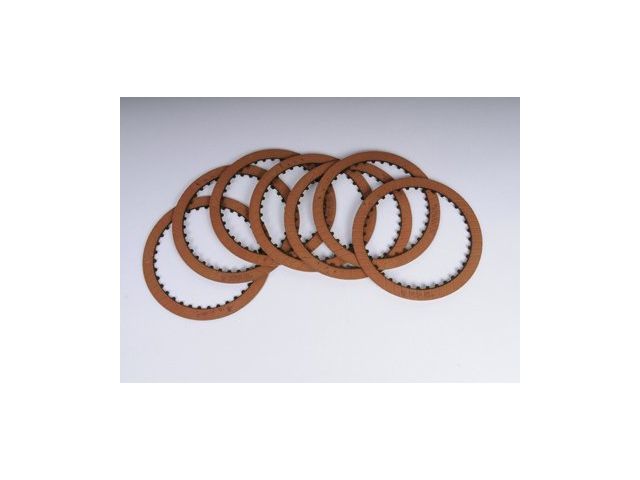
On a 2011-2013 Silverado, P0877 usually indicates an internal transmission problem, not just a bad sensor. The most common causes are debris clogging the valve body separator plate or a failed pressure switch inside the TEHCM assembly. The small, orange, laminated discs that act as diaphragms for the pressure switches are known to crack or dislodge. This is a serious code that can prevent the truck from moving and requires professional diagnosis.
- P0877 on a 2011-2013 Silverado is a serious code that indicates an internal transmission problem and can leave you stranded.
- The most likely causes are a clogged valve body separator plate or a failed TEHCM, not just a simple sensor issue.
- Professional diagnosis is strongly recommended as the repair requires removing the transmission pan and valve body.
- Always use an OEM (ACDelco) transmission filter, as aftermarket filters are a known cause of the debris that triggers this code.
What's Unique About the 2011-2013 Chevrolet SILVERADO
For this generation of Silverado with the 6L80 transmission, code P0877 is strongly linked to specific internal component failures documented in GM Technical Service Bulletins (TSBs). The issue is often not the sensor itself, but either debris clogging hydraulic passages in the valve body separator plate or a failure of the pressure switch diaphragms on the TEHCM. These diaphragms are small, orange, contact-lens-shaped discs that become brittle from heat and age, then crack or get pushed out of their bores. One TSB specifically warns that debris from aftermarket spin-on transmission filters can cause this blockage, leading to a no-move condition. [Bulletin #PIP5100A] This makes it critical to diagnose beyond a simple sensor fault and to use OEM-spec parts for transmission service.
Diagnostic Flowchart
Tap your situation to follow the diagnostic path that matches what you're seeing on this vehicle.
Symptoms You May Notice
- Vehicle will not move in forward or reverse. [Bulletin #PIP5100, Bulletin #PIP5100A]
- Transmission is stuck in one gear (limp mode), often 3rd gear.
- Harsh, erratic, or delayed shifting.
- Check Engine Light is on.
- "Range Inhibit" message may appear on the driver information center. [Bulletin #PIP4379K]
- Smell of overheated or burnt transmission fluid.
- Transmission slipping between gears.
- Replacing only the TEHCM when the root cause was debris in the separator plate, leading to a repeat failure.
- Assuming a major internal rebuild is needed when the cause is a clogged separator plate or a failed TEHCM, which are replaceable components.
- Replacing the TEHCM when the actual fault was a poor connection in the internal wiring harness.
Most Likely Causes
- Failed Transmission Electro-Hydraulic Control Module (TEHCM) 🔴 High Probability → Shop Transmission Assembly The pressure switches are integrated into the TEHCM. The small plastic laminated diaphragms for the switches are known to crack, become brittle, or dislodge from heat and age, causing a loss of pressure reading. This is a widely documented failure point on 6L80 transmissions.
How to confirm: A scan tool may show multiple pressure switch codes simultaneously (e.g., P0872, P0842). Visual inspection after removing the TEHCM will show damaged, missing, or dislodged orange, contact-lens-shaped switch diaphragms. In some cases, they fall apart upon removal.
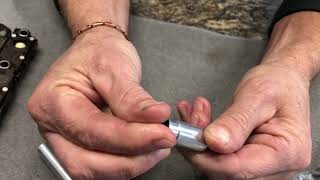
Typical fix: Replace the entire TEHCM assembly. The new module must be programmed to the vehicle's VIN. Some specialists offer a repair service for the diaphragms themselves, but the official GM repair is a full TEHCM replacement. 🎬 See how to reseal the pressure switches yourself
Est. part cost: $300-$800 - Debris in Valve Body Separator Plate Orifices 🔴 High Probability → Shop Transmission Valve Body Multiple TSBs for this platform identify this as a primary cause. TSB #PIP5100A specifically notes that debris from failing aftermarket spin-on filters (sometimes shrink-wrap from the filter itself) can cause the blockage.
How to confirm: After dropping the transmission pan and removing the valve body, the separator plate must be visually inspected for clogged orifices. The debris can be very small and requires careful inspection.
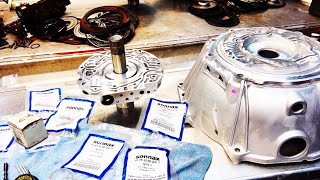
Typical fix: Clean or replace the valve body separator plate and associated gaskets. It is also crucial to 🎬 Watch: A must-do step when servicing your 6L80 transmission replace the transmission filter with a high-quality OEM (ACDelco) part and change the fluid. Aftermarket kits like the Sonnax Zip Kit (6L45-6L90-ZIP) are also available to address wear and pressure loss in the valve body.
Est. part cost: $20-$150 - Low or Contaminated Transmission Fluid 🟡 Medium Probability → Shop Transmission Assembly
How to confirm: Check the transmission fluid level and condition using the dipstick and the proper 'hot check' procedure. Fluid should be at the correct level and red, not brown or black, and should not smell burnt. Burnt fluid indicates internal damage.
Typical fix: Top off the fluid if low and inspect for leaks. If the fluid is old or contaminated, perform a fluid and filter change using DEXRON-VI fluid.
Est. part cost: $75-$200 - Internal Wiring or Connector Issue ⚪ Low Probability
How to confirm: Inspect the main transmission case connector for corrosion or bent pins. After dropping the pan, inspect the internal harness leading to the TEHCM for any signs of damage or loose connections. A forum member fixed the issue by tightening female pins on the internal connector.
Typical fix: Clean the connectors with electrical cleaner and apply dielectric grease. Repair or replace any damaged wiring. Ensure all terminals are fully seated and making good contact.
Est. part cost: $20-$100
Diagnosis Steps
- Check the transmission fluid level and condition. If low, correct the level and check for leaks. If burnt, it indicates a serious internal problem.
- Use a professional scan tool to check for all stored transmission codes. If P0701 is present, follow its diagnostic procedure first, as recommended by TSB #PIP4379K.
- Inspect the main external transmission wiring harness and connector for any visible damage, corrosion, or loose connections.
- If external checks are inconclusive, drop the transmission oil pan.
- Inspect the fluid in the pan for excessive metal shavings or clutch material, which would indicate a major mechanical failure.
- Visually inspect the internal wiring harness for damage, paying close attention to the connector pins for the TEHCM.
- Remove the valve body and TEHCM assembly.
- Inspect the valve body separator plate orifices for any blockage or debris. [Bulletin #PIP5100]
- Inspect the pressure switch diaphragms on the TEHCM. Look for the small, orange, laminated discs to see if they are cracked, brittle, or pushed out of their bores.
- Based on findings, either clean/replace the separator plate, replace the TEHCM, or address wiring issues.
Parts You'll Likely Need
- Transmission Electro-Hydraulic Control Module (TEHCM)
(OEM #24256861)— This is the most common point of failure for P0877 on the 6L80 transmission, as the pressure switches are integrated into it and their diaphragms are known to fail. This part requires programming.
Trusted brands: ACDelco (OEM)
OEM price range: $400-$800
Aftermarket price range: $300-$600 - Valve Body Separator Plate
(OEM #24245720 or 24272467 (verify by year/model))— TSBs confirm that debris clogging the orifices in this plate is a primary cause of P0877 and related codes, leading to a no-move condition. [Bulletin #PIP5100] It is often replaced as a precaution during a TEHCM replacement.
Trusted brands: ACDelco (OEM), Sonnax
OEM price range: $20-$80
Aftermarket price range: $20-$60 - Transmission Filter Kit (Filter and Gasket) — A new filter is required whenever the transmission pan is removed. TSB #PIP5100A specifically warns against using aftermarket filters, which can shed material and cause blockages.
Trusted brands: ACDelco (OEM)
OEM price range: $40-$70
Aftermarket price range: $20-$50 - DEXRON-VI Automatic Transmission Fluid — The correct fluid must be used to refill the transmission after service. Approximately 6-8 quarts are needed for a pan drop service.
Trusted brands: ACDelco (OEM)
Related Codes That Often Appear With This One
- P0701 — This is a general transmission control system fault code. TSB #PIP4379K advises diagnosing P0701 first when it appears with P0877.
- P0751, P0756, P0761 — These are shift solenoid performance codes. They often appear with P0877, indicating a widespread hydraulic or electrical issue within the transmission, as noted in TSB #PIP4379K.
- P0872, P0842, P2723 — These are codes for other transmission fluid pressure switches. Seeing them together with P0877 strongly points to a failure of the entire TEHCM or a significant hydraulic blockage. [3, Bulletin #PIP5100A]
- P0989 — This code for 'Transmission Fluid Pressure Sensor/Switch 'E' Circuit Low' often appears with P0877, indicating that multiple pressure switch diaphragms on the TEHCM have likely failed simultaneously.
Technical Service Bulletins (TSBs) & Recalls
- PIP4379K: Mentions P0877 in a list of codes that can cause a range inhibit, and advises diagnosing P0701 first.
- PIP5100: Points to inspecting the valve body separator plate orifices for debris as a fix for P0877 when the vehicle will not move.
- PIP5100A: Clarifies that blockage in the separator plate can be caused by material from an aftermarket spin-on filter.
Platform-Specific Known Issues
- TSB #PIP5100A explicitly states that aftermarket spin-on transmission filters can shed material (like shrink-wrap) that clogs the valve body separator plate, directly causing P0877 and a no-move condition.
- The pressure switch diaphragms on the TEHCM are a known weak point. They are small, orange, laminated discs that are prone to cracking and dislodging due to heat cycles, a failure mode detailed in many owner forums and repair videos.
Mechanic-Grade Diagnostic Values
- TFP Switch 4 (D) State on Scan Tool — expected: Displays HI/LOW. Should be LOW in all gears except 5th and 6th.. Failure: A LOW reading in 5th or 6th, or a HI reading in other gears, indicates a fault.
- Line Pressure at Idle (in Park/Neutral) — expected: 45-80 psi. Failure: Significantly lower pressure suggests a worn pump, clogged filter, or major internal leak.
- Line Pressure at Wide Open Throttle (WOT) — expected: Up to 300 psi. Failure: Failure to reach high pressure under load points to a weak pump, faulty pressure control solenoid, or significant circuit leaks.
- TEHCM Pressure Switch Continuity Test — expected: The switch should show a closed circuit (continuity) at rest.. Failure: An open circuit at rest, or a circuit that does not open when the switch is manually depressed, indicates a failed switch.
Scan Tool Commands That Help
- GM GDS2/Tech2: Transmission Data List > TFP Switch 4 State — This is the primary live data parameter to monitor. The technician can command different gears and watch to see if the switch state (HI/LOW) matches the expected state for that gear, confirming or denying a switch logic failure.
- GM GDS2/Tech2 with DT-47825 Test Plate: Solenoid Test / Output Controls — With the valve body removed and connected to the DT-47825 air test plate, a technician can use the scan tool to command individual solenoids ON and OFF while applying shop air. This allows for isolation of a faulty solenoid, a leak in the valve body, or a problem within the TEHCM itself, without having the transmission installed.
- GM GDS2/Tech2: Service Programming System (SPS) — This function is mandatory after replacing the TEHCM. It programs the new module with the correct software and vehicle identification number (VIN), allowing it to communicate with the rest of the vehicle's modules.
Wiring & Ground Locations
- Transmission Case Connector (X1/J1) — The main 16-way or 24-way electrical connector on the passenger side of the transmission case.. This is the main interface between the vehicle's wiring harness and the internal TEHCM. Pins can become bent, corroded, or pushed back, causing a loss of signal for the pressure switch circuits. The harness leading to it can also chafe against the frame or engine components.
- TEHCM Internal Connector — Inside the transmission oil pan, where the internal harness plugs into the TEHCM itself.. A poor connection at this point can mimic a failed TEHCM. The connection should be inspected for tightness and corrosion any time the pan is off for diagnosis.
- Engine Block to Chassis Ground — A ground strap running from the rear of the engine block (passenger side) to the firewall/chassis.. A poor or corroded main engine ground can cause a variety of electrical issues, including erratic sensor readings and module communication problems. While not a direct cause, verifying this ground is intact is a crucial step in diagnosing any electrical fault.
Real Owner Repair Stories
- Chevy Talk Forum (2008 GMC Acadia (with 6T75, a similar FWD transmission also using a TEHCM)) — Codes P0877 and P0989 stored.
❌ Tried (didn't work) The user went straight for the most likely cause.
✅ What actually fixed it The user removed the TEHCM and found three of the pressure switch diaphragms (discs) were cracked. They repaired it using a $35 kit containing new discs and an installation tool, which resolved the codes. - Bob Is The Oil Guy Forum (2011 LML Duramax (with Allison 1000, different transmission but similar TCM failure)) — Limp mode, lost PRNDL indicator, multiple codes lit up.
❌ Tried (didn't work) Resetting codes with a tuner provided only a temporary fix for a few minutes.
✅ What actually fixed it The TCM (GM Part #24256861) had failed. It was replaced with the new, upgraded part number (19431596) and flashed at the dealership, which resolved all issues and improved fuel economy.
OEM Part Supersession History
24256861→19431596— Hardware and software upgrade to address common failure modes and improve reliability.
Heads up: The new module must be programmed to the vehicle's VIN using GM's Service Programming System (SPS) after installation.N/A (Full TEHCM Assembly)→Sonnax 124740-70K (Pressure Switch Repair Kit)— Provides a method to repair the failed pressure switch diaphragms without replacing the entire expensive TEHCM.
Heads up: This is an aftermarket repair kit, not a direct part replacement. It requires careful disassembly and reassembly of the TEHCM pressure switch assembly.
Model Year Variations Within This Range
- 2010-2013: The TEHCM used in this period, commonly part number 24256861, featured improved solenoids and an updated pressure manifold gasket compared to the earlier 2006-2009 units. However, they are still highly prone to the pressure switch diaphragm failure that causes code P0877.
Helpful Videos

We Have This Part in Stock


The information in this article is provided for general reference and educational purposes only. Vehicle specifications, procedures, and part compatibility can vary by production date, trim level, and region. Always consult your vehicle's factory service manual and verify part numbers before purchasing or performing repairs. Safety-critical components such as airbags, seat belts, and braking systems should be installed by a qualified professional.
- Chevrolet SILVERADO:
- 🧭 Diagnostic Flowchart
- 🎬 Helpful Videos
- 🛍️ Shop This Part
- What's Unique About the 2011-2013 Chevrolet SILVERADO
- Symptoms You May Notice
- Most Likely Causes
- Diagnosis Steps
- Parts You'll Likely Need
- Related Codes That Often Appear With This One
- Technical Service Bulletins (TSBs) & Recalls
- Platform-Specific Known Issues
- Mechanic-Grade Diagnostic Values
- Scan Tool Commands That Help
- Wiring & Ground Locations
- Real Owner Repair Stories
- OEM Part Supersession History
- Model Year Variations Within This Range
- 🎟️ Get 5% Off