

P0877 on 2001-2005 GMC Sierra: Transmission Pressure Switch 'D' Circuit Low Causes and Fixes
On a 2001-2005 GMC Sierra with the 4L60-E or 4L65-E transmission, code P0877 often points to a mechanical issue inside the transmission, not just a bad sensor. A GM Technical Service Bulletin (TSB) highlights that debris can clog the valve body separator plate, causing pressure problems. The fix usually involves cleaning or replacing the plate and seals, and often the Transmission Fluid Pressure (TFP) switch manifold at the same time.
- P0877 on a 2001-2005 GMC Sierra is a serious code that can prevent the truck from moving.
- The most likely cause, according to a GM TSB, is not a simple sensor failure but debris inside the transmission's valve body.
- Do not simply replace the pressure switch; the valve body must be removed and inspected for contamination to ensure a lasting repair.
- This is not a beginner-friendly DIY repair and should be handled by a professional or an experienced DIYer comfortable with internal transmission work.
- Always use the correct specification of transmission fluid (DEXRON-VI is common for these models) when refilling.
What's Unique About the 2001-2005 Gmc SIERRA
For this generation of GMC Sierra (GMT800 platform), which primarily uses the 4L60-E/4L65-E automatic transmission, the cause of P0877 is frequently mechanical rather than purely electrical. General Motors issued a Technical Service Bulletin (PIP4972C) specifically pointing to debris blocking orifices in the transmission valve body separator plate as a primary cause for this code, which can lead to the vehicle not moving. This means simply replacing the pressure switch often won't fix the root problem, which is a known issue on this platform and its mates like the Chevrolet Silverado.
Diagnostic Flowchart
Tap your situation to follow the diagnostic path that matches what you're seeing on this vehicle.
Symptoms You May Notice
- Vehicle will not move in forward or reverse
- Transmission is stuck in one gear (limp mode), often 3rd gear
- Harsh or delayed shifting
- Transmission slipping
- Illuminated Check Engine Light
- Erratic RPM behavior during shifts
- Replacing only the transmission fluid pressure switch manifold without inspecting the valve body separator plate for debris. If the underlying mechanical issue isn't addressed, the code will likely return.
- Assuming the TFP manifold is faulty when the actual problem is a worn valve bore causing a pressure leak before the sensor.
Most Likely Causes
- Debris in Valve Body Separator Plate 🔴 High Probability → Shop Transmission Valve Body A specific GM Technical Service Bulletin (PIP4972C) identifies this as a common cause for P0877 on this platform, where clutch material and other fine debris clogs hydraulic passages, starving a circuit of pressure.
How to confirm: After dropping the transmission pan, the valve body must be removed and the separator plate inspected for blockages or contamination. The orifices are very small and can be easily clogged.
Typical fix: Clean the valve body and separator plate thoroughly. A more robust fix involves replacing the stock plate with a stronger, less-flexible aftermarket plate from a brand like Sonnax, which helps prevent future issues. 🎬 See how to install an upgraded TransGo separator plate
Est. part cost: $50-$150 - Failed Transmission Fluid Pressure (TFP) Switch Manifold 🟡 Medium Probability → Shop Transmission Assembly The pressure switches are integrated into a single plastic manifold assembly inside the transmission. Over time, the electronic switches, internal diaphragms, or the plastic housing can fail, leading to low voltage readings.
How to confirm: After accessing the valve body, test the switch circuit with a multimeter for correct voltage (typically a 5V reference) and resistance as per the service manual. Visually inspect the manifold for cracks or damage.
Typical fix: Replace the entire TFP switch manifold assembly. It is typically replaced whenever the valve body is serviced as a preventative measure. 🎬 Watch: Common issues and service for the manifold pressure switch
Est. part cost: $50-$100 - Low or Contaminated Transmission Fluid 🟡 Medium Probability → Shop Transmission Assembly
How to confirm: Check the transmission fluid dipstick for proper level and inspect the fluid's color and smell. It should be bright red (or dark red if older) and not smell burnt. Black, burnt fluid indicates severe internal wear.
Typical fix: Top off the fluid or perform a complete fluid and filter change if the fluid is old, dirty, or contaminated. Use DEXRON-VI fluid.
Est. part cost: $60-$120 - Damaged Wiring or Connectors ⚪ Low Probability
How to confirm: Visually inspect the transmission wiring harness from the TCM to the transmission case connector for any signs of damage, corrosion, or loose connections. Also inspect the internal harness that connects to the TFP manifold once the pan is off.
Typical fix: Repair the damaged section of the harness or replace the affected connector.
Est. part cost: $20-$100
Rare But Worth Checking
- Failed Transmission Control Module (TCM) or Powertrain Control Module (PCM): → Shop Transmission Assembly This is a rare cause. All other possibilities, especially the valve body, TFP manifold, and wiring, should be exhaustively ruled out before considering module replacement.
- Worn Valve Body Bores: → Shop Transmission Valve Body Over time, valves within the valve body can wear down their bores, causing internal hydraulic leaks that can set pressure-related codes. This is more common on high-mileage vehicles and can be diagnosed with vacuum testing tools. Companies like Sonnax offer oversized valves and reaming kits to repair this wear.
Diagnosis Steps
- Check the transmission fluid level and condition. Address any low fluid or contamination issues first.
- Use an OBD-II scanner to check for any other transmission-related codes. Note if codes like P0989 or P2723 are also present.
- Inspect the external transmission wiring harness and main connector for visible damage, corrosion, or loose pins.
- Drop the transmission oil pan and inspect for excessive metal shavings or debris. A small amount of fine grey material is normal, but large chunks indicate severe internal failure.
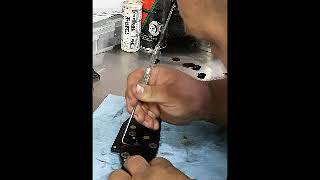
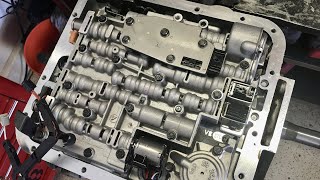
- Remove the transmission valve body. 🎬 Watch this walkthrough on how to install a valve body
- Disassemble the valve body and inspect the separator plate for clogged orifices or debris, as recommended by TSB PIP4972C. Look for scoring or warping on the plate.
- While the valve body is out, inspect the TFP switch manifold. Test its circuits for proper electrical values according to the factory service manual. Check for a 5-volt reference signal at the connector.
- If debris is found, clean the valve body and separator plate thoroughly. Consider replacing the plate with an upgraded aftermarket version.
- If the TFP switch manifold tests faulty or appears damaged, replace it.
- Reassemble with a new pan gasket and filter, and fill with the correct specification of transmission fluid (DEXRON-VI is recommended).
- Clear the codes and perform a test drive to verify the repair.
Parts You'll Likely Need
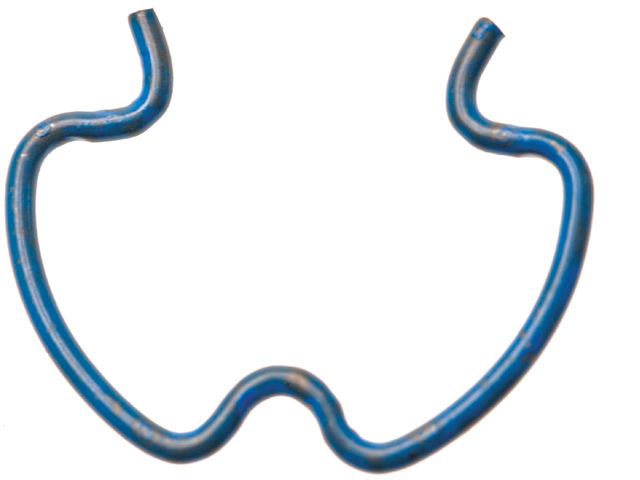
- Transmission Fluid Pressure Switch Manifold
(OEM #ACDelco 24215111 (or cross-references like 24219581))— This assembly contains the pressure switch that triggers the code. It is often replaced as a unit when servicing the valve body.
Trusted brands: ACDelco, Rostra
OEM price range: $70-$120
Aftermarket price range: $50-$100 - Transmission Valve Body Separator Plate — Per GM TSBs, this plate is a common failure point due to debris clogging its passages, directly causing the pressure issue that sets code P0877. Upgraded plates are recommended.
Trusted brands: ACDelco, Sonnax
OEM price range: $60-$100
Aftermarket price range: $40-$80 - Transmission Filter and Gasket Kit — This is required for any job that involves dropping the transmission pan.
Trusted brands: ACDelco, Wix, ATP
OEM price range: $40-$70
Aftermarket price range: $20-$50 - Automatic Transmission Fluid — The transmission must be refilled with the correct type and amount of fluid. DEXRON-VI is the current GM specification and is backward-compatible.
Trusted brands: ACDelco
OEM price range: $10-$15 per quart
Aftermarket price range: $8-$12 per quart
Related Codes That Often Appear With This One
- P2723 — This code for Pressure Control Solenoid 'E' is mentioned in the same TSB (PIP4972C) as P0877, indicating they share a common cause related to valve body issues.
- P0989 — This code relates to the 'E' circuit of the transmission fluid pressure switch. It often appears with P0877, pointing to a failure of the pressure switch manifold or the laminated discs within the TCM on some GM transmissions.
- P0700 — This is a general transmission fault code requested by the TCM. It tells the PCM to turn on the Check Engine Light and indicates that more specific transmission codes, like P0877, are stored in the TCM.
Technical Service Bulletins (TSBs) & Recalls
- PIP4972C: Notes that vehicles with P0877 that won't move should have their valve body separator plate orifices inspected for debris.
- PIP4379K: Lists P0877 as one of many possible codes related to internal transmission issues and range inhibit problems.
Platform-Specific Known Issues
- Technical Service Bulletin PIP4972C specifically addresses an issue where a 2001-2005 Sierra with code P0877 may not move in forward or reverse. The bulletin directs technicians to inspect the valve body separator plate orifices for debris as the likely cause.
- Technical Service Bulletin PIP4379K also lists P0877 among a wide range of transmission codes that can be set due to internal hydraulic or mechanical issues, directing technicians to follow standard diagnostics.
- In some later model GM transmissions with similar designs (like the 6T70/6T75), P0877 can be caused by failed laminated disc seals within the TCM/Valve body assembly, a similar concept of internal failure.
Mechanic-Grade Diagnostic Values
- 1-2 and 2-3 Shift Solenoid Resistance — expected: 20-40 Ohms at 68°F. Failure: A reading outside this range indicates a faulty solenoid coil.
- 3-2 Control Solenoid Resistance — expected: 9-14 Ohms. Failure: A reading outside this range points to a bad 3-2 solenoid.
- Pressure Control (EPC) Solenoid Resistance — expected: 3.5-8.0 Ohms at 68°F. Failure: Resistance outside this range suggests a failing EPC solenoid.
- TFP Switch Voltage (engine running) — expected: 12 volts supplied by the computer to each switch.. Failure: According to ATRA, resistance cannot be checked with an ohmmeter while installed. A voltmeter must be used to check for proper voltage on the appropriate harness wires for each gear range. A low voltage reading on the 'D' circuit wire would confirm the P0877 fault condition.
Hidden / Shadow Codes Worth Checking
- P1810: Transmission Fluid Pressure (TFP) Manual Valve Position Switch Fault. This is a more specific GM code that indicates the VCM has detected an invalid state from the combination of pressure switches. It often points directly to a faulty pressure switch manifold or its wiring. (see via A professional scan tool like a GM Tech 2 or equivalent that can read manufacturer-specific codes, as it may not show up on all basic OBD-II readers.)
Scan Tool Commands That Help
- GM Tech 2 / GDS2: Adaptive Learning Reset (Transmission Adapts Reset) — This function is critical after replacing the transmission, valve body, or solenoids. The PCM stores shift timing and pressure values to compensate for wear. Failing to reset these 'adapts' can cause harsh shifting, damage to the new parts, and shorten the life of the repair.
- GM Tech 2 / GDS2: Solenoid Activation / Output Controls — To diagnose electrical issues without dropping the pan, a technician can use the scan tool to command individual shift solenoids on and off to verify the circuit's integrity from the PCM to the solenoid. This helps differentiate between a wiring/PCM issue and an internal component failure.
Wiring & Ground Locations
- Main Transmission Connector — On the passenger side of the transmission case. It is a round, 20-way Delphi connector on this vehicle generation.. This is the single point of failure for all electrical signals going into and out of the transmission. Corrosion or loose pins in this connector can cause P0877 and other transmission codes. Pins N, P, and R are for the pressure switch signals A, C, and B respectively for 1999-2002 models.
- PCM / Engine Block Grounds — A critical ground strap runs from the back of the driver's side cylinder head to the firewall. Another key ground is on the front of the driver's side cylinder head.. The PCM relies on a clean, solid ground connection to get accurate readings from sensors. A corroded or loose engine ground can cause erratic voltage, leading the PCM to misinterpret the signal from the TFP switch and set a false code.
- Frame and Body Grounds — Key grounds are located on the frame rail near the driver's side tire (for the fuel pump and other components) and under the radiator support, connecting the battery negative to the chassis.. While not directly for the transmission sensors, poor overall vehicle grounding can create electrical noise and voltage drops that affect various modules, including the PCM/TCM, potentially contributing to intermittent and hard-to-diagnose codes.
Real Owner Repair Stories
- Forum post on DuramaxDiesels.com (2006 Chevrolet Silverado (similar GMT800 platform and 4L60-E/4L65-E family)) — P0877 code present, causing limp mode.
❌ Tried (didn't work) Replacing the Pressure Switch Manifold (PSM) inside the transmission pan.
✅ What actually fixed it The P0877 code returned after part replacement. The actual cause was a poor physical connection at the PSM connector. The female pins had become loose over time. The fix was to use a pick to physically tighten the pins and then apply dielectric grease to ensure a solid connection.
OEM Part Supersession History
24215111→24219581— Standard part update and revision by ACDelco.
Heads up: The part numbers are interchangeable for this application. 24219581 is the more current part number you are likely to receive when ordering.
Model Year Variations Within This Range
- 2005 (late production) and newer: Around February 2005, GM added an Input Speed Sensor (ISS) to the 4L60-E. Transmissions from 2001-early 2005 do not have this sensor. Swapping a pre-ISS transmission into a post-ISS truck will cause shifting problems and codes because the computer expects a signal that isn't there. However, a newer trans with the sensor can be put in an older truck, as the computer will simply ignore the extra sensor.
Helpful Videos


We Have This Part in Stock


The information in this article is provided for general reference and educational purposes only. Vehicle specifications, procedures, and part compatibility can vary by production date, trim level, and region. Always consult your vehicle's factory service manual and verify part numbers before purchasing or performing repairs. Safety-critical components such as airbags, seat belts, and braking systems should be installed by a qualified professional.
- Gmc SIERRA:
- 🧭 Diagnostic Flowchart
- 🎬 Helpful Videos
- 🛍️ Shop This Part
- What's Unique About the 2001-2005 Gmc SIERRA
- Symptoms You May Notice
- Most Likely Causes
- Rare But Worth Checking
- Diagnosis Steps
- Parts You'll Likely Need
- Related Codes That Often Appear With This One
- Technical Service Bulletins (TSBs) & Recalls
- Platform-Specific Known Issues
- Mechanic-Grade Diagnostic Values
- Hidden / Shadow Codes Worth Checking
- Scan Tool Commands That Help
- Wiring & Ground Locations
- Real Owner Repair Stories
- OEM Part Supersession History
- Model Year Variations Within This Range
- 🎟️ Get 5% Off