

P0877 on 2011-2013 GMC Sierra: Transmission Fluid Pressure Switch 'D' Circuit Low Causes and Fixes
On a 2011-2013 GMC Sierra, P0877 is most often caused by a failed Transmission Fluid Pressure (TFP) switch inside the transmission or debris blocking passages in the valve body. The fix involves dropping the transmission pan to replace the entire TEHCM (control module) which contains the switches, or cleaning the valve body. This is not a simple sensor swap.
- P0877 on a 2011-2013 Sierra is a serious transmission code indicating a low voltage fault from the 'D' pressure switch, often causing limp mode or a no-move condition.
- Before replacing expensive parts, insist on an inspection of the valve body separator plate for debris, a known issue highlighted in GM service bulletins.
- To prevent future issues, use only OEM (ACDelco) or high-quality aftermarket transmission filters, as material from cheap filters has been known to cause this problem.
- The repair almost always requires dropping the transmission pan and is best left to a professional, as it involves handling sensitive internal components and may require programming a new control module (TEHCM).
What's Unique About the 2011-2013 Gmc SIERRA
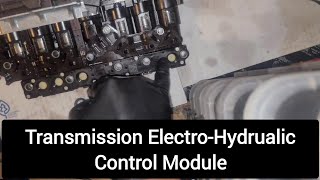
The 2011-2013 GMC Sierra, equipped with the 6L80 or 6L90 transmission, integrates the pressure switches into the Transmission Electro-Hydraulic Control Module (TEHCM) inside the transmission pan. A key issue, identified in GM Technical Service Bulletins, is that debris can block fluid passages in the valve body. TSB PIP5100A specifically calls out protective shrink-wrap from aftermarket spin-on filters as a source of this debris. Furthermore, a very common failure is the tearing of the small, orange, rubber-like laminate diaphragms over the pressure switches on the TEHCM, causing fluid intrusion and incorrect readings. Because the switches are integrated, the entire TEHCM is replaced as a unit 🎬 Watch: How to rebuild and test the TEHCM circuits yourself. and must be programmed to the vehicle.
Diagnostic Flowchart
Tap your situation to follow the diagnostic path that matches what you're seeing on this vehicle.
Symptoms You May Notice
- Vehicle will not move in forward or reverse. 🎬 See this walkthrough on diagnosing a Sierra with no forward gears. [Bulletin #PIP5100, Bulletin #PIP5100A]
- Harsh, erratic, or delayed shifting.
- Transmission is stuck in one gear (limp mode).
- Check Engine Light is on
- Erratic RPM behavior or jerking during acceleration.
- Replacing the entire transmission without first inspecting the valve body for debris or testing the TFP switches within the TEHCM.
- Replacing the TEHCM without first inspecting the external 16-pin connector for corrosion, which is a much simpler and cheaper fix.
Most Likely Causes
- Failed Transmission Fluid Pressure (TFP) Switch / TEHCM 🔴 High Probability → Shop Transmission Assembly The pressure switches are integrated into the TEHCM and are a widely documented failure point. The internal laminate diaphragms (small orange discs) over the switches become brittle from heat cycles, then crack or rupture, causing fluid to bypass the switch and trigger a 'low' voltage reading.
How to confirm: Use an advanced scan tool to monitor the live data for TFP Switch 'D' (Switch 4). If the voltage is stuck low regardless of gear commanded, the switch/TEHCM has likely failed. Visual inspection after removal will often show visibly torn or dislodged diaphragms.
Typical fix: Replace the entire TEHCM assembly, which is located inside the transmission pan. The new module must be programmed to the vehicle's VIN using dealership or equivalent software.
Est. part cost: $450-$700 - Debris in Valve Body Separator Plate Orifices 🔴 High Probability → Shop Transmission Valve Body Manufacturer TSBs #PIP5100 and #PIP5100A specifically call out this issue. TSB #PIP5100A notes that protective shrink-wrap from aftermarket spin-on filters can be inadvertently introduced into the transmission and block the 'reverse pressure orifice' on the separator plate, directly causing P0877.
How to confirm: Drop the transmission oil pan and remove the valve body. Carefully separate the valve body halves to visually inspect the separator plate and its small orifices for blockages. The debris may look like a small piece of clear or colored plastic film.
Typical fix: Thoroughly clean the valve body and separator plate. If the plate is damaged, warped, or shows signs of wear around valve bores, it must be replaced. Aftermarket kits like the Sonnax Zip Kit (6L45-6L90-ZIP) 🎬 Watch: A professional guide to fixing common 6L80 and 6L90 failures. are available to address wear in the valve body bores.
Est. part cost: $50-$150 for a plate, $150-$250 for a Zip Kit - Low or Contaminated Transmission Fluid 🟡 Medium Probability → Shop Transmission Assembly
How to confirm: Check the transmission fluid level and condition using the dipstick. The fluid should be at the correct level, bright red in color, and not smell burnt. Burnt fluid with excessive clutch material indicates a more severe failure.
Typical fix: Top off the fluid or perform a complete fluid and filter change with DEXRON-VI fluid. This is often done as part of another repair and will not fix a faulty TEHCM or a clogged valve body on its own.
Est. part cost: $50-$150 - Wiring or Connector Issue ⚪ Low Probability The main 16-pin transmission connector on the passenger side of the case is exposed to the elements and can suffer from corrosion, moisture intrusion, or loose pins, causing circuit faults.
How to confirm: Before dropping the pan, disconnect the main transmission electrical connector and inspect the pins and sockets for corrosion (green or white powder), bent pins, or fluid intrusion.
Typical fix: Clean the connector pins with electrical contact cleaner and a small brush. Apply dielectric grease before reconnecting to seal out moisture. Repair any damaged wires leading to the connector.
Rare But Worth Checking
- Failed Transmission Control Module (TCM): → Shop Transmission Assembly The TCM is integrated into the TEHCM on this platform. A logic failure within the module could theoretically cause this code, but it is far more common for the physical pressure switch portion to fail. This is diagnosed by replacing the TEHCM assembly after all other possibilities have been exhausted.
Diagnosis Steps
- Check the transmission fluid level and condition. Ensure it is full and does not appear burnt or full of debris. Correct as needed.
- Use an OBD-II scanner to confirm P0877 and check for any other transmission-related codes. Note all codes present.
- With an advanced scan tool, access the transmission control module and monitor the live data for all Transmission Fluid Pressure Switches (1-5). Command gear changes (with engine off, key on) and observe if TFP Switch 4 ('D') changes state correctly or is stuck low.
- Thoroughly inspect the main 16-pin transmission electrical connector on the passenger side of the transmission case for corrosion, damage, or loose pins. Clean and apply dielectric grease as needed.
- If external checks are inconclusive, drop the transmission oil pan. Inspect the fluid in the pan and the magnet for excessive metal shavings or clutch material, which would indicate a severe mechanical failure.
- Remove the valve body and TEHCM assembly.
- Carefully inspect the valve body separator plate orifices for any blockages. TSB #PIP5100A specifically points to debris that may look like plastic shrink-wrap from an aftermarket filter.
- Inspect the TEHCM itself. Look for ruptured or missing orange laminate diaphragms over the pressure switches.
- If the separator plate is clean and no wiring issues were found, the TEHCM is the most likely culprit and should be replaced with a new, programmed unit.
- After repairs, install a new transmission filter (OEM/ACDelco recommended) and pan gasket, refill with DEXRON-VI fluid to the correct level, and clear all codes. A transmission adaptive pressure relearn procedure may be required.
Parts You'll Likely Need
- Transmission Electro-Hydraulic Control Module (TEHCM)
(OEM #24256861 (May be superseded by 24287420, confirm with dealer))— This assembly contains the fluid pressure switches that are the primary cause of this code. A failure of the internal switch diaphragms is common and requires replacement of the entire module.
Trusted brands: ACDelco (GM Genuine)
OEM price range: $500-$850
Aftermarket price range: $400-$700 - Transmission Valve Body Separator Plate
(OEM #24245720 (Verify with VIN))— May be required if the original is warped or if debris has become embedded in the orifices, as noted in GM TSBs. Wear around valve bores can also cause cross-leaks.
Trusted brands: ACDelco, Sonnax
OEM price range: $50-$100
Aftermarket price range: $40-$80 - Transmission Filter and Pan Gasket Kit
(OEM #24236933 (Filter Kit))— Required for any repair that involves dropping the transmission pan. Using an OEM/ACDelco filter is recommended to avoid debris issues cited in TSBs.
Trusted brands: ACDelco, Wix
OEM price range: $40-$60
Aftermarket price range: $25-$50
Related Codes That Often Appear With This One
- P0700 — This is a generic code indicating the TCM has requested the check engine light. It almost always appears with more specific codes like P0877.
- P2723 — This code for 'Pressure Control Solenoid 'E' Performance/Stuck Off' is mentioned in TSB PIP5100A as a possible related code when debris blocks valve body orifices. [Bulletin #PIP5100A]
- P0751, P0756, P0761 — These are shift solenoid performance codes that can be triggered by the same underlying hydraulic pressure issues or valve body blockages that cause P0877. [Bulletin #PIP5100A]
- P0872, P0842, P0989 — These are codes for other pressure switches ('B', 'A', 'E') in the same TEHCM. If multiple pressure switch codes appear together, it strongly points to a failing TEHCM or a problem common to all switches, like a power or ground issue.
Technical Service Bulletins (TSBs) & Recalls
- PIP5100A: No move condition, P0877 set, inspect valve body separator plate for blockage from aftermarket spin-on filter shrink-wrap.
- PIP5100: No move condition, P0877 set, inspect valve body separator plate orifices for debris.
- PIP4379K: Range inhibit condition, lists P0877 as a possible related code and advises diagnosing P0701 first.
Platform-Specific Known Issues
- TSB #PIP5100A — For 2011-2013 models, this bulletin warns that protective shrink-wrap from aftermarket spin-on filters can enter the transmission. This debris can block the 'reverse pressure orifice' on the valve body separator plate, leading to a no-move condition and setting code P0877.
- TSB #PIP5100 — An earlier version of the above TSB, this document also points to debris in the valve body separator plate orifices as the cause for a no-move condition and a list of codes including P0877.
- TSB #PIP4379K — This bulletin addresses a 'Range Inhibit' condition where the vehicle may not shift out of park. It lists P0877 as one of many potential codes that can be set. It advises technicians to follow diagnostics for the generic transmission code P0701 first if it is also present, before diving into specific codes.
- Common Failure Mode — The laminate discs on the TEHCM are a known weak point. Over time, the constant exposure to hot transmission fluid and pressure cycles causes them to become brittle, crack, and fail. This is the most common root cause of P0877 when external wiring and valve body debris are ruled out.
Mechanic-Grade Diagnostic Values
- TFP Switch 4 (1-2-3-4 Clutch Pressure Switch) State on Scan Tool — expected: LOW in all gears except 5th and 6th, where it should be HI.. Failure: The switch state reads LOW when in 5th or 6th gear, or is stuck LOW in all ranges.
- TFP Switch Voltage (General) — expected: Switches between near 0V (LOW) and source voltage (HI). The TCM provides a bias voltage of 8.3-9.3 volts.. Failure: Voltage is stuck at or near 0V, indicating a 'Circuit Low' condition.
Scan Tool Commands That Help
- GDS2 (GM Global Diagnostic System 2): Transmission Adaptive Values Learn — This is a mandatory stationary procedure performed after replacing the TEHCM or the entire transmission to reset and relearn clutch apply pressures for smooth shifting.
- GDS2 / Professional Scan Tool: Reset Transmission Adapts — Used after a TEHCM replacement or major repair to clear old learned values. This must be done before the vehicle is driven to ensure proper shift quality.
- GDS2 / Techline Connect (SPS2): Replace and Reprogram ECU — This function is required to flash the vehicle's VIN and specific calibration data onto a new, blank TEHCM. The vehicle will not operate correctly until this is done.
Wiring & Ground Locations
- Main Transmission Connector (X214 on some diagrams) — On the passenger side of the transmission case, it is a large, round, 16-pin connector.. This is the sole electrical interface between the vehicle's main wiring harness and the internal TEHCM. Corrosion, moisture, or loose pins at this connector can directly cause circuit low faults like P0877, mimicking an internal failure. Inspecting this connector is a critical first step before dropping the pan.
- TEHCM Pin 5 (Ground) — This is the ground pin on the 16-pin main transmission connector.. A poor ground connection at this pin will affect the voltage readings for all sensors and switches within the TEHCM, potentially causing multiple circuit low codes, including P0877.
- TEHCM Pin 4 (Battery +) — This is the main battery positive pin on the 16-pin main transmission connector.. Loss of stable power on this pin due to corrosion or a wiring fault can cause the TEHCM to malfunction and set various codes.
Real Owner Repair Stories
- User report on DuramaxDiesels.com (Silverado with 6L80/90 transmission) — P0877 code present.
❌ Tried (didn't work) Initial diagnosis pointed towards replacing the TEHCM.
✅ What actually fixed it The owner tightened the pin connectors at the Pressure Switch Manifold (PSM) inside the pan and cleaned the main 16-pin plug going into the transmission. This suggests a poor connection, not a failed part, was the root cause. - Premier Automotive Diagnostics (YouTube/Reddit) (GM Vehicle with 6T70/6T75 (similar TEHCM design)) — Codes P0877 and P0989, hard shifting.
✅ What actually fixed it The technician disassembled the TEHCM and found the pressure switch diaphragms (small orange discs) were pushed out and damaged. The fix was to replace the diaphragms and seals using an aftermarket rebuild kit (Sonnax #124740-30K), which resolved the codes without replacing the entire expensive TEHCM.
OEM Part Supersession History
24256861→19431596 (For some applications, verify with VIN)— The original TEHCM part number 24256861 went on a long-term, widespread backorder for approximately 18 months, causing used modules to be sold at high prices. An updated part was eventually released.
Heads up: A new TEHCM is 'blank' and must be programmed with VIN-specific software using GM's SPS2 (Techline Connect) or an equivalent J2534 pass-thru tool. It cannot be swapped from another vehicle. Attempting to install a used module or one from a different year group will result in a no-start or immediate limp mode.
Model Year Variations Within This Range
- 2010-2013: These models generally use a 'Gen 2' TEHCM (like part #24256861) which had some improvements over the earliest 6L80s (2006-2009). However, they are still highly prone to the pressure switch diaphragm failures that cause P0877. The TEHCMs are not directly interchangeable between generations without special considerations.
Helpful Videos


We Have This Part in Stock


The information in this article is provided for general reference and educational purposes only. Vehicle specifications, procedures, and part compatibility can vary by production date, trim level, and region. Always consult your vehicle's factory service manual and verify part numbers before purchasing or performing repairs. Safety-critical components such as airbags, seat belts, and braking systems should be installed by a qualified professional.
- Gmc SIERRA:
- 🧭 Diagnostic Flowchart
- 🎬 Helpful Videos
- 🛍️ Shop This Part
- What's Unique About the 2011-2013 Gmc SIERRA
- Symptoms You May Notice
- Most Likely Causes
- Rare But Worth Checking
- Diagnosis Steps
- Parts You'll Likely Need
- Related Codes That Often Appear With This One
- Technical Service Bulletins (TSBs) & Recalls
- Platform-Specific Known Issues
- Mechanic-Grade Diagnostic Values
- Scan Tool Commands That Help
- Wiring & Ground Locations
- Real Owner Repair Stories
- OEM Part Supersession History
- Model Year Variations Within This Range
- 🎟️ Get 5% Off