

P0877 on 2001-2008 GMC Sierra 2500: Causes and Fixes for Transmission Pressure Switch Faults
On a 2001-2008 GMC Sierra 2500 with an Allison 1000 or 4L80-E transmission, code P0877 almost always points to a faulty transmission fluid pressure (TFP) switch manifold located inside the transmission oil pan. This is often accompanied by the transmission entering 'limp mode'. The repair involves dropping the pan and replacing the switch assembly, a job best left to a professional, with costs typically ranging from $350 to $750.
- P0877 on a 2001-2008 Sierra 2500 indicates a low voltage fault in the 'D' transmission pressure switch circuit.
- The most common cause is a failed pressure switch manifold, which is located inside the transmission oil pan.
- This fault will almost certainly put the truck into 'limp mode,' so it should be addressed promptly to prevent further damage.
- Always check the transmission fluid level and condition first, as low fluid can cause various pressure codes.
- Due to the nature of the repair, professional service is highly recommended.
What's Unique About the 2001-2008 Gmc SIERRA 2500
The 2001-2008 Sierra 2500 HD trucks primarily use the robust Allison 1000 or the GM 4L80-E automatic transmission. For both of these transmissions, code P0877 is a well-documented issue. 🎬 Watch: Understanding the P0877 circuit low fault code. The most common point of failure is the internal pressure switch manifold (PSM) or its associated wiring harness, which is located inside the transmission oil pan. These components are subjected to constant heat cycles and submersion in transmission fluid, which can lead to the plastic becoming brittle, connector pins losing tension, and internal seals failing over time.
Diagnostic Flowchart
Tap your situation to follow the diagnostic path that matches what you're seeing on this vehicle.
Generation note: This range covers the first generation GMT800 (2001-2007 Classic) and the second generation GMT900 (2007.5-2008). While the transmissions (Allison 1000, 4L80-E) are largely the same, there can be minor differences in wiring and part numbers. For example, the Allison PSM was updated from a 6-switch to a 4-switch design for later models, though the 4-switch is backward compatible. The fundamental cause and repair process for P0877 remain consistent across both generations.
Symptoms You May Notice
- Check Engine Light is on
- Transmission is stuck in one gear (limp mode).
- Flashing PRNDL or "Shift Range Inhibited" message on the dash.
- Harsh or delayed shifting.
- Transmission slipping between gears
- Vehicle may not shift at all or may not move.
- Smell of burnt or overheated transmission fluid
- Symptom is worse when the transmission is warm.
- Replacing the entire valve body when only the pressure switch manifold is faulty.
- Replacing the TCM before verifying the integrity of the internal wiring and the pressure switch manifold.
- Assuming a major internal failure without first checking for the common, less expensive electrical faults inside the pan.
Most Likely Causes
- Faulty Transmission Fluid Pressure Switch Manifold (PSM) 🔴 High Probability → Shop Transmission Assembly The PSM is located inside the transmission pan, where constant exposure to heat and fluid causes the plastic and electronic components to become brittle and fail over time. This is the most cited cause for this code on this platform and is specifically mentioned in GM technical service bulletins.
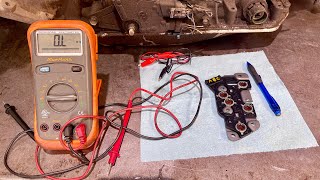
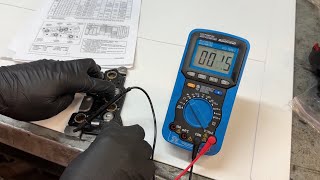
How to confirm: After dropping the transmission pan, visually inspect the PSM and its connector. A definitive test requires a scan tool to monitor the switch state while testing the circuit's integrity with a multimeter. A common failure point is a poor connection at the harness plug; tightening the female pins with a pick and using dielectric grease has resolved the issue for some owners.
Typical fix: Replace the entire pressure switch manifold assembly. This part is located on the valve body inside the transmission.
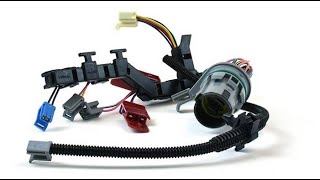
Est. part cost: $50-$150 - Damaged Internal Transmission Wiring Harness or Connector 🟡 Medium Probability → Shop Transmission Assembly Similar to the PSM, the internal wiring harness becomes brittle from heat and fluid exposure. Wires can break or the connector pins can become loose, causing a loss of signal. The main pass-through connector seal can also leak fluid into the electrical connection, causing shorts and communication errors.
How to confirm: With the pan removed, carefully inspect the wiring harness leading to the PSM for any signs of cracking, breaks, or corrosion at the connector. Check for continuity on each wire with a multimeter. Inspect the external transmission connector (passenger side, rear of trans) for any signs of fluid leakage, which indicates a failed pass-through seal.
Typical fix: Replace the internal transmission wiring harness. If the external connector is full of fluid, the harness must be replaced.
Est. part cost: $70-$180 - Low or Dirty Transmission Fluid ⚪ Low Probability → Shop Transmission Assembly
How to confirm: Check the transmission fluid level using the dipstick (engine running, transmission warm, in Park). Note the fluid's color and smell; it should be bright red and not smell burnt. Low fluid can cause erratic pressure readings and trigger multiple pressure-related codes.
Typical fix: Top off the fluid to the correct level or perform a full fluid and filter change if the fluid is old or dirty. Use the manufacturer-specified fluid (DEXRON-VI).
Est. part cost: $50-$150
Rare But Worth Checking
- Faulty Transmission Control Module (TCM): → Shop Transmission Assembly While possible, a faulty TCM is rare. All other potential causes, especially the internal pressure switch and wiring, should be thoroughly ruled out before considering TCM replacement, as it is an expensive part and often requires programming. Some owners have replaced the TCM only to find the issue persisted.
Diagnosis Steps
- Check the transmission fluid level and condition. Ensure it is full and clean.
- Scan the TCM for any other trouble codes. Address any other codes first, especially if P0701 is present, as per TSB PIP4379N.
- Using a capable scan tool, monitor the live data for the TFP switches. Check if the state of switch 'D' changes as you command shifts.
- Inspect the main external transmission wiring harness connector (passenger side) for corrosion, damage, loose pins, or fluid intrusion.
- If external wiring is okay, safely raise the vehicle and drain the transmission fluid.
- Remove the transmission oil pan to access the internal components.
- Visually inspect the internal wiring harness and the connector to the pressure switch manifold for any obvious damage, such as cracked wires or burnt plastic.
- Disconnect the harness from the PSM. Check the connector pins for tension. A known fix involves carefully tightening the female pins with a pick tool and applying dielectric grease.
- Test the wiring for continuity from the TCM connector to the component connector to rule out a broken wire.
- If wiring is confirmed to be good, the pressure switch manifold is the most likely culprit and should be replaced.
- After replacing parts, install a new transmission filter and pan gasket, then refill with the correct type and amount of transmission fluid (DEXRON-VI).
- Clear the codes and perform a test drive to ensure the issue is resolved.
Parts You'll Likely Need
- Transmission Fluid Pressure Switch Manifold
(OEM #Allison: 29546972 (4-switch, fits 2000-2018, supersedes older 6-switch versions) / 4L80-E: 24222077 or 24200695)— This is the most common component to fail and directly causes the P0877 code.
Trusted brands: ACDelco, Allison, Sonnax, Dorman
OEM price range: $100-$200
Aftermarket price range: $45-$120 - Internal Transmission Wiring Harness
(OEM #Allison (2001-E'03): 29541371 / Allison (2006-2009): 29543336)— This harness often becomes brittle and fails, causing an open or short in the circuit to the pressure switch. The pass-through connector is also a common leak point.
Trusted brands: ACDelco, Rostra
OEM price range: $100-$180
Aftermarket price range: $70-$150 - Transmission Filter Kit (with Pan Gasket)
(OEM #Allison (Deep Pan): 29542824)— Required for any repair that involves dropping the transmission pan.
Trusted brands: ACDelco, Allison, Wix
OEM price range: $40-$70
Aftermarket price range: $20-$50
Related Codes That Often Appear With This One
- P0700 — This is a general transmission control system fault that simply indicates the TCM has stored a code. It will almost always be present with P0877.
- P0872 — This code is for the 'C' pressure switch circuit low. Seeing multiple pressure switch codes together (like P0872, P0877, P0989) strongly points to a failure of the pressure switch manifold assembly, its main connector, or the internal harness.
- P0989 — This code is for the 'E' pressure switch circuit low. Seeing multiple pressure switch codes together strongly points to a failure of the pressure switch manifold assembly or its main connector.
- P0751 — This code relates to Shift Solenoid 'A' Performance/Stuck Off. It can appear with P0877 if there are widespread hydraulic or electrical issues within the valve body, often stemming from a failing PSM or harness.
Technical Service Bulletins (TSBs) & Recalls
- PIP4379N: Mentions that P0877 can be found with a range of other transmission codes and advises diagnosing P0701 first if present.
- PIP5378: Although for later models (2015-2016), this TSB directly addresses P0877 (and other pressure switch codes) causing a flashing PRNDL and stuck-in-gear condition. It explicitly recommends replacing the Pressure Switch Manifold (PSM), part number 29546972, if diagnostics do not find another cause.
Platform-Specific Known Issues
- DuramaxDiesels.com Forum Repair Story: Not the PSM: A user with a 2006 Silverado 2500 encountered code P0877 and went through extensive testing. After confirming the PSM and wiring resistance
Mechanic-Grade Diagnostic Values
- Transmission Fluid Pressure (TFP) Sensor/Switch 'D' Circuit Voltage — expected: 0.5V - 4.5V (pressure dependent). Failure: A sustained reading below 0.5V will trigger code P0877.
- Transmission Fluid Temperature (TFT) Sensor Resistance (part of PSM) — expected: 3088-3942 Ohms @ 20°C (68°F) or 159-198 Ohms @ 100°C (212°F). Failure: Readings significantly outside these ranges indicate a failed sensor within the PSM assembly.
Scan Tool Commands That Help
- Tech2 / GDS2 or equivalent: Live Data Monitoring for TFP Switches — Use with the engine running to compare the TFP Switch 1/C, TFP Switch 2/D, and TFP Switch 3/E parameters against the Pressure Switch Manifold Logic table as you command shifts. This verifies if the switch is stuck or responding correctly.
- Tech2 / GDS2 or equivalent: Command Transmission Through Forward Ranges — Used in conjunction with live data monitoring to actively test the pressure switches' response to commanded hydraulic changes, helping to isolate a faulty switch from a wiring or hydraulic issue.
Wiring & Ground Locations
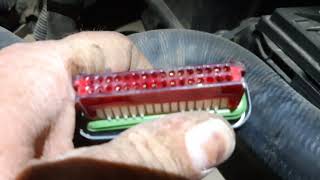
- TCM Red Connector - Pin 2 — On the 32-pin red connector at the Transmission Control Module (TCM) for 5-speed models, located near the fan shroud.. This is the specific pin for the TFP Switch 'D' signal wire (Dark Blue). Testing for continuity and voltage at this pin is essential for diagnosing a circuit fault directly at the module.
- Main Transmission Connector (20-pin) — The main round pass-through connector on the passenger side of the transmission case.. This is a very common failure point. All internal electronic signals, including the TFP switch circuits, pass through here. Corrosion, fluid intrusion from a failed internal seal, or backed-out pins are frequent causes of 'Circuit Low' faults.
- G103 / G104 — G103 is on the front of the passenger side cylinder head. G104 is on the rear of the driver's side cylinder head.. These are primary engine and chassis grounds. A poor ground at these locations can cause erratic voltage readings for the entire engine and transmission control systems, potentially triggering false sensor codes like P0877.
- G101 — Located on the lower front of the engine block.. This is another critical engine block ground. A compromised connection here can lead to various electronic faults, including communication and sensor issues between the ECM and TCM.
Real Owner Repair Stories
- DuramaxDiesels.com forum user / Go-Parts.com article (2006 Chevrolet Silverado 2500HD with Allison transmission) — P0877 code, likely limp mode and Check Engine Light.
❌ Tried (didn't work) Replacing the Pressure Switch Manifold (PSM) did not fix the code., Continuity tests on the wiring harness passed, showing no broken wires.
✅ What actually fixed it The female pins inside the PSM's electrical connector had become loose over time, causing a poor connection. The issue was resolved by physically tightening the pins with a pick tool and applying dielectric grease to the main transmission plug. - Reddit user in r/Duramax (2008 Silverado 2500HD with Allison transmission) — Code P0877-00, transmission stuck in 3rd gear (limp mode), especially after warming up.
❌ Tried (didn't work) TCM was tested by a Chevy dealer and found to be okay., Replacing the 'pressure plate' (likely meaning the PSM) did not solve the issue.
✅ What actually fixed it The user was advised to drop the pan and inspect the internal wiring harness connectors for bent or backed-out pins and to perform resistance checks on the harness wires while shaking them to find intermittent breaks. The final resolution was not posted, but the advice strongly points toward a wiring or connector pin issue rather than a component failure.
"I Checked Everything" — The Actual Cause
- While a smoke test is not applicable for this electrical code, a similar pattern exists where standard continuity/resistance tests pass, yet the problem remains. In a documented case on a 2006 Silverado with P0877, the wiring harness tested good for continuity. The actual root cause was loose female pins in the PSM connector, which were not making a solid physical connection. The fix was to tighten the pins with a pick tool, a mechanical adjustment that electrical tests would not identify.
When the Usual Fixes Don't Work
- In multiple owner-documented cases, the most common fix—replacing the Pressure Switch Manifold (PSM)—did not resolve the P0877 code. The persistent issue was later traced to poor electrical connections. One owner of a 2006 Silverado found that after a new PSM failed to work, the true solution was to tighten the female pins on the PSM's own connector with a pick tool. This highlights that a mechanical connection failure can mimic a component failure, and technicians should inspect pin tension at all related connectors before condemning expensive parts.
OEM Part Supersession History
Older 6-switch Allison PSM (various PNs)→29546972— Design update from a 6-switch to a 4-switch manifold.
Heads up: The 4-switch manifold (PN 29546972) is backward compatible and is the correct service replacement for earlier 2001-2008 models that originally came with a 6-switch version. Two of the switches on the original 6-switch design were not used by the TCM.
Model Year Variations Within This Range
- 2001-2005 vs 2006-2008: The Allison 1000 transitioned from a 5-speed to a 6-speed transmission starting in the 2006 model year. While the P0877 code's primary cause (PSM/wiring) remains the same, internal wiring harness part numbers and some TCM logic may differ between the 5-speed (GMT800) and 6-speed (GMT800/GMT900) versions. Always verify part numbers by VIN.
Helpful Videos

We Have This Part in Stock

The information in this article is provided for general reference and educational purposes only. Vehicle specifications, procedures, and part compatibility can vary by production date, trim level, and region. Always consult your vehicle's factory service manual and verify part numbers before purchasing or performing repairs. Safety-critical components such as airbags, seat belts, and braking systems should be installed by a qualified professional.
- Gmc SIERRA 2500:
- 🧭 Diagnostic Flowchart
- 🎬 Helpful Videos
- 🛍️ Shop This Part
- What's Unique About the 2001-2008 Gmc SIERRA 2500
- Symptoms You May Notice
- Most Likely Causes
- Rare But Worth Checking
- Diagnosis Steps
- Parts You'll Likely Need
- Related Codes That Often Appear With This One
- Technical Service Bulletins (TSBs) & Recalls
- Platform-Specific Known Issues
- Mechanic-Grade Diagnostic Values
- Scan Tool Commands That Help
- Wiring & Ground Locations
- Real Owner Repair Stories
- "I Checked Everything" — The Actual Cause
- When the Usual Fixes Don't Work
- OEM Part Supersession History
- Model Year Variations Within This Range
- 🎟️ Get 5% Off