

GMC Sierra Denali P0877: Transmission Pressure Switch 'D' Circuit Low Guide (2003-2007)
On a 2003-2007 GMC Sierra Denali, code P0877 is often caused by a faulty transmission fluid pressure (TFP) switch, which is part of the internal valve body assembly. This can lead to harsh shifting or the truck not moving at all. Expect a repair cost of $500-$1200, as it requires removing the transmission pan. Before replacing parts, check for debris in the valve body from aftermarket filters and ensure the switch's electrical connector pins are tight.
- P0877 on a 2003-2007 Sierra Denali is a serious code indicating an internal transmission problem, often leading to a no-start or limp-mode condition.
- Do not simply replace the transmission. The most common causes are a faulty TFP manifold switch or debris in the valve body, both of which are serviceable parts.
- A key piece of evidence from GM's own service bulletins (TSB #PIP4972C) points to debris blocking the valve body separator plate as a primary cause.
- This is not a beginner-friendly DIY repair. It requires dropping the transmission pan and servicing internal components.
- Always use the specified DEXRON-VI transmission fluid and be cautious of aftermarket filters to avoid introducing debris.
What's Unique About the 2003-2007 Gmc SIERRA DENALI
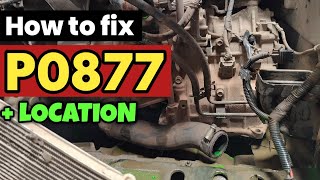
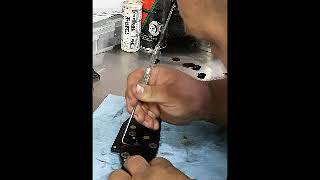
For the 2003-2007 GMT800 platform Sierra Denali, typically equipped with the 4L65-E automatic transmission, this code has a well-documented history. Manufacturer bulletins specifically point towards issues within the valve body. One TSB, #PIP4972C, highlights that debris, specifically plastic shrink-wrap from aftermarket spin-on filter packaging, can get into the transmission and clog the reverse pressure orifice in the valve body separator plate 🎬 Watch: How to inspect the separator plate for debris., leading directly to code P0877 and a 'no-move' condition. This makes internal inspection of the valve body for foreign debris a critical diagnostic step, rather than just assuming a sensor failure.
Diagnostic Flowchart
Tap your situation to follow the diagnostic path that matches what you're seeing on this vehicle.
Generation note: The 2003-2007 year range covers two distinct generations. The 2003-2006 models and the 2007 'Classic' are the GMT800 platform, typically using the 4L65-E transmission. The new body style 2007 model is the GMT900 platform, which uses a different transmission (often the 6L80). While the code's definition is the same, the specific parts and common failures can differ. This guide primarily focuses on the more common GMT800 platform, for which the cited TSBs are highly relevant.
Symptoms You May Notice
- Vehicle will not move in forward or reverse.
- Harsh or delayed gear shifts.
- Transmission slipping between gears.
- Vehicle enters 'limp mode' (stuck in one gear).
- Check Engine Light is illuminated.
- Smell of overheated or burnt transmission fluid.
- Replacing only the external transmission speed sensors without checking internal components.
- Assuming the entire transmission needs to be rebuilt without first diagnosing the valve body and TFP switch.
- Replacing the TFP manifold switch when the actual problem is a loose pin in its connector, leading to the code returning.
Most Likely Causes
- Debris in the Valve Body Separator Plate 🔴 High Probability → Shop Transmission Valve Body As noted in GM Technical Service Bulletin #PIP4972C, debris from aftermarket spin-on filter packaging (plastic shrink-wrap) can block the reverse pressure orifice in the valve body, directly causing code P0877 and a no-move condition.
How to confirm: Requires removing the transmission pan and valve body to visually inspect the separator plate orifices for blockage. The TSB includes images of what this plastic debris looks like.
Typical fix: Clean the valve body and separator plate thoroughly. Replace the separator plate if it is damaged. A full transmission fluid and filter change is required.
Est. part cost: $50-$150 for a separator plate, gaskets, filter, and fluid. - Failed Transmission Fluid Pressure (TFP) Manifold Switch Assembly 🔴 High Probability → Shop Transmission Assembly This assembly, also called the Pressure Switch Manifold (PSM), contains multiple pressure switches including the 'D' switch. It is a common failure item on the 4L60E/4L65E. The internal diaphragms can wear out, the electronics can fail, or the laminate discs can rupture, causing a low voltage signal.
How to confirm: After checking wiring, this is the next logical step. A technician can test the switch circuit with a multimeter, but replacement is common due to the labor involved in accessing it.
Typical fix: Replace the entire TFP manifold switch assembly located on the valve body. This is typically done along with a new filter and fluid.
Est. part cost: $50-$100 for an ACDelco or other OEM-quality part. - Wiring or Connector Issue 🟡 Medium Probability The internal wiring harness is submerged in hot fluid, which can make connectors brittle. More commonly, the female pins on the TFP manifold switch connector can loosen over time, causing a poor connection and intermittent low voltage signals.
How to confirm: Visually inspect the external transmission harness. An internal inspection requires dropping the pan to check the connector at the TFP switch. Wiggle the harness while checking for continuity. Check for loose-fitting pins at the connector.
Typical fix: Repair the damaged wire or replace the harness. If pins are loose, they can sometimes be carefully re-tensioned with a pick tool and secured with dielectric grease.
Est. part cost: $20-$200 depending on the extent of the damage. - Low or Degraded Transmission Fluid ⚪ Low Probability → Shop Transmission Assembly Low fluid levels can cause pressure drops and erratic sensor readings. Old, burnt fluid loses its hydraulic properties and can contribute to sludge buildup that may affect sensor operation.
How to confirm: Check the transmission fluid level and condition using the dipstick following the proper procedure (engine running, transmission warm). The fluid should be bright red and not smell burnt.
Typical fix: Top off the fluid if low, or perform a complete fluid and filter change if the fluid is old or burnt. Use the correct fluid type (DEXRON-VI).
Est. part cost: $60-$120 for fluid and a filter kit.
Diagnosis Steps
- Check the transmission fluid level and condition. If low, top off and check for leaks. If burnt or dirty, a fluid and filter change will be necessary.
- Scan for other transmission-related trouble codes. If P0701 is present, begin diagnostics for that code first, as recommended by TSB #PIP4379M.
- Inspect the external transmission wiring harness and connectors for any visible damage, corrosion, or loose connections.
- If the fluid and external wiring are okay, the next step is to drop the transmission oil pan.
- Visually inspect the fluid in the pan for excessive metal shavings or debris. Look for pieces of plastic shrink-wrap, which could indicate the issue described in TSB #PIP4972C.
- Disconnect the TFP manifold switch connector. Inspect the female pins for looseness. A known fix involves carefully tightening these pins and applying dielectric grease.
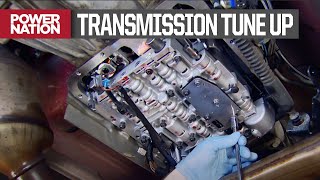
- Remove the valve body to access and inspect the separator plate for blockages, paying close attention to the reverse pressure orifice mentioned in TSB #PIP4972C.
- While the valve body is accessible, test the TFP manifold switch assembly circuits with a multimeter according to the service manual specifications. Or, given the high failure rate and labor involved, preemptively replace it.
- Replace the TFP manifold switch assembly and/or clean/replace the separator plate as needed.
- Reinstall all components with new gaskets, install a new transmission filter, and refill with the correct type and amount of transmission fluid (DEXRON-VI).
- Clear the trouble codes and perform a test drive to ensure the repair was successful.
Parts You'll Likely Need
- Transmission Fluid Pressure (TFP) Manifold Switch Assembly
(OEM #24219581)— This is the most common electrical component to fail for this code. It contains the switch that sends the faulty signal.
Trusted brands: ACDelco, Dorman
OEM price range: $60-$90
Aftermarket price range: $40-$70 - Transmission Filter and Gasket Kit — Required for any job that involves dropping the transmission pan.
Trusted brands: ACDelco, ATP
OEM price range: $30-$50
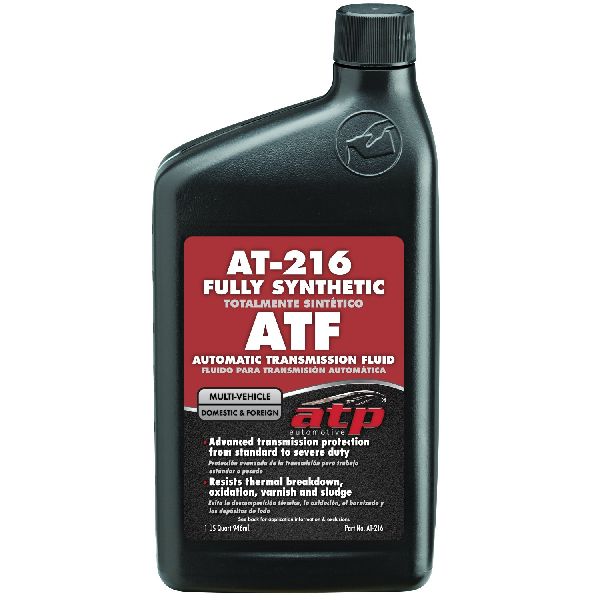
Aftermarket price range: $20-$40 - Automatic Transmission Fluid (DEXRON-VI) — The system must be refilled with fresh fluid after service. Using the correct specification is critical.
Trusted brands: ACDelco
OEM price range: $8-$12 per quart
Aftermarket price range: $7-$10 per quart - Valve Body Separator Plate — May be required if the original is damaged or warped, or if orifices are blocked by debris that cannot be easily cleaned.
Trusted brands: ACDelco, Sonnax
OEM price range: $40-$80
Aftermarket price range: $30-$60
Related Codes That Often Appear With This One
- P2723 — This code for Pressure Control Solenoid 'E' Performance or Stuck Off is often linked with P0877 in TSB #PIP4972C, as both can be caused by the same debris in the valve body.
- P0701 — This is a general Transmission Control System Malfunction code. TSB #PIP4379M specifically advises diagnosing P0701 first when it appears with P0877.
- P0751 — Shift Solenoid 'A' Performance or Stuck Off. This and other shift solenoid codes can appear alongside P0877, as they are all part of the same hydraulic control system. TSB #PIP4379M lists it as a related code.
- P0756 — Shift Solenoid 'B' Performance or Stuck Off. Similar to P0751, this indicates a broader control issue within the valve body, as mentioned in TSB #PIP4379M.
Technical Service Bulletins (TSBs) & Recalls
- PIP4972C: Details a 'no move' condition with P0877 or P2723 caused by debris from aftermarket filter packaging blocking valve body orifices.
- PIP4379M: Advises on diagnosing various transmission codes, including P0877, and recommends addressing P0701 first if present.
Platform-Specific Known Issues
- TSB #PIP4972C documents a specific issue where debris, particularly from aftermarket spin-on filter packaging, can get into the transmission and block orifices on the valve body separator plate, causing a 'no move' condition and setting code P0877.
- TSB #PIP4379M lists P0877 as one of many codes that can result from a general transmission issue, advising technicians to start their diagnosis with code P0701 if it is also present.
Mechanic-Grade Diagnostic Values
- TFP Switch 'D' Signal Voltage — expected: The PCM/TCM supplies 12 volts to the switch. The voltage on the signal wire should change based on gear selection as hydraulic pressure is applied or removed.. Failure: A 'Circuit Low' code like P0877 is set when the voltage reading is unexpectedly low (near 0V) when it should be high (near 12V). This test must be done with the engine running and all components connected.
- TFP Switch Assembly Resistance — expected: Resistance cannot be checked with an ohmmeter while the component is under computer control because the PCM sends 12V to the switches. The internal Transmission Fluid Temperature (TFT) sensor, however, can be checked for resistance. For example, at 68°F (20°C), its resistance should be around 3520 Ohms.. Failure: An open or shorted reading on the TFT sensor portion would indicate a definite failure within the assembly. The pressure switches themselves must be diagnosed using voltage tests.
Scan Tool Commands That Help
- Tech2 / GDS2: Transmission Output Controls — For the newer GMT900 platform with the 6L80 transmission, this function allows a technician to command individual solenoids on and off to verify their function while monitoring pressure data. While less direct for the 4L65E's TFP switch, it helps rule out solenoid issues when multiple codes are present.
Wiring & Ground Locations
- PCM Connector C1 (Blue) — This is one of the main connectors at the Powertrain Control Module (PCM), typically located in the engine bay near the firewall or fender.. Pin 17 (Red wire) on the C1 Blue connector is the signal wire for Transmission Fluid Pressure Switch 'C'. While P0877 is for switch 'D', wiring diagrams show these signals are grouped together, making this connector a key test point for the entire TFP circuit.
- Main PCM Ground — A critical ground wire runs from the main wiring harness to a bolt on the back of the engine block, near the top.. This is a notoriously problematic ground on GMT800 trucks. If it becomes loose, corroded, or broken, it can cause a wide range of erratic sensor readings and codes, including transmission codes, as the PCM loses its reference ground.
- Firewall Ground Straps — There are braided ground straps connecting the back of the engine/cylinder heads to the vehicle's firewall.. These straps ensure the engine and body have a common ground potential. A broken or corroded strap can cause electrical noise and intermittent sensor issues. While less critical than the main PCM ground, they contribute to overall electrical stability.
- Battery to Frame/Engine Block Grounds — The negative battery cable connects to the engine block and also to the vehicle frame, often on the driver's side frame rail.. These are the primary grounds for the entire vehicle. Corrosion or looseness at these points can cause system-wide voltage drops and unpredictable electronic behavior, which could manifest as a 'circuit low' code.
Real Owner Repair Stories
- GMTrucks.com forum user (2005 GMC Sierra 1500 w/ 4L60E) — No forward or reverse gears, vehicle would not move. Codes P0877 and P2723 were present.
❌ Tried (didn't work) The user first suspected a major transmission failure.
✅ What actually fixed it The user dropped the transmission pan and replaced the Transmission Fluid Pressure (TFP) Manifold Switch Assembly. After replacement, the truck moved and operated correctly, clearing the codes.
OEM Part Supersession History
Varies by year→GM 24241779 / 24244053 (Bonded Separator Plate)— GM introduced a bonded separator plate where the gaskets are fused to the plate. This design helps prevent gasket misalignment and cross-leaks between circuits.
Heads up: While offering benefits, some builders note that the orifice sizes on these bonded plates may be different from the original, potentially firming up shifts. Aftermarket hardened plates from companies like TransGo or Sonnax are also popular alternatives that resist wear from check *.
Model Year Variations Within This Range
- 2007 (New Body Style GMT900): The new body style 2007 Sierra Denali introduced the 6L80 6-speed automatic transmission. On this transmission, the TFP switches are integrated into the Transmission Electro-Hydraulic Control Module (TEHCM), also known as the 'Mechatronic' unit. A P0877 code on a 6L80 almost always requires the replacement of the entire TEHCM, which is a more complex and expensive repair that requires dealer-level programming.
Helpful Videos
We Have This Part in Stock


The information in this article is provided for general reference and educational purposes only. Vehicle specifications, procedures, and part compatibility can vary by production date, trim level, and region. Always consult your vehicle's factory service manual and verify part numbers before purchasing or performing repairs. Safety-critical components such as airbags, seat belts, and braking systems should be installed by a qualified professional.
- Gmc SIERRA DENALI:
- 🧭 Diagnostic Flowchart
- 🎬 Helpful Videos
- 🛍️ Shop This Part
- What's Unique About the 2003-2007 Gmc SIERRA DENALI
- Symptoms You May Notice
- Most Likely Causes
- Diagnosis Steps
- Parts You'll Likely Need
- Related Codes That Often Appear With This One
- Technical Service Bulletins (TSBs) & Recalls
- Platform-Specific Known Issues
- Mechanic-Grade Diagnostic Values
- Scan Tool Commands That Help
- Wiring & Ground Locations
- Real Owner Repair Stories
- OEM Part Supersession History
- Model Year Variations Within This Range
- 🎟️ Get 5% Off