

P0878 on 2012-2013 Mazda MAZDA3: Transmission Pressure Switch Fault Causes and Fixes
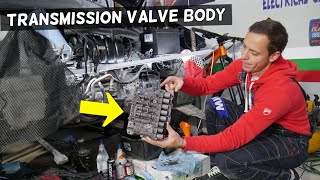
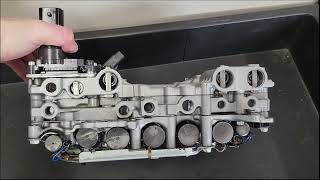
On a 2012-2013 Mazda3, P0878 almost always points to a known internal transmission issue. The most common cause is a faulty control valve body, as documented in Mazda TSB #05-003-14-2898A. This is a professional-level repair that involves replacing the valve body, which comes as a pre-programmed mechatronic unit including the TCM and solenoids.
- P0878 on a 2012-2013 Mazda3 is a serious code that points to a known internal transmission problem, not just a simple sensor failure.
- The most likely cause is a faulty control valve body, a fact supported by multiple Mazda Technical Service Bulletins.
- Symptoms include harsh shifting, getting stuck in gear, and the AT warning light illuminating.
- This is not a typical DIY repair. The fix requires replacing the valve body inside the transmission and is best left to a professional mechanic.
- Do not ignore this code. Driving with this issue can lead to more severe and expensive transmission damage.
What's Unique About the 2012-2013 Mazda MAZDA3
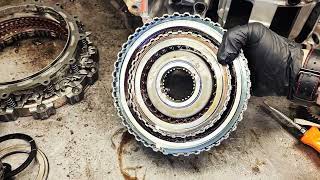
The 2012-2013 Mazda3, particularly models with the early SKYACTIV-Drive (FW6A-EL) automatic transmission 🎬 Watch: A detailed overview of the Skyactiv Drive transmission system., is known for this specific issue. It's not just a random sensor failure; Mazda has acknowledged a pattern failure in multiple Technical Service Bulletins (TSBs). The problem is often caused by contamination within the transmission fluid that causes the delicate oil pressure switches, which are part of the valve body, to stick or fail. Because of this, the fix is rarely just a simple sensor swap and often requires replacing the entire control valve body assembly, which Mazda sells as a single mechatronic unit with the TCM and solenoids.
Diagnostic Flowchart
Tap your situation to follow the diagnostic path that matches what you're seeing on this vehicle.
Symptoms You May Notice
- Check Engine Light and/or AT (Automatic Transaxle) warning light is on
- Harsh, erratic, or delayed shifting, sometimes described as a 'kick' during downshifts
- Transmission getting stuck in one gear (limp mode)
- Inability to shift into certain gears, or the gear indicator on the dash going blank
- Increased fuel consumption
- Vehicle may stall or refuse to move from a stop
- Replacing only the external transmission speed sensors when the issue is internal.
- Assuming any transmission problem requires a full rebuild when the issue is a specific, replaceable component like the valve body.
- Performing a transmission fluid flush without addressing the underlying faulty hardware. The contamination has already caused the switch to stick, and new fluid alone won't fix it.
Most Likely Causes
- Faulty Control Valve Body Assembly 🔴 High Probability → Shop Transmission Valve Body Multiple Mazda TSBs (including #05-003-14-2898A) identify this as the primary failure point. The pressure switches are integrated into the valve body, and internal contamination causes them to fail. Mazda's final repair procedure for this issue is to replace the entire valve body with a new, pre-programmed unit.
How to confirm: A professional technician will use a high-end scan tool to monitor transmission data. If the pressure switch readings are erratic or incorrect and wiring is confirmed to be good, the valve body is the likely culprit. The presence of other codes like P0842, P0847, and P0872 further condemns the valve body.
Typical fix: Replace the entire control valve body with a new, pre-programmed unit. The part is a mechatronic assembly that includes the valve body, solenoids, and TCM.
Est. part cost: $1200-$1800 for the OEM mechatronic unit. - Failed Internal Oil Pressure Switch 🟡 Medium Probability TSB 05-002/15 explicitly states the cause is an oil pressure switch (A or B) getting stuck due to contamination. While the switches are the point of failure, Mazda's repair procedure has evolved. Early fixes involved replacing just the switches, but later TSBs and field experience show a full valve body replacement is more reliable.
How to confirm: This is diagnosed as part of the valve body check. The switch itself is the component sending the bad signal. TSB 05-002/15 provides part numbers for individual switches (Switch A: FZ01-21-2C0, Switch B: FZ01-21-2J0).
Typical fix: While individual switches can be replaced, most shops and Mazda's own TSBs now point towards replacing the entire valve body assembly for a lasting repair.
Est. part cost: $50-$150 for individual switches if available, but labor to access them is the same as a valve body replacement. - Low or Contaminated Transmission Fluid ⚪ Low Probability → Shop Transmission Assembly While low fluid is a common cause for many transmission issues, a 'Circuit High' code is less likely to be caused by it. However, contaminated fluid is the direct cause of the valve body and switch failure on this platform. By the time the code appears, a simple fluid change is unlikely to fix the stuck component.
How to confirm: Check the transmission fluid level and condition. The fluid should be at the correct level and be bright red (Mazda ATF-FZ), not brown, black, or smell burnt.
Typical fix: Perform a transmission fluid drain and fill using the correct fluid (Mazda ATF-FZ). However, if the code is already present, the damage to internal components may already be done and the valve body will likely still need replacement.
Est. part cost: $75-$150 for fluid
Rare But Worth Checking
- Wiring Issue: A damaged wire or corroded connector between the TCM and the transmission's internal harness could cause a 'Circuit High' reading. This should be ruled out before condemning expensive internal parts.
- Faulty Transmission Control Module (TCM): → Shop Transmission Assembly It is rare for the TCM itself to fail in isolation, as it is integrated into the valve body assembly on SKYACTIV models. On non-SKYACTIV models, the externally-mounted TCM was prone to heat failure, but for the 2012-2013 SKYACTIV, a TCM failure means a valve body failure.
Diagnosis Steps
- Verify the code with a quality OBD-II scanner.
- Check and document any other codes present, especially other pressure switch codes (P0842, P0847, P0872, P0877).
- Inspect the transmission fluid level and condition. Ensure it is clean, full, and of the correct type (Mazda ATF-FZ).
- Research applicable TSBs for your vehicle's VIN. TSB #05-003-14-2898A and the superseding #05-002/15 are highly relevant.
- Using an advanced scan tool, monitor the live data from the transmission's pressure switches while driving to see if the readings from switch 'D' (or No. 4) are erratic or incorrect.
- Inspect the transmission's main electrical connector and wiring harness for any signs of damage, corrosion, or looseness.
- If wiring and fluid are good, and multiple pressure switch codes are present, the diagnostic procedure in Mazda's service information and TSBs points to replacing the control valve body.
Parts You'll Likely Need
- Automatic Transmission Control Valve Body
(OEM #FZ01-21-200A (and subsequent revisions like FZ2121100J). Part number may vary by specific production date.)— This is the most common failure and the official fix recommended by Mazda TSBs for P0878 and related codes on this vehicle. The pressure switches, solenoids, and TCM are integrated into this assembly.
Trusted brands: Mazda (OEM)
OEM price range: $1200-$1800
Aftermarket price range: $370-$800 (Remanufactured, quality may vary)
Related Codes That Often Appear With This One
- P0842 — This is another oil pressure switch code ('stuck on') for the same transmission. TSBs often group these codes together as they point to the same root cause.
- P0847 — Another oil pressure switch code ('stuck on') related to the same internal valve body issue.
- P0872 — Another oil pressure switch code ('stuck on') related to the same internal valve body issue.
- P0877 — Another oil pressure switch code ('stuck on') related to the same internal valve body issue.
- P0780 — This code indicates a general 'Shift Malfunction' and is often triggered as a result of the pressure switch failures, confirming a systemic issue within the valve body.
Technical Service Bulletins (TSBs) & Recalls
- 05-003-14-2898A: Directly mentions P0878 and recommends replacing the valve body to correct the probl
Platform-Specific Known Issues
- Mazda issued Technical Service Bulletin #05-003-14-2898A, which directly addresses P0878 among other codes. It states the solution is a 'NEW PROGRAMMED VALVE BODY'.
- Other related TSBs like 05-002/15 confirm the cause is often contamination causing internal pressure switches to stick, reinforcing the diagnosis of a faulty valve body.
- Real Owner Repair Story (Reddit): A Reddit user with a 2012 Mazda 3 experienced the AT light and slipping. After having the TCM refurbished and reprogrammed, the OBD2 scanner correctly identified a fault with 'Cylinder D (4th gear)'. This highlights that even with a TCM issue, the root cause was still a specific internal transmission circuit fault, consistent with the P0878 code family.
- Real Owner Quote (Reddit): A user on Reddit reported a dealer quote for a 2012 Mazda 3 with a similar issue: 'Recommend to replace faulty Valve Body with new OEM one. Price was given over the phone quoted right around $1800 (roughly $1300 for parts and $500 for labor)'.
Mechanic-Grade Diagnostic Values
- TCM Software File Version — expected: PE08-21-PS1-K or later. Failure: File name is PE08-21-PS1-J or older, indicating outdated diagnostic logic that requires an update.
- Oil Pressure Switch Bolt Torque — expected: 9-10 N·m (80-88 in·lbf). Failure: Improper torque can lead to leaks or damage to the valve body.
- ATF Temperature for Initial Learning — expected: 40–110 °C (104–230 °F). Failure: The 'Initial Learning' procedure will not initiate if the transmission fluid temperature is outside this range.
Hidden / Shadow Codes Worth Checking
- P06B8: This code, defined as 'Internal Control Module Non-Volatile Random Access Memory (NVRAM) Error', will be stored if the mandatory 'Initial Learning' procedure is not performed after replacing the valve body or oil pressure switches. (see via Standard OBD-II scanner, will appear after parts replacement if the relearn procedure is skipped.)
Scan Tool Commands That Help
- Mazda Modular Diagnostic System (M-MDS): TCM Configuration — This function must be performed after replacing the control valve body to configure the new module to the vehicle.
- Mazda Modular Diagnostic System (M-MDS): Initial Learning — This is a mandatory procedure after replacing the control valve body or internal pressure switches. It forces the TCM to relearn clutch engagement points and shift adapts. Failure to perform this will result in harsh shifting and may set code P06B8.
- Mazda Modular Diagnostic System (M-MDS): Module Reprogramming — For 2012-2013 Mazda3 models within VIN range JM1BL**500001 - 733727, if the TCM file is version 'PE08-21-PS1-J' or older, it must be reprogrammed to the latest calibration as part of the repair procedure outlined in TSBs.
- No Tool Procedure: Manual Initial Learning Activation — A specific sequence of shifting the lever (P -> N -> Engine OFF -> M(-) -> Engine ON -> M(+) -> M(-)) with the brake pedal depressed can be used to initiate the relearn process without a scan tool, provided the ATF temperature is correct.
Wiring & Ground Locations
- TCM Location — Left rear of the engine compartment, often under the battery box.. The TCM is integrated with the valve body on SKYACTIV models, but on some earlier models, it was mounted externally. Knowing its location is key for harness inspection. For the 2012-2013 SKYACTIV, the main external connector to the transmission is the point of interest.
- G07 — A main ground point located on the top rear of the engine.. This ground is listed in the transmission wiring diagram and a poor connection here could potentially cause erratic signals from transmission components.
- G06 — A main ground point located on the left rear of the engine.. Also listed in the transmission wiring diagram, this ground's integrity is important for the overall transmission control system.
Real Owner Repair Stories
- Reddit user rtaus96 (2018 Mazda6 (with related FW6A-EL family transmission)) — Rough and early shifting, especially into 3rd and 5th gear.
❌ Tried (didn't work) Performing the manual 'relearn' procedure on the old, faulty valve body provided only temporary relief for a few days.
✅ What actually fixed it The owner replaced the valve body themselves. Initially, the car threw a speed sensor code after being driven hard. The owner then used a programming interface they purchased to reprogram the TCM, which cleared the code and permanently resolved the hard shifting issues.
OEM Part Supersession History
FZ01-21-200A→FZ21-21-100J— Updated part from manufacturer to address known failure patterns. The new part is often referred to as the 'Control Valve' or 'Automatic Transmission Valve Body'.
Heads up: While physically similar, using an older or incorrect part number can lead to immediate shifting problems or failure. It is critical to match the part to the vehicle's VIN.N/A→FZ01-21-2J0— This is the part number for the individual Oil Pressure Switch 'B', which is one of the components that fails within the valve body assembly. TSBs recommend replacing switches A and B together.
Heads up: While replacing individual switches was an early repair strategy, later TSBs and field experience favor replacing the entire valve body assembly for a more durable repair.
Model Year Variations Within This Range
- 2012-2013: The 2012 model year was the first to feature the SKYACTIV-G engine and SKYACTIV-Drive (FW6A-EL) transmission in the Mazda3. While 2013 models had minor trim and infotainment updates, the powertrain components related to code P0878 are identical. TSBs for this issue cover both model years, indicating the same failure pattern and repair procedure apply.
Helpful Videos

We Have This Part in Stock

The information in this article is provided for general reference and educational purposes only. Vehicle specifications, procedures, and part compatibility can vary by production date, trim level, and region. Always consult your vehicle's factory service manual and verify part numbers before purchasing or performing repairs. Safety-critical components such as airbags, seat belts, and braking systems should be installed by a qualified professional.
- Mazda MAZDA3:
- 🧭 Diagnostic Flowchart
- 🎬 Helpful Videos
- 🛍️ Shop This Part
- What's Unique About the 2012-2013 Mazda MAZDA3
- Symptoms You May Notice
- Most Likely Causes
- Rare But Worth Checking
- Diagnosis Steps
- Parts You'll Likely Need
- Related Codes That Often Appear With This One
- Technical Service Bulletins (TSBs) & Recalls
- Platform-Specific Known Issues
- Mechanic-Grade Diagnostic Values
- Hidden / Shadow Codes Worth Checking
- Scan Tool Commands That Help
- Wiring & Ground Locations
- Real Owner Repair Stories
- OEM Part Supersession History
- Model Year Variations Within This Range
- 🎟️ Get 5% Off