

OBD-II Code P0887: TCM Power Relay Control Circuit High
What P0887 means, why it triggers, and how to fix it
- Code P0887 indicates the Transmission Control Module (TCM) is receiving an unexpectedly high voltage signal, locking the vehicle in 2nd or 3rd gear.
- Over 70% of P0887 codes on 2014-2017 Jeep, Chrysler, and Ram vehicles are caused by a software glitch requiring a $150-$250 dealer update.
- Never replace the $800+ TCM without first performing a voltage drop test on the main engine ground strap to rule out high electrical resistance.
- Driving with P0887 causes severe transmission overheating, turning a $50 relay replacement into a $4,000 complete transmission rebuild within months.
What Does P0887 Mean?
Your car's main computer detects abnormally high voltage in the electrical circuit supplying power to the Transmission Control Module (TCM). This disrupts communication, prevents proper shifting, and damages the sensitive control module.
Technical definition: The Powertrain Control Module (PCM) detects voltage in the TCM power relay control circuit exceeding the specified threshold. The PCM uses this circuit to turn the TCM's main power relay on and off. When the PCM sees high voltage on this control line while it commands the relay off, it sets P0887.
Can I Drive With P0887?
No, recommended Driving is not recommended. The vehicle unpredictably enters 'limp mode,' locking the transmission in a single gear (usually 2nd or 3rd) and causing a sudden loss of power. Continuing to drive overheats the transmission, turning a simple electrical fix into a catastrophic internal failure requiring a $4,000 rebuild.
Common Causes
- Outdated TCM Software (Very Common) — On Chrysler, Dodge, Jeep, and Ram vehicles, a software glitch incorrectly interprets or causes a high voltage condition, triggering the code without a physical electrical fault.
- Faulty TCM Power Relay (Common) — The relay controlling power to the TCM fails, sticking in the 'on' position or welding its internal contacts together. This sends continuous high voltage down the circuit.
- Corroded Wiring or Ground Connections (Common) — Corroded, loose, or broken engine ground straps create high resistance, tricking the computer into reading high voltage. Frayed wires shorting to a power source also create this condition.
- Faulty Totally Integrated Power Module (TIPM) (Less Common) — On FCA vehicles, the TIPM (fuse/relay box) fails internally. It sends incorrect high voltage to the TCM control circuit.
- Weak Battery or Overcharging Alternator (Less Common) — A faulty alternator overcharges the system (>14.8V), creating voltage spikes that trigger the code. A dying battery causes unstable voltage, confusing the modules during startup.
- Faulty Transmission Control Module (TCM) (Rare) — The TCM itself fails internally. This is the last component to suspect after ruling out software, wiring, and relays.
Symptoms
- Transmission Stuck in 'Limp Mode' — The vehicle locks into a single gear (often 2nd or 3rd) to prevent damage, resulting in poor acceleration and high RPMs.
- Harsh or Erratic Shifting — The transmission slams into gear, shifts at the wrong times, or feels jerky.
- Check Engine and Transmission Warning Lights On — The Malfunction Indicator Lamp (MIL) and specific transmission warning lights illuminate.
- Engine Stalls or Fails to Start — The electrical fault prevents the vehicle from starting or causes unexpected stalling when stopping.
- Unresponsive Accelerator Pedal — Pressing the gas pedal yields little to no engine response during limp mode.
- ABS and Traction Control Lights On — The TCM power fault disables the ABS and stability control systems, illuminating their warning lights.
Diagnostic Flowchart
Tap your situation to follow the diagnostic path that matches what you're seeing on this code.
Common Fixes & Costs
- TCM Software Update — Parts: $0, Labor: $150-$250, ~1 hr book time (Professional)
- Replace TCM Power Relay — Parts: $15-$50, Labor: $25-$75, ~0.3 hr book time (DIY)
- Repair Damaged Wiring or Ground Strap — Parts: $10-$50, Labor: $150-$500, ~1.5 hr book time (Intermediate)
- Replace Transmission Control Module (TCM) — Parts: $500-$850, Labor: $250-$450, ~2.5 hr book time (Professional)
- Replace Totally Integrated Power Module (TIPM) — Parts: $500-$1200, Labor: $150-$300, ~1.5 hr book time (Professional)
Used vs. New Parts: Buying Guide
When a used part is worth it: Buying used is risky and only recommended for older vehicles with low resale value, purchased from a reputable rebuilder offering a warranty.
Donor-vehicle mileage cap: roughly under 60000 miles for the part to have meaningful remaining life.
Donor quality checklist:
- Verify the exact part number matches.
- Purchase from a specialized rebuilder that tests components.
- Visually inspect for corrosion on pins or water damage.
Decision logic:
- If The common fix for your vehicle is a software update → Neither new nor used hardware fixes it. Get the software flashed by a professional.
- If The part requires programming to your vehicle's VIN → Buy a new or professionally remanufactured unit.
- If The vehicle is over 10 years old and has low resale value → A warrantied, remanufactured module offers a good balance of cost savings and reliability.
Warranty tradeoff: Used parts have a 30-90 day warranty. New OEM and quality remanufactured parts come with a 1-year or longer warranty.
Worst-case if a used part fails: $500-1000 if a used module fails after installation, requiring repeat labor costs.
What Happens If You Wait — Timeline
- 0-4 weeks: Intermittent Check Engine Light and 'Service Transmission' warnings. Vehicle occasionally enters limp mode but resets after restarting. (MPG impact: 0-5%% · Added cost: $0)
- 1-3 months: Limp mode becomes frequent. Harsh shifting is noticeable. Transmission fluid begins to overheat during limp mode episodes. (MPG impact: 10-20%% · Added cost: $50-$200)
- 3-6 months: Sustained high temperatures break down transmission fluid and glaze clutch friction surfaces. Electrical problems cause accelerated mechanical wear. (MPG impact: 15-25%% · Added cost: $500 - $1,800)
- 6+ months: Catastrophic internal failure. Prolonged stress warps hard parts and destroys clutch packs, requiring a complete rebuild. (MPG impact: N/A% · Added cost: $3,500 - $7,000+)
Cost of Not Fixing It
- Immediate: Unpredictable shifting and limp mode create a serious safety hazard. (Added cost: $0)
- Weeks to Months: Continued driving in limp mode causes excessive heat buildup, leading to premature clutch wear and fluid breakdown. (Added cost: $500 - $2,500+)
- Months to a Year: Catastrophic internal transmission failure requiring a complete rebuild. (Added cost: $3,500 - $7,000+)
Diagnosis Steps
- Check for Technical Service Bulletins (TSBs)
Check for TSBs related to P0887 for your specific VIN. Manufacturers, especially FCA, issue software updates to fix this exact problem, making this the mandatory first step.
Tools: Internet access, Vehicle Identification Number (VIN) (Beginner) - Inspect the Battery and Charging System
Use a multimeter to check battery voltage with the engine off (~12.4-12.6V) and running (~13.5-14.5V). An overcharging alternator (>14.8V) directly causes this 'high circuit' code.
Tools: Multimeter (Beginner) - Inspect and Swap the TCM Power Relay
Locate the fuse box and find the TCM relay. Swap it with an identical relay from a non-essential system (like the horn). If the problem disappears, the original relay is faulty.
Tools: Owner's manual, relay puller (Beginner) - Visually Inspect Wiring and Grounds
Inspect the wiring harness going to the TCM and relay for frayed or burnt wires. Check the main engine and transmission ground straps to ensure they are clean, tight, and free of corrosion.
Tools: Flashlight (Intermediate) - Perform Voltage Drop Tests
With the ignition on, place the positive multimeter lead on the TCM's ground pin and the negative lead on the negative battery terminal. A reading above 0.1 volts indicates excessive resistance in the ground circuit requiring immediate repair.
Tools: Multimeter, back-probe kit, wiring diagram (Professional) - Test the TCM Power Relay Control Circuit
Check for voltage at the TCM power relay control pin with the key off. It must read 0 volts. Present voltage confirms a short to power in the wiring harness or a faulty PCM driver.
Tools: Multimeter, wiring diagram (Advanced)
When This Code Triggers (Freeze-Frame Conditions)
- Engine Coolant Temp: 180-210°F (The code often sets when the engine is at normal operating temperature.)
- RPM: 0 or 700-800 (The fault is detected during the key-on self-test before the engine starts (0 RPM) or immediately after starting at idle.)
- Vehicle Speed: 0 mph (The check for this fault runs when the vehicle is stationary.)
- System Voltage: 12.0-14.8V (The code sets when the control circuit voltage is unexpectedly high, though an overcharging alternator (>14.8V) directly causes it.)
Related Codes
- P0700 — A general transmission fault code requesting MIL illumination. It always appears alongside specific codes like P0887.
- P0885 — Indicates an open circuit (broken wire or unplugged relay) on the same TCM Power Relay Control Circuit.
- P0886 — Indicates a short to ground (low voltage) on the same TCM Power Relay Control Circuit.
Climate & Environmental Factors
- High Humidity / Salt Belt Regions: Accelerates corrosion on wiring connectors and ground straps. A corroded ground connection directly triggers P0887.
- Extreme Cold: Drops a weak battery's voltage further, causing modules to behave erratically during startup. Freezes aging relays with internal condensation.
How to Talk to a Mechanic About This Code
Say this: "I have a P0887 code. Please start by checking for any open TSBs related to a TCM software update for my VIN before diagnosing hardware."
Directs the shop to the most common and cheapest fix first, preventing them from immediately quoting an expensive TCM replacement.
Avoid saying:
- 'My transmission is acting weird.'
- 'My check engine light is on, can you just fix it?'
- 'I think I need a new transmission computer.'
Questions to ask before authorizing the repair:
- Was there a software update available, and if so, was it performed?
- Can you show me the voltage drop test results proving the wiring and grounds are good?
- Does the repair estimate for the module replacement include programming it to my vehicle?
- What is the warranty on the recommended parts and labor?
Where to Take It: Dealer vs Independent vs Chain
- Dealer:
Recommended first stop for FCA and Ford vehicles due to the high likelihood of a software or warranty fix.
Best for: FCA or Ford vehicles where a software update or warranty claim is the fix., Vehicles still under powertrain warranty., Complex diagnostics requiring manufacturer-specific tools.
Downsides: Highest labor rates., Quick to replace a module rather than diagnose a wiring issue. (Typical cost: +50% vs. baseline) - Independent Shop:
A strong choice for electrical diagnosis, but verify they have a J2534 device for potential flashing.
Best for: Out-of-warranty vehicles after software/warranty has been ruled out., Diagnosing electrical faults like bad grounds or wiring shorts.
Downsides: Quality and diagnostic capabilities vary widely., Lacks expensive tools to perform software updates. (Typical cost: +0% vs. baseline) - Chain Shop:
AVOID for P0887 diagnosis. The problem is too complex for these shops.
Best for: Basic services like battery testing or replacement.
Downsides: Technicians lack specialized training for complex electrical diagnosis., High risk of misdiagnosis. (Typical cost: -10% vs. baseline)
When to Walk Away From the Repair
If the estimated repair cost exceeds 40-50% of the car's private-party value, consider selling or trading it in.
- Car worth $8000, fix is $250: Fix it. A software update is a minor cost relative to the car's value.
- Car worth $4000, fix is $1300: Borderline. Get a second opinion to confirm it's not a cheaper fix (like a ground wire) before proceeding.
- Car worth $3000, fix is $1800: Walk away. The repair cost is 60% of the vehicle's value and is not a sound investment.
What Scan Tool You Need for This Code
Minimum: A code reader that accesses TCM codes and views live data PIDs.
Cheap scanners only show the code but lack the voltage data and bidirectional control needed to distinguish a wiring fault from a module failure.
Budget: BlueDriver Pro Scan Tool (~$100) — Reads and clears TCM codes, views freeze-frame data, and graphs live data from the TCM.
Mid-range: Autel MaxiCOM MK808S (~$350) — Offers bidirectional control to command the TCM power relay on and off, saving hours of diagnostic time.
Professional: Autel MaxiSys MS906BT (~$1200+) — Full bidirectional control and module programming capabilities when paired with a manufacturer software subscription.
Rent vs buy: Buy a mid-range bidirectional scanner. Basic rental tools lack the necessary data and control functions.
How to Clear the Code After You Fix It
- Use an OBD-II scan tool to clear the diagnostic trouble codes.
- Perform a complete drive cycle to allow the vehicle's readiness monitors to run.
Drive cycle (~30 minutes): A generic drive cycle includes a cold start, 3 minutes of idling, 15 minutes of steady highway driving, followed by 15 minutes of stop-and-go city driving.
Readiness monitors affected: Comprehensive Component Monitor, Catalyst Monitor, Evaporative System Monitor
Before emissions retest: drive at least 50 miles to fully set monitors.
Watch out for:
- Clearing the code does not fix the underlying problem; the code returns if the fault exists.
- Disconnecting the battery erases all readiness monitors, guaranteeing an emissions test failure.
Will This Fail Emissions / State Inspection?
Yes — this code typically fails an OBD-II emissions inspection.
- California: An illuminated Check Engine Light results in an automatic smog check failure.
- New York: A P0887 code causes the vehicle to fail the OBD-II emissions inspection.
- Texas: In the 17 counties requiring emissions testing, an illuminated Check Engine Light is an automatic failure.
Most Commonly Affected Vehicles
- Jeep Cherokee (2014-2017) — Extremely common issue due to ZF 9-speed transmission software. TSBs 21-016-16 and 21-015-16 fix this via software update.
- Chrysler 200 (2015-2017) — Prone to P0887 due to ZF 9-speed software glitches. TSBs 21-019-17 and 21-015-16 apply.
- Jeep Renegade (2015-2017) — Shares the Cherokee powertrain. TSB 21-040-17 addresses P0887.
- Ram ProMaster City (2015-2017) — TSB 21-013-16 resolves P0887 and shift quality issues with a software flash.
- Ford Focus (2012-2018) — Indicates a failing TCM on DSP6 PowerShift automatics. Covered under extended warranty 14M02 (10 years/150,000 miles).
- Ford Fiesta (2011-2019) — Precursor to TCM failure on PowerShift transmissions, covered under extended warranty 14M02.
Manufacturer-Specific Notes
- Chrysler/Dodge/Jeep/Ram (FCA): Almost always caused by a software issue on 8-speed and 9-speed automatics. Check TSBs 21-015-16, 21-016-16, and 21-019-17 before replacing hardware.
- Ford: A strong indicator of a failing TCM on DSP6 PowerShift transmissions. Check eligibility for Customer Satisfaction Program 14M02.
- Toyota: On Multi-Mode Transmissions (MMT), the ECU expects <1V on the relay control circuit when off. Seeing >4.0V triggers P0887.
Real Owner Stories
2016 Jeep Cherokee Latitude at 78K miles - The 'Software Fix'
Check engine light came on with a 'Service Transmission' message. The vehicle intermittently entered limp mode, stuck in a high gear.
What they tried:
- Owner checked fuses and swapped the starter relay with an identical one, but the problem persisted.
- Took the vehicle to a Jeep dealership for diagnosis.
Outcome: The dealership found TSB 21-016-16 applied to the vehicle. They performed a software flash on the TCM for $210. The code did not return.
Lesson: For FCA vehicles with this code, assume it's a software problem first. Call a dealer with your VIN to confirm outstanding TSBs before spending money on parts.
2014 Ford Focus SE at 110K miles - The Warranty 'Fix'
Car failed to start intermittently and shuddered while driving. The check engine light was on with code P0887.
What they tried:
- An independent shop quoted $1,400 to replace the TCM.
- The owner researched Ford's PowerShift transmission problems online.
Outcome: The owner discovered Ford's Customer Satisfaction Program 14M02. A Ford dealer confirmed coverage and replaced the TCM at no cost.
Lesson: Always search for manufacturer warranty extensions related to your specific symptoms to save from expensive and unnecessary repair bills.
2012 Dodge Grand Caravan at 130K miles - The Misdiagnosis Story
Transmission stuck in limp mode (2nd gear) with code P0887. The vehicle lived in a 'salt belt' state.
What they tried:
- A general repair shop replaced the TCM for $950. The code returned within a week.
- Owner took it to a transmission specialist for a second opinion.
Outcome: The second shop performed a voltage drop test and found the main transmission-to-chassis ground strap was severely corroded. They replaced the ground strap for $120, permanently fixing the issue.
Lesson: Do not replace expensive modules until the entire circuit, especially grounds, has been professionally tested. A $120 ground strap mimics the failure of a $950 computer.
How to Prevent This Code From Triggering
- Clean Battery Terminals and Chassis Grounds Annually (Once per year, especially before winter) — Corrosion creates resistance, leading to unstable voltage that confuses sensitive modules like the TCM.
- Apply Dielectric Grease to Critical Connectors (When servicing nearby components) — Prevents moisture intrusion and corrosion on TCM and TIPM connectors in salt-belt regions.
- Test Battery and Alternator Health Periodically (Every oil change or at least twice a year) — Identifies a failing component before it causes voltage spikes that trigger P0887.
- Check for Software Updates During Dealer Service (Whenever the vehicle is at a dealership for other service) — Proactively solves P0887 issues on FCA vehicles before symptoms appear.
Frequently Asked Questions
Can I drive my car with a P0887 code?
No. The vehicle unpredictably enters limp mode, causing sudden power loss in traffic. Extended driving overheats and destroys the transmission.
Why did P0887 appear right after I replaced my battery or got a jump start?
A voltage spike during the battery replacement triggered the code. Clear the code with a scanner; if it returns, test the alternator for overcharging.
The shop replaced my TCM but the P0887 code came back. What now?
This is a misdiagnosis. The actual fault is high resistance in a ground connection, a wiring short, or a faulty TIPM sending incorrect voltage.
How much does it cost to fix P0887?
Costs range from $150-$250 for a software update to $850+ for a TCM replacement. Software updates fix the majority of cases on FCA vehicles.
Can I fix P0887 myself?
Basic fuse, relay, and ground checks are DIY-friendly. Software updates and module programming require professional dealer tools.
Could a bad ground strap really cause this transmission code?
Yes. A bad ground creates an unstable reference voltage, causing modules to misinterpret sensor readings. Diagnose this by performing a voltage drop test across the ground strap; a reading over 0.1V confirms a faulty ground.
What is the difference between P0887, P0885, and P0886?
P0887 is a short to power (high voltage). P0886 is a short to ground (low voltage). P0885 is an open circuit (broken wire).
What is a TIPM and how can it cause P0887?
A Totally Integrated Power Module combines the fuse box and control module on FCA vehicles. Internal relay failures send persistent high voltage, triggering P0887.
Key Takeaways
- Code P0887 indicates the Transmission Control Module (TCM) is receiving an unexpectedly high voltage signal, locking the vehicle in 2nd or 3rd gear.
- Over 70% of P0887 codes on 2014-2017 Jeep, Chrysler, and Ram vehicles are caused by a software glitch requiring a $150-$250 dealer update.
- Never replace the $800+ TCM without first performing a voltage drop test on the main engine ground strap to rule out high electrical resistance.
- Driving with P0887 causes severe transmission overheating, turning a $50 relay replacement into a $4,000 complete transmission rebuild within months.
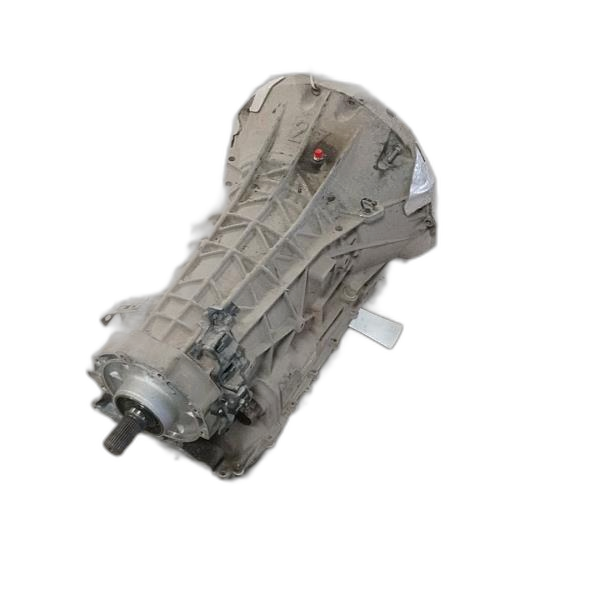
Shop the Parts Behind P0887
Below are the parts most often responsible for code P0887, ranked by how frequently each one is the actual culprit (per the diagnosis above). Tap any to see what we have for your vehicle.




The information in this article is provided for general reference and educational purposes only. Vehicle specifications, procedures, and part compatibility can vary by production date, trim level, and region. Always consult your vehicle's factory service manual and verify part numbers before purchasing or performing repairs. Safety-critical components such as airbags, seat belts, and braking systems should be installed by a qualified professional.
- 🧭 Diagnostic Flowchart
- 🛍️ Shop This Part
- What Does P0887 Mean?
- Can I Drive With P0887?
- Common Causes
- Symptoms
- Common Fixes & Costs
- Used vs. New Parts: Buying Guide
- What Happens If You Wait — Timeline
- Cost of Not Fixing It
- Diagnosis Steps
- When This Code Triggers (Freeze-Frame Conditions)
- Related Codes
- Climate & Environmental Factors
- How to Talk to a Mechanic About This Code
- Where to Take It: Dealer vs Independent vs Chain
- When to Walk Away From the Repair
- What Scan Tool You Need for This Code
- How to Clear the Code After You Fix It
- Will This Fail Emissions / State Inspection?
- Most Commonly Affected Vehicles
- Manufacturer-Specific Notes
- Real Owner Stories
- 2016 Jeep Cherokee Latitude at 78K miles - The 'Software Fix'
- 2014 Ford Focus SE at 110K miles - The Warranty 'Fix'
- 2012 Dodge Grand Caravan at 130K miles - The Misdiagnosis Story
- How to Prevent This Code From Triggering
- Frequently Asked Questions
- Can I drive my car with a P0887 code?
- Why did P0887 appear right after I replaced my battery or got a jump start?
- The shop replaced my TCM but the P0887 code came back. What now?
- How much does it cost to fix P0887?
- Can I fix P0887 myself?
- Could a bad ground strap really cause this transmission code?
- What is the difference between P0887, P0885, and P0886?
- What is a TIPM and how can it cause P0887?
- Key Takeaways
- 🎟️ Get 5% Off