

OBD-II Code P0890: TCM Power Relay Sense Circuit Low
What P0890 means, why it triggers, and how to fix it
- Code P0890 triggers when the Transmission Control Module (TCM) receives less than 9 volts, forcing the vehicle into a restricted 'limp mode' or causing a no-start condition.
- For 2019-2024 Subaru models (Ascent, Legacy, Outback, Forester), a known software bug causes this code in freezing temperatures; check TSB 09-117-24 for a dealer update before replacing parts.
- The most frequent hardware failure is a faulty $20 TCM power relay or a blown fuse, which you can diagnose in under 10 minutes by swapping it with an identical non-essential relay.
- Never replace the $500+ Transmission Control Module (TCM) until you have performed a voltage drop test to rule out corroded wiring and poor ground connections.
What Does P0890 Mean?

Code P0890 indicates the Powertrain Control Module (PCM) detected low voltage in the Transmission Control Module (TCM) power circuit. The TCM is the transmission's brain; without proper voltage, it cannot shift gears correctly or communicate with other vehicle systems.
Technical definition: The official SAE/OBD-II definition is 'TCM Power Relay Sense Circuit Low'. The PCM or TCM detected abnormally low voltage from the relay supplying power to the transmission's control circuits. The TCM expects a reading close to battery voltage (12V+) when the relay activates. If voltage drops significantly (often below 9 volts), it sets this code.
Can I Drive With P0890?
Yes, But With Caution. Driving is possible but unsafe due to unpredictable shifting. The transmission often enters 'limp mode' with limited gears, shifts harshly, or prevents the engine from starting entirely. Continuing to drive in limp mode causes excessive heat and stress on internal transmission components, potentially adding $1,000 to $3,000 in repair costs. Drive only as far as needed to reach a safe location or repair shop.
Common Causes

- Control Module Software Glitch (Very Common) — On 2019-2024 Subaru models, an Engine Control Module (ECM) software bug incorrectly reports a low voltage issue in cold weather after short trips. A dealer software update is the only fix.
- Faulty TCM Power Relay (Very Common) — The relay sending power to the transmission computer is the most frequent hardware failure. This small electronic switch wears out, sticks open, or fails internally due to age or moisture.
- Blown Fuse (Common) — A blown fuse in the TCM or relay power circuit instantly cuts off power and triggers this code.
- Corroded, Damaged, or Loose Wiring (Common) — Wires and plugs connecting the battery, fuse box, relay, and TCM corrode or shake loose, causing a severe voltage drop. This frequently occurs at the main TCM connector.
- Poor Ground Connection (Common) — A loose or broken ground wire for the TCM circuit causes a voltage drop. The module requires a solid chassis ground to function.
- Weak or Failing Battery (Less Common) — A failing main battery or alternator fails to provide the required 12+ volts to the system during startup, triggering the code during the module's self-test.
- Faulty Transmission Control Module (TCM) (Rare) — The TCM itself rarely fails. Always test wiring, relays, grounds, and fuses before replacing this expensive module.
Symptoms

- Harsh Shifting or Limp Mode — The transmission shifts roughly, delays engagement, or locks into a single gear ('limp mode'), causing a severe loss of acceleration.
- Vehicle Will Not Start — A fault in the power relay circuit often prevents the engine from cranking, especially in cold weather on affected Subarus.
- Reduced Fuel Economy — When the transmission locks into limp mode, the engine runs at inefficient RPMs, drastically reducing fuel economy.
- Check Engine Light is On (also visible on scanner) — The Malfunction Indicator Lamp (MIL) illuminates immediately upon detecting the voltage drop.
- Traction Control or ABS Lights On (also visible on scanner) — Because the transmission computer communicates with safety systems, you often see warning lights for the Anti-lock Braking System (ABS) or Traction Control System (TCS).
Diagnostic Flowchart

Tap your situation to follow the diagnostic path that matches what you're seeing on this code.
Common Fixes & Costs
- ECM/TCM Software Update — Parts: $0, Labor: $100-$250, ~1.0 hr book time (Professional)
- Replace TCM Power Relay
— Parts: $15-$60, Labor: $0-$50, ~0.3 hr book time
(DIY)
: OEM 25232AA090 (Alt: Denso, Standard Motor Products)
: OEM 25230-79918 (Alt: Duralast (19273), Bosch)
: OEM 95445-39052 (Alt: Standard Motor Products (RY613)) - Replace Blown Fuse — Parts: $1-$5, Labor: $0, ~0.1 hr book time (DIY)
- Clean or Repair Ground Connection — Parts: $1-$10, Labor: $50-$150, ~0.8 hr book time (DIY)
- Repair or Replace Damaged Wiring — Parts: $5-$100, Labor: $125-$400, ~2.5 hr book time (Intermediate)
DIY vs Professional
- Replace Blown Fuse / TCM Power Relay — Beginner: Yes
Tools: Owner's manual, fuse puller or pliers. - Clean or Repair Ground Connection — Beginner: Yes
Tools: Socket set, wire brush, sandpaper. - Repair or Replace Damaged Wiring — Beginner: No
Tools: Multimeter, wiring diagrams, wire strippers, crimpers, heat shrink tubing. - ECM/TCM Software Update — Beginner: No
Tools: OEM-specific diagnostic tool and a stable voltage power supply.
Used vs. New Parts: Buying Guide
When a used part is worth it: Buying a used relay or fuse never makes sense. The cost savings are minimal ($10-$20), while the risk of getting a part near the end of its service life is high.
Donor-vehicle mileage cap: roughly under 50000 miles for the part to have meaningful remaining life.
Donor quality checklist:
- Avoid parts with visible green or white corrosion on the terminals.
- Match the part number exactly. Relays that look identical often have different internal resistance or pin configurations.
- Prefer new OEM or reputable aftermarket brands (Bosch, Denso) over used.
Decision logic:
- If The part is a relay, fuse, or wiring connector → Always buy new. The low cost of new parts outweighs any potential savings.
- If The fix requires a complex module (like a Chrysler TIPM) and budget is a primary concern → A used module from a low-mileage, accident-damaged vehicle is viable, but carries a higher risk of failure.
Warranty tradeoff: Used relays typically have a 30-day warranty. New aftermarket relays come with a 1-year to limited lifetime warranty. OEM parts carry a 1-year warranty.
Worst-case if a used part fails: $150-$300 if a used part fails, factoring in repeat diagnostic fees and labor.
What Happens If You Wait — Timeline
- 0-1 month: Intermittent Check Engine Light, occasional harsh shifts, or a no-start event that resolves itself. Vehicle remains mostly drivable but unreliable. (MPG impact: 0-5%% · Added cost: $0-25 in wasted fuel)
- 1-3 months: Fault becomes frequent. The vehicle enters 'limp mode', locking the transmission in a single gear. Acceleration is significantly reduced. (MPG impact: 5-15%% · Added cost: $50-150 in wasted fuel and increased stress on transmission clutches.)
- 3-6 months: Driving continuously in limp mode forces the engine to run at inefficient RPMs, causing the catalytic converter to overheat and degrade. (MPG impact: 10-20%% · Added cost: $1200-$2800 for catalytic converter replacement.)
- 6+ months: Sustained operation with erratic internal line pressure from low voltage causes permanent damage to transmission clutch packs or the valve body. (MPG impact: 15-25%% · Added cost: $3000-$7000 for a transmission rebuild or replacement.)
Cost of Not Fixing It
- 0-1 month: Unpredictable shifting, potential no-start conditions, and a 5-10% drop in fuel economy. The vehicle is unreliable and unsafe. (Added cost: Negligible, besides increased fuel cost.)
- 1-6 months: Driving continuously in 'limp mode' forces the engine to run inefficiently, overheating and destroying the catalytic converter. (Added cost: $1200-$2800)
- 6+ months: Sustained operation with low voltage and harsh shifting causes excessive wear inside the transmission, destroying clutch packs and solenoids. (Added cost: $3000-$7000)
Diagnosis Steps
- Check for TSBs and Codes
Before physical inspection, check for Technical Service Bulletins (TSBs) for your specific vehicle. Use an OBD-II scanner to read all stored codes. Ignore P0700 if present, as it simply indicates a generic transmission fault requested by the TCM.
Tools: OBD-II Scanner, Internet Access (Beginner) - Inspect Battery and Fuses
Verify the battery is fully charged (12.4V+ engine off). Locate the fuse(s) for the TCM in your owner's manual and inspect them for a blown filament.
Tools: Multimeter, Owner's Manual (Beginner) - Swap the TCM Power Relay
Find the TCM power relay in the main under-hood fuse box. Swap it with an identical relay from a non-essential system (like the horn). If the transmission shifts normally and the code clears, replace the relay.
Tools: Owner's Manual, Pliers (Beginner) - Visually Inspect Wiring and Grounds
Examine the wiring harness connecting the fuse box to the TCM. Look for chafing, melting, or green corrosion on connector pins. While the engine runs, gently wiggle the harness; if the engine stumbles or the code triggers, you found the short.
Tools: Flashlight, Wiring Diagram (Intermediate) - Test Relay Circuit Voltage
Identify the TCM power relay sense wire at the TCM connector. With the key 'ON', backprobe this wire. You must see a reading close to battery voltage (10-13V). A reading under 9V confirms a fault between the relay and the TCM.
Tools: Multimeter, Wiring Diagram, Backprobe Kit (Advanced) - Perform a Voltage Drop Test
Place one multimeter lead on the positive battery terminal and the other on the power input pin at the TCM connector. With the circuit active, the reading must be less than 0.2 volts. A higher reading proves excessive resistance (corrosion) in the power wire.
Tools: Multimeter, Wiring Diagram (Advanced) - Check Ground Circuit Resistance
Place one multimeter lead on the negative battery terminal and the other on the ground pin at the TCM connector. With the circuit active, the reading must be less than 0.1 volts. Higher readings indicate a corroded chassis ground.
Tools: Multimeter, Wiring Diagram (Intermediate) - Analyze Scan Tool Live Data
Using an advanced scan tool, monitor the live data PID for 'TCM Supply Voltage'. The value must remain stable and match battery voltage. Fluctuations greater than 1 volt point directly to a failing relay or loose ground.
Tools: Advanced OBD-II Scan Tool (Advanced)
When This Code Triggers (Freeze-Frame Conditions)
- Event Trigger: Key On or Engine Start (The TCM performs a self-test on its power relay circuit immediately at startup. A low voltage reading at this moment is the most common trigger.)
- Ambient Temperature: < 32°F (0°C) (For Subaru models, the fault links directly to cold weather, where moisture freezes in a relay after a short trip, causing a fault on the next start.)
- System Voltage: < 11.5V (If the vehicle's battery is weak or the charging system underperforms, overall system voltage drops, triggering the code during the initial self-check.)
- Vehicle Speed: Any (If the cause is an intermittent wiring issue (like a loose ground), the fault triggers at any speed due to vibration or body flex.)
Related Codes
- P0700 — An informational code set by the TCM to tell the main computer to turn on the Check Engine Light. It almost always appears with P0890 and adds no diagnostic value; focus entirely on P0890.
- P0888 — Indicates 'TCM Power Relay Sense Circuit Malfunction'. While P0890 specifically flags LOW voltage, P0888 is general and triggers for open circuits, shorts, or electrical noise.
- P0891 — The exact opposite of P0890, indicating the circuit voltage is HIGH. This requires searching for a wire incorrectly shorting to a power source.
- P0892 — Indicates the signal is INTERMITTENT. This strongly suggests a loose connector, a frayed wire making and breaking contact, or a chattering relay.
Climate & Environmental Factors
- Cold Weather: For 2019-2024 Subaru models, this code triggers specifically after short drives in temperatures below 32°F (0°C). Condensed moisture freezes in the starter/ignition relay, causing a logic fault on the next startup.
- High Humidity: High humidity accelerates corrosion on wiring, connector pins, and ground points. This corrosion increases electrical resistance, causing the voltage drop that triggers P0890.
- Altitude: Altitude does not affect code P0890. The code relies strictly on circuit voltage, not atmospheric pressure.
How to Talk to a Mechanic About This Code
Say this: "I have a P0890 code, which is 'TCM Power Relay Sense Circuit Low'. If it's a Subaru, please check for TSBs first. Otherwise, please start by testing the TCM power relay, fuses, and performing a voltage drop test on the main power and ground wires before quoting a module replacement."
This signals you understand the common, inexpensive failure points. It directs the technician to follow a logical diagnostic path and prevents them from immediately quoting an expensive, unnecessary TCM replacement.
Avoid saying:
- 'My check engine light is on, can you look at it?'
- 'My car is shifting weirdly, just fix it.'
- 'I think I need a new transmission computer.'
Questions to ask before authorizing the repair:
- What was the result of the TCM power relay test? Did you try swapping it?
- What was the voltage reading on the TCM power sense circuit? Was a voltage drop test performed?
- Can you confirm the ground connection for the TCM was inspected and tested?
- If you recommend a TCM replacement, can you show me the test results ruling out the relay, wiring, and software?
Where to Take It: Dealer vs Independent vs Chain
- Dealer:
The only choice for modern Subarus due to the software fix. For other vehicles out of warranty, use an independent specialist.
Best for: 2019-2024 Subaru models requiring a software update per a TSB., Vehicles still under a powertrain or extended warranty., Complex electrical issues requiring manufacturer-specific tools.
Downsides: Highest labor rates ($150-$250/hr)., May default to replacing a whole assembly (like a fuse box) instead of repairing a single wire. (Typical cost: +50% vs. baseline) - Independent Shop:
Excellent choice for non-Subaru vehicles, provided the shop has strong electrical diagnostic skills.
Best for: Out-of-warranty vehicles where the cause is likely a hardware fault (relay, wiring, fuse)., Finding a shop specializing in automotive electrical diagnostics.
Downsides: Quality varies widely; you must vet the shop's reputation for electrical work., May lack access to the latest dealer-only software updates. (Typical cost: +0% vs. baseline) - Chain Shop:
AVOID for P0890 diagnosis. The risk of misdiagnosis (unnecessarily replacing the TCM) is extremely high.
Best for: Simple, unrelated maintenance like oil changes or tire rotations.
Downsides: Technicians often lack specialized training for complex electrical diagnostics., Business model encourages replacing parts until the problem is solved. (Typical cost: -10% vs. baseline)
When to Walk Away From the Repair
If the estimated repair cost exceeds 40-50% of the car's private-party value, seriously consider selling or trading it in.
- Car worth $5000, fix is $450: Fix it. This is a wiring or relay repair well below the threshold.
- Car worth $4000, fix is $1800: Borderline. This likely involves a module replacement. The repair cost is 45% of the car's value. Get a second opinion before proceeding.
- Car worth $3000, fix is $3500: Walk away. The repair (likely a transmission replacement) costs more than the car is worth.
What Scan Tool You Need for This Code
Minimum: A scanner that can read and graph live data, specifically the 'TCM Supply Voltage' PID.
A basic $20 code reader only shows the P0890 code. It cannot show the live voltage data needed to see the power drop, which is essential for diagnosing the relay or wiring.
Budget: Ancel BD310 or BlueDriver Pro (~$60) — These Bluetooth scanners connect to your smartphone and graph live data, including system voltage, sufficient for basic diagnosis of a P0890 fault.
Mid-range: Foxwell NT809 or Topdon ArtiDiag Pro (~$350) — Offers full system diagnostics and bidirectional controls. Bidirectional control allows you to command the TCM relay on and off, providing a definitive test of the component.
Professional: Autel MaxiCOM MK808BT or Launch X431 series (~$500) — Provides full bidirectional control, advanced ECU coding, and access to manufacturer-specific data crucial for diagnosing complex wiring issues.
Rent vs buy: For a one-time diagnosis, auto parts stores like AutoZone offer a loan-a-tool program to borrow a scanner for free. If you do your own maintenance, buying a midrange scanner is a worthwhile investment.
How to Clear the Code After You Fix It
- Use an OBD-II scan tool to clear the diagnostic trouble codes (DTCs).
- Perform a complete drive cycle to allow the vehicle's readiness monitors to run their self-tests.
- Rescan the vehicle to confirm P0890 has not returned and that readiness monitors are set to 'Ready'.
Drive cycle (~20 minutes): A general drive cycle includes a cold start (after sitting for 8+ hours), 5 minutes of idling, 10 minutes of mixed city/suburban driving with several stops, and 5 minutes of steady driving at highway speeds (55-65 mph).
Readiness monitors affected: Comprehensive Component Monitor, Catalyst Monitor, EVAP System Monitor
Before emissions retest: drive at least 100 miles to fully set monitors.
Watch out for:
- Disconnecting the battery clears the code but resets all readiness monitors to 'Not Ready', causing an automatic emissions test failure.
- The code returns immediately upon startup if the underlying electrical or software fault remains unrepaired.
- The EVAP monitor requires specific fuel levels (30-70% full) and ambient temperatures to run successfully.
Will This Fail Emissions / State Inspection?
Yes — this code typically fails an OBD-II emissions inspection.
- California: An active Check Engine Light from code P0890 is an automatic failure. All readiness monitors must be 'Ready' for the test to proceed.
- New York: The NYS DMV inspection includes an OBD-II scan. An illuminated Check Engine Light for P0890 results in an automatic failure.
- Texas: In counties requiring emissions testing, an illuminated Check Engine Light is an automatic failure. After repair, you can have at most one monitor 'Not Ready' to pass.
Most Commonly Affected Vehicles
- Subaru Legacy / Outback (2020-2024) — A known software glitch causes this code in cold weather. A dealer reprogram (TSB 09-117-24) is the required fix.
- Subaru Ascent (2019-2024) — Affected by the cold-weather software issue requiring a module update per TSB 09-117-24.
- Subaru Forester (2019-2022) — Subject to a similar software-related TSB (09-89-22) for the same P0890 code under cold conditions.
- Nissan Rogue / Altima / Versa (2012-2024) — Prone to issues with the TCM connector having a poor connection, or a corroded 10A fuse leading to a loss of power.
- Hyundai Sonata / Santa Fe / Azera (2006-2012) — Frequently experiences this code due to a faulty A/T control relay (P/N 95445-39052). The vehicle enters fail-safe mode, locked in 3rd gear.
- Kia Sedona (2006-2014) — Sets this code due to a faulty A/T control relay or poor connections in the harness.
- Ford Focus / Fiesta (2012-2018) — Commonly points to a defective TCM power relay, corroded wiring, or a poor ground connection tied to known dual-clutch transmission electrical issues.
- Chevrolet / GMC Silverado / Sierra (2007-2014) — Often experience issues with corroded wiring at the underhood fuse box or a faulty TCM relay.
Manufacturer-Specific Notes
- Subaru: For 2019-2024 Subarus, this code is almost always a software logic flaw, not a hardware failure. Condensed moisture freezes in the starter relay after a short drive in cold temperatures, causing the code on the next startup. TSBs 09-117-24 and 09-89-22 detail the required software update.
- Nissan: On CVT models, a faulty connection at the main TCM plug or a corroded 10A fuse for the CVT system is the primary culprit for P0890.
- Chrysler/Dodge/Jeep: The TCM power relay is often integrated directly into the fuse box assembly (Totally Integrated Power Module or TIPM), making the repair significantly more expensive than replacing a standard external relay.
- Hyundai/Kia: When the A/T control relay fails, the TCM cuts power to the transmission solenoids as a fail-safe, permanently locking the transmission in 3rd gear until the relay is replaced.
Real Owner Stories
2020 Subaru Ascent at 45K miles
Vehicle would not start after being moved in the driveway in freezing weather. Dashboard lit up with multiple warnings and code P0890.
What they tried:
- Attempted to jump-start the vehicle, assuming a dead battery.
- Cleared codes with a basic scanner, but the no-start condition returned on the next key cycle.
Outcome: Towed to a Subaru dealer. Dealer confirmed TSB 09-117-24 applied and reprogrammed the ECM. The issue was resolved under the powertrain warranty. Total cost: $0.
Lesson: For 2019-2024 Subarus showing P0890 in cold weather, check with a dealer about TSB software updates before attempting hardware replacements.
2013 Nissan Altima with CVT at 110K miles
Check Engine Light on with P0890, accompanied by harsh shifting and jerking when put into gear.
What they tried:
- A mechanic initially suspected a failing TCM and quoted over $1,200.
- Owner sought a second opinion after reading online forums.
- The second mechanic inspected the fuse box based on a known Nissan quirk.
Outcome: The mechanic found a 10A fuse for the CVT system was visibly corroded. Replacing the $3 fuse and cleaning the terminals resolved all symptoms.
Lesson: Always check the simplest components first. A basic fuse or relay causes the exact same symptoms as a failed $1,000 control module.
2006 Hyundai Sonata V6 at 130K miles
Intermittent Check Engine Light with P0890. The transmission entered limp mode (stuck in 3rd gear), but shifted normally for days after clearing codes.
What they tried:
- Swapped the A/T control relay with an identical one from the fuse box - problem persisted.
- Cleaned the TCM connector and relay box contacts - code returned intermittently.
Outcome: The owner found a chafed wire in the harness near the transmission occasionally shorting to ground. Splicing in a new wire section permanently fixed the issue.
Lesson: Intermittent electrical faults are usually wiring issues. If swapping relays fails, a careful visual inspection of the wiring harness is critical.
How to Prevent This Code From Triggering
- Periodically clean battery terminals and main chassis grounds (Every 12 months or during oil changes) — Corrosion on main power points creates resistance, causing system-wide voltage drops that trigger codes like P0890.
- Apply dielectric grease to major electrical connectors (Whenever a connector is disconnected for service) — Dielectric grease blocks moisture and dirt from reaching metal pins, preventing the corrosion that causes high resistance.
- Inspect and secure wiring harnesses (During other under-hood maintenance) — Ensuring wiring harnesses are secured prevents chafing against sharp metal edges or hot engine components, avoiding shorts.
- Avoid frequent short trips in freezing weather (During winter months) — Short trips prevent the engine bay from heating up enough to evaporate condensation, allowing moisture to freeze in relays and trigger faults.
Frequently Asked Questions
Can a bad battery cause code P0890?
Yes. A weak battery or failing alternator causes low system voltage, triggering P0890 during the startup self-test. Always verify the battery reads at least 12.4V (engine off) before diagnosing circuit faults.
Is it safe to drive my car with a P0890 code?
No. The transmission often shifts erratically, gets stuck in 'limp mode', or prevents the car from starting. Driving in this condition risks severe internal transmission damage or a stalled vehicle in traffic.
How much does it cost to fix a P0890 code?
Costs range from $5 for a DIY fuse replacement to $250 for a dealer software update. If complex wiring repairs are needed, expect to pay $150 to $400 at an independent shop.
Will clearing the code fix the problem?
No. Clearing the code only turns off the dashboard light temporarily. The code returns immediately upon the next startup if the underlying low-voltage condition remains.
What is 'limp mode'?
Limp mode is a protective feature where the computer limits engine power and locks the transmission in a single gear (usually 2nd or 3rd). This prevents catastrophic damage when a serious electrical fault is detected, allowing you to limp to a shop.
What is the most common misdiagnosis for P0890?
Mechanics often mistakenly condemn the expensive Transmission Control Module (TCM) without testing the circuit. The actual fault is usually a $20 relay, a blown fuse, a corroded ground wire, or a software bug.
Why does the P0890 code sometimes appear intermittently?
Intermittent codes stem from loose connections, frayed wires, or failing relays affected by temperature changes and vibration. On some Subarus, freezing temperatures cause moisture to freeze inside a relay, triggering the code only in winter.
Can I fix a P0890 code myself?
You can easily handle simple fixes like replacing a blown fuse or swapping a relay. However, stop DIY and consult a professional if the fix requires tracing wiring shorts, repinning connectors, or performing dealer-only software updates.
Key Takeaways
- Code P0890 triggers when the Transmission Control Module (TCM) receives less than 9 volts, forcing the vehicle into a restricted 'limp mode' or causing a no-start condition.
- For 2019-2024 Subaru models (Ascent, Legacy, Outback, Forester), a known software bug causes this code in freezing temperatures; check TSB 09-117-24 for a dealer update before replacing parts.
- The most frequent hardware failure is a faulty $20 TCM power relay or a blown fuse, which you can diagnose in under 10 minutes by swapping it with an identical non-essential relay.
- Never replace the $500+ Transmission Control Module (TCM) until you have performed a voltage drop test to rule out corroded wiring and poor ground connections.
Shop the Parts Behind P0890
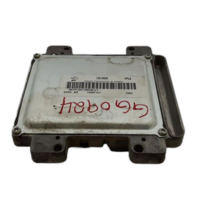
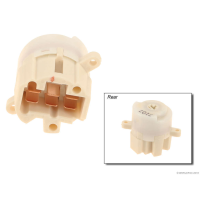
Below are the parts most often responsible for code P0890, ranked by how frequently each one is the actual culprit (per the diagnosis above). Tap any to see what we have for your vehicle.



The information in this article is provided for general reference and educational purposes only. Vehicle specifications, procedures, and part compatibility can vary by production date, trim level, and region. Always consult your vehicle's factory service manual and verify part numbers before purchasing or performing repairs. Safety-critical components such as airbags, seat belts, and braking systems should be installed by a qualified professional.
- 🧭 Diagnostic Flowchart
- 🛍️ Shop This Part
- What Does P0890 Mean?
- Can I Drive With P0890?
- Common Causes
- Symptoms
- Common Fixes & Costs
- DIY vs Professional
- Used vs. New Parts: Buying Guide
- What Happens If You Wait — Timeline
- Cost of Not Fixing It
- Diagnosis Steps
- When This Code Triggers (Freeze-Frame Conditions)
- Related Codes
- Climate & Environmental Factors
- How to Talk to a Mechanic About This Code
- Where to Take It: Dealer vs Independent vs Chain
- When to Walk Away From the Repair
- What Scan Tool You Need for This Code
- How to Clear the Code After You Fix It
- Will This Fail Emissions / State Inspection?
- Most Commonly Affected Vehicles
- Manufacturer-Specific Notes
- Real Owner Stories
- 2020 Subaru Ascent at 45K miles
- 2013 Nissan Altima with CVT at 110K miles
- 2006 Hyundai Sonata V6 at 130K miles
- How to Prevent This Code From Triggering
- Frequently Asked Questions
- Can a bad battery cause code P0890?
- Is it safe to drive my car with a P0890 code?
- How much does it cost to fix a P0890 code?
- Will clearing the code fix the problem?
- What is 'limp mode'?
- What is the most common misdiagnosis for P0890?
- Why does the P0890 code sometimes appear intermittently?
- Can I fix a P0890 code myself?
- Key Takeaways
- 🎟️ Get 5% Off