

P0894 on 2001-2004 Chevrolet Astro: Transmission Component Slipping Causes and Fixes
On a 2001-2004 Chevy Astro, code P0894 almost always indicates a problem with the torque converter clutch (TCC) system inside the 4L60E transmission. The most common causes are a failing torque converter, a worn TCC regulator valve in the valve body, or a bad TCC solenoid. This is a serious code that requires immediate attention to avoid complete transmission failure, as continued driving generates excessive heat and debris.
- P0894 on your Astro is a serious transmission code indicating component slippage, most often the torque converter clutch.
- Do not continue to drive the vehicle, as you risk severe and expensive damage to the entire transmission.
- The most common culprits are a worn-out torque converter, a faulty TCC solenoid, or a worn TCC regulator valve bore in the valve body.
- Diagnosis requires a scan tool that can read live transmission data to confirm TCC slip speed.
- This is not a DIY-friendly repair for most people and should be handled by a qualified transmission shop.
What's Unique About the 2001-2004 Chevrolet ASTRO
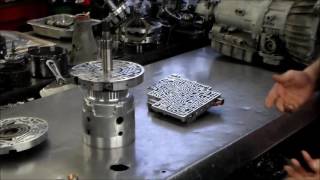
The 2001-2004 Astro uses the GM 4L60E automatic transmission. While generally robust, a known weakness in this transmission family is wear in the valve body, specifically the bore for the TCC regulator valve. This wear allows hydraulic pressure to leak, preventing the torque converter clutch from applying firmly, which directly leads to the slippage detected by the P0894 code. 🎬 Watch: A professional diagnosis of the P0894 slip code. While GM issued a TSB (01-07-30-023B) indicating the valve body was revised after January 15, 2000, to prevent this wear, field experience shows the issue can still occur in high-mileage 2001+ vehicles. This code is often seen with P1870, which is the earlier GM-specific code for the same slippage fault.
Diagnostic Flowchart
Tap your situation to follow the diagnostic path that matches what you're seeing on this vehicle.
Symptoms You May Notice
- Check Engine Light is on
- Harsh or abrupt 1-2 shift (The TCM commands max line pressure to prevent further damage when slip is detected)
- Transmission slipping (engine RPMs flare up without an increase in speed, especially at highway speeds)
- Shuddering or vibration at highway speeds when TCC lockup is attempted
- Transmission overheating, potentially triggering a warning light
- Inability to shift into or out of a certain gear (limp mode)
- Reduced fuel economy
- Higher than normal RPMs when cruising on the highway
- Replacing the entire transmission when only a valve body repair or TCC solenoid was needed.
- Replacing the TCC solenoid when the actual problem is a worn valve body bore, leading to the code returning.
- Replacing the torque converter without inspecting/repairing a worn valve body, which will starve the new converter of apply pressure and cause a repeat failure.
Most Likely Causes
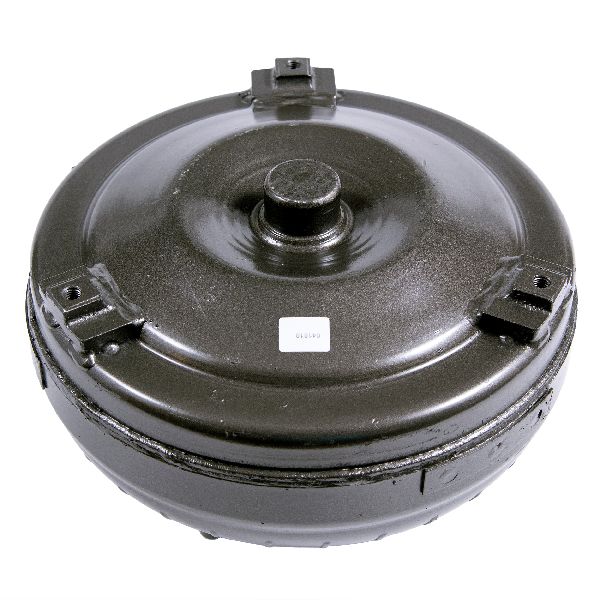
- Failing Torque Converter / Torque Converter Clutch (TCC) 🔴 High Probability → Shop Automatic Transmission Torque Converter The friction material on the TCC can wear out or break apart over time, preventing it from locking up and causing slip. This is a common failure point on high-mileage 4L60E transmissions. Debris from the failed clutch can contaminate the entire transmission.
How to confirm: A professional scan tool can monitor the 'TCC Slip Speed' in real-time. If the slip is over 100-200 RPM when the TCC is commanded on, the clutch is failing. Burnt-smelling fluid or excessive metallic/clutch debris in the transmission pan are also strong indicators.
Typical fix: Replace the torque converter. This requires removing the transmission from the vehicle. The transmission cooler and lines must be thoroughly flushed to remove debris from the old converter.
Est. part cost: $150-$400 - Worn TCC Regulator Valve Bore in Valve Body 🔴 High Probability → Shop Transmission Valve Body The constant oscillation of the steel TCC regulator valve wears out its bore in the aluminum valve body, causing a hydraulic pressure leak that prevents the TCC from applying correctly. This is a well-documented primary cause for P0894 and P1870 on the 4L60E.
How to confirm: This is difficult to confirm without disassembly. A transmission specialist can perform a vacuum test on the valve body to check for leaks. It is often diagnosed after the TCC solenoid has been ruled out. High TCC command percentage on a scan tool with continued high slip RPM points to a hydraulic/mechanical issue like this.
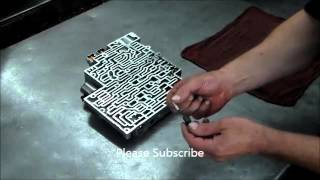
Typical fix: The valve body must be removed. A technician can ream the worn bore and install an oversized valve and sleeve kit (e.g., Sonnax 77754-04K). Alternatively, a remanufactured valve body can be installed. 🎬 See this quick tip for inspecting the valve body.
Est. part cost: $50-$150 for a repair kit, $250-$450 for a remanufactured valve body. - Faulty TCC Solenoid (PWM) 🟡 Medium Probability → Shop Transmission Valve Body The solenoid (part of the internal wiring harness) that controls the flow of fluid to apply the TCC can fail electrically or, more commonly, the plastic body can develop hairline cracks, causing pressure loss. The older brown plastic design was particularly prone to this.
How to confirm: A scan tool can command the solenoid on and off to check for a response (an RPM drop or engine stall at idle). The solenoid's resistance can be tested with a multimeter (typically 10-11 ohms). A visual inspection for cracks is crucial.
Typical fix: Replace the TCC solenoid. The OEM part is often integrated with the harness. This is located inside the transmission oil pan and is accessible after removing the pan and filter. 🎬 Watch: How to replace the TCC and shift solenoids.
Est. part cost: $40-$80 - Low or Burnt Transmission Fluid ⚪ Low Probability → Shop Transmission Assembly
How to confirm: Check the transmission fluid level and condition using the dipstick. The fluid should be at the correct level, red in color, and not have a burnt smell.
Typical fix: If low, top off with the correct fluid (DEXRON-III/VI compatible) and inspect for leaks. If the fluid is dark or burnt, a fluid and filter change is needed, but this is a symptom and will not fix the underlying cause of the slippage.
Est. part cost: $50-$150 for fluid and filter.
Rare But Worth Checking
- Worn Internal Transmission Components: → Shop Transmission Assembly If slip speeds are very high (over 250-400 RPM), it could indicate a failing internal clutch pack or band, not just the TCC. This points to a more severe internal failure requiring a rebuild.
- Plugged TCC Apply Fluid Orifice: Debris can clog the small orifice in the transmission pump that feeds fluid to the TCC, causing a slip condition. This is mentioned in GM service information as a possible cause, especially on low-mileage vehicles.
- Worn Stator Support Bushing: A worn bushing on the stator support shaft (part of the pump) can cause a significant loss of fluid pressure to the torque converter, preventing TCC lockup and setting P0894. This requires transmission removal to inspect and repair.
Diagnosis Steps
- Check the transmission fluid level and condition. Address any low fluid levels or burnt fluid first. Burnt fluid indicates excessive heat from slipping components.
- Use a professional scan tool to read the trouble codes and view live transmission data.
- Monitor 'TCC Slip Speed' while driving at a steady cruise (above 45 mph). The TCM should command the TCC 'ON'. If the slip speed is consistently above 50-100 RPM, a slip is confirmed.
- If a slip is confirmed, drop the transmission pan and inspect for excessive metal shavings or clutch material. A pan full of debris points to torque converter or internal clutch failure.
- Inspect and test the TCC PWM solenoid. Check for cracks in the plastic housing. Test resistance with a multimeter (should be ~10-11 ohms). Use the scan tool to command it on/off and listen for a click.
- If the solenoid and fluid are good, the next most likely causes are the valve body or the torque converter itself.
- Inspect the valve body for scoring or wear in the TCC regulator valve bore. A transmission shop can perform a vacuum test to confirm leaks.
- If the valve body and solenoids are in good condition, the torque converter is the most likely point of failure. Also consider rare causes like a worn stator support bushing if the transmission is removed.
Parts You'll Likely Need
- Torque Converter — This is a very common cause of significant TCC slippage. The internal clutch lining wears out or delaminates, requiring replacement of the entire unit.
Trusted brands: ACDelco, Transtar, Luk, Precision of New Hampton
OEM price range: $250-$450
Aftermarket price range: $150-$300 - TCC Regulator Valve Repair Kit
(OEM #Sonnax 77754-04K)— Fixes the common issue of a worn valve body bore, which causes a pressure leak and prevents the TCC from locking up properly. This specific Sonnax kit is a widely recognized solution.
Trusted brands: Sonnax, TransGo
OEM price range: N/A
Aftermarket price range: $50-$150 - TCC Lock-Up Solenoid (PWM)
(OEM #24227792)— This solenoid controls the application of the TCC. It can fail electrically or develop cracks in its housing, causing pressure loss. It's a common replacement part when diagnosing TCC issues.
Trusted brands: ACDelco, Rostra
OEM price range: $40-$80
Aftermarket price range: $25-$50
Related Codes That Often Appear With This One
- P1870 — P1870 is a GM-specific code for 'Transmission Component Slipping.' It is the predecessor to the generic P0894 and is set for the exact same reasons, particularly a worn TCC regulator valve bore. The two codes are frequently mentioned together in technical service bulletins.
- P0741 — This code means 'Torque Converter Clutch Circuit Performance or Stuck Off.' It is more specific to the TCC electrical circuit and solenoid, but can appear with P0894 if the slip is caused by a complete failure of the TCC to apply.
Technical Service Bulletins (TSBs) & Recalls
- PIP5340A: Instructs technicians to contact GM Technical Assistance when P0894 or P1870 is found, especially after a transmission or torque converter replacement, on Astro/Safari and other models. This highlights it as a known, complex issue.
- 08-07-30-008B: Provides diagnostic information for P0894/P1870, suggesting causes like a cracked TCC solenoid, plugged pump orifice, or a stuck converter clutch valve. It notes slip speeds of 100-400 RPM usually point to TCC apply issues.
- 01-07-30-023B: Discusses P1870 on pre-2000 vehicles caused by TCC regulator valve bore wear. It states that valve bodies were revised after Jan 15, 2000, to prevent this wear, though field experience shows it can still happen.
Platform-Specific Known Issues
- Owner Experience: The Slippery Slope of P0894: On PerformanceTrucks.net, a user describes getting a P0894 code where RPMs flare up about 200 RPM with light throttle at cruising speeds. This is a classic symptom of TCC slip. Another user suggests checking for an incorrectly installed valve in the valve body if a shift kit (like TransGo) was previously installed.
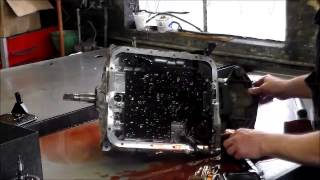
- Technician Diagnosis: Beyond the Usual Suspects: A YouTube video by a transmission specialist shows a case where a P0894 code returned after a valve body modification. The ultimate cause was a severely worn front stator support bushing inside the transmission pump, which caused a major loss of converter charge pressure. This is a less common but critical failure point that requires transmission removal to fix.
Mechanic-Grade Diagnostic Values
- TCC PWM Solenoid Resistance — expected: 10 - 11 Ohms at 68°F (20°C). Failure: An open circuit (infinite resistance) or a short (zero resistance) indicates a failed solenoid.
- 1-2 and 2-3 Shift Solenoid Resistance — expected: 20 - 40 Ohms at 68°F (20°C). Failure: Readings outside this range suggest a faulty shift solenoid, which can sometimes be misdiagnosed as a TCC issue.
- Live Data TCC Slip Speed — expected: Under 50 RPM when TCC is commanded to lock.. Failure: Slip speeds consistently over 100 RPM indicate a definite slip. Speeds below 250 RPM often point to a TCC apply issue (solenoid, valve body), while speeds over 250 RPM may indicate a more severe internal clutch or band failure.
Scan Tool Commands That Help
- Tech 2 / GDS2 or equivalent professional scan tool: TCC Solenoid Command (On/Off or Duty Cycle %) — This bidirectional control is crucial for diagnosis. A technician can command the TCC solenoid ON at idle (in gear, with the brake applied) to see if it causes the engine to bog down or stall, confirming the solenoid and converter clutch are capable of applying. It's also used during a road test to manually lock the converter and observe slip RPMs.
Wiring & Ground Locations
- PCM (Powertrain Control Module) — Under the hood, next to the battery on the driver's side.. The PCM controls the TCC PWM solenoid by providing a ground path. A poor connection at the PCM or a faulty module can prevent proper TCC operation.
- TCC PWM Solenoid — Inside the transmission oil pan, mounted on the valve body. It is identifiable by its gray electrical connector.. This is the component being directly controlled to apply the torque converter clutch. Accessing it requires dropping the transmission pan.
- G103 - Engine Block Ground — On the lower right (passenger) side of the engine block, near the crankshaft position sensor.. This is a primary battery-to-engine block ground. A poor connection here can cause a variety of electrical issues for engine and transmission sensors and actuators, potentially affecting PCM operation and solenoid control.
- Transmission Case Connector — On the passenger side of the 4L60E transmission case. It is a large, round, 20-pin connector.. This is the main electrical interface for all internal transmission solenoids. The TCC PWM solenoid signal from the PCM passes through Pin U of this connector. Testing for voltage and resistance is often done at this connector to diagnose the external harness vs. internal components.
Real Owner Repair Stories
- GMTNation forum user (1998 Chevrolet Camaro (with 4L60E, applicable to Astro)) — Extremely harsh 1-2 shifts, TCC failing to lock or cycling on and off, especially when the fluid was warm.
❌ Tried (didn't work) Initial diagnosis was difficult as the P1870 code (functionally identical to P0894) was not always present despite the symptoms.
✅ What actually fixed it Installation of a TransGo SK-4L60E shift kit, which specifically addresses the worn TCC valve bore in the valve body. After the kit was installed, the harsh shifts stopped and the TCC locked perfectly every time, feeling like a '5th gear' shift. - YouTube video by 'Ark' (GM vehicle with 4L60E transmission) — P1870 code due to TCC failing to fully lock.
❌ Tried (didn't work) The user wanted to avoid the complex task of removing the entire valve body, which is the standard procedure.
✅ What actually fixed it The user demonstrated a method to replace the TCC regulator valve with a Fitzall or similar repair valve *without* removing the valve body from the transmission. This involved bending the retaining clip from below to extract the old valve and install the new one. The user reported the fix was still working flawlessly after 10,000 miles.
OEM Part Supersession History
24212690→24227792— Part update/revision by GM for the TCC PWM Solenoid.
Heads up: Part 24227792 is the widely recognized replacement for many 4L60E applications from 1996 and up, serving as the TCC PWM solenoid.
Model Year Variations Within This Range
- 2001-2004: According to GM and ATRA documentation, the 4L60E valve body was revised for vehicles built after January 15, 2000, specifically to prevent the TCC regulator valve bore wear that commonly causes P1870/P0894. While this revision was intended to solve the problem, high-mileage vehicles from the 2001-2004 range are still frequently diagnosed with this exact issue, suggesting the fix reduced but did not eliminate the problem.
Helpful Videos


We Have This Part in Stock

The information in this article is provided for general reference and educational purposes only. Vehicle specifications, procedures, and part compatibility can vary by production date, trim level, and region. Always consult your vehicle's factory service manual and verify part numbers before purchasing or performing repairs. Safety-critical components such as airbags, seat belts, and braking systems should be installed by a qualified professional.
- Chevrolet ASTRO:
- 🧭 Diagnostic Flowchart
- 🎬 Helpful Videos
- 🛍️ Shop This Part
- What's Unique About the 2001-2004 Chevrolet ASTRO
- Symptoms You May Notice
- Most Likely Causes
- Rare But Worth Checking
- Diagnosis Steps
- Parts You'll Likely Need
- Related Codes That Often Appear With This One
- Technical Service Bulletins (TSBs) & Recalls
- Platform-Specific Known Issues
- Mechanic-Grade Diagnostic Values
- Scan Tool Commands That Help
- Wiring & Ground Locations
- Real Owner Repair Stories
- OEM Part Supersession History
- Model Year Variations Within This Range
- 🎟️ Get 5% Off