

P0894 on 2000-2007 Chevrolet Silverado 2500: 4L80-E Transmission Slipping Causes and Fixes
P0894 means the transmission is slipping, most often the torque converter clutch. On a Silverado 2500 with the 4L80-E, this is frequently caused by a worn TCC regulator valve bore in the valve body or a failed TCC solenoid. A valve body repair kit (e.g., Sonnax) or solenoid replacement can fix it for $400-$800. Ignoring it risks a full transmission rebuild costing thousands.
- P0894 indicates a serious internal transmission slip that should be addressed immediately to avoid catastrophic failure.
- On the Silverado 2500 with a 4L80-E, the most common culprits are a worn TCC regulator valve bore in the valve body or a failed TCC solenoid.
- Do not continue to drive with this code. The transmission will often go into a high-pressure 'limp mode' causing harsh shifts, and continued slipping will generate excessive heat, destroying the transmission.
- Diagnosis requires a professional scan tool to monitor TCC slip. Simply replacing parts without proper diagnosis can be a waste of money.
- Check the transmission fluid first. If it's low, there's a leak. If it's dark and burnt, severe internal damage has likely already occurred.
What's Unique About the 2000-2007 Chevrolet SILVERADO 2500

The 2000-2007 Silverado 2500 typically uses robust transmissions like the 4L80-E or the Allison 1000. While durable, the 4L80-E is particularly known for a design issue where the steel TCC regulator valve constantly oscillates and wears its bore inside the aluminum valve body. This wear creates a hydraulic leak, preventing the full pressure needed to apply the TCC, causing slippage and triggering P0894. 🎬 Watch: Diagnosing P0894 slip codes on the 4L80-E This can happen even if the torque converter and solenoid are perfectly fine, making valve body wear a primary and often misdiagnosed cause on these trucks. Aftermarket companies like Sonnax produce specific kits to repair this worn bore.
Diagnostic Flowchart

Tap your situation to follow the diagnostic path that matches what you're seeing on this vehicle.
Generation note: This range covers the first generation GMT800 (2000-2006 and 2007 'Classic') and the start of the second generation GMT900 (2007). Both generations used transmissions like the 4L80-E and Allison 1000. The underlying causes for P0894, especially the TCC regulator valve bore wear in the 4L80-E, are consistent across these models as the core transmission architecture is similar.
Symptoms You May Notice

- Check Engine Light is on
- Harsh or erratic shifting, especially a hard 1-2 shift after the code sets (due to max line pressure command)
- Transmission slipping (engine RPMs flare up without an increase in speed)
- Failure of the torque converter to lock up at highway speeds, or a shudder during lockup attempts
- Transmission overheating warning light or higher than normal temperatures on the gauge
- Delayed engagement when shifting into Drive or Reverse
- Vehicle may enter 'limp mode,' getting stuck in one gear (often 2nd or 3rd)
- A noticeable drop in fuel economy due to lack of TCC lockup
- Replacing only the torque converter without addressing valve body wear. If the TCC regulator valve bore is worn, a new converter will continue to slip due to low apply pressure, and the P0894 code will return.
- Replacing only the TCC solenoid when the valve body bore is the actual cause of the pressure loss.
Most Likely Causes

- Worn Torque Converter Clutch (TCC) Regulator Valve Bore in Valve Body 🔴 High Probability → Shop Automatic Transmission Torque Converter The valve body bore for the TCC regulator valve is a well-documented wear point in 4L80-E transmissions. Constant valve oscillation wears the bore, leaking hydraulic pressure needed to apply the TCC, causing slippage and setting P0894 or P1870.
How to confirm: A technician can perform a pressure test on the TCC circuit. A more definitive method is to remove the valve body and vacuum test the TCC regulator valve bore. A professional scan tool can also show the TCC duty cycle being commanded to max (e.g., 99%) while TCC slip RPM remains high, indicating a pressure loss.
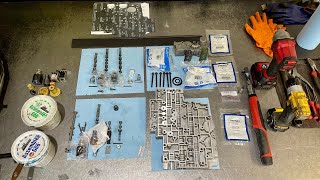
Typical fix: The valve body is removed. The worn bore is reamed and an oversized valve and sleeve kit is installed to restore hydraulic integrity. A common repair kit is the Sonnax 34994-01K.
Est. part cost: $60-$150 for a Sonnax reaming kit, or $300-$500 for a remanufactured valve body. - Failed Torque Converter Clutch (TCC) Solenoid 🟡 Medium Probability → Shop Automatic Transmission Torque Converter The TCC solenoid is an electronic component that can fail electrically (open/short) or mechanically (cracked housing, stuck plunger) over time, preventing proper TCC lockup.
How to confirm: A scan tool can command the solenoid on and off to check its operation; an audible click should be heard from the pan. The solenoid's resistance can be tested with a multimeter (should be 10-15 ohms). A more advanced test involves checking the amperage draw while commanding it on, which should be around 1 amp.
Typical fix: Drop the transmission pan, unplug and unclip the old solenoid, and install a new one. This is often done along with a fluid and filter change.
Est. part cost: $40-$90 for an ACDelco part. - Low or Burnt Transmission Fluid 🟡 Medium Probability → Shop Transmission Assembly Leaks from cooler lines, pan gaskets, or seals can lead to low fluid levels. Low fluid reduces hydraulic pressure, causing slipping and overheating, which degrades the fluid and accelerates wear.
How to confirm: Check the transmission fluid level and condition with the engine running and the transmission warm, following the owner's manual procedure. Fluid should be reddish-pink and clear, not brown, black, or smelling burnt. Burnt fluid indicates excessive heat from slipping components.
Typical fix: If low, top off with the correct fluid (DEXRON-VI is backward compatible for most) and inspect for leaks. If the fluid is burnt, it's a symptom of internal wear, and a simple fluid change is unlikely to be a permanent fix. A full diagnosis is required.
Est. part cost: $60-$150 for fluid. - Worn/Failed Torque Converter ⚪ Low Probability → Shop Automatic Transmission Torque Converter While robust, the internal lock-up clutch lining can delaminate and fail, especially under heavy towing or high mileage. This failure contaminates the entire transmission and coolers with debris, often requiring a full rebuild.
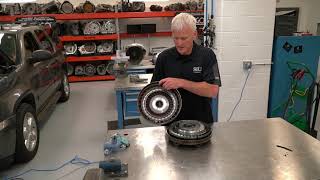
How to confirm: Diagnosed by monitoring TCC slip speed with a scan tool, which will be very high (500+ RPM) when lockup is commanded. A YouTube video by 'siu automotive' shows a cut-open converter from a 2006 Silverado 2500 with P0894 where the friction material had completely broken off. Finding significant metal or clutch material in the pan is a strong indicator.
Typical fix: The transmission must be removed to replace the torque converter. If the converter has failed internally, a full transmission rebuild or replacement is mandatory to clean out the debris and prevent immediate failure of the new parts. The transmission cooler must also be professionally flushed or replaced.
Est. part cost: $300-$700 for a quality remanufactured converter, plus thousands for a rebuild.
Rare But Worth Checking
- Damaged TCC Solenoid Wiring: → Shop Transmission Valve Body One owner on PerformanceTrucks.net found that an exposed wire for the TCC solenoid was shorting to ground intermittently, causing lock-up issues and the P0894 code. A simple repair with electrical tape fixed the issue.
- Loss of Prime in Transmission Pump: → Shop Transmission Assembly TSB #PIP4379N suggests that in some cases, especially in cold weather, the transmission pump can lose its prime after sitting. This leads to delayed engagement, low line pressure, and can set a P0894 among many other codes.
- Plugged TCC Apply Fluid Orifice: GM diagnostic information mentions that a plugged or restricted TCC apply fluid orifice in the pump can cause P0894, especially on low-mileage vehicles where debris from manufacturing may be present.
Diagnosis Steps
- Check the transmission fluid level and condition. Ensure the level is correct and the fluid does not look or smell burnt.
- Scan the TCM for all stored trouble codes. Note any other codes present, especially P0700 or P1870.
- Using a professional scan tool, monitor live data while driving. Focus on Engine RPM, Transmission Input Speed, Output Speed, TCC Commanded Duty Cycle (%), and Torque Converter Clutch (TCC) Slip Speed (RPM).
- At a steady cruise above 45 mph, observe if the TCC Duty Cycle is commanded on (e.g., rises above 50%). When commanded, the TCC Slip Speed should drop to below 50-100 RPM. If it stays high (e.g., 200+ RPM), the slip is confirmed.
- If slip is confirmed, drop the transmission pan and inspect for excessive metal debris. A small amount of fine gray material is normal, but large flakes, chunks of clutch material, or a 'glitter bomb' appearance indicates severe internal damage, likely from the torque converter.
- If the pan is relatively clean, test the TCC solenoid. Check resistance (10-15 Ohms). Use the scan tool to command it on/off and listen for a click. Check for ~1 amp current draw when commanded on.
- If the solenoid and wiring are good, the next most likely cause is a worn TCC regulator valve bore in the valve body. This requires removing the valve body for inspection or vacuum testing.
- If significant debris is found in the pan, a full transmission rebuild and torque converter replacement is required.
Parts You'll Likely Need
- Torque Converter Clutch (TCC) PWM Solenoid
(OEM #24227792 (ACDelco D24227792) or 24210864 are commonly cited part numbers, verify by VIN.)— This solenoid controls fluid flow to engage the TCC. It's a common failure point that can crack or fail electrically, preventing lockup and causing slippage codes.
Trusted brands: ACDelco, Bosch, Rostra
OEM price range: $50-$90
Aftermarket price range: $30-$70 - TCC Regulator Valve Repair Kit
(OEM #Sonnax 34994-01K (Standard) or 34994-18K (Oversized))— This kit addresses the primary design flaw in the 4L80-E valve body. It includes an improved, hard-anodized valve and sometimes a reaming tool to fix the worn bore, restoring hydraulic pressure for the TCC.
Trusted brands: Sonnax
OEM price range: N/A (Repair Kit)
Aftermarket price range: $60-$150 - Torque Converter — If the internal lock-up clutch has failed and shed its friction material, the converter must be replaced. This failure contaminates the entire system, necessitating a transmission rebuild.
Trusted brands: ACDelco (Remanufactured), Precision of New Hampton, Transtar
OEM price range: $400-$800
Aftermarket price range: $250-$600
Related Codes That Often Appear With This One
- P0700 — P0700 is a generic code indicating the Transmission Control Module (TCM) has requested the Check Engine Light be turned on. It almost always accompanies specific transmission codes like P0894 to alert the driver of a transmission-related fault.
- P1870 — This is an older GM-specific code for 'Transmission Component Slipping.' For many years, it was the primary code for TCC slip. TSBs often group P0894 and P1870 together as they point to the same fault, with P0894 being the more common OBD-II generic equivalent.
Technical Service Bulletins (TSBs) & Recalls
- PIP5340 / PIP5340A: Links P0894 and P1870, advising to contact GM technical assistance if these codes appear after a transmission or converter replacement, suggesting a known complex issue.
- PIP4379N: Mentions P0894 as one of many codes that can be set due to a loss of pump prime, especially in cold weather, leading to delayed engagement and low pressure.
- General Diagnostic Bulletins (e.g., 02-07-30-001A, 06-07-30-007A): Provide diagnostic trees for P0894/P1870, discussing causes like cracked TCC solenoids, stuck converter clutch valves, and plugged orifices.
Platform-Specific Known Issues
- YouTube Diagnosis: GM 4l80 Transmission TCC P0894: → Shop Transmission Assembly A highly detailed diagnostic video by 'siu automotive' on a 2006 Chevrolet Silverado 2500 with a 4L80-E and code P0894. The technician uses a scan tool to show the TCC slip at over 500 RPM while being commanded on. After confirming the TCC solenoid is electrically sound, he removes the transmission and cuts the torque converter open, revealing the friction lining has completely broken apart. This is a definitive, visual confirmation of a catastrophic torque converter failure as a cause for P0894.
Mechanic-Grade Diagnostic Values
- TCC Slip Speed (Scan Tool) — expected: < 50 RPM when TCC is commanded locked at cruise.. Failure: Slip speed remains high (>100-200 RPM) when TCC duty cycle is commanded high (e.g., >75%). A reading of 500+ RPM indicates a severe slip.
- 4L80-E TCC Solenoid Current Draw — expected: Approx. 1 Amp change when commanded ON vs OFF.. Failure: Little to no change in current indicates a failed solenoid or wiring issue. This test confirms the entire circuit's integrity.
- Allison 1000 TCC Solenoid (F Trim) Resistance — expected: 10.5 - 11.5 Ohms. Failure: Reading outside this range indicates a failed solenoid coil.
- Allison 1000 Shift Solenoid (SSC, SSD, SSE) Resistance — expected: 22.0 - 24.5 Ohms. Failure: Reading outside this range indicates a failed solenoid coil.
Scan Tool Commands That Help
- GM Tech2 / GDS2 or equivalent professional scanner (e.g., Snap-on, Autel): TCC Solenoid ON/OFF Command — Used to test the electrical integrity of the TCC solenoid and its wiring. While monitoring current draw at the IGN 0 fuse, command the solenoid on and off. A change of ~1 amp confirms the solenoid, wiring, and TCM driver are functioning electrically, helping to isolate the fault to a hydraulic or mechanical issue.
- GM Tech2 / GDS2: Transmission Data Display — Essential for viewing manufacturer-specific PIDs not on generic scanners, such as TCC slip speed, desired vs. actual line pressure, and individual clutch statuses. This is required for an accurate diagnosis of an internal slip.
Wiring & Ground Locations
- PCM Ground — A wire from the main harness connected to a bolt on the top of the engine block, typically on the passenger side for V8 engines.. A poor PCM ground on GMT800 trucks is a notorious cause of bizarre electrical issues and incorrect sensor readings. This can affect how the TCM interprets data and controls the transmission, potentially leading to false codes or erratic behavior.
- G104 / G102 — G104 is on the left rear of the engine block. G102 is on the side of the engine block. Their exact position can vary by engine.. These are primary engine-to-chassis grounds. Corrosion or looseness here can affect the entire engine management system, including the TCM and its sensor inputs.
- Transmission Harness Connector — The main round connector on the passenger side of the transmission case (4L80-E).. This is the primary interface for all electronic controls. Check for corrosion, bent pins, or fluid intrusion from a leaking internal harness seal, which can directly disrupt TCC solenoid commands.
Real Owner Repair Stories
- YouTube channel 'siu automotive' (2006 Chevrolet Silverado 2500 with 4L80-E transmission, ~70,000 miles) — P0894 - Transmission Component Slipping
❌ Tried (didn't work) An electrical test of the TCC solenoid circuit was performed and it passed. Using a scan tool to command the solenoid on/off while measuring amperage at the fuse block showed a correct current draw of ~1 amp, ruling out a simple electrical failure of the solenoid or wiring.
✅ What actually fixed it The torque converter had failed internally. The technician cut the converter open, revealing that the TCC friction lining had broken and delaminated. This created a massive hydraulic leak when lockup was commanded, preventing pressure from applying the clutch and causing the high slip RPMs. The fix required replacing the torque converter and thoroughly flushing the transmission and coolers of debris.
OEM Part Supersession History
24212690→24227792— Standard part revision/update by the manufacturer.
Heads up: The new part number (24227792) is the correct service replacement for the 4L80-E TCC PWM Solenoid.
Model Year Variations Within This Range
- 2001-2005 vs 2006-2007 (Allison 1000): The Allison 1000 transmission was a 5-speed from 2001-2005. In 2006, it was updated to a 6-speed. This changes internal clutch logic and may affect diagnostic strategies.
- 2001-2003 vs 2004-2005 (Allison 1000): The valve body solenoid count changed. 2001-2003 models have six solenoids. 2004-2005 models have seven solenoids, with the addition of a 'G' solenoid used to reduce pump noise at a standstill. This is a critical difference when ordering valve body parts or solenoids.
Helpful Videos

The information in this article is provided for general reference and educational purposes only. Vehicle specifications, procedures, and part compatibility can vary by production date, trim level, and region. Always consult your vehicle's factory service manual and verify part numbers before purchasing or performing repairs. Safety-critical components such as airbags, seat belts, and braking systems should be installed by a qualified professional.
- Chevrolet SILVERADO 2500:
- 🧭 Diagnostic Flowchart
- 🎬 Helpful Videos
- What's Unique About the 2000-2007 Chevrolet SILVERADO 2500
- Symptoms You May Notice
- Most Likely Causes
- Rare But Worth Checking
- Diagnosis Steps
- Parts You'll Likely Need
- Related Codes That Often Appear With This One
- Technical Service Bulletins (TSBs) & Recalls
- Platform-Specific Known Issues
- Mechanic-Grade Diagnostic Values
- Scan Tool Commands That Help
- Wiring & Ground Locations
- Real Owner Repair Stories
- OEM Part Supersession History
- Model Year Variations Within This Range
- 🎟️ Get 5% Off