

P0894 on 1999-2003 GMC Savana: Transmission Component Slipping Causes & Fixes
P0894 on a 1999-2003 GMC Savana indicates internal transmission slipping, most often related to the torque converter clutch (TCC). The most common cause is a worn TCC regulator valve bore in the valve body, a known issue on the 4L60E/4L80E transmissions. This can often be fixed with a valve body repair kit, like the Sonnax 77754-04K, but may also require a new torque converter if the clutch is worn out. Ignoring the code leads to severe transmission damage.
- P0894 on a 1999-2003 Savana means the transmission is slipping, and the most likely culprit is the torque converter clutch system.
- The root cause is very often a worn TCC regulator valve bore in the transmission valve body, a known weakness in the 4L60E/4L80E transmissions.
- Do not continue to drive with this code. The slipping generates intense heat that can lead to complete transmission failure.
- A proper diagnosis is critical. Simply replacing the torque converter without inspecting the valve body may lead to a repeat failure.
- The fix can range from a relatively inexpensive TCC solenoid replacement or valve body repair kit to a much more costly torque converter replacement or transmission rebuild.
What's Unique About the 1999-2003 Gmc SAVANA
The 1999-2003 GMC Savana uses the 4L60E or the heavy-duty 4L80E automatic transmission. Both are known for a specific design flaw where the steel TCC regulator valve constantly oscillates and wears out the softer aluminum bore inside the valve body. This wear creates a hydraulic leak, preventing the torque converter clutch from applying with enough force, which causes the slip detected by the computer. This issue is so common that it also triggers the closely related GM-specific code P1870, which presents with the same symptoms like harsh 1-2 shifts after the transmission warms up. The provided TSB #PIP5340A specifically links P0894 and P1870 on these vans, pointing to this shared, well-documented root cause.
Diagnostic Flowchart
Tap your situation to follow the diagnostic path that matches what you're seeing on this vehicle.
Symptoms You May Notice
- Check Engine Light is on
- Harsh or delayed gear shifts, especially the 1-2 shift after the vehicle has warmed up.
- Sensation of the transmission slipping or engine RPM flaring between gears.
- Shuddering or trembling at highway speeds when the torque converter should be locked.
- Engine RPMs rise slightly (around 200 RPM) at cruise speed with light throttle, but the vehicle doesn't accelerate.
- Transmission overheating, which can cause fluid to be pushed out of the fill tube.
- Poor fuel economy.
- Vehicle may enter "limp mode," getting stuck in one gear (often 3rd).
- Replacing only the torque converter without addressing valve body wear. If the TCC regulator bore is worn, the new converter will soon fail from the same low-pressure condition.
- Replacing only the TCC solenoid when the valve body bore is the real problem. The new solenoid cannot fix a hydraulic leak caused by a worn bore.
- Performing a transmission flush. A flush will not repair the mechanical wear in the valve body or the worn-out torque converter clutch and is not a solution for this code.
Most Likely Causes
- Worn TCC Regulator Valve Bore in Valve Body 🔴 High Probability → Shop Transmission Valve Body This is a well-documented design issue in 4L60E and 4L80E transmissions. The steel valve wears the softer aluminum valve body bore, causing a pressure leak that prevents the TCC from applying correctly. This is the most common cause of P0894 and P1870 on this platform.
How to confirm: A technician can perform a hydraulic pressure test on the TCC circuit or, more definitively, remove the valve body and vacuum test the TCC regulator valve bore. A failing bore will not hold a vacuum, with readings below 15 in-Hg indicating significant wear.
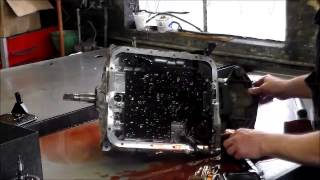
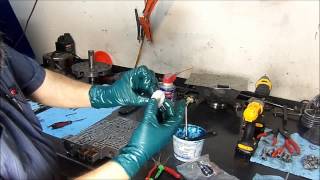
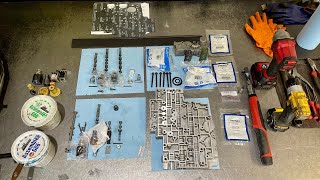
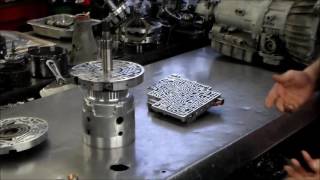
Typical fix: The valve body bore must be reamed and an oversized valve and sleeve kit installed. The most common kit is from Sonnax. For the 4L60E, use kit 77754-04K. 🎬 See how to fix the valve body for code P1870 For the 4L80E, use kit 34994-01K. 🎬 Watch: 4L80E valve body assembly and repair walkthrough Alternatively, a remanufactured valve body with these updates can be installed.
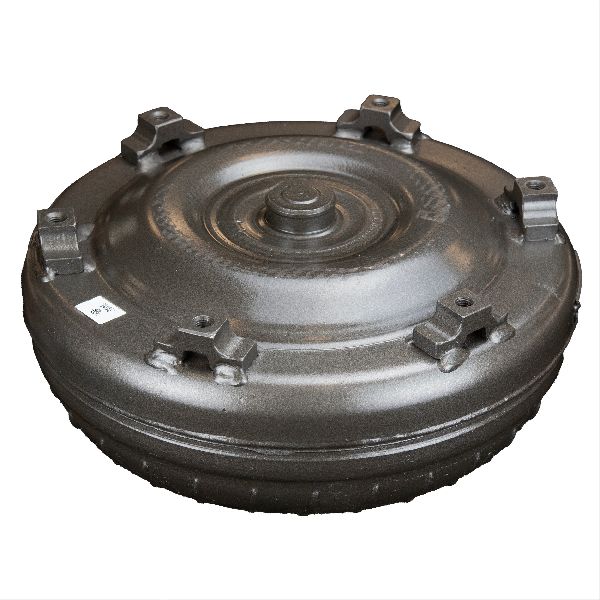
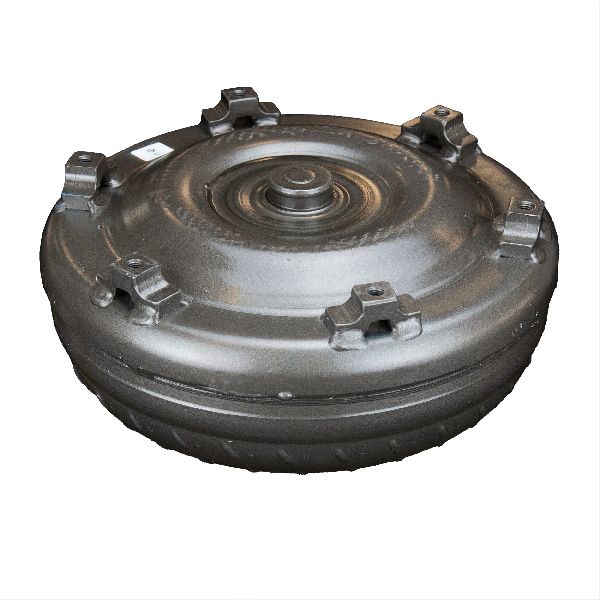
Est. part cost: $60-$150 for a repair kit, $250-$500 for a remanufactured valve body. - Failing Torque Converter / Worn Torque Converter Clutch (TCC) 🔴 High Probability → Shop Automatic Transmission Torque Converter If the TCC slips for an extended period due to low pressure (from valve body wear) or other issues, its friction material wears out or delaminates, leading to more severe slipping. This is often a secondary failure caused by the primary valve body issue.
How to confirm: Use a scan tool to monitor the TCC slip RPM when the clutch is commanded on. A slip of more than 50-100 RPM under light load indicates a problem. Finding significant metallic or friction material debris in the transmission pan is also a strong indicator.
Typical fix: The torque converter must be replaced. This requires removing the entire transmission. The transmission cooler and lines must be thoroughly flushed to remove debris. It is critical to also fix the root cause, such as valve body wear, to prevent the new converter from failing.
Est. part cost: $150-$400 - Faulty TCC PWM Solenoid 🟡 Medium Probability → Shop Transmission Valve Body The solenoid that controls the TCC can fail electrically or mechanically (e.g., a cracked plastic body), preventing it from properly regulating the hydraulic pressure to the clutch.
How to confirm: A technician can command the solenoid on and off with a scan tool while monitoring its amperage draw and the resulting pressure changes. The solenoid can also be removed and tested for resistance. The expected resistance for the TCC PWM solenoid is 10-11 ohms at 68°F (20°C).
Typical fix: Replace the TCC PWM solenoid, which is located on the valve body inside the transmission pan. A common part number is ACDelco 24227792. This is often done preventatively during a valve body service.
Est. part cost: $30-$80 - Low or Degraded Transmission Fluid ⚪ Low Probability → Shop Transmission Assembly While not a platform-specific issue, low fluid level reduces hydraulic pressure, which can cause slipping. Burnt or contaminated fluid indicates excessive heat and wear, often from the slipping TCC itself.
How to confirm: Check the transmission fluid level and condition. The fluid should be at the correct level, red in color, and not have a burnt smell.
Typical fix: Top off the fluid or perform a transmission fluid and filter change. This is a good first step but rarely solves P0894 on its own, as the code usually indicates a mechanical issue that has already developed.
Est. part cost: $50-$150
Rare But Worth Checking
- Worn Front Pump Stator Support Bushing: A worn bushing where the torque converter hub rides can cause a major leak of converter charge oil, leading to low pressure and TCC slip. A technician found this to be the ultimate cause after a valve body repair did not fix the code.
- Cracked TCC Piston in Torque Converter (4L80E): → Shop Automatic Transmission Torque Converter On the heavier-duty 4L80E transmission, a cracked torque converter clutch piston has been identified as a cause for P1870/P0894, leading to a loss of apply pressure.
Diagnosis Steps
- Check the transmission fluid level and condition. If low, top it off and check for leaks. If burnt, note this as a sign of internal damage.
- Use a professional scan tool to check for other transmission-related codes, especially P1870.
- Monitor live data with the scan tool. Drive the vehicle and observe the Torque Converter Clutch (TCC) slip speed when the TCC is commanded ON. A slip speed consistently above 50-100 RPM while the TCC solenoid duty cycle is high (e.g., >90%) strongly indicates a hydraulic/mechanical problem.
- If possible, command the TCC solenoid ON and OFF with the scan tool to test its electrical function and listen for a click.
- Drop the transmission pan to inspect for excessive metal or clutch material debris and to access the valve body. Significant debris points towards converter or clutch pack failure.
- Inspect and test the TCC PWM solenoid for proper resistance and physical damage like cracks. Resistance should be 10-11 Ohms at room temperature.
- If tools are available, test the TCC regulator valve bore in the valve body for wear using a vacuum tester. This is the most definitive step for diagnosing the common valve body issue.
- If the valve body and solenoids are confirmed to be good, the problem is likely the torque converter itself or another internal transmission leak (e.g., worn bushings or seals), requiring transmission removal.
Parts You'll Likely Need
- TCC Regulator Valve Repair Kit — This is the most common cause of P0894 on this platform. The kit allows a technician to ream the worn valve body bore and install an oversized valve to restore hydraulic integrity.
Trusted brands: Sonnax
OEM price range: N/A
Aftermarket price range: $60-$150 - Torque Converter — If the clutch inside the converter is worn out from prolonged slipping, the entire unit must be replaced. This is a common failure point and requires transmission removal.
Trusted brands: ACDelco, Luk, Yank
OEM price range: $300-$500
Aftermarket price range: $150-$300 - TCC PWM Solenoid
(OEM #24227792)— This solenoid controls the TCC apply pressure and can fail, causing the slip. It's often replaced preventatively during a valve body service.
Related Codes That Often Appear With This One
- P1870 — This is a GM-specific code for 'Transmission Component Slipping.' It has nearly identical causes to P0894 on these transmissions, often related to TCC valve body wear. The TSB PIP5340A explicitly groups these two codes together.
Technical Service Bulletins (TSBs) & Recalls
- PIP5340A: Links DTC P0894 and P1870 and directs technicians to contact GM Technical Assistance, indicating a known complex issue.
- 00-07-30-002B: Discusses P1870 and other slip codes, pointing towards valve body wear as a primary cause in 4L60E transmissions.
- 06-07-30-007A: A related TSB mentioned in forums for similar transmission issues, suggesting a pattern of known problems.
Platform-Specific Known Issues
- Real-World Repair Story: P1870 Fixed with Rebuilt Valve Body: → Shop Transmission Valve Body On Blazerforum.com, a user described the classic symptoms tied to P0894/P1870: hard 1-2 shifts that only appeared after driving for 30 minutes. After confirming the fluid was clean, they opted to replace the entire valve body with a remanufactured unit that already had the known TCC valve bore issue corrected. This fixed the problem without requiring a full transmission removal, confirming that addressing the valve body is the key to solving the code.
- Misdiagnosis and Repeat Failures: A user on a GM truck forum shared their frustration after a transmission shop first installed a valve body 'kit' which didn't solve their P1870 code. The shop then installed a full remanufactured valve body for free, but the problem persisted. This highlights that if the valve body fix doesn't work, the problem is likely a worn torque converter or another internal leak, and simply replacing the valve body again won't fix it. The next logical step is torque converter replacement.
Mechanic-Grade Diagnostic Values
- TCC PWM Solenoid Resistance (4L60E/4L80E) — expected: 10-11 Ohms at 68°F (20°C), or 10-15 Ohms depending on source.. Failure: An open circuit (infinite resistance) or a short (near zero resistance) indicates a failed solenoid.
- Scan Tool Live Data: TCC Slip Speed — expected: Under 50 RPM when TCC is commanded to lock.. Failure: Sustained slip speeds over 100 RPM when the TCC solenoid duty cycle is commanded high (e.g., >90%) confirms a mechanical or hydraulic slip.
- Valve Body Vacuum Test: TCC Regulator Bore — expected: A healthy bore should hold a vacuum of 18-20 in-Hg or more.. Failure: Readings below 15 in-Hg indicate significant bore wear requiring a reamed and sleeved repair.
Scan Tool Commands That Help
- GM Tech 2 / Professional Scan Tool: TCC Solenoid Duty Cycle Control — To manually command the TCC solenoid ON, OFF, or to a specific duty cycle while monitoring TCC slip speed. This helps isolate whether the solenoid is responding to commands from the PCM and how the transmission reacts, separating an electrical control issue from a hydraulic/mechanical one.
- GM Tech 2 / Professional Scan Tool: Transmission Output Controls / Solenoid Test — Allows a technician to individually command each shift solenoid and the TCC solenoid on and off while the vehicle is stationary (engine off, key on). Listening for an audible 'click' from the transmission pan for each command helps confirm the solenoid is mechanically actuating.
Wiring & Ground Locations
- Transmission Case Connector (Pin T) — The main round electrical connector on the passenger side of the transmission case.. Pin T is the circuit for the TCC PWM Solenoid. A technician can test resistance between Pin T and Pin E (12v+) to verify the solenoid's electrical integrity without dropping the pan.
- G103 (Ground) — On the right rear of the engine, sometimes on the cowl above the brake booster depending on the specific year and engine.. This is a primary ground location for the Powertrain Control Module (PCM). A poor connection here can cause erratic behavior from the PCM, including incorrect transmission control commands and false sensor readings.
- G102 (Ground) — Located at the left rear of the engine.. This ground is also used by the PCM. Ensuring it is clean and tight is a critical step in diagnosing any electronic control issues before condemning expensive components.
- TRANS Fuse 20 (10A) — In the underhood fuse block.. This fuse supplies ignition power to the transmission solenoids. While a blown fuse would likely cause more severe issues than just P0894, checking it is a fundamental first step in any electrical diagnosis.
Real Owner Repair Stories
- BAT Auto Technical Forum (1999 Chevy S-10 Blazer 4.3L (Uses 4L60E, same common issue)) — P1870 code, TCC slip over 150 RPM, fluid leaking from vent tube, trans temp at 205°F.
❌ Tried (didn't work) A previous owner had already installed a Transgo shift kit with a TCC regulator fix., The new owner installed a completely new valve body with a Sonnax reamed bore and valve kit., Forced the TCC to lock with a check ball in the solenoid; the engine did not stall, proving a major hydraulic leak was still present.
✅ What actually fixed it After dropping the transmission, the rear stator support bushing was found to be severely worn, with one oil groove completely gone. Replacing the worn stator bushing and the damaged input turbine shaft finally resolved the P1870 code and brought TCC slip back to normal levels.
Model Year Variations Within This Range
- 1999 vs. 2000-2003 (4L60E): Starting around 1999-2000, the 4L60E case design changed from a one-piece case to a two-piece case with a removable bellhousing. Later models (around 2000+) also received a deeper bellhousing and a longer 300mm input shaft to accommodate a larger, more durable torque converter. While internal components are similar, a complete transmission from a 1999 may not be a direct swap for a 2003 without addressing these differences.
Helpful Videos

We Have This Part in Stock

The information in this article is provided for general reference and educational purposes only. Vehicle specifications, procedures, and part compatibility can vary by production date, trim level, and region. Always consult your vehicle's factory service manual and verify part numbers before purchasing or performing repairs. Safety-critical components such as airbags, seat belts, and braking systems should be installed by a qualified professional.
- Gmc SAVANA:
- 🧭 Diagnostic Flowchart
- 🎬 Helpful Videos
- 🛍️ Shop This Part
- What's Unique About the 1999-2003 Gmc SAVANA
- Symptoms You May Notice
- Most Likely Causes
- Rare But Worth Checking
- Diagnosis Steps
- Parts You'll Likely Need
- Related Codes That Often Appear With This One
- Technical Service Bulletins (TSBs) & Recalls
- Platform-Specific Known Issues
- Mechanic-Grade Diagnostic Values
- Scan Tool Commands That Help
- Wiring & Ground Locations
- Real Owner Repair Stories
- Model Year Variations Within This Range
- 🎟️ Get 5% Off