

P0894 on 1998-2002 GMC Sonoma: Transmission Slipping Causes & Fixes
On a 1998-2002 GMC Sonoma, P0894 almost always indicates Torque Converter Clutch (TCC) slippage inside the 4L60-E transmission. The most common cause is a worn TCC regulator valve bore in the valve body. The fix is typically a valve body repair kit or a remanufactured valve body, costing several hundred dollars.
- P0894 on a 1998-2002 Sonoma means the torque converter clutch is slipping, a very common problem for its 4L60-E transmission.
- The root cause is almost always a worn TCC regulator valve bore in the transmission valve body, a known design flaw.
- Do not ignore this code. The resulting harsh 1-2 shift and continued slipping will generate heat and lead to catastrophic transmission failure.
- The correct fix is not just a new solenoid, but a valve body repair kit or a remanufactured valve body to permanently fix the hydraulic leak.
- This repair is complex and best left to a professional transmission shop familiar with the 4L60-E.
What's Unique About the 1998-2002 Gmc SONOMA
The 1998-2002 GMC Sonoma is equipped with the GM 4L60-E automatic transmission. This transmission is notorious for a specific design flaw: the aluminum bore for the TCC regulator valve inside the valve body wears out over time due to the constant oscillation of the steel valve. This wear allows hydraulic pressure to leak, preventing the TCC from applying with enough force. This leads directly to the slippage that triggers codes P0894 and P1870. While the code is generic, the cause on this specific truck is very frequently tied to this well-documented valve body issue.
Diagnostic Flowchart
Tap your situation to follow the diagnostic path that matches what you're seeing on this vehicle.
Symptoms You May Notice
- Check Engine Light is on
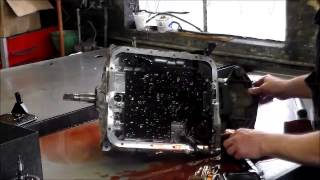
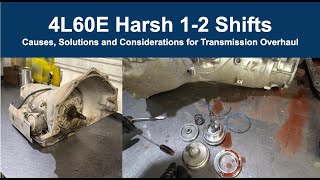
- Harsh or banging shift from 1st to 2nd gear 🎬 Learn why your transmission is experiencing these harsh 1-2 shifts
- Engine RPMs are higher than usual at highway speeds
- Transmission feels like it's slipping or not engaging properly
- A sensation of the engine revving up without a corresponding increase in speed
- Transmission may overheat, potentially causing a burning smell
- Sensation of RPMs flaring by 200-300 RPM at highway speeds with light throttle application.
- Symptoms are often worse or only appear when the transmission fluid is hot (e.g., after 20-30 minutes of highway driving).
- Replacing only the TCC solenoid when the valve body bore is worn. The new solenoid will not fix the hydraulic leak, and the code will return.
- Replacing the entire transmission when only a valve body repair or replacement was necessary. This is a much more expensive repair that may not be needed if the issue is caught early.
- Replacing the torque converter without addressing the underlying valve body issue that caused it to fail.
Most Likely Causes
- Worn TCC Regulator Valve Bore in Valve Body 🔴 High Probability → Shop Transmission Valve Body This is a well-documented, common failure point in the 4L60-E's aluminum valve body. The constant movement of the steel valve wears the softer aluminum bore, causing a hydraulic leak that prevents full TCC lockup pressure.
How to confirm: A transmission specialist can test for hydraulic leaks at the valve body. Diagnosis is often made after confirming TCC slip with a scan tool and eliminating simpler causes. The issue is often difficult to duplicate until the transmission is fully warmed up to operating temperature (above 200°F / 93°C).
Typical fix: Install an aftermarket TCC regulator valve repair kit (e.g., from Sonnax or TransGo) which includes an oversized valve and reaming tools to restore the bore, or replace the entire valve body with a remanufactured unit.
Est. part cost: $50-$150 for a repair kit, $250-$450 for a remanufactured valve body. - Failed Torque Converter Clutch (TCC) PWM Solenoid 🟡 Medium Probability → Shop Automatic Transmission Torque Converter The solenoid can fail electrically or develop hairline cracks in its plastic housing, leading to pressure loss. It's a common replacement part during 4L60-E service and is often replaced alongside any valve body work.
How to confirm: A scan tool can command the solenoid on/off to check for an electrical response (amperage draw and an audible click). Visual inspection for cracks is necessary after dropping the transmission pan. Resistance should be checked with a multimeter; it should be 10-11 ohms at 68°F (20°C).
Typical fix: Replace the TCC PWM solenoid. This is located inside the transmission and requires removing the fluid pan. 🎬 See this walkthrough on replacing the TCC and shift solenoids
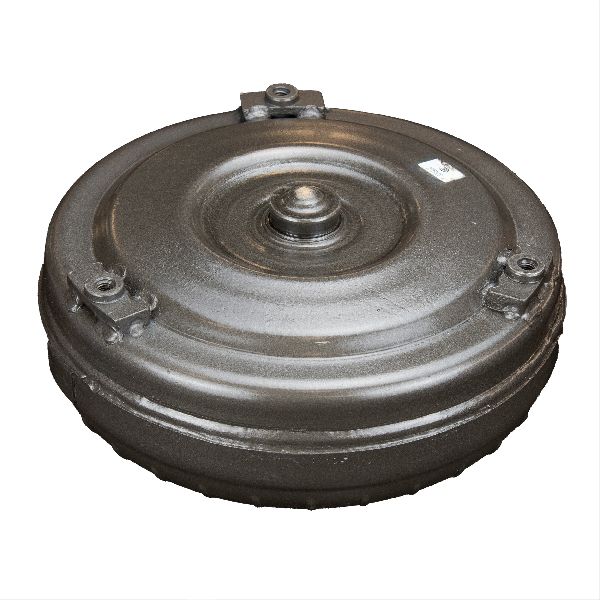
Est. part cost: $30-$80 - Worn or Failed Torque Converter 🟡 Medium Probability → Shop Automatic Transmission Torque Converter The clutch lining inside the torque converter can wear out or delaminate, especially if the vehicle has been driven for a long time with the TCC valve issue which causes the clutch to slip and burn. This prevents it from locking up effectively.
How to confirm: Using a scan tool to monitor TCC slip RPM is the primary method. If slip is consistently high (over 100-200 RPM) when the TCC is commanded on, and the solenoid/valve body are known to be good, the converter itself is the likely culprit.
Typical fix: Replace the torque converter. This is a major repair that requires removing the entire transmission. It is critical to also fix the underlying hydraulic issue (like the valve body bore) or the new converter will fail prematurely.
Est. part cost: $150-$400 - Low or Degraded Transmission Fluid ⚪ Low Probability → Shop Transmission Assembly
How to confirm: Check the transmission fluid dipstick with the engine running and transmission warm. The fluid should be at the full mark and bright red. If it's low, brown, or smells burnt, it needs service.
Typical fix: Perform a transmission fluid and filter change. This is unlikely to fix an existing P0894 but is critical preventative maintenance and the first step in any diagnosis.
Est. part cost: $50-$100
Rare But Worth Checking
- Worn 3-4 Clutch Pack: While the code usually points to the TCC, slipping in the 3-4 clutch pack can also trigger P0894 as it occurs in an upper gear range where the TCC is also active. This indicates a more severe internal transmission problem requiring a rebuild.
- Worn Stator Support Bushing: The stator support bushing inside the transmission pump can wear out, causing a loss of converter charge oil pressure. This prevents the TCC from applying correctly and can trigger a P0894 code, even if the valve body and converter clutch are good.
Diagnosis Steps
- Check the transmission fluid level and condition. Ensure it is full and does not look or smell burnt.
- Scan the computer for all codes. Note if P1870, P0741, or P0700 are also present.
- Using a capable scan tool, monitor live data for TCC Slip Speed while driving at a steady cruise (around 50-55 MPH).
- Observe the TCC command (Duty Cycle %) and slip RPM. When commanded ON, the slip should drop to well below 50 RPM. If it remains high (e.g., over 100-200 RPM), a slip is confirmed.
- If slip is confirmed, drop the transmission fluid pan and inspect for excessive metal shavings or clutch material, which would indicate a severe internal failure.
- Inspect the TCC PWM solenoid. Test its circuit and check the solenoid body for hairline cracks, especially around the filter screen area. Check the solenoid's resistance; it should be 10-11 ohms at 68°F (20°C).
- If the solenoid is good and the pan is relatively clean, the most likely cause is the TCC regulator valve bore in the valve body. This diagnosis is often best left to a transmission professional with hydraulic testing equipment.
Parts You'll Likely Need
- TCC Regulator Valve Repair Kit — This directly addresses the most common cause of P0894 on the 4L60-E: the worn valve bore in the valve body.
Trusted brands: Sonnax (P/N: 77754-04K for '98+ models), TransGo (P/N: SK-4L60E, a shift kit which includes a replacement TCC valve)
OEM price range: N/A
Aftermarket price range: $50-$150 - Torque Converter Clutch (TCC) PWM Solenoid
(OEM #24227792 (Also check 24227747, 24207054))— This solenoid controls the TCC apply pressure and is a common failure point that can cause slipping, often due to hairline cracks in the housing.
Trusted brands: ACDelco, Bosch, Rostra
OEM price range: $50-$90
Aftermarket price range: $30-$60 - Remanufactured Valve Body — A complete remanufactured valve body is an alternative to reaming the original. It comes with the TCC valve bore already sleeved and restored, along with updated solenoids.
Trusted brands: Sonnax, ACDelco
OEM price range: $400-$600
Aftermarket price range: $250-$450
Related Codes That Often Appear With This One
- P1870 — This is the older GM-specific code for 'Transmission Component Slipping.' P0894 and P1870 are functionally identical on these vehicles 🎬 Watch: A budget-friendly guide to fixing the P1870 code and are triggered by the same failure, often a worn TCC valve bore.
- P0741 — This code means 'Torque Converter Clutch Circuit Performance or Stuck Off.' It is more specific to the TCC system and frequently appears with P0894 when the torque converter or its controls are the root cause.
- P0700 — This is a generic code indicating the Transmission Control Module (TCM) has stored a fault. It acts as a 'check engine light' request from the TCM and will always be present alongside a specific transmission code like P0894.
Technical Service Bulletins (TSBs) & Recalls
- Harsh 1-2 Upshift, SES/MIL Illuminated, DTC P1870 Set (Replace Valve Body): This is the key TSB for this issue. It states that after 20,000+ miles, wear in the TCC isolator/regulator valve bore inside the control valve body can cause poor or no TCC apply. It explains that when the PCM detects this slip (setting P1870), it commands maximum line pressure as a protective measure, which causes the harsh 1-2 shift. The official GM fix at the time was to replace the entire valve body.
- MIL Illumination Harsh 1-2 Shift And P0894 Or P1870 Setting After Torque Converter Or Transmission Replacement: → Shop Automatic Transmission Torque Converter This bulletin advises technicians that if a P0894 or P1870 code appears along with a harsh 1-2 shift *after* a transmission or torque converter has been replaced, they should contact the GM Technical Assistance Center for further instruction. This indicates the problem can persist even after major parts are replaced if the root cause (often in the valve body) isn't addressed.
Platform-Specific Known Issues
- Owner Experience: The 'Code Buster' Kit Fix: A common story shared across forums for vehicles with the 4L60-E transmission (including the Sonoma's platform mates) involves battling the P1870/P0894 code. One owner on
Mechanic-Grade Diagnostic Values
- TCC PWM Solenoid Resistance — expected: 10-11 Ohms at 68°F (20°C), or 13-15 Ohms at 212°F (100°C).. Failure: A reading significantly outside this range, or an open/short circuit, indicates a failed solenoid.
- 1-2 and 2-3 Shift Solenoid Resistance — expected: 20-30 Ohms (typically test in the 20-25 Ohm range).. Failure: Readings outside the 20-30 Ohm specification suggest a faulty shift solenoid, which can sometimes be related to overall transmission performance issues.
- TCC Slip Speed (Live Scan Data) — expected: Should drop to near 0 RPM (ideally under 50 RPM) when the TCC is commanded to lock.. Failure: Consistently high slip RPM (e.g., over 100-200 RPM) when the TCC is commanded ON confirms a slip condition.
Scan Tool Commands That Help
- GM Tech2 or equivalent professional scanner: TCC Solenoid Duty Cycle Control — This bidirectional control allows a technician to manually command the TCC PWM solenoid to a specific duty cycle (e.g., 0%, 50%, 100%) while monitoring TCC slip speed. This helps isolate whether the solenoid is responding to commands from the PCM, which is crucial for differentiating between a hydraulic, mechanical, or electrical fault.
- GM Tech2 or equivalent professional scanner: Transmission Output Controls (Shift Solenoids, etc.) — Allows for manual engagement of shift solenoids to confirm their mechanical and electrical operation with the key on, engine off. This can help rule out other solenoid issues when diagnosing a general transmission performance problem alongside P0894.
Wiring & Ground Locations
- Transmission Case Connector Pin T — On the main round electrical connector on the passenger side of the 4L60-E transmission case.. This is the pin for the TCC PWM Solenoid Valve Control circuit. A technician can test for voltage signals from the PCM at this pin to verify the electrical command is reaching the transmission.
- PCM Connector C2 (Blue) - Pin 2 — At the Powertrain Control Module (PCM), which is located on the right front of the engine compartment.. This is the TCC Solenoid Valve Control pin on the PCM side. Testing here can confirm if the PCM is sending the signal, helping to diagnose a wiring issue between the PCM and transmission if the signal is present here but not at the transmission connector. The wire color is typically Tan/Black.
- G103 (Gas Engine) — On the right front side of the engine, near the thermostat housing.. This is a primary engine and PCM ground location. A poor connection here can cause erratic behavior from the PCM and various sensors, potentially affecting transmission control and diagnostics.
- Ground Strap (Firewall to Engine Block) — Typically runs from the firewall on the driver's or passenger's side to the rear of the engine block or cylinder head.. This strap ensures the engine and body have a solid ground connection. Corrosion or a break in this strap can lead to a host of electrical issues, including improper transmission solenoid operation.
Real Owner Repair Stories
- GMTNation forum user (1998 Chevrolet Camaro (with 4L60-E, same platform issue)) — Neck-snapping hard 1-2 shift, TCC failing to lock or cycling on/off, especially when warm. Code P1870 was expected but not always present.
❌ Tried (didn't work) Initial diagnosis was difficult as the code was not always set, despite clear symptoms.
✅ What actually fixed it Installing a TransGo SK-4L60E shift kit, which includes a fix for the TCC valve bore wear. The user reported the TCC lockup became firm and positive (like a 5th gear shift) and all symptoms were resolved. - GMTNation forum user (High-mileage (213k+) truck with 4L60-E) — Started with a slightly hard 1-2 shift in traffic, which quickly progressed to a very hard, jolting 1-2 shift and the Check Engine Light with code P1870.
❌ Tried (didn't work) The owner debated between a cheap fix and a full transmission replacement due to the high mileage.
✅ What actually fixed it The user was advised by others that replacing the valve body with a remanufactured unit (with the Sonnax TCC fix already installed) or installing a Transgo kit had an ~80% chance of permanently fixing the issue, which is the standard and accepted repair for this specific failure mode.
OEM Part Supersession History
Varies by year→24227792— This part number for the TCC PWM Solenoid has become a common service replacement for many 4L60-E applications from the mid-90s through the 2000s.
Heads up: While this part fits a wide range of years, it's critical to verify the application. Some early (pre-95) 4L60-E transmissions used a different, non-PWM TCC system with a different solenoid. Always verify by VIN or original part.
Model Year Variations Within This Range
- 1998: 1998 was a transition year where GM began using a two-piece case design (separate bellhousing) for the 4L60-E on trucks, replacing the older one-piece case. These early two-piece case transmissions still used the 298mm input shaft common to older SBC engines.
- 1999-2002: Starting in 1999, the 4L60-E case was updated for the new Gen III LS-based engines (though the Sonoma used the 4.3L V6). These transmissions used a 300mm input shaft and a different bellhousing with a top bolt hole. While the core P0894 issue (TCC valve bore wear) remains the same, internal hard parts and torque converters are not directly interchangeable between 1998 and 1999+ models without specific conversion parts.
- 1996-2000 vs 2001-2002: According to some interchange guides, the electronics and valve bodies are generally compatible from 1996-2000 and 2001-2006. While the P0894 fault is common to all, a replacement valve body or transmission should be sourced from the correct year group to ensure full electronic compatibility.
Helpful Videos


We Have This Part in Stock

The information in this article is provided for general reference and educational purposes only. Vehicle specifications, procedures, and part compatibility can vary by production date, trim level, and region. Always consult your vehicle's factory service manual and verify part numbers before purchasing or performing repairs. Safety-critical components such as airbags, seat belts, and braking systems should be installed by a qualified professional.
- Gmc SONOMA:
- 🧭 Diagnostic Flowchart
- 🎬 Helpful Videos
- 🛍️ Shop This Part
- What's Unique About the 1998-2002 Gmc SONOMA
- Symptoms You May Notice
- Most Likely Causes
- Rare But Worth Checking
- Diagnosis Steps
- Parts You'll Likely Need
- Related Codes That Often Appear With This One
- Technical Service Bulletins (TSBs) & Recalls
- Platform-Specific Known Issues
- Mechanic-Grade Diagnostic Values
- Scan Tool Commands That Help
- Wiring & Ground Locations
- Real Owner Repair Stories
- OEM Part Supersession History
- Model Year Variations Within This Range
- 🎟️ Get 5% Off