

OBD-II Code P0901: Clutch Actuator Circuit Range/Performance
The Ultimate Guide to P0901: What It Means, Why It Triggers, and How to Fix It for Good
- P0901 indicates a performance mismatch in the automated clutch circuit, most frequently caused by corroded wiring or low battery voltage rather than a failed actuator.
- Stop driving immediately; continuing at highway speeds risks sudden shifts to neutral or engine stalls, escalating a $200 wiring fix into a $2,500 transmission rebuild.
- Always verify battery voltage exceeds 12.4V (engine off) and 13.5V (running) before replacing parts, as low voltage triggers false P0901 codes.
- After replacing an actuator or TCM, you must perform a mandatory clutch relearn procedure using a bidirectional scan tool, or the P0901 code returns instantly.
What Does P0901 Mean?
Code P0901 indicates the Powertrain or Transmission Control Module (PCM/TCM) detects a performance issue in the clutch actuator control circuit. The actuator—a motor or hydraulic solenoid—automatically engages and disengages the clutch in automated-manual or dual-clutch transmissions. The computer triggers this code when the actuator fails to move as commanded or returns incorrect electrical feedback.
Technical definition: The SAE/OBD-II definition for P0901 is "Clutch Actuator Circuit Range/Performance". The PCM/TCM detects the voltage, resistance, or physical travel of the clutch actuator falls outside manufacturer specifications. The fault sets when the commanded clutch position mismatches the actual position reported by the sensor.
Can I Drive With P0901?
No — Do Not Drive. Driving with P0901 poses a significant safety risk. The transmission unexpectedly shifts to neutral, gets stuck in gear, or stalls the engine, causing potential crashes at highway speeds. Continuing to drive destroys clutch forks and synchronizers, turning a $200 wiring repair into a $2,500 transmission rebuild.
Common Causes
- Damaged wiring, connectors, or loose grounds (Very Common) — The wiring harness to the clutch actuator endures extreme heat and vibration. Corroded connector pins, frayed wires, and loose chassis grounds create high resistance and intermittent signals that immediately trigger this code.
- Faulty clutch actuator or integrated position sensor (Common) — The actuator motor or solenoid fails internally due to shorted windings or stripped gears. Additionally, the integrated position sensor fails and sends incorrect travel data to the computer, requiring replacement of the entire actuator assembly.
- Low hydraulic fluid or failing master/slave cylinder (hydraulic systems) (Common) — In hydraulic clutch systems, fluid leaks from the master or slave cylinder prevent the system from building the pressure required to move the actuator, triggering a performance fault even if the electronics are perfect.
- Mechanical binding or worn clutch components (Common) — Internal transmission failures, such as a worn clutch fork, seized linkage, or a destroyed clutch friction disc, physically block the actuator from moving its full range.
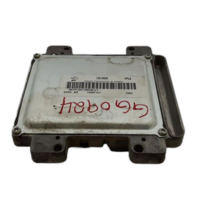
- Faulty Transmission Control Module (TCM) (Rare) — The control module commanding the actuator experiences internal driver failures or software glitches. This is the root cause for specific vehicles (like the Ford DPS6) but remains rare for most other platforms.
Symptoms
- Harsh, erratic, or delayed shifting — The vehicle shifts gears roughly, unpredictably, or with a violent jerk and delay, especially at low speeds.
- Transmission stuck in gear or 'Limp Mode' — The transmission refuses to shift, locking into a single gear, or enters a fail-safe mode with severely reduced engine power.
- Engine stalls or will not start — The engine stalls when coming to a stop, or the vehicle refuses to crank because the TCM cannot confirm the transmission is in Neutral or Park.
- Clicking, grinding, or buzzing noises — You hear unusual mechanical grinding or electrical buzzing from the transmission area as the actuator struggles to move the clutch fork.
- Soft or spongy clutch pedal (hydraulic systems) — In vehicles with a hydraulic actuator tied to a pedal, the pedal feels soft, spongy, or sinks to the floor, indicating total hydraulic pressure loss.
- Check Engine Light or Transmission Warning Light is on (also visible on scanner) — The Malfunction Indicator Lamp (MIL) or a gear-shaped transmission warning light illuminates on the dashboard.
Diagnostic Flowchart
Tap your situation to follow the diagnostic path that matches what you're seeing on this code.
Common Fixes & Costs
- Repairing or replacing the wiring harness/connectors
— Parts: $20-$150, Labor: $150-$400, ~1.5 hr book time
(Intermediate)
: OEM - Reprogramming or updating TCM/PCM software — Parts: $0, Labor: $150-$300, ~1.0 hr book time (Professional)
- Replacing the clutch actuator(s)
— Parts: $150-$600, Labor: $200-$600, ~2.5 hr book time
(Intermediate)
: OEM (Alt: {"brand": "Dorman", "part_number": "609-025", "price_comparison": "Often priced 20-30% lower than OEM."}) - Replacing the Transmission Control Module (TCM)
— Parts: $500-$1200, Labor: $150-$300, ~1.5 hr book time
(Professional)
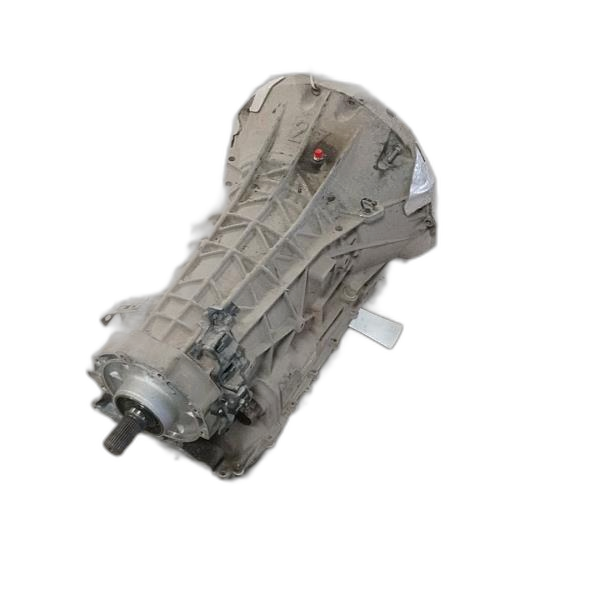
: OEM (Alt: {"brand": "Various (Remanufactured)", "part_number": "A2C30743100", "price_comparison": "Remanufactured units cost $250-) - Replacing the clutch assembly and related components — Parts: $500-$1200, Labor: $800-$1500, ~8.5 hr book time (Professional)
DIY vs Professional
- Repairing or replacing the wiring harness/connectors — Beginner: No
Tools: Multimeter, wire strippers, soldering iron, heat shrink tubing, wiring diagrams. - Replacing the clutch actuator(s) — Beginner: Yes (with caution)
Tools: Basic socket set (E8 inverted Torx for Ford), extensions, advanced scan tool. - Replacing the Transmission Control Module (TCM) — Beginner: No
Tools: Socket set, advanced/OEM scan tool for programming. - Replacing the clutch assembly — Beginner: No
Tools: Professional mechanic's toolset, engine hoist, transmission jack, clutch alignment tools.
Used vs. New Parts: Buying Guide
When a used part is worth it: Sourcing a used Ford DPS6 TCM with the latest part number (ending in K05) from a 2017+ donor vehicle is a highly cost-effective strategy. Avoid used clutch actuators, as they are mechanical wear items prone to identical failures.
Donor-vehicle mileage cap: roughly under 60000 miles for the part to have meaningful remaining life.
Donor quality checklist:
- Verify the part number exactly matches the latest manufacturer revision.
- Ensure the donor vehicle was not scrapped due to flood or fire damage.
- Purchase from sellers offering at least a 30-day return policy.
Decision logic:
- If The part is a Ford DPS6 TCM and a used, updated version (K05+) is available. → Buy used, but budget for potential dealer programming fees.
- If The part is a mechanical clutch actuator. → Buy new OEM or reputable aftermarket parts to avoid inheriting another worn-out motor.
- If The vehicle is older than 10 years and budget is the primary concern. → Buy used, accepting the higher risk of premature failure.
Warranty tradeoff: Salvage yards offer 30-90 day warranties. New aftermarket parts include 1-year to lifetime warranties. Remanufactured TCMs from reputable suppliers include 1-year warranties and arrive pre-programmed.
Worst-case if a used part fails: $300-$600 if a used part fails, accounting for repeat labor and replacement parts.
What Happens If You Wait — Timeline
- 0-2 weeks: Intermittent check engine light and occasional harsh shifts. The fault logs in the TCM. (MPG impact: 0-2%% · Added cost: $0)
- 2 weeks - 3 months: Check engine light stays on permanently. The vehicle gets stuck in 'limp mode' or stalls at stops. Risk of being stranded is high. (MPG impact: 3-8%% · Added cost: $100-$300 (Tow truck fees))
- 3-6 months: Repeated harsh clutch engagements destroy the clutch disc, pressure plate, and release bearing. (MPG impact: 5-15%% · Added cost: $1,300 - $2,700 (Clutch replacement required))
- 6+ months: Failed shift attempts and grinding destroy internal transmission synchronizers and shift forks. (MPG impact: 10-25%% · Added cost: $3,000 - $5,000+ (Full transmission rebuild))
Cost of Not Fixing It
- 0-1 Month: Inconsistent shifting, stalling at intersections, and a high risk of being stranded. Drivability and safety are severely compromised. (Added cost: $100-$300 (Tow truck fees))
- 1-6 Months: Harsh clutch engagement accelerates wear on the clutch disc, pressure plate, and release bearing. This turns a simple actuator fix into a mandatory clutch replacement. (Added cost: $1,300 - $2,700)
- 6+ Months: Failed shift attempts and grinding destroy internal transmission synchronizers and shift forks, necessitating a complete transmission rebuild or replacement. (Added cost: $3,000 - $5,000+)
Diagnosis Steps
- Check for Technical Service Bulletins (TSBs) and Recalls
Search for TSBs or recalls for your specific VIN. Manufacturers release bulletins for known P0901 issues (like FCA Recall S55 or Ford Warranty 14M02) that provide a direct, often free, fix at the dealership.
Tools: Internet access (Beginner) - Scan for Codes and Review Freeze Frame Data
Use an OBD-II scanner to confirm P0901 and check for related codes like P0900, P0902, P0903, or P0805. Review freeze-frame data to pinpoint the exact vehicle speed and temperature when the fault occurred.
Tools: OBD-II Scanner (Beginner) - Inspect Battery Voltage and Fluid Levels
Verify the battery and charging system. Stable voltage above 12.4V (engine off) and 13.5V (running) is mandatory; low voltage triggers false electronic faults. For hydraulic systems, verify the clutch fluid level is at the MAX line.
Tools: Multimeter (Beginner) - Visual Inspection of Wiring and Connectors
Inspect the entire wiring harness from the TCM to the clutch actuator. Look for chafed insulation, melted wires, or green corrosion inside the connectors. Verify the TCM's main ground strap is tight and rust-free.
Tools: Flashlight, Mirror (Intermediate) - Quantitative Circuit Analysis
Disconnect the actuator and TCM. Use a multimeter to test the actuator's internal resistance (typically 4-8 ohms for motors, 10-50 ohms for solenoids). An open circuit (OL) means the actuator is dead. Test harness wires for continuity and shorts to ground.
Tools: Multimeter, Vehicle-specific service manual (Advanced) - Live Data and Position Sensor Sweep Test
Use an advanced scan tool to monitor live data PIDs for 'Commanded' vs. 'Actual' clutch position. Command the actuator to move. The position sensor voltage must sweep smoothly (e.g., 0.5V to 4.5V) without glitches, spikes, or dropouts.
Tools: Advanced Scan Tool (Advanced) - Pro Tip: Dynamic Voltage Drop and Waveform Analysis
Perform a voltage drop test on the power and ground wires while commanding the actuator. A drop exceeding 300 millivolts (0.3V) proves high resistance exists. Use an oscilloscope to verify the TCM is sending a clean Pulse Width Modulated (PWM) square wave to the actuator.
Tools: Advanced Scan Tool, Multimeter, Oscilloscope (Professional) - Pro Tip: Perform Clutch Actuator Relearn/Calibration
After replacing any transmission component, you must perform a relearn procedure with an OEM-level scan tool. This teaches the TCM the new clutch engagement points. Skipping this guarantees the P0901 code returns instantly.
Tools: Advanced/OEM Scan Tool (Professional)
When This Code Triggers (Freeze-Frame Conditions)
- Engine Coolant Temp: 180-210°F (82-99°C) (The fault frequently occurs once the vehicle reaches normal operating temperature and components expand.)
- RPM: 700-2500 RPM (The code triggers during idle, low-speed shifting in stop-and-go traffic, or steady cruising.)
- Vehicle Speed: 0-45 mph (0-72 kph) (P0901 sets during gear changes at low to moderate speeds, the exact moment the clutch actuator is most active.)
- Engine Load: 15-50% (The fault appears under light to moderate acceleration when the TCM commands a gear shift.)
Related Codes
- P0900 — Clutch Actuator Circuit/Open. Indicates a complete loss of signal due to a broken wire or disconnected connector. P0900 is a hard electrical fault, whereas P0901 is a performance mismatch.
- P0902 — Clutch Actuator Circuit Low. Points to a direct short to ground. Diagnosis reveals continuity between the signal wire and the vehicle's chassis.
- P0903 — Clutch Actuator Circuit High. Indicates a short to power. Diagnosis reveals constant battery voltage on the signal wire.
- P0805 — Clutch Position Sensor Circuit. Targets the sensor reporting the clutch's position. Because P0901 sets when commanded and actual positions mismatch, a faulty P0805 sensor directly causes P0901.
Climate & Environmental Factors
- High Humidity / Water Exposure: Moisture forces its way into electrical connectors, causing the green corrosion and high resistance that directly triggers P0901.
- Cold Weather (<32°F / 0°C): Cold temperatures increase the viscosity of hydraulic fluid, slowing actuator response times. Cold also makes aging wire insulation brittle and prone to cracking.
- Road Salt (Winter Climates): Salt spray creates a highly corrosive environment, drastically accelerating the destruction of wiring harnesses, connectors, and chassis ground points.
How to Talk to a Mechanic About This Code
Say this: "I have a P0901 code on my [Make, Model, Year] and I'd like to schedule a diagnostic. Can you please check for any TSBs or recalls, and perform a full circuit test, including a voltage drop test on the actuator harness, before recommending any part replacements?"
This proves you understand the common causes. It forces the technician to perform a thorough electrical diagnosis rather than immediately quoting an expensive actuator replacement, saving you hundreds of dollars.
Avoid saying:
- 'My transmission is acting weird, can you fix it?'
- 'Just replace the clutch actuator.'
- 'My check engine light is on, do whatever it takes.'
Questions to ask before authorizing the repair:
- Did you find a specific wiring fault, or did the actuator itself fail a resistance test?
- Is there a software update available for the TCM that addresses this?
- Does this repair require a 'relearn' procedure, and is that included in the quote?
- What is the warranty on the parts and labor for this specific repair?
Where to Take It: Dealer vs Independent vs Chain
- Dealer:
Highly Recommended for Ford and FCA vehicles known to have recalls and warranty extensions related to P0901.
Best for: Vehicles covered by a recall or warranty extension (e.g., Ford 14M02, FCA S55)., Complex manufacturer-specific software updates and programming.
Downsides: Highest labor rates, often 1.5x to 2x an independent shop., Dealers prefer replacing entire expensive harnesses rather than performing component-level wiring repairs. (Typical cost: +50% vs. baseline) - Independent Shop:
Good fit, provided you verify they have experience with your specific transmission and can perform the clutch calibration.
Best for: Out-of-warranty vehicles where cost is a major factor., Shops specializing in transmission work or complex electrical diagnostics.
Downsides: Must verify they own advanced, OEM-level scan tools capable of performing the mandatory clutch relearn procedure. (Typical cost: +0% vs. baseline) - Chain Shop:
AVOID for P0901 diagnosis and repair.
Best for: Simple jobs like oil changes, tires, and brakes.
Downsides: Technicians lack the advanced diagnostic tools and training for complex transmission electronics., High risk of misdiagnosis or incomplete repairs (skipping the relearn). (Typical cost: -10% vs. baseline)
When to Walk Away From the Repair
If the total estimated repair cost for P0901 exceeds 50% of your car's current private-party market value, sell the car as-is or trade it in.
- Car worth $4000, fix is $2200: Walk away. The repair cost exceeds 50% of the car's value. Put the money toward a replacement vehicle.
- Car worth $10000, fix is $1200: Fix it. The repair cost is well below the 50% threshold and restores the vehicle's primary function.
- Car worth $3000, fix is $450: Fix it. A sub-$500 repair on a running vehicle is a worthwhile investment.
What Scan Tool You Need for This Code
Minimum: A bidirectional scan tool capable of performing the 'Clutch Actuator Relearn/Calibration' for your specific vehicle make.
A basic $50 code reader CANNOT perform the mandatory relearn procedure after a part is replaced. Skipping the relearn causes the code to return immediately, making the repair a failure.
Budget: None Recommended (~$None) — Scanners in this price range lack bidirectional control and are insufficient for a complete P0901 repair.
Mid-range: Foxwell NT510 Elite / NT680 Pro (~$150) — Reads transmission live data and performs the critical clutch relearn/calibration. This is the minimum tool required for a successful DIY repair.
Professional: Autel MaxiCOM MK808 / Launch X431 Series (~$450-900) — Offers full bidirectional control, comprehensive active tests, clutch calibration, and TCM programming functions.
Rent vs buy: Standard auto parts store loaner tools will NOT work. For a one-time P0901 fix, it is more cost-effective to pay a qualified shop for 1 hour of labor to perform the relearn than to buy a capable scanner.
How to Clear the Code After You Fix It
- Use a bidirectional OBD-II scan tool to clear all diagnostic trouble codes (DTCs).
- Execute the mandatory clutch actuator relearn/calibration procedure.
- Complete a full drive cycle to run onboard self-tests and set readiness monitors.
Drive cycle (~20 minutes): 1. Cold start, idle for 3 minutes. 2. Drive in stop-and-go city traffic for 10 minutes, making several complete stops. 3. Drive at a steady 55 mph (90 kph) for 10 minutes. 4. Coast down to 20 mph without braking, then stop completely.
Readiness monitors affected: Comprehensive Component Monitor (CCM), Transmission components
Before emissions retest: drive at least 50 miles to fully set monitors.
Watch out for:
- Disconnecting the battery clears the code but resets all readiness monitors, guaranteeing an instant emissions test failure.
- Skipping the mandatory clutch relearn calibration guarantees the code returns immediately upon starting the engine.
Will This Fail Emissions / State Inspection?
Yes — this code typically fails an OBD-II emissions inspection.
- California: An active Check Engine Light triggers an automatic smog check failure. You must complete a full drive cycle after repairs to set all readiness monitors before retesting.
- New York: An illuminated Malfunction Indicator Lamp (MIL) for P0901 results in an automatic NYS inspection failure.
- Texas: In emissions-testing counties, an active Check Engine Light is an automatic failure. Clearing the code in the parking lot results in a failure due to 'Not Ready' monitors.
Most Commonly Affected Vehicles
- Ford Focus, Fiesta (2012-2018) — Extremely common on DPS6 PowerShift transmissions. The issue stems from a failed TCM or clutch actuator. Ford issued warranty extension 14M02 for the TCM (10yr/150k miles, final deadline June 30, 2025).
- Jeep Cherokee, Renegade (2014-2016) — Subject to safety recall S55 (NHTSA 16V-529). If P0901 appears after the recall's software flash, dealers must replace the transmission wire harness to fix insufficient wire crimps.
- Chrysler 200 (2015-2017) — Equipped with the 9-speed transmission, these vehicles fall under TSB 21-035-16 and recall S55, requiring a software update and potential harness replacement.
- Dodge Dart (2013-2016) — Models with the 2.4L engine and dual-clutch transmission require PCM software updates (TSB 18-023-16 REV. C) to address P0901 and improve diagnostics.
- Honda TLX V6, Civic (2015-2018) — Honda identified P0901 on the TLX stems from abnormal resistance in the sub-harness between the TCM and transmission solenoids. Civic models often require a TCM software update.
- Hyundai Veloster, Tucson, Elantra (2016-2022) — Models with the dual-clutch transmission (DCT) trigger this code due to actuator failure, internal transmission faults, or worn clutch forks.
- Smart Fortwo (2008-2015) — The 451 model frequently shears the internal shaft of the clutch actuator motor, requiring actuator replacement and a mandatory relearn procedure.
- Toyota Corolla, Yaris, Aygo (2000-2014) — Affects models with the Multi-Mode Transmission (MMT). The clutch actuator, speed sensors, or the MMT control module fail and trigger P0901.
- Chevrolet Malibu, Cruze (2012-2019) — Automated manual-style transmissions trigger P0901 due to low hydraulic fluid or failing actuator solenoids.
Manufacturer-Specific Notes
- Ford: On the DPS6 transmission, swap the identical clutch actuators ('A' and 'B'). If P0901 (Clutch A) changes to P090B (Clutch B), the actuator is faulty. If it stays P0901, the wiring or TCM is bad.
- FCA (Jeep, Chrysler, Fiat, Ram): For 2014-2016 9-speed models, P0901 links to Safety Recall S55. Dealers must update the TCM software. If P0901 returns, they must replace the entire transaxle wire harness.
- Honda/Acura: On the TLX V6, P0901 stems from a faulty sub-harness between the TCM and the transmission, not the actuator itself. Replace this specific sub-harness to fix the code.
- Toyota: On MMT vehicles, P0901 pairs with a flashing 'N' on the dash. Fixing it requires replacing the clutch actuator and performing a complex, multi-step MMT system initialization with a scan tool.
Real Owner Stories
2008 Smart Fortwo 451 with 170,000 km
Car refused to crank and displayed three horizontal lines on the dashboard cluster. A scan tool revealed code P0901.
What they tried:
- Checked fuses, which were all good.
- Attempted to reprogram the actuator by disconnecting the battery.
- Removed and opened the clutch actuator.
Outcome: The owner discovered the internal motor shaft of the clutch actuator sheared off. Replacing the actuator with a used, re-lubricated unit resolved the issue.
Lesson: On Smart cars, a no-crank situation with three bars is a classic symptom of mechanical clutch actuator failure, even if it presents as an electrical code.
2015 Ford Focus with DPS6 Transmission
Vehicle displayed a P0901 code and experienced violent, harsh shifting.
What they tried:
- Initial diagnosis pointed towards a $600 faulty clutch actuator.
Outcome: A deeper inspection revealed a damaged wiring harness leading to the actuator, causing severe voltage drops. Replacing the harness for $250 permanently fixed the code and shifting problems.
Lesson: Never assume the most expensive part failed. Thoroughly inspecting the wiring harness for damage or corrosion frequently reveals a much cheaper fix.
2015 Jeep Cherokee with 9-Speed Transmission
Vehicle unexpectedly shifted to neutral at 60 mph and triggered code P0901.
What they tried:
- Took the vehicle to the dealer due to the severe safety risk.
Outcome: The dealer identified the vehicle fell under FCA Safety Recall S55. They updated the TCM software, but P0901 remained. Following the recall mandate, they replaced the entire transaxle wire harness for free, permanently fixing the problem.
Lesson: Always check for recalls first. For 2014-2016 Jeep/Chrysler models, P0901 is directly addressed by a safety recall, meaning the dealer performs the repair free of charge.
2018 Honda Civic with P0901
The check engine light illuminated with a P0901 code, but shifting performance felt completely normal.
What they tried:
- Performed a diagnostic scan at the dealership.
Outcome: The dealer traced the issue to a known software glitch within the TCM. A 30-minute software update cleared the code permanently for $150.
Lesson: P0901 isn't always a hardware failure. Check if a TCM software update exists for your vehicle, as it provides a fast and inexpensive fix.
How to Prevent This Code From Triggering
- Change DCT/automated transmission fluid per schedule (Every 30,000-60,000 miles) — Clean fluid lubricates and cools hydraulic actuators. Contaminated fluid causes poor performance and overheating.
- Apply dielectric grease to critical connectors (During any related service) — Dielectric grease seals out moisture, preventing the pin corrosion that causes high resistance and triggers P0901.
- Modify driving habits in heavy traffic (Daily habit) — Avoid 'creeping' in traffic with a dry DCT. Creeping keeps the clutch semi-engaged, generating excessive heat that destroys actuators. Shift to Neutral when stopped for over a minute.
- Perform regular underbody washes in winter climates (Monthly during winter) — Washing away road salt prevents it from corroding wiring harnesses and ground connections, a primary cause of electrical faults.
Frequently Asked Questions
What is the most common mistake when diagnosing P0901?
The biggest mistake is immediately replacing the clutch actuator without a complete diagnosis. The actual cause is frequently a cheaper fix like a corroded wire, loose ground, or software issue. Always test the circuit and check for TSBs before buying expensive parts.
Can I just clear the P0901 code and keep driving?
You can clear the code, but it returns immediately if the underlying fault remains. Ignoring it is dangerous and leads to unpredictable shifting, stalling, or getting stuck in gear. Continued driving causes expensive secondary damage to the transmission.
What is a clutch actuator and what does it do?
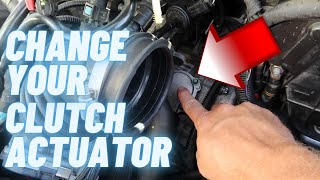
A clutch actuator is a motor or hydraulic solenoid in automated manual or dual-clutch transmissions that automatically engages and disengages the clutch. It performs the job your left foot does in a traditional manual car. It operates based on precise electrical commands from the transmission control module.
How much does it cost to diagnose a P0901 code?
A professional diagnostic fee for a check engine light typically costs between $150 and $165. Shops often credit this fee toward the final repair cost if you authorize them to perform the work.
Can a weak battery cause a P0901 code?
Yes, a weak battery directly causes a P0901 code. The TCM and clutch actuator require stable voltage above 12.4V to function correctly. Voltage drops from a failing battery or alternator cause erratic actuator performance, triggering the code even if transmission components are perfectly fine.
What is a clutch actuator relearn procedure and is it necessary?
A relearn or calibration is a mandatory software procedure that synchronizes a new actuator with the Transmission Control Module (TCM). It teaches the TCM the new part's precise travel limits and engagement points. Skipping this step guarantees harsh shifting and an immediate return of the P0901 code.
Can P0901 cause permanent transmission damage?
Yes, a failing actuator causes the clutch to slip or engage too harshly. This repeated stress burns out the clutch friction material and destroys internal transmission synchronizers. Extreme neglect requires a complete, costly transmission rebuild.
Is the Ford PowerShift (DPS6) transmission reliable after a P0901 repair?
Replacing a faulty TCM with the updated part improves reliability for this specific electrical issue. However, the DPS6 transmission's core design remains prone to mechanical failures like clutch shudder from leaking input shaft seals. A P0901 repair solves the immediate fault but does not cure the transmission's overall problematic reputation.
Is it more likely a bad wire or a bad part?
Wiring and connector issues are actually more common than failed actuators. Technicians frequently trace P0901 to corroded pins, loose grounds, or chafed wires in the harness. Always perform a thorough electrical inspection before condemning an expensive control module or actuator.
Key Takeaways
- P0901 indicates a performance mismatch in the automated clutch circuit, most frequently caused by corroded wiring or low battery voltage rather than a failed actuator.
- Stop driving immediately; continuing at highway speeds risks sudden shifts to neutral or engine stalls, escalating a $200 wiring fix into a $2,500 transmission rebuild.
- Always verify battery voltage exceeds 12.4V (engine off) and 13.5V (running) before replacing parts, as low voltage triggers false P0901 codes.
- After replacing an actuator or TCM, you must perform a mandatory clutch relearn procedure using a bidirectional scan tool, or the P0901 code returns instantly.
Helpful Videos

Shop the Parts Behind P0901
Below are the parts most often responsible for code P0901, ranked by how frequently each one is the actual culprit (per the diagnosis above). Tap any to see what we have for your vehicle.


The information in this article is provided for general reference and educational purposes only. Vehicle specifications, procedures, and part compatibility can vary by production date, trim level, and region. Always consult your vehicle's factory service manual and verify part numbers before purchasing or performing repairs. Safety-critical components such as airbags, seat belts, and braking systems should be installed by a qualified professional.
- 🧭 Diagnostic Flowchart
- 🎬 Helpful Videos
- 🛍️ Shop This Part
- What Does P0901 Mean?
- Can I Drive With P0901?
- Common Causes
- Symptoms
- Common Fixes & Costs
- DIY vs Professional
- Used vs. New Parts: Buying Guide
- What Happens If You Wait — Timeline
- Cost of Not Fixing It
- Diagnosis Steps
- When This Code Triggers (Freeze-Frame Conditions)
- Related Codes
- Climate & Environmental Factors
- How to Talk to a Mechanic About This Code
- Where to Take It: Dealer vs Independent vs Chain
- When to Walk Away From the Repair
- What Scan Tool You Need for This Code
- How to Clear the Code After You Fix It
- Will This Fail Emissions / State Inspection?
- Most Commonly Affected Vehicles
- Manufacturer-Specific Notes
- Real Owner Stories
- 2008 Smart Fortwo 451 with 170,000 km
- 2015 Ford Focus with DPS6 Transmission
- 2015 Jeep Cherokee with 9-Speed Transmission
- 2018 Honda Civic with P0901
- How to Prevent This Code From Triggering
- Frequently Asked Questions
- What is the most common mistake when diagnosing P0901?
- Can I just clear the P0901 code and keep driving?
- What is a clutch actuator and what does it do?
- How much does it cost to diagnose a P0901 code?
- Can a weak battery cause a P0901 code?
- What is a clutch actuator relearn procedure and is it necessary?
- Can P0901 cause permanent transmission damage?
- Is the Ford PowerShift (DPS6) transmission reliable after a P0901 repair?
- Is it more likely a bad wire or a bad part?
- Key Takeaways
- 🎟️ Get 5% Off