

OBD-II Code P0903: Clutch Actuator Circuit High
The Ultimate 2026 Guide to Meaning, Diagnosis, and Repair
- Code P0903 indicates a high-voltage short in the clutch actuator circuit, immediately disabling normal shifting in automated manual and dual-clutch transmissions.
- Do not drive with a P0903 code; the transmission will unexpectedly drop into neutral or lock into a single gear, creating an immediate collision risk.
- Inspect the transmission wiring harness for chafing before buying parts; a $10 wire repair fixes this code more often than a $600 Transmission Control Module (TCM).
- Ford Focus/Fiesta owners must check Customer Satisfaction Program 14M02, which extends TCM warranty coverage to 10 years or 150,000 miles, potentially covering this exact repair for free.
- Replacing the clutch actuator or TCM requires a mandatory post-install 'relearn' procedure using a bi-directional scan tool to synchronize engagement points.
What Does P0903 Mean?
P0903 indicates the Transmission Control Module (TCM) detects excessively high voltage on the clutch actuator electrical circuit. This code applies to vehicles with automated manual (AMT) or dual-clutch (DCT) transmissions, where a robotic actuator operates the clutch. When the TCM commands the actuator circuit to a low voltage state (e.g., off) and detects the voltage remains high, it sets P0903, immediately disabling normal shifting.
Technical definition: The formal SAE/OBD-II definition for code P0903 is “Clutch 'A' Actuator Control Circuit High”. It sets when the Powertrain Control Module (PCM) or Transmission Control Module (TCM) detects voltage in the clutch actuator's control circuit above the manufacturer-specified range. This condition confirms a short to a power source, where circuit voltage remains near battery voltage (12V) even when commanded low.
Can I Drive With P0903?
No — Do Not Drive. Do not drive. This code indicates a critical transmission failure that causes the vehicle to stall, shift erratically, or become completely immobile without warning, often in the middle of traffic. Attempting to drive creates an immediate collision risk and guarantees further, more expensive damage to the transmission's internal components.
Common Causes
- Damaged, shorted, or corroded wiring/connectors (Very Common) — The wiring harness to the clutch actuator rubs against the chassis or transmission case, causing a short to a 12V power wire. Connectors also suffer from water ingress, creating an unintended high-voltage path.
- Faulty Clutch Actuator (Common) — The actuator's internal motor or solenoid develops an internal short circuit, causing it to draw excessive current and report high voltage to the TCM.
- Failed Transmission Control Module (TCM) (Common) — Highly prevalent on Ford DPS6 transmissions. An internal failure in the TCM's driver circuit causes it to send incorrect signals or falsely report a high voltage condition.
- Faulty Clutch Position Sensor (Less Common) — The sensor reporting the actuator's position fails and sends an incorrect high-voltage signal, tricking the TCM into setting P0903 even if the actuator circuit is intact.
- Welded Relay Contacts (Less Common) — A stuck or welded transmission relay supplies constant battery voltage to the circuit, overriding the TCM's command to lower the voltage.
- Low or Unstable Battery Voltage (Rare) — A failing battery causes severe voltage drops during cranking. Modern TCMs are highly sensitive to this and occasionally set erroneous circuit codes when system voltage fluctuates wildly.
- Corroded Ground Straps (Rare) — The transmission relies on clean ground connections. A poor ground creates high electrical resistance, forcing voltage to find alternative paths and sometimes resulting in a high voltage fault.
Symptoms
- Transmission stuck in one gear (Limp Mode) — The TCM locks the transmission into a single gear (usually 2nd or 3rd) to prevent internal damage, severely limiting vehicle speed.
- Engine stalls or refuses to start — The engine stalls unexpectedly in traffic if the clutch fails to disengage. The vehicle refuses to crank if the TCM cannot verify the clutch is in neutral.
- Harsh, erratic, or delayed shifting — The vehicle shifts roughly with a noticeable bang, hesitates between gears, or fails to shift entirely as the actuator struggles to operate.
- Vehicle refuses to move — The transmission fails to engage any gear from a standstill, leaving the vehicle immobile despite the engine running normally.
- Check Engine Light or Transmission Warning Light is on — The dashboard illuminates the Malfunction Indicator Lamp or a gear-specific warning light (like a flashing 'N' on Toyotas) to alert the driver.
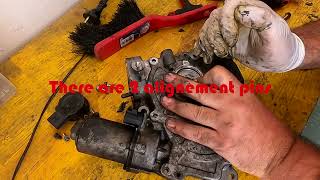
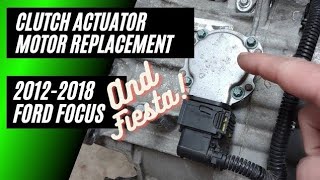
- High Voltage Reading on Clutch Actuator Circuit PID (scan-tool only — no driver-felt sign) — Live scan tool data shows the clutch actuator control circuit voltage stuck near 12V, even when the TCM commands it to 0V. This is the definitive electronic proof of the fault. 🎬 See: Understanding P0903 symptoms and how to fix high voltage errors.
Diagnostic Flowchart
Tap your situation to follow the diagnostic path that matches what you're seeing on this code.
Common Fixes & Costs
- Repairing wiring harness — Parts: $10-$50, Labor: $150-$600, ~2.5 hr book time (Intermediate)
- Replacing the Clutch Actuator
— Parts: $150-$700, Labor: $250-$1200, ~2 hr book time
(Intermediate)
Ford Focus/Fiesta (DPS6): OEM AE8Z-7C604-A (Alt: {'brand': 'Various (Lab Work, etc.)', 'part_number': 'AE8Z7C604A', 'price': '$35-$90'})
Toyota Yaris/Corolla (MMT): OEM 31360-12030 (Actuator Assembly) (Alt: {'brand': 'Aisin, Klifex', 'part_number': '31360-12010', 'price': '$150-$400'}) - Replacing the Transmission Control Module (TCM)
— Parts: $300-$1000, Labor: $150-$400, ~2.5 hr book time
(Professional)
Ford Focus/Fiesta (DPS6): OEM AE8Z-7Z369-F (Alt: {'brand': 'Dorman (Remanufactured)', 'part_number': '609-031, 609-231', 'price': '$300-$500'}) - Replacing the Clutch Position Sensor — Parts: $50-$250, Labor: $100-$300, ~1.5 hr book time (Intermediate)
- Replacing a faulty relay — Parts: $10-$30, Labor: $0-$50, ~0.2 hr book time (DIY)
Used vs. New Parts: Buying Guide
When a used part is worth it: A used clutch actuator from a verified low-mileage vehicle is acceptable for an older car on a tight budget. Buying a used Ford DPS6 TCM is highly discouraged due to a 100% failure rate on early revisions.
Donor-vehicle mileage cap: roughly under 60000 miles for the part to have meaningful remaining life.
Donor quality checklist:
- Verify the exact part number matches; superseded parts are often incompatible.
- For a Ford TCM, check labels indicating it is a newer, revised part (e.g., K05 or higher).
- Avoid parts from rust-belt states to minimize corrosion risk.
- Confirm the donor vehicle was scrapped for an accident, not a transmission failure.
Decision logic:
- If The part is a Ford DPS6 TCM → Buy a new OEM revised part or a high-quality remanufactured unit. The risk of a used part failing is absolute.
- If Vehicle is > 120K miles and budget is the primary concern → A used actuator is a high-risk but acceptable option; expect a significantly shorter lifespan.
- If The vehicle is a keeper and reliability is critical → Buy a new OEM or top-tier aftermarket part. The warranty and peace of mind justify the cost.
Warranty tradeoff: Used parts offer a 30-90 day warranty excluding labor. Aftermarket new parts offer 1-year to lifetime warranties. New OEM parts carry a 1-2 year warranty.
Worst-case if a used part fails: $500-$1500 if a used part fails after the warranty period, requiring a second part purchase and duplicate labor costs.
What Happens If You Wait — Timeline
- 0-1 month: Code P0903 sets, Check Engine Light illuminates. Shifting becomes slightly harsh, but the vehicle remains drivable. The fault is intermittent. (MPG impact: 0-2%% · Added cost: $0)
- 1-3 months: Shifting becomes violently harsh. The transmission occasionally refuses to shift or locks into limp mode. The fault becomes consistent. (MPG impact: 3-8%% · Added cost: $50-$150 in wasted fuel and accelerated wear on clutch linings.)
- 3-6 months: Vehicle frequently enters limp mode, stalls in traffic, or refuses to move. Constant harsh engagement severely damages clutch discs and shift forks. (MPG impact: 10-15%% · Added cost: $800-$1,500 (A simple wiring fix is no longer enough; mechanical components are now destroyed).)
- 6+ months: Catastrophic failure. The vehicle is completely immobile. Extreme mechanical stress breaks internal transmission gears, requiring a full rebuild. (MPG impact: 15-25%% · Added cost: $2,500-$5,000+ (The repair escalates from a $10 wire fix to a total transmission replacement).)
Cost of Not Fixing It
- Immediate: Immediate stranding. The vehicle stalls in traffic, refuses to move from a stop, or gets stuck in a single gear, creating a serious safety hazard. (Added cost: Towing costs ($100-$300))
- 1-3 months: Accelerated wear on clutch components. Continued operation with erratic engagement destroys the clutch discs, pressure plate, and shift forks. (Added cost: $1200-$2000)
- 3+ months: Catastrophic transmission damage. Mechanical stress from harsh shifts breaks internal gears or synchronizers, requiring a complete transmission rebuild. (Added cost: $2500-$5000+)
Diagnosis Steps
- Scan for Codes and Review Freeze Frame Data
Use an OBD-II scanner to confirm P0903 and check for related codes (P0900, P0902, P0810). Review freeze frame data to see the exact vehicle speed, RPM, and engine load when the fault occurred.
Tools: OBD-II Scanner (Beginner) - Perform a Visual Inspection and Wiggle Test
Inspect the entire clutch actuator wiring harness for chafing, melted insulation, or bare wires rubbing against the transmission case. Unplug connectors to check for water intrusion. While monitoring the circuit voltage with a multimeter, vigorously wiggle the harness; if voltage spikes to 12V, you found the short.
Tools: Flashlight, Inspection Mirror, Digital Multimeter (Beginner) - Test the Actuator Circuit for a Short to Power
Disconnect the harness from the actuator and TCM. Set a multimeter to DC Voltage. Connect the black lead to chassis ground and probe the signal wire pin at the actuator connector with the red lead. Turn the key ON. A reading of 12V confirms a short to power in the harness.
Tools: Digital Multimeter, Vehicle-Specific Wiring Diagram (Intermediate) - Test Actuator Motor Resistance
Disconnect the clutch actuator. Set the multimeter to Ohms. Measure across the two pins of the actuator motor. A Ford DPS6 actuator reads under 5 Ohms; a Toyota MMT reads 10-20 Ohms. A reading of 0 Ohms (dead short) or OL (open circuit) confirms a failed actuator.
Tools: Digital Multimeter, Repair Manual (Intermediate) - Analyze Scan Tool Live Data (PIDs)
Use a bi-directional scanner to monitor the clutch actuator command (PWM percentage) and circuit voltage. The command PID varies as you attempt to shift. If the commanded state is 0% but the circuit voltage PID remains near 12V, the fault is active.
Tools: Bi-Directional Scan Tool (Advanced) - Inspect and Test the Transmission Control Module (TCM)
If wiring and the actuator test good, the TCM is suspect. With the actuator disconnected, use a scanner to command the actuator OFF while back-probing the signal output pin on the TCM. If the TCM outputs 12V when commanded OFF, its internal driver has failed.
Tools: Basic hand tools, Bi-Directional Scan Tool, Digital Multimeter (Professional) - Test the Clutch Position Sensor
Monitor live data for clutch position voltage. It must change smoothly as the clutch is commanded to move. If the value is stuck high or jumps erratically, the sensor is faulty and tricking the TCM.
Tools: Bi-Directional Scan Tool (Advanced) - Bench Test the Clutch Actuator
Remove the actuator. Apply manufacturer-specified voltage directly to the power and ground pins using a fused jumper wire. It must move smoothly through its full range. Use a clamp-on ammeter to check for excessive current draw indicating an internal short.
Tools: Fused Jumper Wires, 12V Power Source, Ammeter, Repair Manual (Advanced) - Check Relays for Welded Contacts
Locate the transmission control relay. Swap it with a known good relay of the same type (like the horn relay). A welded relay contact supplies constant 12V power to the circuit, causing a P0903 code.
Tools: Owner's Manual (Beginner)
When This Code Triggers (Freeze-Frame Conditions)
- Engine Coolant Temp: 180-210°F (Fully warmed up, during normal operation.)
- RPM: 1500-3000 (During cruise, acceleration, or at the exact moment of a commanded shift.)
- Engine Load: 30-70% (Moderate load, such as accelerating from a stop or driving up an incline.)
- Vehicle Speed: 25-60 mph (City or highway driving when shifts are actively occurring.)
Related Codes
- P0902 — Clutch Actuator Circuit Low. The direct opposite of P0903. Indicates voltage is below specification, usually due to a short to ground or severed wire.
- P0900 — Clutch Actuator Circuit Open. Indicates a complete break in the circuit, such as an unplugged connector or a blown internal motor winding.
- P0901 — Clutch Actuator Circuit Range/Performance. Set when the electrical signal is present but the mechanical response is illogical or erratic.
- P0810 — Clutch Position Control Error. Frequently appears alongside P0903 on Toyota MMTs. Indicates the TCM detects a problem with the clutch position sensor's feedback signal.
Climate & Environmental Factors
- High Humidity / Water Ingress: Water penetrates connectors located low on the transmission, creating corrosion that bridges pins and causes a high-voltage short.
- Extreme Cold: Wiring insulation becomes brittle and cracks, exposing bare copper to the chassis and creating an immediate short circuit.
- Road Salt (Winter Climates): Salt spray accelerates the corrosion of wiring connectors and ground straps, significantly increasing the likelihood of electrical faults.
How to Talk to a Mechanic About This Code
Say this: "I have a P0903 code, 'Clutch Actuator Circuit High,' and the transmission is shifting harshly. I need a diagnostic. Based on my research, the cause is often a chafed wiring harness shorting to power on my [mention vehicle make/model]. Please start by thoroughly inspecting the actuator wiring and connector for damage before quoting a new actuator or TCM."
This signals you are an informed customer. It directs the technician to the most common and cheapest failure point (wiring), preventing them from immediately quoting an expensive actuator or TCM. It establishes a logical diagnostic path and prevents blind parts replacement.
Avoid saying:
- 'My transmission is acting weird.' (Too vague, invites a broad and expensive diagnosis)
- 'Just fix the check engine light.'
- 'A guy online said I need a new transmission.' (Anchors them to the most expensive fix)
Questions to ask before authorizing the repair:
- Did you perform a voltage test on the actuator's control circuit wire to confirm a short to power? What was the reading?
- Did you inspect the full length of the wiring harness for rubbing, melting, or corrosion?
- If the wiring is good, what specific test condemned the clutch actuator (e.g., resistance test, bench test)?
- If you recommend a TCM, how did you rule out the wiring and the actuator?
- Does this repair require a 'relearn' or 'initialization' procedure, and is that cost included in the quote?
Where to Take It: Dealer vs Independent vs Chain
- Dealer:
Mandatory first stop for Ford owners to check warranty coverage. Otherwise, an expensive choice best reserved for guaranteed access to the latest TCM software updates.
Best for: Ford Focus/Fiesta vehicles, to check for free replacement under extended warranty program 14M02., Vehicles still under the powertrain warranty., Complex manufacturer-specific relearn procedures requiring proprietary software.
Downsides: Highest labor rates, often 1.5-2x more than independent shops., Technicians often replace whole components (actuator, TCM) rather than repairing a simple wire. (Typical cost: +50% vs. baseline) - Independent Shop:
Best fit for most out-of-warranty vehicles. Verify they have experience with your specific transmission type and possess the scan tools required for post-repair relearns.
Best for: Out-of-warranty vehicles where cost is a major factor., Shops specializing in transmission or automotive electrical diagnostics., Getting a second opinion after a high dealer quote.
Downsides: Expertise varies widely. Vet them carefully., May lack the specific bi-directional tool needed for the final relearn/initialization on Toyota MMT or Ford DPS6 systems. (Typical cost: +0% vs. baseline) - Chain Shop:
AVOID. P0903 requires specialized electrical diagnostic skills and bi-directional relearn tools rarely found at chain repair shops.
Best for: Reading the initial code for free.
Downsides: Technicians lack the training for complex electrical short diagnosis., High pressure to upsell unnecessary fluid flushes., Guaranteed to lack the tools for post-repair relearn procedures. (Typical cost: -10% vs. baseline)
When to Walk Away From the Repair
If the estimated repair cost exceeds 50% of the car's private-party value, sell the vehicle as-is or trade it in.
- Car worth $4500, fix is $2200: Borderline. The repair cost equals 49% of the car's value. Get a second opinion to confirm the diagnosis before proceeding; this is a classic 'walk away' scenario if the car has other pending issues.
- Car worth $10000, fix is $1500: Fix it. The repair cost is 15% of the vehicle's value, making it a worthwhile investment to keep a reliable car on the road.
- Car worth $2500, fix is $1800: Walk away. The repair cost is 72% of the car's value. It is financially irresponsible to invest this much into a heavily depreciated vehicle.
What Scan Tool You Need for This Code
Minimum: A scan tool capable of reading manufacturer-specific transmission codes, viewing live data, and performing a TCM reset/relearn procedure (bi-directional control).
A $20 code reader only confirms the P0903 code. It cannot read live transmission voltage data, command the actuator for testing, or perform the mandatory post-repair 'relearn' procedure. You cannot complete this repair with a basic reader.
Budget: BlueDriver Pro (~$90) — Reads enhanced transmission codes and views live data to monitor circuit voltage. Bi-directional capabilities for the mandatory clutch relearn function are limited; verify vehicle compatibility before purchasing.
Mid-range: XTOOL D7 / Kingbolen S6 Elite (~$240-350) — Offers full system diagnostics and bi-directional control. Commands the clutch actuator for testing and performs the critical TCM reset and adaptive learning procedures required for Ford and Toyota models.
Professional: Autel MaxiCOM MK808Z / Launch X431 CRP919E (~$450-600) — Provides dealership-level diagnostics. Features full bi-directional control, special transmission functions, and advanced coding capabilities required if a new TCM is installed.
Rent vs buy: Auto parts stores do not rent bi-directional scan tools. Buying a mid-range tool (~$350) is cheaper than one hour of diagnostic labor at a dealership.
How to Clear the Code After You Fix It
- Reconnect battery if disconnected for repair.
- Use an OBD-II scan tool to clear the P0903 fault code.
- Perform the manufacturer-specific clutch actuator/TCM relearn/initialization procedure with a bi-directional scan tool. This is mandatory.
- Perform a complete drive cycle to allow readiness monitors to run.
Drive cycle (~30 minutes): After a cold start (sit for 8+ hours), idle for 2-3 minutes. Drive for 10-15 minutes in stop-and-go city traffic. Drive for 10-15 minutes at a steady highway speed (55-60 mph). Allow the vehicle to cool down.
Readiness monitors affected: Catalyst (CAT) monitor, Evaporative System (EVAP) monitor, Oxygen (O2) Sensor monitor
Before emissions retest: drive at least 100 miles to fully set monitors.
Watch out for:
- Failing to perform the mandatory clutch relearn procedure, causing immediate return of shifting issues.
- Clearing the code without fixing the root electrical short, causing the code to return instantly.
- Assuming the car is ready for an emissions test right after clearing the code, before monitors set to 'Ready'.
Will This Fail Emissions / State Inspection?
Yes — this code typically fails an OBD-II emissions inspection.
- California: An active P0903 code automatically fails the smog check's OBD-II inspection. All required readiness monitors must be 'Ready' to pass after repair.
- New York: The NYS inspection includes an OBD-II scan. P0903 causes an immediate failure of the emissions portion.
- Texas: In the 17 Texas counties requiring emissions testing, an active powertrain fault code like P0903 fails the OBD-II test.
Most Commonly Affected Vehicles
- Ford Focus (2012-2018) — Equipped with the DPS6 dual-clutch transmission. Notorious for TCM failures and chafed wiring harnesses leading to the lower actuator.
- Ford Fiesta (2011-2019) — Uses the same problematic DPS6 transmission. The TCM is mounted directly on the transmission, exposing it to extreme heat and vibration.
- Toyota Yaris (2005-2014) — Models with the MultiMode Transmission (MMT) frequently experience clutch actuator motor failures requiring replacement and manual initialization.
- Toyota Corolla (2005-2013) — International market Corollas with the MMT system are highly susceptible to clutch actuator electrical faults.
- Toyota Auris (2006-2013) — Uses the same MMT system as the Yaris and Corolla; a very common vehicle for P0903 and P0810 codes.
- Honda Civic (2006-2011) — European models with the 'i-SHIFT' automated manual transmission experience actuator failures presenting as a flashing gear indicator and no-start condition.
- Volkswagen/Audi Golf, Jetta, A3 (2006-2017) — DSG models use a Mechatronic unit housing the TCM and solenoids. P0903 indicates a fault within this expensive unit.
- Mitsubishi Lancer Evolution, Ralliart (2008-2015) — TC-SST vehicles experience issues with clutch solenoids and actuators, sometimes related to the hydraulic pump relay.
Manufacturer-Specific Notes
- Ford: On DPS6 transmissions, P0903 is heavily linked to TCM failure. Ford issued Customer Satisfaction Program 14M02, extending the TCM warranty to 10 years/150,000 miles. Always verify VIN eligibility with a dealer before paying for repairs.
- Toyota: MMT systems require a mandatory 'initialization' procedure after replacing the actuator. Failing to perform this guarantees continued shifting problems. It can be done manually via the OBD port without a scanner.
- Dodge: In specific Dodge vehicles, P0903 is repurposed to mean 'Trans Fluid Deteriorated'. Verify the code definition for your exact VIN with a professional scan tool.
- Volkswagen/Audi: On DSG transmissions, P0903 points to an internal failure of the Mechatronic unit. Rule out all external wiring issues before condemning this $1,500+ component.
Real Owner Stories
2012 Ford Focus at 110K miles with P0903
Check engine light illuminated, transmission shifted harshly, slipped, and eventually locked into limp mode.
What they tried:
- A local shop diagnosed a bad TCM and quoted $1100.
- Owner researched and found the lower clutch actuator wiring is a common failure point.
- Visual inspection revealed the harness rubbing against the frame, wearing through the insulation.
Outcome: Repaired the single chafed wire with a butt connector and heat shrink for $10. Cleared codes, shifting returned to normal, and P0903 never returned.
Lesson: Always perform a visual inspection of the wiring harness before replacing a $600 TCM. A simple wiring short is the most common cause.
2007 Toyota Yaris MMT at 85K miles with P0903 & P0810
Car refused to start, dashboard flashed 'N', and transmission warning light illuminated.
What they tried:
- Jump start failed.
- Scanned codes: P0903 and P0810.
- Replaced the clutch actuator motor based on forum advice.
- Car still refused to start; codes remained active.
Outcome: Owner discovered a mandatory initialization procedure is required. After performing the manual relearn (using a jumper wire in the OBD port and specific brake pedal pumps), the codes cleared and the car drove perfectly.
Lesson: Replacing a Toyota MMT actuator is only half the job. The TCM must be re-initialized to learn the new part's position, otherwise the vehicle remains immobilized.
2014 Ford Fiesta at 75K miles with intermittent P0903
Transmission shuddered occasionally, triggering P0903. Clearing the code worked temporarily, but it always returned in hot weather.
What they tried:
- Inspected wiring; found no damage.
- Swapped upper and lower clutch actuators to see if the code followed the part. P0903 ('Clutch A') returned, proving the actuator was fine.
Outcome: Took the vehicle to a Ford dealer. Dealer confirmed the TCM was failing intermittently. Repair was 100% covered under Ford's extended warranty program (14M02).
Lesson: Always check for open recalls or extended warranty coverage (like Ford 14M02) before paying for repairs. Intermittent P0903 is a classic symptom of a failing Ford TCM.
How to Prevent This Code From Triggering
- Change Transmission Fluid at Recommended Intervals (Every 30,000-60,000 miles) — Clean fluid lubricates moving parts. Mechanics recommend a 30,000-mile interval for the Ford DPS6 to prevent premature wear, ignoring the manual's 150,000-mile suggestion.
- Perform Regular Visual Inspections of Wiring (During every oil change) — Catching a chafing wire before it shorts out prevents P0903 entirely. Check harnesses around the transmission for secure mounting, especially on Ford models.
- Keep TCM Software Updated (Check with dealer during service visits) — Manufacturers release software updates to improve shifting logic, optimize actuator control, and fix bugs triggering false codes.
- Practice Smooth Driving Habits (Daily habit) — Automated manual transmissions are manual gearboxes at their core. Avoiding aggressive acceleration and 'creeping' in traffic reduces wear on the clutch actuator.
- Address Fluid Leaks Immediately (As soon as noticed) — Fluid leaks cause pressure loss, forcing the actuator motor to overwork and overheat. Leaking fluid also contaminates electrical connectors, causing shorts.
Frequently Asked Questions
What is the most common misdiagnosis for P0903?
The most common mistake is immediately replacing the expensive clutch actuator or TCM without inspecting the wiring harness. A simple frayed wire shorting to power is the most frequent cause and a much cheaper fix.
What does 'Circuit High' actually mean?
It means the voltage in the circuit exceeds the manufacturer's normal operating range. This is usually caused by a short circuit allowing 12V battery power to enter a control wire that should be at 0V.
Do I need to do a 'relearn' after replacing the clutch actuator?
Yes, a 'relearn' or 'initialization' procedure is mandatory on automated transmissions like Toyota MMT and Ford DPS6. This synchronizes the new actuator with the TCM to establish correct clutch engagement points. Skipping this step guarantees continued shifting problems.
How much does it cost to diagnose a P0903 code?
Most repair shops charge a diagnostic fee ranging from $125 to $185. This fee covers the first hour of labor for testing circuits and components.
Can a weak battery cause a P0903 code?
A weak battery causes widespread electrical problems by dropping voltage during cranking, which confuses sensitive modules like the TCM. This occasionally leads to false communication codes or erroneous circuit codes like P0903.
Will clearing the code make it go away?
No, clearing the code only turns off the check engine light temporarily. Because P0903 is a hard electrical fault, the TCM detects the problem immediately upon startup and triggers the light again.
Is a P0903 code serious?
Yes, it is a critical safety code. It directly disables the transmission's ability to shift, causing the vehicle to stall in traffic or suffer catastrophic internal damage if ignored.
Can I fix a P0903 code myself?
DIY repair is possible for repairing damaged wires or replacing a welded relay. However, diagnosing the circuit with a multimeter and replacing major components requires advanced skills and a bi-directional scanner.
Key Takeaways
- Code P0903 indicates a high-voltage short in the clutch actuator circuit, immediately disabling normal shifting in automated manual and dual-clutch transmissions.
- Do not drive with a P0903 code; the transmission will unexpectedly drop into neutral or lock into a single gear, creating an immediate collision risk.
- Inspect the transmission wiring harness for chafing before buying parts; a $10 wire repair fixes this code more often than a $600 Transmission Control Module (TCM).
- Ford Focus/Fiesta owners must check Customer Satisfaction Program 14M02, which extends TCM warranty coverage to 10 years or 150,000 miles, potentially covering this exact repair for free.
- Replacing the clutch actuator or TCM requires a mandatory post-install 'relearn' procedure using a bi-directional scan tool to synchronize engagement points.
Helpful Videos


Shop the Parts Behind P0903
Below are the parts most often responsible for code P0903, ranked by how frequently each one is the actual culprit (per the diagnosis above). Tap any to see what we have for your vehicle.




The information in this article is provided for general reference and educational purposes only. Vehicle specifications, procedures, and part compatibility can vary by production date, trim level, and region. Always consult your vehicle's factory service manual and verify part numbers before purchasing or performing repairs. Safety-critical components such as airbags, seat belts, and braking systems should be installed by a qualified professional.
- 🧭 Diagnostic Flowchart
- 🎬 Helpful Videos
- 🛍️ Shop This Part
- What Does P0903 Mean?
- Can I Drive With P0903?
- Common Causes
- Symptoms
- Common Fixes & Costs
- Used vs. New Parts: Buying Guide
- What Happens If You Wait — Timeline
- Cost of Not Fixing It
- Diagnosis Steps
- When This Code Triggers (Freeze-Frame Conditions)
- Related Codes
- Climate & Environmental Factors
- How to Talk to a Mechanic About This Code
- Where to Take It: Dealer vs Independent vs Chain
- When to Walk Away From the Repair
- What Scan Tool You Need for This Code
- How to Clear the Code After You Fix It
- Will This Fail Emissions / State Inspection?
- Most Commonly Affected Vehicles
- Manufacturer-Specific Notes
- Real Owner Stories
- 2012 Ford Focus at 110K miles with P0903
- 2007 Toyota Yaris MMT at 85K miles with P0903 & P0810
- 2014 Ford Fiesta at 75K miles with intermittent P0903
- How to Prevent This Code From Triggering
- Frequently Asked Questions
- What is the most common misdiagnosis for P0903?
- What does 'Circuit High' actually mean?
- Do I need to do a 'relearn' after replacing the clutch actuator?
- How much does it cost to diagnose a P0903 code?
- Can a weak battery cause a P0903 code?
- Will clearing the code make it go away?
- Is a P0903 code serious?
- Can I fix a P0903 code myself?
- Key Takeaways
- 🎟️ Get 5% Off