

OBD-II Code P0919: Gear Shift Position Control Error
The Ultimate Expert Guide to Diagnosing and Fixing P0919
- Code P0919 indicates a critical mismatch between the selected gear and the transmission's actual state, creating a severe roll-away hazard that makes driving unsafe.
- The top three causes for P0919 are a failed gear shift position sensor (inhibitor switch), corroded wiring harnesses, or a mechanically worn shift lever assembly.
- Always search for Technical Service Bulletins (TSBs) before replacing parts; VW offers a $70 microswitch repair kit, and Ford extended TCM warranties to 10 years/150,000 miles for this exact issue.
- Expect repair costs to range from $225 for an aftermarket inhibitor switch replacement to over $2,000 for a complete Transmission Control Module (TCM) and valve body replacement.
- Never replace the TCM or shifter assembly without first verifying battery health (minimum 12.4V) and testing the gear position sensor's 5.0V reference signal with a multimeter.
What Does P0919 Mean?

P0919 indicates the Powertrain Control Module (PCM) or Transmission Control Module (TCM) detects a critical mismatch between the gear you selected and the transmission's actual gear. This communication breakdown between the shifter, position sensor, and control module triggers the check engine light and causes severe drivability and safety issues.
Technical definition: The official SAE/ISO definition for P0919 is "Gear Shift Position Control Error". This indicates the PCM or TCM detects an invalid signal from the gear shift position sensor circuit or a failure in the shift actuation control system. The module cannot verify the actual gear state compared to the commanded gear state.
Can I Drive With P0919?

No — Do Not Drive. Driving is unsafe and poses a significant safety risk. The transmission fails to engage Park, creating a roll-away hazard. It also becomes stuck in one gear or refuses to shift into Drive or Reverse, leaving you stranded in traffic. Immediate diagnosis is required.
Common Causes

- Faulty Gear Shift Position Sensor (or Inhibitor Switch) (Very Common) — This sensor, located on the shift lever assembly or the transmission case, fails internally from wear or moisture intrusion. It stops sending an accurate signal to the computer about which gear is selected.
- Damaged or Corroded Wiring/Connectors (Very Common) — The wiring harness between the gear position sensor, shifter, and TCM is exposed to heat, vibration, and moisture. Wires chafe and connectors corrode, causing intermittent or total signal loss.
- Mechanical Failure in the Shift Lever Assembly (Common) — Physical components in the shifter wear out, break, or misalign. This prevents the sensor from aligning correctly, causing an inaccurate reading even if the sensor is functional.
- Failed Transmission Control Module (TCM) (Common) — Internal circuit failure, software glitches, or physical damage causes the TCM to misinterpret sensor signals or fail to control the transmission, directly triggering a P0919 code.
- Faulty Shift Actuator (Less Common) — In automated manual or dual-clutch transmissions, electric actuators physically move the shift forks. If an actuator fails, the transmission cannot execute the commanded gear change.
- Low or Contaminated Transmission Fluid (Less Common) — Extremely low or dirty transmission fluid causes hydraulic pressure drops, leading to erratic shifting and slipping. The TCM interprets this mechanical failure as a position control error.
- Low Battery Voltage or Bad Ground (Rare) — Control modules require a stable voltage (12.4V+) to function. A weak battery or a corroded ground connection causes unpredictable electrical faults and false sensor readings.
- Internal Transmission Mechanical Failure (Rare) — A failing clutch pack or valve body prevents the transmission from physically engaging the commanded gear. The resulting gear ratio error flags as a P0919 control fault.
- PCM/TCM Software or Firmware Glitch (Rare) — The logic within the control module itself is sometimes faulty. Manufacturers release software updates (reflashes) to fix bugs that erroneously trigger a P0919 code.
Symptoms

- Check Engine Light is on — The vehicle's computer illuminates the Malfunction Indicator Lamp (MIL) on the dashboard.
- Car is stuck in one gear ('Limp Mode') — The transmission defaults to a single safe gear (usually 2nd or 3rd) to prevent damage, resulting in poor acceleration and high engine RPMs.
- Inability to Shift or Delayed/Harsh Shifting — The vehicle refuses to shift into Drive or Reverse, or shifts are noticeably rough, jerky, or delayed.
- Incorrect or Flashing Gear Indicator on Dashboard — The PRND display on the instrument cluster goes blank, flashes, or shows a different gear than physically selected.
- Engine Will Not Start — If the computer cannot reliably determine the transmission is in Park or Neutral, it disables the starter to prevent the car from lurching.
- Transmission Warning Light is on — Many vehicles illuminate a separate transmission-specific warning light, often shaped like a gear.
Diagnostic Flowchart
Tap your situation to follow the diagnostic path that matches what you're seeing on this code.
Common Fixes & Costs
- Replacing the Gear Shift Position Sensor / Inhibitor Switch — Parts: $75-$250, Labor: $150-$350, ~2 hr book time (DIY)
- Repairing or replacing damaged wiring or connectors — Parts: $10-$100, Labor: $150-$500, ~1.5 hr book time (Intermediate)
- Applying VW/Audi DSG Shifter Microswitch TSB Repair Kit — Parts: $50-$100, Labor: $250-$450, ~3 hr book time (Intermediate)
- Replacing the entire shift lever assembly — Parts: $250-$700, Labor: $200-$400, ~2.5 hr book time (Intermediate)
- Replacing the Transmission Control Module (TCM) — Parts: $500-$1,200, Labor: $200-$600, ~3.5 hr book time (Professional)
Used vs. New Parts: Buying Guide
When a used part is worth it: For expensive components like a complete shifter assembly or a TCM, a used part from a reputable salvage yard offers significant savings. This is viable for older vehicles where a new part is a large fraction of the car's value.
Donor-vehicle mileage cap: roughly under 80000 miles for the part to have meaningful remaining life.
Donor quality checklist:
- Verify the donor vehicle was in an accident and not scrapped for a transmission-related failure.
- Match the part number EXACTLY, including any hardware or software revisions.
- For electronic modules, ensure the seller offers a return policy.
Decision logic:
- If The failed part is an external sensor (e.g., inhibitor switch) → Buy new. The cost savings on a used sensor are minimal and not worth the risk of premature failure.
- If The part is a high-cost electronic module (TCM, shifter) and the vehicle is over 10 years old → A used part from a low-mileage donor is a reasonable choice, but be aware of the limited warranty.
- If The part is known to have a high failure rate (e.g., Ford DPS6 TCM) → Favor a new or remanufactured part with an updated design and a longer warranty.
Warranty tradeoff: Used parts typically come with a 30-90 day warranty covering the part only. New aftermarket parts have a 1-year to limited lifetime warranty. New OEM parts carry a 1-2 year warranty.
Worst-case if a used part fails: $300-$800 if a used electronic module fails after installation, requiring a second diagnostic and replacement labor charge.
What Happens If You Wait — Timeline
- Immediate (First Occurrence): Code P0919 is set. Check Engine Light illuminates. The vehicle is stuck in 'limp mode' (one gear) or refuses to shift into Drive/Reverse. The gear indicator flashes. (MPG impact: 15-40% (if stuck in a low gear)% · Added cost: $0)
- 0-100 miles of driving (if possible): Continued operation in limp mode puts significant stress on the engine and transmission clutches. There is a high risk of being stranded. The primary safety risk of the vehicle failing to engage Park remains. (MPG impact: 15-40%% · Added cost: $50-$200 in wasted fuel and potential towing costs.)
- 100-500 miles: If the root cause was a minor electrical issue, the resulting harsh shifting causes real mechanical damage. Clutch packs burn, and metal debris circulates in the transmission fluid, damaging the valve body. (MPG impact: 15-40%+% · Added cost: $500-$1,500 (Potential for valve body or solenoid replacement now needed).)
- 500+ miles: Catastrophic transmission failure. The initial control problem leads to widespread internal mechanical damage. The transmission fails completely. The cost of repair shifts to a full transmission rebuild. (MPG impact: N/A (Vehicle is inoperable)% · Added cost: $3,000-$7,000+ (Cost of a rebuilt or new transmission, plus labor).)
Cost of Not Fixing It
- Immediate: Significant safety risk. The vehicle fails to engage Park, creating a roll-away hazard, or becomes stranded in traffic if it refuses to shift. (Added cost: N/A)
- 0-1 month: Reduced fuel economy from limp mode operation. Increased engine stress from non-optimal RPMs. (Added cost: $50-$200 in wasted fuel)
- 1-6 months: Accelerated wear on transmission clutches and internal components from harsh shifting and excessive heat. This turns a $200 sensor issue into a $3,000 transmission rebuild. (Added cost: $2,500-$5,000+ for a transmission rebuild or replacement.)
Diagnosis Steps

- Scan for All Codes and Freeze Frame Data
Use an OBD-II scanner to confirm P0919 is present. Check for related codes (e.g., P0914-P0918, U-codes for communication). Document all codes and the freeze frame data showing the vehicle's state when the fault occurred.
Tools: OBD-II Scanner (Beginner) - Check for Technical Service Bulletins (TSBs)
Search online for TSBs related to P0919 for your specific make, model, and year. Manufacturers release bulletins for known issues (like the VW microswitch or Ram TCM) that point directly to the fix, saving hours of diagnosis.
Tools: Internet access, smartphone or computer (Beginner) - Verify Battery Voltage and Grounds
Use a multimeter to confirm the battery has at least 12.4 volts with the engine off and over 13.5 volts when running. Check the main ground straps from the battery to the chassis and engine. Ensure they are clean and tight.
Tools: Digital Multimeter (Beginner) - Inspect Wiring Harness and Connectors
Visually inspect all related wiring near hot exhaust components or moving parts. Look for chafed, burnt, or broken wires. Unplug the connectors at the shifter, inhibitor switch, and TCM. Look for bent pins, moisture, or green/white corrosion.
Tools: Flashlight, mechanic's mirror (Beginner) - Check Transmission Fluid Level and Condition
On vehicles with a dipstick, verify the fluid is at the correct level and is bright red. On sealed transmissions, stop DIY and take the vehicle to a shop, as checking requires the vehicle to be level and at a specific temperature.
Tools: Rag, gloves, owner's manual (Beginner) - [PRO TIP] Test the Gear Position Sensor with a Multimeter
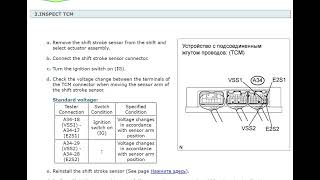
Identify the sensor's power, signal, and ground wires using a wiring diagram. With the key on, engine off, confirm the 5.0V reference voltage is present. Backprobe the signal wire and slowly move the shifter through each gear. The voltage must change smoothly (e.g., 0.5V to 4.5V). Sudden drops to 0V indicate a faulty sensor.
Tools: Digital Multimeter, backprobe pins, wiring diagram (Advanced) - [PRO TIP] Test Sensor/Circuit Resistance
With the component disconnected, check resistance. The ground wire from the sensor connector to the chassis ground must be near 0 Ω. Values outside the manufacturer's specified range for the sensor or shift motor indicate a failed component.
Tools: Digital Multimeter, wiring diagram, service manual (Advanced) - [PRO TIP] Analyze Sensor Waveform with an Oscilloscope
Connect to the sensor's signal wire. As you move the shifter, the waveform must be a smooth, clean line without dropouts. A noisy or glitchy pattern confirms a failing sensor or bad connection triggering the P0919 code.
Tools: Digital Storage Oscilloscope, wiring diagram (Advanced) - [PRO TIP] Check CAN Bus Voltages
If communication codes (U-codes) are present, check the CAN bus integrity at the OBD-II port. With the key on, CAN High is approximately 2.6V and CAN Low is approximately 2.4V. Voltages stuck high, low, or equal indicate a network problem.
Tools: Digital Multimeter or Oscilloscope (Advanced) - Diagnose the Transmission Control Module (TCM)
If all wiring and sensors test perfectly, use a bi-directional scan tool to check for internal TCM faults, monitor live data streams, and check for software updates. If the TCM receives a good sensor signal but fails to command the transmission, the TCM is faulty.
Tools: Advanced bi-directional scan tool (Professional)
When This Code Triggers (Freeze-Frame Conditions)
- Engine Coolant Temp: 180-210°F (82-99°C) (The fault often occurs when the vehicle is fully warmed up and has been running for some time.)
- RPM: Variable (often 700-2500 RPM) (The error logs during a shift event, either from a stop or while accelerating/decelerating at city speeds.)
- Vehicle Speed: 0-45 mph (0-72 kph) (Most likely to trigger during stop-and-go driving or when shifting gears at low to moderate speeds.)
- Gear Commanded vs. Actual: Mismatch (e.g., Commanded: 3, Actual: 2) (The TCM commands a gear change, but the sensors report the transmission did not successfully complete the shift.)
Related Codes
- P0915 - Gear Shift Position Circuit Range/Performance — P0915 indicates the sensor's signal is illogical. P0919 is a general control error resulting from the bad data indicated by P0915. Diagnose P0915 first.
- P0916 - Gear Shift Position Circuit Low — This specific electrical fault means the signal voltage is below the specified range, due to a short to ground or a failed sensor. Find and fix the short causing P0916 to resolve P0919.
- P0917 - Gear Shift Position Circuit High — This indicates the signal voltage is above the specified range, caused by a short to voltage. Fixing the P0917 fault resolves the P0919 control error.
- U0101 - Lost Communication with TCM — P0919 means the TCM is online but receiving bad data. U0101 means the TCM itself is offline. If your scanner cannot talk to the TCM, the problem is U0101 (power, ground, or network wiring issue).
- P0705 - Transmission Range Sensor Circuit Malfunction — This code is closely related and used interchangeably with the P0914-P0918 series on Hyundai/Kia models. It points directly to a fault in the sensor that tells the computer which gear is selected.
Climate & Environmental Factors
- High Humidity / Road Salt: Promotes corrosion on external wiring harnesses, connectors, and the inhibitor switch. This corrosion increases electrical resistance, causing signal errors that trigger P0919.
- Extreme Cold: Causes wiring to become brittle and susceptible to breaking from vibration. It also causes mechanical parts within the shifter assembly to become stiff, leading to a control error.
- High Heat: Prolonged exposure to high ambient or engine temperatures accelerates the breakdown of electronic components within sensors and control modules.
How to Talk to a Mechanic About This Code
Say this: "I have an OBD-II code P0919, which is a Gear Shift Position Control Error, and my car is stuck in limp mode. I'd like to schedule a diagnostic to determine if the cause is electrical, like the position sensor or wiring, or a more complex control module or mechanical issue."
This signals to the shop that you are informed. It directs their diagnostic process toward the most likely causes (sensor, wiring, TCM) and discourages them from immediately suggesting a costly, full transmission replacement without proper evidence.
Avoid saying:
- 'My car is acting weird and won't shift right.' (too vague)
- 'Just fix the check engine light.' (invites replacing parts until the light goes out)
- 'I think I need a new transmission.' (You may have just suggested the most expensive possible repair)
Questions to ask before authorizing the repair:
- How did you determine that [the specific part] has failed? Did you test the sensor's signal or inspect the wiring?
- Have you checked for any Technical Service Bulletins (TSBs) for a P0919 code on my specific vehicle?
- If you are recommending a TCM or shifter assembly replacement, can you show me why a sensor or wiring repair isn't the right fix?
- What is the warranty on the recommended repair, covering both the parts and your labor?
Where to Take It: Dealer vs Independent vs Chain
- Dealer:
Recommended for specific, known TSB-related failures on newer cars or if the vehicle is under warranty.
Best for: Vehicles under warranty., Newer vehicles (less than 10 years old) with known complex issues covered by TSBs (e.g., Ram Mechatronics, VW microswitch, Ford TCM)., Repairs requiring proprietary software for programming and relearn procedures.
Downsides: Highest labor rates., May replace an entire assembly (like a shifter) when a smaller component or kit would suffice. (Typical cost: +50% vs. baseline) - Independent Shop:
Best overall choice for most out-of-warranty P0919 repairs, especially if you find a reputable transmission specialist.
Best for: Out-of-warranty vehicles., Common P0919 causes like an external inhibitor switch or wiring repair., Finding a shop that specializes in transmissions is a major advantage.
Downsides: Quality varies greatly; vet shops carefully., May lack expensive, manufacturer-specific diagnostic and programming tools for the newest models. (Typical cost: +0% vs. baseline) - Chain Shop:
AVOID for P0919 diagnosis. The risk of misdiagnosis (e.g., quoting a transmission rebuild for a sensor fault) is extremely high.
Best for: Simple jobs like oil changes and brakes.
Downsides: Technician skill for complex diagnostics is inconsistent., High pressure to upsell services., Generally not equipped for in-depth electronic transmission diagnosis. (Typical cost: -10% vs. baseline)
When to Walk Away From the Repair
If the estimated repair cost exceeds 40% of the car's private-party value (use Kelley Blue Book), seriously consider selling or trading in the vehicle.
- Car worth $4000, fix is $2200: Walk away. The repair cost is over 50% of the car's value. It's not a sound financial decision.
- Car worth $12000, fix is $1800: Fix it. The repair cost is only 15% of the vehicle's value and well below the threshold.
- Car worth $2500, fix is $800: Borderline. At 32% of the car's value, the decision depends on the car's overall condition and your attachment to it. Get a second opinion before proceeding.
What Scan Tool You Need for This Code
Minimum: A scanner that reads and graphs live data for the transmission sensors.
A basic $20 code reader only tells you the P0919 code exists. It cannot show you the live voltage from the gear position sensor as you move the shifter, which is essential to determine if the sensor signal is dropping out. Without live data, you are guessing at the cause.
Budget: Bluetooth OBD-II Dongle (e.g., BlueDriver, BAFX Products) (~$50) — Connects to a smartphone app to read codes, clear them, and display live sensor data. This is sufficient to watch the gear position sensor voltage and see if it's faulty.
Mid-range: Innova 5610 or Foxwell NT-series (~$320) — These handheld scanners offer enhanced OEM-specific data for transmission systems. Some offer basic bidirectional controls to test actuators, helpful in diagnosing shift actuator faults.
Professional: Autel MaxiCOM MK808 / Launch CRP919E (~$500-700) — Provides full bidirectional control to command shifts and test actuators directly. Crucially, these tools perform transmission relearn/adaptation procedures required after replacing a TCM or mechatronic unit.
How to Clear the Code After You Fix It
- Ensure all connectors are securely fastened and the battery is reconnected.
- Use an OBD-II scan tool to erase the P0919 and any related fault codes from the TCM/PCM.
- Perform a complete drive cycle to allow the vehicle's readiness monitors to run their self-tests.
Drive cycle (~20 minutes): Start the engine cold. Idle for 3 minutes. Drive in stop-and-go city traffic for 10 minutes, including full stops. Drive at a steady highway speed (55-60 mph) for 10 minutes. Allow the vehicle to cool down completely. This helps the TCM relearn shift points.
Readiness monitors affected: Comprehensive Component Monitor, Transmission
Before emissions retest: drive at least 50 miles to fully set monitors.
Watch out for:
- Disconnecting the battery does not reliably clear the code from the TCM and resets all readiness monitors to 'Not Ready', guaranteeing an emissions test failure.
- If the underlying mechanical or electrical fault is not fixed, the code returns immediately upon the first detected error.
Will This Fail Emissions / State Inspection?
Yes — this code typically fails an OBD-II emissions inspection.
- California: An illuminated Check Engine Light is an automatic failure for the smog check. A full drive cycle must be completed to set all readiness monitors before a retest.
- New York: A vehicle automatically fails the emissions portion of the NYS inspection if the Check Engine Light is on.
- Texas: In counties requiring emissions testing, an active P0919 code causes an automatic inspection failure.
Most Commonly Affected Vehicles
- Ram 1500 (2020-2021) — Equipped with the ZF 8-speed transmission. TSB #09-003-21 REV. A links P0919 to a highly probable internal failure of the integrated TCM/valve body assembly (mechatronic unit).
- Volkswagen/Audi Golf, Jetta, Passat, Tiguan, A3 (2013-2021) — On models with a DSG transmission, this code is commonly caused by a failed internal microswitch in the shifter assembly. VW has a TSB with a repair kit (part #5Q0713128A) to install an external microswitch.
- Ford Focus, Fiesta (2012-2018) — Models with the DSP6 PowerShift automatic transmission have well-documented TCM failures. Ford issued extended warranty program 14M02, covering the TCM for 10 years or 150,000 miles.
- Hyundai / Kia Tucson, Santa Fe, Sorento, Veloster (2011-2017) — A faulty inhibitor switch (transmission range sensor) is a very common cause for this code. Part number 42700-23000 is a common replacement.
- Toyota Corolla, Yaris, Auris (2007-2014) — Models with Multi-Mode Transmissions (MMT) set this code due to the shift stroke sensor or the 'shift and select' actuator motors failing.
- Honda Civic, Jazz (2006-2012) — Vehicles with the 'i-SHIFT' automated manual gearbox experience P0919 related to the clutch actuator or needing a 'neutral position learning' procedure performed.
- Chevrolet Cruze, Sonic, Malibu (2011-2016) — Issues with the shift lever assembly, internal position sensor, and the connecting wiring harness frequently cause P0919 on these models.
- BMW Various with Steptronic Transmissions (2010-2023) — The fault is often in the electronic gear selector switch (GWS) module itself or indicates a severe internal fault in the mechatronics unit. Diagnosis requires a BMW-specific scan tool.
Manufacturer-Specific Notes
- Ram/Chrysler/Dodge: On newer trucks with the ZF 8-speed transmission, P0919 is a critical code almost always caused by an internal failure of the combined TCM/valve body unit (mechatronic), detailed in TSB 09-003-21 REV. A.
- Volkswagen/Audi: For DSG transmissions, the root cause is a tiny, failed microswitch inside the shifter assembly. VW offers a TSB and a repair kit that installs a new, external switch to bypass the failed internal one.
- Ford: For 2012-2018 Focus/Fiesta models with the DPS6 PowerShift transmission, Ford extended the warranty on the Transmission Control Module (TCM) to 10 years or 150,000 miles under program 14M02.
- Honda: On i-SHIFT models, the fix is sometimes as simple as having a dealer perform a 'neutral position learning' procedure with their diagnostic tool after a battery disconnect.
Real Owner Stories
2020 Ram 1500 Laramie at 40K miles
While pulling out into traffic, the truck refused to upshift, with the RPMs jumping but no gear change. The owner had to pull over, shift to Park, and then back to Drive to get it to function. The problem was intermittent.
What they tried:
- Took the truck to the dealer, who could not replicate the problem and found no codes.
- The issue reoccurred, and the owner returned to the dealer.
- On the second visit, the dealer diagnosed a failing TCM/valve body assembly, referencing TSB #09-003-21 REV. A.
Outcome: The dealer replaced the entire mechatronic (TCM/valve body) unit under warranty. The issue was resolved.
Lesson: For 2020-2021 Ram 1500s, P0919 is a known and serious issue pointing to the TCM/valve body. Intermittent shifting problems require a dealer visit referencing the specific TSB.
2017 VW Golf GTI (DSG) at 75K miles
The check engine light came on, and the dashboard gear indicator started flashing. The car occasionally hunted for a gear at low speeds. The scanner showed code P0919.
What they tried:
- An independent shop quoted $1,200 to replace the entire shifter assembly, stating the internal position sensor was bad.
- The owner searched online forums and found discussions about a common microswitch failure and a VW TSB.
- They purchased the VW shifter repair kit (part #5Q0713128A) online for $70.
Outcome: The owner had the independent shop install the TSB repair kit instead of the full assembly. The total cost was $400 ($70 part + labor). The code was cleared and did not return.
Lesson: Always search for TSBs related to your specific vehicle. For VW/Audi DSG models, P0919 is commonly a failed microswitch, and a specific $70 repair kit fixes it without replacing the entire shifter.
2013 Hyundai Elantra at 110K miles
The car intermittently failed to start. Turning the key did nothing, but after jiggling the shifter, it eventually started. A P0919 code was stored, along with P0705 (Transmission Range Sensor Circuit Malfunction).
What they tried:
- Initially suspected a bad starter or battery, but both tested good.
- Replaced the gear shift position sensor (inhibitor switch) located on the outside of the transmission case.
Outcome: The owner purchased an aftermarket inhibitor switch (Standard Motor Products NS-319) for $80 and replaced it themselves in one hour. The no-start issue was completely resolved.
Lesson: A no-start condition combined with a P0919 points directly to the inhibitor/range sensor. If wiggling the shifter allows the car to start, this external, inexpensive sensor is the culprit.
2012 Ford Focus (DPS6) at 95K miles
Vehicle experienced harsh, jerky shifting, a flashing transmission warning light, and eventually got stuck in limp mode with a P0919 code.
What they tried:
- The owner checked for warranty extensions due to known PowerShift transmission issues.
- They discovered Ford's Customer Satisfaction Program 14M02, extending the TCM warranty to 10 years or 150,000 miles.
Outcome: The Ford dealer confirmed the TCM failed. The part and labor were completely covered under the 14M02 warranty extension, saving the owner a $1,500 repair bill.
Lesson: For high-failure-rate components like the Ford DPS6 TCM, manufacturers issue extended warranties. Always check for warranty extensions before paying for a major repair.
How to Prevent This Code From Triggering
- Change transmission fluid at recommended intervals (Every 30,000-60,000 miles for most automatics) — Clean fluid maintains proper hydraulic pressure for shifting and cools electronic components like the TCM. Degraded fluid leads to overheating and premature electronic failure.
- Periodically inspect and clean external electrical connectors (Every 2 years or during other under-vehicle service) — Connectors for components like the inhibitor switch are exposed to road salt and moisture. Cleaning and applying dielectric grease prevents corrosion that causes signal errors.
- Address fluid leaks immediately (As soon as noticed) — Leaking fluids contaminate and degrade the insulation of nearby wiring harnesses, leading to shorts. A transmission fluid leak causes low fluid levels, leading to shifting errors.
- Ensure engine and chassis grounds are clean and tight (During battery replacement or every 3-5 years) — The TCM and sensors rely on solid ground connections for accurate voltage readings. Corrosion creates resistance, causing erratic sensor signals that trigger a false P0919.
- Avoid aggressive driving and excessive heat (Daily habit) — Harsh acceleration and towing heavy loads generate excess heat in the transmission. This heat accelerates the breakdown of sensitive electronic components within the transmission.
Frequently Asked Questions
Can a bad battery cause a P0919 code?
Yes. Control modules and sensors require a stable voltage to operate correctly. A failing battery causes voltage drops and electrical noise that lead to incorrect signals and trigger a false P0919 code. Always verify battery health early in your diagnosis.
Will clearing the code fix the problem?
No. Clearing the code only erases the fault record and turns off the check engine light temporarily. The fault is physical, and the code returns as soon as the control module runs its self-test again.
Is it safe to drive with a P0919 code?
No. The transmission fails to engage or stay in Park, allowing the vehicle to roll away unexpectedly. You also risk being stranded if the car gets stuck in neutral or limp mode.
How much does it cost to diagnose a P0919 code?
Most repair shops charge a standard diagnostic fee ranging from $125 to $185. This fee covers the initial code scan and one hour of labor to perform preliminary checks on wiring and components.
Where is the gear shift position sensor located?
In many cars, it is part of the main shifter assembly in the center console. In trucks and Hyundai/Kia models, it is an external 'inhibitor switch' mounted on the side of the transmission where the shift cable connects.
My shifter feels loose and now I have a P0919 code. Are they related?
Yes. A loose shifter handle, worn bushings, or a stretched cable causes a physical misalignment between the shifter's position and the sensor's reading. This mechanical mismatch directly triggers a P0919 code. Fix the mechanical looseness before replacing electronic parts.
What are common misdiagnosis mistakes for P0919?
The most common mistake is immediately replacing an expensive component like the TCM or the entire shifter assembly without testing the wiring or checking for TSBs. On VWs, replacing the whole shifter instead of using the $70 TSB repair kit is a costly error.
What does 'Gear Shift Position Control Error' actually mean?
It means the transmission control module (TCM) detects a conflict. It either sees a gear position sensor signal that doesn't make sense, or it commanded a gear change but the transmission's speed sensors show the change never happened.
Key Takeaways
- Code P0919 indicates a critical mismatch between the selected gear and the transmission's actual state, creating a severe roll-away hazard that makes driving unsafe.
- The top three causes for P0919 are a failed gear shift position sensor (inhibitor switch), corroded wiring harnesses, or a mechanically worn shift lever assembly.
- Always search for Technical Service Bulletins (TSBs) before replacing parts; VW offers a $70 microswitch repair kit, and Ford extended TCM warranties to 10 years/150,000 miles for this exact issue.
- Expect repair costs to range from $225 for an aftermarket inhibitor switch replacement to over $2,000 for a complete Transmission Control Module (TCM) and valve body replacement.
- Never replace the TCM or shifter assembly without first verifying battery health (minimum 12.4V) and testing the gear position sensor's 5.0V reference signal with a multimeter.
Helpful Videos

Shop the Parts Behind P0919
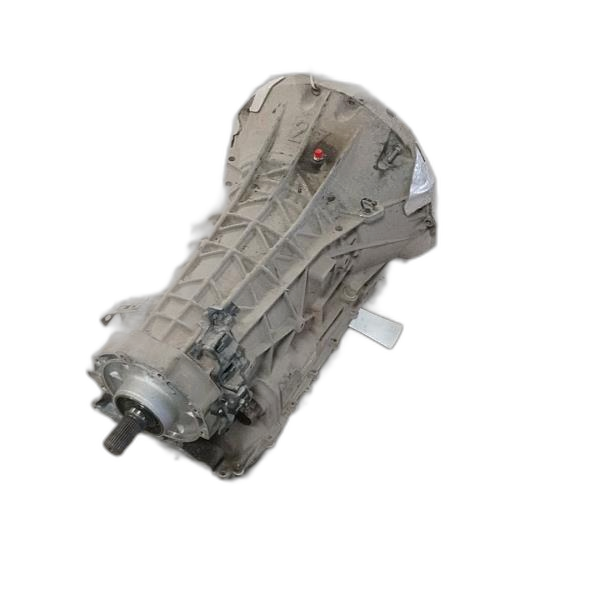
Below are the parts most often responsible for code P0919, ranked by how frequently each one is the actual culprit (per the diagnosis above). Tap any to see what we have for your vehicle.




The information in this article is provided for general reference and educational purposes only. Vehicle specifications, procedures, and part compatibility can vary by production date, trim level, and region. Always consult your vehicle's factory service manual and verify part numbers before purchasing or performing repairs. Safety-critical components such as airbags, seat belts, and braking systems should be installed by a qualified professional.
- 🧭 Diagnostic Flowchart
- 🎬 Helpful Videos
- 🛍️ Shop This Part
- What Does P0919 Mean?
- Can I Drive With P0919?
- Common Causes
- Symptoms
- Common Fixes & Costs
- Used vs. New Parts: Buying Guide
- What Happens If You Wait — Timeline
- Cost of Not Fixing It
- Diagnosis Steps
- When This Code Triggers (Freeze-Frame Conditions)
- Related Codes
- Climate & Environmental Factors
- How to Talk to a Mechanic About This Code
- Where to Take It: Dealer vs Independent vs Chain
- When to Walk Away From the Repair
- What Scan Tool You Need for This Code
- How to Clear the Code After You Fix It
- Will This Fail Emissions / State Inspection?
- Most Commonly Affected Vehicles
- Manufacturer-Specific Notes
- Real Owner Stories
- 2020 Ram 1500 Laramie at 40K miles
- 2017 VW Golf GTI (DSG) at 75K miles
- 2013 Hyundai Elantra at 110K miles
- 2012 Ford Focus (DPS6) at 95K miles
- How to Prevent This Code From Triggering
- Frequently Asked Questions
- Can a bad battery cause a P0919 code?
- Will clearing the code fix the problem?
- Is it safe to drive with a P0919 code?
- How much does it cost to diagnose a P0919 code?
- Where is the gear shift position sensor located?
- My shifter feels loose and now I have a P0919 code. Are they related?
- What are common misdiagnosis mistakes for P0919?
- What does 'Gear Shift Position Control Error' actually mean?
- Key Takeaways
- 🎟️ Get 5% Off