

OBD-II Code P0928: Gear Shift Lock Solenoid Circuit Open
The Ultimate Guide to What P0928 Means, Why It Triggers, and How to Fix It
- Code P0928 indicates an electrical open circuit in the shift lock safety system, physically locking your gear shifter in Park.
- Over 80% of P0928 triggers stem from simple electrical faults: a blown fuse, a broken wire in the center console, or connector corrosion from spilled drinks.
- You cannot drive the vehicle normally, but inserting a key or screwdriver into the manual shift lock override slot allows you to shift into Neutral for towing.
- Test the brake lights and inspect the shift interlock fuse before buying parts; a $15 faulty brake switch or a $2 blown fuse often mimics a failed $300 shifter assembly.
What Does P0928 Mean?

P0928 means your vehicle's Transmission Control Module (TCM) detects an open circuit in the gear shift lock solenoid system. This solenoid is a safety device that prevents shifting out of Park unless the brake pedal is depressed. An 'open circuit' means there is a physical break in the electrical path—such as a cut wire, corroded connector, or burned-out solenoid coil—preventing the solenoid from receiving the power it needs to unlock the shifter.
Technical definition: The official SAE/OBD-II definition for code P0928 is "Gear Shift Lock Solenoid/Actuator Control Circuit 'A' Open". This indicates the control module detects a complete lack of electrical continuity in the circuit responsible for activating the shift lock solenoid.
Can I Drive With P0928?

No — Do Not Drive. This critical fault permanently locks the gear shifter in Park. The vehicle is immobilized and cannot be driven. You must use the manual shift lock override slot to disengage Park for towing or moving the vehicle to a repair location.
Common Causes

- Damaged wiring or loose connectors (Very Common) — Wires routed through the center console frequently fray, break, or disconnect from constant shifter movement and vibration. Spilled drinks cause severe corrosion in the connectors, creating an immediate open circuit.
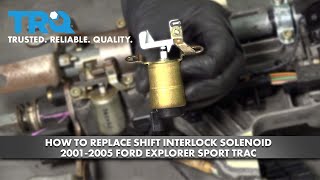
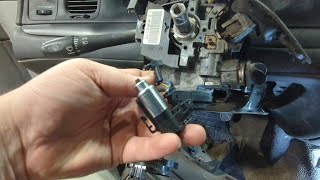
- Failed gear shift lock solenoid (Common) — The solenoid's internal electromagnetic coil burns out over time, creating an internal open circuit that prevents activation even when power is supplied.
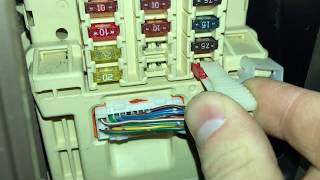
- Blown fuse or faulty relay (Common) — A short circuit or electrical overload blows the shift interlock system fuse. 🎬 See how a simple blown fuse can cause this code. Once the fuse blows, the solenoid loses power, and the control module registers an open circuit.
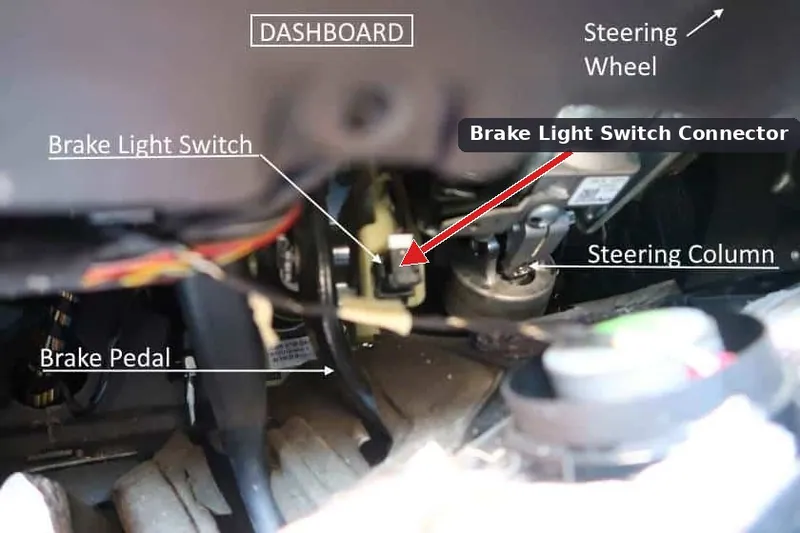
- Faulty brake light switch (Less Common) — The system requires a brake pedal input signal to unlock the shifter. A faulty brake light switch fails to send this signal, mimicking P0928 symptoms and preventing solenoid activation.
- Poor ground connection (Less Common) — A corroded, loose, or broken ground wire for the shift interlock solenoid creates an open circuit condition, triggering P0928 even if the power wire and solenoid are perfectly functional.
- Aftermarket accessories or modifications (Rare) — Improperly installed remote starters, alarms, or audio systems interfere with or sever the shift interlock wiring, leading to an open circuit.
- Faulty Transmission Control Module (TCM) (Rare) — The control module operating the solenoid's circuit suffers a failed internal driver. 🎬 Watch a transmission expert's secret for diagnosing P0928 quickly. This requires module replacement and reprogramming.
Symptoms
- Gear shifter stuck in Park — The most definitive symptom. You press the brake pedal, but the shifter refuses to move out of the Park position, immobilizing the vehicle.
- Check Engine Light illuminated — The vehicle's computer triggers the Check Engine Light or a specific transmission warning message on the dashboard.
- Inability to start the engine — Certain ignition systems require a valid Park/Neutral signal from the shift interlock system before allowing the starter motor to crank.
- Cruise control inoperative — Because the cruise control system relies on the brake light switch signal to disengage, a fault in this shared circuit disables cruise control.
Diagnostic Flowchart
Tap your situation to follow the diagnostic path that matches what you're seeing on this code.
Common Fixes & Costs
- Replace Blown Fuse — Parts: $1-$5, Labor: $0-$50, ~0.1 hr book time (DIY)
- Repair or Replace Wiring Harness/Connector — Parts: $10-$150, Labor: $100-$400, ~1.5 hr book time (Intermediate)
- Replace Gear Shift Lock Solenoid/Actuator
— Parts: $150-$400, Labor: $100-$300, ~1.2 hr book time
(Intermediate)
Chrysler/Dodge (Common): OEM 5057506AH (Alt: Dorman 924-985 ($50-$80))
Dodge Journey (62TE Trans): OEM 68376696AA (Solenoid Pack) (Alt: Dorman 609-043 ($250-$310)) - Replace Brake Light Switch
— Parts: $15-$50, Labor: $50-$100, ~0.6 hr book time
(DIY)
Chrysler 300 (2015-2020): OEM 05189366AB (Alt: Standard Motor Products PBS141 ($15))
Ford Escape (2013-2019): OEM GL3Z-13480-A (Alt: Duralast DR4028VC ($25-$35)) - Replace Transmission Control Module (TCM) — Parts: $200-$800, Labor: $100-$300, ~2.5 hr book time (Professional)
Used vs. New Parts: Buying Guide
When a used part is worth it: A used shifter assembly is a cost-effective option for vehicles over 10 years old, especially when a new OEM part is discontinued or prohibitively expensive.
Donor-vehicle mileage cap: roughly under 80000 miles for the part to have meaningful remaining life.
Donor quality checklist:
- Verify the donor vehicle's center console shows no signs of liquid spills or sticky residue.
- Inspect the electrical connector pins for green or white corrosion.
- Match the part number exactly, as shifter assemblies vary heavily by trim level.
Decision logic:
- If The fault requires replacing the entire shifter assembly and the vehicle is over 10 years old → Purchase a used part from a low-mileage donor to save money.
- If Only the solenoid is bad and can be purchased separately → Buy a new aftermarket or OEM solenoid; the labor to install it makes a used part too risky.
- If The vehicle is less than 8 years old → Purchase a new OEM or high-quality aftermarket part to ensure longevity.
Warranty tradeoff: Used parts typically include a 30-day warranty. New aftermarket parts offer 1-year to lifetime warranties. New OEM parts carry a 1-2 year warranty.
Worst-case if a used part fails: $200-$500 in repeated labor costs to disassemble the center console if a used part fails prematurely.
What Happens If You Wait — Timeline
- Immediate: Code P0928 is set, the Check Engine Light illuminates, and the shifter locks in Park. The vehicle is immobilized. (MPG impact: N/A% · Added cost: $75-$200 for a tow to a repair shop.)
- 0-1 week (Owner attempts improper fixes): Forcing the shifter out of Park without using the override breaks the plastic shifter housing or snaps the shifter cable. (MPG impact: N/A% · Added cost: $250-$500 for a new shifter assembly or cable.)
- 1 week - 2 months (Owner relies on override): Using the manual shift lock override daily bypasses a primary safety interlock, creating a severe risk of unintended vehicle movement. (MPG impact: N/A% · Added cost: $0, but carries a high safety and liability risk.)
- 2+ months (Ignoring the root cause): If the fault is an intermittent short circuit, continuously replacing fuses damages the driver circuit inside the Body Control Module (BCM) or Transmission Control Module (TCM). (MPG impact: N/A% · Added cost: $500-$1100 to replace and program a control module.)
Cost of Not Fixing It
- Immediate: The vehicle is immobilized and cannot be shifted out of Park. (Added cost: $75-$200 for a tow to a repair shop.)
- 0-1 month: Attempting to forcefully yank the shifter out of Park breaks the plastic shifter housing, bends the linkage, or snaps the transmission cable. (Added cost: $250-$800 for a new shifter assembly or linkage repair.)
- 1+ months: Relying daily on the manual shift lock override bypasses a critical safety system, risking unintended vehicle rollaway. (Added cost: High liability risk in the event of an accident.)
Diagnosis Steps
- Read the Diagnostic Trouble Code (DTC)
Use an OBD-II scanner to confirm P0928 is the active code. Record freeze frame data and note any other codes present, especially brake switch codes (P0571) or communication codes (P0705).
Tools: OBD-II Scanner (Beginner) - Test the Brake Light Switch
With the ignition on, have a helper stand behind the vehicle. Press the brake pedal and confirm the brake lights illuminate. If they do not, the brake light switch or its circuit is faulty and is the primary suspect.
Tools: Helper (Beginner) - Check the Fuses and Relays
Consult your owner's manual to locate the fuse box. Inspect the fuses related to the shift interlock system, transmission controls, and body control module. Replace any blown fuses, but note that a blown fuse indicates an underlying short circuit.
Tools: Owner's Manual, Fuse Puller (Beginner) - Inspect the Wiring and Connectors
Remove the center console trim to access the gear shifter. Perform a thorough visual inspection of the wiring harness. Look for frayed wires, broken connections, and sticky residue or green corrosion from spilled liquids.
Tools: Flashlight, Trim Removal Tools (Beginner) - Test the Solenoid Circuit for Power
Disconnect the solenoid connector. Set a multimeter to DC volts. Have a helper press the brake pedal with the ignition on. Check for battery voltage (11-13V) at the power supply pin. If voltage is missing, the problem is upstream in the wiring.
Tools: Multimeter, Vehicle Wiring Diagram (Intermediate) - Test the Solenoid Resistance
With the connector unplugged, set your multimeter to Ohms (Ω). Measure the resistance across the solenoid's two terminals. A good solenoid typically reads between 5 and 50 ohms. A reading of 'OL' (infinite resistance) confirms the solenoid coil is broken and requires replacement.
Tools: Multimeter, Service Manual (Intermediate) - Perform an Active Command Test
Use a professional bidirectional scan tool to command the shift lock solenoid 'ON'. Listen for an audible click from the solenoid. If it clicks, the solenoid is functional, pointing to a module or input issue. If it does not click, the fault lies in the solenoid or its wiring.
Tools: Professional Scan Tool (Professional) - Perform a Continuity and Ground Check
Disconnect the battery. Unplug the connectors at the control module and the solenoid. Set the multimeter to continuity mode. Probe the power and control wires between the two connectors. No beep indicates a broken wire. Verify the circuit's chassis ground point is clean and tight.
Tools: Multimeter, Vehicle Wiring Diagram (Professional) - Perform a Voltage Drop Test
With the circuit loaded (ignition on, brake pressed), connect one multimeter lead to the battery positive terminal and the other to the power pin at the solenoid connector. A reading higher than 0.2V indicates excessive resistance in the wiring. Repeat on the ground side.
Tools: Multimeter (Advanced) - Check Live Data PIDs
Using a scan tool, monitor live data for 'Brake Pedal Position' and 'Transmission Range Sensor'. If the module does not register the brake pedal as 'Pressed' or the transmission as 'Park', it will refuse to activate the solenoid.
Tools: Professional Scan Tool (Advanced)
When This Code Triggers (Freeze-Frame Conditions)
- Vehicle Speed: 0 mph (Vehicle is stationary.)
- Engine RPM: 600-900 RPM (Engine is at idle speed.)
- Transmission Range: PARK (The code sets the moment the driver attempts to shift out of Park.)
- Brake Pedal Status: ON / PRESSED (The fault is detected when the computer attempts to energize the solenoid after receiving the brake pedal input.)
- Engine Load: < 10% (Engine is at idle with no load.)
Related Codes
- P0929 — P0929 indicates an intermittent fault in the shift lock circuit, causing the shifter to stick occasionally. P0928 indicates a hard 'open' circuit, meaning the shifter is stuck permanently.
- P0705 — P0705 indicates a fault in the Transmission Range Sensor. If the TCM does not know the shifter is in Park, it refuses to operate the shift lock solenoid. Diagnose P0705 first if the dashboard gear indicator is blank.
- P0571 — P0571 points to a fault in the Brake Switch circuit. The brake signal is mandatory to energize the shift lock solenoid. If your brake lights are inoperative, diagnose P0571 first.
- P0930 — P0930 refers to the Transmission Fluid Pressure Sensor. A fault here forces the TCM into a fail-safe mode, which locks the shifter in Park as a precaution.
Climate & Environmental Factors
- Liquid Spills: Direct liquid spills (coffee, soda) into the center console cause severe corrosion on the shift lock solenoid's connector. This corrosion creates high resistance or a complete open circuit, directly triggering P0928.
- Salt Belt Regions: In regions utilizing heavy winter road salt, chassis ground points corrode rapidly. A corroded ground wire for the shift interlock circuit creates an open circuit condition.
- Extreme Cold: Extreme cold makes plastic wire insulation brittle. The physical stress of moving the shifter in sub-zero temperatures snaps already-weakened wires inside the console.
How to Talk to a Mechanic About This Code
Say this: "I have a P0928 code and my shifter is stuck in Park. Please start by checking the shift interlock fuse, brake light switch function, and wiring in the center console before quoting a full shifter replacement."
This signals you know the common causes are minor electrical issues. It directs the technician to perform a logical, cost-effective diagnosis instead of immediately jumping to the most expensive conclusion.
Avoid saying:
- 'My car is stuck in Park, just fix it.'
- 'My check engine light is on, can you look at it?'
- 'I think I need a new shifter.'
Questions to ask before authorizing the repair:
- Did you test the solenoid's resistance with a multimeter? What was the reading?
- Did you confirm there is voltage at the solenoid's connector when the brake is pressed?
- Can the broken wire be repaired instead of replacing the entire harness?
Where to Take It: Dealer vs Independent vs Chain
- Dealer:
Recommended only if a specific TSB applies or if a control module requires programming.
Best for: Vehicles under warranty., Vehicles with known TSBs or recalls for this issue., When diagnosis points to a failed and programmable control module (TCM/BCM).
Downsides: Highest labor rates., Dealers prefer replacing full shifter assemblies rather than repairing wiring. (Typical cost: +50% vs. baseline) - Independent Shop:
Best fit for most P0928 scenarios. An experienced independent technician efficiently traces the open circuit without unnecessarily replacing major parts.
Best for: Out-of-warranty vehicles., Diagnosing and repairing common electrical faults like broken wires or failed solenoids., Cost-conscious owners.
Downsides: Quality varies; look for shops with ASE-certified technicians specializing in electrical diagnostics. (Typical cost: +0% vs. baseline) - Chain Shop:
Avoid for a full P0928 diagnosis, which requires disassembling the vehicle's interior and performing detailed circuit tests.
Best for: Simple fixes like a blown fuse or an easily accessible brake light switch replacement.
Downsides: Lacks the in-depth electrical diagnostic expertise for tracing open circuits in harnesses., High pressure to sell parts leads to misdiagnosis. (Typical cost: -10% vs. baseline)
When to Walk Away From the Repair
If the estimated repair cost for P0928 exceeds 40% of your car's private-party market value, pause and evaluate your options.
- Car worth $3000, fix is $1200: Walk away. The repair cost is a significant percentage of the car's value, indicating a complex module failure.
- Car worth $8000, fix is $450: Fix it. This cost suggests a standard repair like a new solenoid or wiring fix, restoring full function to the vehicle.
- Car worth $5000, fix is $2200: Borderline. Get a second opinion. This high cost indicates a dealer quoting a full shifter and module replacement. An independent shop will likely find a cheaper wiring solution.
What Scan Tool You Need for This Code
Minimum: A code reader that reads powertrain codes and views live data for the brake switch status.
A $20 reader only confirms the P0928 code. It cannot show if the computer sees the brake pedal press (live data) or command the solenoid to activate (bidirectional control), leaving you guessing at the cause.
Budget: BlueDriver Pro (~$100) — Reads the P0928 code and displays live data, allowing you to see if the brake pedal switch registers as 'On' or 'Off' when pressed.
Mid-range: Foxwell NT809BT / XTOOL A30M (~$200-400) — Includes full bidirectional control. This allows you to command the shift lock solenoid 'On' directly from the tool. A click confirms the solenoid is good; no click confirms the fault is in the circuit.
Professional: Autel MaxiCOM MK808BT (~$450-600) — Offers robust bidirectional control, OE-level diagnostics for all systems, and advanced functions required if the problem is a complex module issue.
Rent vs buy: Auto parts stores read codes for free but do not offer tools with live data or bidirectional features. Buying at least a budget pick is highly recommended to avoid replacing the wrong parts.
How to Clear the Code After You Fix It
- Reconnect the battery if disconnected.
- Use an OBD-II scan tool to clear the P0928 code.
- Start the engine, press the brake, and verify the shifter moves smoothly out of Park.
- Perform a short test drive to confirm normal operation.
Drive cycle (~30 minutes): P0928 is an electrical fault that does not require a complex emissions drive cycle to verify the repair. If the circuit is fixed, the code will not return upon shifting. To reset general emissions readiness monitors for state inspection: Cold start, idle for 3 minutes with A/C on. Accelerate to 55 mph and hold for 5 minutes. Decelerate to 20 mph without braking. Accelerate to 60 mph and hold for 5 minutes. Decelerate to a complete stop.
Readiness monitors affected: Catalyst (CAT) monitor, Evaporative (EVAP) System monitor, Oxygen (O2) Sensor monitor, Oxygen Sensor Heater monitor
Before emissions retest: drive at least 50 miles to fully set monitors.
Watch out for:
- Clearing the code does not fix an open circuit; the code returns immediately upon pressing the brake pedal if the repair failed.
- Disconnecting the battery clears the code but resets all readiness monitors, guaranteeing an emissions test failure until a full drive cycle is completed.
Will This Fail Emissions / State Inspection?
Yes — this code typically fails an OBD-II emissions inspection.
- California: An illuminated Check Engine Light results in an automatic smog check failure. After repair, a full drive cycle must be completed to set readiness monitors before a re-test.
- New York: A vehicle automatically fails the NYS inspection if the Check Engine Light is on. You can pass with one monitor 'Not Ready' (two for model years 1996-2000) after clearing the code.
- Texas: In emissions-testing counties, an illuminated Check Engine Light is an automatic failure. The vehicle must be driven 50-100 miles post-repair to reset monitors.
Most Commonly Affected Vehicles
- Chrysler 300 (2015-2020) — TSB RRT 15-057 addresses models with rotary shifters. The fault requires replacing the entire Electronic Shifter Module (ESM) rather than a standalone solenoid.
- Dodge Journey (2009-2019) — Commonly caused by a failed or heavily corroded shift lock solenoid located within the center console shifter assembly.
- Ford Escape (2013-2019) — Known to experience wiring harness failures near the shifter actuator, triggering P0928 and preventing the vehicle from shifting out of park.
- Hyundai Genesis (2009-2014) — The TCM is highly sensitive to voltage drops and sets P0928 immediately if it detects high resistance in the solenoid's power supply circuit.
- Honda Accord (2013-2017) — Frequently triggered by corroded connectors at the shift actuator following liquid spills in the center console.
- Subaru Outback (2010-2018) — Subaru extended the CVT warranty to 10 years/100,000 miles for these models. Any transmission code warrants checking warranty status with a dealer before attempting DIY repairs.
- Toyota Camry (2007-2011) — Frayed wiring harnesses in the center console area are the direct cause of the P0928 code on these specific model years.
- Chevrolet Malibu (2004-2012) — Notorious for a failed Brake-Transmission Shift Interlock (BTSI) solenoid. GM recall 14V252 also addressed a BCM issue causing identical symptoms.
- Ford Focus (2012-2016) — While famous for dual-clutch transmission failures, the complex electrical system also manifests P0928 when shifter wiring connectors fail.
Manufacturer-Specific Notes
- Chrysler/Dodge/Ram: On vehicles with rotary shifters, TSB RRT 15-057 dictates replacing the entire Electronic Shifter Module (ESM) rather than attempting to repair a solenoid or wire.
- Dodge: On the Grand Caravan, the Wireless Ignition Node (WIN) controls the shift interlock solenoid. Diagnosis must include checking the WIN module circuits, not just the TCM.
- GM (Chevrolet/Buick): A failed Brake-Transmission Shift Interlock (BTSI) solenoid inside the shifter assembly is the primary cause for P0928. Always check if NHTSA Campaign 14V252000 applies to your VIN first.
- Subaru: Subaru extended the CVT warranty to 10 years or 100,000 miles on many 2010-2018 models. Always check warranty status with a dealer before paying out of pocket for transmission electrical repairs.
Real Owner Stories
2010 Dodge Journey Stuck in Park
Vehicle was completely unable to shift out of Park. The P0928 code was present.
What they tried:
- Owner tested the solenoid with a multimeter and found no continuity, indicating an internal open circuit.
Outcome: The solenoid failed due to internal corrosion. Because the entire shifter assembly was also heavily corroded, the owner replaced the whole unit to permanently resolve the issue.
Lesson: A simple multimeter resistance test definitively confirms a failed solenoid. If the reading is 'OL' (Open Line), the solenoid is dead and must be replaced.
Land Rover D4 with P0928-13
Shifter was locked in Park and the car was stuck in limp mode. The owner measured 10V at the unplugged solenoid connector.
What they tried:
- Replaced the brake switch with no change.
- Tested the solenoid directly with a 12V battery; it worked perfectly.
- Remeasured voltage at the solenoid connector while plugged in and found it dropped to 2.9V.
Outcome: The owner correctly deduced the solenoid was good. The wiring had high resistance and could not supply enough current under load to activate the 12V solenoid.
Lesson: A voltage test on an unplugged connector is misleading. A 'voltage drop' test under load is mandatory to find high resistance in a circuit.
Audi Q5 with Intermittent P0928
Received a 'Transmission Malfunction' warning and the shifter was briefly stuck in Park. The problem disappeared and the car drove normally.
What they tried:
- The owner posted on a forum asking if the issue could be ignored.
Outcome: The immediate outcome was normal operation, but this is a classic sign of an impending hard failure caused by a loose connector or early-stage corrosion.
Lesson: Intermittent electrical faults rarely fix themselves. The P0928 code is a warning that a permanent failure is imminent; diagnose the issue before you get stranded.
How to Prevent This Code From Triggering
- Use caution with liquids in the center console. (Daily habit) — Liquid spills seep into the shifter assembly and corrode the solenoid connector, causing an immediate open circuit.
- Apply dielectric grease to accessible electrical connectors. (During other console/dash maintenance) — Dielectric grease seals out moisture and oxygen, preventing the corrosion that leads to high resistance on connector pins.
- Always use the parking brake before shifting into Park. (Every time you park) — Engaging the parking brake first lets the vehicle's weight rest on the brakes, reducing mechanical stress on the shifter linkage and interlock mechanism.
- Inspect and clean chassis ground points. (Every 30,000 miles in Salt Belt regions) — Road salt corrodes ground points, creating an open circuit even if the power side and solenoid are perfect.
Frequently Asked Questions
Can I drive my car with a P0928 code?
No. This code means your gear shifter is physically locked in the Park position, making the vehicle undrivable. You must use the manual override slot to shift into Neutral for towing.
How do I get my car out of Park if the shifter is stuck?
Locate the manual shift lock override, typically a small slot or covered button near the shifter. Insert your key or a small screwdriver into this slot to manually release the lock. Consult your owner's manual for the exact location.
Will clearing the code fix the problem?
No. P0928 indicates a hard electrical fault, such as a broken wire or blown fuse. Clearing the code does not repair the physical break, and the code returns instantly upon pressing the brake pedal.
I spilled coffee in my center console. Could that cause this code?
Yes. Spilled liquids are a leading cause of P0928. The liquid seeps into the shifter assembly and corrodes the electrical connector, creating an open circuit.
What is a common misdiagnosis for P0928?
A common misdiagnosis is immediately replacing the expensive shifter assembly without testing the circuit. The fault is frequently a simple broken wire or a $15 faulty brake light switch.
My brake lights work, so can I rule out the brake switch?
Mostly, yes. Functioning brake lights confirm the switch is sending a signal, pointing the diagnosis toward the shift lock solenoid or its dedicated wiring. However, vehicles with dual-circuit brake switches require checking a wiring diagram to be 100% certain.
Can a bad battery cause a P0928 code?
While a weak battery causes erratic electronic behavior, it is rarely the direct cause of P0928, which signifies a broken electrical circuit. Ensure your battery terminals are clean and tight before beginning deep electrical diagnostics.
Key Takeaways
- Code P0928 indicates an electrical open circuit in the shift lock safety system, physically locking your gear shifter in Park.
- Over 80% of P0928 triggers stem from simple electrical faults: a blown fuse, a broken wire in the center console, or connector corrosion from spilled drinks.
- You cannot drive the vehicle normally, but inserting a key or screwdriver into the manual shift lock override slot allows you to shift into Neutral for towing.
- Test the brake lights and inspect the shift interlock fuse before buying parts; a $15 faulty brake switch or a $2 blown fuse often mimics a failed $300 shifter assembly.
Helpful Videos
Shop the Parts Behind P0928
Below are the parts most often responsible for code P0928, ranked by how frequently each one is the actual culprit (per the diagnosis above). Tap any to see what we have for your vehicle.




The information in this article is provided for general reference and educational purposes only. Vehicle specifications, procedures, and part compatibility can vary by production date, trim level, and region. Always consult your vehicle's factory service manual and verify part numbers before purchasing or performing repairs. Safety-critical components such as airbags, seat belts, and braking systems should be installed by a qualified professional.
- 🧭 Diagnostic Flowchart
- 🎬 Helpful Videos
- 🛍️ Shop This Part
- What Does P0928 Mean?
- Can I Drive With P0928?
- Common Causes
- Symptoms
- Common Fixes & Costs
- Used vs. New Parts: Buying Guide
- What Happens If You Wait — Timeline
- Cost of Not Fixing It
- Diagnosis Steps
- When This Code Triggers (Freeze-Frame Conditions)
- Related Codes
- Climate & Environmental Factors
- How to Talk to a Mechanic About This Code
- Where to Take It: Dealer vs Independent vs Chain
- When to Walk Away From the Repair
- What Scan Tool You Need for This Code
- How to Clear the Code After You Fix It
- Will This Fail Emissions / State Inspection?
- Most Commonly Affected Vehicles
- Manufacturer-Specific Notes
- Real Owner Stories
- 2010 Dodge Journey Stuck in Park
- Land Rover D4 with P0928-13
- Audi Q5 with Intermittent P0928
- How to Prevent This Code From Triggering
- Frequently Asked Questions
- Can I drive my car with a P0928 code?
- How do I get my car out of Park if the shifter is stuck?
- Will clearing the code fix the problem?
- I spilled coffee in my center console. Could that cause this code?
- What is a common misdiagnosis for P0928?
- My brake lights work, so can I rule out the brake switch?
- Can a bad battery cause a P0928 code?
- Key Takeaways
- 🎟️ Get 5% Off