

P0934 on 2013 Ram 2500: Line Pressure Sensor Circuit Low Causes and Fixes
On a 2013 Ram 2500 with the 68RFE transmission, code P0934 is overwhelmingly caused by a faulty transmission line pressure sensor, also known as a transducer. This sensor is located externally on the passenger side of the transmission case, making it accessible. Replacing it with a quality OEM Mopar part (P/N 4799758AF) or a reputable aftermarket equivalent like Rostra is the most common and effective fix. Owners strongly advise against using cheap, unbranded aftermarket sensors, as they are wid
- P0934 on a 2013 Ram 2500 almost always points to the line pressure sensor (transducer).
- Do NOT use cheap aftermarket sensors; they are a very common source of misdiagnosis. Spend the extra money on an OEM Mopar part to avoid doing the job twice.
- The sensor is located on the outside of the transmission on the passenger side, making it a relatively easy DIY replacement.
- If a new OEM sensor doesn't fix the code, check the wiring harness for damage before assuming a more serious internal transmission problem.
- Do not continue to drive the vehicle, as you risk severe and costly damage to the transmission.
What's Unique About the 2013-2013 Ram 2500

For the 2013 Ram 2500, which primarily uses the 68RFE automatic transmission behind the 6.7L Cummins engine, this code is a very well-documented issue. The line pressure sensor (transducer) is a known high-failure part. Unlike some vehicles where the sensor is inside the transmission pan, on the 68RFE it is an externally mounted component on the passenger side of the transmission case, making replacement a relatively simple, bolt-off, bolt-on job. 🎬 Watch: Step-by-step P0934 sensor replacement and circuit testing. This platform is notoriously sensitive to the quality of this specific sensor. Numerous owner reports on forums like Reddit and CumminsForum confirm that cheap aftermarket parts from sources like eBay or Amazon often fail out-of-the-box or within a few drive cycles, causing the P0934 code to return. Using a genuine Mopar or a trusted OEM-equivalent like Rostra is critical for a lasting repair.
Diagnostic Flowchart

Tap your situation to follow the diagnostic path that matches what you're seeing on this vehicle.
Symptoms You May Notice
- Check Engine Light is on
- Transmission goes into "limp mode" (may get stuck in 1st or 4th gear)
- Harsh or erratic shifting
- Delayed engagement when shifting into gear
- Slipping in reverse, especially when the transmission is cold
- Reduced acceleration power
- Inability to shift to higher gears
- Replacing the entire transmission solenoid pack when only the inexpensive, external line pressure sensor is bad.
- Condemning the valve body or entire transmission before thoroughly testing the sensor and its wiring, and checking for a split internal filter.
- Using a cheap, low-quality aftermarket pressure sensor. This is a very common mistake. The new part is often faulty, causing the P0934 code to persist and leading the owner to incorrectly believe the sensor was not the root cause.
Most Likely Causes

- Faulty Transmission Line Pressure Sensor (Transducer) 🔴 High Probability → Shop Transmission Assembly This specific sensor is a known high-failure item on the 68RFE transmission. The market is flooded with low-quality aftermarket versions that are notoriously unreliable and fail at a high rate, a fact corroborated by numerous owner experiences.
How to confirm: With a capable scan tool, monitor the line pressure sensor voltage with the Key On, Engine Off (KOEO). The voltage should be stable and between 0.35 and 0.51 volts. If it reads near zero (e.g., 0.06V), the sensor is highly suspect. A definitive test is to unplug the sensor; the scan tool reading should jump to 5V. If it does, the wiring is almost certainly intact, and the sensor itself is bad.
Typical fix: Replace the line pressure sensor. It is located on the passenger side of the transmission case, held in by a single bolt. It is critical to use a high-quality OEM Mopar (P/N 4799758AF) or a reputable OEM-equivalent like Rostra (P/N 50-1040). Torque specs are not commonly cited, so snug-tight is sufficient. Avoid Dorman and other cheap brands for this part.
Est. part cost: $60-$110 for OEM/Rostra - Damaged Wiring or Connector 🟡 Medium Probability The wiring harness leading to the sensor is exposed to engine and exhaust heat, road debris, and vibration. This can lead to chafed insulation, corrosion in the connector pins, or a loose connection at the sensor's pigtail.
How to confirm: Visually inspect the wiring harness and connector for any signs of melting, chafing, or green/white corrosion. Check for a solid 5V reference signal and a good ground at the connector with a multimeter. Test the signal wire (T38) and ground wire (T160) for continuity back to the PCM, ensuring resistance is below 5.0 ohms.
Typical fix: Repair the damaged section of wiring or replace the pigtail connector if the pins are corroded or damaged.
Est. part cost: $15-$40 - Failed Internal Transmission Pan Filter ⚪ Low Probability → Shop Transmission Assembly Multiple owners have reported the flat, pan-style transmission filter (the one inside the pan) splitting at the seam where the plastic body meets the metal plate. This allows the transmission pump to suck in air, especially when the fluid is cold or the truck is on an incline, causing a momentary but significant drop in line pressure that can trigger pressure-related codes like P0934 or P0868.
How to confirm: This requires dropping the transmission oil pan for a visual inspection of the filter. If the filter has split along its seam, the failure will be obvious.
Typical fix: Replace both the spin-on and pan transmission filters. Use quality Mopar filters (Pan Filter: 5013470AE, Spin-on: 5179267AD) and refill with the correct ATF+4 fluid.
Est. part cost: $50-$90 for OEM filters
Rare But Worth Checking
- Faulty Transmission Control Module (TCM) or Powertrain Control Module (PCM): → Shop Transmission Assembly This is very rare and should be the last resort. The TCM/PCM should only be considered after the sensor, wiring, and internal transmission health (filters, fluid) have been exhaustively ruled out with known-good parts.
- Internal Hydraulic Leak / Worn Valve Body: On higher mileage trucks (over 100k miles), wear within the valve body, particularly the Solenoid Switch Valve (SSV) bore, can cause internal pressure leaks. This is a more complex issue that may present with multiple codes (like P0871) and drivability problems that a new sensor doesn't fix. This typically requires a valve body rebuild or replacement.
Diagnosis Steps
- Connect an OBD-II scanner and confirm P0934 is the primary code. Note any other transmission-related codes (e.g., P0868, P0871).
- Using a scan tool with live data, monitor 'Line Pressure Sensor Voltage' with Key On, Engine Off (KOEO). The reading should be stable and between 0.35V and 0.51V. A reading near 0V is a strong indicator of a failed sensor.
- While watching the live data, disconnect the sensor. The voltage on the scan tool should immediately jump to 5V. If it does, the wiring is confirmed to be good, and the sensor is faulty.
- If the voltage does not change when disconnected, or if the initial reading is erratic, perform a pin-out test at the connector. Check for 5V reference, a solid ground, and inspect the signal wire (T38) for shorts or opens back to the PCM. Resistance on the signal and ground (T160) circuits should be below 5.0 ohms.
- If the sensor and wiring test good, the next step is to drop the transmission pan. Inspect the pan filter for a split seam, which is a known issue that causes pressure loss.
- If the filter is intact and the problem persists after replacing the sensor with a known-good OEM or Rostra part, the issue may be a more complex internal problem like a worn valve body or a failing TCM.
Parts You'll Likely Need

- Transmission Line Pressure Sensor (Transducer)
(OEM #4799758AF)— This is the most common failure point for code P0934 on the 68RFE transmission.
Trusted brands: Mopar (OEM), Rostra (P/N: 50-1040)
OEM price range: $75-$110
Aftermarket price range: $20-$50 (Strongly Not Recommended) - Transmission Filter Kit (Pan and Spin-on)
(OEM #Pan: 5013470AE, Spin-on: 5179267AD)— A split pan filter can cause pressure loss and trigger this code. It's also good practice to change filters when servicing the transmission.
Trusted brands: Mopar (OEM), Wix, Baldwin
OEM price range: $60-$90
Aftermarket price range: $30-$50
Related Codes That Often Appear With This One
- P0933 — This code for 'Hydraulic Pressure Sensor Range/Performance' is often stored with P0934, as they both relate to implausible signals from the same sensor.
- P0935 — 'Line Pressure Sensor Circuit High' can appear with P0934 if the sensor's failure is intermittent, causing voltage to swing from too low to too high.
- P0868 — 'Line Pressure Low' can be triggered if a failed/split pan filter causes the pump to suck air, leading to an actual, not just perceived, drop in hydraulic pressure.
- P0871 — 'Overdrive Pressure Switch Rationality' can appear when the main line pressure is incorrect, causing issues in other hydraulic circuits. This code appearing after a sensor replacement can point towards a deeper issue like a worn valve body.
Technical Service Bulletins (TSBs) & Recalls
- 18-091-16: Lists P0934 and details a PCM software update to change the code from a one-trip to a two-trip fault to reduce erroneous check engine lights.
- 18-057-15 REV A: Also lists P0934 with a cluster of related transmission fault codes, likely superseded by the 2016 TSB.
- 18-030-14 REV. B: Mentions P0934 as part of a known group of transmission diagnostic trouble codes addressed by software updates.
Platform-Specific Known Issues
- The provided NHTSA Technical Service Bulletins (TSBs) #18-091-16, #18-057-15 REV A, and others all list P0934 as part of a group of transmission codes addressed by software updates or related component checks, confirming it is a known issue to the manufacturer.
Mechanic-Grade Diagnostic Values
- Line Pressure Sensor Voltage (KOEO, normal) — expected: 0.35V - 4.75V. Failure: A reading ≤ 0.35V for 0.18 seconds will set the code. A reading of ~0.06V is a common failure value.
- Line Pressure Sensor Voltage (KOEO, sensor disconnected) — expected: ~5V. Failure: If voltage does not jump to ~5V, it indicates a wiring issue (short or open) between the sensor and the PCM.
- Line Pressure Sensor Signal & Ground Circuit Resistance — expected: < 5.0 Ohms. Failure: Resistance above 5.0 Ohms indicates an open or high resistance in the (T38) Signal circuit or (T160) Ground circuit.
- Normal Line Pressure (During Shifts) — expected: 1034 to 1103 kPa (150 to 160 psi). Failure: Pressure significantly below this range during shifts can indicate internal leaks or pump issues, not just a sensor fault.
- KOEO Voltage (OEM Sensor) — expected: ~0.51V. Failure: A brand new, cheap aftermarket sensor may read 0.06V out of the box, while a good OEM sensor reads ~0.51V.
Scan Tool Commands That Help
- wiTECH or equivalent: Quick Learn Procedure — This procedure is necessary after replacing the valve body or solenoid pack to allow the TCM to learn the new components' hydraulic characteristics. It is not typically required for only replacing the external line pressure sensor, but may be recommended if drivability issues persist.
Wiring & Ground Locations
- (T38) Line Pressure Sensor Signal Circuit — Runs from the line pressure sensor connector to the Powertrain Control Module (PCM).. This is the wire that carries the voltage signal from the sensor. A short to ground on this wire will cause a P0934 code. An open circuit will prevent the signal from reaching the PCM.
- (T160) Sensor Ground Circuit — Runs from the line pressure sensor connector to the PCM, providing the ground reference for the sensor.. An open or high resistance in the ground circuit will cause an incorrect voltage reading, potentially triggering a P0934.
- (F856) 5-Volt Supply Circuit — Runs from the PCM to the line pressure sensor connector, providing the 5V reference voltage.. An open or short to ground on this circuit will starve the sensor of power, causing it to output an incorrect low voltage and set a P0934.
- Line Pressure Sensor Connector — External, on the passenger side of the 68RFE transmission case.. This connector is a primary point of failure due to exposure to heat, vibration, and potential corrosion. A poor connection here can mimic a failed sensor.
Real Owner Repair Stories
- RamForum.com user 'tallfetcher' (2013 Ram 1500 with 65RFE (similar architecture)) — Initially had P0870 (OD Hydraulic Pressure Test Fault) and limp mode.
❌ Tried (didn't work) Replaced the original line pressure transducer with a new Dorman part. This stopped the P0870 but immediately started causing a P0934 code., Inspected wiring pigtail, found no issues., Dropped pan and found a split transmission filter (which caused a P0868 code at high RPM), replaced filter, but P0934 returned the next day.
✅ What actually fixed it Replacing the new, faulty Dorman transducer with one from a junkyard resolved the P0934 code. The root cause was the bad aftermarket part. - YouTube channel 'Premium Fuel Only' (2014 Ram 2500 with 6.7L Cummins) — P0934 code, scan tool showed 0.06V from the sensor with KOEO.
❌ Tried (didn't work) Initially replaced the original sensor with a cheap sensor purchased from Amazon. The new Amazon sensor was also faulty and produced the same 0.06V reading and P0934 code.
✅ What actually fixed it Purchasing and installing a genuine dealer (Mopar) sensor fixed the issue. The new Mopar sensor immediately read a correct 0.51V at KOEO, and the code was resolved. - Reddit user 'Conscious-Bid7279' (2018 Ram 2500 6.7L Cummins with 144k miles) — P0934 code, limp mode (stuck in 1st, hard shift to 4th).
❌ Tried (didn't work) Replaced sensor with a cheap one from eBay; code returned in 30 minutes., Replaced the shift solenoid, filters, and fluid. This temporarily resolved the P0934 but then a P0871 code appeared after 4 hours of driving.
✅ What actually fixed it The final fix was replacing the entire valve body. The user's progression of codes (P0934 -> P0871) after trying simpler fixes pointed to a larger internal hydraulic leak within the valve body itself.
OEM Part Supersession History
4799758, 4799758ac, 4799758ad→4799758AF— Standard part revision and improvement over time.
Heads up: The latest version, 4799758AF, is the recommended replacement for all previous versions for this application.
Helpful Videos
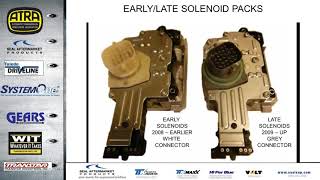
We Have This Part in Stock

The information in this article is provided for general reference and educational purposes only. Vehicle specifications, procedures, and part compatibility can vary by production date, trim level, and region. Always consult your vehicle's factory service manual and verify part numbers before purchasing or performing repairs. Safety-critical components such as airbags, seat belts, and braking systems should be installed by a qualified professional.
- Ram 2500:
- 🧭 Diagnostic Flowchart
- 🎬 Helpful Videos
- 🛍️ Shop This Part
- What's Unique About the 2013-2013 Ram 2500
- Symptoms You May Notice
- Most Likely Causes
- Rare But Worth Checking
- Diagnosis Steps
- Parts You'll Likely Need
- Related Codes That Often Appear With This One
- Technical Service Bulletins (TSBs) & Recalls
- Platform-Specific Known Issues
- Mechanic-Grade Diagnostic Values
- Scan Tool Commands That Help
- Wiring & Ground Locations
- Real Owner Repair Stories
- OEM Part Supersession History
- 🎟️ Get 5% Off