

P0935 on 2005-2015 Honda Pilot: Transmission Pressure Switch Causes and Fixes
This code typically means a transmission fluid pressure switch has failed or its wiring is shorted. On a Honda Pilot, this is a very common issue, often causing a flashing 'D' light and harsh shifting. Replacing the faulty external pressure switch is the most likely fix, costing around $50-$100 for the part. Use only genuine Honda parts for this repair.
- P0935 on your Pilot is almost certainly caused by a failed transmission fluid pressure switch.
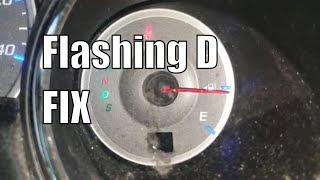
- Symptoms include a flashing 'D' light and harsh shifting.
- Do not drive the vehicle, as you can cause expensive internal transmission damage.
- Use Genuine Honda replacement parts for the switches, as aftermarket versions are known to fail quickly.
- The repair is accessible for a DIYer with basic tools, but be sure to identify the correct switch for your model year and test the circuit before replacing parts.
What's Unique About the 2005-2015 Honda Pilot
On Honda V6 vehicles from this era, including the Pilot, Odyssey, and Acura MDX, the automatic transmission uses several external pressure switches for different clutch packs (e.g., 3rd, 4th). These single-wire switches are a well-documented, high-failure-rate item. While P0935 is a generic code, on a Pilot it almost always points directly to one of these specific, accessible switches rather than a more complex internal sensor, making it a common and relatively simple DIY repair.
Generation note: The 2005-2015 range covers two generations. The first generation (2005-2008) and second generation (2009-2015) have different transmission designs and the location of the pressure switches varies. For the 1st gen, the 3rd and 4th gear switches are located on the lower front and side of the transmission, accessible from the driver's side wheel well. For the 2nd gen, switches are often located on the top of the transmission, requiring removal of the air intake box and battery tray for access. Always verify the location for your specific model year, as there can be multiple switches.
Symptoms You May Notice
- Flashing 'D' (Drive) indicator light on the instrument cluster.
- Harsh, abrupt, or slamming shifts.
- Check Engine Light is on.
- Vehicle enters 'limp mode,' getting stuck in a single gear (often 2nd or 3rd).
- Delayed engagement when shifting from Park into Drive or Reverse.
- Inability to shift into higher gears.
- Replacing the entire transmission when only an external, inexpensive switch has failed.
- Assuming the issue is low transmission fluid. While proper fluid level is critical, it does not typically cause a 'Circuit High' electrical code.
- Replacing the pressure switch without testing the wiring first. If the 5V signal remains after unplugging the sensor, the new sensor will not fix the problem.
Most Likely Causes
- Failed Transmission Fluid Pressure Switch 🔴 High Probability → Shop Transmission Assembly The pressure switches used by Honda during this period are a well-documented common failure item across many models, including the Pilot, Odyssey, and Accord. Aftermarket replacements are known to have an even higher failure rate, sometimes lasting only a couple of years before failing again.
How to confirm: Using a scan tool, observe the voltage for the specific pressure switch circuit. If it is stuck at ~5V, unplug the sensor. If the voltage then drops to 0V, the sensor is internally shorted and must be replaced. You can also test the single wire going to the switch with a multimeter; with the key on, it should have 5V or 12V. If voltage is present, the switch is the likely culprit. 🎬 Watch: How to test the pressure switch before replacing it
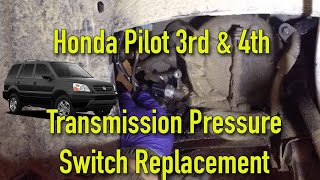
Typical fix: Replace the failed pressure switch and its corresponding crush washer. It's often recommended to replace other adjacent pressure switches at the same time as preventative maintenance, as they have a similar service life. Always use a Genuine Honda part.
Est. part cost: $40-$100 - Short in Wiring Harness 🟡 Medium Probability The wiring is routed near the front of the vehicle and can be susceptible to damage from road debris, heat, or rubbing against other components over time. Rodents chewing on the soy-based wire coating used by Honda can also cause shorts.
How to confirm: After unplugging the suspect sensor, check the voltage on the signal wire in the harness with a scan tool. If it still reads ~5V, the harness is shorted to a power source somewhere between the connector and the PCM. Visually inspect the harness for any chafing, melting, or corrosion.
Typical fix: Inspect the wiring harness for any visible damage, chafing, or corrosion at the connector. Repair or replace the damaged section of wire, sealing the repair with heat-shrink tubing.
Est. part cost: $5-$50 for repair materials
Rare But Worth Checking
- Faulty Powertrain Control Module (PCM): → Shop Engine Control Module (ECM) This is extremely rare and should only be considered after definitively ruling out both the sensor and the wiring harness as the cause.
- Corroded Connector: Water intrusion or contamination at the sensor's electrical connector can cause the pins to bridge, creating a short circuit that mimics a failed sensor. Always inspect the connector for green or white corrosion when replacing the sensor.
Diagnosis Steps
- Check and document any other stored trouble codes. Pay close attention to other transmission codes like P0847 or P0872, which can help identify the specific switch at fault.
- Check the transmission fluid level and condition. Ensure it is at the correct level and does not smell burnt.
- Connect a capable scan tool to view live transmission data. Identify which pressure switch circuit is reading high (stuck at ~5V).
- Locate the specific pressure switch on the transmission. This will vary by model year. For 1st gens (05-08), check the driver's side wheel well area. For 2nd gens (09-15), check the top of the transmission under the airbox.
- Visually inspect the wiring and connector for any obvious signs of damage, corrosion, or loose connections.
- Disconnect the sensor's electrical connector. If the scan tool voltage reading drops to 0V, the sensor has failed internally and needs to be replaced.
- If the voltage remains at ~5V after disconnecting the sensor, there is a short to power in the wiring harness that must be located and repaired.
- If the sensor and wiring are confirmed to be good, the issue may lie with the PCM, but this is highly unlikely.
Parts You'll Likely Need
- 3rd Clutch Transmission Fluid Pressure Switch
(OEM #28600-RKE-004)— This is one of the most common pressure switches to fail on this generation of Honda V6 transmissions. The OEM part number has been superseded multiple times (from 28600-RAY-003, etc.), indicating revisions to the part.
Trusted brands: Honda (Genuine OE), Standard Motor Products
OEM price range: $60-$90
Aftermarket price range: $30-$50 - 4th Clutch Transmission Fluid Pressure Switch
(OEM #28610-RKE-004)— Often fails along with the 3rd clutch switch or is replaced preventatively at the same time. Note that other switches exist for other gears/clutches.
Trusted brands: Honda (Genuine OE), Standard Motor Products
OEM price range: $60-$90
Aftermarket price range: $30-$50 - Crush Washer / Gasket
(OEM #90471-PW7-A00)— A new aluminum crush washer is required each time a pressure switch is replaced to ensure a proper seal and prevent transmission fluid leaks. They are often dropped and lost during the repair, so having extras is wise.
Trusted brands: Honda (Genuine OE)
OEM price range: $2-$5
Aftermarket price range: $1-$3
Related Codes That Often Appear With This One
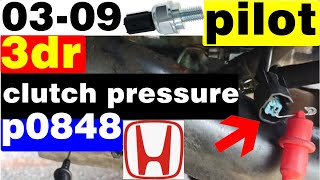
- P0847 — Refers to the 3rd Clutch Transmission Fluid Pressure Switch 'Circuit Low', another common failure mode for the same component.
- P0872 — Refers to the 4th Clutch Transmission Fluid Pressure Switch 'Circuit Low', often replaced along with the 3rd clutch switch.
- P0873 — Refers to the 4th Clutch Transmission Fluid Pressure Switch 'Circuit High', a similar fault on a different clutch circuit.
- P0934 — The opposite of P0935, indicating 'Hydraulic Pressure Sensor Circuit Low'. Seeing either code points to a problem in the same sensor circuit.
Platform-Specific Known Issues
- Owners frequently report that using non-OEM (aftermarket) pressure switches leads to premature failure, sometimes within months or a couple of years. It is highly recommended to use Genuine Honda parts for this repair.
- On 2nd generation models, accessing the switches on top of the transmission requires removing the battery and air intake assembly, which can be the most time-consuming part of the job.
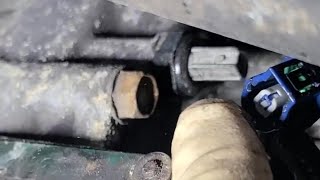
- The single-wire connectors can be brittle and difficult to release. Care must be taken not to damage the connector or the wiring during removal.
Mechanic-Grade Diagnostic Values
- Pressure Switch Signal Voltage (Key On, Engine Off) — expected: 5V or 12V at the single-wire connector with the switch unplugged.. Failure: 0V at the connector indicates a wiring issue from the PCM; voltage present but code remains points to a bad switch.
- Pressure Switch Signal Voltage (Scan Tool, Key On) — expected: Should toggle between ~0V and ~5V as gears are shifted.. Failure: A value stuck at or near 5V (or specifically >= 4.75V) for more than a fraction of a second triggers the P0935 code.
- Pressure Switch Resistance — expected: These are simple on/off switches, not variable resistors. They should show continuity to ground when pressure is applied and an open circuit when it's not. A direct resistance test is less common than a voltage test.. Failure: A switch that is permanently shorted to ground or permanently open will fail the voltage test.
- Pressure Switch Installation Torque — expected: 8 ft-lbs (very low torque). Failure: Over-tightening can damage the aluminum switch body or the transmission case threads. Under-tightening will cause a fluid leak.
Scan Tool Commands That Help
- Honda Diagnostic System (HDS): Live Data Monitoring (Transmission > Pressure Switch Status) — This is the primary function used to diagnose P0935. The technician watches the status (On/Off) or voltage of the 3rd, 4th, and other pressure switches while driving or manually shifting to see which one is not responding correctly or is stuck in the 'High' state.
- Honda Diagnostic System (HDS): Clear DTCs — After replacing the faulty switch, the code must be cleared from the PCM. The system will then re-run its self-test on the next drive cycle to confirm the fix.
Wiring & Ground Locations
- G101 — On the top, left side of the engine compartment, near the transmission.. This is a primary ground point for many engine and transmission components. A loose or corroded G101 can cause a floating ground, leading to erratic voltage readings and multiple, seemingly unrelated fault codes.
- PCM Connector B (51-Pin on some models) — At the Powertrain Control Module (PCM), typically located in the engine bay or behind the dashboard.. The signal wires from the various transmission pressure switches terminate here. For example, on some 6-speed models, the 3rd clutch switch wire goes to Pin 25 and the 4th clutch switch wire goes to Pin 26. Advanced diagnosis involves checking for continuity and shorts directly at these PCM pins to isolate a wiring fault from a sensor fault.
- J/C C113 — Junction connector located on the top of the transmission (on 2011 models).. This is a common junction point for various transmission sensor wiring. Corrosion or damage at this connector could affect the pressure switch circuit.
Real Owner Repair Stories
- Piloteers.org forum user (2005 Honda Pilot) — Flashing 'D' light on the dashboard and a stored P0872 code (4th gear pressure switch circuit low).
❌ Tried (didn't work) The owner initially only had the P0872 code.
✅ What actually fixed it The owner replaced both the 3rd and 4th gear pressure switches as a pair, since they are a common failure item. After replacement, the flashing 'D' light and the code were resolved. The owner discovered the old switches were aftermarket parts, suggesting a previous, failed repair. The fix was to install new, Genuine Honda switches (28600-RKE-004 and 28610-RKE-004). - YouTube user RB The Mechanic (2010 Honda (CR-V, but applicable to Pilot)) — Flashing 'D' light and P0847 code (3rd clutch pressure switch stuck on/short).
❌ Tried (didn't work) Driving the car until the transmission was warm was required to make the symptom (flashing light) appear consistently.
✅ What actually fixed it The video demonstrates locating and replacing the faulty 3rd gear pressure switch, which resolved the P0847 code and the flashing 'D' light. The repair involved accessing the switch from the side of the transmission.
OEM Part Supersession History
28600-RAY-003, 28600-P7W-013, 28600-RAY-013, 28600-RGR-004, 28600-P7W-003→28600-RKE-004— This part is for the 3rd or 4th clutch pressure switch (often brown connector) and has been revised multiple times by Honda to improve reliability.
Heads up: The newest part number (28600-RKE-004) is the correct replacement for all previous versions and should be used.Unknown early versions→28610-RKE-004— This is the corresponding part number for the other common pressure switch (e.g., if 28600 is 4th gear, this is 3rd gear). It has also been updated for reliability.
Model Year Variations Within This Range
- 2005-2008 (1st Generation): The 3rd and 4th gear pressure switches are typically located on the front and side of the transmission case and are most easily accessed by removing the driver's side front wheel and splash shield.
- 2009-2015 (2nd Generation): The pressure switches are more commonly located on the top of the transmission, underneath the air intake assembly and battery tray. Access requires removing these components from the engine bay.
Diagnostic Flowchart
Other Known Issues on This Vehicle
Issues unrelated to this code that are worth knowing about as an owner of this generation:
- Variable Cylinder Management (VCM) Issues 🔴 High — Very common across all 2nd gen (2009-2015) Pilots. Can lead to fouled spark plugs, excessive oil consumption, and eventual piston ring failure. (Ref: Honda issued warranty extensions (e.g., TSB 13-082) to cover piston ring repairs for misfire codes (P0301-P0304).)
- Leaking/Failed Front Lower Control Arm Compliance Bushings 🟠 Medium — Common on 2nd gen Pilots, typically failing between 50k-100k miles. The fluid-filled bushings leak, leaving black streaks and causing clunking noises or vibration. (Ref: Honda acknowledged the issue with TSBs (e.g., 15-045) and some dealer investigations were noted.)
- Torque Converter Judder / Shudder 🟠 Medium — Widespread on later 2nd gen and early 3rd gen models. Feels like driving over a rumble strip at low speeds. Often caused by deteriorated transmission fluid. (Ref: Multiple TSBs (e.g., 15-086) were issued, with the fix typically being a transmission software update and multiple fluid drain-and-fills.)
- Excessive Oil Consumption 🔴 High — Directly related to the VCM issue, this is a top complaint for the 2nd generation. Can lead to low oil levels and engine damage if not monitored. (Ref: Covered under the same class-action lawsuit and warranty extensions as the VCM piston ring failure.)
- Takata Airbag Inflator Recall 🔴 High — Affects all model years from 2009-2015. The inflators can rupture, causing serious injury or death. This is a critical safety recall. (Ref: NHTSA Recall / Honda Service Bulletin 19-079.)
Used vs. New Parts: Buying Guide for This Vehicle
When a used part is the smart pick: Never. Given the extremely high failure rate of this specific part, even on low-mileage vehicles, installing a used pressure switch is a significant risk and is not recommended. The labor to access the switch often exceeds the part cost, making it unwise to use a part with an unknown and likely short remaining lifespan.
What to inspect on the donor part:
- Not applicable as used parts are not recommended.
OEM-only on this vehicle (don't cheap out):
- Transmission Fluid Pressure Switch
Aftermarket brands forum-validated for this vehicle:
- None are consistently recommended over OEM. While brands like Standard Motor Products (SMP) are generally reputable, forum consensus strongly advises against using anything but Genuine Honda for this specific part to avoid premature failure.
Brands owners have reported issues with on this vehicle:
- Unbranded, no-name parts from online marketplaces. Owners frequently report these failing within months or a year.
Real Owner Stories
Aggregated from forums and TSBs cited above. Mileages and costs reflect what owners reported in those sources.
2005-2008 Honda Pilot 3.5L V6
Symptoms: Flashing 'D' (Drive) indicator light on the instrument cluster and harsh, abrupt, or slamming shifts.
What fixed it: Replacement of the failed pressure switch and its corresponding crush washer using a Genuine Honda part.
Source hint: Piloteers.org - Extensive discussions on pressure switch failures
2001-2006 Acura MDX 3.5L V6
Symptoms: Flashing 'D' lights and the vehicle entering limp mode.
What fixed it: Replacement of the 3rd and 4th gear pressure switches.
Source hint: AcuraZine - MDX Platform Mate Confirmation
Related OBD-II Codes
Frequently Asked Questions
My 2009-2015 Honda Pilot has a flashing 'D' light; where are the pressure switches located?
Can I use an aftermarket pressure switch from a local parts store to fix P0935?
Is there a TSB for the engine misfire and oil consumption issues on my 2012 Pilot?
My Pilot feels like it's driving over a rumble strip at low speeds; is this related to P0935?
Where is the pressure switch located on a 1st generation (2005-2008) Pilot?
Are the front lower control arm bushings a known problem on the 2009-2015 models?
Helpful Videos
We Have This Part in Stock

The information in this article is provided for general reference and educational purposes only. Vehicle specifications, procedures, and part compatibility can vary by production date, trim level, and region. Always consult your vehicle's factory service manual and verify part numbers before purchasing or performing repairs. Safety-critical components such as airbags, seat belts, and braking systems should be installed by a qualified professional.
- Honda Pilot:
- 🧭 Diagnostic Flowchart
- 🎬 Helpful Videos
- 🛍️ Shop This Part
- What's Unique About the 2005-2015 Honda Pilot
- Symptoms You May Notice
- Most Likely Causes
- Rare But Worth Checking
- Diagnosis Steps
- Parts You'll Likely Need
- Related Codes That Often Appear With This One
- Platform-Specific Known Issues
- Mechanic-Grade Diagnostic Values
- Scan Tool Commands That Help
- Wiring & Ground Locations
- Real Owner Repair Stories
- OEM Part Supersession History
- Model Year Variations Within This Range
- Other Known Issues on This Vehicle
- Used vs. New Parts: Buying Guide for This Vehicle
- Real Owner Stories
- 2005-2008 Honda Pilot 3.5L V6
- 2001-2006 Acura MDX 3.5L V6
- Related OBD-II Codes
- Frequently Asked Questions
- 🎟️ Get 5% Off