

P0935 on 2011-2016 Hyundai Elantra (A6GF1): Hydraulic Pressure Sensor Circuit Fixes
This code indicates a high voltage signal from the transmission's hydraulic pressure sensor, usually due to a short circuit in the wiring or a failed sensor. On the A6GF1 transmission in these Elantras, the internal wiring harness is the most common failure point. Driving is not recommended as it can lead to severe transmission damage. The most common fix is replacing the internal transmission wiring harness (P/N: 46307-3B650) or the sensor itself.
- P0935 on a 2011-2016 Elantra is a critical code indicating an electrical short in the transmission pressure sensor circuit.
- The most likely cause is a brittle and shorted internal transmission wiring harness (P/N: 46307-3B650), a known issue for the A6GF1 transmission in this model.
- Do not drive the vehicle. The transmission will default to maximum line pressure, which can quickly cause catastrophic internal damage.
- This is not a DIY-friendly repair. It requires dropping the transmission pan and a professional scan tool for the post-repair relearn procedure.
- Always diagnose to confirm if the fault is the sensor or the wiring before ordering parts.
What's Unique About the 2011-2016 Hyundai Elantra
On Hyundai Elantras from this era equipped with the A6GF1 6-speed automatic transmission, a common point of failure is the internal transmission wiring harness. Over time, heat cycles can make the wiring insulation brittle, leading to cracks and shorts that trigger a P0935 code, even if the pressure sensor itself is still functional. This makes diagnosing a wiring issue a higher probability than on some other vehicles where the sensor is the primary culprit. The oil temperature sensor is also integrated into this harness and is a known high-failure item.
🎬 Watch: How to diagnose a faulty oil temperature sensorGeneration note: The 2011-2016 model years cover the fifth generation (MD/UD) of the Hyundai Elantra, which commonly uses the A6GF1 6-speed automatic transmission. The issues related to P0935 are generally consistent across this generation for vehicles with this transmission.
Symptoms You May Notice
- Check Engine Light is on
- Harsh or erratic shifting
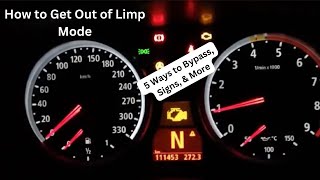
- Transmission stuck in one gear (limp mode) 🎬 Watch: How to identify and exit transmission limp mode
- Delayed engagement when shifting into Drive
- Reduced fuel efficiency
- Grinding sounds when shifting
- Replacing the entire valve body when only the sensor or harness is bad.
- Assuming low transmission fluid is the cause; this code is electrical, whereas low fluid typically causes low-pressure codes or shifting problems without a 'Circuit High' fault.
Most Likely Causes
- Shorted Internal Transmission Wiring Harness 🔴 High Probability → Shop Transmission Assembly The wiring harness inside the A6GF1 transmission is a known failure point. The insulation becomes brittle from repeated heat cycles, causing wires to crack and short to power, triggering the 'Circuit High' fault. The integrated oil temperature sensor is also a frequent point of failure on this harness.
How to confirm: A technician will need to drop the transmission pan, access the harness, and perform continuity and resistance tests on the wires leading to the pressure sensor. A short to voltage will be present on the signal wire.
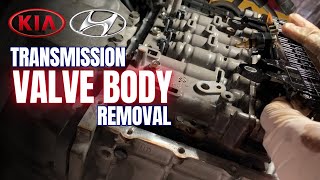
Typical fix: Replacement of the internal transmission wiring harness. The most common part number for this is 46307-3B650. 🎬 See this step-by-step internal harness and valve body replacement
Est. part cost: $50-$150 - Failed Hydraulic Pressure Sensor 🟡 Medium Probability The sensor itself can fail by shorting internally, causing it to send a constant high voltage signal back to the TCM.
How to confirm: With a scan tool showing live data, unplug the sensor. If the voltage reading drops to zero, the sensor is shorted internally. If the voltage remains high (near 5V), the short is in the wiring.
Typical fix: Replacement of the hydraulic pressure sensor, which is often located on the valve body inside the transmission. It is often replaced as a set with other pressure switches/sensors.
Est. part cost: $70-$200 - Corroded or Damaged Connector ⚪ Low Probability
How to confirm: Visually inspect the transmission's main electrical connector for any signs of corrosion, moisture intrusion, or bent/broken pins.
Typical fix: Cleaning the connector with an electrical contact cleaner or repairing/replacing the connector if damaged.
Est. part cost: $10-$50
Rare But Worth Checking
- Failed Transmission Control Module (TCM): → Shop Transmission Assembly This is the least likely cause. The TCM should only be considered after all wiring and sensor issues have been definitively ruled out. Symptoms can include erratic shifting, failure to shift, or unexpected shifts to neutral.
Diagnosis Steps
- Scan the vehicle for any other transmission-related trouble codes.
- Use a scan tool to monitor the live data from the hydraulic pressure sensor. A reading stuck near 5.0 volts confirms the 'Circuit High' issue.
- Inspect the external transmission wiring and main connector for any visible damage or corrosion.
- Drop the transmission pan to access the internal components.
- Visually inspect the internal wiring harness for brittle or cracked insulation.
- Disconnect the pressure sensor. If the scan tool voltage drops to 0V, the sensor is faulty. If it remains at 5V, the wiring harness is shorted.
- Perform resistance and continuity tests on the wiring harness to confirm the short to voltage.
- Replace the faulty component (harness or sensor).
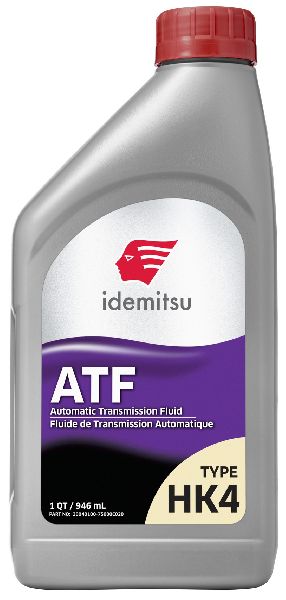
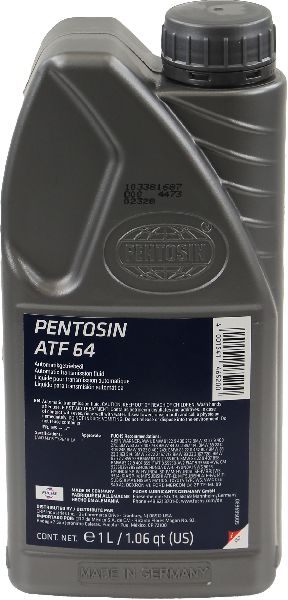
- Reassemble the transmission with a new filter and fresh, correct-spec fluid (Hyundai SP-IV).
- Clear the trouble codes and perform a transmission relearn procedure with a capable scan tool, as detailed in TSBs like 14-AT-008.
Parts You'll Likely Need
- Transmission Wiring Harness
(OEM #46307-3B650)— This is a known failure point on this platform; the insulation becomes brittle and shorts out. This part number supersedes previous versions like 46307-3B610 and 46307-3B620.
Trusted brands: Hyundai (OEM)
OEM price range: $100-$160
Aftermarket price range: $50-$100 - Hydraulic Pressure Sensor — The sensor can short internally, causing a constant high voltage signal. It is often replaced along with the harness as a preventative measure. It may be part of a larger sensor or solenoid assembly.
Trusted brands: Hyundai (OEM)
OEM price range: $120-$200
Aftermarket price range: $70-$130
Technical Service Bulletins (TSBs) & Recalls
- TSB 14-AT-008: Details the procedure for resetting and relearning adaptive values in the TCM after a repair, which is a required step.
- TSB 18-AT-004: While for diagnosing harsh shifts, it provides context on using Hyundai's GDS tool to analyze transmission behavior, relevant for post-repair testing.
Platform-Specific Known Issues
- Owners report that the internal transmission wiring harness is a frequent cause of P0935 due to heat-induced brittleness.
- Some owners have experienced symptoms like delayed engagement into drive or no forward movement at all, which can be related to the transmission entering a fail-safe mode due to this electrical fault.
- A thread on Car Talk Community for a 2011 Elantra discusses various causes for transmission issues, including faulty solenoids and software problems, which align with the diagnostic path for P0935.
Mechanic-Grade Diagnostic Values
- Line Pressure Sensor (LPS) Signal Voltage — expected: 0.35V to 4.75V. Failure: A voltage reading greater than or equal to 4.75V for 0.18 seconds will set the code. A reading stuck at 5.0V indicates a hard short circuit.
- Variable Force Solenoids (VFS) - 5 solenoids — expected: Approximately 5.1 - 5.3 Ohms. Failure: A reading significantly outside this range indicates a failed solenoid coil.
- Shift Solenoids (On/Off) - 2 solenoids — expected: Approximately 10 - 11 Ohms. Failure: A reading significantly outside this range indicates a failed solenoid coil.
- Oil Temperature Sensor Resistance at 68°F (20°C) — expected: 5.88 kΩ. Failure: An open or shorted reading, or a value that doesn't correspond to the actual fluid temperature.
Scan Tool Commands That Help
- Hyundai GDS (Global Diagnostic System): Vehicle Software Management > Resetting Adaptive Values — This is a required step after replacing the internal harness, valve body, or transmission to reset the learned shift parameters and prevent harsh shifting.
- Hyundai GDS (Global Diagnostic System): DTC Guide — Provides a guided diagnostic procedure for a specific fault code, outlining steps to check components and wiring.
- Hyundai GDS (Global Diagnostic System): Actuation Test — Allows a technician to command individual solenoids on and off to verify their mechanical and electrical function, helping to isolate a faulty solenoid from a wiring issue.
- Hyundai GDS (Global Diagnostic System): Flight Record — For intermittent electrical faults, this function can capture high-frequency data snapshots during a drive cycle when a fault event occurs, which can help diagnose issues not visible with standard live data.
Wiring & Ground Locations
- Transmission Main Connector — On top of the transaxle case, where the external vehicle harness connects to the transmission.. This is the primary external connection point to check for corrosion, bent pins, or damage before assuming the fault is internal to the transmission.
- Internal Harness Connector (to Valve Body) — Inside the transmission, connecting the main harness pass-through to the valve body solenoids and sensors.. This connector and its associated wiring are the most common failure points for P0935 due to heat-induced brittleness and shorts.
OEM Part Supersession History
46307-3B610, 46307-3B620→46307-3B650— Updated design to improve durability and resistance to heat-induced brittleness.
Heads up: The updated harness (46307-3B650) is the recommended replacement for all years in the range and is backward compatible.
Model Year Variations Within This Range
- 2011-2016: While the A6GF1 transmission was used throughout this period, the internal wiring harness part number was updated. Early harnesses (e.g., 46307-3B610) were superseded by the more robust 46307-3B650. Technicians recommend always updating to the latest part number regardless of the vehicle's original year.
Diagnostic Flowchart
Other Known Issues on This Vehicle
Issues unrelated to this code that are worth knowing about as an owner of this generation:
- 1.8L Nu Engine Piston Slap / Ticking Noise 🔴 High — Widespread issue, often noticeable on cold starts. Can lead to oil consumption and eventual engine failure. (Ref: Subject of a class-action lawsuit (Brown, et al., v. Hyundai Motor America) resulting in extended warranties.)
- Steering Wheel Click/Clunk Noise 🟡 Low — Very common. Caused by the failure of a small, inexpensive flexible rubber coupler in the electronic power steering (MDPS) motor. (Ref: Hyundai TSB 17-ST-002 extended the warranty for this part to 10 years/100,000 miles.)
- Transmission Input/Output Speed Sensor Failure 🟠 Medium → Shop Transmission Assembly — Common issue that can cause the transmission to get stuck in one gear (limp mode) and illuminate the Check Engine Light. (Ref: Often requires replacement of the sensors, which are typically located inside the transmission.)
- Brake Light Switch Failure 🟡 Low — A common failure causing issues with push-button start, cruise control, and electronic stability control (ESC) warning lights. (Ref: A recall was issued for some earlier Hyundai models, but it remains a frequent repair item.)
Used vs. New Parts: Buying Guide for This Vehicle
When a used part is the smart pick: A used valve body assembly (with sensors and solenoids) can be a cost-effective option if it comes from a low-mileage, verified-running donor vehicle. However, the core issue of P0935 is often the harness, which should never be sourced used.
Donor-vehicle mileage cap: roughly under 60000 miles for the part to have meaningful remaining life.
What to inspect on the donor part:
- For a valve body, check for clean, bright red transmission fluid residue. Avoid any parts with dark, burnt-smelling fluid.
- Ensure all electrical connectors are free of corrosion and the plastic is not cracked or brittle.
- Verify the donor vehicle's VIN to confirm it had the same A6GF1 transmission.
OEM-only on this vehicle (don't cheap out):
- Transmission Wiring Harness: This part fails due to heat and age. A used harness has already been subjected to the same conditions and is likely to fail soon, if it hasn't already. Always buy new OEM.
Brands owners have reported issues with on this vehicle:
- Unbranded or no-name wiring harnesses from online marketplaces. These often use inferior materials that cannot withstand the high-temperature transmission fluid environment, leading to premature failure.
Real Owner Stories
Aggregated from forums and TSBs cited above. Mileages and costs reflect what owners reported in those sources.
2011 Hyundai Elantra
Symptoms: Transmission issues involving potential faulty solenoids and software problems; symptoms align with erratic shifting and electrical faults in the A6GF1 unit.
What fixed it: Diagnostic path suggests replacement of internal transmission components or addressing software/solenoid issues.
Source hint: Car Talk Community - '2011 Hyundai Elantra transmission issue'
Related OBD-II Codes
Frequently Asked Questions
Is there a specific TSB for resetting my transmission after fixing the P0935 code?
My 2011 Elantra is stuck in one gear and shifting harshly; could this be the internal wiring?
Can I use a used wiring harness from a donor Elantra to save money?
What transmission fluid should I use when reassembling my Elantra's transmission?
Does the P0935 code on my Elantra relate to the common steering wheel clicking issue?
How can a technician tell if the sensor or the harness is the problem?
Helpful Videos
We Have This Part in Stock




The information in this article is provided for general reference and educational purposes only. Vehicle specifications, procedures, and part compatibility can vary by production date, trim level, and region. Always consult your vehicle's factory service manual and verify part numbers before purchasing or performing repairs. Safety-critical components such as airbags, seat belts, and braking systems should be installed by a qualified professional.
- Hyundai Elantra:
- 🧭 Diagnostic Flowchart
- 🎬 Helpful Videos
- 🛍️ Shop This Part
- What's Unique About the 2011-2016 Hyundai Elantra
- Symptoms You May Notice
- Most Likely Causes
- Rare But Worth Checking
- Diagnosis Steps
- Parts You'll Likely Need
- Technical Service Bulletins (TSBs) & Recalls
- Platform-Specific Known Issues
- Mechanic-Grade Diagnostic Values
- Scan Tool Commands That Help
- Wiring & Ground Locations
- OEM Part Supersession History
- Model Year Variations Within This Range
- Other Known Issues on This Vehicle
- Used vs. New Parts: Buying Guide for This Vehicle
- Real Owner Stories
- 2011 Hyundai Elantra
- Related OBD-II Codes
- Frequently Asked Questions
- 🎟️ Get 5% Off