

P0935 on 2017-2020 Hyundai Elantra: Hydraulic Pressure Sensor Circuit High Causes and Fixes
On a 2017-2020 Hyundai Elantra with the 6-speed automatic transmission, code P0935 is most often caused by a shorted internal transmission wiring harness (Part No. 46307-3B650) that has become brittle from heat. This is more common than the hydraulic pressure sensor itself failing. The fix requires replacing the harness inside the transmission, a job that involves removing the valve body.
- P0935 on a 2017-2020 Elantra is an electrical code indicating a short circuit, not a mechanical pressure problem.
- The most likely cause is a brittle, shorted internal transmission wiring harness, a known issue on these vehicles.
- Do not drive the vehicle. The resulting harsh shifting can quickly cause severe, expensive damage to the transmission's clutches.
- Diagnosis requires a scan tool and a multimeter to distinguish between a failed sensor and a failed wiring harness before starting repairs.
- This is not a beginner-friendly DIY repair, as it involves opening the transmission. Professional service is strongly recommended.
What's Unique About the 2017-2020 Hyundai Elantra
🎬 Watch: Common problems with this Elantra generation.For Hyundai and Kia models from this era equipped with the A6GF1 6-speed automatic transmission, a very common point of failure is the internal transmission wiring harness. Over time, the wire insulation becomes brittle from constant heat cycles inside the transmission and can crack or flake off, causing the signal wire to short to a 5-volt reference wire. This makes it appear as though the sensor has failed, but often the sensor is fine and the harness is the true culprit. The 2020 Elantra also introduced the Intelligent Variable Transmission (IVT), which has its own specific TSBs related to pressure sensor issues (though for different codes), but the brittle harness issue is specific to the 6-speed automatic.
Symptoms You May Notice
- Illuminated Check Engine Light
- Harsh or slamming gear shifts
- Vehicle stuck in "limp mode" (usually locked in 2nd or 3rd gear)
- Delayed or no engagement when shifting from Park into Drive or Reverse
- Inability for the transmission to shift gears
- Transmission slipping or flaring between gears
- Replacing the hydraulic pressure sensor when the internal wiring harness is the actual cause. This is a common mistake because the symptoms are identical. The diagnostic step of unplugging the main transmission connector is critical to isolate the fault to being internal or external to the transmission.
Most Likely Causes
- Internal Transmission Wiring Harness Failure 🔴 High Probability → Shop Transmission Assembly The wiring insulation inside the A6GF1 transmission becomes brittle 🎬 See a teardown of the A6GF1 transmission. from repeated exposure to hot transmission fluid, leading to cracks and shorts between the signal and reference wires.
How to confirm: With a scan tool showing 5V on the pressure sensor circuit, unplug the main transmission connector. If the voltage remains at 5V, the short is in the external harness. If the voltage drops, the fault is internal (harness or sensor). Given the platform history, the internal harness is the prime suspect.
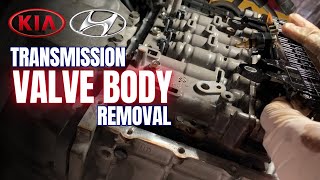
Typical fix: The transmission oil pan and valve body must be removed to access and replace the internal wiring harness (OEM Part No. 46307-3B650).
Est. part cost: $70-$150 - Faulty Hydraulic Pressure Sensor 🟡 Medium Probability The sensor itself can fail by shorting internally, causing it to send a constant high voltage signal. While possible, it's less common than the harness failure on this specific platform.
How to confirm: With a scan tool showing 5V on the pressure sensor circuit, unplug the sensor connector at the transmission case. If the voltage on the scan tool drops to 0V, the sensor is internally shorted. This test confirms the fault is internal, but doesn't distinguish between the sensor and harness without dropping the pan.
Typical fix: Replace the hydraulic pressure sensor. This sensor is typically located on the valve body inside the transmission.
Est. part cost: $50-$120 - Damaged External Wiring or Connector ⚪ Low Probability While less common, external damage from road debris, improper repairs, or corrosion can still occur. Some Hyundai models use soy-based wire insulation which can attract rodents.
How to confirm: Visually inspect the wiring harness leading to the transmission for any signs of physical damage, melting, or corrosion at the main connector. Perform a wiggle test on the harness while monitoring sensor voltage.
Typical fix: Repair the damaged section of the wire or clean/replace the corroded connector.
Est. part cost: $5-$50
Rare But Worth Checking
- Failed Transmission Control Module (TCM): → Shop Transmission Assembly This is very rare. The TCM should only be considered after all wiring and sensor possibilities have been exhaustively ruled out.
Diagnosis Steps
- Connect an OBD-II scanner and confirm P0935 is the active code. Note any other codes, especially P0933 or P0869.
- Using the scanner's live data function, monitor the 'Transmission Hydraulic Pressure Sensor' voltage. A reading stuck at or near 5.0 volts confirms the 'Circuit High' condition.
- Visually inspect the external transmission wiring harness and its main connector for any obvious damage, corrosion, or loose connections.
- Perform the key diagnostic test: While watching the live voltage data, disconnect the main electrical connector at the transmission. If the voltage reading drops to 0V, the fault is internal to the transmission (harness or sensor). If the voltage remains at 5V, the short circuit is in the external harness between the TCM and the transmission.
- If the fault is determined to be internal, the next step is to drain the fluid and remove the oil pan to access the valve body, sensor, and internal harness.
- Once inside, carefully inspect the internal harness (a black plastic assembly with multiple wires) for brittle, cracked, or flaking insulation, especially near the connectors.
- Based on the high probability for this platform, it is recommended to replace the internal harness (Part No. 46307-3B650) even if the damage is not immediately obvious. The sensor can be tested for resistance but is less likely to be the sole point of failure.
- Reassemble the transmission with a new pan gasket, fill with the correct type and amount of new Hyundai SP4-M specific transmission fluid, and clear the trouble codes.
- Perform a test drive to ensure the shifting is smooth and the code does not return. A transmission adaptive learning procedure may be required via a capable scan tool.
Parts You'll Likely Need
- Internal Transmission Wiring Harness
(OEM #46307-3B650)— This is the most common failure point for this code on the A6GF1 transmission due to heat-induced brittleness and shorting.
Trusted brands: Hyundai Genuine
OEM price range: $100-$150
Aftermarket price range: $70-$120 - Transmission Oil Pressure Sensor
(OEM #48885-02300)— This is the second most likely cause if the sensor itself has shorted internally. The part number is from a TSB for the IVT transmission in the 2020 Elantra but may differ for the 6-speed automatic. The harness is the more probable failure.
Trusted brands: Hyundai Genuine
OEM price range: $80-$120
Aftermarket price range: $50-$90 - Transmission Pan Gasket — Required for reassembly after dropping the oil pan to access internal components.
Trusted brands: Hyundai Genuine, Fel-Pro
OEM price range: $20-$40
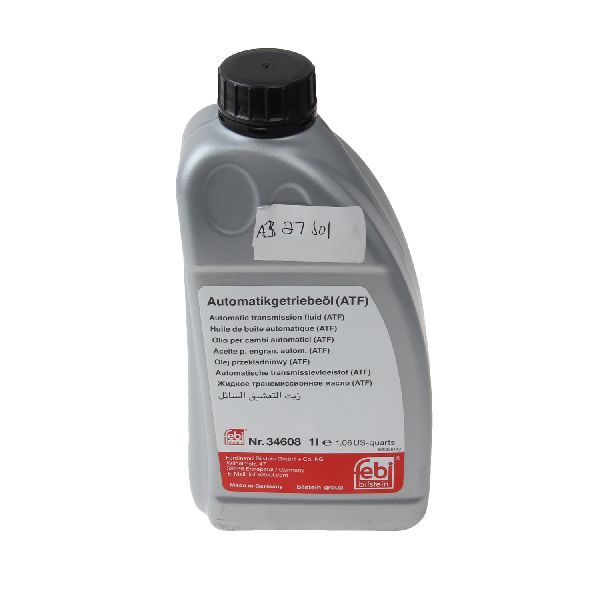
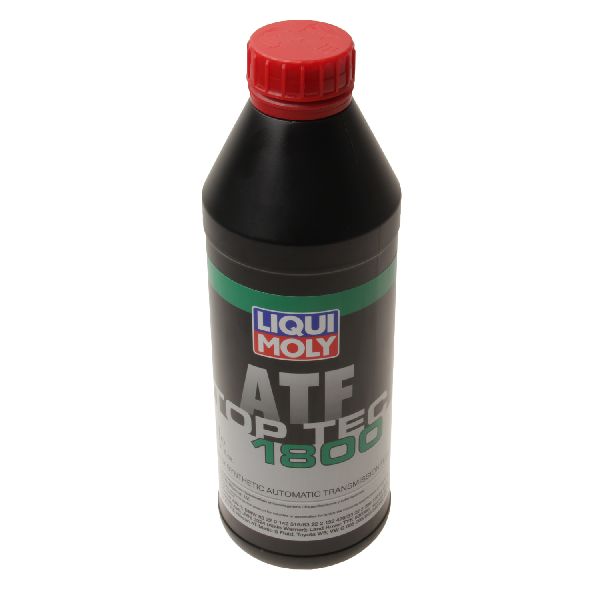
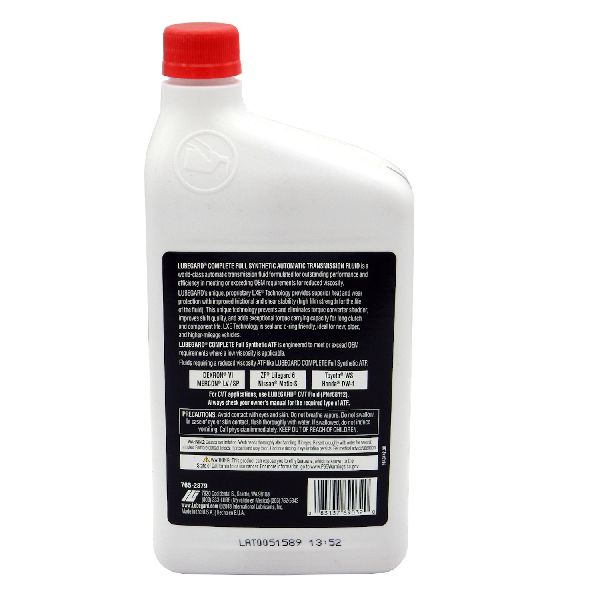
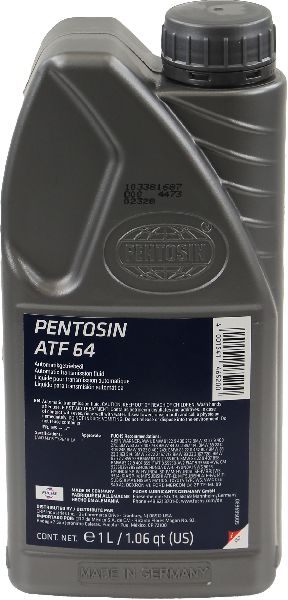
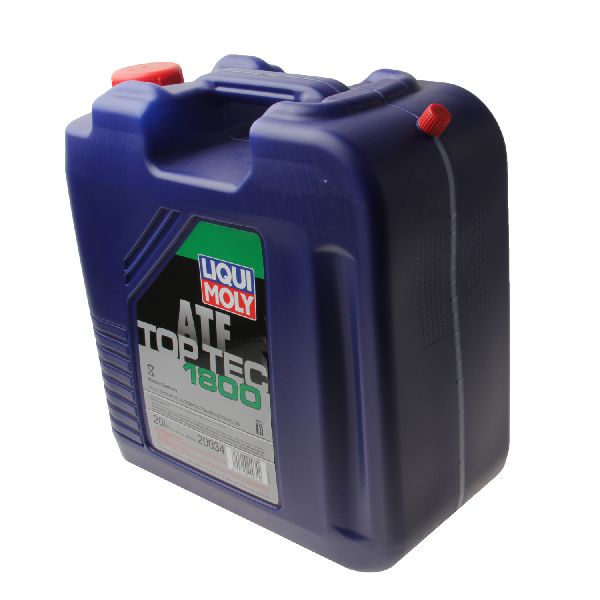
Aftermarket price range: $15-$30 - Hyundai SP4-M ATF
(OEM #00232-19057)— The correct fluid must be used when refilling the transmission. A drain and fill typically requires about 4-5 quarts.
Trusted brands: Hyundai Genuine
OEM price range: $15-$25 per quart
Related Codes That Often Appear With This One
- P0933 (Hydraulic Pressure Sensor Range/Performance): Often appears with P0935. P0935 indicates an electrical impossibility (stuck at 5V), while P0933 means the reading is implausible for the driving condition. Fixing the P0935 short will resolve both.
- P0869 (Line Pressure High): This is a direct consequence of P0935. The faulty 5V signal from P0935 makes the TCM believe line pressure is dangerously high, so it logs P0869 as a result.
Technical Service Bulletins (TSBs) & Recalls
- TSB 23-AT-010H: While not for P0935, this TSB for 2020 Elantras with the IVT addresses replacing the pressure sensor for other codes, showing a pattern of sensor-related issues on newer transmissions.
Platform-Specific Known Issues
- A known tendency for the internal transmission wiring harness (46307-3B650) to degrade from heat, causing a short circuit that triggers P0935.
- For 2020 models with the IVT, Hyundai has issued TSB 23-AT-010H for other pressure sensor codes (P0845, P0846, P0867), indicating a sensitivity in the pressure monitoring system on these newer transmissions.
- Other TSBs for Hyundai's 6, 7, and 8-speed automatics (like 18-AT-007 and 22-AT-006H) show a pattern of replacing internal harnesses to fix various sensor circuit codes, further supporting the harness as the weak link.
Mechanic-Grade Diagnostic Values
- Variable Force Solenoids (VFS) Resistance — expected: ~5.1 - 5.3 Ohms. Failure: A reading significantly higher or lower than the expected range indicates a faulty solenoid coil.
- On/Off Shift Solenoids Resistance — expected: ~10 - 11 Ohms. Failure: A reading outside this range suggests a failure in the shift solenoid's electrical coil.
- Transmission Fluid Temperature Sensor Resistance — expected: ~1.9k Ohms @ 24.4°C (76°F). Failure: An open or shorted reading, or a value that doesn't correlate with the actual fluid temperature, indicates a faulty sensor. Note: On 2013+ models, this sensor is integrated into the internal harness.
- Hydraulic Pressure Sensor Signal Voltage (Live Data) — expected: ~0.5V - 4.5V (Varies with pressure). Failure: A reading stuck at or near 5.0V indicates a 'Circuit High' fault. A reading stuck near 0V would indicate a 'Circuit Low' fault (P0934).
Scan Tool Commands That Help
- Hyundai GDS (Global Diagnostic System) / KDS: Resetting Auto Transmission Adaptive Values — This function should be used after replacing internal transmission components like the valve body, solenoids, or the entire transmission. It clears the learned shift patterns, forcing the TCM to relearn shift points and pressures with the new components, which is critical for smooth operation.
- Hyundai GDS (Global Diagnostic System) / KDS: Actuation Test — Allows a technician to individually command solenoids on and off to verify their mechanical operation and monitor the circuit response. This can help isolate a specific faulty solenoid if multiple codes are present or if the issue is intermittent.
Wiring & Ground Locations
- Transmission Control Module (TCM) — On the 2017-2020 Elantra, the TCM functions are integrated into the main Powertrain Control Module (PCM). The PCM is located in the engine bay, typically near the battery or firewall on the driver's side.. The PCM/TCM is the computer that receives the faulty voltage signal from the pressure sensor circuit and sets code P0935. All external wiring for the sensor circuit terminates at this module.
- Main Transmission Connector — On the top or side of the A6GF1 transmission case. This is the main electrical interface between the external vehicle harness and the internal transmission harness.. Disconnecting this connector is the primary diagnostic step to determine if the short circuit is internal (harness/sensor) or external (wiring to the TCM). A bolt secures the connector, which must be removed before the connector can be pushed into the transmission for internal harness removal.
- TCM/PCM Ground Circuit — The main ground for the PCM is typically a chassis ground point in the engine bay, often near the battery or on the strut tower. Specific ground locations like G104 are often under the intake manifold.. A poor ground connection to the control module can cause floating voltages and erratic sensor readings, potentially leading to false codes. While less common than the harness failure for P0935, checking for clean and tight grounds is a fundamental step in any electrical diagnosis.
Real Owner Repair Stories
- YouTube video by a transmission technician (2013 Hyundai Elantra with A6GF1 transmission (same family and issue as 2017-2020 models)) — Check Engine Light with code P0711 (Transmission Fluid Temperature Sensor code), but the root cause and repair process are identical to the P0935 harness failure.
❌ Tried (didn't work) Initial diagnosis pointed to just the temperature sensor.
✅ What actually fixed it The technician noted that Hyundai updated the design. The original temperature sensor was separate, but due to frequent failures of the entire internal harness, the replacement part is a complete, one-piece harness with the temp sensor integrated. The fix required removing the valve body to replace the entire internal wiring harness. This confirms the pattern of harness failure being the primary issue.
OEM Part Supersession History
46307-3B610, 46307-3B620→46307-3B650— The part was revised to improve the durability of the wire insulation and connectors to better withstand the high-heat environment inside the transmission, addressing the root cause of the brittleness and shorting failures.
Heads up: The newer part number 46307-3B650 is the correct and more robust replacement for the older versions. There are no known incompatibilities when using the new part on an older vehicle; it is a direct, improved replacement.
Model Year Variations Within This Range
- 2017-2019 vs 2020: The 2020 Hyundai Elantra introduced the Intelligent Variable Transmission (IVT) as an option on several trims, replacing the 6-speed automatic (A6GF1) in those configurations. The P0935 code and its common cause of a brittle internal harness are specific to the A6GF1 automatic. IVT-equipped cars will have different transmission components, codes, and failure modes.
- 2013+ (including 2017-2020): Starting around 2013, the Transmission Fluid Temperature (TFT) sensor was integrated directly into the internal wiring harness. On earlier A6GF1 models (pre-2013), the TFT sensor was a separate, replaceable component. For the 2017-2020 Elantra, a failure of the TFT sensor (codes P0711, P0712, P0713) requires the replacement of the entire internal harness, the same part that fails and causes P0935.
Diagnostic Flowchart
Other Known Issues on This Vehicle
Issues unrelated to this code that are worth knowing about as an owner of this generation:
- Engine Failure from Improperly Heat-Treated Piston Rings 🔴 High — Affects 2019-2020 models with the 2.0L Nu MPI engine. Can lead to engine seizure, stalling, and potential fire risk. (Ref: NHTSA Recall 21V301000.)
- Excessive Oil Consumption 🟠 Medium — Commonly reported on the 2.0L Nu engine, often becoming noticeable after 80,000 miles. Owners report needing to add oil between changes.
- Ignition Coil Failure 🟡 Low — A known pattern of premature ignition coil failure, often starting with a single cylinder misfire around 50,000-90,000 miles.
- Crankshaft Position Sensor Failure 🟠 Medium — Can cause intermittent stalling and a no-start condition. A common issue on the 2.0L engine for this generation.
- Loss of Power Brake Assist 🔴 High — Affects certain 2017 Elantra models. The brake booster can fail, resulting in a sudden increase in pedal effort needed to stop the vehicle. (Ref: NHTSA Recall 17V063000.)
Used vs. New Parts: Buying Guide for This Vehicle
When a used part is the smart pick: For this specific repair, obtaining a used part from a salvage yard is NOT recommended. The primary failure part, the internal wiring harness, fails due to heat and age. A used harness from a donor vehicle will have similar age and heat exposure, making it highly likely to fail soon, if it hasn't already.
What to inspect on the donor part:
- Not applicable, as a used harness should be avoided.
OEM-only on this vehicle (don't cheap out):
- Internal Transmission Wiring Harness (46307-3B650)
- Hyundai SP4-M ATF (00232-19057)
Aftermarket brands forum-validated for this vehicle:
- While some aftermarket harnesses exist, the OEM Genuine Hyundai part is the most reliable choice, as it is the most recent revision designed to fix the original flaw. For a critical internal transmission part, the small price difference is not worth the risk of a premature failure and repeating the significant labor involved.
Brands owners have reported issues with on this vehicle:
- Any unbranded or suspiciously cheap internal wiring harnesses found on marketplaces should be avoided. The quality of the wire insulation and connector pins is critical for longevity, and low-quality alternatives are likely to fail quickly.
Real Owner Stories
Aggregated from forums and TSBs cited above. Mileages and costs reflect what owners reported in those sources.
2011-2017 Hyundai Accent
Symptoms: Found metal shavings in the pan; car would get stuck in 3rd gear when cold but worked fine after warming up.
What fixed it: The issue pointed to internal component failure such as a harness or solenoid, often requiring a fluid change or component replacement.
Source hint: https://www.hyundai-forums.com/threads/accent-transmission-problem-or-sensor-problem.124991/
Related OBD-II Codes
Frequently Asked Questions
Which specific part number is recommended for the internal wiring harness failure on my Elantra?
Does TSB 23-AT-010H apply to my 2020 Elantra with the IVT?
Is there a recall for engine issues on the 2019-2020 Elantra that I should be aware of while fixing this code?
Why is the internal harness failing on the A6GF1 transmission?
What type of transmission fluid should I use when reassembling the transmission after a P0935 repair?
Are there other TSBs that support replacing the internal harness for sensor circuit codes?
Helpful Videos

We Have This Part in Stock


The information in this article is provided for general reference and educational purposes only. Vehicle specifications, procedures, and part compatibility can vary by production date, trim level, and region. Always consult your vehicle's factory service manual and verify part numbers before purchasing or performing repairs. Safety-critical components such as airbags, seat belts, and braking systems should be installed by a qualified professional.
- Hyundai Elantra:
- 🧭 Diagnostic Flowchart
- 🎬 Helpful Videos
- 🛍️ Shop This Part
- What's Unique About the 2017-2020 Hyundai Elantra
- Symptoms You May Notice
- Most Likely Causes
- Rare But Worth Checking
- Diagnosis Steps
- Parts You'll Likely Need
- Related Codes That Often Appear With This One
- Technical Service Bulletins (TSBs) & Recalls
- Platform-Specific Known Issues
- Mechanic-Grade Diagnostic Values
- Scan Tool Commands That Help
- Wiring & Ground Locations
- Real Owner Repair Stories
- OEM Part Supersession History
- Model Year Variations Within This Range
- Other Known Issues on This Vehicle
- Used vs. New Parts: Buying Guide for This Vehicle
- Real Owner Stories
- 2011-2017 Hyundai Accent
- Related OBD-II Codes
- Frequently Asked Questions
- 🎟️ Get 5% Off