

P0944 on 2022-2024 Ram 2500: Causes for Loss of Hydraulic Pump Prime
P0944 on a 2022-2024 Ram 2500, particularly those with the 6.7L Cummins and 68RFE transmission, signifies the transmission's hydraulic pump has lost pressure. This is often due to a known internal issue. Multiple Technical Service Bulletins (TSBs) point to specific failures within the pump assembly or a related thrust bearing, and they explicitly advise against reflexively replacing the torque converter.
- P0944 on your Ram 2500 is a serious code indicating a loss of transmission hydraulic pressure.
- Do not continue driving the vehicle, as this can lead to severe transmission damage.
- This code is often paired with P0868. If you see both, be aware of TSB #9100202, which warns against replacing the torque converter as a first step.
- The most likely cause on this specific truck is a known issue with the transmission pump assembly or related internal parts, as documented in multiple TSBs.
- This is not a DIY-friendly repair. Diagnosis and repair should be performed by a qualified technician who has access to Ram's service information.
What's Unique About the 2022-2024 Ram 2500
For the 2022-2024 Ram 2500 with the 6.7L Cummins engine, this code is particularly significant due to manufacturer-issued TSBs targeting the 68RFE transmission. These bulletins strongly suggest a known issue with the transmission's internal components, such as the pump assembly or a cracked rear selective thrust bearing, rather than common problems like low fluid. Crucially, TSB 9100202 specifically warns technicians *not* to replace the torque converter if P0944 is present with code P0868, pointing to a more specific, underlying cause that requires careful diagnosis following service publication S2321000007.
Diagnostic Flowchart
Tap your situation to follow the diagnostic path that matches what you're seeing on this vehicle.
Symptoms You May Notice
- Check Engine Light (Malfunction Indicator Lamp) is on
- Hard or delayed shifting into gear
- Vehicle enters 'limp mode,' limiting power and speed
- Transmission slipping
- Whining sound coming from the transmission area
- Inability for the vehicle to move
- Replacing the Torque Converter
- Replacing internal transmission components without a specific diagnosis
- Replacing only the line pressure sensor without checking for mechanical faults
Most Likely Causes
- Faulty Transmission Pump Assembly or Internal Components 🔴 High Probability → Shop Transmission Assembly Multiple TSBs (9100202, S2321000007, 21-012-25 REV. E) point to issues with the 68RFE transmission's pump assembly, reaction shaft, or related internal parts like a cracked rear selective thrust bearing as the root cause. These are known failure points for this specific vehicle and transmission combination.
How to confirm: A technician must follow the diagnostic procedures outlined in the relevant TSBs. This often involves checking for specific code combinations (like P0868) and may lead to inspecting the transmission pump and related internal parts. TSB 21-012-25 REV. E, for example, directly calls for transmission replacement if its listed DTCs are present, indicating the failure is internal and not easily serviceable.
Typical fix: Replacement of the specific components mentioned in the TSB, which could be the pump assembly and reaction shaft. In many cases, particularly when a cracked thrust bearing is the cause (per TSB 21-012-25 REV. E), the official repair is a complete transmission replacement.
Est. part cost: $500-$2000+ for a pump; $4000-$8000+ for a replacement transmission. - Low Transmission Fluid Level 🟡 Medium Probability → Shop Transmission Assembly While TSBs point to a specific hardware issue, low fluid is a fundamental cause for loss of hydraulic pressure in any automatic transmission and should be the first check.
How to confirm: Check the transmission fluid level according to the manufacturer's procedure. This must be done with the engine running, at the correct operating temperature, and on a level surface.
Typical fix: Top off the fluid to the correct level using the specified fluid (Mopar ATF+4 for the 68RFE) and inspect for leaks that may have caused the low level.
Est. part cost: $20-$100 - Clogged or Incorrectly Installed Transmission Filter ⚪ Low Probability → Shop Transmission Assembly A blocked filter can starve the pump of fluid, causing it to lose prime. An improperly seated filter seal is a known issue that can allow air to enter the system, leading to a loss of prime.
How to confirm: The transmission pan must be removed to inspect the filter and its seal. Look for a clogged filter medium or a damaged/misaligned seal at the pump inlet.
Typical fix: Replace the transmission filter(s) and fluid. Ensure the new filter and seal are installed correctly into the pump housing.
Est. part cost: $50-$150
Rare But Worth Checking
- Stuck Main Regulator Valve: The main pressure regulator valve within the valve body can get stuck, causing pressure control issues. This is less common than a pump failure but is a known possibility in hydraulic transmissions.
Diagnosis Steps
- Scan the vehicle for all stored diagnostic trouble codes. Note if P0944 is accompanied by P0868, as this combination is critical.
- Check for any applicable TSBs or recalls for the vehicle's VIN. The TSBs for this code (e.g., 9100202, 21-012-25 REV. E) are critical for correct diagnosis and supersede generic procedures.
- Check the transmission fluid level and condition. The fluid should be at the correct level, not burnt, and free of excessive debris. This is the most basic first step.
- If fluid is correct, follow the diagnostic path outlined in the relevant Ram TSBs (e.g., S2321000007). This will likely point towards an internal mechanical fault rather than external components.
- If no TSB applies, perform a transmission line pressure test using a scan tool to compare desired vs. actual pressure. 🎬 See how a professional technician inspects and diagnoses 68RFE issues.
- If pressure is low, drop the transmission pan to inspect the fluid for excessive metallic debris (indicating internal failure) and check the transmission filter and its seal for damage or improper installation.
- If the filter and fluid are okay but pressure remains low, the issue is almost certainly an internal problem with the transmission pump or a related component (like the thrust bearing), requiring transmission removal for inspection and repair or replacement. 🎬 Watch: Step-by-step guide to removing a 68RFE transmission.
Parts You'll Likely Need
- Transmission Pump Assembly
(OEM #52109082AB)— TSB #9100202 directly implicates the 'PUMP ASSY' as a likely point of failure when P0944 and P0868 are present. This part is specific to the 68RFE transmission used with the 6.7L Cummins engine.
Trusted brands: Mopar
OEM price range: $1000-$1500
Aftermarket price range: $400-$1000 - Complete Transmission Assembly (68RFE) — TSB 21-012-25 REV. E, which addresses a cracked rear selective thrust bearing causing P0944 and other codes, explicitly calls for the replacement of the entire transmission as the official repair.
Trusted brands: Mopar (Remanufactured)
OEM price range: $6000-$9000
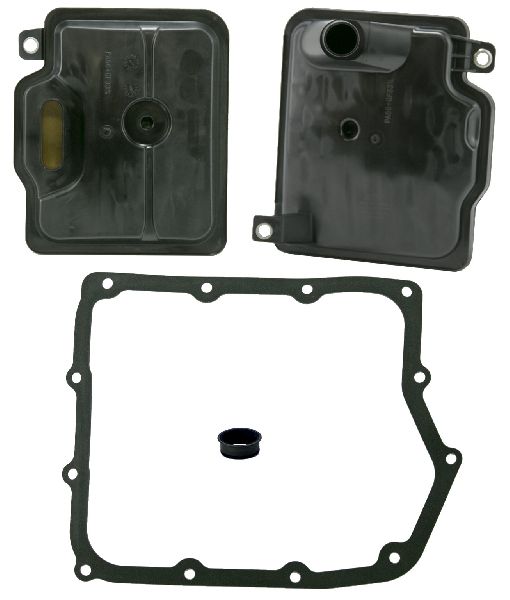
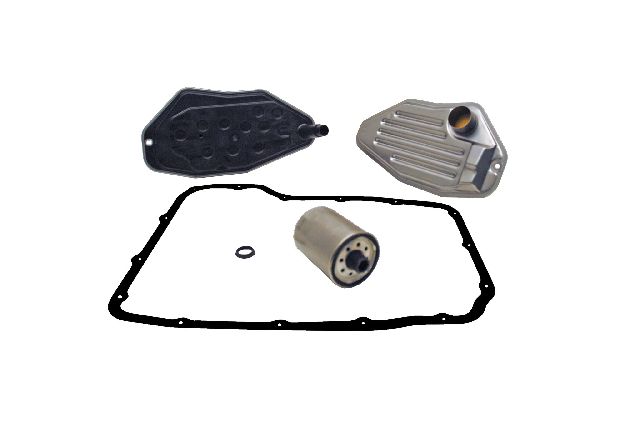
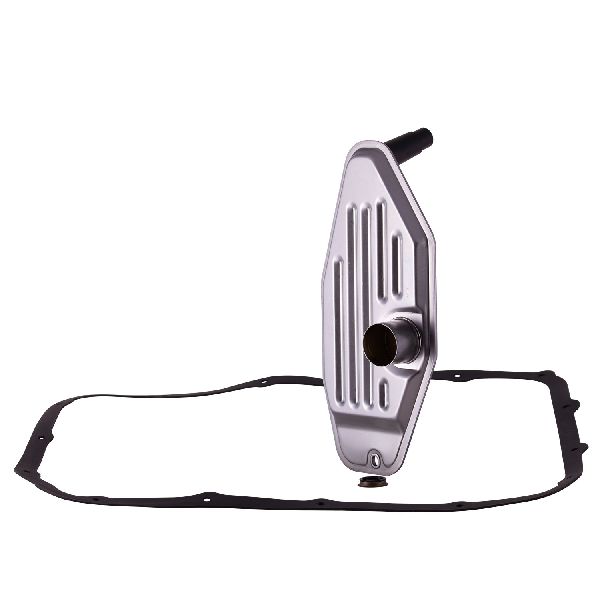
Aftermarket price range: $4000-$7000 - Transmission Filter Kit — This is a standard replacement part during any internal transmission service and can be a cause if clogged or installed incorrectly.
Trusted brands: Mopar, Wix, ATP
OEM price range: $60-$120
Aftermarket price range: $30-$80
Related Codes That Often Appear With This One
- P0868 - Transmission Fluid Pressure Low — This code is frequently seen with P0944 because a loss of pump prime (P0944) directly causes low overall fluid pressure (P0868). TSBs #9100202 and #S2321000007 explicitly link these two codes as a pair indicating a specific internal failure.
- P0876 - Transmission Fluid Pressure Sensor/Switch 'D' Circuit Range/Performance — TSB #21-012-25 REV. E lists this code alongside P0944 as part of a pattern of related hydraulic pressure faults caused by a potential cracked thrust bearing.
- P0871 - Transmission Fluid Pressure Sensor/Switch 'C' Circuit Range/Performance — Also mentioned in TSB #21-012-25 REV. E, indicating a widespread issue within the hydraulic pressure monitoring system when the pump loses prime due to internal mechanical failure.
Technical Service Bulletins (TSBs) & Recalls
- 21-012-25 REV. E: Links P0944 to a cracked rear selective thrust bearing and mandates transmission replacement as the fix.
- 9100202: Warns against misdiagnosing the issue as a torque converter failure when P0944 and P0868 are present together.
- S2321000007: Provides the specific diagnostic path to follow when P0944 and P0868 are set, focusing on the transmission pump and reaction shaft.
- 21-012-25 REV. C: An earlier revision of the bulletin confirming the symptoms and related codes, which was later superseded by REV. E with more definitive repair instructions.
Platform-Specific Known Issues
- TSB #9100202 explicitly warns against replacing the torque converter or other internal components when P0944 and P0868 are found together, directing technicians to a specific service publication (S2321000007) for the correct repair path, which points to the pump assembly.
- TSB #21-012-25 REV. E and its subsequent revisions link P0944 to a cracked rear selective thrust bearing in the 68RFE transmission. The prescribed fix is not a component repair but a complete transmission replacement.
Mechanic-Grade Diagnostic Values
- Actual vs. Desired Line Pressure — expected: Actual pressure should be within ± 34 kPa (5 psi) of desired pressure.. Failure: A larger deviation, especially if actual pressure is consistently lower while the Line Pressure Duty Cycle is at 5%, points to a hydraulic issue (pump, leak, or valve body).
- Line Pressure Sensor (LPS) Voltage — expected: 0.35 - 4.75 volts with ignition on, engine running.. Failure: Voltage outside of this range indicates a faulty sensor or a wiring issue.
- Stock Line Pressure Range (General) — expected: Varies between 60-160 psi (414-1103 kPa) depending on load.. Failure: Consistently reading below 60 psi at idle or failing to increase under load suggests a problem.
- Line Pressure During Shifts — expected: Should be set to a preset level of 1034 to 1103 kPa (150 to 160 psi) during shifts.. Failure: Failure to reach this pressure during a shift can cause slipping and incorrect gear ratio codes.
Scan Tool Commands That Help
- wiTECH, Snap-on, Auto Ingenuity: Quick Learn — This is mandatory after replacing the transmission, valve body, or solenoid pack. It resets all adaptive memory and performs a static calibration of the clutch fill volumes. Failure to perform this can lead to harsh shifts and premature transmission failure.
- wiTECH or equivalent: Program Torque Converter Solenoid PI Curve — Required on 2019 and newer 68RFE transmissions when the valve body or transmission is replaced. The technician must scan a QR code from the new part and enter a 46/66-character code into the TCM to calibrate the new TCC variable force solenoid.
- wiTECH or equivalent: Shift Lever Position Test — Used as an initial diagnostic step to verify the Transmission Range Sensor (TRS) and its communication with the TCM are functioning correctly before diving into hydraulic diagnostics.
- Scan Tool Live Data: Drive Learn Monitoring — After a Quick Learn, the technician should monitor CVI (Clutch Volume Index) values, actual vs. desired line pressure, and throttle percentage during a specific 'drive learn' procedure (e.g., multiple light-throttle accelerations) to ensure the transmission is adapting correctly.
Wiring & Ground Locations
- Line Pressure Sensor (LPS) — On the passenger side of the transmission case, externally accessible.. This sensor provides the actual pressure reading to the TCM. A faulty sensor or corroded connector can mimic low pressure, although with P0944, a mechanical fault is more likely. The connector is known to be a potential point for corrosion.
- Transmission Control Module (TCM) — Located at the rear of the engine compartment, near the right (passenger side) inner fender on trucks with the 6.7L diesel engine.. The TCM processes all transmission data and controls pressure. Poor connections or ground issues at the TCM can cause a wide range of transmission codes and symptoms.
- TCM Ground Pins — At the TCM main connector.. Specific pins (37, 39, 51, and 57) provide the main grounds for the TCM. Pin 53 is the dedicated sensor ground for the line pressure sensor, which is routed internally through the TCM. High resistance on these grounds can cause erratic sensor readings and control issues.
Real Owner Repair Stories
- NHTSA Technical Service Bulletins (TSB #9100202, #S2321000007, #21-012-25 REV. E) (2022-2024 Ram 2500/3500 with 6.7L Cummins & 68RFE Transmission) — Malfunction Indicator Lamp (MIL) on, codes P0944 and P0868 are set together, vehicle may enter limp mode, hard shifting.
❌ Tried (didn't work) Replacing the torque converter, Replacing other internal transmission components without following the specific TSB diagnostic path.
✅ What actually fixed it Following the specific diagnostic procedure in TSB S2321000007, which led to identifying a failed pump assembly or a cracked rear selective thrust bearing. The official repair is often a complete transmission replacement, as mandated by TSB 21-012-25 REV. E for the thrust bearing issue.
When the Usual Fixes Don't Work
- While low transmission fluid is a universal cause for loss of pump prime, on the 2022-2024 Ram 2500, the presence of code P0944—especially when paired with P0868—should immediately shift suspicion towards the known internal mechanical failures outlined in manufacturer TSBs. Technicians should resist the urge to assume it's just low fluid and should consult the TSBs first.
- A common misdiagnosis for transmission pressure and shifting issues is a faulty torque converter. However, TSB #9100202 explicitly warns *against* replacing the torque converter for this code combination, as the root cause has been identified as a separate internal pump or bearing issue.
Model Year Variations Within This Range
- 2019-2024: In 2019, the 68RFE received significant hydraulic control changes to the pump, valve body, and solenoid pack. The torque converter regulator valve was changed, and the TCC accumulator was eliminated from the pump. Most importantly, the TCC solenoid was changed to a Variable Force Solenoid (VFS) that requires a specific 'Program Torque Converter Solenoid PI Curve' procedure with a scan tool when replaced.
- 2024 (specific build dates): TSB 21-012-25 REV. B applies specifically to vehicles built between June 14, 2024, and September 04, 2024. For these vehicles, P0944 (and a host of other codes) is strongly linked to a cracked rear selective thrust bearing, with the mandated repair being a full transmission replacement.
Helpful Videos


We Have This Part in Stock

The information in this article is provided for general reference and educational purposes only. Vehicle specifications, procedures, and part compatibility can vary by production date, trim level, and region. Always consult your vehicle's factory service manual and verify part numbers before purchasing or performing repairs. Safety-critical components such as airbags, seat belts, and braking systems should be installed by a qualified professional.
- Ram 2500:
- 🧭 Diagnostic Flowchart
- 🎬 Helpful Videos
- 🛍️ Shop This Part
- What's Unique About the 2022-2024 Ram 2500
- Symptoms You May Notice
- Most Likely Causes
- Rare But Worth Checking
- Diagnosis Steps
- Parts You'll Likely Need
- Related Codes That Often Appear With This One
- Technical Service Bulletins (TSBs) & Recalls
- Platform-Specific Known Issues
- Mechanic-Grade Diagnostic Values
- Scan Tool Commands That Help
- Wiring & Ground Locations
- Real Owner Repair Stories
- When the Usual Fixes Don't Work
- Model Year Variations Within This Range
- 🎟️ Get 5% Off