

OBD-II Code P0963: Pressure Control Solenoid 'A' Control Circuit High
What P0963 means, why it triggers, and how to fix it
- Stop driving within 50 miles of a P0963 code appearing; the resulting maximum line pressure causes harsh shifts that can destroy a $3,500 transmission.
- Test the solenoid wiring harness for a short-to-power (12V) before buying parts, as damaged wiring mimics a failed solenoid 30% of the time.
- Check your alternator output with a multimeter; a reading above 14.5V indicates an overcharging system that triggers high-voltage transmission codes.
- Expect repair costs to range from $200 for a DIY solenoid replacement to over $1,500 if a dealer replaces the entire valve body assembly (common on Subaru and Nissan CVTs).
What Does P0963 Mean?

The P0963 code means the Powertrain Control Module (PCM) or Transmission Control Module (TCM) detects abnormally high voltage in the transmission Pressure Control Solenoid 'A' circuit. This solenoid is an electronically controlled valve that manages transmission fluid pressure, which is essential for smooth gear shifting and torque converter lockup. When voltage is too high, the computer loses pressure control, causing shifting problems and triggering a fail-safe mode that commands maximum line pressure to protect the transmission.
Technical definition: The PCM or TCM registered a voltage reading from the 'A' pressure control solenoid circuit above the manufacturer's specified range. This condition is typically caused by a short to power in the wiring, a related electrical fault, or a failing control module.
Can I Drive With P0963?

Yes, But With Caution. You can operate the vehicle, but it will likely experience harsh shifting, stalling, or enter a reduced-power 'limp mode.' Get it diagnosed promptly. Driving with harsh shifting causes permanent mechanical damage to internal transmission components like clutch packs and bands, turning a $300 solenoid repair into a $3,500+ transmission rebuild. Do not drive more than 50 miles before seeking diagnosis.
🎬 Watch: How to fix the P0963 circuit high error codeCommon Causes

- Faulty Pressure Control Solenoid 'A' (Very Common) — The solenoid fails internally, causing an electrical short that leads to a high voltage reading. This is the most frequent reason for this code.
- Wiring or Connector Short to Power (Common) — Damaged, corroded, or frayed wiring harnesses short to a power source, altering the signal and causing the high voltage fault.
- Low or Contaminated Transmission Fluid (Common) — Insufficient or dirty fluid causes the transmission to overheat and solenoids to malfunction. Dirty fluid also clogs hydraulic passages, affecting pressure regulation.
- Faulty Transmission Control Module (TCM) (Less Common) — The computer controlling the transmission fails, sending incorrect voltage signals. This is sometimes caused by unstable vehicle battery voltage.
- Overcharging Alternator (Uncommon) — An overcharging alternator increases system voltage beyond the normal 13.5-14.5V range, affecting transmission solenoids and triggering a 'circuit high' code.
- Poor Ground Connection (Uncommon) — A corroded ground connection for the transmission or TCM leads to unstable voltage readings throughout the system.
Symptoms
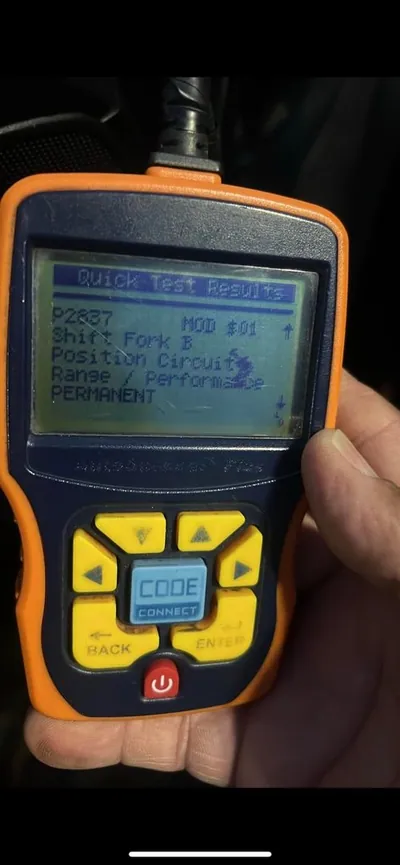
- Check Engine Light is on — The Malfunction Indicator Lamp (MIL) illuminates on your dashboard.
- Harsh, Erratic, or Delayed Shifting — The transmission shifts very roughly (especially downshifting), slips between gears, or experiences delayed engagement when put in drive.
- Vehicle Enters 'Limp Mode' or Fails to Shift — The computer puts the transmission into a protective 'limp mode,' locking it into a single gear (often 3rd gear) and severely limiting engine power.
- Transmission Overheating — The transmission runs at a higher than normal temperature, indicated by a warning light or a noticeable burning smell due to slipping clutches.
- Engine Stalling — The vehicle stalls, particularly when coming to a stop or at idle, due to improper torque converter operation.
- Increased Fuel Consumption — Inefficient transmission operation and lack of torque converter lockup causes a noticeable decrease in fuel economy.
- High Voltage Reading in Freeze Frame (scan-tool only — no driver-felt sign) — An OBD-II scanner reveals a voltage reading for the 'A' solenoid circuit above the manufacturer's specified threshold at the moment the code set.
Diagnostic Flowchart
Tap your situation to follow the diagnostic path that matches what you're seeing on this code.
Common Fixes & Costs
- Replace Pressure Control Solenoid 'A' — Parts: $50-$150, Labor: $150-$450, ~2.5 hr book time (Intermediate)
- Repair or Replace Wiring/Connectors — Parts: $20-$100, Labor: $100-$300, ~2 hr book time (Intermediate)
- Transmission Fluid and Filter Change — Parts: $50-$100, Labor: $125-$320, ~1.5 hr book time (DIY)
- Replace Valve Body Assembly — Parts: $600-$1200, Labor: $400-$800, ~4.5 hr book time (Advanced)
- Replace Transmission Control Module (TCM) — Parts: $400-$1000, Labor: $150-$300, ~2 hr book time (Professional)
DIY vs Professional
- Transmission Fluid and Filter Change — Beginner: Yes
Tools: Socket set, drain pan, funnel, new fluid, new filter/gasket. - Repair or Replace Wiring/Connectors — Beginner: No
Tools: Multimeter, wire strippers, crimpers, soldering iron, heat shrink tubing, vehicle-specific wiring diagrams. - Replace Pressure Control Solenoid 'A' — Beginner: No
Tools: Socket set, torque wrench, transmission fluid, drain pan, snap-ring pliers. - Replace Valve Body Assembly — Beginner: No
Tools: Extensive socket set, torque wrench, service manual, specialized alignment tools. - Replace Transmission Control Module (TCM) — Beginner: No
Tools: Basic hand tools, factory-level scan tool for programming.
Used vs. New Parts: Buying Guide
When a used part is worth it: For a pressure control solenoid, buying used is not recommended. The minimal cost savings do not justify the labor required for installation. A used solenoid carries an unknown history and risks premature failure.
Donor-vehicle mileage cap: roughly under 40000 miles for the part to have meaningful remaining life.
Donor quality checklist:
- Only consider used if it's from a very low-mileage vehicle wrecked for non-drivetrain reasons.
- Ensure the part number matches exactly.
- Avoid parts from vehicles with signs of transmission overheating (burnt fluid).
Decision logic:
- If The part is a single, externally accessible solenoid → Always buy a new OEM or high-quality aftermarket part. Part cost is low compared to labor.
- If The solenoid is part of a larger valve body assembly (common in Subaru, Nissan) → A used, low-mileage valve body is a cost-effective alternative to a new one. Alternatively, install a new aftermarket solenoid into your existing valve body.
- If The vehicle is old and has low value → A used part is a justifiable gamble to keep the car running on a tight budget.
Warranty tradeoff: Used parts typically have a 30-90 day warranty. New aftermarket solenoids come with a 1-year to limited lifetime warranty. OEM parts carry a 12-month warranty.
Worst-case if a used part fails: $300-600 if a used solenoid fails shortly after installation, as you will pay for the labor twice.
What Happens If You Wait — Timeline
- 0-2 weeks: Code is set, MIL illuminates. Shifting becomes harsh intermittently or the vehicle enters 'limp mode'. The issue is purely electrical. (MPG impact: 5-10%% · Added cost: $0)
- 2 weeks - 2 months: Continued driving with constant high line pressure causes severe shifts. This puts extreme stress on internal clutch packs, seals, and bands. (MPG impact: 10-15%% · Added cost: $500-$1,500. Clutch frictions are glazed and seals are stressed, requiring a more involved repair.)
- 2-6 months: Accelerated mechanical wear leads to burnt clutches and cracked internal hard seals. Metal debris circulates in the fluid, contaminating the valve body. (MPG impact: 15-25%% · Added cost: $2,500-$3,500. The transmission requires a full rebuild to replace damaged clutches and flush out debris.)
- 6+ months: Catastrophic failure. The transmission slips severely, fails to engage, or locks up completely. The vehicle is undrivable. (MPG impact: N/A (vehicle is inoperable)% · Added cost: $3,500-$7,000+. A complete replacement with a remanufactured or new unit is the only option.)
Cost of Not Fixing It
- 0-1 month: Persistently harsh shifting, entry into 'limp mode,' and a 10% drop in fuel economy. The vehicle is unsafe and unreliable. (Added cost: $0)
- 1-6 months: Driving with maximum line pressure causes accelerated wear on transmission clutch packs, bands, and internal seals. This turns a solenoid issue into a serious internal mechanical problem. (Added cost: $1500-3500)
- 6+ months: Catastrophic transmission failure. Extreme hydraulic pressure destroys multiple internal components, requiring a complete transmission rebuild or replacement. (Added cost: $3500-7000)
Diagnosis Steps

- Scan for Codes and Review Freeze Frame Data
Use an OBD-II scanner to confirm P0963 is present and check for related trouble codes. Document all codes and review the freeze frame data for a snapshot of sensor readings at the moment the fault triggered.
Tools: OBD-II Scanner (Beginner) - Check for Technical Service Bulletins (TSBs)
Check manufacturer databases for TSBs related to P0963 for your specific vehicle. Manufacturers frequently release software updates or identify known wiring issues that cause this code.
Tools: Internet access, TSB database (Beginner) - Check Transmission Fluid Level and Condition
Inspect the transmission fluid. Top off low fluid. Note if fluid is dark, dirty, or smells burnt. Severely contaminated fluid indicates internal transmission damage requiring a rebuild.
Tools: Gloves, Dipstick (if equipped), Rag (Beginner) - Inspect Wiring and Connectors
Perform a visual inspection of the transmission wiring harness and connectors associated with the pressure control solenoid. Look for damage, corrosion, melting, or loose connections, especially where the harness rubs against the engine block.
Tools: Flashlight, Inspection Mirror (Intermediate) - Check System Voltage
With the engine running, check the battery and alternator voltage. A reading above 14.5V indicates an overcharging alternator, which is a root cause of high voltage codes.
Tools: Digital Multimeter (Intermediate) - Test Solenoid Resistance and Voltage
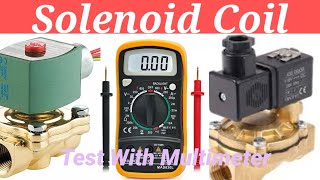
Disconnect the transmission harness connector. Test the resistance of the pressure control solenoid and compare it to manufacturer specs (e.g., GM is 3-10 ohms, Subaru is 12 ohms). Check for voltage on the signal wire; battery voltage present where it shouldn't be confirms a short to power.
Tools: Digital Multimeter, Vehicle-specific wiring diagram (Advanced) - Live Data PID Analysis
Monitor live data PIDs related to the transmission. Watch 'PCS A Commanded Pressure', 'PCS A Actual Pressure', and 'TCM Voltage'. A voltage reading consistently at battery voltage regardless of command points directly to a circuit high fault.
Tools: Advanced OBD-II Scan Tool (with live data) (Advanced) - Pro Tip: TCM Connector Pinpoint Test
Disconnect the TCM connector and perform voltage tests on the corresponding pins. If high voltage is present at the TCM pin with the transmission disconnected, the fault is internal to the TCM. If not, the short is in the wiring harness.
Tools: Digital Multimeter, Vehicle-specific wiring diagram, Pin-out chart for TCM (Advanced) - Pro Tip: Analyze Solenoid Waveform
Connect an oscilloscope to the solenoid's control wire. When commanded by the scan tool, you should see a clean square wave pattern. A flat line at battery voltage confirms a short to power and a lack of TCM control.
Tools: Oscilloscope, Scan tool with bidirectional control (Professional) - Test Mechanical Transmission Pressure
If electrical tests pass, use a pressure gauge to check hydraulic pressure in the transmission. This determines if the problem is mechanical solenoid function, the transmission pump, or a blocked valve body.
Tools: Transmission Pressure Gauge Set (Professional)
When This Code Triggers (Freeze-Frame Conditions)
- Engine Coolant Temp: 180-210°F (The code is often set when the engine has reached full operating temperature.)
- RPM: 1200-2500 RPM (The fault is commonly detected during steady-state driving or light acceleration, not typically at idle or high RPMs.)
- Vehicle Speed: 30-55 mph (Often triggered during city or highway cruising speeds when the transmission is actively shifting or maintaining a gear.)
- Transmission Fluid Temperature: 150-200°F (The fault is most reliably detected when the transmission fluid is warm, as fluid viscosity and solenoid performance change with temperature.)
Related Codes
- P0962 — Indicates 'Pressure Control Solenoid 'A' Control Circuit Low,' the opposite of P0963. P0962 points to a short to ground or an open circuit (low voltage), whereas P0963 indicates a short to power (high voltage).
- P0960 — Indicates an open circuit for solenoid 'A'. A multimeter resistance test shows infinite resistance (OL) for P0960, while P0963 shows excessive voltage on the signal wire.
- P0961 — Indicates the circuit range/performance is out of spec. This is a general fault set by intermittent electrical issues, low fluid, or a failing solenoid that hasn't completely shorted.
- P0964, P0965, P0966, P0967 — Relate to Pressure Control Solenoid 'B'. If a code for solenoid 'A' appears alongside a 'B' code, it indicates a systemic problem like a faulty TCM, a shared ground issue, or a damaged main wiring harness.
Climate & Environmental Factors
- High Temperature / Overheating: Excessive heat breaks down transmission fluid, destroying its lubricating properties and increasing friction. Heat also degrades wiring insulation and damages delicate solenoid coils, causing electrical shorts.
- Cold Weather: Cold weather thickens transmission fluid, causing delayed engagement and straining the transmission pump and solenoids. This added strain exposes pre-existing weaknesses in electrical components.
- High Humidity / Water Intrusion: Humidity and water exposure cause corrosion in electrical connectors, including the main transmission and TCM harnesses. This corrosion creates unwanted electrical paths, leading to erratic voltage readings and triggering P0963.
How to Talk to a Mechanic About This Code
Say this: "I have a P0963 code and the transmission is shifting harshly. I'd like to schedule a diagnostic to test the pressure control solenoid 'A' circuit. Please check the wiring harness for shorts, and test the solenoid's resistance and voltage before recommending part replacement."
This signals that you understand P0963 is an electrical fault. It directs the mechanic to perform a logical diagnostic sequence and prevents them from immediately jumping to a costly transmission rebuild.
Avoid saying:
- 'My car is shifting funny, can you fix it?'
- 'The check engine light is on, just do whatever it takes.'
- 'I think I need a new transmission.'
Questions to ask before authorizing the repair:
- What were the results of the electrical tests on the solenoid circuit?
- Did you find a short in the wiring, or did the solenoid itself test faulty?
- Can you show me the damaged wiring or the out-of-spec reading on the multimeter?
- If the solenoid needs replacement, is the new part OEM or aftermarket, and what is the warranty?
Where to Take It: Dealer vs Independent vs Chain
- Dealer:
Recommended if the vehicle is under warranty or has known TSBs. Be cautious of automatic recommendations for large component replacement without detailed electrical test results.
Best for: Vehicles under powertrain warranty, Complex electrical issues or required TCM software updates, Subaru or Nissan CVTs where a valve body replacement is common and covered by warranty
Downsides: Highest labor rates, Defaults to replacing an entire assembly (like a valve body) instead of a smaller component (Typical cost: +50% vs. baseline) - Independent Shop:
Best overall fit, IF you choose a reputable transmission specialist. A general mechanic lacks the specific expertise for this electrical fault.
Best for: Out-of-warranty vehicles where cost is a factor, Shops that specialize in transmission repair and have strong electrical diagnostic skills
Downsides: Quality and expertise vary greatly; must vet the shop carefully, Lacks expensive, factory-specific programming tools for newer TCMs (Typical cost: +0% vs. baseline) - Chain Shop:
AVOID for P0963 diagnosis. The risk of misdiagnosis and being sold an expensive, unnecessary rebuild is extremely high.
Best for: Simple fluid and filter changes
Downsides: Technician skill is highly variable, Lacks in-depth electrical diagnostic tools and training, High pressure to upsell; quickly and incorrectly recommends a full transmission rebuild (Typical cost: -10% vs. baseline)
When to Walk Away From the Repair
If the estimated repair cost exceeds 50% of the car's private-party value, seriously consider selling the car as-is or trading it in.
- Car worth $4000, fix is $600: Fix it. This is a relatively low repair cost compared to the car's value.
- Car worth $6000, fix is $2800: Borderline. The repair is almost half the car's value. Get a second opinion and evaluate the car's overall condition before proceeding.
- Car worth $3000, fix is $3500: Walk away. The repair costs more than the car is worth. Do not fix it.
What Scan Tool You Need for This Code
Minimum: A scanner that reads manufacturer-specific transmission codes and displays live data for transmission PIDs (Parameter IDs).
A $20 code reader only shows a generic P0700 'Transmission Fault'. You need to see live data like transmission fluid temperature and solenoid commanded vs. actual voltage to diagnose the problem without guessing.
Budget: BlueDriver Pro (~$90) — Reads and clears transmission codes. Displays live data for some transmission parameters, which is essential for diagnosis. Ability to access all OEM-specific PIDs is limited.
Mid-range: Foxwell NT510 Elite (~$180) — Provides full-system diagnostics, including deep transmission analysis. Offers bi-directional control, allowing you to command the solenoid to activate to confirm if the fault is in the wiring.
Professional: Autel MaxiCOM MK808S/MK900BT (~$450-700) — Offers full bidirectional control and OE-level diagnostics. Performs advanced functions like transmission 'quick learn' procedures, required after replacing a valve body or TCM.
Rent vs buy: A free rental scanner from an auto parts store is only useful for confirming the code exists. It lacks the live data or bidirectional features needed for diagnosis. Buy at least a budget-level scanner with transmission live data capabilities.
How to Clear the Code After You Fix It
- Use an OBD-II scan tool to clear the diagnostic trouble codes (DTCs).
- Perform a complete drive cycle to allow the vehicle's readiness monitors to run.
- Check for pending or current codes again after the drive cycle.
Drive cycle (~20 minutes): Start the engine and idle for 3 minutes. Drive in stop-and-go traffic for 10 minutes, ensuring several gear shifts. Drive at a steady 50 mph for 10 minutes. Allow the vehicle to cool down completely.
Readiness monitors affected: Comprehensive Component Monitor, Transmission
Before emissions retest: drive at least 50 miles to fully set monitors.
Watch out for:
- Disconnecting the battery clears the code but resets all readiness monitors, causing an automatic emissions failure.
- If the electrical fault remains, the code returns immediately upon the next drive cycle.
- Nissan and Subaru vehicles require a specific relearn procedure using a factory scan tool after replacing a solenoid or valve body.
Will This Fail Emissions / State Inspection?
Yes — this code typically fails an OBD-II emissions inspection.
- California: A P0963 code causes an automatic failure of the smog check. The Check Engine Light being on is an immediate fail, and associated readiness monitors will not set.
- New York: The NYS vehicle inspection includes an OBD-II scan. An active P0963 code and illuminated MIL results in an emissions failure.
- Texas: In the 17 Texas counties requiring emissions testing, a vehicle with an active P0963 code fails the OBD-II portion of the inspection.
Most Commonly Affected Vehicles
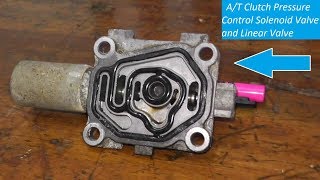
- Honda Accord (2012-2017) — Models with the J35Y1 engine are noted for issues with the A/T clutch pressure control solenoid valve A. Diagnosis must include checking PCM grounds G&D1 and G&D2 for open circuits.
- Honda CR-V / HR-V (2016-2022) — Honda has specific diagnostic procedures for these models, indicating a known electrical fault. For the HR-V with CVT, P0963 points to a high output in the drive pulley pressure control valve circuit.
- Honda Civic (2016-2021) — On CVT models, P0963 indicates an electrical fault in the drive pulley pressure control valve circuit. TSB 17-003 addresses a vibrating pressure control valve causing a grinding noise on hot restarts.
- Chevrolet / GMC Express, Savana, Acadia, Cruze (2012-2017) — On vehicles with 6-speed automatic transmissions (6T40/6T45), the TCM sets this code and commands maximum line pressure as a fail-safe, causing extremely harsh shifts.
- Subaru Various with CVT (Impreza, Outback, Forester) (2013-2020) — Pressure control solenoids are integrated into the valve body. Subaru dealers only replace the entire valve body assembly ($1,500-$2,800). A common failure is the lock-up duty solenoid, which should measure 12 Ohms at 68°F.
- Nissan Altima, Murano (2016-2019) — Technicians recommend a full fluid flush with NS-2/NS-3 fluid before condemning the solenoid or valve body, as fluid breakdown is a common cause of solenoid codes on Nissan CVTs.
- Toyota Yaris/Vitz (2010-2019) — Owners of CVT models report this code appearing intermittently, causing limp mode behavior. The cause is often a failing solenoid within the valve body.
- Mazda Miata (NC) (2006-2015) — On automatic models, this code points to a faulty TCM, especially on cars with unstable battery voltage. The primary symptom is being stuck in 3rd gear.
Manufacturer-Specific Notes
- Honda: Service information explicitly states P0963 is an electrical circuit problem (short or open) and cannot be caused by an internal mechanical transmission failure. Diagnosis must focus on wiring, connectors, and solenoid resistance.
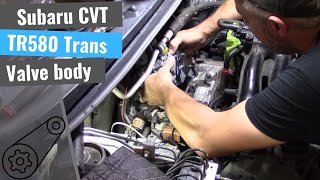
- Subaru: On Lineartronic CVTs (TR580/TR690), solenoids are part of the valve body. Subaru does not sell individual solenoids, requiring the purchase of the entire valve body assembly. Aftermarket individual solenoids are available for DIY repair.
- GM (Chevrolet/GMC): In 6-speed transmissions (6T40/6T45), the TCM's response to a P0963 fault is to command maximum line pressure as a fail-safe, resulting in the signature symptom of extremely harsh and jarring shifts.
- Allison: For 3000 and 4000 series transmissions, TSB #3058 addresses P0963, indicating a short-to-battery in the main modulator solenoid circuit. The TCM sets the code when it detects the short for more than 2 seconds with system voltage between 9V and 18V.
- Nissan: After replacing a valve body or transmission, a 'Recalibration' or 'Write IP Characteristics' procedure with a factory scan tool is mandatory; the code will not clear without it.
Real Owner Stories
2010 Mazda Miata (NC) at 75K miles - Misdiagnosed by Dealer
Check Engine Light came on, and the automatic transmission was stuck in 3rd gear (limp mode). Manual shifting mode did not work.
What they tried:
- Owner scanned the code and found P0963.
- A local dealership diagnosed the issue and insisted the entire gearbox needed replacement for thousands of dollars.
- Based on forum advice, the owner suspected the Transmission Control Module (TCM), a known failure point on these cars triggered by unstable battery voltage.
Outcome: The owner sourced a used TCM from a junkyard for $300. After installing the new TCM, the code cleared, and the car shifted perfectly.
Lesson: A P0963 code accompanied by being stuck in gear is often a faulty TCM, not a catastrophic transmission failure. Always check forums for vehicle-specific quirks before agreeing to a major repair.
2010 Toyota Yaris with CVT - Intermittent Electrical Gremlin
The Check Engine Light appeared intermittently at low speeds. The car felt like it was in 'safe mode' with sluggish performance.
What they tried:
- Owner took the car to a local mechanic.
- The mechanic inspected the wiring and connectors going to the CVT transmission, as the intermittent nature pointed to an electrical issue rather than a hard part failure.
Outcome: The mechanic repaired a faulty connector in the circuit. The total repair cost was $400, mostly for diagnostic labor. The code did not return.
Lesson: Intermittent codes are often caused by wiring or connector problems. A thorough visual inspection of the harness for chafing or loose pins prevents unnecessary part replacement.
2013 Chevy Cruze at 110K miles - A Classic Solenoid Failure
The car suddenly began shifting very harshly, with a loud 'bang' when going into gear. The Check Engine Light was on with code P0963.
What they tried:
- The owner performed a transmission fluid and filter change, but this did not solve the harsh shifting.
- A transmission shop tested the resistance of the pressure control solenoid 'A' and found it had failed (out of the typical 3-10 ohm range).
Outcome: The shop replaced the faulty pressure control solenoid. The total cost was $550 ($100 for the part, $450 for labor and fluid). Shifting returned to normal.
Lesson: In GM vehicles, P0963 triggers a fail-safe of maximum line pressure, causing signature 'banging' shifts. While checking fluid is a good first step, the root cause is almost always an electrical fault in the solenoid or circuit.
How to Prevent This Code From Triggering
- Perform regular transmission fluid and filter changes (Every 30,000 to 60,000 miles) — Clean fluid provides proper lubrication and prevents abrasive particles from clogging or damaging delicate solenoid valves.
- Use only the manufacturer-specified transmission fluid (Every time fluid is added or changed) — Incorrect fluid types have the wrong viscosity, leading to poor performance, overheating, and degradation of internal electronics.
- Install an auxiliary transmission cooler (Once, especially if you tow or live in a hot climate) — Heat is the primary cause of transmission failure. An auxiliary cooler keeps fluid temperatures stable, protecting electronic components like solenoids from heat damage.
- Maintain a healthy vehicle electrical system (Ongoing) — A weak battery or failing alternator causes unstable voltage, which confuses or damages the sensitive Transmission Control Module (TCM).
Frequently Asked Questions
Is it safe to drive with a P0963 code?
Driving is not recommended. The transmission will likely shift harshly and unpredictably, which causes severe internal damage. Continued driving turns a minor electrical fix into a $3,500+ mechanical overhaul.
What is the most common misdiagnosis for P0963?
A common mistake is replacing the pressure control solenoid without testing the wiring and connectors first. A shorted wire perfectly mimics a failed solenoid. Replacing the entire transmission for a simple electrical issue is another costly pitfall.
How much does it cost to fix a P0963 code?
Costs range from $125 for a fluid change to $600 for a solenoid replacement. If the entire valve body requires replacement (common in Subarus), expect to pay $1,500 to $2,800. TCM replacement typically costs $800 to $1,300.
Can I fix the P0963 code myself?
DIYers can check transmission fluid, inspect wiring, and test the battery/alternator voltage. Replacing the solenoid requires dropping the transmission pan and is an intermediate-level job. Advanced electrical diagnosis or TCM replacement requires professional tools and programming.
What is the difference between a shift solenoid and a pressure control solenoid?
A shift solenoid is an on/off valve that directs fluid to engage a specific gear. A pressure control solenoid modulates overall hydraulic pressure based on engine load and speed to ensure smooth shifts. P0963 specifically indicates a failure in the pressure control circuit.
What does 'limp mode' feel like?
Limp mode feels like a sudden, severe loss of power. The transmission locks into a single gear (usually 2nd or 3rd) and refuses to shift. This is a protective measure by the computer to prevent further mechanical damage.
Will changing the transmission fluid fix a P0963 code?
If the code is caused by severely degraded fluid impeding solenoid function, a fluid change might resolve it. However, if the solenoid has an internal electrical short or the wiring is damaged, new fluid will not fix the problem.
Should I check for Technical Service Bulletins (TSBs) for a P0963 code?
Yes, always check for TSBs before starting repairs. Manufacturers frequently release bulletins with updated diagnostic procedures, improved parts, or TCM software updates that resolve known causes of this code.
Key Takeaways
- Stop driving within 50 miles of a P0963 code appearing; the resulting maximum line pressure causes harsh shifts that can destroy a $3,500 transmission.
- Test the solenoid wiring harness for a short-to-power (12V) before buying parts, as damaged wiring mimics a failed solenoid 30% of the time.
- Check your alternator output with a multimeter; a reading above 14.5V indicates an overcharging system that triggers high-voltage transmission codes.
- Expect repair costs to range from $200 for a DIY solenoid replacement to over $1,500 if a dealer replaces the entire valve body assembly (common on Subaru and Nissan CVTs).
Helpful Videos
![What is P0963 Engine Code [Quick Guide]](https://img.youtube.com/vi/gRA1E3aGDQU/mqdefault.jpg)


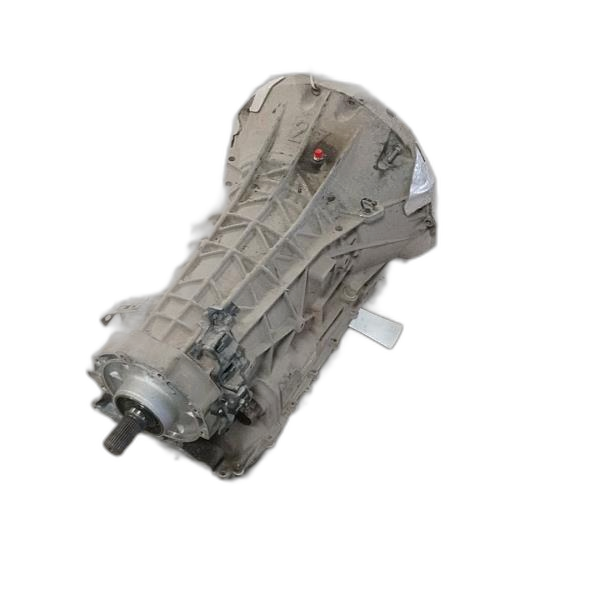
Shop the Parts Behind P0963
Below are the parts most often responsible for code P0963, ranked by how frequently each one is the actual culprit (per the diagnosis above). Tap any to see what we have for your vehicle.



The information in this article is provided for general reference and educational purposes only. Vehicle specifications, procedures, and part compatibility can vary by production date, trim level, and region. Always consult your vehicle's factory service manual and verify part numbers before purchasing or performing repairs. Safety-critical components such as airbags, seat belts, and braking systems should be installed by a qualified professional.
- 🧭 Diagnostic Flowchart
- 🎬 Helpful Videos
- 🛍️ Shop This Part
- What Does P0963 Mean?
- Can I Drive With P0963?
- Common Causes
- Symptoms
- Common Fixes & Costs
- DIY vs Professional
- Used vs. New Parts: Buying Guide
- What Happens If You Wait — Timeline
- Cost of Not Fixing It
- Diagnosis Steps
- When This Code Triggers (Freeze-Frame Conditions)
- Related Codes
- Climate & Environmental Factors
- How to Talk to a Mechanic About This Code
- Where to Take It: Dealer vs Independent vs Chain
- When to Walk Away From the Repair
- What Scan Tool You Need for This Code
- How to Clear the Code After You Fix It
- Will This Fail Emissions / State Inspection?
- Most Commonly Affected Vehicles
- Manufacturer-Specific Notes
- Real Owner Stories
- 2010 Mazda Miata (NC) at 75K miles - Misdiagnosed by Dealer
- 2010 Toyota Yaris with CVT - Intermittent Electrical Gremlin
- 2013 Chevy Cruze at 110K miles - A Classic Solenoid Failure
- How to Prevent This Code From Triggering
- Frequently Asked Questions
- Is it safe to drive with a P0963 code?
- What is the most common misdiagnosis for P0963?
- How much does it cost to fix a P0963 code?
- Can I fix the P0963 code myself?
- What is the difference between a shift solenoid and a pressure control solenoid?
- What does 'limp mode' feel like?
- Will changing the transmission fluid fix a P0963 code?
- Should I check for Technical Service Bulletins (TSBs) for a P0963 code?
- Key Takeaways
- 🎟️ Get 5% Off