

OBD-II Code P0964: Pressure Control Solenoid 'B' Control Circuit Open
What P0964 means, why it triggers, and how to fix it
- Damaged wiring harnesses or corroded connectors cause over 50% of P0964 codes, not catastrophic internal transmission failures.
- Expect severe drivability issues like harsh 'banging' shifts and the transmission locking into a single gear (limp mode).
- Continued driving with P0964 causes cumulative stress on engine mounts and clutches, potentially adding $1,500 in secondary repair costs.
- Isolate the fault using a multimeter to test circuit resistance; a healthy solenoid reads 5-30 ohms, while an open circuit reads infinite ('OL').
- Check for Technical Service Bulletins (TSBs) or extended warranties, especially if driving a 2016-2018 Chevy Volt or a 2010-2019 Subaru CVT.
What Does P0964 Mean?

P0964 means the Transmission Control Module (TCM) detects an electrical break in the 'B' pressure control solenoid circuit. This solenoid manages hydraulic fluid pressure to ensure smooth gear shifts. An 'open circuit' means the electrical signal is broken or missing entirely, preventing the TCM from controlling the solenoid.
Technical definition: The Transmission Control Module (TCM) detects a complete loss of continuity (infinite resistance) in the control circuit for Pressure Control Solenoid 'B'.
Can I Drive With P0964?
Yes, But With Caution. You can drive the vehicle, but expect harsh shifting, poor acceleration, and limp mode. Continued driving causes cumulative stress on engine mounts and differential gearing, adding $500-$1500 in secondary repair costs. Get the vehicle diagnosed immediately to prevent expensive internal transmission damage.
Common Causes

- Damaged or corroded external wiring/connectors (Very Common) — Road debris, heat, and moisture scrape wires or corrode connectors, breaking the electrical circuit between the TCM and the transmission.
- Failed Pressure Control Solenoid 'B' (Common) — The solenoid's internal wire coil breaks, creating an open circuit that ignores TCM commands.
- Faulty internal transmission wiring harness (Common) — The harness inside the transmission oil pan fails from constant heat and fluid exposure. This is a known issue on specific GM and Dodge vehicles.
- Faulty Transmission Valve Body (Less Common) — On modern transmissions (especially CVTs), solenoids are integrated into the valve body. Internal failures manifest as electrical codes.
- Low or dirty transmission fluid (Less Common) — Contaminated fluid causes overheating, stressing solenoids and leading to premature electrical failure.
- Poor ground connection (Rare) — A corroded transmission or TCM ground strap causes bizarre electrical issues, including false open circuit codes.
- Failed Transmission Control Module (TCM) (Very Rare) — The TCM's internal driver circuit fails. Suspect this only after ruling out all wiring and solenoid issues.
Symptoms

- Transmission stuck in one gear (Limp Mode) — The transmission enters a fail-safe mode, locking into a single gear (often 2nd or 3rd) to prevent further internal damage.
- Harsh, erratic, or delayed shifting — The vehicle slams into gear because hydraulic pressure is unregulated.
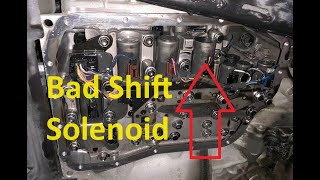
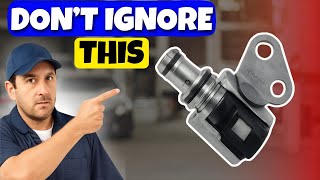
- Check Engine Light is on 🎬 Watch: A mechanic explains common symptoms of a bad solenoid. — The TCM illuminates the Malfunction Indicator Lamp (MIL) immediately upon detecting the open circuit.
- Vehicle has poor acceleration — The car feels sluggish and weak from a stop because the transmission is stuck in a higher gear.
- Abnormal vibrations — Erratic hydraulic pressure control causes a noticeable shudder during acceleration or shifting.
- Transmission overheating (also visible on scanner) — Improper pressure control causes clutches to slip, generating excessive heat and triggering a temperature warning light.
- Increased fuel consumption (also visible on scanner) — The engine runs at higher RPMs when stuck in lower gears, dropping fuel efficiency by 10-25%.
Diagnostic Flowchart

Tap your situation to follow the diagnostic path that matches what you're seeing on this code.
Common Fixes & Costs
- Repair or Replace External Wiring Harness — Parts: $20-$100, Labor: $150-$400, ~1.5 hr book time (Intermediate)
- Replace Pressure Control Solenoid 'B' — Parts: $50-$200, Labor: $250-$500, ~3 hr book time (Advanced)
- Replace Transmission Valve Body Assembly — Parts: $400-$1200, Labor: $300-$800, ~4.5 hr book time (Professional)
- Transmission Fluid and Filter Change — Parts: $50-$100, Labor: $150-$300, ~1 hr book time (DIY)
- Replace Transmission Control Module (TCM) — Parts: $200-$1000, Labor: $150-$400, ~2 hr book time (Professional)
Used vs. New Parts: Buying Guide
When a used part is worth it: Buying used makes sense for external wiring harnesses. For internal solenoids or valve bodies, used parts are risky but budget-friendly for older, high-mileage vehicles if sourced from a low-mileage, accident-damaged donor.
Donor-vehicle mileage cap: roughly under 80000 miles for the part to have meaningful remaining life.
Donor quality checklist:
- Verify the donor vehicle's VIN to ensure exact compatibility.
- Get a written warranty, even if it's only 30-90 days.
- Avoid parts from vehicles in rust-belt states.
- Ask for the mileage and reason the vehicle was salvaged.
Decision logic:
- If The part is an external wiring harness or connector. → Used is a cost-effective and reliable option.
- If The part is an internal solenoid or valve body and the vehicle has less than 100,000 miles. → Buy new (OEM or quality aftermarket) for reliability and warranty.
- If The vehicle is over 150,000 miles and the budget is very tight. → A used part from a reputable salvage yard with a warranty is an acceptable risk.
Warranty tradeoff: Used parts typically have a 30-90 day part-only warranty. New aftermarket parts carry a 1-year to limited lifetime warranty. New OEM parts offer a 1-2 year warranty.
Worst-case if a used part fails: 600-1200
What Happens If You Wait — Timeline
- 0-2 weeks: Code P0964 sets. Driver experiences intermittent harsh shifts and limp mode. (MPG impact: 5-10%% · Added cost: $0-$50)
- 2 weeks - 3 months: Harsh shifting becomes consistent. Repeated shock loads wear out engine and transmission mounts. (MPG impact: 10-15%% · Added cost: $200-$650)
- 3-6 months: Uncontrolled high pressure generates excessive heat, burning fluid and hardening internal seals. Clutch packs slip. (MPG impact: 15-25%% · Added cost: $800-$2000)
- 6+ months: Catastrophic failure. Clutch material is destroyed, metal components warp, and the transmission requires a complete rebuild. (MPG impact: 25%+% · Added cost: $2500-$5000)
Cost of Not Fixing It
- 0-1 month: Noticeable drop in fuel economy (10-25%) due to inefficient shifting. Increased safety risk from limp mode in traffic. (Added cost: 50-100)
- 1-6 months: Accelerated wear on transmission clutches and bands. Damage to engine and transmission mounts from repeated 'banging' into gear. (Added cost: 500-1500)
- 6+ months: Catastrophic internal transmission failure. Slipping clutches generate extreme heat, warping metal components and destroying seals. (Added cost: 2500-5000)
Diagnosis Steps
- Scan for Codes and Check Fluid
Use an OBD-II scanner to confirm P0964 and check for related codes (e.g., P0AC4). Verify the transmission fluid is at the correct level and is a clean, translucent color.
Tools: OBD-II Scanner, Rag/Paper Towel (Beginner) - Test Battery and Charging System
A weak battery causes low voltage conditions, triggering false electrical codes. Test battery voltage (12.6V engine off) and alternator output (13.5-14.5V engine running).
Tools: Digital Multimeter (Beginner) - Visually Inspect External Wiring and Grounds
Inspect the wiring harness from the TCM to the transmission connector for chafing, melting, or corrosion. Verify the main transmission ground strap is tight and rust-free.
Tools: Flashlight, Socket Set (Beginner) - Pinpoint Resistance Testing (Isolate the Fault)
Identify the PC Solenoid 'B' pins at the TCM connector using a wiring diagram. Disconnect the TCM and measure resistance. 'OL' (infinite resistance) confirms the open circuit. Next, measure resistance at the transmission case connector. A good reading (20-30 ohms) means the external harness is broken. An 'OL' reading means the internal harness or solenoid has failed.
Tools: Digital Multimeter, Vehicle-Specific Wiring Diagram (Intermediate) - Analyze Live Data PIDs
Monitor 'Pressure Control Solenoid B Command' and 'Current' PIDs with an advanced scan tool. When commanded ON, an open circuit shows 0 Amps, confirming the electrical break.
Tools: Advanced Bidirectional Scan Tool (Advanced) - Verify Solenoid Resistance at Component
If the fault is internal, drop the transmission oil pan. Test resistance directly at the solenoid connector. 'OL' confirms a failed solenoid. A healthy solenoid reads 5-30 ohms depending on the manufacturer.
Tools: Socket Set, Drain Pan, Digital Multimeter, New Pan Gasket, Transmission Fluid, Service Manual (Advanced) - Command Solenoid with Advanced Scan Tool
Use bidirectional control to command the solenoid ON while monitoring current feedback. Zero current draw confirms the open circuit without disassembly.
Tools: Advanced Bidirectional Scan Tool (Professional) - Waveform Analysis (Oscilloscope Diagnosis)
Connect an oscilloscope to the solenoid control wire. A flat line (zero volts or stuck at source voltage) during a commanded shift definitively confirms an electrical open.
Tools: Automotive Oscilloscope, Probing Kit (Professional) - Test the Transmission Control Module (TCM)
Perform this step only after proving the solenoid and all wiring are good. Use a breakout box to test the TCM's output directly for a failed internal driver.
Tools: Advanced Diagnostic Equipment, Breakout Box (Professional)
When This Code Triggers (Freeze-Frame Conditions)
- Engine Coolant Temp: 180-200°F (82-93°C) (The code sets when the engine is at full operating temperature.)
- RPM: 1500-3000 RPM (Occurs during steady driving or when a gear shift is commanded by the TCM.)
- Engine Load: 20-60% (Detected under normal acceleration or cruising, not typically at idle or full throttle.)
- Vehicle Speed: 30-60 mph (Occurs at city or highway speeds when the transmission actively shifts or holds gears.)
Related Codes
- P0965 — Indicates a range/performance issue with solenoid 'B'. The TCM sees an erratic or weak signal, whereas P0964 is a complete absence of signal.
- P0966 — Points to a 'Circuit Low' condition, usually a short to ground. A multimeter shows near-zero resistance to ground, while P0964 shows infinite resistance.
- P0967 — Indicates a 'Circuit High' condition, usually a short to power. Battery voltage is present on the signal wire when it shouldn't be.
- P0AC4 — On hybrid vehicles like the Chevy Volt, this code appears alongside P0964 to indicate the hybrid system has detected the transmission fault and disabled electric drive.
Climate & Environmental Factors
- High Humidity / Road Salt: Salt Belt regions experience higher rates of corrosion on external wiring connectors and ground straps, directly causing open circuits.
- Extreme Heat: Hot climates and heavy towing accelerate material breakdown. Internal transmission wiring harnesses become brittle and crack from constant heat cycles.
- Extreme Cold: Cold temperatures thicken transmission fluid, increasing hydraulic pressure and straining solenoids. Wiring also becomes brittle and susceptible to cracking.
How to Talk to a Mechanic About This Code
Say this: "I have an active P0964 code and harsh shifting. Please perform a pinpoint test to isolate the open circuit before recommending any part replacement. I want to confirm if the fault is in the external wiring, internal harness, or the solenoid itself."
This signals you expect a thorough electrical diagnosis, preventing shops from immediately quoting a new solenoid or transmission rebuild without proving where the electrical failure is located.
Avoid saying:
- 'My transmission is acting weird.'
- 'My check engine light is on, can you just fix it?'
- 'I think I need a new transmission solenoid.'
Questions to ask before authorizing the repair:
- What were the results of the pinpoint test? What was the resistance reading at the TCM connector versus the transmission connector?
- Can you show me the damaged wire or the failed part before you replace it?
- If the solenoid needs to be replaced, is it part of a larger valve body or solenoid pack?
- What is the warranty on the recommended parts and the labor for this repair?
Where to Take It: Dealer vs Independent vs Chain
- Dealer:
A safe, but expensive, choice. Recommended if your vehicle has a specific TSB or is under warranty.
Best for: Vehicles under warranty., Vehicles with known TSBs for this code (e.g., Chevy Volt, Subaru CVT models)., Complex modern European cars requiring specialized software.
Downsides: Highest labor rates., May prefer replacing expensive assemblies (full valve body) instead of repairing wiring. (Typical cost: +50% vs. baseline) - Independent Shop:
Excellent choice. Transmission specialists are best equipped to perform detailed electrical diagnosis and repair wiring to save costs.
Best for: Out-of-warranty vehicles where cost is a factor., Finding a transmission specialist.
Downsides: Quality varies widely. You must vet the shop's reviews and ASE certifications., May lack dealer-level software for programming. (Typical cost: +0% vs. baseline) - Chain Shop:
AVOID for this code. The risk of misdiagnosis is very high.
Best for: Simple maintenance like oil changes or brake jobs.
Downsides: Technician skill for complex electrical diagnostics is inconsistent., High pressure to upsell unnecessary transmission rebuilds. (Typical cost: -10% vs. baseline)
When to Walk Away From the Repair
If the total estimated repair cost exceeds 50% of your car's private-party market value, seriously consider selling the car as-is.
- Car worth $5000, fix is $450: Fix it. This is a small fraction of the car's value and a common repair cost for a wiring issue.
- Car worth $5000, fix is $2200: Borderline. Get a second opinion to ensure a full valve body replacement is truly necessary before proceeding.
- Car worth $3000, fix is $2800: Walk away. The repair cost is nearly the entire value of the car.
What Scan Tool You Need for This Code
Minimum: A scanner that reads transmission-specific codes and displays live transmission data PIDs.
A $20 reader cannot show live data (solenoid commanded state vs. current draw) needed to confirm the electrical fault without a multimeter.
Budget: BlueDriver Pro (~$100) — Reads transmission codes and shows live data PIDs. Graphs commanded pressure vs. actual pressure to see discrepancies.
Mid-range: Foxwell NT510 Elite (~$180) — Offers bidirectional control to command the pressure control solenoid 'B' on and off directly from the scanner.
Professional: Autel MaxiCOM MK808 / Innova 5610 (~$450-700) — Provides extensive bidirectional control, live current viewing, and access to manufacturer-specific test procedures.
Rent vs buy: Free rental scanners are too basic. Buy at least a budget pick that shows live data. For DIY repairs, a mid-range scanner with bidirectional control is essential.
How to Clear the Code After You Fix It
- Use an OBD-II scan tool to clear all Diagnostic Trouble Codes (DTCs).
- Perform a complete drive cycle to allow the vehicle's readiness monitors to run.
Drive cycle (~20 minutes): A generic drive cycle involves a cold start (engine off for 8+ hours), 2-3 minutes of idling, followed by mixed city/highway driving. Include steady cruising at 55-60 mph for at least 5 minutes and several instances of deceleration without using the brakes.
Readiness monitors affected: Comprehensive Component Monitor, Transmission Component Monitor
Before emissions retest: drive at least 50 miles to fully set monitors.
Watch out for:
- Clearing the code without fixing the underlying open circuit causes the code to return immediately.
- Failing to drive the vehicle long enough after a repair prevents readiness monitors from setting to 'Ready', causing a failed emissions test.
Will This Fail Emissions / State Inspection?
Yes — this code typically fails an OBD-II emissions inspection.
- California: An illuminated Check Engine Light is an automatic failure. All OBD-II readiness monitors must be 'Ready'.
- New York: An active P0964 code causes an automatic failure. The Check Engine Light must be off and readiness monitors set.
- Texas: In emissions-testing counties, an active P0964 code results in an automatic failure. Safety-only counties may pass the vehicle.
Most Commonly Affected Vehicles
- Chevrolet Volt (2016-2018) — Covered under TSB PIC6330. The fix requires replacing the control solenoid valve body and internal harness. The updated harness part has a date code after 02/12/2018.
- Chevrolet Malibu (2016-2018) — Covered under TSB PIC6330 for intermittent circuit issues caused by internal harness or solenoid module quality.
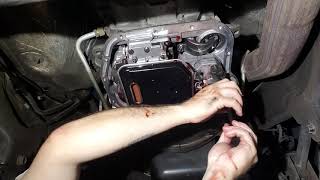
- Dodge/Jeep Various with 42RE/44RE/46RE/47RE/48RE transmissions (1996-2009) — Extremely common failure of the Governor Pressure Solenoid and Sensor. Always check and clean transmission ground connections, as poor grounds cause false solenoid codes.
- Ford Focus (2000-2011) — Models with the 4F27E transmission are known for shift solenoid failures. The fix is replacing the entire shift solenoid assembly (solenoid block).
- Subaru Various with CVT (2010-2019) — P0964 almost always requires replacing the entire valve body assembly. Subaru extended the CVT warranty to 10 years/100,000 miles for many of these models.
- Hyundai Elantra, Sonata (2011-2019) — Frequently traced back to a faulty internal transmission wiring harness that becomes brittle from heat cycles, leading to limp mode.
- Nissan Rogue, Pathfinder, Sentra, Altima (2013-2024) — CVT models suffer from failing solenoids within the valve body, causing shuddering, hesitation, and limp mode identical to a P0964 fault.
- MINI Countryman (R60) (2010-2016) — Transmission faults trigger limp mode, with solenoid replacement in the mechatronics unit being a common fix.
Manufacturer-Specific Notes
- General Motors (Chevrolet): TSB PIC6330 acknowledges P0964 is caused by poor quality internal wiring harnesses or solenoid packs in 2016-2018 Volt and Malibu models. Replace both parts simultaneously.
- Dodge / Jeep / Chrysler: On RE series transmissions, poor grounding is a notorious cause of false solenoid codes. Clean and add redundant ground straps from the transmission to the chassis before replacing parts.
- Nissan: CVT shuddering and hesitation stem from premature wear of the valve body and solenoids. A fluid change rarely fixes the issue.
- Subaru: Subaru extended the CVT warranty to 10 years or 100,000 miles for many 2010-2019 models. Contact a dealer with your VIN to confirm coverage for valve body replacement.
Real Owner Stories
2017 Chevy Volt at 170K miles
Check Engine Light came on with codes P0964 and P0AC4. The car started with a rough knock and would not drive in electric mode.
What they tried:
- A local shop quoted $4500 to replace the entire transmission.
- A dealer quoted $2600 to replace the transmission wiring harness and the solenoid valve.
Outcome: The owner performed a DIY repair, replacing the solenoid valve body (part cost ~$250) in 4 hours, resolving the issue.
Lesson: For the Gen 2 Volt, P0964 is a known issue (TSB PIC6330). Do not agree to a full transmission replacement. The fault is almost always the solenoid body or internal harness.
2018 Chevy Silverado
Check Engine Light appeared with code P0964.
What they tried:
- Checked transmission fluid level and condition.
- Inspected the external wiring harness for visible damage or corrosion.
Outcome: The issue was traced to a corroded pin within the main transmission harness connector. Cleaning the connector with contact cleaner and applying dielectric grease permanently cleared the code.
Lesson: Always start with the simplest causes. An open circuit is frequently caused by a bad connection, not a failed part.
Dodge Ram with 48RE Transmission
Vehicle experienced harsh shifting, limp mode, and threw a governor pressure solenoid circuit code.
What they tried:
- Replaced the governor pressure solenoid and sensor pack inside the transmission pan.
Outcome: The code returned. Further diagnosis revealed a corroded ground strap from the transmission to the chassis. Cleaning and tightening the ground strap permanently resolved the problem.
Lesson: Electrical ground issues are a notorious cause of false solenoid codes. Inspect and clean all ground connections before replacing internal parts.
How to Prevent This Code From Triggering
- Perform regular transmission fluid and filter changes (Every 30,000-60,000 miles) — Clean fluid prevents debris buildup that clogs solenoid passages and ensures proper cooling to prevent coils from overheating.
- Use only the manufacturer-specified transmission fluid (Every fluid change) — Incorrect fluid has the wrong viscosity and friction modifiers, causing poor shifting and accelerated solenoid wear.
- Inspect and protect external wiring (Annually, especially in Salt Belt regions) — Applying dielectric grease to major connectors prevents moisture and road salt from causing corrosion that leads to open circuits.
- Maintain the vehicle's cooling system (Per manufacturer schedule) — An overheating engine leads to an overheating transmission, which is the primary cause of fluid breakdown and solenoid failure.
Frequently Asked Questions
Can I fix P0964 myself?
Cleaning a corroded external connector or replacing a ground strap is DIY-friendly. Properly testing circuits with a multimeter and replacing internal transmission parts requires intermediate to advanced skills. A DIY solenoid body replacement on a Chevy Volt takes 2-4 hours for an experienced home mechanic.
Can a weak battery cause a P0964 code?
Yes. A failing battery causes a significant voltage drop during engine cranking. This forces electronic modules, including the TCM, to glitch and set random fault codes.
Will clearing the code fix the problem?
No. Clearing the code only turns off the check engine light temporarily. Because P0964 indicates a persistent physical electrical fault, the code returns immediately when the TCM commands the solenoid.
What happens if I ignore the P0964 code?
Ignoring this code leads to severe transmission damage. Consistently harsh shifting causes mechanical wear on clutches, bands, and gears. What starts as a wiring issue quickly turns into a multi-thousand dollar transmission rebuild.
Is a transmission flush a good idea for P0964?
A flush will not fix an electrical open circuit. While dirty fluid contributes to solenoid failure over time, it is not the direct cause of this code. Perform a simple drain-and-fill only after completing the electrical repair.
Is the pressure control solenoid the same as a shift solenoid?
They work together but perform different jobs. Shift solenoids are on/off valves that direct fluid to engage specific gears. Pressure control solenoids regulate overall hydraulic pressure to control the smoothness of the shift.
My mechanic wants to replace the whole transmission. Is that necessary?
For a P0964 code alone, this is highly unlikely and a major red flag. This code points to a specific electrical circuit failure, not a catastrophic internal mechanical failure. Get a second opinion from a transmission specialist.
What are the most common misdiagnoses for P0964?
The most common mistake is replacing the pressure control solenoid without testing the wiring. Technicians often find the true problem was a broken wire or corroded connector pin only after the new solenoid fails to fix the issue. Always test the entire circuit from the TCM to the solenoid first.
My mechanic replaced the solenoid, but the code came back. What now?
This confirms the problem is not the solenoid itself. Meticulously re-inspect the internal and external wiring harnesses for intermittent breaks and check for corroded connector pins. Verify the transmission has a solid ground connection, as poor grounds mimic solenoid failures.
Key Takeaways
- Damaged wiring harnesses or corroded connectors cause over 50% of P0964 codes, not catastrophic internal transmission failures.
- Expect severe drivability issues like harsh 'banging' shifts and the transmission locking into a single gear (limp mode).
- Continued driving with P0964 causes cumulative stress on engine mounts and clutches, potentially adding $1,500 in secondary repair costs.
- Isolate the fault using a multimeter to test circuit resistance; a healthy solenoid reads 5-30 ohms, while an open circuit reads infinite ('OL').
- Check for Technical Service Bulletins (TSBs) or extended warranties, especially if driving a 2016-2018 Chevy Volt or a 2010-2019 Subaru CVT.
Helpful Videos
Shop the Parts Behind P0964
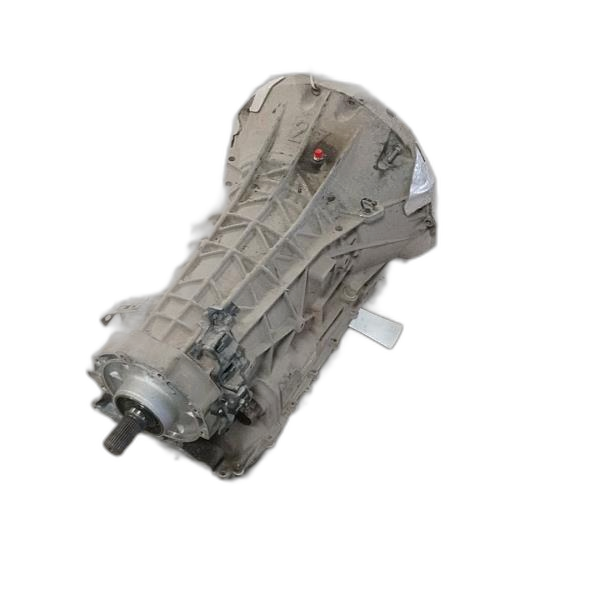
Below are the parts most often responsible for code P0964, ranked by how frequently each one is the actual culprit (per the diagnosis above). Tap any to see what we have for your vehicle.



The information in this article is provided for general reference and educational purposes only. Vehicle specifications, procedures, and part compatibility can vary by production date, trim level, and region. Always consult your vehicle's factory service manual and verify part numbers before purchasing or performing repairs. Safety-critical components such as airbags, seat belts, and braking systems should be installed by a qualified professional.
- 🧭 Diagnostic Flowchart
- 🎬 Helpful Videos
- 🛍️ Shop This Part
- What Does P0964 Mean?
- Can I Drive With P0964?
- Common Causes
- Symptoms
- Common Fixes & Costs
- Used vs. New Parts: Buying Guide
- What Happens If You Wait — Timeline
- Cost of Not Fixing It
- Diagnosis Steps
- When This Code Triggers (Freeze-Frame Conditions)
- Related Codes
- Climate & Environmental Factors
- How to Talk to a Mechanic About This Code
- Where to Take It: Dealer vs Independent vs Chain
- When to Walk Away From the Repair
- What Scan Tool You Need for This Code
- How to Clear the Code After You Fix It
- Will This Fail Emissions / State Inspection?
- Most Commonly Affected Vehicles
- Manufacturer-Specific Notes
- Real Owner Stories
- 2017 Chevy Volt at 170K miles
- 2018 Chevy Silverado
- Dodge Ram with 48RE Transmission
- How to Prevent This Code From Triggering
- Frequently Asked Questions
- Can I fix P0964 myself?
- Can a weak battery cause a P0964 code?
- Will clearing the code fix the problem?
- What happens if I ignore the P0964 code?
- Is a transmission flush a good idea for P0964?
- Is the pressure control solenoid the same as a shift solenoid?
- My mechanic wants to replace the whole transmission. Is that necessary?
- What are the most common misdiagnoses for P0964?
- My mechanic replaced the solenoid, but the code came back. What now?
- Key Takeaways
- 🎟️ Get 5% Off