

OBD-II Code P0965: Pressure Control Solenoid 'B' Control Circuit Range/Performance
What P0965 means, why it triggers, and how to fix it
- Code P0965 flags an electrical failure in the transmission's 'B' pressure control solenoid circuit, locking the vehicle into a restricted 2nd or 3rd gear 'limp mode'.
- Driving with an active P0965 code for more than a few miles destroys clutch packs and the torque converter, turning a $200 electrical repair into a $4,000 transmission rebuild.
- On 2013-2018 Nissan and 2010-2017 Subaru CVTs, this code almost always requires replacing the entire $800-$1,500 valve body assembly rather than a single solenoid.
- Always test the solenoid circuit resistance at the TCM connector (typically 3-13 ohms) and check for a charging system over-voltage (above 15V) before dropping the transmission pan.
What Does P0965 Mean?
Code P0965 indicates the Powertrain Control Module (PCM) or Transmission Control Module (TCM) detected an electrical fault in the 'B' pressure control solenoid circuit. This electro-hydraulic valve manages the fluid pressure required for smooth gear shifts. When the electrical signal falls outside the expected range, the computer triggers the check engine light and forces the transmission into a protective 'limp mode'.
Technical definition: The SAE/OBD-II definition is "Pressure Control Solenoid 'B' Control Circuit Range/Performance." The PCM/TCM has detected that the voltage, current, or resistance in the control circuit for the 'B' pressure control solenoid is outside normal operational parameters. While generic, it is exceptionally common in Nissan, Subaru, GM, and Hyundai vehicles.
Can I Drive With P0965?
No — Do Not Drive. Do not drive the vehicle. The transmission enters a protective 'limp mode' with severely limited speed and gear choice. Continuing to drive destroys clutches and the valve body due to unregulated hydraulic pressure, turning a $200 solenoid repair into a $4,000 transmission rebuild. Tow the vehicle to a repair facility.
Common Causes
- Defective Transmission Valve Body (Very Common) — The pressure control solenoid is housed within the valve body. In many modern transmissions (especially Nissan and Subaru CVTs), the solenoids are integrated and cannot be replaced individually. Internal wear or warping of the valve body triggers this code.
- Faulty Pressure Control Solenoid 'B' (Very Common) — The solenoid fails internally due to electrical shorts or opens in its copper coil, or becomes mechanically stuck, preventing it from regulating hydraulic pressure.
- Low or Contaminated Transmission Fluid (Common) — Fluid that is low, degraded, or contaminated with clutch material clogs the solenoid's microscopic passages, causing it to stick and fail performance parameters.
- Damaged Wiring or Corroded Connectors (Common) — The external wiring harness or the main transmission connector corrodes from moisture and road salt, disrupting the electrical signal between the TCM and the solenoid.
- Poor Ground Connection (Less Common) — A corroded or loose ground wire for the transmission or TCM causes erratic voltage readings, tricking the computer into setting a P0965 code even if the solenoid is healthy.
- Outdated TCM Software (Less Common) — Manufacturers frequently release software updates for the TCM to correct overly sensitive diagnostic parameters or false-positive codes.
- Failing Transmission Control Module (TCM) (Rare) — The TCM itself fails, sending incorrect voltage to the solenoid or failing to read the return signal. This is diagnosed only after ruling out wiring and solenoid faults.
Symptoms
- Check Engine Light is On — The primary indicator. A transmission-specific warning light (like AT OIL TEMP) also illuminates on some models.
- Transmission Enters 'Limp Mode' — The computer locks the transmission into a single gear (usually 2nd or 3rd) to prevent internal damage, severely limiting speed and acceleration.
- Harsh, Delayed, or Erratic Shifting — The transmission slams into gear, hesitates, or shifts at incorrect RPMs because fluid pressure is unregulated.
- Transmission Slipping or Juddering — Engine RPMs flare up without an increase in vehicle speed, or a severe shudder occurs during acceleration (highly common in CVTs).
- Decreased Fuel Economy — Inefficient shifting forces the engine to work harder, dropping fuel efficiency by 10-15%.
Diagnostic Flowchart
Tap your situation to follow the diagnostic path that matches what you're seeing on this code.
Common Fixes & Costs
- Replace Transmission Valve Body
— Parts: $400-$1500, Labor: $400-$1000, ~4.5 hr book time
(Professional)
: OEM Example: 31705-28X0B (Alt: Rostra, Sonnax (remanufactured units))
: OEM Example: 31825AA052 (Alt: Dorman, Rostra) - Replace Pressure Control Solenoid 'B'
— Parts: $70-$250, Labor: $200-$450, ~2.5 hr book time
(Intermediate)
: OEM Varies, part of TEHCM assembly (Alt: ACDelco 24230298, Kkonetoy 2048150A) - Transmission Fluid and Filter Change — Parts: $50-$120, Labor: $150-$250, ~1.5 hr book time (DIY)
- Repair Transmission Wiring Harness or Ground — Parts: $10-$50, Labor: $150-$400, ~2.5 hr book time (Professional)
- Reprogram or Replace TCM — Parts: $0-$1200, Labor: $150-$300, ~2.0 hr book time (Professional)
Used vs. New Parts: Buying Guide
When a used part is worth it: For older vehicles (150k+ miles), a used valve body from a low-mileage (under 80k miles) collision-salvage vehicle is a viable budget option.
Donor-vehicle mileage cap: roughly under 80000 miles for the part to have meaningful remaining life.
Donor quality checklist:
- Verify the donor vehicle's VIN to confirm exact compatibility and check for outstanding transmission TSBs.
- Ensure the part includes a minimum 30-day functional warranty.
- Inspect connectors for green corrosion and the unit for external impact damage.
Decision logic:
- If Vehicle is newer or has low mileage (<80k miles) and you plan to keep it long-term → Buy a new OEM or high-quality remanufactured valve body. The higher cost guarantees reliability and a longer warranty.
- If Vehicle is older (>150k miles) and your goal is 1-2 more years of life on a tight budget → Purchase a tested, used valve body from a reputable salvage yard.
- If The part is a known high-failure item (e.g., Nissan Jatco CVT valve bodies) → Buy a remanufactured unit from a specialist (like Sonnax or Rostra) that corrects original OEM design flaws. Avoid used OEM parts with the same inherent defect.
Warranty tradeoff: Used parts offer a 30-90 day warranty. Aftermarket remanufactured parts offer 1-3 years. OEM parts installed by a dealer carry a 12-month/12,000-mile warranty.
Worst-case if a used part fails: $800-$1500 if a used part fails after the warranty period, requiring a second replacement part and duplicate labor costs.
What Happens If You Wait — Timeline
- 0-1 month: Check Engine Light illuminates. Intermittent harsh shifts occur, but the vehicle drives normally most of the time. The TCM logs the fault but avoids limp mode. (MPG impact: 0-5%% · Added cost: $0-$50 in wasted fuel.)
- 1-3 months: Shifting problems become frequent. The transmission enters 'limp mode' intermittently. Slipping gears cause excess heat, accelerating fluid breakdown and clutch wear. (MPG impact: 5-15%% · Added cost: $200-$800 as clutch surfaces glaze and wear prematurely due to unregulated pressure.)
- 3-6 months: Vehicle enters limp mode on every drive. The transmission overheats, emitting a burnt fluid smell. Slipping clutches generate massive debris, contaminating the valve body. (MPG impact: 15-25%% · Added cost: $800-$2,500 to replace burnt clutch packs and the torque converter.)
- 6+ months: Catastrophic transmission failure. Clutch packs are completely burned out. Debris destroys the valve body and pump. The transmission no longer engages. (MPG impact: >25% (or vehicle is undrivable)% · Added cost: $3,000-$7,000 for a complete transmission replacement.)
Cost of Not Fixing It
- 0-1 month: Immediate drivability issues including harsh shifting, slipping, and 'limp mode'. Fuel economy drops by 10-15%. (Added cost: High risk of being stranded and requiring a tow ($100-$200).)
- 1-3 months: Incorrect hydraulic pressure causes excessive friction, overheating the transmission and accelerating wear on clutch packs and internal seals. (Added cost: $800-$1500 in added internal parts for a required rebuild.)
- 3+ months: Catastrophic internal transmission failure. Slipping clutches burn out, contaminating the system with metal debris and destroying the valve body, torque converter, and pump. (Added cost: $3000-$7000 for a complete transmission replacement.)
Diagnosis Steps
- Scan for Codes and Check for TSBs
Use an OBD-II scanner to confirm P0965 and note related codes (e.g., P0700, P0964, P0966). Immediately check for Technical Service Bulletins (TSBs) for your specific VIN. Manufacturers often provide specific diagnostic paths or warranty extensions for this exact code.
Tools: OBD-II Scanner, Internet Access for TSB search (Beginner) - Check Transmission Fluid Level and Condition
Verify the fluid is at the correct level per the manufacturer's procedure. Inspect the color and smell. Dark, gritty, or burnt-smelling fluid indicates severe internal clutch wear, meaning the P0965 code is a symptom of a larger mechanical failure, not just an electrical glitch.
Tools: Rag, Dipstick (if equipped) (Beginner) - Inspect Wiring, Connectors, and Grounds
Visually inspect the transmission wiring harness for frayed wires or melting. Unplug the main connector at the transmission and TCM to check for green corrosion or fluid intrusion. Verify all transmission ground straps are tight and rust-free.
Tools: Flashlight, Socket Set (Intermediate) - Check Alternator and System Voltage
An overcharging alternator causes high voltage conditions that trigger false 'Range/Performance' codes. With the engine running, measure voltage at the battery. Readings above 15.0V indicate a faulty voltage regulator that must be fixed before continuing transmission diagnosis.
Tools: Digital Multimeter (Intermediate) - Test Solenoid Circuit Resistance Against OEM Specs
Disconnect the TCM connector and use a multimeter to test the resistance of the solenoid circuit (testing both the wiring and the solenoid coil simultaneously). Compare readings to the service manual. An open circuit (infinite resistance) or short (near 0 ohms) confirms a hard fault. Typical specs range from 3 to 13 ohms depending on the vehicle.
Tools: Digital Multimeter, Vehicle Service Manual/Wiring Diagram (Advanced) - Monitor Live Data with a Professional Scan Tool
Use a bi-directional scan tool to monitor the TCM's live data. Observe the 'Pressure Control Solenoid B Commanded Duty Cycle' and actual pressure sensor readings. Command the solenoid on and off to verify its response. A discrepancy between the commanded state and actual pressure isolates the issue to the solenoid or a hydraulic blockage.
Tools: Professional Bi-Directional Scan Tool (Professional) - Drop Pan to Inspect Valve Body and Test Solenoid Directly
If external circuits test good, drop the transmission oil pan. Test the solenoid's internal resistance directly at its pins. Apply a 12V power source to hear if it 'clicks' mechanically. Inspect the valve body for cracks and the pan for excessive metallic debris, which mandates a full rebuild.
Tools: Socket Set, Drain Pan, Digital Multimeter, 12V Power Source (Advanced) - Scope the Solenoid Circuit (For Intermittent Faults)
Connect an oscilloscope to the solenoid's control wire at the TCM. A healthy circuit shows a clean square wave (duty cycle) that changes during shifts. A messy or flat-lined pattern indicates a failing TCM driver or intermittent wiring short.
Tools: Automotive Oscilloscope, Back-probe Pins (Professional)
When This Code Triggers (Freeze-Frame Conditions)
- Engine Coolant Temp: 175-210°F (Logs when the vehicle is fully warmed up and operating at normal temperature.)
- Engine RPM: 1500-3000 RPM (Sets during acceleration or cruising when the TCM commands a gear shift or torque converter lockup.)
- Engine Load: 25-70% (Occurs under moderate engine load as the transmission actively manages pressures for changing torque demands.)
- Vehicle Speed: 30-60 mph (Triggers during city or highway driving as the transmission shifts through gears requiring Solenoid 'B'.)
Related Codes
- P0964 — Indicates an 'Open' circuit for Solenoid 'B'. Look for a completely broken wire, disconnected plug, or a burned-out solenoid coil resulting in infinite resistance.
- P0966 — Signals a 'Low' voltage condition (short to ground). Test for continuity between the solenoid's power wire and the transmission case. A reading confirms a short circuit.
- P0967 — Signals a 'High' voltage condition (short to power). Caused by a wire rubbing through and touching a power source. The signal wire will incorrectly show constant battery voltage.
- P0700 — A generic informational code indicating the TCM has stored a fault. It always appears alongside a specific code like P0965. Ignore P0700 and diagnose P0965.
Climate & Environmental Factors
- Road Salt / High Humidity: In winter climates or coastal areas, salty water spray penetrates underbody wiring connectors. This acts as an electrolyte, accelerating corrosion on copper pins, causing the high resistance or short circuits that trigger P0965.
- Extreme Cold: Sub-zero temperatures make plastic wiring insulation and connector seals brittle. Cracks form, allowing moisture intrusion that leads to the corrosion described above.
How to Talk to a Mechanic About This Code
Say this: "I have a P0965 code and I'm experiencing harsh shifting and limp mode. I'd like to schedule a diagnostic. Please start by checking for TSBs, inspecting the fluid condition, and testing the solenoid 'B' circuit resistance at the TCM before recommending internal parts."
This proves you understand the logical diagnostic steps. It prevents a shop from immediately quoting a $2,000 valve body replacement without ruling out a $150 wiring or ground issue.
Avoid saying:
- 'My transmission is broken, how much to fix it?'
- 'My check engine light is on, can you just look at it?'
- 'Just replace the solenoid.' (If it's a wiring issue, you will pay for a part you didn't need.)
Questions to ask before authorizing the repair:
- Did you find any Technical Service Bulletins for this VIN?
- What was the condition of the transmission fluid? Was there metallic debris in the pan?
- What was the exact resistance reading for the solenoid 'B' circuit, and what is the OEM spec?
- If the solenoid needs replacement, is it a standalone part or integrated into the valve body?
- Does the new part require a TCM software update or relearn procedure, and is that included in the quote?
Where to Take It: Dealer vs Independent vs Chain
- Dealer:
Mandatory if your Nissan or Subaru is covered by a CVT warranty extension. Otherwise, it is the most expensive option.
Best for: Vehicles under powertrain or extended CVT warranties (crucial for Nissan/Subaru)., When a TSB mandates a proprietary software update., Complex failures on vehicles under 5 years old.
Downsides: Highest labor rates ($150-$250/hr)., Will default to replacing the entire $1,500 valve body assembly rather than a $100 solenoid. (Typical cost: +50% vs. baseline) - Independent Shop:
The best overall choice for out-of-warranty P0965 repairs. A transmission specialist will perform a detailed circuit diagnosis rather than blindly replacing parts.
Best for: Out-of-warranty vehicles., Shops specifically certified in transmission repair (ATRA members)., Diagnosing electrical faults or replacing accessible solenoids.
Downsides: Quality varies; ensure they have excellent reviews for transmission diagnostics., May lack dealer-specific tools for TCM programming on brand-new cars. (Typical cost: +0% vs. baseline) - Chain Shop:
Avoid for P0965 diagnosis. Use only for a simple fluid change as a starting point.
Best for: A basic transmission fluid and filter change.
Downsides: Technicians lack specialized training for complex transmission electrical diagnostics., High risk of misdiagnosing P0965 and upselling unnecessary services., Not equipped for internal transmission work. (Typical cost: -10% vs. baseline)
When to Walk Away From the Repair
If the total estimated repair cost for P0965 exceeds 50% of your car's private-party market value (via Kelley Blue Book), do not fix it.
- Car worth $4500, fix is $2800: Walk away. The repair is 62% of the car's value.
- Car worth $12000, fix is $1800: Fix it. The repair is 15% of the vehicle's value and restores its function.
- Car worth $3000, fix is $750: Borderline, but worth fixing if the rest of the car is reliable. A $750 repair to keep a $3,000 car drivable is a sound investment.
What Scan Tool You Need for This Code
Minimum: A tool that reads manufacturer-specific transmission codes and views live transmission data PIDs (Parameter IDs), such as solenoid commanded state.
A $20 code reader only shows the P0965 code. It cannot view live TCM data or command the solenoid on/off, which is mandatory to determine if the fault is electrical or mechanical.
Budget: BlueDriver Pro (~$99) — Reads and clears transmission codes and displays live data for transmission PIDs on supported vehicles. Excellent for checking fluid temp before visiting a shop.
Mid-range: Foxwell NT510 Elite (~$180) — Provides bi-directional control, allowing you to command the 'B' solenoid on and off to listen for a mechanical 'click', confirming if the solenoid is stuck or electrically dead.
Professional: Autel MaxiCOM MK808S (~$450-550) — Offers comprehensive bi-directional control, extensive live data streams, and special transmission functions like 'TCM Adaptation' required after replacing a valve body.
How to Clear the Code After You Fix It
- Use an OBD-II scan tool to erase P0965 and related fault codes.
- Perform a complete transmission drive cycle to allow the TCM to relearn and verify the repair.
- Rescan the vehicle to ensure no codes return.
Drive cycle (~30 minutes): A generic drive cycle requires a cold start (sit for 8+ hours), 3 minutes of idling, mixed stop-and-go city driving, and 10 minutes of steady highway speed (55-60 mph). This forces the readiness monitors to run self-tests.
Readiness monitors affected: Comprehensive Component Monitor, Catalyst Monitor, Transmission-specific monitors
Before emissions retest: drive at least 50 miles to fully set monitors.
Watch out for:
- Disconnecting the battery does not clear the TCM memory on modern vehicles and resets all readiness monitors, guaranteeing an emissions test failure.
- If the underlying electrical fault remains, the code returns immediately upon shifting into gear.
Will This Fail Emissions / State Inspection?
Yes — this code typically fails an OBD-II emissions inspection.
- California: An illuminated Check Engine Light triggers an automatic smog check failure. A complete drive cycle must set all readiness monitors before a re-test.
- New York: The NYS DMV inspection includes an OBD-II scan. Code P0965 causes an automatic emissions failure.
- Texas: In the 17 counties requiring emissions testing, an active P0965 code causes an automatic failure. The Check Engine Light must be off and monitors set to pass.
Most Commonly Affected Vehicles
- Nissan Sentra (2013-2018) — Extremely common. The Jatco CVT is highly prone to valve body failures causing P0965. Covered by TSB NTB17-034i.
- Nissan Altima, Rogue, Versa, Murano (2013-2020) — Shares the Jatco CVT design with high rates of valve body and solenoid issues. Always check for warranty extensions.
- Subaru Outback, Forester, Impreza, Crosstrek (2010-2017) — The pressure control solenoid is integrated into the valve body on Lineartronic CVTs. P0965 requires replacing the entire valve body assembly.
- Chevrolet Malibu, Cruze, Sonic (2012-2019) — Models with 6T40/6T45 transmissions frequently require solenoid body (TEHCM) replacement when this code appears.
- Ford Focus, Fiesta (2012-2018) — The DPS6 'PowerShift' transmission exhibits electrical faults related to the TCM and actuator motors that manifest as solenoid circuit codes.
- Hyundai Elantra, Sonata, Tucson (2011-2016) — Often related to internal harness failures where plastic becomes brittle. Test resistance at the main connector before dropping the pan.
- Honda Accord, Civic, CR-V (2008-2015) — Highly sensitive to fluid condition. A '3x drain and fill' with genuine Honda ATF is the mandatory first diagnostic step.
- Volkswagen Jetta, Passat, Golf (2010-2017) — Points to issues within the complex mechatronics unit (valve body) or its wiring, requiring costly replacement.
Manufacturer-Specific Notes
- Nissan: P0965 is a definitive indicator of a failing valve body on CVTs. TSB NTB17-034i provides flowcharts leading directly to valve body replacement. Due to lawsuits, Nissan extended the CVT warranty on many models to 84 months/84,000 miles.
- Subaru: Subaru integrates pressure control solenoids directly into the CVT valve body. Fixing P0965 requires replacing the entire $1,200 valve body. Subaru extended the CVT warranty to 10 years/100,000 miles for many 2010-2018 models.
- General Motors (Chevrolet): GM TSBs (e.g., #16-NA-019) group P0965 with other codes, requiring a specific diagnostic flowchart and a 'fast learn' procedure performed with a dealer tool after repairs.
- Honda: Honda transmissions are hyper-sensitive to fluid type. Technicians always perform a '3x drain and fill' with genuine Honda ATF to rule out fluid-related sticking before testing electronics.
Real Owner Stories
2015 Nissan Sentra at 95,000 miles
Check engine light illuminated with severe shuddering ('judder') during acceleration. The car hesitated to move from a stop.
What they tried:
- A local shop changed the CVT fluid, but the code and symptoms returned the next day.
- The owner researched Nissan TSBs and found P0965 indicates valve body failure.
Outcome: The owner took the car to a dealership. Covered under the extended CVT warranty, the dealer replaced the entire CVT valve body assembly (OEM #31705-28X2B) for free. The repair resolved all symptoms.
Lesson: For Nissan CVTs, P0965 is rarely a simple fluid fix. Always check for TSBs and warranty extensions before paying out of pocket.
2012 Subaru Outback at 110,000 miles
Vehicle entered 'limp mode' on the highway. The AT OIL TEMP light flashed and P0965 was stored. Shifting was harsh.
What they tried:
- The owner checked the transmission fluid, which was clean and full.
- An independent shop tested the solenoid circuit and found resistance out of spec.
Outcome: Because Subaru integrates the solenoid into the valve body, the shop replaced the entire assembly. The $1,800 repair ($1,200 part, $600 labor/fluid) permanently fixed the issue.
Lesson: On Subarus, a solenoid code mandates a valve body replacement. Check if your vehicle falls under the 10-year/100,000-mile warranty extension before authorizing repairs.
2014 Chevy Cruze at 78,000 miles
Intermittent harsh downshifting. The P0965 code appeared and cleared on its own randomly.
What they tried:
- A mechanic quoted $700 to replace the solenoid block.
- The owner sought a second opinion from a transmission specialist who performed a wiring inspection.
Outcome: The specialist found a heavily corroded ground wire attached to the transmission case causing unstable voltage to the TCM. Cleaning the ground and applying dielectric grease cost $120 and permanently solved the problem.
Lesson: Never assume the most expensive internal part has failed. Intermittent electrical issues are frequently caused by bad external wiring or grounds.
How to Prevent This Code From Triggering
- Change transmission fluid and filter (Every 30,000 to 60,000 miles) — Clean fluid prevents clutch debris and metal shavings from clogging microscopic solenoid passages. This is the single most effective preventive measure.
- Use only OEM-specified transmission fluid (Every fluid change) — Modern transmissions require specific fluid friction properties (e.g., Nissan NS-3). Generic fluids damage seals and cause shifting problems that trigger solenoid faults.
- Install an external transmission cooler (Once, if towing or in a hot climate) — Heat destroys transmission electronics. An auxiliary cooler stabilizes fluid temperatures, preventing the solenoid's electrical coil from burning out.
- Allow the vehicle to warm up before aggressive driving (Daily habit) — Driving hard on cold fluid stresses internal components. Warm fluid ensures correct viscosity to protect solenoids and valves.
- Avoid abrupt acceleration from a standstill (Daily habit) — Gentle acceleration reduces initial shock loads and high pressure demands, minimizing wear on the internal components the solenoids control.
Frequently Asked Questions
Can I still drive my car with a P0965 code?
Do not drive the vehicle. While it enters 'limp mode' to protect itself, continued driving causes catastrophic transmission damage. Tow it to a repair shop to avoid a multi-thousand dollar rebuild.
Is P0965 an electrical or a mechanical problem?
It is an electrical circuit code, but it is caused by either an electrical fault (bad wiring, dead coil) or a mechanical issue (stuck valve, clogged fluid) that alters the circuit's electrical performance.
Will changing my transmission fluid fix a P0965 code?
A fluid change only fixes the code if dirty fluid is causing the solenoid to stick mechanically. If the solenoid has failed electrically or the wiring is damaged, new fluid will not solve the issue.
What is the most common misdiagnosis for P0965?
Immediately replacing the solenoid without testing the wiring or checking TSBs is a costly mistake. Many owners replace the solenoid only to find the code returns because the actual problem was a corroded ground wire or a known valve body defect.
Can a bad battery cause a P0965 code?
A failing alternator causing unstable voltage (above 15V) confuses sensitive electronics like the TCM, triggering erroneous performance codes. Always verify your charging system is healthy during diagnosis.
What is the difference between Pressure Control Solenoid 'A' and 'B'?
They are separate solenoids controlling hydraulic pressure for different internal functions. Solenoid 'A' typically controls primary line pressure, while Solenoid 'B' manages pressure for a specific clutch pack or the torque converter.
Why is this code so common on Nissan CVTs?
Nissan CVTs from 2013-2018 have a severe design flaw leading to premature valve body failures. Because the solenoids are permanently integrated into the valve body, this flaw makes P0965 exceptionally common.
How do I reset the P0965 code?
Clear the code using an OBD-II scanner. However, if the root electrical or mechanical fault is not repaired, the code returns immediately the next time the transmission attempts to shift.
Key Takeaways
- Code P0965 flags an electrical failure in the transmission's 'B' pressure control solenoid circuit, locking the vehicle into a restricted 2nd or 3rd gear 'limp mode'.
- Driving with an active P0965 code for more than a few miles destroys clutch packs and the torque converter, turning a $200 electrical repair into a $4,000 transmission rebuild.
- On 2013-2018 Nissan and 2010-2017 Subaru CVTs, this code almost always requires replacing the entire $800-$1,500 valve body assembly rather than a single solenoid.
- Always test the solenoid circuit resistance at the TCM connector (typically 3-13 ohms) and check for a charging system over-voltage (above 15V) before dropping the transmission pan.
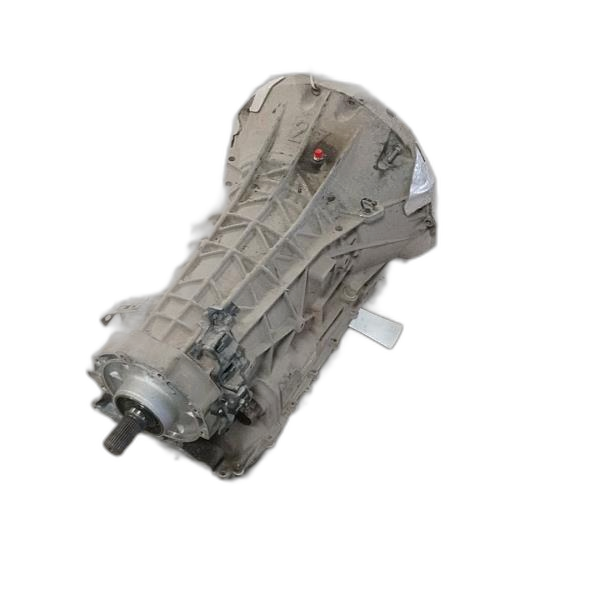
Shop the Parts Behind P0965
Below are the parts most often responsible for code P0965, ranked by how frequently each one is the actual culprit (per the diagnosis above). Tap any to see what we have for your vehicle.




The information in this article is provided for general reference and educational purposes only. Vehicle specifications, procedures, and part compatibility can vary by production date, trim level, and region. Always consult your vehicle's factory service manual and verify part numbers before purchasing or performing repairs. Safety-critical components such as airbags, seat belts, and braking systems should be installed by a qualified professional.
- 🧭 Diagnostic Flowchart
- 🛍️ Shop This Part
- What Does P0965 Mean?
- Can I Drive With P0965?
- Common Causes
- Symptoms
- Common Fixes & Costs
- Used vs. New Parts: Buying Guide
- What Happens If You Wait — Timeline
- Cost of Not Fixing It
- Diagnosis Steps
- When This Code Triggers (Freeze-Frame Conditions)
- Related Codes
- Climate & Environmental Factors
- How to Talk to a Mechanic About This Code
- Where to Take It: Dealer vs Independent vs Chain
- When to Walk Away From the Repair
- What Scan Tool You Need for This Code
- How to Clear the Code After You Fix It
- Will This Fail Emissions / State Inspection?
- Most Commonly Affected Vehicles
- Manufacturer-Specific Notes
- Real Owner Stories
- 2015 Nissan Sentra at 95,000 miles
- 2012 Subaru Outback at 110,000 miles
- 2014 Chevy Cruze at 78,000 miles
- How to Prevent This Code From Triggering
- Frequently Asked Questions
- Can I still drive my car with a P0965 code?
- Is P0965 an electrical or a mechanical problem?
- Will changing my transmission fluid fix a P0965 code?
- What is the most common misdiagnosis for P0965?
- Can a bad battery cause a P0965 code?
- What is the difference between Pressure Control Solenoid 'A' and 'B'?
- Why is this code so common on Nissan CVTs?
- How do I reset the P0965 code?
- Key Takeaways
- 🎟️ Get 5% Off