

OBD-II Code P0971: Pressure Control Solenoid 'C' Control Circuit High
What P0971 means, why it triggers, and how to fix it
- Code P0971 indicates a high-voltage short in the Transmission Pressure Control Solenoid 'C' circuit, typically caused by frayed wiring or a failed solenoid.
- Stop driving if the transmission enters 'limp mode' (stuck in 2nd or 3rd gear), as continuing generates excessive heat that turns a $300 solenoid repair into a $4,000 transmission rebuild.
- Test the solenoid's resistance with a multimeter before replacing parts; a healthy Subaru AWD solenoid reads 4 ohms or less, while a Honda CR-V reads 4.7 to 5.9 ohms.
- Do not authorize a $1,700+ valve body replacement at a dealership without first asking an independent transmission shop if they can replace just the individual $150 aftermarket solenoid.
What Does P0971 Mean?

Your Transmission Control Module (TCM) detected a high-voltage electrical fault in the Pressure Control Solenoid 'C' circuit. This solenoid acts as a valve, controlling transmission fluid flow for smooth gear shifts. 'Circuit High' means the computer sees higher voltage than expected, almost always due to a short to a 12-volt power source.
Technical definition: The SAE/OBD-II definition is "Pressure Control Solenoid 'C' Control Circuit High". The Powertrain Control Module (PCM) or Transmission Control Module (TCM) expects low voltage (near 0V) when it grounds the circuit to activate the solenoid. If the voltage remains high during activation, the module triggers P0971.
Can I Drive With P0971?
Yes, But With Caution. You can drive temporarily, but you will likely experience harsh shifting, stalling, or the transmission getting stuck in one gear (limp mode). Continuing to drive causes severe transmission damage. Driving with harsh shifting leads to premature clutch wear and overheating, turning a $300 solenoid repair into a $4,000 transmission rebuild.
Common Causes

- Damaged external or internal wiring harness (Very Common) — Wires fray from vibration, melt from heat, or short to a power source, causing a high voltage reading. Internal harnesses (like on GM 6-speeds) become brittle and fail submerged in hot fluid.
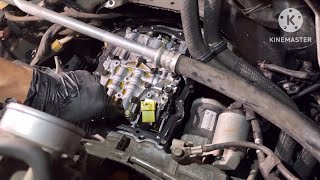
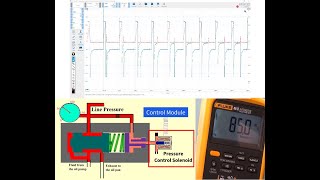
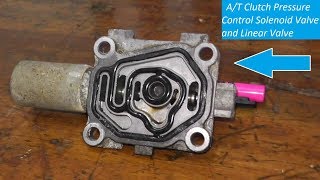
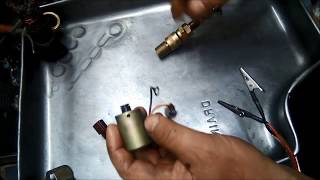
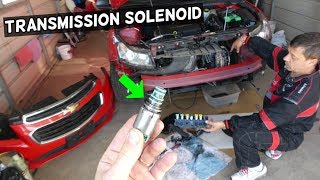
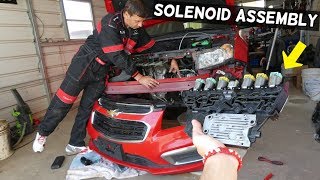
- Faulty Pressure Control Solenoid 'C' (Common) — The solenoid fails internally, causing an electrical short. 🎬 Watch: How to test pressure control solenoid operation. This is extremely common in Subaru and Nissan CVTs. 🎬 Watch: Step-by-step Subaru Solenoid C replacement guide.
- Low, dirty, or contaminated transmission fluid (Common) — Burnt fluid or metallic debris clogs passages, causing solenoids to overheat and fail electrically over time.
- Failing Transmission Control Module (TCM) (Less Common) — The computer misinterprets voltage or fails internally. This is a known, warranty-extended issue on Ford DPS6 transmissions. 🎬 See how to replace the TCM on a Ford Focus.
- Weak battery or failing alternator (Rare) — Alternators producing over 14.5V or weak batteries cause unpredictable voltage spikes, triggering circuit high codes in sensitive modules.
- Mismatched tire pressure on AWD models (Rare) — Significantly mismatched tires strain the AWD transfer clutch solenoid (Solenoid 'C' on Subarus), causing premature electrical failure.
Symptoms

- Check Engine Light and flashing AT OIL TEMP light — The Malfunction Indicator Lamp illuminates. On Subarus, the 'AT OIL TEMP' light flashes to indicate a critical TCM fault.
- Harsh shifting, slipping, or stalling — Gears shift abruptly, slam into place, or slip entirely. The vehicle often stalls when coming to a stop or fails to shift out of Park.
- Transmission stuck in 'limp mode' — The transmission defaults to a single gear (often 2nd or 3rd) to prevent further damage, limiting speed to around 30 mph.
- Disabled advanced safety features — The computer disables linked systems like ABS, traction control, cruise control, and advanced driver-assistance systems (e.g., Subaru EyeSight).
Diagnostic Flowchart

Tap your situation to follow the diagnostic path that matches what you're seeing on this code.
Common Fixes & Costs
- Replace the faulty Pressure Control Solenoid — Parts: $50-$250, Labor: $250-$600, ~3 hr book time (Professional)
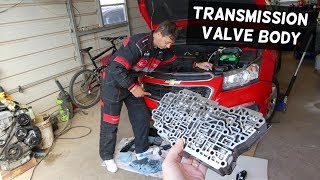
- Replace the Transmission Valve Body — Parts: $700-$1200, Labor: $400-$800, ~4 hr book time (Professional)
- Repair or replace damaged wiring — Parts: $10-$50, Labor: $150-$400, ~1.5 hr book time (Intermediate)
- Change the transmission fluid and filter — Parts: $50-$150, Labor: $100-$250, ~1 hr book time (DIY)
- Replace the Transmission Control Module (TCM) — Parts: $400-$1000, Labor: $150-$300, ~2 hr book time (Professional)
DIY vs Professional
- Repair or replace damaged wiring 🟢 Beginner
Tools: Digital Multimeter, wire strippers, crimpers, heat shrink, vehicle-specific wiring diagram. - Replace the faulty Pressure Control Solenoid 🟢 Beginner
Tools: Extensive socket set, torque wrench, transmission fluid pump, drain pan, vehicle-specific service manual. - Change the transmission fluid and filter 🟢 Beginner
Tools: Socket set, drain pan, funnel, torque wrench, correct type and amount of transmission fluid. - Replace the Transmission Valve Body 🟢 Beginner
Tools: Same as solenoid replacement, potentially including specialized alignment tools. - Replace the Transmission Control Module (TCM) 🟢 Beginner
Tools: Socket set, trim removal tools, professional scan tool for programming.
Used vs. New Parts: Buying Guide
When a used part is worth it: A used valve body or TCM is a cost-effective option for a high-mileage vehicle (over 150k miles) where repair costs approach the car's total value.
Donor-vehicle mileage cap: roughly under 100000 miles for the part to have meaningful remaining life.
Donor quality checklist:
- Verify the part number matches exactly; internal electronics vary by year.
- Ask the seller for the donor vehicle's mileage.
- Avoid valve bodies from vehicles scrapped due to transmission failure; look for accident-damaged donors.
- Ensure the seller offers at least a 30-day warranty.
Decision logic:
- If Vehicle has under 100K miles → Buy a new OEM or high-quality remanufactured part to protect the vehicle's value.
- If The part is a single, externally accessible solenoid → A new aftermarket solenoid is the best balance of cost and reliability.
- If The part is a TCM or complex valve body for a long-term vehicle → Favor a remanufactured unit from a reputable supplier over a used one.
Warranty tradeoff: Used parts have a 30-90 day warranty. New aftermarket parts carry a 1-year warranty. Remanufactured parts offer a 1 to 3-year warranty.
Worst-case if a used part fails: $500-$1500 if a used part fails, covering the second replacement part and repeated labor.
What Happens If You Wait — Timeline
- 0-1 month: Code P0971 sets, Check Engine Light illuminates. Shifting becomes slightly harsher, but the vehicle remains drivable. (MPG impact: 0-5%% · Added cost: $0-$50 in wasted fuel)
- 1-4 months: Harsh shifting becomes frequent. The transmission occasionally slips. Incorrect fluid pressure accelerates wear on internal clutch packs, and the transmission runs hotter than normal. (MPG impact: 5-10%% · Added cost: $50-$200 in wasted fuel and accelerated fluid degradation.)
- 4-8 months: Vehicle unexpectedly enters 'limp mode,' locking into a single gear. Clutch material glazes and burns from incorrect pressure, contaminating the fluid with debris. (MPG impact: 10-15%% · Added cost: $2,500+. The valve body is contaminated, and clutch packs are damaged, requiring a full valve body replacement or minor rebuild.)
- 8+ months: Catastrophic failure occurs. Widespread clutch failure contaminates the entire transmission, torque converter, and cooler. The vehicle fails to move. (MPG impact: 15-25%+% · Added cost: $4,000-$8,000+. A simple solenoid issue has cascaded into a required full transmission replacement.)
Cost of Not Fixing It
- 0-1 month: Noticeable harsh shifting, a 5-10% drop in fuel economy, and potential for getting stuck in limp mode. (Added cost: Negligible, besides increased fuel cost.)
- 1-6 months: Continued harsh shifting accelerates wear on transmission clutches. The transmission overheats, degrading the fluid and causing internal damage. (Added cost: $2500+)
- 6+ months: Catastrophic internal transmission failure. Slipping clutches burn up, contaminating the system with debris. A simple fix turns into a required transmission rebuild. (Added cost: $4000-$8000)
Diagnosis Steps
- Read Trouble Codes and Freeze Frame Data
Use an OBD-II scanner to confirm P0971 and check for related codes. Note the freeze frame data to see vehicle conditions when the code set. Clear the codes and test drive; immediate return indicates a hard electrical fault.
Tools: OBD-II Scanner (Beginner) - Check Transmission Fluid Level and Condition
Inspect the transmission fluid. Low fluid requires topping off. Dark, burnt fluid requires a fluid and filter change. Fluid contaminated with metal shavings indicates severe internal mechanical failure requiring a rebuild.
Tools: Rag, Dipstick (if equipped) (Beginner) - Inspect Wiring Harness and Connectors
Visually inspect the external wiring harness connecting the TCM to the transmission. Look for frayed wires, melted insulation, or corrosion at the main connector. Focus on areas where the harness rubs against the chassis.
Tools: Flashlight (Intermediate) - Test Solenoid Circuit for a Short to Power
Disconnect the TCM and transmission connectors. Set a multimeter to DC Volts, connect the negative lead to ground, and turn the key ON (engine off). Probe the Solenoid 'C' control pin at the TCM connector. Any voltage above 0V confirms a short to power in the harness.
Tools: Digital Multimeter, Vehicle-specific wiring diagram (Advanced) - Test Solenoid Internal Resistance
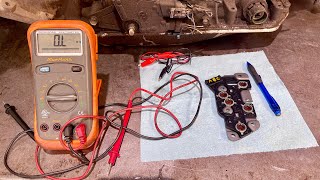
If the wiring is intact, test the internal resistance of the solenoid from the transmission connector pins. Compare the reading to manufacturer specifications. For example, a Subaru TR580 AWD solenoid must read 4 ohms or less, while a 2017-2022 Honda CR-V CVT solenoid reads 4.7 to 5.9 ohms. A reading of infinite resistance (open) or near-zero (short) confirms a failed solenoid.
Tools: Digital Multimeter, Manufacturer service manual (Advanced) - Check Circuit for a Short to Ground
With connectors disconnected and the key OFF, use a multimeter set to Ohms to check for continuity between the Solenoid 'C' control pin and ground. Infinite resistance is normal. A low ohm reading confirms a short to ground in the harness.
Tools: Digital Multimeter, Vehicle-specific wiring diagram (Advanced) - Analyze Signal with an Oscilloscope
Back-probe the Solenoid 'C' signal wire at the TCM. When commanded on, voltage must pull down to near zero. If voltage stays high, the TCM driver circuit is failing or the wire is shorted to power.
Tools: Oscilloscope, Wiring diagram (Professional) - Test the Transmission Control Module (TCM)
If the solenoid and wiring test perfectly, the TCM is the culprit. This is a diagnosis by elimination. Take the vehicle to a transmission specialist or dealer for module testing and replacement.
Tools: Advanced diagnostic tools (Professional)
When This Code Triggers (Freeze-Frame Conditions)
- Engine Coolant Temp: 175-210°F (The fault often appears after the vehicle is fully warmed up.)
- RPM: 1500-2500 (Sets during steady-state driving, not during hard acceleration.)
- Engine Load: 20-50% (Occurs under light to moderate engine load, consistent with cruising.)
- Vehicle Speed: 40-65 mph (Frequently triggered during highway or steady-speed driving.)
Related Codes
- P0700 — A general transmission fault code. It means the TCM stored a specific code (like P0971) and requested the Check Engine Light to turn on. Focus diagnosis entirely on P0971.
- P0970 — Pressure Control Solenoid C Control Circuit Low. The opposite of P0971. P0971 is a short to power; P0970 is an open circuit or short to ground.
- P0968, P0969 — Relates to Pressure Control Solenoid 'B'. Multiple solenoid codes appearing simultaneously indicate a widespread electrical issue (bad ground, failing TCM) or severe fluid contamination.
- P0741 — Torque Converter Clutch Circuit Performance. Appears alongside P0971 in Subaru CVTs when a single hydraulic pressure fault triggers codes for multiple hydraulically controlled components.
Climate & Environmental Factors
- Cold Climates / Road Salt: Road salt accelerates corrosion on the external transmission wiring harness and connectors, leading to shorts that trigger P0971.
- High Humidity: High humidity promotes corrosion at electrical connection points, compromising circuit integrity over time.
How to Talk to a Mechanic About This Code
Say this: "I have a P0971 code and harsh shifting. I'd like to schedule a diagnostic. Please ensure the technician performs a full electrical diagnosis, including testing the solenoid resistance and checking the wiring harness for shorts, before recommending a valve body replacement."
This signals you understand the problem could be a simple wiring issue or a single solenoid, encouraging a thorough diagnosis rather than a quick, costly parts replacement.
Avoid saying:
- 'My check engine light is on, can you look at it?'
- 'The car is shifting funny, just fix it.'
- 'Do whatever you think is best.'
Questions to ask before authorizing the repair:
- What were the results of the electrical tests? Specifically, what was the resistance reading on solenoid 'C'?
- Did you find a short to power in the wiring harness? Can you show me the damage?
- Is it possible to replace only the faulty solenoid, or are you forcing a full valve body replacement?
- What is the warranty on this repair for both parts and labor?
Where to Take It: Dealer vs Independent vs Chain
- Dealer:
Go here first ONLY if your vehicle is under warranty. For out-of-warranty repairs, seek an independent specialist.
Best for: Vehicles under powertrain warranty or extended warranty (e.g., Subaru CVT, Ford TCM)., Complex electrical issues on newer vehicles.
Downsides: Highest labor rates., Guaranteed to recommend replacing the entire valve body assembly ($1,700+) instead of a single solenoid. (Typical cost: +50% vs. baseline) - Independent Shop:
Best choice for out-of-warranty P0971 repairs. A good transmission shop saves you over $1,000 compared to a dealer.
Best for: Out-of-warranty vehicles where cost is a major concern., Finding a shop willing to replace an individual solenoid instead of the whole valve body.
Downsides: Quality varies. Look for shops specializing in transmissions or your specific vehicle make., May lack specialized programming tools for TCM replacements. (Typical cost: +0% vs. baseline) - Chain Shop:
AVOID for primary diagnosis and repair. Use only for a basic code scan as a starting point.
Best for: Getting an initial, free code scan., Basic maintenance like a transmission fluid change.
Downsides: Technician skill for complex electrical diagnostics is highly variable., High risk of being sold an unnecessary transmission rebuild. (Typical cost: -10% vs. baseline)
When to Walk Away From the Repair
If the estimated repair cost exceeds 50% of the car's private-party market value, seriously consider selling the car as-is instead of repairing it.
- Car worth $5500, fix is $1700: Fix it. The repair cost is roughly 30% of the car's value, a reasonable investment to keep a functional vehicle on the road.
- Car worth $3000, fix is $2200: Walk away. The repair cost is over 70% of the car's value. It is not financially sensible to invest this much into an older car.
- Car worth $8000, fix is $3000: Borderline. The cost is nearly 40% of the car's value. Get a second opinion from an independent shop to see if a cheaper solenoid-only repair is possible.
What Scan Tool You Need for This Code
Minimum: A scanner that reads manufacturer-specific transmission codes and displays Freeze Frame data.
A $20 generic reader only shows P0700 or P0971 without specific TCM data. You need to see the codes stored in the TCM and the Freeze Frame conditions.
Budget: BlueDriver Pro (~$100) — Reads enhanced transmission codes, shows Freeze Frame data, and allows viewing live TCM data, the minimum for DIY diagnosis.
Mid-range: Foxwell NT604 Elite / Autel AP200 (~$150) — Offers comprehensive access to all vehicle modules and provides detailed live data PIDs for the transmission system.
Professional: Autel MaxiCOM MK808 / MK900 Series (~$450-800) — Provides full bidirectional control. Allows you to actively command the 'C' solenoid on and off to definitively prove if the solenoid and wiring work.
Rent vs buy: Rent a basic scanner to confirm the code for free. To properly diagnose P0971, buy a budget pick like BlueDriver. For professional-level tests, buy a mid-range or pro scanner with bidirectional capability.
How to Clear the Code After You Fix It
- Use an OBD-II scan tool to clear all fault codes.
- Ensure the fuel tank is between 15% and 85% full.
- Perform a complete drive cycle until the onboard readiness monitors are set to 'Ready'.
Drive cycle (~30 minutes): From a cold start, idle for 2-3 minutes. Drive in stop-and-go traffic for 10-15 minutes. Drive at a steady highway speed (55-60 mph) for 5 minutes. Coast down to 20 mph without braking, come to a stop, and idle for 30 seconds.
Readiness monitors affected: Comprehensive Component Monitor, Transmission-related monitors
Before emissions retest: drive at least 50 miles to fully set monitors.
Watch out for:
- Disconnecting the battery does not reliably clear codes and resets all readiness monitors to 'Not Ready'.
- The code returns immediately if the root electrical fault was not repaired.
- Failing to follow specific speed requirements prevents readiness monitors from setting.
Will This Fail Emissions / State Inspection?
Yes — this code typically fails an OBD-II emissions inspection.
- California: An active Check Engine Light is an automatic failure. After repair, a full drive cycle must be completed to set readiness monitors before re-testing.
- New York: The NYS inspection includes an OBD-II scan. An active P0971 code results in an immediate emissions failure.
- Texas: In emissions-testing counties, a vehicle fails the OBD-II inspection if the Check Engine Light is on due to P0971.
Most Commonly Affected Vehicles
- Subaru Outback, Forester, Crosstrek, Impreza, Legacy (2010-2020) — Extremely common on TR580/TR690 CVTs. Solenoid 'C' is the AWD transfer clutch solenoid. Dealerships replace the entire valve body, but independent shops can replace just the aftermarket solenoid. Subaru extended the CVT warranty to 10 years/100,000 miles for many models.
- Honda Civic, CR-V, Fit, HR-V, Accord (2011-2022) — Common on CVT models. For 2017-2022 CR-Vs, specified solenoid resistance is 4.7-5.9 ohms. Failure often requires valve body replacement as Honda does not sell solenoids separately.
- Ford Focus, Fiesta (2011-2016) — Prevalent in DSP6 PowerShift transmissions. TCM failures trigger various solenoid codes, including P0971. Covered under extended warranty program 14M02.
- Chevrolet Cruze, Malibu, Equinox (2010-2019) — Occurs on 6T30/6T40/6T45 6-speed automatics. The cause is frequently a faulty internal TCM (TEHCM) or brittle internal wiring harness.
- Nissan Altima, Rogue, Sentra (2007-2018) — Prevalent in Jatco CVTs. The issue is tied to the valve body. Dirty fluid is the primary contributor to solenoid failure in these units.
Manufacturer-Specific Notes
- Subaru: Dealerships refuse to replace individual CVT solenoids, mandating a $1,700-$2,500 valve body replacement. However, the AWD solenoid (Solenoid C) is available aftermarket and can be replaced by independent mechanics for under $800.
- Honda: Honda provides precise resistance values for testing solenoids from the PCM connector (e.g., 4.7-5.9 ohms for a 2017+ CR-V). On older models, TSBs point to a faulty PCM causing solenoid codes, requiring computer replacement instead of transmission work.
- Ford: On 2011-2016 Focus and Fiesta models, P0971 is almost always a symptom of a failing Transmission Control Module (TCM), covered under a 10-year/150,000-mile warranty extension.
- General Motors: On 6T-series transmissions, the TCM (TEHCM) is bolted to the valve body inside the transmission. P0971 requires removing the transmission side cover to replace this submerged module.
Real Owner Stories
2015 Subaru Forester at 120K miles
AT OIL TEMP, ABS, traction control, and EyeSight lights illuminated. A local mechanic pulled code P0971 after the dealer found no codes.
What they tried:
- The mechanic recommended a $1,700 valve body replacement.
- The owner opted to try a $350 CVT fluid change first, as the fluid was original.
Outcome: The fluid change temporarily resolved the intermittent symptoms. While a valve body replacement is the definitive fix, fresh fluid occasionally clears minor solenoid sticking.
Lesson: For high-mileage vehicles with original transmission fluid, a fluid service is a worthwhile $300 gamble before committing to a $1,700 valve body replacement, especially if symptoms are intermittent.
2012 Subaru Impreza at 150K miles
AT Oil Temp light illuminated with code P0971. The dealer quoted $1,714 for a valve body replacement.
What they tried:
- The owner researched extended warranties and independent repair options.
Outcome: The owner discovered that another driver in California had the exact repair covered under the PZEV emissions warranty (15 years / 150,000 miles).
Lesson: Never pay out of pocket without checking for extended warranties. State-specific emissions warranties (like PZEV in California) often cover transmission components up to 150,000 miles.
2016 Subaru Outback with P0971
Dashboard warning lights illuminated with code P0971 indicating a 'Solenoid C' fault. The owner was an experienced DIYer.
What they tried:
- The owner found that the TR580 transmission valve body is accessible from the top of the engine bay.
- They purchased a used valve body assembly on eBay for $250.
Outcome: The owner replaced the valve body themselves, saving over $1,000 in labor and parts compared to the dealer quote.
Lesson: Replacing the Subaru TR580 valve body is a feasible DIY project because it is accessible from the top, avoiding the need to drop the transmission pan. Sourcing used or aftermarket parts dramatically reduces costs.
Ford Focus/Fiesta with DPS6 Transmission
Vehicle exhibited intermittent power loss, no-start conditions, and harsh shifting, triggering P0971.
What they tried:
- Diagnosis pointed to a faulty Transmission Control Module (TCM).
Outcome: Ford's Customer Satisfaction Program 14M02 extended the TCM warranty to 10 years or 150,000 miles, covering the replacement entirely.
Lesson: If you own a 2011-2016 Ford Focus or Fiesta with solenoid codes, check your VIN against warranty extension 14M02 immediately. The TCM is the likely cause, and the repair is often free.
How to Prevent This Code From Triggering
- Perform regular transmission fluid changes (Every 30,000 to 60,000 miles) — Clean fluid maintains correct hydraulic pressure and prevents metallic contaminants from clogging or electrically shorting sensitive solenoid valves.
- Use only the manufacturer-specified transmission fluid (Every fluid change) — Generic fluids cause chemical incompatibilities that damage seals and alter friction properties, leading to overheating and eventual solenoid failure.
- Apply dielectric grease to external transmission connectors (During transmission service or every 3 years in harsh climates) — Seals out moisture and road salt, preventing the corrosion that causes high-resistance electrical faults like P0971.
- Fix fluid leaks immediately (As soon as detected) — Low fluid causes overheating and erratic pressure, putting immense strain on solenoids and quickly causing catastrophic transmission failure.
Frequently Asked Questions
Can I fix P0971 myself?
Checking fluid levels is DIY-friendly, but replacing internal solenoids or the TCM requires advanced skills and dropping the transmission pan. This job carries a high risk of introducing contamination or damaging the valve body. Leave internal repairs to an experienced DIYer or professional mechanic.
Will changing the transmission fluid fix a P0971 code?
A fluid change only fixes P0971 if the code stems directly from dirty fluid clogging the solenoid. If the solenoid or wiring is already electrically shorted, new fluid will not solve the problem. Always perform electrical testing before relying on a fluid flush.
What is the most common misdiagnosis for P0971?
The most expensive misdiagnosis is replacing the entire transmission valve body without performing a full electrical test. Technicians must rule out simpler causes like a wiring short to power or a faulty ground before condemning a $1,500 component.
What does 'Circuit High' actually mean?
'Circuit High' means the Transmission Control Module (TCM) detects voltage in the solenoid's control circuit that exceeds the normal operating range. This usually happens when a frayed wire in the harness touches a 12-volt power source. The TCM expects voltage to drop near zero when activated; when it stays high, P0971 triggers.
How much does it cost to fix P0971?
A simple wiring repair costs $150 to $400, while replacing a single aftermarket solenoid ranges from $300 to $850. If the dealer requires a full valve body replacement (common on Subarus), expect to pay $1,500 to $2,500. TCM replacements typically cost between $600 and $1,500 including programming.
Is P0971 a serious problem?
Yes, P0971 is a serious transmission fault. Driving with incorrect fluid pressure causes harsh shifting that rapidly burns up internal clutch packs. Address it immediately to prevent a minor electrical issue from destroying the entire transmission.
Can a bad battery cause a P0971 code?
Yes. A failing alternator overcharging the system (above 14.5V) or a weak battery causes severe voltage fluctuations. These spikes trigger 'Circuit High' codes in sensitive computer modules like the TCM.
What is the AT OIL TEMP light on my Subaru?
A flashing 'AT OIL TEMP' light on a Subaru acts as a specific check engine light for the transmission. It indicates the Transmission Control Module (TCM) has detected a critical fault, such as code P0971. You must scan the TCM with an OBD-II reader to retrieve the exact code.
Key Takeaways
- Code P0971 indicates a high-voltage short in the Transmission Pressure Control Solenoid 'C' circuit, typically caused by frayed wiring or a failed solenoid.
- Stop driving if the transmission enters 'limp mode' (stuck in 2nd or 3rd gear), as continuing generates excessive heat that turns a $300 solenoid repair into a $4,000 transmission rebuild.
- Test the solenoid's resistance with a multimeter before replacing parts; a healthy Subaru AWD solenoid reads 4 ohms or less, while a Honda CR-V reads 4.7 to 5.9 ohms.
- Do not authorize a $1,700+ valve body replacement at a dealership without first asking an independent transmission shop if they can replace just the individual $150 aftermarket solenoid.
Helpful Videos



Shop the Parts Behind P0971
Below are the parts most often responsible for code P0971, ranked by how frequently each one is the actual culprit (per the diagnosis above). Tap any to see what we have for your vehicle.



The information in this article is provided for general reference and educational purposes only. Vehicle specifications, procedures, and part compatibility can vary by production date, trim level, and region. Always consult your vehicle's factory service manual and verify part numbers before purchasing or performing repairs. Safety-critical components such as airbags, seat belts, and braking systems should be installed by a qualified professional.
- 🧭 Diagnostic Flowchart
- 🎬 Helpful Videos
- 🛍️ Shop This Part
- What Does P0971 Mean?
- Can I Drive With P0971?
- Common Causes
- Symptoms
- Common Fixes & Costs
- DIY vs Professional
- Used vs. New Parts: Buying Guide
- What Happens If You Wait — Timeline
- Cost of Not Fixing It
- Diagnosis Steps
- When This Code Triggers (Freeze-Frame Conditions)
- Related Codes
- Climate & Environmental Factors
- How to Talk to a Mechanic About This Code
- Where to Take It: Dealer vs Independent vs Chain
- When to Walk Away From the Repair
- What Scan Tool You Need for This Code
- How to Clear the Code After You Fix It
- Will This Fail Emissions / State Inspection?
- Most Commonly Affected Vehicles
- Manufacturer-Specific Notes
- Real Owner Stories
- 2015 Subaru Forester at 120K miles
- 2012 Subaru Impreza at 150K miles
- 2016 Subaru Outback with P0971
- Ford Focus/Fiesta with DPS6 Transmission
- How to Prevent This Code From Triggering
- Frequently Asked Questions
- Can I fix P0971 myself?
- Will changing the transmission fluid fix a P0971 code?
- What is the most common misdiagnosis for P0971?
- What does 'Circuit High' actually mean?
- How much does it cost to fix P0971?
- Is P0971 a serious problem?
- Can a bad battery cause a P0971 code?
- What is the AT OIL TEMP light on my Subaru?
- Key Takeaways
- 🎟️ Get 5% Off