

OBD-II Code P0974: Shift Solenoid 'A' Control Circuit High
The Ultimate Guide to P0974: What It Means, Why It Triggers, and How to Fix It for Good
- P0974 indicates a high-voltage open circuit or short-to-power in Shift Solenoid 'A', directly disabling specific gear shifts.
- Inspect the external transmission wiring harness and check fluid levels before spending $200+ on a replacement solenoid.
- Driving with P0974 causes the transmission to overheat and slip, escalating a $300 electrical repair into a $3,000+ complete rebuild within weeks.
- Use a bi-directional scanner to command the solenoid ON and OFF; if voltage drops, the wiring is intact and the mechanical solenoid is the culprit.
What Does P0974 Mean?

P0974 means the Transmission Control Module (TCM) detects a high-voltage fault in the electrical circuit controlling 'Shift Solenoid A'. This solenoid is an electronic valve managing transmission fluid flow for smooth gear changes. The 'High' designation means the circuit voltage is stuck above normal parameters, which the TCM interprets as an open circuit (a broken wire) or a short to a power source.
Technical definition: The SAE/OBD-II definition for P0974 is "Shift Solenoid 'A' Control Circuit High". 🎬 Watch: A quick breakdown of the P0974 code and its causes. The TCM detects that the control circuit for shift solenoid 'A' reports a continuously high voltage condition when commanded OFF. For example, GM vehicles set this code if the TCM sees a short to voltage for over 4.4 seconds, while Toyota ECMs trigger it upon detecting 100 kOhms or more resistance (an open circuit).
Can I Drive With P0974?
Yes, But With Caution. Short-distance driving is permissible to reach a repair shop, but you must service the vehicle immediately. You will experience harsh shifting, an inability to shift, reduced fuel economy, and poor acceleration. Continuing to drive stuck in a high gear causes the transmission to overheat, turning a $300 electrical repair into a $3,000+ catastrophic internal failure.
Common Causes

- Faulty Shift Solenoid 'A' (Very Common) — The solenoid fails internally. The coil windings burn out, creating an open circuit, or the plastic housing cracks, causing a mechanical malfunction.
- Damaged Wiring or Connectors (Common) — The wiring harness or connectors short to power, corrode, or disconnect. This is frequently caused by chafing, road salt corrosion, rodent damage, or pinched wires from previous engine repairs.
- Low or Contaminated Transmission Fluid (Common) — Dirty fluid clogs the microscopic passages within the solenoid and valve body. Low fluid causes overheating, which melts solenoid internals.
- Clogged Valve Body (Uncommon) — Debris from normal wear clogs the intricate hydraulic passages of the valve body, preventing solenoids from functioning even if they are electrically sound.
- Transmission Control Module (TCM) Failure (Less Common) — The internal driver circuit inside the TCM fails, sending an incorrect signal or falsely reporting a high voltage condition.
- Internal Transmission Failure (Rare) — Debris from a failing clutch pack contaminates the fluid and destroys the solenoid. This is always accompanied by metallic debris in the transmission pan.
Symptoms

- Failure to Shift (Limp Mode) — The transmission refuses to shift and locks into a single gear (usually 2nd or 3rd) to protect itself from further damage.
- Harsh or Erratic Shifting — The vehicle bangs into gear, jerks violently during shifts, or shifts at incorrect RPMs.
- Poor Acceleration — Because the transmission is stuck in a higher gear, the car feels incredibly sluggish from a dead stop.
- Decreased Fuel Economy — Operating outside the optimal RPM range causes a noticeable 10-20% drop in gas mileage.
- Check Engine Light is On (also visible on scanner) — The Malfunction Indicator Lamp illuminates immediately upon the TCM detecting the high voltage fault.
Diagnostic Flowchart

Tap your situation to follow the diagnostic path that matches what you're seeing on this code.
Common Fixes & Costs
- Replace Shift Solenoid 'A' — Parts: $50-$150, Labor: $200-$500, ~2.5 hr book time (Intermediate)
- Repair or Replace Wiring Harness — Parts: $10-$300, Labor: $150-$600, ~3.0 hr book time (Professional)
- Transmission Fluid and Filter Change — Parts: $50-$150, Labor: $100-$200, ~1.5 hr book time (DIY)
- Replace Transmission Valve Body — Parts: $400-$1500, Labor: $300-$700, ~4.5 hr book time (Professional)
Used vs. New Parts: Buying Guide
When a used part is worth it: Only for older, high-mileage vehicles where a new OEM solenoid pack exceeds the car's value. Buy from a low-mileage donor vehicle.
Donor-vehicle mileage cap: roughly under 80000 miles for the part to have meaningful remaining life.
Donor quality checklist:
- Verify the donor vehicle was not scrapped due to transmission failure.
- Match the part number exactly; visually identical solenoids have different internal resistance.
- Avoid parts from rust-belt states to prevent external corrosion issues.
Decision logic:
- If Vehicle is under 100K miles or under warranty → Buy new OEM to guarantee reliability.
- If Budget is the primary concern on a high-mileage vehicle → A new aftermarket part is acceptable, but carries a higher risk of premature failure.
- If The solenoid is part of a sealed solenoid pack → Buy new OEM. The labor to replace it is too high to risk doing it twice with a used part.
Warranty tradeoff: Used parts offer a 30-day warranty. New aftermarket parts offer 1-year warranties. New OEM parts carry the manufacturer's standard warranty.
Worst-case if a used part fails: 400-800 if a cheap aftermarket part fails, requiring repeat labor and new fluid.
What Happens If You Wait — Timeline
- 0-1 week: Code P0974 sets. Shifting becomes harsh or erratic. The vehicle occasionally enters 'limp mode'. (MPG impact: 0-5%% · Added cost: $0)
- 1 week - 2 months: The transmission gets permanently stuck in a single gear (often 2nd or 3rd). Acceleration is dangerously slow, and highway driving forces extreme RPMs, generating massive heat. (MPG impact: 5-15%% · Added cost: $50-150 in wasted fuel)
- 2-6 months: Severe overheating breaks down the transmission fluid. Lack of lubrication accelerates wear on clutch packs and internal seals. (MPG impact: 10-20%% · Added cost: $800-2000 (Requires valve body replacement or minor rebuild))
- 6+ months: Catastrophic internal failure. Extreme heat and clutch debris contaminate the entire system, destroying the torque converter and valve body. (MPG impact: 15-25%+% · Added cost: $3000-7000+)
Cost of Not Fixing It
- 0-1 month: Noticeable 10-20% decrease in fuel economy, poor acceleration, and harsh shifting. High risk of getting stranded in 'limp mode'. (Added cost: 50-150 in wasted fuel)
- 1-6 months: Driving with high RPMs overheats the transmission, breaking down fluid and destroying clutches and internal seals. (Added cost: 800-2000 for a valve body replacement or minor rebuild)
- 6+ months: Catastrophic transmission failure. Overheating destroys the torque converter and clutch packs, requiring a complete replacement. (Added cost: 3000-7000+)
Diagnosis Steps

- Scan for Trouble Codes
Use an OBD-II scanner to confirm P0974. Check for related codes. P0700 is a generic alert to ignore. Codes for other solenoids (P0975, P0976) confirm a shared harness or TCM issue, not a single bad solenoid.
Tools: OBD-II Scanner (Beginner) - Check Transmission Fluid Level and Condition
Check the fluid using the dipstick. Healthy fluid is bright red. Dark, brown, or burnt-smelling fluid requires immediate service. Metallic particles indicate severe internal failure.
Tools: Rag or paper towel (Beginner) - Inspect Wiring and Connectors
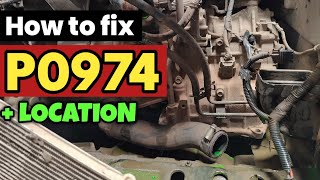
Visually inspect the wiring harness running to the transmission for chafing, melting, or rodent damage. Disconnect the main transmission connector and check for bent pins, pushed-out wires, or water intrusion.
Tools: Flashlight, Mirror (Intermediate) - Perform Commanded State Test with a Bi-Directional Scanner
Command solenoid 'A' ON and OFF using an advanced scanner. When commanded ON, voltage must drop to near 0V. If voltage remains high, the electrical fault is active. This confirms the issue without dropping the transmission pan.
Tools: Bi-directional Scan Tool (Advanced) - Perform Harness 'Wiggle Test'
With the key ON and a scan tool monitoring circuit voltage, wiggle the wiring harness between the TCM and transmission. If voltage fluctuates, you have located the internal wire break.
Tools: Scan Tool or Digital Multimeter (Intermediate) - Test the Solenoid Circuit from the TCM
Disconnect the TCM. Using a multimeter, check resistance on the wire leading to solenoid 'A'. An infinite reading (OL) confirms an open circuit in either the harness or the solenoid.
Tools: Digital Multimeter, Vehicle-specific wiring diagram (Advanced) - Test Shift Solenoid Resistance at the Transmission
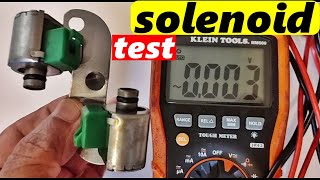
Drop the transmission pan to access the solenoid. Disconnect it and measure internal resistance. Compare to OEM specs (e.g., Toyota: 11-15 Ω, Subaru: 10-13.5 Ω). An infinite reading (OL) means the internal coil is broken and the solenoid must be replaced.
Tools: Socket set, Drain pan, Digital Multimeter, New pan gasket, Transmission fluid (Advanced) - Test Solenoid Activation
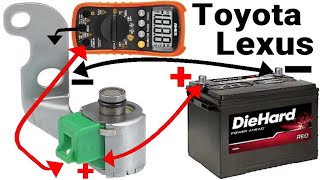
Briefly apply 12V power and ground to the solenoid terminals using fused jumper wires. You must hear a sharp 'click'. No click means the valve is mechanically seized.
Tools: 12V power source, Fused jumper wires (Advanced)
When This Code Triggers (Freeze-Frame Conditions)
- Engine Coolant Temp: 180-210°F (Vehicle is at full operating temperature.)
- RPM: 1200-2800 RPM (During light to moderate acceleration.)
- Engine Load: 25-65% (The engine is under a moderate working load.)
- Vehicle Speed: 25-60 mph (Detected during city or highway driving when the transmission attempts to shift.)
Related Codes
- P0700 — A generic Transmission Control System Malfunction code. It is simply the TCM telling the main computer to turn on the check engine light. It offers no diagnostic value on its own.
- P0973 — Shift Solenoid 'A' Control Circuit Low. The direct counterpart to P0974. P0974 means a broken wire or short to power; P0973 means a wire is shorting to ground.
- P0972 — Shift Solenoid 'A' Control Circuit Range/Performance. Indicates the circuit is out of expected range due to an intermittent electrical issue or a hydraulic blockage, rather than a hard electrical fault.
- P0975, P0976, P0977 — Codes for Shift Solenoid 'B'. Seeing these alongside P0974 proves a shared electrical failure (like a bad ground or faulty TCM) rather than multiple solenoids failing simultaneously.
Climate & Environmental Factors
- Cold Climates / Road Salt: Road salt destroys electrical wiring. Corrosion penetrates weather seals on transmission connectors, eating through insulation and causing the open circuit that triggers P0974.
- High Humidity: Moisture infiltrates aging electrical connectors, leading to pin corrosion and permanent circuit faults.
How to Talk to a Mechanic About This Code
Say this: "I have a P0974 code for the Shift Solenoid 'A' Control Circuit High. Please start by checking the fluid, inspecting the external wiring harness, and testing the resistance of the solenoid circuit before recommending any part replacements."
This proves you understand the issue is electrical. It forces the mechanic to perform logical diagnostics instead of immediately quoting a $3,000 transmission rebuild.
Avoid saying:
- 'My transmission is acting weird.'
- 'My check engine light is on, can you just fix it?'
- 'I think I need a new transmission.'
Questions to ask before authorizing the repair:
- What was the condition and level of the transmission fluid?
- Did you find any damage to the external wiring or connectors?
- What was the resistance reading for the Shift Solenoid 'A' circuit? Was it open (infinite resistance)?
- If replacing the solenoid, did the wiring harness from the TCM test good for continuity?
- What is the warranty on this repair for parts and labor?
Where to Take It: Dealer vs Independent vs Chain
- Dealer:
Recommended only for warranty work. P0974 does not require dealer-exclusive tools.
Best for: Vehicles under powertrain warranty (especially Subarus with extended CVT warranties)., New models with complex, manufacturer-specific transmission electronics.
Downsides: Highest labor rates., Dealers default to replacing expensive full valve bodies instead of single solenoids. (Typical cost: +50% vs. baseline) - Independent Shop:
The ideal choice. A reputable independent transmission shop provides accurate diagnosis and cost-effective repair.
Best for: Out-of-warranty vehicles., Shops specializing in transmission repair or automotive electrical diagnostics.
Downsides: Expertise varies. Vet shops for ASE certifications in electrical work. (Typical cost: +0% vs. baseline) - Chain Shop:
AVOID. The diagnostic complexity guarantees an expensive misdiagnosis.
Best for: Simple fluid and filter changes.
Downsides: Technicians lack specialized electrical diagnostic skills., High risk of being upsold a complete transmission rebuild for a broken wire. (Typical cost: -10% vs. baseline)
When to Walk Away From the Repair
If the estimated repair cost exceeds 50% of the car's private-party value, sell the car as-is.
- Car worth $4000, fix is $600: Fix it. The repair is 15% of the vehicle's value.
- Car worth $5000, fix is $2800: Walk away. The repair is 56% of the car's value.
- Car worth $2500, fix is $3500: Walk away immediately. The repair costs more than the car.
What Scan Tool You Need for This Code
Minimum: A code reader that reads transmission-specific DTCs and views live TCM data.
A $20 reader only shows the code. It cannot display live circuit voltage or command the solenoid to activate, forcing you to guess the cause.
Budget: XTOOL A30 / Vgate iCar Pro 2S (~$50) — Pairs with a smartphone to read transmission codes and display live data streams, allowing you to monitor solenoid circuit voltage.
Mid-range: Foxwell NT510 Elite / Autel ML629 (~$150) — Offers bi-directional control. You can command Shift Solenoid 'A' ON and OFF directly from the tool to confirm if the solenoid responds before dropping the pan.
Professional: Autel MaxiCOM MK808 / Innova 5610 (~$500-800) — Provides full bi-directional control, advanced actuator tests, and performs transmission relearn functions after repair.
Rent vs buy: AutoZone loans basic readers for free, but they lack bi-directional tests. Buy a mid-range scanner to properly diagnose P0974 yourself.
How to Clear the Code After You Fix It
- Reconnect the battery and all transmission connectors.
- Use an OBD-II scan tool to clear the P0974 code from the TCM memory.
- Perform a transmission relearn procedure if specified by the manufacturer.
- Conduct a 20-minute test drive through all gears to verify the fix.
Drive cycle (~20 minutes): Start cold and idle for 3 minutes. Drive in stop-and-go city traffic, then maintain steady highway speeds above 45 mph for 15 minutes to ensure the transmission cycles through all gears.
Readiness monitors affected: Comprehensive Component Monitor, Transmission
Before emissions retest: drive at least 50 miles to fully set monitors.
Watch out for:
- Disconnecting the battery does not clear permanent TCM codes.
- The code returns immediately if the broken wire or short was not properly soldered.
- Failing to complete a full drive cycle leaves the transmission monitor 'Incomplete', causing an automatic emissions failure.
Will This Fail Emissions / State Inspection?
Yes — this code typically fails an OBD-II emissions inspection.
- California: P0974 is an automatic failure. The check engine light must be off and all monitors set to 'Ready'.
- New York: An active P0974 code fails the OBD-II emissions portion of the NYS DMV inspection.
- Texas: In the 17 counties requiring emissions testing, an active P0974 code results in immediate failure.
Most Commonly Affected Vehicles
- Honda Accord, Civic, Odyssey, CR-V (2003-2017) — P0974 points specifically to an open in the shift solenoid 'A' circuit. The issue is almost always electrical, preventing shifting into 2nd and 5th gears.
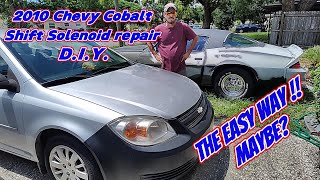
- Chevrolet / Pontiac / Saturn Cobalt, HHR, G5, Ion (2005-2011) — The 4T45-E transmission is infamous for the 1-2 shift solenoid physically breaking. The plastic end blows out, locking the vehicle in a high gear.
- Subaru Outback, Forester, Impreza, Crosstrek (2010-2020) — P0974 relates to a failing solenoid within the CVT valve body. Aftermarket solenoids are now available, preventing the need for a $1,500 full valve body replacement.
- Toyota Tundra, Land Cruiser, Sienna, Sequoia (2004-2012) — On AB60E/F transmissions, P0974 points to an open in the 'S1' circuit. The TCM logs the fault if it detects resistance of 100 kΩ or more.
- Acura TL, MDX (2004-2008) — P0974 appears alongside P0700 due to shift solenoid failure. Diagnostics must focus on the electrical circuit, not mechanical transmission health.
- Hyundai / Kia Various Models (2001-2015) — Experiences P0974 primarily due to brittle wiring harnesses cracking near the transmission housing.
- Allison-equipped Trucks Chevrolet Silverado HD, GMC Sierra HD (2001-2019) — P0974 indicates a short-to-battery in the Shift Solenoid 1 (SS1) circuit. The TCM defaults to a hydraulic limp mode.
Manufacturer-Specific Notes
- Honda/Acura: Service manuals explicitly state P0974 is an electrical circuit problem and cannot be caused by internal mechanical transmission failure. Do not authorize a transmission rebuild for this code.
- Subaru: Subaru extended the CVT warranty to 10 years/100,000 miles for many 2010-2020 models via TSBs. Always check your VIN with a dealer before paying for a P0974 repair.
- Chevrolet (4T45-E): The 1-2 shift solenoids physically shatter, blowing out the plastic ends. The fix is a $50 solenoid, not a new transmission.
- Toyota: Toyota requires precise resistance testing. The 'S1' solenoid must read 11-15 Ω at 68°F. A reading of 100 kΩ triggers P0974, while 8 Ω triggers P0973.
- Allison: The TCM automatically clears P0974 after 40 warm-up cycles without the failure recurring. The check engine light may turn off, but the intermittent wiring fault still exists.
Real Owner Stories
2008 Acura TL with flashing 'D' light
A week after purchase, the 'D' indicator light flashed, followed by the Check Engine Light with code P0974. The car jerked into gear but drove normally otherwise.
What they tried:
- Replaced top and side shift solenoids.
- Replaced 3rd and 4th gear pressure switches.
- Performed a transmission fluid flush with OEM fluid.
Outcome: The issue remained unresolved after $400+ in parts, proving the fault was deeper in the wiring harness rather than the physical solenoids.
Lesson: Throwing parts at a P0974 code wastes money. If replacing the solenoid fails, you must perform a deep electrical diagnosis of the wiring harness and TCM.
2005 Honda Accord with P0974 after engine repair
After fixing an alternator wire and replacing an oil pressure sensor, the car threw codes P0974 and P0962 with a flashing 'D' light.
What they tried:
- Used a bidirectional scanner to command solenoids; confirmed Solenoid 'A' was unresponsive.
- Checked for voltage at the solenoid connector and found 0V.
- Inspected the transmission connectors and checked continuity through the recently reinstalled wiring harness.
Outcome: The owner found a bent pin on a wiring harness connector caused during the previous engine work. Straightening the pin fixed the code.
Lesson: If P0974 appears immediately after a major repair, the cause is almost always a pinched wire, damaged connector, or unseated plug.
2010 Mini Cooper S (R56) stuck in gear
The vehicle experienced shifting problems and displayed P0974 alongside 4E84 (the manufacturer-specific code for Solenoid valve S1).
What they tried:
- Sought forum advice to identify the correct replacement part and procedure.
Outcome: The owner replaced the shift solenoid inside the transmission. They replaced both solenoids ('A' and 'B') simultaneously to save on future labor.
Lesson: Search for both the generic P-code and the manufacturer-specific code for accurate repair advice. Always replace grouped solenoids together while the transmission pan is off.
How to Prevent This Code From Triggering
- Change transmission fluid and filter regularly (Every 30,000 to 60,000 miles.) — Clean fluid prevents debris from clogging solenoid passages and dissipates heat, stopping the solenoid coil from burning out.
- Use only OEM-specified transmission fluid (Every fluid service.) — Incorrect fluid degrades seals and alters friction properties, causing increased wear and solenoid compatibility failures.
- Install an auxiliary transmission cooler (One-time installation for towing or hot climates.) — Overheating destroys transmissions. An external cooler stabilizes fluid temperatures, extending the life of all internal electronics.
- Address minor fluid leaks immediately (As soon as noticed.) — Low fluid causes the transmission to overheat and solenoids to malfunction. Fixing a $50 seal leak prevents a $3,000 transmission replacement.
Frequently Asked Questions
What are the most common misdiagnosis mistakes for P0974?
The biggest mistake is replacing the transmission without performing basic electrical checks. Always check the fluid level and thoroughly inspect the wiring harness for damage first. On many vehicles, the fault is strictly electrical.
Can I just clear the P0974 code and keep driving?
You can clear it, but it will return within seconds of driving. The code indicates a persistent electrical fault. Ignoring it forces the transmission to slip and overheat, guaranteeing major damage.
Is replacing a shift solenoid a DIY job?
Yes, for experienced DIYers. It requires draining the fluid, removing the transmission pan, and accessing the valve body. You must use a torque wrench to prevent pan leaks upon reassembly.
My mechanic says I need a new transmission. Is that right?
Be highly suspicious. P0974 is caused by a single faulty solenoid or a broken wire, which costs under $500 to fix. Demand proof of widespread internal damage (like metal in the pan) before authorizing a $3,000 replacement.
What is a shift solenoid 'pack' or 'block'?
Some vehicles group several solenoids into a single, non-serviceable assembly. If one solenoid fails, you must replace the entire expensive block.
What exactly does Shift Solenoid 'A' do?
It is a valve that controls fluid pressure to execute a specific gear shift (e.g., 1st to 2nd gear). When it fails, the TCM loses hydraulic control, causing the vehicle to get stuck in gear.
Can a bad TCM or PCM cause a P0974 code?
Yes, but it is rare. The internal driver circuit inside the TCM can fail and falsely report high voltage. Only replace the TCM after meticulously ruling out the solenoid and wiring harness.
Key Takeaways
- P0974 indicates a high-voltage open circuit or short-to-power in Shift Solenoid 'A', directly disabling specific gear shifts.
- Inspect the external transmission wiring harness and check fluid levels before spending $200+ on a replacement solenoid.
- Driving with P0974 causes the transmission to overheat and slip, escalating a $300 electrical repair into a $3,000+ complete rebuild within weeks.
- Use a bi-directional scanner to command the solenoid ON and OFF; if voltage drops, the wiring is intact and the mechanical solenoid is the culprit.
Helpful Videos

Shop the Parts Behind P0974
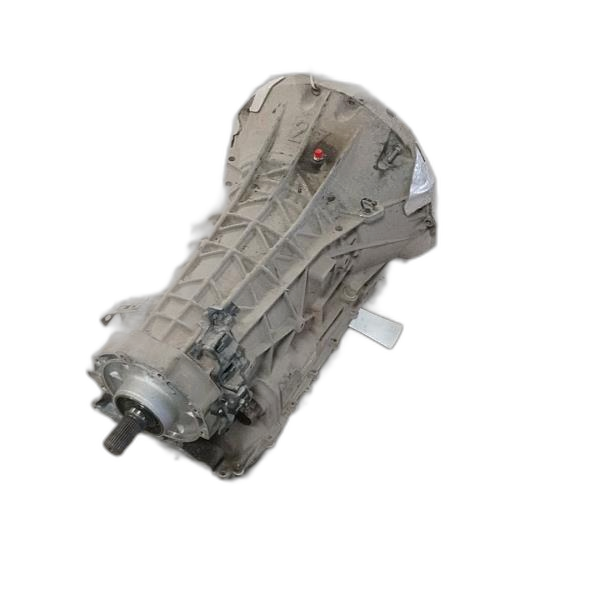
Below are the parts most often responsible for code P0974, ranked by how frequently each one is the actual culprit (per the diagnosis above). Tap any to see what we have for your vehicle.



The information in this article is provided for general reference and educational purposes only. Vehicle specifications, procedures, and part compatibility can vary by production date, trim level, and region. Always consult your vehicle's factory service manual and verify part numbers before purchasing or performing repairs. Safety-critical components such as airbags, seat belts, and braking systems should be installed by a qualified professional.
- 🧭 Diagnostic Flowchart
- 🎬 Helpful Videos
- 🛍️ Shop This Part
- What Does P0974 Mean?
- Can I Drive With P0974?
- Common Causes
- Symptoms
- Common Fixes & Costs
- Used vs. New Parts: Buying Guide
- What Happens If You Wait — Timeline
- Cost of Not Fixing It
- Diagnosis Steps
- When This Code Triggers (Freeze-Frame Conditions)
- Related Codes
- Climate & Environmental Factors
- How to Talk to a Mechanic About This Code
- Where to Take It: Dealer vs Independent vs Chain
- When to Walk Away From the Repair
- What Scan Tool You Need for This Code
- How to Clear the Code After You Fix It
- Will This Fail Emissions / State Inspection?
- Most Commonly Affected Vehicles
- Manufacturer-Specific Notes
- Real Owner Stories
- 2008 Acura TL with flashing 'D' light
- 2005 Honda Accord with P0974 after engine repair
- 2010 Mini Cooper S (R56) stuck in gear
- How to Prevent This Code From Triggering
- Frequently Asked Questions
- What are the most common misdiagnosis mistakes for P0974?
- Can I just clear the P0974 code and keep driving?
- Is replacing a shift solenoid a DIY job?
- My mechanic says I need a new transmission. Is that right?
- What is a shift solenoid 'pack' or 'block'?
- What exactly does Shift Solenoid 'A' do?
- Can a bad TCM or PCM cause a P0974 code?
- Key Takeaways
- 🎟️ Get 5% Off