

OBD-II Code P0975: Shift Solenoid 'B' Control Circuit Range/Performance
The Ultimate Guide to P0975: What it means, why it triggers, and how to fix it for good.
- Code P0975 indicates an erratic electrical signal in the shift solenoid 'B' circuit, causing harsh shifting or a 2nd/3rd-gear limp mode.
- For 2014-2017 Chrysler and Jeep models with 9-speed transmissions, a $150-$250 TCM software update (TSB 21-019-17) is the most common fix.
- On Subaru and Nissan CVTs, a P0975 code usually requires a complete valve body replacement costing $1,500 to $2,300 because individual solenoids are not sold separately.
- Never replace a transmission or valve body without first verifying the battery outputs at least 12.4V and the transmission fluid is at the correct level.
What Does P0975 Mean?
The Transmission Control Module (TCM) detected an erratic electrical signal from shift solenoid 'B'. This solenoid is an electronic valve that directs hydraulic fluid to change gears. When its voltage or resistance falls outside the manufacturer's expected range, the TCM triggers P0975 and illuminates the Check Engine Light.
Technical definition: SAE/OBD-II defines P0975 as "Shift Solenoid 'B' Control Circuit Range/Performance." The TCM sees a mismatch between the commanded state of the solenoid and the actual electrical feedback. Unlike P0976 (short to ground) or P0977 (short to power), a 'range/performance' code means the circuit operates but behaves erratically due to high resistance, a sticking mechanical valve, or software glitches.
Can I Drive With P0975?
No — Do Not Drive. You can physically drive short distances, but we strongly advise against it. The transmission will likely default to a 2nd or 3rd gear 'limp mode' or unexpectedly shift to neutral, creating a severe safety hazard in traffic. Continuing to drive overheats the transmission, turning a $200 solenoid fix into a $3,500 complete replacement.
Common Causes
- Outdated Transmission Control Module (TCM) Software (Very Common) — On many modern vehicles, particularly 2014-2017 Chrysler and Jeep models, overly sensitive TCM software falsely triggers P0975. A dealership software update is the required fix.
- Faulty Shift Solenoid 'B' (Very Common) — The solenoid itself fails electrically due to an internal coil short, or becomes mechanically stuck open/closed from debris in the transmission fluid.
- Low or Contaminated Transmission Fluid (Common) — Fluid that is low, old, or filled with clutch material causes solenoids to stick or overheat, triggering performance codes.
- Internal Transmission Wiring Harness Failure (Common) — The wiring harness inside the transmission pan degrades from constant exposure to heat and fluid, causing poor connections at the solenoid. This is a known recall issue on ZF 9-speed transmissions.
- External Wiring or Connector Damage (Common) — Wiring between the TCM and the transmission housing corrodes, frays, or shorts out from exposure to road salt, heat, and vibration.
- Clogged Valve Body Passages (Less Common) — A clogged transmission filter restricts fluid flow, starving the solenoids of hydraulic pressure. Debris also clogs the fine channels within the valve body.
- Weak Battery or Low System Voltage (Less Common) — Modern transmissions require a stable voltage supply. A weak battery or failing alternator causes communication errors and false solenoid codes.
- Faulty Transmission Control Module (TCM) (Rare) — The TCM itself fails, sending incorrect commands or misinterpreting feedback. Rule out software, wiring, and fluid before replacing the TCM.
Symptoms
- Check Engine Light & 'Service Transmission' Message — The Malfunction Indicator Lamp (MIL) illuminates, often accompanied by a specific transmission warning on the driver information display.
- Vehicle Stuck in 'Limp Mode' — The transmission locks into a single gear (usually 2nd or 3rd) to prevent internal damage, causing poor acceleration and high RPMs at highway speeds.
- Harsh, Delayed, or Erratic Shifting — The vehicle slams into gear, hesitates before shifting, or slips between gears.
- Transmission Unexpectedly Shifts to Neutral — The transmission suddenly drops into neutral while driving, causing a complete loss of motive power. This is a critical safety hazard.
- Decreased Fuel Economy (also visible on scanner) — Driving in limp mode or with erratic shifting forces the engine to work harder, dropping fuel efficiency by 10-20%.
Diagnostic Flowchart
Tap your situation to follow the diagnostic path that matches what you're seeing on this code.
Common Fixes & Costs
- Update TCM Software — Parts: $0, Labor: $150-$250, ~1.0 hr book time (Professional)
- Change Transmission Fluid and Filter — Parts: $75-$150, Labor: $150-$250, ~1.5 hr book time (DIY)
- Replace Shift Solenoid 'B'
— Parts: $50-$150, Labor: $300-$600, ~2.5 hr book time
(Intermediate)
Honda Accord/Odyssey/Pilot: OEM - Repair or Replace Wiring Harness
— Parts: $50-$350, Labor: $200-$900, ~4.0 hr book time
(Intermediate)
Jeep Cherokee / Chrysler 200 (ZF 9-Speed): OEM - Replace Transmission Valve Body
— Parts: $500-$1200, Labor: $400-$800, ~3.5 hr book time
(Professional)
Subaru Impreza/Outback/Forester (TR580 CVT): OEM - Replace Transmission Control Module (TCM) — Parts: $300-$800, Labor: $150-$400, ~2.0 hr book time (Professional)
DIY vs Professional
- Update TCM Software 🟢 Beginner
Tools: Manufacturer-specific scan tool (e.g., FCA wiTECH), stable power supply, OEM software subscription. - Change Transmission Fluid and Filter 🟢 Beginner
Tools: Socket set, drain pan, fluid pump, infrared thermometer. - Replace Shift Solenoid or Valve Body 🟢 Beginner
Tools: Socket set, torque wrench, drain pan, service manual. - Repair External Wiring Harness 🟢 Beginner
Tools: Multimeter, wire strippers, soldering iron, heat shrink tubing.
Used vs. New Parts: Buying Guide
When a used part is worth it: A used part only makes sense for an externally-mounted solenoid on an older, high-mileage vehicle (like an early 2000s Honda). Never install a used internal valve body or wiring harness due to the massive labor costs of a repeat failure.
Donor-vehicle mileage cap: roughly under 60000 miles for the part to have meaningful remaining life.
Donor quality checklist:
- Verify the donor vehicle was not scrapped due to transmission failure.
- Match part numbers exactly.
- Avoid parts from rust-belt regions.
Decision logic:
- If The part is a complete valve body assembly → Buy new OEM or a quality remanufactured unit. Used valve bodies have unknown internal wear.
- If The part is an individual solenoid on a vehicle worth over $5,000 → Buy new OEM or reputable aftermarket (Denso, Rostra). The labor cost is too high to risk a used part.
- If Vehicle is > 150K miles AND budget is the primary concern → A used external solenoid is acceptable if you are doing the labor yourself.
Warranty tradeoff: Salvage yards offer 30-day part-only warranties. New OEM parts carry 1-2 year warranties. Remanufactured valve bodies often include 1-year warranties that cover labor.
Worst-case if a used part fails: $500-$1200 if a used internal part fails, requiring you to pay for repeat labor, new fluid, and another part.
What Happens If You Wait — Timeline
- 0-1 month: Check Engine Light is on. Shifting is slightly harsh, or symptoms only appear when the transmission is cold. (MPG impact: 0-5%% · Added cost: $0-$50 in wasted fuel.)
- 1-4 months: Harsh shifting becomes frequent. The transmission enters limp mode during long drives. Fuel economy drops noticeably. (MPG impact: 5-15%% · Added cost: $200-$400 (Increased fuel costs and potential towing fees).)
- 4-8 months: Harsh shifting causes accelerated wear on internal clutch packs. Debris from a failing solenoid contaminates the valve body. (MPG impact: 10-20%% · Added cost: $1,000-$2,500 (Escalates to needing a full valve body replacement).)
- 8+ months: Catastrophic failure. Severe slipping generates extreme heat, destroying seals and warping metal parts. The transmission fails to engage any gear. (MPG impact: 20%+% · Added cost: $3,500-$7,000+ (Requires complete transmission replacement).)
Cost of Not Fixing It
- 0-1 month: Erratic shifting, poor fuel economy, and risk of being stranded due to limp mode or unexpected shifts to neutral. (Added cost: $0-$50 in wasted fuel.)
- 1-6 months: Harsh shifting destroys internal clutch packs. Debris from a failing solenoid contaminates the entire valve body. (Added cost: $1000-$2500 (Escalates from a solenoid fix to a full valve body replacement).)
- 6+ months: Catastrophic transmission failure. Slipping clutches overheat and send metal shavings throughout the unit. (Added cost: $3500-$7000+ (Requires complete transmission replacement).)
Diagnosis Steps
- Scan for Codes and Check TSBs
Use an OBD-II scanner to confirm P0975. Immediately check a TSB database for your specific VIN. A software update is the most common fix for FCA vehicles and must be ruled out first.
Tools: OBD-II Scanner, TSB Database Access (Beginner) - Inspect Transmission Fluid Level and Condition
Verify the transmission fluid is at the correct level and is bright red. Dark brown, black, or burnt-smelling fluid indicates internal clutch damage or severe contamination.
Tools: Gloves, Rag, Dipstick (if equipped), Infrared Thermometer (for sealed units) (Intermediate) - Check Battery Health and System Voltage
Test the battery to ensure it holds at least 12.4V with the engine off, and 13.5-14.5V while running. Low voltage triggers false solenoid codes.
Tools: Digital Multimeter (Beginner) - Visually Inspect External Wiring and Connectors
Inspect the main wiring harness connecting to the transmission. Look for melted wires, corrosion on pins, or loose connections.
Tools: Flashlight, Mirror (Intermediate) - Monitor and Command Solenoid with Scan Tool
Use a bi-directional scan tool to view live data for 'Shift Solenoid B Commanded State' vs 'Actual State'. Command the solenoid ON/OFF to see if it responds and listen for an audible click from the transmission pan.
Tools: Professional Bi-Directional Scan Tool (Advanced) - Test Shift Solenoid Circuit from TCM Connector
Disconnect the TCM. Using a wiring diagram, probe the power and control wires for solenoid 'B' with a multimeter. A reading of Over-Limit (OL) means a broken wire; near zero ohms to ground means a short.
Tools: Digital Multimeter, Vehicle-Specific Wiring Diagram (Advanced) - Test Shift Solenoid Internal Resistance
Drop the transmission pan. Disconnect the solenoid and measure resistance across its pins. Compare to OEM specs (e.g., Honda is typically 12-25 Ohms). Readings outside this range confirm a dead solenoid.
Tools: Socket Set, Drain Pan, Digital Multimeter, Torque Wrench (Advanced) - Inspect the Valve Body
While the pan is off, inspect the valve body for scoring or metal shavings. Heavy contamination requires replacing the entire valve body assembly.
Tools: Flashlight, Cleaning Solvent (Professional)
When This Code Triggers (Freeze-Frame Conditions)
- Engine Coolant Temp: 175-210°F (fully warmed up)
- RPM: 1200-2800 (during an attempted shift under light to moderate acceleration)
- Engine Load: 25-70% (cruise or gentle acceleration)
- Vehicle Speed: 25-55 mph (city or highway driving when a shift is commanded)
Related Codes
- P0976 — Indicates a specific electrical short to ground on the solenoid 'B' circuit. P0975 is a general performance fault, while P0976 is a hard electrical failure.
- P0977 — Indicates a short to power on the solenoid 'B' circuit. You will find constant battery voltage on the signal wire.
- P0700 — A generic informational code telling the engine computer to turn on the Check Engine Light. Ignore P0700 and diagnose the P0975.
- P0973 — Indicates a problem with Shift Solenoid 'A'. Seeing P0973 and P0975 together points to a shared electrical ground, damaged main harness, or failing TCM.
Climate & Environmental Factors
- Cold Weather: Low temperatures thicken transmission fluid. This sluggish fluid prevents solenoids from actuating quickly, triggering a performance code that often disappears once the vehicle warms up.
- Road Salt and Humidity: Saltwater acts as an electrolyte, rapidly corroding external transmission connectors. This corrosion creates high electrical resistance, directly causing P0975.
How to Talk to a Mechanic About This Code
Say this: "I have a P0975 code on my [Vehicle Year/Make/Model]. I know this is often a software or wiring issue. Could you please check for any applicable TSBs for a TCM reflash before testing the circuit's resistance?"
This signals you are an informed consumer. It forces the shop to check for inexpensive software fixes before authorizing expensive part replacements.
Avoid saying:
- 'Just fix whatever's wrong'
- 'My check engine light is on, can you look at it?'
- 'I think I need a new transmission'
Questions to ask before authorizing the repair:
- Did you check for Technical Service Bulletins, and is my TCM software up to date?
- Can you provide the resistance readings from the solenoid circuit?
- If a new valve body is needed, what is the warranty on the part and the labor?
- Will an adaptive reset procedure be required after the repair?
Where to Take It: Dealer vs Independent vs Chain
- Dealer:
Mandatory first stop for FCA vehicles to check for software updates. Best choice for CVT valve body replacements.
Best for: Chrysler, Jeep, and Dodge vehicles requiring software updates, Vehicles under powertrain warranty, Subaru/Nissan requiring specialized valve body programming
Downsides: Labor rates are $150-$250/hr, Will default to expensive assembly replacements rather than component repair (Typical cost: +40% vs. baseline) - Independent Shop:
Excellent choice for straightforward solenoid swaps and harness repairs after software issues are ruled out.
Best for: Out-of-warranty vehicles with mechanical faults (e.g., older Honda solenoids), Electrical diagnosis and wiring repair
Downsides: May lack expensive OEM-specific programming tools required for modern TCMs. (Typical cost: +0% vs. baseline) - Chain Shop:
AVOID. The risk of misdiagnosing P0975 and being sold a costly, unneeded repair is extremely high.
Best for: Basic fluid drain-and-fills
Downsides: High pressure to upsell unnecessary transmission rebuilds., Technicians lack specialization in complex transmission electronics. (Typical cost: -10% vs. baseline)
When to Walk Away From the Repair
If the estimated repair cost exceeds 40-50% of the car's private-party value, sell it as-is.
- Car worth $8000, fix is $200: Fix it. A software update is a minor cost to restore full vehicle function.
- Car worth $6000, fix is $750: Fix it. A solenoid replacement is a reasonable cost and well below the threshold.
- Car worth $4500, fix is $2200: Borderline. A valve body replacement is nearly 50% of the car's value. Get a second opinion.
- Car worth $3000, fix is $4000: Walk away. The repair cost exceeds the vehicle's value. Sell to a wholesale buyer.
What Scan Tool You Need for This Code
Minimum: A scanner that reads manufacturer-specific transmission codes and displays live data for transmission PIDs.
A basic $20 code reader only shows the P0975 code. It cannot show live circuit voltage or the commanded state of the solenoid, which are essential to determine if the problem is the wiring or the TCM.
Budget: BlueDriver Pro / Autel AP200 (~$100) — Connects to your phone to graph live transmission data, such as solenoid voltage. Offers no active bi-directional tests.
Mid-range: Foxwell NT510 Elite / Innova 5610 (~$180) — Provides access to OEM-specific transmission codes. The Foxwell offers bi-directional control to command the solenoid on/off.
Professional: Autel MaxiCOM MK808S / Launch CRP919E (~$500-800) — Offers full bi-directional control, network topology maps, and performs critical post-repair functions like the 'Transmission Quick Learn'.
Rent vs buy: Auto parts stores scan codes for free, but their tools are basic. Diagnosing P0975 requires live data and bi-directional tests, meaning you must buy a mid-range scanner or visit a professional.
How to Clear the Code After You Fix It
- Use an OBD-II scan tool to clear codes.
- Perform a 'Transmission Quick Learn' or adaptive reset using a professional scan tool.
- Conduct a full drive cycle to allow readiness monitors to set.
Drive cycle (~30 minutes): Cold start and idle for 3 minutes. Drive in stop-and-go traffic for 15 minutes. Accelerate to a steady 55 mph for 10 minutes. Coast down to 20 mph without braking. Stop and idle for 30 seconds. Turn off the engine.
Readiness monitors affected: Comprehensive Component Monitor, Catalyst Monitor, Evaporative System Monitor
Before emissions retest: drive at least 100 miles to fully set monitors.
Watch out for:
- Disconnecting the battery clears the code but resets all emissions monitors, guaranteeing an inspection failure.
- Skipping the TCM relearn procedure after replacing a solenoid guarantees continued harsh shifting.
- The code returns immediately if the internal wiring harness is damaged but only the solenoid was replaced.
Will This Fail Emissions / State Inspection?
Yes — this code typically fails an OBD-II emissions inspection.
- California: An illuminated Check Engine Light is an automatic failure. You must complete a drive cycle to set all readiness monitors before re-testing.
- New York: A P0975 code causes an automatic failure of the NYS DMV OBD-II emissions inspection.
- Texas: In emissions-testing counties (Harris, Dallas, Travis), an illuminated Check Engine Light results in an automatic failure.
Most Commonly Affected Vehicles
- Chrysler 200 (2015-2017) — Extremely common issue caused by outdated TCM software (TSB 21-019-17 REV. A) or a faulty internal harness (Recall S55).
- Jeep Cherokee (2014-2016) — Uses the same ZF 9-speed transmission as the Chrysler 200. Software updates and internal harness replacements are the standard fixes.
- Honda Accord, Odyssey, Pilot (2001-2009) — P0975 points directly to a bad 'B' solenoid. These are often externally mounted and easy to replace.
- Subaru Impreza, Outback, Forester (2010-2015) — Solenoids are integrated into the valve body. This code almost always requires a $1,500+ replacement of the entire valve body assembly.
- Chevrolet Cruze, Malibu, Equinox (2010-2017) — Indicates a failed solenoid, but is frequently linked to broken internal hard parts (like the 3-5-R wave plate) or a failed TEHCM.
- Volkswagen Rabbit, Golf, Jetta, Beetle (2005-2012) — The Aisin 09G transmission suffers from valve body bore wear. A remanufactured valve body is the only durable repair.
- Nissan Altima, Rogue, Sentra (2007-2018) — On Nissan CVTs, P0975 indicates internal valve body failure requiring complete assembly replacement.
- Ford Focus, Fiesta (2011-2016) — Points to issues with the TCM or clutch actuators on the DPS6 dual-clutch transmission, rather than a traditional hydraulic solenoid.
Manufacturer-Specific Notes
- Chrysler/Jeep/Dodge (FCA): A TCM software update is the mandatory first diagnostic step for the ZF 9-speed transmission. A 'Transmission Quick Learn' procedure with a wiTECH tool is required after any repair.
- Honda: Honda uses multiple linear solenoids working in tandem. Clogged screens on individual, externally mounted solenoids are a frequent and easily serviceable issue.
- Subaru & Nissan: Shift solenoids are integrated into the CVT valve body and are not sold individually. P0975 requires replacing and calibrating the entire valve body assembly.
- Volkswagen/Audi: The Aisin 09G transmission is notorious for aluminum valve body bores wearing out. Replacing the solenoid won't fix the pressure loss; a sleeved, remanufactured valve body is required.
Real Owner Stories
2015 Chrysler 200 at 85K miles
Check Engine Light on, transmission stuck in 3rd gear limp mode.
What they tried:
- Independent shop quoted $1,200 for a new valve body.
Outcome: Owner took the car to a dealership. The dealer applied TSB 21-019-17 REV. A and performed a TCM software update for $180. The code cleared and shifting returned to normal.
Lesson: Always check for software TSBs on Chrysler/Jeep 9-speed transmissions before authorizing hard part replacements.
2014 Subaru Outback at 163K miles
AT OIL TEMP light flashing, Check Engine Light on. Dealer quoted $1,800 for a valve body.
What they tried:
- Owner searched for individual solenoids to save money.
Outcome: Owner learned Subaru CVTs do not have serviceable solenoids. They paid the $1,800 for the full valve body replacement, which permanently resolved the code.
Lesson: On Subaru and Nissan CVTs, a single solenoid code requires a full valve body replacement. It is expensive but unavoidable.
2004 Honda Odyssey at 140K miles
Code P0975 with harsh shifting from 2nd to 3rd gear.
What they tried:
- Owner performed a transmission drain-and-fill, but the problem persisted.
Outcome: Owner bought an OEM shift solenoid 'B' for $90. Because it was externally mounted, they swapped it in their driveway in 45 minutes. The code never returned.
Lesson: Older Honda solenoids are common failure points but are highly accessible for DIY replacement.
2012 Chrysler 200 at 78K miles
Car went into limp mode immediately after a routine transmission fluid change.
What they tried:
- Owner feared the shop destroyed the transmission.
Outcome: A service bulletin revealed the TCM required a software relearn to adapt to the new fluid's viscosity. A quick scan tool reset fixed the issue.
Lesson: If P0975 appears immediately after a fluid change, the TCM likely needs an adaptive relearn procedure.
How to Prevent This Code From Triggering
- Perform regular transmission fluid and filter changes. (Every 30,000-60,000 miles.) — Clean fluid maintains correct hydraulic pressure and prevents sludge from clogging the tiny plungers inside the shift solenoids.
- Use only the manufacturer-specified transmission fluid. (Every time fluid is added or changed.) — Incorrect fluid has the wrong viscosity, causing poor shifting and degrading the seals within the solenoids.
- Avoid aggressive driving and heavy towing when possible. (Daily habit.) — Hard acceleration generates excessive heat, which is the primary killer of transmission fluid and electronic solenoid coils.
- Annually inspect external wiring harnesses and connectors. (Once per year, especially in rust-belt regions.) — Catching corrosion early prevents the electrical resistance that triggers range/performance codes.
Frequently Asked Questions
What does Shift Solenoid 'B' actually do?
Shift Solenoid 'B' is an electronically controlled valve inside your transmission. The car's computer opens and closes it to direct hydraulic fluid, which engages the clutch packs needed to change gears.
What are the most common misdiagnosis mistakes for P0975?
The biggest mistake is replacing the solenoid without checking for TCM software updates, especially on Chrysler and Jeep vehicles. Mechanics also frequently overlook weak batteries or corroded ground wires, which cause false solenoid codes.
Why does my mechanic want to replace the whole valve body?
On many modern transmissions (like Subaru and Nissan CVTs), solenoids are permanently integrated into the valve body and cannot be bought separately. Additionally, if metal debris killed one solenoid, it has likely ruined the entire valve body.
Can I fix P0975 myself?
You can check the battery and inspect external wiring at home. However, replacing a solenoid requires dropping the transmission pan, and most modern vehicles require a professional scan tool to reprogram the TCM afterward. Stop DIYing if the external wiring is intact.
How much does it cost to fix code P0975?
A dealership software update costs $150-$250. Replacing a single shift solenoid at an independent shop runs $350-$800. If the entire valve body requires replacement, expect to pay $1,000 to $2,300.
Will clearing the code fix the problem?
No. The TCM runs self-diagnostics continuously. As soon as you drive and the transmission attempts to shift, the code and limp mode will return.
Is a transmission flush a good idea for this code?
No. A high-pressure flush on a transmission already experiencing shifting issues dislodges settled debris, forcing it into the valve body and worsening the problem. A simple gravity drain-and-fill is the only safe fluid service.
What is the difference between P0975, P0976, and P0977?
P0975 means the circuit's electrical feedback is erratic or out of range. P0976 means the circuit is shorted to ground (0 volts). P0977 means the circuit is shorted to power (constant 12 volts).
Key Takeaways
- Code P0975 indicates an erratic electrical signal in the shift solenoid 'B' circuit, causing harsh shifting or a 2nd/3rd-gear limp mode.
- For 2014-2017 Chrysler and Jeep models with 9-speed transmissions, a $150-$250 TCM software update (TSB 21-019-17) is the most common fix.
- On Subaru and Nissan CVTs, a P0975 code usually requires a complete valve body replacement costing $1,500 to $2,300 because individual solenoids are not sold separately.
- Never replace a transmission or valve body without first verifying the battery outputs at least 12.4V and the transmission fluid is at the correct level.
Helpful Videos

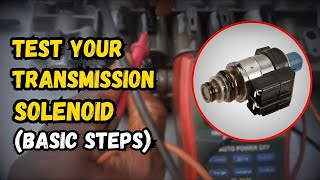

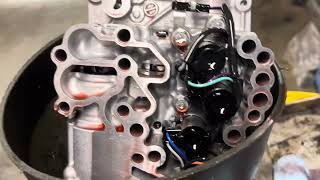
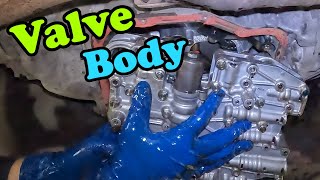
![How to Perform Transmission Quicklearn on Chrysler, Dodge, Jeep, Ram [May Fix Hard Shifts!]](https://img.youtube.com/vi/BV-kVYyX-7M/mqdefault.jpg)
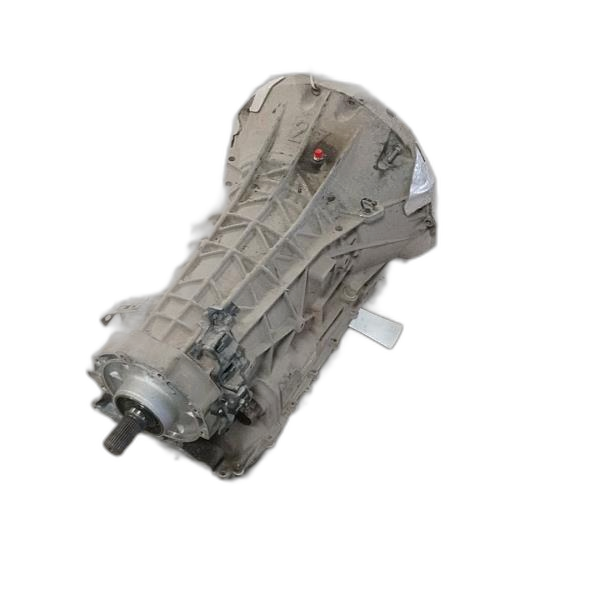
Shop the Parts Behind P0975
Below are the parts most often responsible for code P0975, ranked by how frequently each one is the actual culprit (per the diagnosis above). Tap any to see what we have for your vehicle.


The information in this article is provided for general reference and educational purposes only. Vehicle specifications, procedures, and part compatibility can vary by production date, trim level, and region. Always consult your vehicle's factory service manual and verify part numbers before purchasing or performing repairs. Safety-critical components such as airbags, seat belts, and braking systems should be installed by a qualified professional.
- 🧭 Diagnostic Flowchart
- 🎬 Helpful Videos
- 🛍️ Shop This Part
- What Does P0975 Mean?
- Can I Drive With P0975?
- Common Causes
- Symptoms
- Common Fixes & Costs
- DIY vs Professional
- Used vs. New Parts: Buying Guide
- What Happens If You Wait — Timeline
- Cost of Not Fixing It
- Diagnosis Steps
- When This Code Triggers (Freeze-Frame Conditions)
- Related Codes
- Climate & Environmental Factors
- How to Talk to a Mechanic About This Code
- Where to Take It: Dealer vs Independent vs Chain
- When to Walk Away From the Repair
- What Scan Tool You Need for This Code
- How to Clear the Code After You Fix It
- Will This Fail Emissions / State Inspection?
- Most Commonly Affected Vehicles
- Manufacturer-Specific Notes
- Real Owner Stories
- 2015 Chrysler 200 at 85K miles
- 2014 Subaru Outback at 163K miles
- 2004 Honda Odyssey at 140K miles
- 2012 Chrysler 200 at 78K miles
- How to Prevent This Code From Triggering
- Frequently Asked Questions
- What does Shift Solenoid 'B' actually do?
- What are the most common misdiagnosis mistakes for P0975?
- Why does my mechanic want to replace the whole valve body?
- Can I fix P0975 myself?
- How much does it cost to fix code P0975?
- Will clearing the code fix the problem?
- Is a transmission flush a good idea for this code?
- What is the difference between P0975, P0976, and P0977?
- Key Takeaways
- 🎟️ Get 5% Off