

OBD-II Code P0978: Shift Solenoid 'C' Control Circuit Range/Performance
What P0978 means, why it triggers, and how to fix it
- Code P0978 indicates the Transmission Control Module (TCM) detected an electrical or mechanical fault in the 'C' shift solenoid circuit, often causing the vehicle to lock into 2nd or 3rd gear.
- For 2014-2018 Chrysler, Jeep, and Ram vehicles with 9-speed transmissions, check for TCM software updates via Technical Service Bulletins (TSBs) before spending $800+ on hardware repairs.
- Test the solenoid's resistance using a digital multimeter; a healthy solenoid typically reads between 5 and 25 Ohms depending on the manufacturer, while an infinite reading confirms a dead coil.
- Limit driving to a maximum of 5-10 miles to reach a repair shop, as continued harsh shifting will destroy internal clutch packs and force a $3,000+ transmission rebuild.
What Does P0978 Mean?
Your car's Transmission Control Module (TCM) detected a problem with the electrical circuit for shift solenoid 'C'. This electronic valve controls hydraulic fluid flow to change gears. When the TCM sees voltage, resistance, or response time outside the expected range, it triggers P0978 and illuminates the check engine light.
Technical definition: The SAE/OBD-II definition is Shift Solenoid 'C' Control Circuit Range/Performance. The Transmission Control Module (TCM) detected the electrical circuit for shift solenoid 'C' operating outside expected parameters, or its mechanical response time is too slow. This stems from an electrical fault (abnormal resistance) or a hydraulic/mechanical issue (sticking valve) preventing the solenoid from performing as commanded.
Can I Drive With P0978?
Yes, But With Caution. You can drive, but limit it to short trips to a repair shop. The transmission will likely shift harshly, get stuck in one gear (limp mode), or fail to shift entirely, creating a safety risk in traffic. Driving more than a few miles with poor shifting accelerates wear on transmission clutches and causes overheating. Prolonged inefficient engine operation also stresses the catalytic converter, risking an $800-$2500 repair.
Common Causes
- Outdated Transmission Control Module (TCM) Software (Very Common) — On modern vehicles, especially Chrysler, Jeep, and Ram models with ZF 9-speed transmissions, overly sensitive original software sets this code. A dealership software update is the required fix.
- Faulty Shift Solenoid 'C' (Common) — The solenoid fails electrically with an internal short or open circuit, or becomes clogged with transmission fluid debris, causing it to stick. This is the most frequent hardware-related cause.
- External Wiring or Connector Issues (Common) — The external wiring harness connecting the TCM to the transmission suffers damage, corrosion, or poor connections at the main plug or ground points due to heat, road debris, or rodents.
- Low or Dirty Transmission Fluid (Less Common) — Low or contaminated fluid causes erratic solenoid operation, sticking, and performance issues that trigger this code. It also causes transmission overheating, degrading solenoid function.
- Internal Transmission Harness Failure (Less Common) — The wiring harness inside the transmission oil pan fails from constant exposure to heat and fluid, causing intermittent shorts or opens in the solenoid circuit.
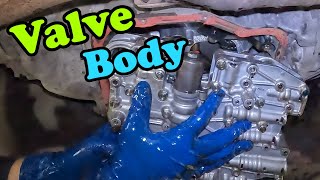
- Internal Valve Body Wear (Rare) — In high-mileage vehicles, the aluminum valve body bores wear out. This allows hydraulic fluid to leak past seals, causing pressure losses the TCM interprets as a solenoid performance issue.
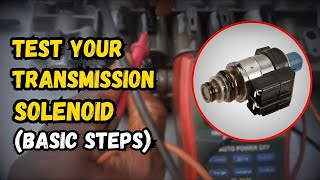
- Faulty Transmission Control Module (TCM) (Rare) — TCM failure is uncommon and usually sets multiple trouble codes simultaneously. Diagnose this only after ruling out all wiring and solenoid possibilities. 🎬 Watch: A simple guide on how to test a transmission solenoid.
Symptoms
- Check Engine Light is on — The Malfunction Indicator Lamp (MIL) illuminates on your dashboard.
- Harsh, Erratic, or Delayed Shifting — The transmission shifts abruptly, unpredictably, or with a noticeable delay as the TCM struggles to control hydraulic pressure.
- Vehicle Stuck in One Gear (Limp Mode) — The transmission enters a 'fail-safe' mode, locking into a single gear (often 2nd, 3rd, or 4th) to prevent internal damage.
- Transmission Slipping — The vehicle momentarily loses power or disengages between shifts because the solenoid fails to route hydraulic pressure correctly.
- Poor Acceleration and Increased Fuel Consumption — Incorrect shifting forces the engine to rev higher than usual, causing sluggish acceleration and reduced gas mileage.
Common Fixes & Costs
- Update Transmission Control Module (TCM) Software — Parts: $0, Labor: $150-$300, ~1.5 hr book time (Professional)
- Replace Shift Solenoid 'C'
— Parts: $30-$150, Labor: $150-$400, ~2.5 hr book time
(Intermediate)
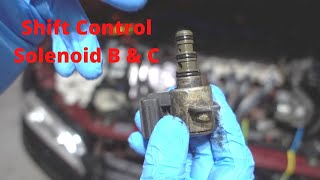
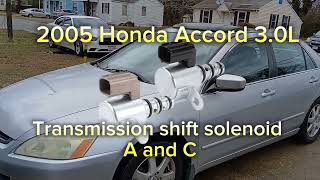
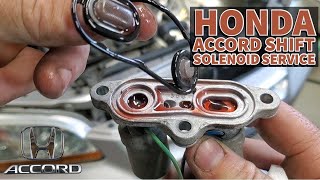
Honda Accord/Odyssey (Various Years): OEM 28500-RT4-003 🎬 Watch: How to locate shift solenoid C on a Honda Accord. (Alt: Beck Arnley 047-0016, Dorman, Rostra) - Replace Transmission Valve Body
— Parts: $600-$1500, Labor: $300-$800, ~4.5 hr book time
(Professional)
Jeep Cherokee / Chrysler 200 (ZF 9-Speed): OEM Mopar 68251123AB (Alt: ZF (Original Manufacturer), TC Remanufacturing)
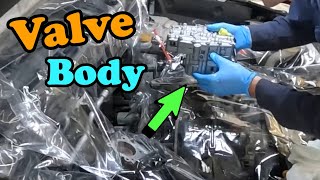
Subaru Outback/Crosstrek (CVT): 🎬 See this step-by-step guide for replacing a Subaru CVT valve body. OEM Subaru 31706AA034 or 31825AA055 (Alt: Remanufactured units available from various suppliers.) - Repair or Replace Damaged Wiring Harness — Parts: $20-$200, Labor: $150-$400, ~2.0 hr book time (Intermediate)
- Replace Internal Transmission Harness
— Parts: $100-$250, Labor: $250-$500, ~4.0 hr book time
(Advanced)
Jeep Cherokee (ZF 9-Speed, 9-solenoid version): OEM Mopar 68197332AA (Alt: Not commonly available) - Transmission Fluid and Filter Service
— Parts: $60-$150, Labor: $120-$250, ~1.5 hr book time
(Intermediate)
Chrysler/Jeep/Ram (ZF 9-Speed): OEM Mopar ZF 8&9 Speed ATF (#68218925AA) (Alt: Liqui Moly Top Tec 1950, Ravenol ATF 9HP)
DIY vs Professional
- Update Transmission Control Module (TCM) Software 🟢 Beginner
Tools: Dealership-level scan tool (e.g., wiTECH), stable power supply. - Replace Shift Solenoid 'C' (Externally Mounted) 🟢 Beginner
Tools: Basic socket set, torque wrench, drain pan, rags. - Replace Shift Solenoid 'C' / Valve Body (Internally Mounted) 🟢 Beginner
Tools: Socket set, torque wrench, drain pan, fluid pump, gasket scraper, service manual. - Repair or Replace Damaged Wiring Harness 🟢 Beginner
Tools: Digital Multimeter, wire cutters/strippers, soldering iron, heat shrink tubing, wiring diagrams.
Used vs. New Parts: Buying Guide
When a used part is worth it: For a simple, externally-mounted solenoid on an older, high-mileage vehicle, a used part from a reputable salvage yard is a cost-effective fix. For an entire valve body, buy a professionally rebuilt unit.
Donor-vehicle mileage cap: roughly under 80000 miles for the part to have meaningful remaining life.
Donor quality checklist:
- Verify the donor vehicle was not scrapped due to transmission failure.
- Match the part number exactly; solenoids and valve bodies are highly specific.
- Demand a 30-90 day warranty for used parts.
Decision logic:
- If The part is an entire valve body assembly. → Buy a new or professionally rebuilt unit with a warranty. Used units have unknown histories and identical wear issues.
- If The vehicle has under 100,000 miles and you plan to keep it long-term. → Buy a new OEM or high-quality aftermarket solenoid/valve body for maximum longevity.
- If The vehicle has over 150,000 miles and budget is the primary concern. → A used individual solenoid is acceptable, but carries a higher risk of premature failure.
Warranty tradeoff: Used parts offer a 30-90 day warranty covering the part only. New aftermarket parts offer 1-year to limited lifetime warranties. New OEM parts installed by a dealer carry a 12-month/12,000-mile warranty on parts and labor.
Worst-case if a used part fails: $400-$800 if a used internal part fails after installation, requiring you to pay labor costs twice.
Cost of Not Fixing It
- 0-1 month: Noticeable drop in fuel economy (5-15%) due to inefficient shifting and higher RPMs. Increased driver annoyance from harsh shifts. (Added cost: $20-$60 per month in extra fuel costs.)
- 1-6 months: Accelerated wear on transmission clutches and bands from harsh engagement and slipping. Transmission overheats, breaking down fluid and damaging seals. (Added cost: $500-$1500 for valve body damage or replacement of multiple solenoids.)
- 6+ months: Catastrophic internal transmission failure. Slipping and overheating destroy clutch packs and warp metal components, requiring a complete rebuild. (Added cost: $2,500-$5,000+ for a rebuilt or new transmission.)
Diagnosis Steps
- Scan for Codes and Check TSBs
Use an OBD-II scanner to check for accompanying codes. Codes for other solenoids (P0975) or TCM power (P0887) indicate a shared software, wiring, or module issue. Immediately search for Technical Service Bulletins (TSBs) for your specific vehicle. This is mandatory for Chrysler, Jeep, and Ram products before replacing parts.
Tools: OBD-II Scanner, Internet Access (Beginner) - Check Transmission Fluid Level and Condition
Verify the transmission fluid level and condition. The fluid must be at the 'FULL' mark and appear reddish-pink. Dark brown or burnt-smelling fluid requires immediate replacement. Vehicles without dipsticks require a mechanic to check fluid at a specific temperature.
Tools: Rag, Owner's Manual (Beginner) - Inspect External Wiring and Connectors
Visually inspect the external wiring harness running from the TCM to the transmission. Look for frayed wires, corrosion, or loose connectors. Disconnect the main transmission plug, check for moisture or bent pins, and verify the main transmission ground is tight and clean.
Tools: Flashlight (Intermediate) - Monitor Live Data Voltage & PIDs
Use an advanced scan tool to monitor live data PIDs for Shift Solenoid 'C'. Watch the commanded state (On/Off) and circuit voltage. When commanded 'On', voltage must drop from battery voltage (12-14V) to near 0V. Unchanging or constantly low voltage indicates a hard circuit fault.
Tools: Advanced Bi-Directional Scan Tool (Advanced) - Test Solenoid Circuit Resistance at the TCM
Disconnect the TCM connector. Using a multimeter and wiring diagram, measure resistance across the Shift Solenoid 'C' control and ground pins. Compare to manufacturer specs (e.g., ZF 9HP48 is 5.3-5.6 Ohms; older Hondas are 12-25 Ohms). Infinite resistance means an open circuit; near zero means a short. Next, test for continuity between the control pin and chassis ground; any continuity indicates a short to ground.
Tools: Digital Multimeter, Vehicle-Specific Wiring Diagram (Advanced) - Test and Activate the Solenoid Directly
If TCM circuit tests fail, remove the transmission pan to access the solenoid. Test resistance directly at the solenoid's pins. If out of spec, replace it. If in spec, briefly apply a 12V power source to the solenoid terminals. A healthy solenoid produces a distinct 'click'. No click means it is mechanically stuck and requires replacement.
Tools: Socket Set, Drain Pan, Digital Multimeter, 12V Power Source, Jumper Wires (Advanced) - Inspect Internal Harness and Valve Body
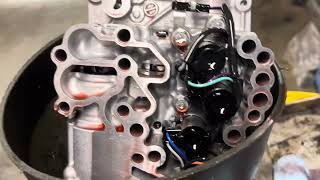
With the pan off, inspect the internal transmission harness for brittle, heat-damaged wiring. Examine the valve body for excessive wear, scoring, or metal debris causing valves to stick.
Tools: Flashlight, Socket Set (Professional)
When This Code Triggers (Freeze-Frame Conditions)
- Engine Coolant Temp: 180-200°F (Fully warmed up during normal operation.)
- Engine RPM: 1500-2500 RPM (During a commanded gear shift under light to moderate acceleration.)
- Engine Load: 30-60% (Steady cruise or gentle acceleration when a shift is expected.)
- Vehicle Speed: 35-55 mph (Triggered during highway driving when shifting between higher gears.)
Related Codes
- P0979 — Indicates 'Shift Solenoid 'C' Control Circuit Low,' a specific electrical fault (usually a short to ground). Unlike P0978, which includes mechanical faults, P0979 points directly to wiring or solenoid electrical failure.
- P0980 — Indicates 'Shift Solenoid 'C' Control Circuit High,' a specific electrical fault (open circuit or short to power). This is purely electrical, whereas P0978 triggers from performance issues like sticking valves.
- P0975 — Indicates 'Shift Solenoid 'B' Control Circuit Range/Performance.' Seeing multiple solenoid codes together strongly suggests a systemic issue like a software problem, bad main connector, or failing TCM.
- P0700 — A generic transmission fault code indicating the TCM stored a specific fault. It always appears alongside specific codes like P0978 and requires scanning the TCM directly.
Climate & Environmental Factors
- High Humidity / Water Ingress: High humidity or driving through deep water forces moisture into exposed main harness connectors. This causes temporary shorts or pin corrosion, triggering intermittent P0978 codes during weather changes.
- Extreme Cold: Extreme cold thickens transmission fluid, slowing the mechanical action of the solenoid's internal valve. The TCM logs a 'Range/Performance' fault because the shift fails to occur within the expected timeframe.
How to Clear the Code After You Fix It
- Use an OBD-II scan tool to clear the P0978 code.
- Perform a transmission relearn procedure if specified by the manufacturer using a bi-directional scan tool.
- Complete a full drive cycle to allow the TCM to adapt and run readiness monitors.
Drive cycle (~30 minutes): Start the engine cold and idle for 3 minutes. Drive in stop-and-go city traffic for 15 minutes, including several complete stops. Drive at a steady highway speed (55-65 mph) for 15 minutes. Allow the vehicle to cool down completely.
Readiness monitors affected: Comprehensive Component Monitor, Catalyst Monitor, Evaporative System Monitor
Before emissions retest: drive at least 100 miles to fully set monitors.
Watch out for:
- Disconnecting the battery fails to clear the code from the TCM and resets all readiness monitors, guaranteeing an emissions test failure.
- The code returns immediately if the underlying electrical or mechanical fault remains unrepaired.
- Skipping the manufacturer-specific transmission adaptive learning reset after replacing parts causes continued poor shifting.
Will This Fail Emissions / State Inspection?
Yes — this code typically fails an OBD-II emissions inspection.
- California: An illuminated Check Engine Light causes an automatic smog check failure. Clearing the code sets monitors to 'Not Ready', requiring a 50-100 mile drive cycle before re-testing.
- New York: The NYS vehicle inspection includes an OBD-II scan. An active P0978 code and illuminated MIL causes an automatic failure.
- Texas: In emissions-testing counties (Harris, Dallas, Tarrant), an illuminated Check Engine Light is an automatic failure. Drive 50-100 miles after repair to reset readiness monitors.
Most Commonly Affected Vehicles
- Chrysler 200 (2015-2017) — Equipped with the ZF 9-speed transmission, highly prone to P0978 due to TCM software issues. TSB 21-019-17 REV. A is the primary fix.
- Jeep Cherokee (2014-2018) — Uses the ZF 9-speed transmission and frequently experiences this code due to software glitches. A TCM flash is the most common fix.
- Ram ProMaster City (2015-2021) — Shares the problematic ZF 9-speed transmission. Susceptible to software issues and wiring harness problems.
- Honda Accord, Odyssey, Pilot (2003-2013) — Experiences this code due to failing individual shift solenoids. Solenoids are mounted externally on the transmission case, making them easier to replace. Resistance should be 12-25 Ohms.
- Subaru Crosstrek, Impreza, Outback, Forester (2012-2018) — CVT transmissions set solenoid codes requiring full valve body replacement. Subaru extended the CVT warranty on many models to 10 years/100,000 miles.
- Ford Fusion, Focus, Escape (2007-2014) — Experiences P0978 due to failed shift solenoids or valve body issues. A fluid and filter change is the recommended first step.
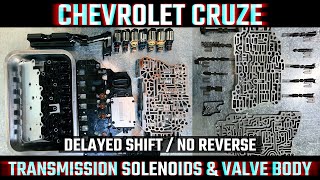
- Chevrolet Silverado, Cruze, Malibu, Equinox (2008-2019) — Triggered by a faulty solenoid, bad connection at the round transmission connector, or failing TCM. Internal harness failure is a known issue on 6T40/6T45 6-speed automatics.
- Hyundai Sonata, Tucson, Elantra (2011-2022) — Sets P0978 due to a failed solenoid within the valve body or degrading internal transmission temperature sensor/harness assemblies.
- Volkswagen Jetta, Golf, Passat (2005-2018) — The 09G 6-speed automatic transmission suffers from solenoids sticking due to fluid contamination. Solenoid replacement is a common repair.
- Land Rover Range Rover Evoque (2012-2015) — Uses the ZF 9-speed transmission and is susceptible to the same software and solenoid failures as Chrysler/Jeep models.
Manufacturer-Specific Notes
- Chrysler/Jeep/Ram (with ZF 9-Speed): The most common cause is outdated software, not a bad part. Always check for TSBs (like 21-019-17 REV. A) with a dealer before replacing hardware. Multiple solenoid codes appearing together guarantee a software issue.
- Subaru (with CVT): Subaru's official repair procedure requires replacing the entire expensive valve body assembly rather than individual solenoids. Always check for coverage under Subaru's 10-year/100,000-mile CVT warranty extension program.
- Honda: On older models, shift solenoids bolt to the outside of the transmission case. This makes them significantly easier and cheaper to access, test, and replace compared to internal solenoids.
- Volkswagen/Audi (with 09G): The 09G transmission features solenoids that become sticky as fluid breaks down after 80,000 miles. Cleaning or replacing the solenoids and flushing the fluid resolves the performance codes.
Frequently Asked Questions
How much does it cost to fix code P0978?
Costs range from $150 for a software update to over $2,000 for a valve body replacement. Replacing a single external shift solenoid typically costs $200-$500. Always diagnose before replacing parts to avoid unnecessary expenses.
What is the most common misdiagnosis for P0978?
The most common mistake on modern vehicles is replacing the shift solenoid or valve body when the actual problem is outdated software. Always check for Technical Service Bulletins (TSBs) regarding a TCM update before replacing hardware. A simple flash often resolves the issue permanently.
Can I fix P0978 myself?
You can DIY this fix if the issue is an externally mounted solenoid (common on older Hondas) or a visible wiring fault. However, most fixes involve dropping the transmission pan or require specialized dealership tools for software updates. Stop DIY and consult a professional if the external wiring and fluid check out fine.
What's the difference between a 'Range/Performance' code and a 'Circuit Low/High' code?
A 'Range/Performance' code (P0978) means the TCM sees an unexpected electrical reading or a slow mechanical response, often caused by a sticky valve. 'Circuit Low' (P0979) or 'Circuit High' (P0980) codes indicate purely electrical problems. Low/High codes point to direct shorts or open circuits, while Range/Performance codes can be mechanical.
What happens if I don't fix P0978?
Ignoring P0978 causes progressively worse shifting and forces the vehicle into limp mode. The resulting harsh engagement and incorrect hydraulic pressures accelerate wear on internal clutches and bands. This ultimately leads to catastrophic transmission failure and a $3,000+ rebuild.
Will changing the transmission fluid fix a P0978 code?
A fluid change rarely fixes a hard electrical circuit fault. However, if dirty fluid caused the solenoid to stick mechanically, fresh fluid might resolve the 'Range/Performance' code. It is a smart first step if the fluid is burnt or past its service interval.
Is Shift Solenoid 'C' the same in every car?
No, the 'C' designation simply refers to the solenoid's position in the circuit sequence defined by the specific manufacturer. Its actual function, location, and resistance specifications vary drastically between vehicle makes and transmission models. Always consult a vehicle-specific service manual.
Can a bad battery cause code P0978?
Yes, a weak battery or failing alternator causes low voltage throughout the vehicle's electrical system. The TCM interprets this voltage drop in the solenoid circuit as a performance fault, triggering P0978. Always verify your battery rests at 12.6V and charges at 13.5V-14.5V before diagnosing transmission circuits.
Key Takeaways
- Code P0978 indicates the Transmission Control Module (TCM) detected an electrical or mechanical fault in the 'C' shift solenoid circuit, often causing the vehicle to lock into 2nd or 3rd gear.
- For 2014-2018 Chrysler, Jeep, and Ram vehicles with 9-speed transmissions, check for TCM software updates via Technical Service Bulletins (TSBs) before spending $800+ on hardware repairs.
- Test the solenoid's resistance using a digital multimeter; a healthy solenoid typically reads between 5 and 25 Ohms depending on the manufacturer, while an infinite reading confirms a dead coil.
- Limit driving to a maximum of 5-10 miles to reach a repair shop, as continued harsh shifting will destroy internal clutch packs and force a $3,000+ transmission rebuild.
Helpful Videos
Shop the Parts Behind P0978
Below are the parts most often responsible for code P0978, ranked by how frequently each one is the actual culprit (per the diagnosis above). Tap any to see what we have for your vehicle.




The information in this article is provided for general reference and educational purposes only. Vehicle specifications, procedures, and part compatibility can vary by production date, trim level, and region. Always consult your vehicle's factory service manual and verify part numbers before purchasing or performing repairs. Safety-critical components such as airbags, seat belts, and braking systems should be installed by a qualified professional.
- 🎬 Helpful Videos
- 🛍️ Shop This Part
- What Does P0978 Mean?
- Can I Drive With P0978?
- Common Causes
- Symptoms
- Common Fixes & Costs
- DIY vs Professional
- Used vs. New Parts: Buying Guide
- Cost of Not Fixing It
- Diagnosis Steps
- When This Code Triggers (Freeze-Frame Conditions)
- Related Codes
- Climate & Environmental Factors
- How to Clear the Code After You Fix It
- Will This Fail Emissions / State Inspection?
- Most Commonly Affected Vehicles
- Manufacturer-Specific Notes
- Frequently Asked Questions
- How much does it cost to fix code P0978?
- What is the most common misdiagnosis for P0978?
- Can I fix P0978 myself?
- What's the difference between a 'Range/Performance' code and a 'Circuit Low/High' code?
- What happens if I don't fix P0978?
- Will changing the transmission fluid fix a P0978 code?
- Is Shift Solenoid 'C' the same in every car?
- Can a bad battery cause code P0978?
- Key Takeaways
- 🎟️ Get 5% Off