

OBD-II Code P0983: Shift Solenoid 'D' Control Circuit High
What P0983 means, why it triggers, and how to fix it
- Code P0983 indicates an open circuit or high voltage in the control wiring for Shift Solenoid 'D', preventing proper gear shifts.
- Damaged external wiring harnesses and failed solenoids cause over 80% of P0983 codes, while Transmission Control Module (TCM) failures are extremely rare.
- Drivers will immediately experience a Check Engine Light, harsh shifting, and the vehicle locking into 'limp mode' (usually 2nd or 3rd gear).
- Stop driving immediately; operating a vehicle in limp mode overheats the transmission fluid, turning a $250 wiring repair into a $3,500 complete transmission rebuild.
What Does P0983 Mean?

Your car's Transmission Control Module (TCM) detected a problem with Shift Solenoid 'D'. This solenoid acts as an electronic gate controlling transmission fluid flow to shift gears. The 'Circuit High' message means the computer sees excessive voltage in this specific circuit. This is caused by an electrical break (open circuit) in the wire or a short to a power source.
Technical definition: The SAE/OBD-II definition is Shift Solenoid 'D' Control Circuit High. The Transmission Control Module (TCM) detects voltage in the 'D' shift solenoid control circuit above the expected range. This fault points directly to an open circuit in the solenoid's wiring, a broken solenoid coil, or a short to power. When the TCM commands the circuit closed, it expects a voltage drop; remaining high signifies an open circuit.
Can I Drive With P0983?
No — Do Not Drive. Driving is not recommended. The vehicle enters 'limp mode,' locking it into a single gear, resulting in poor acceleration and high engine RPMs at moderate speeds. Continuing to drive causes the transmission fluid to overheat, leading to accelerated wear on clutches and internal components. This quickly turns a $250 wiring repair into a complete transmission rebuild costing $3,500 or more.
Common Causes

- Damaged wiring or bad electrical connectors (Very Common) — The transmission wiring harness is exposed to heat, vibration, and road debris. Wires chafe or break, and connectors corrode or fill with moisture, causing an open circuit.
- Failed Shift Solenoid 'D' (Common) — The electronic coil inside the solenoid develops an open circuit (break). This failure is often intermittent, occurring only when the transmission reaches operating temperature.
- Poor ground connection (Less Common) — A corroded or loose ground strap for the transmission or TCM creates a floating ground, interpreted by the computer as a high voltage reading in the solenoid circuit.
- Internal transmission failure (Rare) — Mechanical failure inside the transmission generates excessive metallic debris, which travels through the fluid and shorts out or damages the solenoid and its internal wiring.
- Faulty Transmission Control Module (TCM) (Very Rare) — A faulty driver circuit within the TCM incorrectly reports a high voltage condition. Consider this only after exhaustively ruling out wiring and solenoid failures.
Symptoms

- Check Engine Light is on — An illuminated Check Engine Light is the primary indicator. Hondas may also display a flashing 'D' on the dashboard.
- Transmission stuck in 'limp mode' — The vehicle enters a fail-safe mode, locking into a single gear (usually 2nd or 3rd) to prevent damage, resulting in high RPMs at higher speeds.
- Harsh, delayed, or erratic shifting — The transmission shifts roughly, hesitates, or slams into gear.
- Decreased fuel economy — Operating in the wrong gear forces the engine to work harder, consuming significantly more fuel.
- Inability to shift into higher gears (also visible on scanner) — The car accelerates normally but refuses to shift into overdrive or top gears (e.g., 5th and 6th on Toyota Tundras).
Diagnostic Flowchart
Tap your situation to follow the diagnostic path that matches what you're seeing on this code.
Common Fixes & Costs
- Repairing damaged wiring or cleaning connectors — Parts: $10-$50, Labor: $150-$300, ~1.5 hr book time (Intermediate)
- Replacing a single Shift Solenoid 'D'
— Parts: $40-$350, Labor: $200-$500, ~2.5 hr book time
(Intermediate)
Toyota Tundra/Sequoia (S4 Solenoid): OEM 35240-50050
Honda Accord/CR-V (Shift Solenoid Set D): OEM 28015-R90-308 - Replacing the transmission solenoid pack or lead frame
— Parts: $150-$400, Labor: $300-$600, ~4.5 hr book time
(Professional)
Ford F-150 (6R80 Molded Lead Frame): OEM AL3Z-7G276-D - Replacing the Transmission Control Module (TCM) — Parts: $400-$1000, Labor: $150-$300, ~1.5 hr book time (Professional)
Used vs. New Parts: Buying Guide
When a used part is worth it: For a simple, externally accessible solenoid on a high-mileage vehicle, a used part from a reputable salvage yard is cost-effective. It is not recommended for internal parts like lead frames.
Donor-vehicle mileage cap: roughly under 100000 miles for the part to have meaningful remaining life.
Donor quality checklist:
- Verify the donor vehicle was not scrapped due to transmission failure.
- Match the part number exactly; visual matches are not sufficient.
- Prefer sellers offering at least a 30-90 day warranty.
Decision logic:
- If The part is a complex assembly like a lead frame or valve body → Buy new (OEM or quality aftermarket). The risk of a used part failing is too high given the extensive labor to install it.
- If Vehicle is older (>150k miles) and the budget is very tight → A used individual solenoid is acceptable, but understand it has a limited lifespan.
- If The part is a known high-failure item (e.g., Ford 6R80 lead frame) → Buy a new, updated OEM part to avoid a repeat failure.
Warranty tradeoff: Used parts carry a 30-90 day part-only warranty, leaving you responsible for labor if it fails. New OEM parts offer the best guarantee, especially when installed by a dealer.
Worst-case if a used part fails: $500-$1200 if a used internal part fails after the warranty period, requiring you to pay for parts and labor twice.
What Happens If You Wait — Timeline
- 0-1 month: Check Engine Light illuminates. Vehicle enters 'limp mode,' locking in one gear. Shifting becomes harsh or fails completely for certain gears. (MPG impact: 5-15%% · Added cost: $0-50 in wasted fuel. The problem is still a simple electrical fix.)
- 1-3 months: Continued operation with high RPMs and harsh shifts causes the transmission fluid to overheat and degrade, reducing its ability to lubricate internal components. (MPG impact: 10-20%% · Added cost: $200-$500. The fluid is burnt, requiring a full flush. Thermal stress causes other solenoids to fail.)
- 3-6 months: Accelerated wear on transmission clutch packs begins. Degraded fluid allows clutches to slip and burn, shedding friction material into the fluid. (MPG impact: 15-25%% · Added cost: $800-$1,500. The original electrical issue causes secondary mechanical damage, requiring valve body cleaning or replacement.)
- 6+ months: Catastrophic internal failure. Clutch debris clogs the filter, starves the pump, and jams the valve body, leading to complete loss of movement. (MPG impact: N/A (Vehicle undrivable)% · Added cost: $3,500-$7,000+. The transmission requires a complete rebuild or replacement.)
Cost of Not Fixing It
- 0-1 month: Erratic shifting, vehicle stuck in 'limp mode,' and a 5-15% drop in fuel economy due to operating in the wrong gear. (Added cost: Negligible, besides fuel cost.)
- 1-6 months: Harsh shifting and high RPM operation causes transmission fluid to overheat and break down, accelerating wear on clutch packs and internal seals. (Added cost: $250-$600)
- 6+ months: Catastrophic internal transmission damage. Worn clutches shed material, clogging the valve body and oil pump, requiring a complete rebuild. (Added cost: $3,500 - $7,000+)
Diagnosis Steps

- Scan for All Codes
Use an OBD-II scanner to confirm P0983 and check for related codes. Codes for other solenoids (P0750-P0774) point toward a broader electrical issue rather than a single failed solenoid.
Tools: OBD-II Scanner (Beginner) - Inspect the Wiring and Connectors
Perform a visual inspection of the wiring harness running to the transmission. Look for chafing, melting, or broken wires. Unplug the main transmission connector and check for bent or corroded pins.
Tools: Flashlight, Mirror (Intermediate) - Test the Solenoid Circuit for Continuity
Disconnect the TCM and transmission connectors. Check for continuity on the wire for Solenoid 'D' between the TCM and transmission connector. A reading of 'OL' (Open Line) indicates a broken wire requiring repair.
Tools: Digital Multimeter, Vehicle Wiring Diagram (Advanced) - Test the Solenoid's Internal Resistance
Drop the transmission pan to access the solenoid connector. Measure the resistance across the solenoid's pins. A reading of infinite resistance ('OL') confirms the solenoid coil is broken and the part must be replaced.
Tools: Digital Multimeter, Socket Set, Drain Pan, Vehicle Service Manual (Advanced) - Perform Bi-Directional Control Test
Using a professional scan tool, access the TCM functions and perform an 'Active Test' on Shift Solenoid 'D'. Command the solenoid on and off while listening for an audible click. No click confirms a circuit or solenoid failure.
Tools: Advanced Bi-Directional Scan Tool (Advanced) - Perform a 'Wiggle Test'
Set your multimeter to measure resistance on the circuit. Gently wiggle the wiring harness at various points between the TCM and the transmission. A sudden jump to 'OL' indicates the exact location of an intermittent break.
Tools: Digital Multimeter or Scan Tool (Advanced) - Check the Ground Circuit
Perform a voltage drop test on the transmission ground strap. Connect the positive lead to the transmission case and the negative lead to the negative battery terminal. With the engine running, the reading must be less than 0.1 volts (100mV).
Tools: Digital Multimeter (Advanced) - Check the Transmission Fluid
Check the transmission fluid level and condition. While fluid does not directly cause a 'Circuit High' electrical fault, dark or burnt fluid indicates secondary mechanical damage requiring attention.
Tools: Rag or paper towel (Beginner)
When This Code Triggers (Freeze-Frame Conditions)
- Engine Coolant Temp: 180-200°F (82-93°C) (The code sets when the engine and transmission are fully warmed up. Intermittent solenoid failures occur at operating temperature.)
- RPM: 1500-2500 RPM (Occurs during cruise or steady throttle application when the transmission attempts to shift into a higher gear.)
- Engine Load: 20-50% (Happens under moderate load as the TCM actively commands a shift.)
- Vehicle Speed: 40-60 mph (The fault occurs at highway speeds when the transmission engages overdrive gears controlled by Solenoid 'D'.)
Related Codes
- P0982 — The direct opposite code: 'Shift Solenoid 'D' Control Circuit Low.' P0983 (High) means an open circuit. P0982 (Low) points to a short to ground or a failed driver in the TCM.
- P0981 — 'Shift Solenoid 'D' Control Circuit Range/Performance.' Sets when the circuit's voltage is abnormal but not stuck high or low. Points to an intermittent wiring issue or a failing solenoid with out-of-spec resistance.
- P0700 — 'Transmission Control System Malfunction.' A generic informational code set by the Engine Control Module (ECM) indicating the TCM stored a fault code. It always appears alongside a specific code like P0983.
- P0750 - P0774 — Relates to other shift solenoids. Multiple solenoid codes at once indicate a widespread issue like a bad main connector, faulty ground, or failing TCM, rather than multiple individual solenoid failures.
Climate & Environmental Factors
- Cold Climates / Road Salt: Road salt and moisture corrode transmission connectors, causing open circuits (P0983) or short circuits. This is a leading cause of wiring failures in the 'salt belt'.
- High Heat: High ambient temperatures or heavy towing increase transmission operating temperatures. The solenoid coil develops an intermittent open circuit when hot, triggering the code after extended driving.
- High Humidity: High humidity accelerates corrosion in electrical connectors that are not perfectly sealed, increasing the chance of a circuit fault over time.
How to Talk to a Mechanic About This Code
Say this: "I have an OBD-II code P0983 for the 'Shift Solenoid D Control Circuit High' and I'm experiencing harsh shifting. I'd like to schedule a diagnostic appointment. Please test the solenoid's wiring harness and connectors for an open circuit before replacing the solenoid."
This signals to the shop that you understand P0983 points to a circuit problem, not just a bad part. It encourages a thorough diagnosis to find the root cause (e.g., a broken wire) instead of immediately replacing an expensive solenoid.
Avoid saying:
- My check engine light is on.
- My transmission is acting weird, can you fix it?
- Just replace the 'D' solenoid.
Questions to ask before authorizing the repair:
- Did you find the fault in the wiring, the connector, or the solenoid itself?
- What were the resistance (ohms) readings for the solenoid?
- Can you show me the damaged wire or corroded connector pin?
- What is the cost difference between an OEM part and a reliable aftermarket part for this repair?
- What is the warranty on the parts and labor for this specific repair?
Where to Take It: Dealer vs Independent vs Chain
- Dealer:
Recommended only if the vehicle is under warranty or has a known recall. Otherwise, an independent shop is more cost-effective.
Best for: Vehicles under warranty, Known manufacturer-specific issues covered by a recall or TSB (like the Ford lead frame problem), Complex repairs requiring TCM programming
Downsides: Highest labor rates and parts costs., Defaults to replacing a larger, more expensive assembly (like a full valve body) when a single part failed. (Typical cost: +40% vs. baseline) - Independent Shop:
Best choice for most out-of-warranty vehicles. A good independent transmission specialist diagnoses and repairs a P0983 code correctly and affordably.
Best for: Out-of-warranty vehicles where cost is a factor., Diagnosing and repairing common electrical faults and component replacements.
Downsides: Quality and expertise vary widely. Look for shops specializing in transmissions with ASE-certified technicians., Lacks the latest dealer-specific programming tools for very new models. (Typical cost: +0% vs. baseline) - Chain Shop:
Not recommended. The risk of misdiagnosis or being sold an unnecessary and expensive repair is high for a specific electrical code like P0983.
Best for: Simple maintenance like oil changes and brake jobs.
Downsides: Technicians lack specialized diagnostic training for complex transmission electrical issues., High pressure to upsell, leading to recommendations for a full transmission replacement when a smaller repair suffices. (Typical cost: -10% vs. baseline)
When to Walk Away From the Repair
If the estimated repair cost exceeds 50% of the car's current private-party market value, seriously consider selling or trading in the vehicle.
- Car worth $8000, fix is $850: Fix it. The repair cost is well below the 50% threshold and restores significant vehicle function.
- Car worth $4000, fix is $1300: Borderline. This is a significant percentage of the car's value. Get a second opinion to confirm the diagnosis and cost before proceeding.
- Car worth $2500, fix is $3500: Walk away. The repair cost far exceeds the vehicle's value. A shop quoting a full transmission rebuild for this code should be questioned.
What Scan Tool You Need for This Code
Minimum: A code reader that reads and clears transmission-specific DTCs (not just engine codes).
A basic $20 reader only shows the P0983 code. It cannot perform active tests to command the solenoid on and off, a critical step in differentiating a wiring problem from a failed solenoid without disassembling the transmission.
Budget: XTool A30M (~$90) — Offers full system diagnostics and bi-directional control, allowing you to perform an active test on the shift solenoids to listen for a click.
Mid-range: Foxwell NT716 / Autel MaxiCOM MK808 (~$250-450) — Provides robust bi-directional control for active tests, live data graphing to monitor circuit voltage, and access to manufacturer-specific codes and data.
Professional: Autel MaxiSys Series / Launch X431 Series (~$900-2000+) — Provides full OEM-level diagnostics, including advanced coding and programming necessary after replacing a lead frame or TCM on certain vehicles.
Rent vs buy: Auto parts stores offer free loaner tools that read transmission codes, but they lack bi-directional capabilities. If you plan to DIY the diagnosis, purchasing a budget bi-directional scanner like the XTool A30M is a worthwhile investment.
How to Clear the Code After You Fix It
- Use an OBD-II scan tool to clear the diagnostic trouble codes (DTCs).
- Perform a transmission drive cycle to allow the onboard diagnostics to re-run tests and confirm the repair.
- Check for pending or confirmed codes after the drive cycle to ensure P0983 does not return.
Drive cycle (~30 minutes): Start the vehicle cold and idle for a few minutes. Perform mixed city driving (stops and starts, 25-40 mph) for 15 minutes. Drive at a steady highway speed (55-60 mph) for 5-10 minutes before cooling down.
Readiness monitors affected: Comprehensive Component Monitor (CCM), Transmission
Before emissions retest: drive at least 50 miles to fully set monitors.
Watch out for:
- Disconnecting the battery clears the code but resets all readiness monitors, causing an automatic emissions test failure.
- The code returns immediately if the underlying electrical fault (broken wire, bad solenoid) is not fixed.
- Failing to perform a complete drive cycle leaves the transmission monitor in a 'not ready' state.
Will This Fail Emissions / State Inspection?
Yes — this code typically fails an OBD-II emissions inspection.
- California: An active P0983 code is an automatic failure for a smog check. All readiness monitors must be 'complete' before passing.
- New York: The NYS DMV inspection includes an OBD-II scan. A transmission-related code like P0983 causes an automatic emissions failure.
- Texas: In the 17 counties requiring emissions testing, an active Check Engine Light and P0983 result in an automatic failure of the OBD-II test.
Most Commonly Affected Vehicles

- Honda CR-V, Civic, Pilot, Accord (2011-2022) — Caused by an open circuit in the wiring harness. A flashing 'D' on the dashboard is the primary symptom.
- Toyota Tundra, Sequoia (2007-2021) — Commonly sets this code due to a failed S4 solenoid (Toyota's Solenoid 'D'), preventing shifts into 5th and 6th gear. The solenoid fails when hot.
- Ford F-150, Transit (2011-2017) — On 6R80 transmissions, this code points to a failure in the molded lead frame. Replacing the entire lead frame assembly is the standard repair.
- Hyundai Genesis (2009-2014) — P0983 corresponds to Shift Control Solenoid Valve 'D' (S4) circuit high, causing the transmission to fix in 4th gear.
- Subaru Outback, Forester (2010-2019) — Subaru does not sell individual solenoids for these CVT transmissions. The repair requires replacing the entire valve body assembly.
- Chevrolet Silverado (2007-2014) — Caused by issues within the TEHCM (Transmission Electro-Hydraulic Control Module) or associated wiring. A professional scan differentiates the two.
- MINI/BMW Various with Aisin Transmissions (2005-2013) — Dealers only sell the entire valve body. Individual solenoids can sometimes be sourced from Volkswagen or Toyota models using the same transmission.
- Lexus IS350, GS350 (2006-2013) — Shares transmission components with Toyota. The code relates to the S4 solenoid and prevents shifting into higher gears.
Manufacturer-Specific Notes
- Honda: P0983 is frequently caused by an open circuit (a break) in the wiring harness leading to the solenoid, rather than a faulty solenoid itself. A flashing 'D' indicator light is the classic symptom.
- Toyota: The dealer identifies 'Shift Solenoid D' as the 'S4 solenoid' in service information for the AB60F transmission. A failed S4 solenoid is the primary cause for losing 5th and 6th gears on Tundras.
- Ford: For the 6R80 transmission, P0983 is caused by a failure in the molded lead frame. Ford issued recall 26S28 in 2024 for 2014-2017 F-150s for sudden downshifts, replacing the lead frame if specific DTCs are present.
- Subaru: Subaru does not sell individual shift solenoids for its automatic and CVT transmissions. If a solenoid fails, the required repair is replacing the entire valve body assembly.
Real Owner Stories
2008 Toyota Tundra with 300k miles
Check Engine Light illuminated, and the transmission refused to shift into 5th or 6th gear. The code was P0983, pointing to the S4 solenoid (Toyota's designation for 'D').
Outcome: Replacing the single S4 solenoid with an $80 aftermarket part fixed the problem, avoiding a $3,500 transmission replacement.
Lesson: For high-mileage Toyota Tundras losing high gears with P0983, directly replacing the S4 solenoid is a highly successful repair, even if cold resistance tests appear normal.
2012 Toyota Tundra misdiagnosis
Check Engine Light, flashing 4-LO, and traction control light illuminated with code P0983. The owner immediately replaced the 'D' solenoid for over $500.
Outcome: The issue was a corroded connector pin, not the solenoid. A bad connection mimics a failed solenoid perfectly to the TCM.
Lesson: Always test the circuit before replacing expensive parts. Replacing a $500 OEM solenoid when the issue is a $10 corroded wire is a costly mistake.
2014 Honda CR-V with flashing 'D' light
The 'D' indicator on the dashboard flashed, accompanied by harsh, erratic shifting and code P0983.
Outcome: Replacing the 'D' solenoid resolved the shifting issues and cleared the code.
Lesson: On Hondas, a flashing 'D' light is the primary symptom for this code. Accessing the solenoid requires removing the transmission side cover, a moderately complex DIY job.
2011-2017 Ford F-150 (6R80 Transmission)
Vehicle suddenly downshifted on the highway and entered limp mode with P0983 stored.
Outcome: Replacing the molded lead frame (Part# AL3Z-7G276-D) corrected the repair. Ford issued warranty extensions and recalls for this exact problem.
Lesson: If you have a Ford 6R80 transmission, the issue is almost always the lead frame. Replacing just one solenoid will fail.
How to Prevent This Code From Triggering
- Regularly change transmission fluid and filter (Every 30,000 to 60,000 miles) — Clean fluid lubricates and cools solenoids effectively. Contaminated fluid causes solenoids to stick, clog, or overheat, leading to electrical failure.
- Use only the manufacturer-specified transmission fluid (Every fluid change) — Incorrect fluid causes improper lubrication and degrades seals within the solenoids, leading to premature failure.
- Maintain the engine's cooling system (Annually) — The engine's radiator cools the transmission fluid. An overheating engine leads to an overheating transmission, the primary cause of solenoid burnout.
- Inspect external wiring harnesses and connectors (During every oil change) — Checking for corrosion and ensuring connectors are secure prevents open circuits caused by moisture or vibration.
Frequently Asked Questions
Can I just clear the P0983 code and keep driving?
You can clear the code, but it returns as soon as the TCM runs its diagnostic test. Ignoring it causes severe, expensive damage to your transmission's internal components.
Is replacing a shift solenoid a DIY job?
Yes, if the solenoid is accessible by simply removing the transmission pan. If accessing the solenoid requires valve body removal, take the vehicle to a transmission specialist. The risk of damaging internal components is too high for beginners.
What are the most common mistakes when diagnosing P0983?
The biggest mistake is immediately replacing the solenoid without testing the wiring first. A broken wire or corroded connector is a very frequent cause.
Will a transmission fluid change fix a P0983 code?
No. A 'Circuit High' code indicates a purely electrical fault (an open wire or failed coil). A fluid change cannot repair a broken wire or a dead solenoid.
My mechanic replaced the solenoid but the code came back. What now?
The problem is in the wiring harness between the solenoid and the TCM, or a bad ground. An intermittent open circuit was missed during initial testing. A 'wiggle test' or pin-to-pin continuity check of the entire circuit is the required next step.
What's the difference between 'Circuit High' (P0983) and 'Circuit Low' (P0982)?
'Circuit High' (P0983) means the circuit is open (broken wire) and the computer sees high voltage because no current flows. 'Circuit Low' (P0982) means the wire is touching a metal ground, causing a short circuit and an abnormal voltage drop.
Can a bad battery or alternator cause a P0983 code?
Unstable vehicle voltage causes electronic modules to behave erratically and set false codes. However, if P0983 is the only code present, the fault lies within the transmission circuit itself.
Key Takeaways
- Code P0983 indicates an open circuit or high voltage in the control wiring for Shift Solenoid 'D', preventing proper gear shifts.
- Damaged external wiring harnesses and failed solenoids cause over 80% of P0983 codes, while Transmission Control Module (TCM) failures are extremely rare.
- Drivers will immediately experience a Check Engine Light, harsh shifting, and the vehicle locking into 'limp mode' (usually 2nd or 3rd gear).
- Stop driving immediately; operating a vehicle in limp mode overheats the transmission fluid, turning a $250 wiring repair into a $3,500 complete transmission rebuild.
Helpful Videos




Shop the Parts Behind P0983
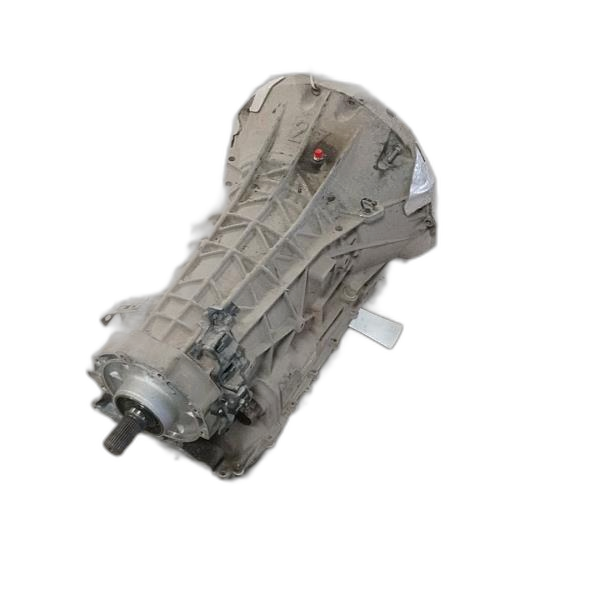
Below are the parts most often responsible for code P0983, ranked by how frequently each one is the actual culprit (per the diagnosis above). Tap any to see what we have for your vehicle.


The information in this article is provided for general reference and educational purposes only. Vehicle specifications, procedures, and part compatibility can vary by production date, trim level, and region. Always consult your vehicle's factory service manual and verify part numbers before purchasing or performing repairs. Safety-critical components such as airbags, seat belts, and braking systems should be installed by a qualified professional.
- 🧭 Diagnostic Flowchart
- 🎬 Helpful Videos
- 🛍️ Shop This Part
- What Does P0983 Mean?
- Can I Drive With P0983?
- Common Causes
- Symptoms
- Common Fixes & Costs
- Used vs. New Parts: Buying Guide
- What Happens If You Wait — Timeline
- Cost of Not Fixing It
- Diagnosis Steps
- When This Code Triggers (Freeze-Frame Conditions)
- Related Codes
- Climate & Environmental Factors
- How to Talk to a Mechanic About This Code
- Where to Take It: Dealer vs Independent vs Chain
- When to Walk Away From the Repair
- What Scan Tool You Need for This Code
- How to Clear the Code After You Fix It
- Will This Fail Emissions / State Inspection?
- Most Commonly Affected Vehicles
- Manufacturer-Specific Notes
- Real Owner Stories
- 2008 Toyota Tundra with 300k miles
- 2012 Toyota Tundra misdiagnosis
- 2014 Honda CR-V with flashing 'D' light
- 2011-2017 Ford F-150 (6R80 Transmission)
- How to Prevent This Code From Triggering
- Frequently Asked Questions
- Can I just clear the P0983 code and keep driving?
- Is replacing a shift solenoid a DIY job?
- What are the most common mistakes when diagnosing P0983?
- Will a transmission fluid change fix a P0983 code?
- My mechanic replaced the solenoid but the code came back. What now?
- What's the difference between 'Circuit High' (P0983) and 'Circuit Low' (P0982)?
- Can a bad battery or alternator cause a P0983 code?
- Key Takeaways
- 🎟️ Get 5% Off