

OBD-II Code P1001: System Check Incomplete / Component Fault
What P1001 means, why it triggers, and how to fix it on your specific vehicle
- P1001 is a manufacturer-specific code, meaning its definition and repair procedure change entirely depending on your vehicle's brand.
- On Ford, Lincoln, and Jaguar vehicles, P1001 is a harmless informational code indicating an incomplete self-test, requiring only a standard 30-minute drive cycle to clear.
- For 2020-2024 Chevrolet Malibus, P1001 is caused by a chafed ECM wiring harness over 90% of the time, requiring a $20 wire splice and protective tape repair.
- Honda V6 engines trigger P1001 when a failing engine oil pressure sensor sends a voltage signal exceeding 4.79V, requiring a $130-$250 sensor replacement.
- On Nissan models, P1001 signals a CAN communication failure frequently resolved by cleaning a corroded negative battery terminal or chassis ground.
What Does P1001 Mean?
P1001 is a manufacturer-specific code, meaning its definition changes entirely depending on your car. For Ford, Lincoln, Mercury, and Jaguar, it means the engine computer hasn't finished routine self-tests after a battery disconnect. On Honda, it points to a failing oil pressure sensor. On Mazda, it signals an electronic throttle control system issue. On GM vehicles, it indicates a specific wiring harness short. For BMWs, it points to a Valvetronic variable valve lift system fault.
Technical definition: Because P1001 is not standardized, its meaning is assigned by the manufacturer. Common definitions include: Ford/Jaguar: Key On Engine Running (KOER) Self-Test Not Completed. Honda: Engine Oil Pressure (EOP) Sensor Circuit High Voltage. Mazda: Electronic Throttle Control System Malfunction. GM: ECM wiring harness chafing causing communication faults. BMW: Valvetronic (VVT) Limp Home Request High Input. Nissan: CAN Communication Circuit Fault.
Can I Drive With P1001?
Yes, But With Caution. On Ford, Jaguar, and Lincoln vehicles, this code is informational and driving is perfectly safe. On Honda, GM, or Mazda, it signals a fault requiring prompt attention to prevent performance issues. On Nissan or BMW models, the vehicle enters a 'limp mode' with severely limited power. Driving in limp mode for extended periods damages the catalytic converter from unburnt fuel, adding $800-$2500 to repair costs.
Common Causes
- Diagnostic self-tests not completed (Ford, Lincoln, Mercury, Jaguar) (Very Common) — This occurs after a battery disconnect or clearing codes. It is not a fault, but indicates the engine computer hasn't finished running its Key-On-Engine-Running (KOER) self-checks.
- Chafed or Damaged Wiring Harness (GM) (Very Common) — On 2020-2024 Chevrolet Malibus, the engine control module (ECM) wiring harness rubs against a metal bracket near the battery, severing wires and causing communication errors (TSB #21-NA-186).
- Faulty Engine Oil Pressure Sensor or Switch (Honda, Acura) (Common) — On Honda V6 engines, a failing oil pressure sensor sends an incorrect high voltage signal to the computer. The fault triggers when signal voltage exceeds 4.79V.
- Corroded or Loose Battery Terminals/Grounds (Nissan) (Common) — A corroded negative battery terminal or a loose chassis ground strap disrupts CAN bus communication between modules, triggering this fault on Nissan vehicles.
- Valvetronic (VVT) System Fault (BMW) (Less Common) — Indicates a 'Limp Home Request' from the Valvetronic system due to high input voltage. This is caused by a failing Valvetronic motor, eccentric shaft sensor, or oil leaking into the sensor connector.
- Failing Electronic Throttle Body (Mazda) (Less Common) — Indicates a mechanical or electrical malfunction within the electronic throttle control system, directly affecting acceleration and idle speed.
- Secondary Air Injection System Fault (Subaru) (Less Common) — On turbocharged Subarus, moisture and corrosion cause the secondary air injection pump or valves to seize, triggering P1001.
- Low Battery Voltage or Charging System Problem (Less Common) — Low system voltage from a weak battery or faulty alternator prevents diagnostic self-tests from completing successfully.
- Faulty Powertrain Control Module (PCM) (Rare) — The PCM itself fails or experiences programming glitches, preventing it from completing self-diagnostic routines. This is always accompanied by specific module-related error codes.
Symptoms
- Check Engine Light is On — The universal symptom across all vehicle makes for this code.
- No Noticeable Symptoms — For Ford and Jaguar vehicles, this is an informational code and vehicle performance remains completely normal.
- Poor Acceleration, Rough Idle, or 'Limp Mode' — On BMW, Mazda, or Nissan vehicles, the engine suffers reduced power, slow throttle response, fluctuating idle, or enters a forced 'limp home' mode.
- Erratic or Inoperative Fuel Gauge (Chevrolet Malibu) — On 2020-2024 Chevrolet Malibus, the wiring short that causes P1001 also severs the fuel level sensor circuit, dropping the fuel gauge to empty.
- Oil Pressure Warning Light On or Erratic Gauge — For Honda vehicles, the faulty sensor triggers the red oil pressure warning light or causes the dashboard gauge to read incorrectly.
- Freeze Frame Data Shows High Sensor Voltage (scan-tool only — no driver-felt sign) — For a Honda P1001, freeze frame data shows the Engine Oil Pressure (EOP) sensor voltage exceeding 4.8V.
- CAN Bus Communication Errors Logged (scan-tool only — no driver-felt sign) — On GM or Nissan vehicles, a scan tool reveals 'U' codes (e.g., U0076) stored alongside P1001, confirming a network communication failure.
Common Fixes & Costs
- Complete an OBD-II Drive Cycle (Ford, Jaguar) — Parts: $0, Labor: $0, ~0.1 hr book time (DIY)
- Repair and Protect ECM Wiring Harness (GM)
— Parts: $5-$25, Labor: $150-$300, ~1.5 hr book time
(Intermediate)
Chevrolet Malibu (2020-2024): OEM - Replace Engine Oil Pressure Sensor (Honda)
— Parts: $20-$150, Labor: $80-$175, ~0.8 hr book time
(Intermediate)
Honda Accord/Odyssey/Pilot (V6): OEM - Clean or Replace Battery Terminals/Grounds (Nissan)
— Parts: $1-$120, Labor: $0-$100, ~0.5 hr book time
(DIY)
Nissan Altima (2005-2012): OEM - Replace Electronic Throttle Body (Mazda)
— Parts: $200-$500, Labor: $150-$250, ~1.2 hr book time
(Professional)
Mazda 3/6 (2006-2013): OEM - Replace Valvetronic Actuator Motor (BMW)
— Parts: $250-$600, Labor: $400-$800, ~3.5 hr book time
(Professional)
BMW 3 Series/X3/X5 (N52 Engine): OEM
Used vs. New Parts: Buying Guide
When a used part is worth it: For electronic components like throttle bodies (Mazda), a used part from a reputable, low-mileage donor is cost-effective for older vehicles where budget is the primary concern.
Donor-vehicle mileage cap: roughly under 80000 miles for the part to have meaningful remaining life.
Donor quality checklist:
- Verify the part number matches exactly, as electronic components are not interchangeable between model years.
- Choose sellers offering a 30-90 day warranty to protect against dead-on-arrival parts.
- Avoid parts from rust-belt states if corrosion is a known failure mode.
Decision logic:
- If The part is a simple sensor and a new OEM version is under $100 → Buy new for the warranty. The savings on a used part are minimal.
- If The part is a complex assembly like a throttle body and the vehicle is over 10 years old → A used part saves significant money, but carries the risk of a shorter lifespan.
- If The vehicle is under warranty or the part is covered by a special extension (BMW SULEV) → Always use a new, genuine part to ensure coverage.
Warranty tradeoff: Used parts include a 30-90 day functional warranty. New aftermarket parts offer 1-year to limited lifetime warranties. New OEM parts carry the manufacturer's 1-2 year warranty.
Worst-case if a used part fails: $200-$800 if a used electronic part fails, requiring you to pay labor a second time plus the cost of another replacement part.
Cost of Not Fixing It
- Informational Code (Ford/Jaguar): No negative consequences. The only impact is the inability to pass an emissions test until the drive cycle is complete. (Added cost: $0)
- 0-1 Month (Fault Codes): For Honda, driving with a faulty oil pressure sensor disables the warning system. For BMW/Mazda, expect persistent 'limp mode' and poor drivability. For GM, the erratic fuel gauge is a constant annoyance. (Added cost: $0)
- 1-6 Months (Fault Codes): Ignoring a true low oil pressure condition on a Honda causes severe internal engine wear. Driving a BMW in limp mode overheats the catalytic converter from a rich fuel mixture. (Added cost: $1200 - $2500 (for catalytic converter damage))
- 6+ Months (Fault Codes): Catastrophic engine failure occurs on a Honda if a real oil pressure event is ignored. On a GM, severed CAN bus wires cause a no-start condition. On a BMW, continued operation destroys valvetrain components. (Added cost: $3000 - $8000+ (for complete engine replacement))
Diagnosis Steps
- Identify Vehicle Manufacturer
Identify your car's make immediately. This dictates exactly what P1001 means, as the causes and fixes are completely different between brands.
Tools: Owner's Manual (Beginner) - Scan for Additional Codes
Use an OBD-II scanner to check for accompanying codes. P1001 often appears with P1000 on a Ford/Jaguar, oil pressure codes (P0522, P0523) on a Honda, or communication codes (U0076) on a GM or Nissan.
Tools: OBD-II Scanner (Beginner) - For Ford/Jaguar: Perform a Drive Cycle
If you have a Ford or Jaguar and no other codes are present, complete a full OBD-II drive cycle. Drive the car at varying city and highway speeds to allow the computer to run its self-tests. The code clears itself once tests are complete.
Tools: None (Beginner) - For GM (Malibu): Inspect ECM Wiring Harness
On 2020-2024 Malibus, locate the ECM near the battery. Unclip the wiring harness from its plastic bracket and inspect the loom for a shiny, rubbed-through spot on the bottom side. This confirms TSB #21-NA-186.
Tools: Flashlight, Trim Removal Tools (Intermediate) - For Nissan: Perform a Voltage Drop Test on Grounds
Set a multimeter to DC Volts. Place the red lead on the negative battery post and the black lead on the vehicle's chassis. A reading above 0.2 volts proves excessive resistance in the ground circuit, causing the CAN communication fault.
Tools: Multimeter (Intermediate) - For Honda: Test the Oil Pressure Sensor Circuit
With the key on and engine off, disconnect the oil pressure sensor. Check the reference voltage wire at the connector (should be 5V) and the signal wire (should be 0V). If voltages are correct, the sensor itself has failed.
Tools: Multimeter, Service Manual (Intermediate) - For BMW: Actuate and Monitor the Valvetronic System
Use a bidirectional scanner to command a Valvetronic system relearn. Listen for abnormal clicking or binding from the actuator motor. Monitor live data for the eccentric shaft sensor position; erratic jumps confirm sensor failure.
Tools: Advanced OBD-II Scanner (Advanced) - For Mazda: Inspect the Electronic Throttle Body
Remove the intake boot from the throttle body. Visually inspect the throttle plate for heavy carbon buildup. Gently push the plate open to check for mechanical binding within the assembly.
Tools: Screwdriver/Socket Set, Flashlight (Intermediate) - For Nissan: Test CAN Bus Resistance
Disconnect the battery. At the OBD-II port, measure resistance between Pin 6 (CAN High) and Pin 14 (CAN Low). A healthy bus reads 60 Ohms. A reading of 120 Ohms indicates an open circuit or missing terminating resistor.
Tools: Multimeter, OBD-II Pinout Diagram (Advanced) - For Honda: Validate EOP Sensor High Voltage Fault
Monitor the Engine Oil Pressure (EOP) sensor voltage PID with a scan tool. If the voltage is stuck above 4.79V regardless of engine RPM, the sensor has failed internally.
Tools: Advanced OBD-II Scanner (Advanced) - For Mazda: Test Throttle Position Sensor (TPS) Voltage
Back-probe the TPS connector. With the key on, engine off, signal voltage should be 0.6V-0.9V at closed throttle and rise smoothly to 3.5V-4.7V at wide-open throttle. Dead spots indicate a faulty TPS.
Tools: Multimeter, Back-probe Kit, Scan Tool (Advanced)
When This Code Triggers (Freeze-Frame Conditions)
- Engine Coolant Temp: 175-210°F (80-99°C) (The fault typically sets when the engine is fully warmed up and has been running for several minutes.)
- Engine RPM: 700-2500 RPM (Triggers at idle for sensor faults or during steady cruise for communication or actuator faults.)
- Vehicle Speed: 0-65 mph (Faults log when stationary (Honda oil pressure sensor) or at highway speeds (GM CAN bus error).)
- Sensor Voltage (Honda): > 4.8V (For a Honda P1001, the key freeze frame data point is the oil pressure sensor voltage stuck at an abnormally high level.)
Related Codes
- P1000 — P1000 means the general OBD-II drive cycle is incomplete, while P1001 means the specific KOER self-test is incomplete. Drive the vehicle to clear both.
- P0522 / P0523 — P0523 is the generic equivalent for 'Circuit High Voltage.' Seeing P1001 alongside P0523 on a Honda confirms a high voltage fault, triggering when sensor voltage exceeds 4.79V.
- U0076 / U18A2 — These 'U' codes indicate a loss of communication on a specific data bus. On GM vehicles, a chafed wiring harness disrupts these signals, triggering P1001 as a symptom.
- P2110 / P2135 — On a Mazda, P2135 means the throttle sensors disagree. P2110 indicates the ECU forced 'limp mode' because of the fault detected by P1001/P2135.
Climate & Environmental Factors
- Cold Climates / High Humidity: Moisture entering the Subaru Secondary Air Injection system freezes or causes corrosion, seizing the air pump or valves. This is the primary failure mode for this system.
- Regions Using Road Salt (Rust Belt): Road salt accelerates corrosion of electrical ground connections, the primary cause of P1001 CAN communication faults on Nissan vehicles.
- High Ambient Heat / Engine Bay Temperatures: Heat accelerates the breakdown of engine oil, which leaks past seals and contaminates the BMW Valvetronic eccentric shaft sensor electronics, causing signal failure.
How to Clear the Code After You Fix It
- For fault-based codes (Honda, GM, BMW), use an OBD-II scan tool to clear the codes after the repair is complete.
- For informational codes (Ford, Jaguar), clearing is not necessary; completing the drive cycle is the procedure.
- Reconnect the battery if it was disconnected for the repair.
Drive cycle (~30 minutes): A generic drive cycle includes a cold start (vehicle sits for 8+ hours), 2-3 minutes of idling, 10-15 minutes of steady highway driving (55-60 mph), followed by 10-15 minutes of stop-and-go city driving.
Readiness monitors affected: All monitors, Catalyst (CAT), Evaporative System (EVAP), Oxygen (O2) Sensor
Before emissions retest: drive at least 50 miles to fully set monitors.
Watch out for:
- Disconnecting the battery clears the code but resets all readiness monitors to 'Not Ready', guaranteeing an emissions test failure.
- The code returns immediately if the underlying mechanical or electrical fault (bad sensor, chafed wire) is not fixed.
- Failing to maintain a fuel level between 1/4 and 3/4 full prevents EVAP monitors from setting during the drive cycle.
Will This Fail Emissions / State Inspection?
Yes — this code typically fails an OBD-II emissions inspection.
- California: An illuminated Check Engine Light is an automatic failure. Even if the light is off (Ford P1001), the test fails due to incomplete readiness monitors.
- New York: A vehicle automatically fails the NYS inspection if the Check Engine light is on. Clearing the code right before the test results in a failure due to 'Not Ready' monitors.
- Texas: In the 17 counties requiring emissions testing, an illuminated Check Engine Light or an incomplete readiness monitor status causes the vehicle to fail the OBD-II test.
Most Commonly Affected Vehicles
- Ford F-150, Mustang, Explorer (2004-2013) — P1001 appears after battery replacement or clearing codes, indicating the KOER test is incomplete. It is informational only.
- Chevrolet Malibu (2020-2024) — Prone to P1001 due to ECM wiring harness chafing on a bracket, documented in TSB #21-NA-186.
- Honda Accord, Odyssey, Pilot (V6 models) (2008-2012) — Sets P1001 due to intermittent failure of the rocker arm oil pressure switches sending high voltage signals.
- Nissan Altima, Maxima, Titan (2005-2012) — P1001 indicates a CAN communication circuit fault, almost always caused by a corroded negative battery terminal or faulty chassis ground.
- BMW 3 Series, 5 Series, X3, X5 (2006-2017) — Triggers P1001 for a Valvetronic system fault, forcing limp mode. Caused by a failing actuator motor or eccentric shaft sensor.
- Jaguar S-Type, X-Type, XJ (2002-2008) — Informational code seen with P1000. Changes to P1111 once a drive cycle is completed and monitors run without issue.
- Mazda 3, 6 (2006-2013) — Triggered by a mechanical or electrical fault in the electronic throttle control system.
- Subaru WRX, Forester XT, Legacy GT (2006-2014) — Indicates a fault with the secondary air injection system. The air pump or combination valves seize from moisture.
Manufacturer-Specific Notes
- Ford / Lincoln / Mercury / Jaguar: P1001 is an informational code meaning 'KOER Self-Test Not Completed'. It appears after a test abort or memory reset. Complete a drive cycle to clear it.
- General Motors (Chevrolet): TSB #21-NA-186 identifies ECM wiring harness chafing as the cause of P1001 in over 90% of 2020-2024 Malibus.
- Honda / Acura: P1001 is associated with a failing oil pressure sensor on J-series V6 engines, sending a high voltage signal (above 4.79V).
- Nissan: P1001 indicates a CAN communication failure. Always inspect the negative battery terminal and chassis ground for corrosion before diagnosing modules.
- BMW: P1001 is a 'Valvetronic Limp Home Request High Input'. The variable valve lift system has a fault, forcing reduced power. The cause is typically the Valvetronic motor or eccentric shaft sensor.
Frequently Asked Questions
Why did code P1001 appear right after I changed my car battery?
If you drive a Ford, Lincoln, Mercury, or Jaguar, this is completely normal. Disconnecting the battery resets the engine computer's memory, and P1001 simply means it hasn't finished its self-checks yet. The code clears on its own after you complete a drive cycle.
Is P1001 a serious problem?
For a Ford or Jaguar, it is harmless. For a BMW, Honda, or Mazda, it indicates a component failure requiring diagnosis to prevent poor performance or engine damage.
Can I pass an emissions test with code P1001?
No. Even if the code is the harmless Ford/Jaguar version, it indicates that the vehicle's readiness monitors are not set. An emissions testing station will fail the vehicle until a full drive cycle is completed.
I have a P1001 on my Nissan. What should I check first?
Clean the negative battery terminal and the main ground strap connection with a wire brush. A poor ground is the most common cause of this communication code. If cleaning fails, a voltage drop test on the ground circuit should show less than 0.2V.
What is a common misdiagnosis with the P1001 code?
A frequent mistake is replacing an expensive module before checking simple root causes, like quoting a new ECM for a Nissan when the issue is a corroded battery terminal. On GM vehicles, mechanics sometimes replace sensors when the real problem is a chafed wire harness. Always start with the most common, cheapest causes for your specific vehicle.
How do I perform a drive cycle to clear a Ford P1001 code?
A general drive cycle involves a cold start, 15 minutes of stop-and-go city driving, and 15 minutes of steady highway-speed driving (55-60 mph). This allows the computer to complete its tests.
What does P1001 mean on a Chevy Malibu?
On 2020-2024 Chevrolet Malibus, P1001 is almost always caused by the engine control module (ECM) wiring harness rubbing against its metal bracket. This is covered by TSB 21-NA-186. Symptoms include an erratic fuel gauge and the check engine light.
Key Takeaways
- P1001 is a manufacturer-specific code, meaning its definition and repair procedure change entirely depending on your vehicle's brand.
- On Ford, Lincoln, and Jaguar vehicles, P1001 is a harmless informational code indicating an incomplete self-test, requiring only a standard 30-minute drive cycle to clear.
- For 2020-2024 Chevrolet Malibus, P1001 is caused by a chafed ECM wiring harness over 90% of the time, requiring a $20 wire splice and protective tape repair.
- Honda V6 engines trigger P1001 when a failing engine oil pressure sensor sends a voltage signal exceeding 4.79V, requiring a $130-$250 sensor replacement.
- On Nissan models, P1001 signals a CAN communication failure frequently resolved by cleaning a corroded negative battery terminal or chassis ground.
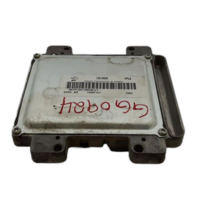
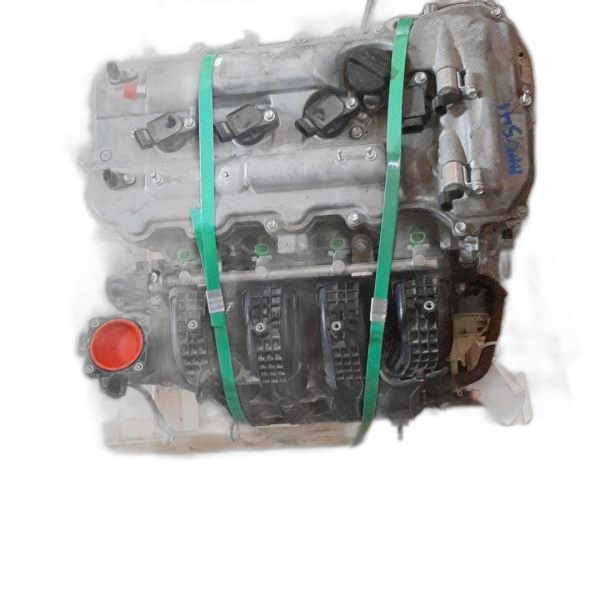
Shop the Parts Behind P1001
Below are the parts most often responsible for code P1001, ranked by how frequently each one is the actual culprit (per the diagnosis above). Tap any to see what we have for your vehicle.




The information in this article is provided for general reference and educational purposes only. Vehicle specifications, procedures, and part compatibility can vary by production date, trim level, and region. Always consult your vehicle's factory service manual and verify part numbers before purchasing or performing repairs. Safety-critical components such as airbags, seat belts, and braking systems should be installed by a qualified professional.
- 🛍️ Shop This Part
- What Does P1001 Mean?
- Can I Drive With P1001?
- Common Causes
- Symptoms
- Common Fixes & Costs
- Used vs. New Parts: Buying Guide
- Cost of Not Fixing It
- Diagnosis Steps
- When This Code Triggers (Freeze-Frame Conditions)
- Related Codes
- Climate & Environmental Factors
- How to Clear the Code After You Fix It
- Will This Fail Emissions / State Inspection?
- Most Commonly Affected Vehicles
- Manufacturer-Specific Notes
- Frequently Asked Questions
- Why did code P1001 appear right after I changed my car battery?
- Is P1001 a serious problem?
- Can I pass an emissions test with code P1001?
- I have a P1001 on my Nissan. What should I check first?
- What is a common misdiagnosis with the P1001 code?
- How do I perform a drive cycle to clear a Ford P1001 code?
- What does P1001 mean on a Chevy Malibu?
- Key Takeaways
- 🎟️ Get 5% Off