

P1004 on 2013-2015 Ram 1500: Short Runner Valve Performance Causes and Fixes
P1004 on a 2013-2015 Ram 1500 most often means the Short Runner Valve (SRV) actuator has failed or the valve flaps are sticking inside the intake manifold. A very common underlying cause is a wiring harness to the actuator that is too short, causing connection failures. The fix is often replacing the SRV actuator (Mopar P/N 53022137AL), the entire intake manifold assembly (Mopar P/N 68194114AC), or repairing the wiring harness. Expect to pay $150-$250 for an actuator or $400-$700 for a full inta
- P1004 on your Ram 1500 means the intake manifold's Short Runner Valve isn't working correctly, which can hurt performance and fuel economy.
- The most likely causes are a failed actuator motor, a short/damaged wiring harness behind the engine, or sticky/bound flaps inside the intake manifold itself.
- Diagnosis can be tricky; it's important to test the wiring and manually check for binding flaps before spending money on parts.
- Often, the most effective long-term fix is to replace the entire intake manifold assembly, which includes all the moving parts.
- This is a challenging DIY repair (4/5 difficulty) due to the location of the components at the back of the engine, requiring removal of the intake manifold.
What's Unique About the 2013-2015 Ram 1500

On this generation of Ram 1500, particularly with the 5.7L HEMI, the P1004 code is a well-documented issue. A primary cause is the wiring harness for the SRV actuator, located at the back of the intake manifold, being too short from the factory. This puts stress on the connector and wires, leading to intermittent electrical connections or outright failure. Forum discussions frequently mention owners chasing this code, sometimes replacing multiple parts before discovering the wiring issue or an internal manifold problem. One owner on RamForum.com noted that after a dealer replaced the actuator, the intake, and the PCM, the problem was finally solved by replacing the wiring and plug going to the actuator. The problem is often triggered by hard acceleration when the valve is commanded to switch states.
Diagnostic Flowchart

Tap your situation to follow the diagnostic path that matches what you're seeing on this vehicle.
Symptoms You May Notice
- Check Engine Light is on
- Noticeable loss of power, especially during hard acceleration or at high RPMs
- Engine hesitation or shuttering under load
- Rough idle or stalling
- Reduced fuel economy
- Audible ticking or clicking sound from the rear of the engine bay
- Replacing only the SRV actuator when the internal flaps of the intake manifold are actually the cause of the binding.
- Replacing the PCM before thoroughly checking the wiring harness for intermittent faults.
- Replacing the intake manifold when the wiring harness connector is the actual point of failure.
Most Likely Causes

- Faulty Short Runner Valve (SRV) Actuator 🔴 High Probability → Shop Engine Intake Manifold The actuator is an electronic motor located in a high-heat area on the back of the intake manifold, making it prone to failure over time. It is often the first part replaced, though it may not be the root cause.
How to confirm: Use a bidirectional scan tool to command the SRV open and closed. If you don't hear the motor actuating or see the position change on the scan tool data, the actuator is likely bad (assuming wiring is good). You can also remove the actuator and apply 12V power and ground directly to its pins 🎬 Watch: A quick guide to testing the SRV actuator. to test its function.
Typical fix: Replace the SRV actuator. This requires partial removal or lifting of the intake manifold to access the actuator on the back. The OEM Mopar part number is 53022137AL (which supersedes several previous part numbers).
Est. part cost: $150 - $250 - Sticking/Binding Valve Flaps Inside Intake Manifold 🟡 Medium Probability → Shop Engine Intake Manifold Carbon and oil buildup from the PCV system can accumulate inside the plastic intake manifold, causing the runner flaps to become sticky or completely seized. The plastic components can also warp over time from heat cycles.
How to confirm: After removing the SRV actuator, attempt to move the valve linkage by hand. It should move smoothly with little resistance. If it is very stiff, gritty, or stuck, the manifold is the problem.
Typical fix: The intake manifold must be replaced as a complete assembly. These manifolds are typically plastic-welded and not designed to be serviced internally. The OEM Mopar part number is 68194114AC.
Est. part cost: $400 - $700 - Wiring Harness or Connector Issue 🔴 High Probability A known issue covered by TSBs is that the wiring harness leading to the SRV actuator is too short, causing stress on the connector and wires, leading to an intermittent or open circuit. Wires can also melt from contact with hot engine components.
How to confirm: Visually inspect the wiring harness and connector at the back of the intake manifold for signs of stretching, chafing, or melting. Wiggle the connector while monitoring sensor data on a scan tool to see if the signal drops out. Check for power and ground at the connector with a multimeter when the valve is commanded on by a scan tool.
Typical fix: Repair the damaged section of the wiring. A common fix is to splice in a new pigtail connector (Mopar P/N 68064996AA) with extra wire length to relieve tension. Dorman also offers an OE FIX repair kit (P/N 911-933) that includes a harness extension. 🎬 Watch: How to install the Dorman wiring repair kit.
Est. part cost: $30 - $60 - Outdated Powertrain Control Module (PCM) Software ⚪ Low Probability → Shop Engine Control Module (ECM) Manufacturer TSB #18-103-16 REV. B was issued to update PCM software to correct overly sensitive diagnostic parameters for P1004 and other related codes. This is often the first step a dealer will take.
How to confirm: A dealership or a properly equipped independent shop can check your vehicle's current software version against the latest available version from FCA (Stellantis).
Typical fix: Reprogram (flash) the PCM with the latest software. This must be done by a dealer or qualified shop.
Est. part cost: $100 - $250
Rare But Worth Checking
- Faulty Powertrain Control Module (PCM): → Shop Engine Control Module (ECM) This is rare and should only be considered after all other possibilities (actuator, wiring, and the manifold itself) have been exhaustively ruled out. Forum threads show owners having the PCM replaced at great expense, only for the code to return because the true fault was in the wiring or manifold.
- Loose Intake Manifold Bolts: → Shop Engine Intake Manifold One owner reported that after a dealer service, the P1004 code and other issues persisted. The final fix was discovering the intake manifold bolts were not torqued to the specification of 108 in/lbs. Properly torquing the bolts resolved the code. This can cause a vacuum leak that may affect the performance of the runner valve system.
Diagnosis Steps
- Read all diagnostic trouble codes (DTCs) with an OBD-II scanner. Note any other codes present, such as P2008, P2016, or P2017.
- Using a bidirectional scan tool, command the Short Runner Valve (SRV) actuator on and off. Listen for a click or whirring from the motor at the back of the intake manifold.
- While commanding the actuator, monitor the intake runner position sensor data on the scan tool to see if it changes state as expected. Signal dropouts could indicate a wiring issue.
- If there is no response, perform a visual inspection of the SRV actuator's wiring harness and connector. Look for signs of tension, chafing, melting, or corrosion. Gently wiggle the harness to see if it triggers a fault.
- If the wiring appears intact, test for power and ground at the actuator connector using a multimeter while commanding it on and off with the scan tool.
- If wiring and power are good, the actuator is the primary suspect. To confirm a mechanical issue, you must gain access to the actuator at the rear of the intake manifold, which requires lifting or removing the intake.
- Once the actuator is removed, try to move the valve linkage on the manifold by hand. It should pivot smoothly. If it is stiff, binds, or is completely stuck, the entire intake manifold needs to be replaced.
- If the linkage moves freely, the SRV actuator is faulty and should be replaced.
- After any repair involving intake manifold removal, double-check that all manifold bolts are torqued to specification (e.g., 108 in/lbs). One owner found loose bolts caused persistent issues after a dealer repair.
Parts You'll Likely Need

- Intake Manifold Assembly
(OEM #68194114AC (supersedes 68194114AB, 68194114AA))— This is the most comprehensive fix, as it replaces the manifold housing, the internal runner flaps, the position sensor, and often comes with a new SRV actuator. It solves issues with both binding flaps and a failed actuator.
Trusted brands: Mopar, Dorman
OEM price range: $500-$700
Aftermarket price range: $350-$500 - Short Runner Valve (SRV) Actuator
(OEM #53022137AL (supersedes 53022137AE, AF, AG, AH, AI, AJ, AK))— If diagnosis confirms the internal manifold flaps move freely and the wiring is good, replacing only the actuator motor is a viable, lower-cost repair.
Trusted brands: Mopar, Dorman, Standard Motor Products
OEM price range: $200-$250
Aftermarket price range: $150-$200 - SRV Actuator Connector Pigtail
(OEM #68064996AA)— Needed to repair a damaged or stressed connector as part of the wiring harness fix. Splicing this in adds necessary slack.
Trusted brands: Mopar, Dorman (included in kit 911-933)
OEM price range: $30-$50
Aftermarket price range: $20-$40
Related Codes That Often Appear With This One
- P2008 — This code indicates an open circuit in the SRV control. It often appears with P1004 when there is an electrical fault, such as a broken wire or bad connector.
- P2016 — This code points to the Intake Manifold Runner Position Sensor Circuit being low, indicating a problem with the sensor that reports the valve's position.
- P2017 — This code indicates the Intake Manifold Runner Position Sensor Circuit is high. Seeing P2016 or P2017 strongly suggests a sensor or wiring issue rather than a purely mechanical one.
- P0300 — A Multiple Cylinder Misfire code can sometimes accompany P1004, especially under heavy acceleration when the improper airflow from the stuck runner valve disrupts the air/fuel mixture.
Technical Service Bulletins (TSBs) & Recalls
- 18-103-16 REV. B: Addresses a PCM software update for P1004 and a list of other DTCs.
- 18-012-14 & 18-100-16: Note that P1004 can be triggered by using a block heater in ambient temperatures greater than -20°F (-29°C).
- 18-003-10: Describes the failure of the short wiring harness and the procedure to repair it.
Platform-Specific Known Issues
- The 'Parts Cannon' Experience: A common story on forums involves owners or shops throwing multiple parts at the P1004 code with no success. One user on RamForum.com detailed a frustrating experience where a dealer first replaced the SRV actuator ($301), then the intake manifold, then the PCM ($523), and the light still came back on. The final recommendation was to replace the entire engine wiring harness. This highlights the importance of diagnosing the wiring harness integrity before replacing expensive components.
- Post-Repair Loose Bolts: After having the intake manifold replaced, one owner continued to experience issues, including different trouble codes (P0128) and engine surging. Upon self-inspection, they found several intake manifold bolts were loose and not torqued to the factory specification of 108 in/lbs. After properly torquing the bolts, the issues, including the original P1004, were resolved. This serves as a critical reminder to verify torque specs after this repair.
Mechanic-Grade Diagnostic Values
- SRV Control Circuit (K238) or Signal Circuit (K237) Resistance — expected: Below 5.0 Ohms. Failure: Resistance above 5.0 Ohms indicates an open or high resistance in the circuit.
- Resistance to Ground on SRV Control Circuit (K238) — expected: Above 100 Ohms. Failure: Resistance below 100 Ohms indicates a short to ground.
- SRV Ground Circuit (Z903/Z908) to Chassis Ground Resistance — expected: Below 5.0 Ohms. Failure: Resistance above 5.0 Ohms indicates a bad ground connection.
- Voltage at ASD Relay Output Circuit (F344) in SRV Connector — expected: Battery voltage (approx. 12V) with ignition on and ASD relay actuated via scan tool.. Failure: No voltage or low voltage indicates an open or high resistance in the power supply circuit.
- SRV Circuit Feedback (PWM Duty Cycle) - De-energized (Closed) — expected: 75% - 85% Pulse Width Modulated (PWM) duty cycle. Failure: A value outside this range for a calibrated amount of time will set the DTC.
- SRV Circuit Feedback (PWM Duty Cycle) - Energized (Open) — expected: 35% - 55% Pulse Width Modulated (PWM) duty cycle. Failure: A value outside this range for a calibrated amount of time will set the DTC.
Scan Tool Commands That Help

- wiTECH (Chrysler/FCA Dealer Tool): SRV Solenoid Control State — This is a bidirectional test used to manually command the SRV actuator open and closed. It is essential for determining if the failure is with the actuator motor itself or a mechanical binding issue within the manifold, separating it from a wiring or sensor problem.
- wiTECH (Chrysler/FCA Dealer Tool): Auto Shutdown (ASD) Relay Control State — This test manually activates the ASD relay, which provides power to the SRV actuator. It is used to verify the integrity of the power supply circuit (F344) to the actuator, helping to diagnose an open or high-resistance condition in the power feed wire.
Wiring & Ground Locations
- SRV Actuator Connector — At the rear of the intake manifold, near the firewall.. This is the primary connection point for the actuator and its integrated position sensor. It is a common failure point due to heat exposure and stress from a short factory wiring harness.
- K238 — Wire within the engine harness between the PCM (Connectors C1/C2) and the SRV actuator connector.. This is the specific circuit for the SRV Control signal from the PCM. An open, short to ground, or high resistance on this wire is a direct cause of P1004 and related codes.
- K237 — Wire within the engine harness between the PCM and the SRV actuator connector.. This is the SRV Signal circuit. An open or short in this wire will cause the PCM to lose feedback on the valve's position, triggering a performance code.
- F344 — Wire within the engine harness providing power from the Auto Shutdown (ASD) relay to the SRV actuator.. This is the power supply circuit. A lack of voltage on this wire will prevent the actuator from functioning at all.
- Z903 / Z908 — Wire within the engine harness providing ground to the SRV actuator.. This is the ground circuit for the SRV. High resistance or an open on the ground side will prevent the actuator from working correctly.
Real Owner Repair Stories
- RamForum.com user (2013 Ram 2500 5.7L with 36,000 miles) — Persistent P1004 Check Engine Light.
❌ Tried (didn't work) Replaced SRV actuator, Replaced entire intake manifold, Replaced and reprogrammed the PCM
✅ What actually fixed it The final fix was replacing the wiring and plug going to the short runner actuator. The user reported no more issues for over 6 months after the wiring repair. - RamForum.com user (2013 Ram 1500) — P1004 code, P0128 code, surging at idle, and electronic throttle control light (red lightning bolt).
❌ Tried (didn't work) Previous dealer repairs including intake manifold replacement.
✅ What actually fixed it The owner found numerous loose intake manifold bolts from a previous dealer repair. After torquing all bolts to the specified 108 in/lbs in the correct pattern, all codes and symptoms were resolved. - Rainman Ray's Repairs on YouTube (2013 Ram 1500 5.7L Hemi with 170k miles) — Intermittent check engine light with code P1004, intermittent misfire/shutter under load.
❌ Tried (didn't work) A dealership had previously replaced the Short Runner Valve (SRV) actuator, but the code returned.
✅ What actually fixed it The technician discovered that wiring for the MAP sensor, which runs in the same harness area as the SRV wiring, had melted and shorted together. Repairing the melted wiring resolved the P1004 code.
When the Usual Fixes Don't Work
- In multiple documented cases, replacing the SRV actuator, the entire intake manifold, and even the PCM failed to resolve the P1004 code. The ultimate root cause was eventually traced back to the wiring harness. One owner on RamForum.com went through all three part replacements at a dealership before a final visit, where replacing the wiring pigtail and a section of the harness finally fixed the issue permanently. This highlights that while the actuator and manifold are common failure points, the wiring harness should be considered a primary suspect, especially if the code returns after parts have been replaced.
OEM Part Supersession History
53022137AE, AF, AG, AH, AI, AJ, AK→53022137AL— Progressive design updates by the manufacturer to improve reliability and correct performance issues.
Heads up: 53022137AL is the latest revision and should be used for all replacements. Using older, superseded stock is not recommended as it may have the original design flaws.
Helpful Videos
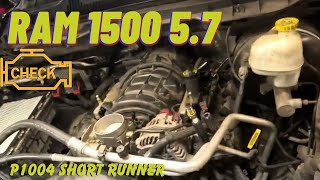
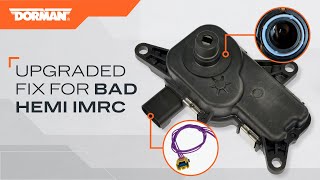

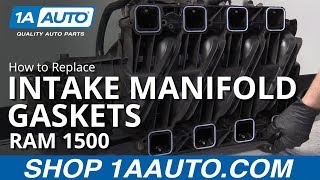
Used OEM Parts in Stock
New Aftermarket Parts Available


The information in this article is provided for general reference and educational purposes only. Vehicle specifications, procedures, and part compatibility can vary by production date, trim level, and region. Always consult your vehicle's factory service manual and verify part numbers before purchasing or performing repairs. Safety-critical components such as airbags, seat belts, and braking systems should be installed by a qualified professional.
- Ram 1500:
- 🧭 Diagnostic Flowchart
- 🎬 Helpful Videos
- 🛍️ Shop This Part
- What's Unique About the 2013-2015 Ram 1500
- Symptoms You May Notice
- Most Likely Causes
- Rare But Worth Checking
- Diagnosis Steps
- Parts You'll Likely Need
- Related Codes That Often Appear With This One
- Technical Service Bulletins (TSBs) & Recalls
- Platform-Specific Known Issues
- Mechanic-Grade Diagnostic Values
- Scan Tool Commands That Help
- Wiring & Ground Locations
- Real Owner Repair Stories
- When the Usual Fixes Don't Work
- OEM Part Supersession History
- 🎟️ Get 5% Off