

OBD-II Code P1006: A Manufacturer-Specific Malfunction
What P1006 means, why it triggers, and how to fix it on Hyundai, BMW, VW, and more
- Verify your vehicle's specific P1006 definition before buying parts; it means stuck intake flaps on a Hyundai, an oil-soaked Valvetronic sensor on a BMW, and a failing cylinder 3 injector on a VW TDI.
- On Hyundai and Kia 2.4L GDI engines, do not replace the $150 IMRC actuator until you manually verify the intake runner flaps are free of carbon buildup.
- For BMW N52 engines, inspect the Valvetronic sensor connector at the back of the valve cover for oil pooling before authorizing a $1,200 sensor replacement.
- Driving with an active P1006 code for more than 4 months causes the engine to run rich, which destroys the catalytic converter and adds $800 to $2,500 to your final repair bill.
What Does P1006 Mean?
P1006 is a manufacturer-specific code with entirely different meanings depending on your vehicle. On Hyundai and Kia, it flags a failure in the Intake Manifold Runner Control (IMRC) system, where carbon buildup jams the butterfly flaps controlling engine airflow. On BMWs, it indicates a Valvetronic sensor error, and on VW TDIs, it points to a fuel injector imbalance.
Technical definition: Hyundai/Kia: 'Intake Manifold Tuning (IMT) Valve Position Sensor Circuit High'. BMW: 'Valvetronic (VVT) Guiding Sensor Parity Error'. Volkswagen TDI: 'Torque Difference in Cylinder 3'. General Motors: 'Barometric Pressure (BARO) Sensor Performance'.
Can I Drive With P1006?
Yes, But With Caution. Yes, but expect significantly reduced engine power, poor fuel economy, and stalling at idle. Repair it soon. Prolonged driving causes carbon buildup requiring expensive repairs or destroys the catalytic converter, adding $800-$2500 to the bill.
Common Causes
- Heavy carbon buildup on intake runner flaps (Hyundai/Kia) (Very Common) — On GDI engines, oil vapor bakes into thick carbon deposits, physically jamming the runner flaps 🎬 Watch: DIY guide to cleaning GDI intake valves and flaps. and preventing movement.
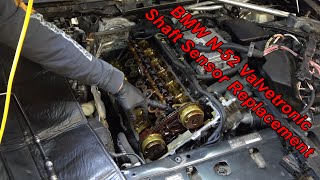
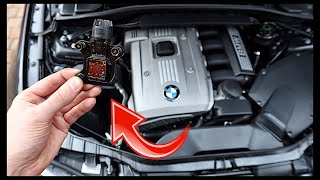
- Oil contamination in sensor connector (BMW) (Very Common) — On BMW N52 engines, a leaking valve cover gasket allows engine oil to seep into the Valvetronic eccentric shaft sensor connector, shorting the signal. 🎬 See how to replace the Valvetronic sensor and valve cover gasket.
- Faulty or dirty fuel injector (VW TDI) (Common) — On VW diesels, this code flags a torque imbalance on cylinder 3, caused by a dirty, leaking, or failing fuel injector. 🎬 Watch: Step-by-step VW TDI fuel injector replacement for P1006.
- Faulty IMRC actuator motor (Common) — The electronic motor moving the runner flaps fails or burns out from trying to move carbon-seized flaps.
- Damaged or disconnected actuator linkage (Common) — The plastic linkage connecting the actuator to the runner flaps breaks or pops off.
- Faulty IMRC position sensor (Less Common) — The sensor reporting flap position to the PCM fails, sending incorrect voltage data even if the flaps move correctly.
- Damaged wiring or connectors (Less Common) — Wires leading to the actuator or sensor become frayed or corroded, causing a loss of power or signal.
Symptoms
- Check Engine Light is on — The PCM logs the fault and illuminates the dashboard indicator.
- Reduced engine power — The car feels sluggish and weak at low or high RPMs because airflow is restricted.
- Rough or unstable idle — The engine shakes, vibrates, or stalls at idle because the runner flaps are stuck in the wrong position.
- Hesitation during acceleration — The vehicle stumbles or lags when pressing the gas pedal.
- Poor fuel economy — The engine burns 10-20% more fuel because the air-fuel mixture is inefficient.
- IMRC Position Mismatch (scan-tool only — no driver-felt sign) — A scan tool shows the 'Commanded' flap position does not match the 'Actual' position.
Diagnostic Flowchart
Tap your situation to follow the diagnostic path that matches what you're seeing on this code.
Common Fixes & Costs
- Cleaning intake manifold and runner flaps (Hyundai/Kia) — Parts: $30-$50 (gaskets/cleaner), Labor: $400-$800, ~3.5 hr book time (Professional)
- Replacing Valvetronic Sensor & Valve Cover Gasket (BMW) — Parts: $350-$500, Labor: $600-$900, ~4.5 hr book time (Professional)
- Replacing Fuel Injector (VW TDI) — Parts: $250-$400, Labor: $300-$500, ~2.5 hr book time (Professional)
- Replacing the IMRC actuator/solenoid — Parts: $75-$250, Labor: $150-$300, ~1.5 hr book time (Intermediate)
- Replacing the entire intake manifold assembly — Parts: $250-$700, Labor: $400-$800, ~3.0 hr book time (Professional)
DIY vs Professional
- Cleaning the intake manifold (Aerosol Method) — Beginner: Yes, with caution.
Tools: GDI intake cleaner spray, basic hand tools, safety glasses. - Replacing the IMRC actuator — Beginner: Yes, if easily accessible.
Tools: Basic socket set, flashlight. - Replacing the Valvetronic Sensor (BMW) — Beginner: No.
Tools: Comprehensive tool set, torque wrench, valve cover gasket set, BMW diagnostic tool. - Replacing the Fuel Injector (VW TDI) — Beginner: No.
Tools: Injector puller tool, new seals, torque wrench, VCDS scan tool. - Manual Carbon Cleaning (Walnut Blasting) — Beginner: No.
Tools: Socket set, torque wrench, media blaster, shop vacuum, picks.
Used vs. New Parts: Buying Guide
When a used part is worth it: Buy a used intake manifold assembly if the vehicle has over 100,000 miles and the donor part is verified clean. Never buy used electronic sensors, actuators, or fuel injectors.
Donor-vehicle mileage cap: roughly under 80000 miles for the part to have meaningful remaining life.
Donor quality checklist:
- Verify the donor vehicle wasn't scrapped for engine failure.
- Inspect used intake manifolds for cracks, warping, and heavy carbon residue.
- Match the part number exactly; superseded numbers are often incompatible.
Decision logic:
- If The part is an electronic sensor, actuator, or fuel injector → Buy new OEM. The labor cost to replace a failed used part outweighs the savings.
- If The part is a complete intake manifold assembly → A used part from a low-mileage source is a cost-effective choice.
- If The vehicle is covered by the VW Dieselgate extended warranty → Take it to the dealer for free OEM replacement parts.
Warranty tradeoff: Used parts carry a 30-90 day warranty covering only the part. New OEM parts carry a 1-2 year warranty covering parts and sometimes labor.
Worst-case if a used part fails: $400-$1500 if a used electronic part fails, requiring repeat labor and a new part.
What Happens If You Wait — Timeline
- 0-1 month: Check Engine Light illuminates. Minor hesitation and a 5% drop in fuel economy. (MPG impact: 0-5%% · Added cost: $50 in wasted fuel)
- 1-4 months: Noticeable loss of power, unstable idle, and consistent hesitation. The engine runs rich. (MPG impact: 5-15%% · Added cost: $200 in wasted fuel)
- 4-8 months: The rich mixture overheats the catalytic converter. Carbon buildup puts severe strain on the actuator motor. (MPG impact: 10-20%% · Added cost: $800-$2500 (catalytic converter damage))
- 8+ months: The catalytic converter clogs completely. The actuator motor burns out, or broken linkage pieces are ingested by the engine. (MPG impact: 20-30%+% · Added cost: $1500-$7000+)
Cost of Not Fixing It
- 0-1 month: Noticeable drop in fuel economy (5-15%), rough idle, and sluggish acceleration at low RPMs. (Added cost: $50 in wasted fuel)
- 1-6 months: An incorrect air-fuel mixture causes the engine to run rich, overheating and destroying the catalytic converter. (Added cost: $800-$2500)
- 6+ months: The actuator motor burns out from fighting seized flaps. In severe cases, broken internal linkage pieces are ingested by the engine, causing catastrophic damage. (Added cost: $1500-$7000+)
Diagnosis Steps
- Read the Fault Codes
Use an OBD-II scanner to confirm P1006. Verify the code's specific definition for your vehicle's make and model before proceeding.
Tools: OBD-II Scanner (Beginner) - Visual Inspection
Inspect the IMRC actuator for broken plastic linkage or disconnected wires. On BMWs, check the Valvetronic sensor connector for oil pooling. On VW TDIs, inspect the cylinder 3 injector wiring.
Tools: Flashlight (Beginner) - Check Linkage and Flap Movement
With the engine off, gently move the Hyundai/Kia IMRC linkage by hand. If it feels stuck, the flaps are seized by carbon. If it's loose, the linkage is broken.
Tools: Hands / Safety Gloves (Intermediate) - Command Actuator with a Scan Tool
Use a bidirectional scan tool to command the IMRC actuator to open and close. If the actuator moves but the sensor value doesn't change, the sensor is bad. If it doesn't move, the actuator is faulty.
Tools: Bidirectional Scan Tool (Advanced) - Manufacturer-Specific Live Data Analysis
For VW TDIs, use VCDS to view fuel quantity deviation (Block 013). A value for cylinder 3 higher than +1.5 mg/stroke confirms a failing injector.
Tools: VCDS or Advanced Scan Tool (Professional) - Inspect for Carbon Buildup
If the flaps are stuck, remove the intake manifold. Look inside the ports to confirm heavy carbon buildup on the flaps and runners.
Tools: Basic hand tools (sockets, wrenches) (Advanced) - Test the Position Sensor Circuit
Back-probe the signal wire on the IMRC position sensor with a multimeter. Manually move the linkage; the voltage must sweep smoothly from ~0.5V to ~4.5V.
Tools: Multimeter (Advanced)
When This Code Triggers (Freeze-Frame Conditions)
- Engine Coolant Temp: 180-200°F (82-93°C) (The fault is detected when the engine is fully warmed up.)
- RPM: 1500-3000 RPM (Sets during steady-state cruising or light acceleration when the PCM commands a runner position change.)
- Engine Load: 20-50% (Occurs under light to moderate engine load, rarely during idle or full-throttle.)
- Fault Trigger: Command vs. Actual Mismatch (The PCM commands the actuator to move, but the position sensor reports no change or an out-of-range value.)
Related Codes
- P200A / P2006 — Indicates 'Intake Manifold Runner Performance' or 'Stuck Closed'. P1006 is the electrical sensor fault, while P200A/P2006 confirms the physical flaps are jammed.
- P0303 — Cylinder 3 Misfire. On VW TDIs, seeing this alongside P1006 confirms the cylinder 3 fuel injector is failing.
- P0106 — MAP/BARO Performance. On GM vehicles, this is the primary related code. On others, stuck intake flaps cause abnormal manifold pressure, triggering P0106 secondarily.
Climate & Environmental Factors
- Cold Climates / Short Trips: Accelerates carbon buildup on GDI engines. The engine fails to reach sustained operating temperatures, causing oil vapors to condense rapidly on cold intake valves.
- High Mileage: Increases the likelihood of rubber gasket degradation, specifically the BMW valve cover gasket, which leaks oil directly into the Valvetronic sensor.
How to Talk to a Mechanic About This Code
Say this: "I have a P1006 code on my [Vehicle]. Research indicates this means [stuck flaps / oil in sensor / bad injector]. I need a diagnostic to confirm this specific cause before replacing parts."
Focuses the technician on the exact manufacturer-specific issue, preventing them from starting a generic, expensive diagnostic process.
Avoid saying:
- 'My check engine light is on, can you look at it?'
- 'Just fix whatever's wrong.'
Questions to ask before authorizing the repair:
- For Hyundai/Kia: Did you physically confirm the runner flaps are seized?
- For BMW: Is the valve cover gasket replacement included in the quote?
- For VW TDI: Did you check if my VIN is covered under the Dieselgate warranty?
- Does the new part require a digital relearn procedure, and is that included in the labor?
Where to Take It: Dealer vs Independent vs Chain
- Dealer:
Best for: Vehicles under warranty (especially VW Dieselgate)., Complex BMW Valvetronic coding.
Downsides: Labor rates are 1.5-2x higher than independent shops., Will replace the entire manifold instead of cleaning it. (Typical cost: +50% vs. baseline) - Independent Shop:
The best choice. Use a general indie for Hyundai/Kia carbon cleaning, and a European specialist for BMW or VW repairs.
Best for: Out-of-warranty vehicles., Hyundai/Kia carbon cleaning., European specialists for BMW/VW repairs.
Downsides: General shops lack the specific VCDS tools for VW coding. (Typical cost: +0% vs. baseline) - Chain Shop:
AVOID. They lack the advanced diagnostic tools required for P1006.
Best for: Oil changes and tires.
Downsides: High risk of misdiagnosing manufacturer-specific codes., Will replace expensive actuators without fixing the underlying carbon jam. (Typical cost: -10% vs. baseline)
When to Walk Away From the Repair
If the estimated repair cost exceeds 50% of the car's private-party value, sell or trade in the vehicle.
- Car worth $5000, fix is $800: Fix it. The repair is well below the 50% threshold.
- Car worth $4000, fix is $1800: Borderline. Get a second opinion before authorizing the repair.
- Car worth $3000, fix is $2000: Walk away. The repair cost is 67% of the car's value.
What Scan Tool You Need for This Code
Minimum: A scanner with live data streaming, manufacturer-specific code definitions, and bidirectional control.
A $20 reader cannot command the IMRC actuator to move, read live voltage, or perform a BMW Valvetronic relearn.
Budget: Thinkcar ThinkScan 689BT (~$90) — Pairs with a smartphone to offer full system diagnostics and live data graphing to view IMRC commanded vs. actual positions.
Mid-range: Foxwell NT710 (~$250) — Offers full bidirectional control to test the actuator and supports advanced resets like BMW Valvetronic relearns and VW injector coding.
Professional: Autel MaxiCOM MK808S (~$450) — Provides fast, OEM-level diagnostics, full bidirectional control, and extensive service functions.
How to Clear the Code After You Fix It
- Use an OBD-II scan tool to clear the diagnostic trouble codes.
- Perform the manufacturer-specific relearn procedure for the new component (e.g., BMW Valvetronic calibration or VW injector coding).
- Drive the vehicle in mixed city/highway conditions for 30 minutes to reset readiness monitors.
Drive cycle (~30 minutes): Start the engine cold and idle for 3 minutes. Drive in mixed city/highway conditions for 20 minutes, maintaining steady cruising speeds. Perform several smooth accelerations and decelerations. Allow the engine to cool down.
Readiness monitors affected: Catalyst Monitor, Evaporative System (EVAP) Monitor, Oxygen (O2) Sensor Monitor
Before emissions retest: drive at least 50 miles to fully set monitors.
Watch out for:
- Disconnecting the battery clears the code but resets all readiness monitors to 'Not Ready', causing an automatic emissions failure.
- Failing to perform the digital relearn procedure for a new BMW Valvetronic sensor causes the code to return immediately.
Will This Fail Emissions / State Inspection?
Yes — this code typically fails an OBD-II emissions inspection.
- California: An active Check Engine Light is an automatic failure. A full drive cycle must be completed to set all readiness monitors before a retest.
- New York: Clearing the code right before the test results in a failure due to readiness monitors being 'Not Ready'.
- Texas: Vehicles 2001 and newer can have up to one readiness monitor 'Not Ready' and still pass, provided the Check Engine Light is off.
Most Commonly Affected Vehicles
- Hyundai Sonata, Santa Fe (2011-2017) — Extremely common on 2.4L GDI engines due to severe carbon buildup seizing the intake flaps.
- Kia Optima, Sorento (2011-2016) — Shares the 2.4L GDI engine with Hyundai and suffers identical carbon buildup failures.
- BMW 328i, 128i, X3, X5 (N52 Engine) (2005-2013) — P1006 points to a Valvetronic sensor failure, almost always caused by oil leaking from the valve cover gasket into the connector.
- Volkswagen Passat TDI, Jetta TDI, Golf TDI (2010-2015) — Indicates 'Torque Difference Cylinder 3', caused by a faulty fuel injector. Often covered by the Dieselgate warranty.
- Chevrolet Trailblazer, Silverado (2005-2014) — Triggered by a faulty barometric pressure (BARO) sensor, unrelated to the intake runners.
- Ford F-250, F-350 (6.0L Power Stroke) (2003-2007) — Relates to the alternator and charging system, not the intake manifold.
- Honda Accord, CR-V (2003-2007) — Not a standard Honda code, but similar symptoms point to VTEC system issues caused by low oil.
Manufacturer-Specific Notes
- Hyundai / Kia: Carbon buildup jams the flaps, causing the actuator motor to burn out. You must clean the manifold and replace the actuator simultaneously.
- BMW: Always inspect the Valvetronic sensor connector for oil before replacing the sensor. A leaking valve cover gasket is the true root cause.
- Volkswagen: Technicians often misdiagnose this as a camshaft issue. It means 'Torque Difference Cylinder 3' and requires a new fuel injector, which is frequently covered by the Dieselgate warranty.
- General Motors: Defined as 'Barometric Pressure (BARO) Sensor Performance'. Diagnosis must focus on the MAP/BARO sensor, not the intake manifold.
Real Owner Stories
2013 Hyundai Sonata 2.4L GDI at 148,000 miles
Check Engine Light on with P1006. The car hesitated, idled roughly, and lost fuel economy.
What they tried:
- Used fuel injector cleaners with no change.
- Replaced the IMRC actuator, but the code returned immediately.
Outcome: Severe carbon buildup had seized the intake flaps. The manifold was manually cleaned for $600, and the original actuator functioned perfectly afterward.
Lesson: P1006 on GDI engines is a mechanical jam, not an electrical failure. Verify flap movement before replacing the actuator.
2009 BMW 328i (N52) at 115,000 miles
Service Engine Soon light with P1006. The car had a rough idle and smelled of fuel.
What they tried:
- Cleaned VANOS solenoids, which provided a temporary one-day fix.
- Inspected the Valvetronic sensor connector and found oil inside.
Outcome: Replaced the eccentric shaft sensor and the leaking valve cover gasket, resolving all codes.
Lesson: Always inspect the BMW Valvetronic sensor connector for oil. A valve cover leak is the root cause and must be fixed.
2013 VW Jetta TDI at 84,000 miles
P1006 appeared after the engine stalled and hesitated.
What they tried:
- Considered diesel fuel additives.
- A mechanic incorrectly suggested replacing the camshaft position sensor.
Outcome: Took the vehicle to a VW dealer. The cylinder 3 fuel injector was replaced for free under the Dieselgate Extended Emissions Warranty.
Lesson: Do not misdiagnose VW TDI P1006 as a camshaft issue. Always check your VIN for warranty coverage before paying for injector repairs.
How to Prevent This Code From Triggering
- Use Top Tier certified gasoline (Every fill-up) — High detergent levels keep fuel injectors clean, reducing soot that contributes to intake valve carbon buildup.
- Perform a chemical intake cleaning service (Every 40,000 miles) — Dissolves carbon deposits from GDI intake runners and valves, preventing them from seizing.
- Fix valve cover gasket leaks immediately (At first sign of a leak) — Prevents oil from leaking into the BMW Valvetronic sensor connector and destroying the electronics.
Frequently Asked Questions
What does the Intake Manifold Runner Control (IMRC) system do?
The IMRC adjusts the length of the intake runners to optimize airflow. Long paths boost low-end torque, while short paths maximize high-RPM horsepower.
What happens if I ignore code P1006?
Engine performance degrades, fuel economy plummets, and stalling occurs. Prolonged rich running destroys the catalytic converter, adding over $1,000 to repair costs.
Can I fix P1006 myself?
You can replace an accessible IMRC actuator or use aerosol intake cleaners. However, manual carbon cleaning, BMW sensor replacement, or VW injector coding require professional tools.
How do I prevent P1006?
Use Top Tier gas and perform chemical intake cleanings every 40,000 miles on GDI engines. Fix BMW valve cover oil leaks immediately before they ruin sensors.
Why did the code return after replacing the actuator?
The underlying flaps are likely seized with carbon, or the new part requires a digital relearn procedure. Clear the code with a scanner and perform a full drive cycle.
Key Takeaways
- Verify your vehicle's specific P1006 definition before buying parts; it means stuck intake flaps on a Hyundai, an oil-soaked Valvetronic sensor on a BMW, and a failing cylinder 3 injector on a VW TDI.
- On Hyundai and Kia 2.4L GDI engines, do not replace the $150 IMRC actuator until you manually verify the intake runner flaps are free of carbon buildup.
- For BMW N52 engines, inspect the Valvetronic sensor connector at the back of the valve cover for oil pooling before authorizing a $1,200 sensor replacement.
- Driving with an active P1006 code for more than 4 months causes the engine to run rich, which destroys the catalytic converter and adds $800 to $2,500 to your final repair bill.
Helpful Videos

Shop the Parts Behind P1006
Below are the parts most often responsible for code P1006, ranked by how frequently each one is the actual culprit (per the diagnosis above). Tap any to see what we have for your vehicle.



The information in this article is provided for general reference and educational purposes only. Vehicle specifications, procedures, and part compatibility can vary by production date, trim level, and region. Always consult your vehicle's factory service manual and verify part numbers before purchasing or performing repairs. Safety-critical components such as airbags, seat belts, and braking systems should be installed by a qualified professional.
- 🧭 Diagnostic Flowchart
- 🎬 Helpful Videos
- 🛍️ Shop This Part
- What Does P1006 Mean?
- Can I Drive With P1006?
- Common Causes
- Symptoms
- Common Fixes & Costs
- DIY vs Professional
- Used vs. New Parts: Buying Guide
- What Happens If You Wait — Timeline
- Cost of Not Fixing It
- Diagnosis Steps
- When This Code Triggers (Freeze-Frame Conditions)
- Related Codes
- Climate & Environmental Factors
- How to Talk to a Mechanic About This Code
- Where to Take It: Dealer vs Independent vs Chain
- When to Walk Away From the Repair
- What Scan Tool You Need for This Code
- How to Clear the Code After You Fix It
- Will This Fail Emissions / State Inspection?
- Most Commonly Affected Vehicles
- Manufacturer-Specific Notes
- Real Owner Stories
- 2013 Hyundai Sonata 2.4L GDI at 148,000 miles
- 2009 BMW 328i (N52) at 115,000 miles
- 2013 VW Jetta TDI at 84,000 miles
- How to Prevent This Code From Triggering
- Frequently Asked Questions
- What does the Intake Manifold Runner Control (IMRC) system do?
- What happens if I ignore code P1006?
- Can I fix P1006 myself?
- How do I prevent P1006?
- Why did the code return after replacing the actuator?
- Key Takeaways
- 🎟️ Get 5% Off