

OBD-II Code P1015: Manufacturer-Specific Fault
What P1015 means, why it triggers, and how to fix it
- P1015 is a manufacturer-specific code that means 'Wastegate Control Pressure Low' on Ford EcoBoosts and 'Valvetronic Sensor Error' on BMWs.
- On Ford 2.7L and 3.5L engines, replace the $50 wastegate control solenoid (BL3Z-9K378-A) before agreeing to a $2,500 turbocharger replacement.
- Inspect Ford vacuum lines for cracks or pinched sections near the cam cover, which cause 80% of EcoBoost P1015 vacuum leaks.
- On BMW N55 engines, oil leaking into the eccentric shaft sensor connector requires replacing the $300 sensor and valve cover gasket to prevent a $3,500 Valvetronic failure.
- Never clear a BMW P1015 code after replacing parts without using a bidirectional scanner to perform the mandatory Valvetronic limit relearn procedure.
What Does P1015 Mean?
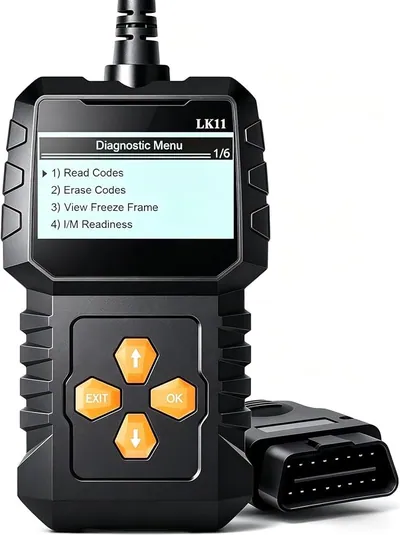
P1015 is a manufacturer-specific code. On Ford EcoBoost engines, it indicates the turbocharger's wastegate control pressure is too low. On BMWs, it points to a gradient error in the Valvetronic system's position sensor. On Volkswagens, it signals a short to ground in the air filter bypass valve circuit. On Nissan and Toyota, it signifies low voltage from the power steering circuit sensor.
Technical definition: Ford: 'Wastegate Control Pressure Lower Than Expected'. BMW: 'Valvetronic (VVT) Reference Sensor Gradient Error (Bank 1)'. Volkswagen: 'Air Filter Bypass Valve (N275) Short to Ground'. Mercedes-Benz: 'Oil Temperature Sensor Has Exceeded The Measuring Range'. General Motors: 'Class 2 Data Link Low'. Nissan/Toyota: 'Power Steering Circuit Sensor Low Voltage'.
Can I Drive With P1015?
Yes, But With Caution. You can drive the vehicle, but you will experience reduced engine power and poor acceleration. On Ford EcoBoost engines, continued driving strains the turbocharger, escalating a $50 hose repair into a $2,500 turbo replacement. On BMWs, driving with a failing Valvetronic system damages the eccentric shaft, turning a $1,500 motor repair into a $4,000 full assembly replacement.
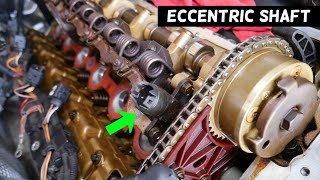
🎬 Watch: Step-by-step guide to replacing the Valvetronic motorCommon Causes

- Failed wastegate control solenoid (Ford). (Very Common) — This electronic solenoid manages vacuum sent to the wastegate actuator. It fails internally, gets hot to the touch, and stops regulating pressure.
- Cracked or pinched vacuum lines (Ford). (Very Common) — Plastic vacuum lines become brittle from engine heat and crack. Ford TSB SSM 46438 also notes the hose gets pinched by a zip-tie at the cam cover on 2.7L and 3.0L engines.
- Oil contamination of eccentric shaft sensor (BMW). (Common) — Oil leaks past the eccentric shaft position sensor's seal into the electrical connector, corrupting the signal sent to the DME.
- Failed wastegate actuator or diaphragm (Ford). (Less Common) — The internal rubber diaphragm tears and fails to hold vacuum, or the mechanical arm seizes from carbon buildup.
- Failed DME drivers for Valvetronic motor (BMW). (Less Common) — A failing Valvetronic motor draws excessive current, burning out the driver circuits within the main engine computer (DME).
- Defective vacuum pump. (Rare) — The engine's main vacuum pump fails to produce the 18-22 inHg required to operate the wastegate, often accompanied by a hard brake pedal.
Symptoms

- Check Engine Light is on — The vehicle's computer detects a fault and stores the P1015 code.
- Significant loss of engine power — The vehicle feels sluggish and enters 'limp mode' due to disabled turbo boost or restricted valve lift.
- Poor fuel economy — The engine works harder to compensate for the disabled turbocharger or Valvetronic system, dropping efficiency by 10-25%.
- Audible whistling or hissing — On Ford models, a severe vacuum leak in the wastegate control system produces a hissing sound under hard acceleration.
Diagnostic Flowchart

Tap your situation to follow the diagnostic path that matches what you're seeing on this code.
Common Fixes & Costs
- Replace the wastegate control solenoid (Ford) — Parts: $30-$80, Labor: $100-$150, ~0.7 hr book time (DIY)
- Replace cracked vacuum lines/hoses (Ford) — Parts: $20-$50, Labor: $50-$150, ~0.8 hr book time (DIY)
- Replace BMW Valvetronic motor and eccentric shaft — Parts: $1200-$1800, Labor: $1500-$2500, ~8.5 hr book time (Professional)
- Replace the wastegate actuator (Ford) — Parts: $100-$250, Labor: $200-$400, ~2.5 hr book time (Intermediate)
- Replace the entire turbocharger assembly (Ford) — Parts: $800-$1500, Labor: $600-$1200, ~5.5 hr book time (Professional)
DIY vs Professional
- Replace the wastegate control solenoid (Ford) 🟢 Beginner
Tools: Socket set (8mm, 10mm), long pliers, pick tool. - Replace cracked vacuum lines/hoses (Ford) 🟢 Beginner
Tools: Pliers, hose cutters, flashlight. - Replace the wastegate actuator (Ford) 🟢 Beginner
Tools: Full socket set, wrenches, vacuum pump for calibration. - Replace BMW Valvetronic motor and eccentric shaft 🟢 Beginner
Tools: E-Torx sockets, injector puller, fuel line disconnect tools, torque wrench, BMW ISTA scan tool.
Used vs. New Parts: Buying Guide
When a used part is worth it: A used OEM Ford wastegate solenoid from a low-mileage donor is acceptable if new OEM parts are backordered. Never buy a used BMW Valvetronic motor.
Donor-vehicle mileage cap: roughly under 60000 miles for the part to have meaningful remaining life.
Donor quality checklist:
- Verify the part number matches exactly.
- Avoid parts from flood-damaged or collision vehicles.
- Prefer donors from dry climates to minimize corrosion risk.
Decision logic:
- If Part is a Ford wastegate solenoid and new OEM is unavailable → A used OEM part from a verified low-mileage donor is a reasonable choice.
- If Part is a BMW Valvetronic motor or eccentric shaft → Buy new OEM or VDO only. The labor cost is too high to risk using a part with an unknown history.
Warranty tradeoff: Used parts offer a 30-90 day warranty. New aftermarket parts have a 1-year warranty. New OEM parts carry a 1-2 year warranty.
Worst-case if a used part fails: $600-$3500, representing the cost of repeated labor if a used part fails.
What Happens If You Wait — Timeline
- 0-1 month: Check Engine Light illuminates. Ford experiences sluggish acceleration. BMW exhibits rough idle on cold starts. (MPG impact: 5-10%% · Added cost: $50-$150 in wasted fuel.)
- 1-4 months: Ford turbocharger bearings strain under improper boost control. BMW eccentric shaft teeth begin to grind against the failing motor. (MPG impact: 10-15%% · Added cost: $200-$500 in increased component wear.)
- 4-8 months: Ford wastegate actuator seizes, requiring a $2,500 turbo replacement. BMW eccentric shaft teeth shear off completely, escalating a $400 motor repair to a $3,500 full assembly replacement. (MPG impact: 15-25%% · Added cost: $1,500-$3,500 as a cheap repair becomes a major component replacement.)
- 8+ months: Catastrophic failure. Ford turbo sends metal fragments into the intercooler. BMW Valvetronic motor shorts out the $1,500 DME engine computer. (MPG impact: 25%+% · Added cost: $4,000-$8,000+ for a new turbo and engine work or a new DME.)
Cost of Not Fixing It
- 0-1 month: 10-15% drop in fuel economy and severe power loss. (Added cost: $50-$150 in wasted fuel.)
- 1-6 months: Improper boost regulation destroys Ford turbocharger bearings. Failing BMW motor grinds down eccentric shaft teeth. (Added cost: $1500-$3500)
- 6+ months: Ford turbo sends metal shrapnel into the engine. BMW Valvetronic motor shorts out the DME computer. (Added cost: $4000-$8000+)
Diagnosis Steps
- Visually Inspect Vacuum Lines (Ford)
Inspect all plastic and rubber vacuum lines connected to the turbocharger wastegate control solenoid and actuator. Look for cracks, breaks, or pinched sections near the cam cover.
Tools: Flashlight (Beginner) - Check the Wastegate Control Solenoid (Ford)
With the ignition on but the engine off, touch the wastegate control solenoid. If it is excessively hot, it has shorted internally and must be replaced.
Tools: None (Beginner) - Test the Wastegate Actuator (Ford)
Apply vacuum directly to the wastegate actuator. Watch the arm to see if it moves smoothly and holds vacuum. If it leaks, the internal diaphragm is bad.
Tools: Handheld vacuum pump with gauge (Intermediate) - Check for Water/Ice in Hoses (Ford TSB)
Per Ford TSB SSM 46438, water enters the control hoses and freezes in cold weather. Disconnect the hoses and check for blockages or moisture.
Tools: Basic hand tools (Intermediate) - Test Vacuum Supply (Ford)
Disconnect the vacuum line supplying the wastegate control solenoid and connect a vacuum gauge. Start the engine and verify vacuum is between 18-22 inHg at idle.
Tools: Vacuum gauge (Intermediate) - Pro Tip: Correlate Live Data with Vacuum Test (Ford)
Monitor 'Wastegate Control Pressure' (PID: WGATE_PRES_F) on a scan tool while applying vacuum with a hand pump. The sensor readings must correspond smoothly with the applied vacuum. Jumps indicate a faulty sensor.
Tools: Advanced OBD-II Scanner, Handheld vacuum pump (Professional) - Advanced: Test Wastegate Solenoid Resistance (Ford)
Disconnect the solenoid and measure resistance across the two pins. A healthy solenoid shows 20 to 60 Ohms. 'OL' indicates an open circuit; near zero indicates a short.
Tools: Multimeter (Advanced) - Advanced: Test Wastegate Actuator Cracking Pressure (Ford)
Slowly apply vacuum to the actuator. The point at which the rod begins to move is the 'cracking pressure' (approx. 9.5 inHg for stock EcoBoost). Lower values indicate a weak spring.
Tools: Handheld vacuum pump with gauge (Advanced) - Check Valvetronic Sensor and Motor Voltages (BMW)
Back-probe the electrical connectors. The eccentric shaft sensor requires a 5V reference. The Valvetronic motor requires battery voltage (approx. 12V) when the ignition is turned on.
Tools: Multimeter, Back-probe kit (Advanced) - Pro Tip: Perform Valvetronic System Test (BMW)
Run the Valvetronic system test plan using ISTA. This commands the motor to move the eccentric shaft through its full range. Clicking noises during this test confirm mechanical failure.
Tools: BMW Diagnostic Tool (ISTA) (Professional)
When This Code Triggers (Freeze-Frame Conditions)
- Engine Coolant Temp: 170-200°F (Fault triggers once the engine reaches full operating temperature.)
- Engine RPM: 1500-3000 RPM (Code sets during steady-state cruising or light acceleration.)
- Engine Load: 20-50% (Occurs under moderate load when the ECU actively commands boost or valve lift.)
- Vehicle Speed: 40-65 mph (Triggered during highway cruising when the vacuum system expects stable pressure.)
Related Codes
- P1016 — Wastegate Control Pressure Higher Than Expected. If both P1015 and P1016 appear, the wastegate control solenoid is failing intermittently.
- P0299 — Turbo Underboost Condition. P1015 causes P0299. Diagnose and fix P1015 first to resolve the root control issue.
- P1013 — Wastegate Control Pressure Circuit Low. Points to the exact same vacuum line and solenoid failures outlined in Ford TSB SSM 46438.
Climate & Environmental Factors
- Cold Weather: Moisture accumulates in Ford wastegate vacuum lines and freezes overnight, blocking pressure and triggering P1015 on cold starts (Ford TSB SSM 46438).
- Engine Temperature: Hairline vacuum cracks seal themselves as the engine bay heats up, causing power loss in the morning that disappears after a warm restart.
How to Talk to a Mechanic About This Code
Say this: "For a Ford EcoBoost: 'I have a P1015 wastegate pressure code. Please test the control solenoid and inspect the vacuum lines before quoting a turbo replacement.' For a BMW: 'I have a P1015 Valvetronic code. Please confirm if the fault is the sensor, motor, or the eccentric shaft, and confirm you use ISTA for diagnostics.'"
This directs the technician toward the cheapest repairs first and prevents you from being upsold to an unnecessary $2,500 turbo replacement on a Ford or an incomplete repair on a BMW.
Avoid saying:
- 'My check engine light is on, can you look at it?'
- 'Just fix whatever is wrong.'
- 'A guy on the internet said it's the turbo.'
Questions to ask before authorizing the repair:
- For Ford: 'Did you test the wastegate actuator with a vacuum pump? Can you show me the cracked hose or the failed solenoid?'
- For BMW: 'Did you find oil in the eccentric shaft sensor connector? What were the results of the Valvetronic system test?'
- What is the warranty on this specific repair, for both the parts and the labor?
Where to Take It: Dealer vs Independent vs Chain
- Dealer:
Recommended for complex BMW Valvetronic issues. Use with caution for out-of-warranty Fords.
Best for: Vehicles under warranty., Complex BMW Valvetronic repairs requiring ISTA software.
Downsides: Highest labor rates., Quick to recommend a full turbocharger replacement on a Ford instead of diagnosing external components. (Typical cost: +50% vs. baseline) - Independent Shop:
The best choice for a Ford P1015. For a BMW, find an independent shop that specializes in German vehicles.
Best for: Out-of-warranty Ford EcoBoost repairs., Shops that specialize in German vehicles for BMW Valvetronic issues.
Downsides: A general shop lacks the specific tools or knowledge for a BMW Valvetronic repair. (Typical cost: +0% vs. baseline) - Chain Shop:
AVOID. The diagnostic complexity of P1015 is beyond the scope of chain repair shops.
Best for: Simple maintenance like oil changes.
Downsides: Technicians lack specialized training for nuanced diagnostic work., High pressure to upsell parts; very likely to recommend an unnecessary turbo replacement. (Typical cost: -10% vs. baseline)
What Scan Tool You Need for This Code
Minimum: A scanner that reads manufacturer-specific trouble codes and definitions.
For a Ford, you need to see live data for the wastegate control system. For a BMW, you absolutely need a scanner that performs the 'Valvetronic limit relearn' procedure after a repair.
Budget: BlueDriver Pro / ANCEL FD500 (~$100) — Reads manufacturer-specific code definitions and shows live data. Sufficient for initial diagnosis on a Ford but insufficient for a BMW repair.
Mid-range: Foxwell NT510 Elite (~$250) — Provides dealer-level diagnostics, including reading all modules, viewing live data, and performing the critical BMW Valvetronic relearn procedure.
Professional: Autel MaxiCOM MK808S (~$450) — Offers full bidirectional control, allowing you to command the wastegate solenoid directly to test its function.
Rent vs buy: For a Ford, rent a basic scanner for initial diagnosis. For a BMW, buy a capable scanner like the Foxwell to perform the mandatory relearn procedure.
How to Clear the Code After You Fix It
- Use an OBD-II scan tool to clear the P1015 code.
- For BMW, perform the mandatory 'Valvetronic limit positions' relearn procedure using a bidirectional scan tool.
- Perform a 20-minute drive cycle to ensure the code does not return.
Drive cycle (~20 minutes): Cold start and idle for 2 minutes. Drive in stop-and-go traffic for 10 minutes. Accelerate to 65 MPH and decelerate to 40 MPH without using the brakes, repeating 3 times. Bring the vehicle to a stop and idle in Drive for 2 minutes.
Readiness monitors affected: Comprehensive Component Monitor, Catalyst Monitor, Evaporative System Monitor
Before emissions retest: drive at least 50 miles to fully set monitors.
Watch out for:
- Disconnecting the battery clears the code but resets all readiness monitors, causing an instant emissions failure.
- Failing to perform the BMW Valvetronic relearn guarantees the code returns immediately.
Will This Fail Emissions / State Inspection?
Yes — this code typically fails an OBD-II emissions inspection.
- California: An illuminated Check Engine Light results in an automatic failure of the Smog Check. All OBD-II readiness monitors must also be complete.
- New York: The NYS DMV vehicle inspection includes an OBD-II scan. The presence of P1015 causes an automatic failure.
- Texas: In the 17 Texas counties that require emissions testing, a vehicle with an active P1015 code fails the OBD-II inspection.
Most Commonly Affected Vehicles
- Ford F-150 (2015-2017) — Very common on 2.7L and 3.5L EcoBoost engines. TSB SSM 46438 addresses pinched or frozen vacuum lines.
- Ford Edge (2015-2018) — Models with 2.0L and 2.7L EcoBoost engines are prone to this code.
- Ford Escape (2016-2017) — The 2.0L EcoBoost engine experiences this code due to wastegate control system faults.
- Ford Fusion (2016-2017) — Equipped with EcoBoost engines that share the same wastegate control system vulnerabilities.
- BMW 335i / 535i (N55 Engine) (2011-2016) — Relates to the Valvetronic system, indicating a sensor problem within the variable valve lift system.
- Volkswagen Touareg / R32 (2008-2014) — Points to a fault with the Air Filter Bypass Valve (N275) having a short to ground.
- Nissan / Toyota Altima / Camry (2007-2015) — Defined as an excessively low voltage from the Power steering circuit sensor.
- Mercedes-Benz E-Class / S-Class (2006-2012) — Indicates the Oil Temperature Sensor Has Exceeded The Measuring Range.
Manufacturer-Specific Notes
- Ford: Means 'Wastegate Control Pressure Lower Than Expected'. Caused by brittle vacuum lines or a bad solenoid. TSB SSM 46438 highlights pinched or frozen lines on 2016-2017 EcoBoosts.
- BMW: Means 'Valvetronic Reference Sensor Gradient Error'. Caused by oil leaking into the sensor connector. Covered under the 15-year/150,000-mile SULEV warranty in participating states.
- General Motors (GM): Means 'Class 2 Data Link Low', indicating a module communication failure entirely unrelated to engine mechanics.
Real Owner Stories
2016 Ford F-150 2.7L EcoBoost with P1015
Check Engine Light illuminated with severe power loss. The owner wanted to diagnose the issue before resorting to a $2,500 turbo replacement.
What they tried:
- Touched the wastegate control solenoid with the ignition on and found it burning hot.
- Tested the wastegate actuators with a vacuum pump and confirmed they held pressure.
Outcome: The owner replaced the wastegate control solenoid (Ford P/N BL3Z-9K378-A) for $50. This restored full power and cleared the code permanently.
Lesson: Always check the wastegate solenoid first. A hot-to-the-touch solenoid guarantees internal failure and is a $50 fix that prevents a multi-thousand dollar turbo replacement.
2011 BMW 335i (N55 Engine) with Valvetronic Faults
Car entered limp mode with a clicking noise from the engine when unlocking the doors.
What they tried:
- Dealership diagnosed a failed actuator motor and suspected a damaged eccentric shaft.
- Owner opted to replace only the Valvetronic motor to save money.
Outcome: The clicking noise returned within a week. The owner had to tear the engine down again to replace the eccentric shaft, which had a broken tooth that destroyed the new motor.
Lesson: A clicking noise from a BMW engine cover indicates mechanical Valvetronic failure. Always replace the motor and eccentric shaft together to prevent repeat failures.
2011 BMW 328i (SULEV) with Eccentric Shaft Sensor Failure
Towed to a dealership with a bad eccentric shaft sensor. The dealer quoted $1,600 for the repair.
What they tried:
- Owner checked the warranty book and verified the 'Valvetronic sensor' was covered under the SULEV warranty.
- Dealership initially refused coverage, claiming it was a different part.
Outcome: After pushing back and contacting BMW of North America, the dealership replaced the sensor and valve cover gasket for free under the SULEV warranty.
Lesson: If you live in a SULEV state (CA, NY, MA, NJ), check your 15-year/150,000-mile warranty before paying for expensive emissions repairs.
How to Prevent This Code From Triggering
- Inspect Ford EcoBoost vacuum lines. (Every oil change) — Plastic lines become brittle from heat. Catching a crack early prevents sudden power loss and a P1015 code.
- Replace BMW valve cover and eccentric shaft sensor gaskets. (At 80,000 miles or first sign of oil leak.) — Prevents oil from leaking into the sensor connector, saving you from a $1,500 Valvetronic repair.
- Use high-quality synthetic engine oil. (Every 5,000 miles) — On BMW N55 engines, sludge clogs the oil squirter that lubricates the Valvetronic motor, causing catastrophic gear failure.
- Upgrade to high-temperature silicone vacuum hoses (Ford). (When replacing old lines) — Silicone resists heat and oil better than OEM plastic, permanently preventing P1015 vacuum leaks.
Frequently Asked Questions
Can I fix P1015 myself?
Yes, replacing a cracked vacuum line or a $50 control solenoid on a Ford EcoBoost takes under an hour with basic hand tools. Diagnosing a BMW Valvetronic issue requires a $250+ bidirectional scanner and advanced mechanical skills. Stop DIYing and go to a shop if the wastegate actuator requires calibration.
What are common misdiagnosis mistakes for P1015 on Fords?
Shops frequently replace the entire $2,500 turbocharger assembly when the actual fault is a $50 wastegate control solenoid. Always test the solenoid and inspect vacuum lines for hairline cracks before authorizing a turbo replacement.
For a BMW P1015, if the Valvetronic motor is bad, does the eccentric shaft also need replacement?
Yes, in most cases. A failing motor wears down the eccentric shaft's teeth, and a binding shaft will quickly burn out a new motor. Replace them as a pair to prevent a repeat $3,000 failure.
Why does my truck have no power in the morning but seems fine after it warms up?
Moisture accumulates in the wastegate control vacuum lines and freezes overnight, blocking pressure. Once the engine bay heats up, the ice melts and restores normal operation, a known issue covered in Ford TSB SSM 46438.
The shop wants to replace my whole turbo for a P1015 code. Is that necessary?
Rarely. The root cause is almost always an external control component like a vacuum line or solenoid. Insist the shop tests the wastegate actuator and solenoid independently before agreeing to a turbo replacement.
What is a wastegate and what does it do?
A wastegate is a valve that controls the speed of your turbocharger. It diverts exhaust gases away from the turbine wheel to regulate boost pressure and prevent catastrophic engine damage.
I replaced the solenoid but the code came back. What now?
Test the wastegate actuator with a handheld vacuum pump to ensure the internal diaphragm holds pressure. Next, thoroughly re-inspect all vacuum lines for microscopic cracks or pinched sections near the cam cover.
Is it safe to drive with a BMW Valvetronic issue?
No. The engine reverts to the throttle body as a backup, causing severe power loss. Continuing to drive forces the failing motor to grind against the eccentric shaft, escalating a $1,500 repair into a $4,000 replacement.
Key Takeaways
- P1015 is a manufacturer-specific code that means 'Wastegate Control Pressure Low' on Ford EcoBoosts and 'Valvetronic Sensor Error' on BMWs.
- On Ford 2.7L and 3.5L engines, replace the $50 wastegate control solenoid (BL3Z-9K378-A) before agreeing to a $2,500 turbocharger replacement.
- Inspect Ford vacuum lines for cracks or pinched sections near the cam cover, which cause 80% of EcoBoost P1015 vacuum leaks.
- On BMW N55 engines, oil leaking into the eccentric shaft sensor connector requires replacing the $300 sensor and valve cover gasket to prevent a $3,500 Valvetronic failure.
- Never clear a BMW P1015 code after replacing parts without using a bidirectional scanner to perform the mandatory Valvetronic limit relearn procedure.
Helpful Videos

Shop the Parts Behind P1015
Below are the parts most often responsible for code P1015, ranked by how frequently each one is the actual culprit (per the diagnosis above). Tap any to see what we have for your vehicle.


The information in this article is provided for general reference and educational purposes only. Vehicle specifications, procedures, and part compatibility can vary by production date, trim level, and region. Always consult your vehicle's factory service manual and verify part numbers before purchasing or performing repairs. Safety-critical components such as airbags, seat belts, and braking systems should be installed by a qualified professional.
- 🧭 Diagnostic Flowchart
- 🎬 Helpful Videos
- 🛍️ Shop This Part
- What Does P1015 Mean?
- Can I Drive With P1015?
- Common Causes
- Symptoms
- Common Fixes & Costs
- DIY vs Professional
- Used vs. New Parts: Buying Guide
- What Happens If You Wait — Timeline
- Cost of Not Fixing It
- Diagnosis Steps
- When This Code Triggers (Freeze-Frame Conditions)
- Related Codes
- Climate & Environmental Factors
- How to Talk to a Mechanic About This Code
- Where to Take It: Dealer vs Independent vs Chain
- What Scan Tool You Need for This Code
- How to Clear the Code After You Fix It
- Will This Fail Emissions / State Inspection?
- Most Commonly Affected Vehicles
- Manufacturer-Specific Notes
- Real Owner Stories
- 2016 Ford F-150 2.7L EcoBoost with P1015
- 2011 BMW 335i (N55 Engine) with Valvetronic Faults
- 2011 BMW 328i (SULEV) with Eccentric Shaft Sensor Failure
- How to Prevent This Code From Triggering
- Frequently Asked Questions
- Can I fix P1015 myself?
- What are common misdiagnosis mistakes for P1015 on Fords?
- For a BMW P1015, if the Valvetronic motor is bad, does the eccentric shaft also need replacement?
- Why does my truck have no power in the morning but seems fine after it warms up?
- The shop wants to replace my whole turbo for a P1015 code. Is that necessary?
- What is a wastegate and what does it do?
- I replaced the solenoid but the code came back. What now?
- Is it safe to drive with a BMW Valvetronic issue?
- Key Takeaways
- 🎟️ Get 5% Off