

OBD-II Code P1020: Manufacturer-Specific Fault Guide
What P1020 means, why it triggers, and how to fix it on different vehicles
- P1020 is a manufacturer-specific code that requires looking up the exact definition for your brand, as it means a fuel pressure fault on a VW but a Valvetronic sensor failure on a BMW.
- On VW and Audi vehicles, P1020 almost always indicates a failed High-Pressure Fuel Pump (HPFP), but mechanics must verify the low-pressure pump delivers 58-87 PSI first to prevent a $1,200 misdiagnosis.
- BMW models trigger P1020 when engine oil leaks into the eccentric shaft sensor connector, requiring a $1,000 replacement that is sometimes covered under the 15-year/150,000-mile SULEV warranty.
- For Honda and Mitsubishi vehicles, P1020 points to a camshaft timing system failure, while on GM trucks it indicates a software VIN mismatch requiring a $150 dealer reprogramming.
- Driving with an active P1020 code causes sudden engine stalling at highway speeds and destroys the catalytic converter, adding up to $2,500 in secondary repair costs within 6 months.
What Does P1020 Mean?
P1020 is a manufacturer-specific code, meaning it has different definitions depending on your car brand. For Volkswagen and Audi, it signals a serious problem with the high-pressure fuel system, where the engine's computer cannot get the fuel pressure it requests. For BMW, it points to a fault in the Valvetronic variable valve lift system. For GM, it indicates a module communication error. For Honda and Acura, it indicates a fault in the VTC (Variable Timing Control) system, often related to the camshaft position sensor circuit. For Mitsubishi, it points to an issue with the MIVEC variable valve timing oil feeder control valve system.
Technical definition: Because P1020 is not a generic code, its definition varies. The most common definitions are: * **Volkswagen/Audi:** Fuel Pressure Regulation: Control Range Exceeded. This means the Engine Control Module (ECM) has detected that the actual fuel pressure is significantly different than the commanded pressure. * **BMW:** Valvetronic Eccentric Shaft Sensor Power Supply. This indicates a fault with the power supply to the sensor that monitors the position of the Valvetronic variable valve lift assembly. * **General Motors (GMC/Chevy):** Original VIN Mismatch or Missing. The Vehicle Identification Number (VIN) in the Anti-lock Brake System (ABS) module does not match the VIN broadcast by the Powertrain Control Module (PCM). * **Honda/Acura:** VTC System Malfunction / Camshaft Position Sensor Circuit Fault. This signals an issue with the variable timing control system's ability to adjust the camshaft phasing, often due to an electrical fault in the camshaft position sensor (CMP) circuit. * **Mitsubishi:** Oil Feeder Control Valve System. This indicates a circuit or mechanical fault in the MIVEC variable valve timing system's oil control solenoid. * **Nissan:** Fuel Pressure Regulation Limit Exceeded or Accelerator Position Sensor Fault. Depending on the model, it indicates a fuel pressure issue similar to VW/Audi or a problem with the throttle control system.
Can I Drive With P1020?
Yes, But With Caution. Driving is possible but not recommended. You experience sudden and severe power loss, engine stalling, or hesitation, which is a safety risk in traffic. Continued driving with a persistent low fuel pressure issue creates a lean running condition, destroying the catalytic converter over time and adding $1,000-$3,000 to the total repair cost.
Common Causes
- Failing High-Pressure Fuel Pump (HPFP) or Integrated Regulator (Very Common) — The most frequent cause on VW/Audi direct-injection engines. The pump wears out mechanically or its integrated regulator (N276) fails electrically, preventing it from generating the high pressure required by the ECM, especially under load.
- Failed Eccentric Shaft Position Sensor (BMW) (Common) — On BMWs, this sensor, which is critical for the Valvetronic system, fails when engine oil leaks past its internal seal and contaminates the electrical connector, corrupting the signal or causing a short in the power supply.
- Failing Low-Pressure Fuel Pump (LPFP) or Control Module (Common) — A weak or failing in-tank low-pressure pump starves the HPFP of fuel, causing it to underperform and trigger high-pressure fault codes. This is a common point of misdiagnosis. On some models like the VW Atlas, the fuel pump control module (J538) fails, mimicking a bad pump.
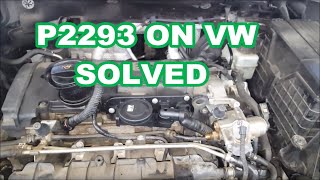
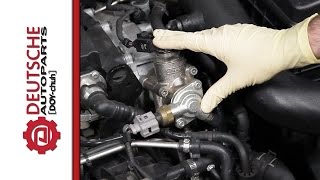
- Worn HPFP Cam Follower (Less Common) — The HPFP is driven by a lobe on the camshaft via a small bucket or roller called a cam follower. This part wears down or punctures, preventing the camshaft from fully actuating the pump, leading to low pressure. It is a mandatory inspection and replacement item when servicing the HPFP. 🎬 Watch: DIY guide to checking your cam follower and fuel pump.
- Faulty Camshaft Position Sensor (Honda/Acura) (Less Common) — On Honda and Acura vehicles, P1020 is often caused by a failing camshaft position sensor (CMP), a bad connector, or a wiring issue between the sensor and the ECM, disrupting the VTC system. 🎬 Watch: A quick test for the camshaft position sensor circuit.
- Wiring Harness or Connector Faults (Less Common) — Corrosion, damage, or a loose pin in the wiring to the fuel pressure sensor (G247), HPFP regulator (N276), or BMW eccentric shaft sensor causes an open or short circuit. This triggers the code even if the component itself is functional.
- Clogged Fuel Filter or Restricted Fuel Lines (Rare) — A severe restriction in the low-pressure fuel system, including a clogged in-tank pre-mesh filter, starves the HPFP of fuel, preventing it from building adequate high pressure and triggering the code.
- Stretched Timing Chain (VW/Audi) (Rare) — A significantly stretched timing chain alters the camshaft's timing relative to the crankshaft. Since the HPFP is driven by the camshaft, this disrupts its operation enough to cause pressure codes like P1020 and P0087.
Symptoms
- Check Engine Light and/or EPC Light On — The Malfunction Indicator Lamp (MIL) will always be on. On many VW and Audi vehicles, the Electronic Power Control (EPC) light also illuminates, signaling a powertrain fault.
- Significant Loss of Engine Power — The vehicle feels sluggish and has trouble accelerating. The engine goes into a 'limp mode' with drastically reduced power to prevent damage.
- Engine Hesitation or Stalling — The engine jerks, sputters, or stalls unexpectedly, especially when you press the gas pedal. This happens because the fuel supply can't keep up with demand and is a major safety concern.
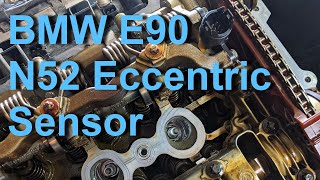
- Rough Idle or Hard Starting — The engine runs unevenly at a stop or takes longer than usual to start due to incorrect fuel pressure or, on BMWs, improper valve lift control. 🎬 See how to replace the BMW Valvetronic eccentric shaft sensor.
- Decreased Fuel Economy (also visible on scanner) — An inefficient fuel delivery or valve timing system almost always leads to the engine consuming more fuel than normal.
Diagnostic Flowchart
Tap your situation to follow the diagnostic path that matches what you're seeing on this code.
Common Fixes & Costs
- Replace High-Pressure Fuel Pump (HPFP) — Parts: $300-$700, Labor: $300-$600, ~2.2 hr book time (Professional)
- Replace BMW Eccentric Shaft Sensor — Parts: $250-$400, Labor: $600-$1000, ~4.5 hr book time (Professional)
- Replace Low-Pressure Fuel Pump (LPFP) — Parts: $200-$500, Labor: $200-$400, ~1.8 hr book time (Intermediate)
- Replace HPFP Cam Follower — Parts: $30-$60, Labor: $150-$250, ~0.8 hr book time (Intermediate)
- Reprogram/Initialize Control Module (GM) — Parts: $0, Labor: $100-$250, ~1.0 hr book time (Professional)
DIY vs Professional
- Replace HPFP Cam Follower (VW/Audi) 🟢 Beginner
Tools: Basic hand tools (socket set, Torx bits), torque wrench, new cam follower, new HPFP o-ring. - Replace Low-Pressure Fuel Pump (LPFP) 🟢 Beginner
Tools: Socket set, screwdrivers, fuel line disconnect tools, lock ring removal tool (can sometimes be improvised). - Replace High-Pressure Fuel Pump (HPFP) (VW/Audi) 🟢 Beginner
Tools: Full tool set, torque wrench, fuel line wrenches, VCDS or similar scan tool for priming/testing. - Replace Eccentric Shaft Sensor (BMW) 🟢 Beginner
Tools: Extensive tool set, torque wrench, engine timing tools (potentially), BMW-specific scan tool for relearn procedure.
Used vs. New Parts: Buying Guide
When a used part is worth it: For high-cost electronic items like a BMW eccentric shaft sensor, a used part from a low-mileage, accident-damaged vehicle is a viable option if the budget is extremely tight, but it carries significant risk. For mechanical wear items like a High-Pressure Fuel Pump, a used part is never recommended.
Donor-vehicle mileage cap: roughly under 60000 miles for the part to have meaningful remaining life.
Donor quality checklist:
- Verify the exact part number matches; superseded parts are often not compatible.
- For sensors, ensure the connector is free of oil, corrosion, or damage.
- Avoid parts from vehicles with high mileage or unknown maintenance history.
Decision logic:
- If The part is a known mechanical wear item like a fuel pump. → Always buy new. The risk of premature failure of a used pump outweighs any cost savings.
- If The part is electronic (e.g., sensor) and the OEM new price is over $300. → Consider a new OEM-supplier equivalent (e.g., VDO for BMW) first. A used part is a last resort.
- If The vehicle has over 120,000 miles. → Installing a used part with unknown history is very risky; favor a new part with a warranty.
Warranty tradeoff: Used parts from salvage yards typically offer a 30-90 day warranty, but this only covers the part itself, not the extensive labor required for installation. New aftermarket and OEM parts offer warranties from 1-year to limited lifetime, providing much better protection.
Worst-case if a used part fails: $800-2000 if a used part fails shortly after installation, as you will have to pay for the repeat labor and purchase a second replacement part.
What Happens If You Wait — Timeline
- 0-1 month: For VW/Audi, the Check Engine and EPC lights appear, often with codes P1020 and P0087. The car experiences intermittent hesitation or a brief 'fuel cut' under hard acceleration. For BMW, a subtle rough idle or slightly longer crank time appears, especially when cold. (MPG impact: 0-5%% · Added cost: $0-$50 in wasted fuel.)
- 1-3 months: For VW/Audi, limp mode becomes more frequent, and the car is noticeably down on power. Stalling occurs. On FSI engines, the cam follower wears completely through. For BMW, the rough idle is now consistent, and the car feels sluggish. The P1020 code is permanently stored. (MPG impact: 5-15%% · Added cost: $50-$200 in wasted fuel.)
- 3-6 months: For VW/Audi, the failing HPFP begins to send metal fragments ('swarf') through the fuel system. A worn-through cam follower starts to damage the camshaft lobe. The lean condition begins to overheat the catalytic converter. For BMW, the oil contaminating the eccentric shaft sensor begins to wick up the wiring harness towards the main engine computer (DME). (MPG impact: 15-25%% · Added cost: $1,500-$4,000. On a VW, the camshaft now needs replacement. On a BMW, ignoring the fault causes wear on the eccentric shaft itself, adding $1,000+ to the repair.)
- 6+ months: Catastrophic failure. For VW/Audi, the HPFP completely fails, destroying injectors and requiring the entire fuel system to be flushed or replaced to remove metal debris. The camshaft is destroyed. The catalytic converter is permanently damaged from the lean condition. For BMW, the eccentric shaft itself seizes, or oil reaches and damages the DME, leading to a multi-thousand dollar repair. (MPG impact: >25% (or car is undrivable)% · Added cost: $4,000-$8,000+. This represents a worst-case scenario where a full fuel system replacement (VW) or DME and eccentric shaft replacement (BMW) is needed on top of the initial failure part.)
Cost of Not Fixing It
- 0-1 month: Persistent Check Engine/EPC light, unpredictable stalling or limp mode, and a potential 5-15% drop in fuel economy. Increased safety risk due to potential power loss in traffic. (Added cost: Negligible, other than increased fuel consumption.)
- 1-6 months: On VW/Audi, a failing cam follower fractures, sending metal debris into the cylinder head, destroying the HPFP and potentially scoring or damaging the camshaft. This turns a sub-$300 repair into a $2,500+ repair. (Added cost: $2000-4000)
- 6+ months: Continued driving with a lean condition caused by low fuel pressure overheats and destroys the catalytic converter. On BMWs, ignoring a faulty sensor causes excessive wear on the Valvetronic eccentric shaft itself, adding significant cost to the repair. (Added cost: $1200-3500)
Diagnosis Steps
- Scan for All Fault Codes
Use an OBD-II scanner to read the codes. Note if P1020 appears with other codes like P0087 (Fuel Pressure Too Low) or P053F, as this pattern strongly points to a high-pressure fuel system issue on VW/Audi vehicles.
Tools: OBD-II Scanner (Beginner) - Monitor Live Fuel Pressure Data (VW/Audi/Nissan)
Using a scanner with live data, monitor 'Fuel Rail Pressure (High) Requested' vs. 'Actual' values. At warm idle, a healthy system shows actual pressure matching a specified pressure of around 40 bar (580 PSI). While revving or under load, the requested pressure exceeds 120 bar (1740 PSI) on older engines and up to 350 bar (5076 PSI) on newer engines. A large, consistent difference where 'Actual' is much lower than 'Requested' indicates a pressure delivery problem.
Tools: Advanced OBD-II Scanner (Intermediate) - Test the Low-Pressure Fuel System (VW/Audi)
Before blaming the expensive HPFP, verify it receives enough fuel. Connect a mechanical fuel pressure gauge to the low-pressure line's service port. The pressure must meet manufacturer specification under all load conditions. For many VW/Audi models, this is typically 4.0-6.0 bar (58-87 PSI). Pressure below this range, especially during acceleration, indicates a failing in-tank pump (LPFP), clogged filter, or faulty pump control module.
Tools: Mechanical Fuel Pressure Gauge (Intermediate) - Inspect the HPFP and Cam Follower (VW/Audi)
Visually inspect the high-pressure fuel pump for any signs of fuel leaks. On applicable engines (like the 2.0T FSI/TSI), remove the HPFP to inspect the cam follower for wear, scoring, or holes. A worn follower must be replaced, and the camshaft lobe must be inspected for damage.
Tools: Basic Hand Tools, Torx Set (Advanced) - Inspect BMW Eccentric Shaft Sensor Connector
If you have a BMW with code P1020, remove the engine cover and locate the large, round electrical connector for the eccentric shaft sensor. Unplug it and check for any engine oil inside the connector. Oil contamination is a definitive sign of internal sensor seal failure, requiring sensor replacement.
Tools: Basic Hand Tools (Intermediate) - Test BMW Eccentric Shaft Sensor Power Supply
On a BMW with P1020, locate the eccentric shaft sensor. Disconnect its connector and use a multimeter to test for battery voltage (approx. 12V) at the power supply pin (check a wiring diagram for your specific model). A lack of voltage points to a wiring issue or a fault in the DME, while the presence of voltage combined with the code suggests the sensor itself has an internal short.
Tools: Multimeter, Vehicle-specific Wiring Diagram (Advanced) - Electrically Test the VW/Audi Fuel Pressure Regulator (N276)
Disconnect the N276 connector on the HPFP. Use a multimeter to measure the resistance between the terminals. A typical reading is between 1.0 and 5.0 Ω. An open circuit or dead short indicates a failed regulator, requiring HPFP replacement. For advanced diagnosis, use an oscilloscope to monitor the duty cycle signal sent from the ECM to the N276. A steady signal that changes with RPM indicates the ECM is attempting to control pressure. If the signal is present but pressure doesn't build, the pump is faulty.
Tools: Multimeter, Automotive Oscilloscope (Professional) - Inspect Camshaft Position Sensor Circuit (Honda/Acura)
For a Honda with P1020, locate the camshaft position sensor (CMP). Check its electrical connector for a secure fit and look for any damage or corrosion on the wiring harness. Test the sensor and wiring for proper voltage and continuity according to the service manual.
Tools: Multimeter, Basic Hand Tools (Intermediate) - Resistance Test Mitsubishi Oil Feeder Control Valve
On a Mitsubishi with P1020, disconnect the oil feeder control valve connector. Use a multimeter set to Ohms (Ω) to measure the resistance between the two terminals on the valve itself. The standard value is 6.9 – 7.9 Ω at 20°C (68°F). If the reading is outside this range, the valve is faulty and must be replaced.
Tools: Multimeter (Advanced) - Check GM Module Programming
If you have a GM vehicle with code P1020, the issue is related to a recently replaced ABS or Powertrain Control Module. The module needs to be initialized and programmed with the correct VIN using a dealer-level scan tool to resolve the mismatch.
Tools: Professional Diagnostic Scan Tool (Professional) - Perform BMW Valvetronic Limit Relearn
After replacing an eccentric shaft sensor or motor, a 'relearn' or 're-adaptation' procedure is mandatory. This is performed with a BMW-specific scan tool (like ISTA/D) and teaches the DME the mechanical end-stops of the Valvetronic system. Failure to perform this step results in continued poor performance and fault codes.
Tools: BMW-specific Diagnostic Scan Tool (Professional)
When This Code Triggers (Freeze-Frame Conditions)
- Engine Coolant Temp: 180-210°F (82-99°C) (Fully warmed up. The fault is often set after the vehicle has been running for a while.)
- RPM: 1500-3000 (During acceleration or steady cruise. The ECU commands higher fuel pressure under load, and a weak pump fails to meet the target.)
- Engine Load: 40-70% (Moderate to high load, such as climbing a hill or accelerating onto a highway, which demands higher fuel volume and pressure.)
- Vehicle Speed: 40-65 mph (Often occurs during highway driving when a sustained demand is placed on the fuel system.)
Related Codes
- P0087 — Means 'Fuel Rail/System Pressure - Too Low'. On VW/Audi, P0087 confirms the state (low pressure), while P1020 identifies the fault (the system's inability to regulate it). Seeing them together strongly suggests a mechanical failure of the HPFP, cam follower, or LPFP.
- P053F — Means 'Cold Start Fuel Pressure Performance'. This code is often stored with P1020 and P0087 on VWs, indicating the pressure problem is present during engine startup. It further points towards a weak pump or failing regulator.
- P0090 — Means 'Fuel Metering Solenoid Control Circuit'. On VW/Audi, this code points to a specific electrical fault (open or short) in the fuel pressure regulator (N276/N290) circuit, which is often integrated into the HPFP. It is often the root cause of the P1020 control fault.
- P1017 — This is a BMW-specific code for 'Eccentric Shaft Sensor Plausibility'. P1020 indicates a power supply problem to the sensor, while P1017 means the sensor's signal is erratic or nonsensical. A power fault (P1020) causes a signal fault (P1017), so P1020 points to the root electrical cause.
- U0073 — Means 'Control Module Communication Bus 'A' Off'. On GM vehicles where P1020 indicates a VIN mismatch, this code is also present, indicating a broader communication problem on the CAN bus network that prevents modules from verifying the VIN.
Climate & Environmental Factors
- Cold Weather: For BMWs with a failing Valvetronic eccentric shaft sensor, cold weather worsens symptoms. The DME adjusts valve lift for cold starts, and a faulty sensor signal leads to long crank times, rough cold idle, and stalling that is not as apparent in warmer temperatures.
- Fuel Quality: While not a direct cause, poor quality fuel with high ethanol content or contaminants accelerates wear on both low and high-pressure fuel pumps over the long term, contributing to eventual failure.
How to Talk to a Mechanic About This Code
Say this: "For a VW/Audi: 'I have a P1020 code, and I'd like a diagnosis. Please start by testing the low-pressure fuel system with a mechanical gauge and document the reading before recommending a high-pressure pump replacement.' For a BMW: 'I have a P1020 code. Please begin by inspecting the eccentric shaft sensor connector for oil contamination, and also check if this repair could be covered by the SULEV warranty for my VIN.'"
This specific language signals you are an informed consumer. It directs the technician to perform critical, often-skipped diagnostic steps to prevent expensive misdiagnoses, like replacing a $1,400 HPFP when the issue was a weaker in-tank pump.
Avoid saying:
- 'My check engine light is on, can you fix it?'
- 'Just do whatever it needs.'
- 'I heard it's probably the [expensive part], can you just replace it?'
Questions to ask before authorizing the repair:
- For VW/Audi: 'What was the exact pressure reading from the low-pressure pump? Did you inspect the cam follower for wear?'
- For BMW: 'Did you find oil in the sensor connector? Does the estimate include replacing the valve cover and sensor gaskets, and performing the mandatory Valvetronic relearn procedure?'
- For any repair: 'What is the warranty on the parts and labor for this repair?'
Where to Take It: Dealer vs Independent vs Chain
- Dealer:
Recommended for BMW Valvetronic faults, all GM P1020 codes, and for owners who prioritize factory-trained technicians and parts above all else.
Best for: Vehicles under warranty (or potentially covered by extended emissions warranties like BMW SULEV)., Complex, brand-specific issues like BMW Valvetronic faults or GM module programming., The most recent model years where independent shops lack updated tools or information.
Downsides: Highest labor rates, often 1.5-2x more than independent shops., Recommends replacing an entire assembly when a smaller component has failed. (Typical cost: +50% vs. baseline) - Independent Shop:
Best overall fit, but ONLY if it is a reputable shop specializing in German cars (VW/Audi/BMW). Ask if they have brand-specific tools like VCDS or ISTA before booking.
Best for: Out-of-warranty VW and Audi fuel system repairs., Owners looking for a better cost-to-quality ratio., Building a long-term relationship with a trusted mechanic.
Downsides: Quality and expertise vary dramatically. Must be a specialist in German vehicles to be effective for this code., Lacks the very latest dealer-level software for brand-new models. (Typical cost: +0% vs. baseline) - Chain Shop:
AVOID. These shops are not equipped to properly diagnose or repair the root causes of P1020 on German vehicles.
Best for: Simple jobs like tires, brakes, and oil changes.
Downsides: Technicians lack the specialized training and tools for complex, manufacturer-specific codes like P1020., High risk of misdiagnosis, leading to unnecessary replacement of parts. (Typical cost: -10% vs. baseline)
When to Walk Away From the Repair
If the estimated repair cost exceeds 50% of your car's private-party market value, it's time to seriously consider selling or trading it in instead of repairing.
- Car worth $4000, fix is $2000: Borderline. The repair is 50% of the car's value. Get a second opinion, but strongly consider selling as-is or trading in.
- Car worth $15000, fix is $1400: Fix it. The repair cost is well below the threshold and makes economic sense.
- Car worth $3000, fix is $2500: Walk away. The repair cost is over 80% of the car's value and is not a sound investment.
What Scan Tool You Need for This Code
Minimum: A scanner that reads manufacturer-specific codes and displays live data PIDs (Parameter IDs) for the relevant system (Fuel Rail Pressure for VW, Valvetronic data for BMW).
A generic $20 code reader only tells you 'P1020' exists. It cannot show you the critical live data (like requested vs. actual fuel pressure) needed to diagnose a VW, nor can it perform the mandatory 'relearn' procedure required after replacing a BMW sensor. Using a basic reader leads to guessing and wasted money.
Budget: OBDeleven or BlueDriver Pro (~$99) — These Bluetooth dongles paired with a smartphone app read manufacturer-specific codes and display the live data needed to see a fuel pressure discrepancy on a VW. OBDeleven is particularly strong for VAG cars.
Mid-range: Foxwell NT510 Elite (~$200) — This is the best choice for a serious DIYer. It comes with one free brand-specific software package (e.g., BMW or VW). It offers deep, OE-level diagnostics, graphs live data, and crucially, performs bidirectional controls and adaptations like the mandatory BMW Valvetronic relearn procedure.
Professional: Autel MaxiCOM MK808 / Ross-Tech VCDS (~$500-800) — The Autel MK808 is a powerful all-makes tablet with full bidirectional control and service functions. VCDS is the gold standard for VW/Audi diagnostics, offering unparalleled logging and coding capabilities, but it is VAG-specific and requires a laptop.
Rent vs buy: DO NOT rent a scanner from a parts store for this code. Their loaner tools are basic readers incapable of the specific functions needed. If you own a German car, buying a midrange tool like the Foxwell NT510 Elite is a wise investment that pays for itself by avoiding a single misdiagnosis.
How to Clear the Code After You Fix It
- Use an OBD-II scan tool to clear all fault codes after the repair is complete.
- Ensure the fuel tank is between 1/4 and 3/4 full.
- Perform the manufacturer-specific drive cycle to run all readiness monitors.
Drive cycle (~30 minutes): A typical drive cycle involves a cold start, a few minutes of idling, a period of steady-speed city driving (20-35 mph), followed by a period of steady-speed highway driving (45-60 mph), and a final period of idling before shutdown. Specific steps vary by manufacturer.
Readiness monitors affected: Catalyst (CAT) monitor, Oxygen (O2) Sensor monitor, Evaporative (EVAP) System monitor, Fuel System monitor
Before emissions retest: drive at least 50 miles to fully set monitors.
Watch out for:
- Disconnecting the battery clears the code but also resets all readiness monitors, requiring a full drive cycle before an emissions test.
- The code returns immediately if the underlying mechanical or electrical fault has not been properly fixed.
- Not meeting the specific conditions for the drive cycle (e.g., fuel level, coolant temperature, steady throttle) prevents readiness monitors from setting.
Will This Fail Emissions / State Inspection?
Yes — this code typically fails an OBD-II emissions inspection.
- California: An active P1020 code is an automatic failure of the OBD-II portion of the smog check. All required readiness monitors must also be 'Ready' to pass, which requires driving 50-100 miles after a repair.
- New York: The NYS DMV inspection includes an OBD-II scan. An illuminated Check Engine Light and a code like P1020 results in an automatic failure.
- Texas: In the 17 counties requiring emissions testing, a vehicle with an active P1020 code fails the OBD-II scan portion of the annual safety inspection.
Most Commonly Affected Vehicles
- Volkswagen Tiguan (2019-2023) — Prone to HPFP failure, often triggering P1020 along with P0087 and P053F. VW has issued TSBs acknowledging this pattern.
- Volkswagen Atlas / Atlas Cross Sport (2022-2023) — A known issue with the HPFP is documented in VW TSB #2069309. Failure of the J538 fuel pump control module is also a possible cause on these models.
- Volkswagen Jetta (A7) (2019-2023) — The 1.4T and 1.5T EA211 engines commonly experience HPFP failure. TSB TT 20-18-05 provides diagnostic guidance.
- Volkswagen Taos (2022-2023) — The 1.5TSI EVO engine in the Taos commands very high fuel pressures (up to 350 bar) and is susceptible to both HPFP and LPFP failures. A recall (VW #20DV) was issued for the in-tank low-pressure pump on some 2022 models.
- Audi A4/S4 (2.0L FSI) (2005-2009) — These models suffer from faulty fuel pressure regulators. TPI 2007116 notes issues with clogged fuel pump pre-meshes, sometimes requiring a new low-pressure pump with a wider mesh design.
- BMW X3 (N52 Engine) (2007-2010) — Commonly experiences eccentric shaft sensor failure due to oil leaking into the connector, causing the P1020 power supply fault.
- BMW 3-Series / 1-Series (N55 Engine) (2011-2015) — These models are susceptible to Valvetronic system faults, including issues with the eccentric shaft sensor and servomotor.
- Honda / Acura Various models with VTC/VTEC (2003-2012) — On these vehicles, P1020 indicates a fault in the camshaft position sensor (CMP) circuit, not a fuel system issue.
- Nissan Frontier (2016-2019) — Triggers P1020 for either 'Fuel Pressure Regulation' or issues with the accelerator position sensor, requiring careful diagnosis to differentiate.
Manufacturer-Specific Notes
- Volkswagen / Audi: VW has issued Technical Service Bulletins (TSBs) like #2069309, #24-23-01, and Audi has TPI 2007116. These documents acknowledge that codes P1020, P0087, and P053F appearing together almost always require a full diagnosis of the high-pressure fuel system, often leading to HPFP replacement. A recall (#20DV) was issued for the low-pressure fuel pump on some 2022 VW Taos models, which also causes this code.
- BMW: The eccentric shaft sensor and related valve cover gaskets are sometimes covered under BMW's SULEV (PZEV) warranty, which is 15 years/150,000 miles in states that adopted California's emission standards. Owners must check with a dealer to confirm coverage before paying for the repair. A temporary 'fix' some attempt is to unplug the faulty sensor, forcing the engine to use the throttle body for air control, but this is not a proper repair.
- General Motors: This code is not a mechanical fault but a software/configuration issue. It typically only appears after a major component like the ABS module or PCM has been replaced and not correctly programmed to the vehicle with a dealer-level tool.
- Mitsubishi: For Mitsubishi, P1020 relates to the MIVEC variable valve timing system. Diagnosis involves checking the oil feeder control valve's resistance (spec: 6.9-7.9 Ω @ 20°C), its connector, and the wiring back to the ECU, rather than the fuel system.
Real Owner Stories
2019 VW Jetta 1.4T at 75,000 miles
Car suddenly went into limp mode on the highway with EPC and Check Engine lights on. Codes P1020, P0087, and P053F were present. The car would barely accelerate.
What they tried:
- The owner first suspected the low-pressure fuel pump (LPFP) or a clogged filter.
- An independent technician was consulted. They immediately recommended replacing the High-Pressure Fuel Pump (HPFP) based on the combination of codes, citing VW TSBs.
- The technician tested the low-pressure pump's output first to confirm it was supplying adequate pressure (it was), ruling out a misdiagnosis.
Outcome: Replaced the HPFP and the associated cam follower as a precaution. Total cost was approximately $1,400. The codes were cleared, and power was restored. The car has run without issue for over a year since the repair.
Lesson: The combination of P1020, P0087, and P053F on a modern VW almost always points to the HPFP. However, insisting the shop verifies low-pressure fuel supply first is a critical step to avoid a costly misdiagnosis.
2009 BMW 328i (N52) at 112,000 miles
Car had a history of intermittent rough idle and occasional starting issues for years. One day, it failed to crank and displayed a 'reduced engine output' warning. Multiple codes related to the Valvetronic system were stored.
What they tried:
- Over three years, the owner replaced coils, plugs, and O2 sensors trying to solve the rough idle, with no success.
- An independent technician replaced the Valvetronic motor with no change.
- The DME was replaced, which allowed the car to start, but the technician recommended also replacing the eccentric shaft sensor for $1,700 to fix the underlying rough idle.
- The owner found oil inside the eccentric shaft sensor connector, a tell-tale sign of sensor failure.
Outcome: The owner ultimately had the eccentric shaft sensor replaced, which finally resolved the long-standing rough idle and starting issues. The oil leak from the old sensor's internal seal had been corrupting the system for years.
Lesson: Intermittent rough idle, cold start stumbles, and inconsistent performance on a BMW N52/N55 are classic signs of a failing eccentric shaft sensor, often before it fails completely. Don't chase misfires with plugs and coils before checking the sensor's electrical connector for oil contamination.
2007 Audi A4 2.0T FSI at 130,000 miles
Engine suddenly lost power and felt like it hit a wall (a 'fuel cut') during hard acceleration. Check engine light came on with code P1020 and P0087.
What they tried:
- The owner, active on forums, immediately suspected the HPFP cam follower based on the symptoms.
- Upon removing the HPFP, they found the cam follower had worn completely through, with a hole in the middle. The tip of the HPFP plunger was also scored and damaged.
- The camshaft lobe that drives the pump showed visible wear and scoring.
Outcome: The owner had to replace the HPFP, the cam follower, and the intake camshaft. What was a $50 preventative part (the follower) turned into a repair costing over $2,000 due to the consequential damage.
Lesson: On VW/Audi FSI engines (approx. 2005-2009), the cam follower is a known wear item that is not a matter of 'if' but 'when'. It must be inspected every 20,000-30,000 miles and replaced preventatively to avoid catastrophic damage to the HPFP and camshaft.
2011 BMW X3 (N52) with P1020
Check Engine Light on with code P1020. Dealer quoted $2,000 to replace the eccentric shaft sensor, which requires removing the valve cover.
What they tried:
- The owner found forum discussions suggesting a 'free fix' for this specific code.
- They removed the plastic engine cover, located the large round connector for the eccentric shaft sensor, and unplugged it.
Outcome: Unplugging the sensor forces the BMW's engine to revert to using its traditional throttle body to control air and engine speed, bypassing the faulty Valvetronic system. The car ran without the P1020 code, albeit with slightly reduced fuel efficiency. The owner drove the car this way for months.
Lesson: While not a proper repair, unplugging the eccentric shaft sensor is a known temporary workaround on some BMW models to get the car running more smoothly and extinguish the P1020 code if a costly repair is not immediately possible. This is not a long-term solution.
How to Prevent This Code From Triggering
- Inspect/Replace HPFP Cam Follower (VW/Audi FSI) (Inspect every 20,000-30,000 miles; replace if any wear is visible.) — The black Diamond-Like Carbon (DLC) coating on the follower wears away, allowing the metal to be destroyed by the camshaft lobe. Preventative replacement is the only way to avoid catastrophic failure of the HPFP and camshaft.
- Perform regular, high-quality oil changes (Every 5,000-7,500 miles, using oil that meets manufacturer specs (e.g., VW 502.00).) — For VW/Audi, good oil reduces wear on the cam follower and timing chain. For BMW, clean oil prevents sludge that harms Valvetronic components and helps preserve the seals (like the one on the eccentric shaft sensor) that fail and cause oil leaks.
- Use Top Tier gasoline (Every fill-up.) — Higher levels of detergents in Top Tier gas prevent carbon buildup on injectors and within the fuel system. Maintaining a clean fuel system reduces overall stress on the pumps and regulators.
- Replace BMW valve cover and eccentric shaft sensor gaskets preventatively (If the valve cover is removed for any reason after 80,000 miles.) — The gaskets for the valve cover and eccentric shaft sensor become hard and brittle, leading to oil leaks. The leak into the sensor connector is the primary cause of P1020 on BMWs. Replacing the seal is cheap insurance against a $400 sensor and a multi-hour labor bill.
- Don't ignore oil leaks (Daily habit of checking for drips.) — For BMWs, an oil leak from the valve cover area is a direct threat to the eccentric shaft sensor. Fixing the leak promptly prevents the sensor from being contaminated with oil, which is the root cause of the P1020 electrical fault.
Frequently Asked Questions
My mechanic wants to replace the HPFP right away. Could it be anything else?
While the High-Pressure Fuel Pump (HPFP) is a common failure for a P1020 code on a VW or Audi, replacing it without checking other components is a classic misdiagnosis. A failing in-tank low-pressure pump (LPFP), worn cam follower, or faulty control module all produce the exact same code. A technician must test the low-pressure system's output (target 58-87 PSI) with a mechanical gauge before condemning the expensive HPFP.
What is the difference between code P1020 and P0087?
P0087 tells you what happened: the fuel rail pressure is too low. P1020 on a VW/Audi tells you why it happened: the fuel pressure regulation system exceeded its control limits and cannot compensate. They almost always appear together, pointing to a mechanical or electrical failure in the fuel delivery system.
I have a P1020 code on my Honda. Does this mean my fuel pump is bad?
No. On a Honda or Acura, code P1020 is not related to the fuel system. It indicates a fault in the Variable Timing Control (VTC) system, most likely caused by a faulty camshaft position sensor (CMP), its connector, or the wiring.
Can I just clear the P1020 code and keep driving?
You can clear the code, but it will return quickly because P1020 indicates a hard mechanical or electrical fault, not an intermittent glitch. Ignoring it means continuing to drive with a condition that causes dangerous stalling, poor performance, and permanent catalytic converter damage.
Can a bad gas cap cause code P1020?
No. While a loose gas cap causes a Check Engine Light for the evaporative emissions (EVAP) system (like code P0455), it is completely unrelated to the high-pressure fuel system or Valvetronic faults indicated by P1020.
Will a fuel injector cleaner fix a P1020 code?
It is highly unlikely. Code P1020 on VW/Audi vehicles points to a mechanical or electrical failure in the high-pressure pump, its regulator, or its drive mechanism, which a chemical cleaner cannot fix.
I have a P1020 code on my Chevy. Does this mean my fuel pump is bad?
No. On a Chevrolet or GMC vehicle, P1020 indicates a VIN mismatch between control modules, not a fuel system problem. This is a communication error that requires a technician with dealer-level programming tools to resolve.
My car is a Mitsubishi and has a P1020 code. What does it mean?
On many Mitsubishi vehicles, P1020 points to a problem with the Oil Feeder Control Valve System, which is part of the MIVEC variable valve timing system. It is not a fuel-related code. The cause is a failed oil control valve (spec: 6.9-7.9 Ohms), a bad connector, or a wiring issue.
Why is the repair so expensive?
For VW/Audi, the High-Pressure Fuel Pump is a complex, precision-machined component that is costly to manufacture. For BMW, replacing the eccentric shaft sensor requires removing the valve cover and other components, resulting in a massive labor bill.
Is it dangerous to drive with a P1020 code?
Yes, it is dangerous. The primary risk is a sudden stall or loss of power while driving, which causes a severe safety hazard in an intersection or on a highway. Get the vehicle serviced immediately to avoid accidents and expensive secondary engine damage.
Key Takeaways
- P1020 is a manufacturer-specific code that requires looking up the exact definition for your brand, as it means a fuel pressure fault on a VW but a Valvetronic sensor failure on a BMW.
- On VW and Audi vehicles, P1020 almost always indicates a failed High-Pressure Fuel Pump (HPFP), but mechanics must verify the low-pressure pump delivers 58-87 PSI first to prevent a $1,200 misdiagnosis.
- BMW models trigger P1020 when engine oil leaks into the eccentric shaft sensor connector, requiring a $1,000 replacement that is sometimes covered under the 15-year/150,000-mile SULEV warranty.
- For Honda and Mitsubishi vehicles, P1020 points to a camshaft timing system failure, while on GM trucks it indicates a software VIN mismatch requiring a $150 dealer reprogramming.
- Driving with an active P1020 code causes sudden engine stalling at highway speeds and destroys the catalytic converter, adding up to $2,500 in secondary repair costs within 6 months.
Helpful Videos
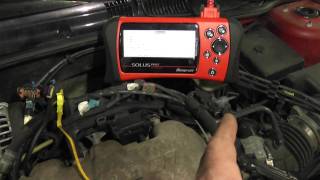
Shop the Parts Behind P1020
Below are the parts most often responsible for code P1020, ranked by how frequently each one is the actual culprit (per the diagnosis above). Tap any to see what we have for your vehicle.


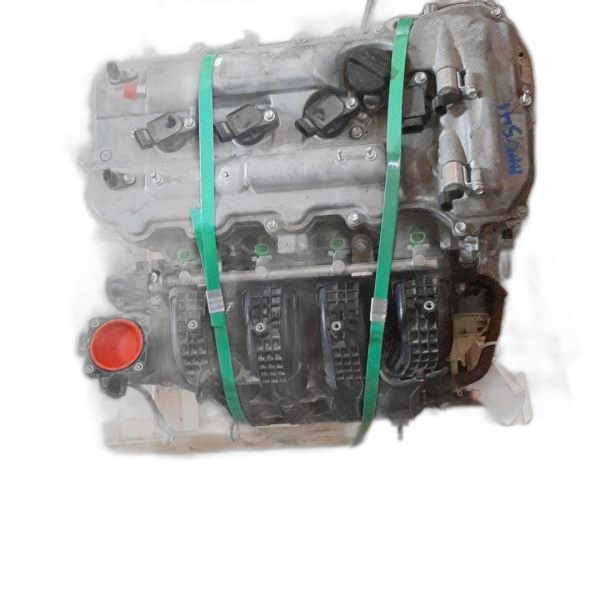

The information in this article is provided for general reference and educational purposes only. Vehicle specifications, procedures, and part compatibility can vary by production date, trim level, and region. Always consult your vehicle's factory service manual and verify part numbers before purchasing or performing repairs. Safety-critical components such as airbags, seat belts, and braking systems should be installed by a qualified professional.
- 🧭 Diagnostic Flowchart
- 🎬 Helpful Videos
- 🛍️ Shop This Part
- What Does P1020 Mean?
- Can I Drive With P1020?
- Common Causes
- Symptoms
- Common Fixes & Costs
- DIY vs Professional
- Used vs. New Parts: Buying Guide
- What Happens If You Wait — Timeline
- Cost of Not Fixing It
- Diagnosis Steps
- When This Code Triggers (Freeze-Frame Conditions)
- Related Codes
- Climate & Environmental Factors
- How to Talk to a Mechanic About This Code
- Where to Take It: Dealer vs Independent vs Chain
- When to Walk Away From the Repair
- What Scan Tool You Need for This Code
- How to Clear the Code After You Fix It
- Will This Fail Emissions / State Inspection?
- Most Commonly Affected Vehicles
- Manufacturer-Specific Notes
- Real Owner Stories
- 2019 VW Jetta 1.4T at 75,000 miles
- 2009 BMW 328i (N52) at 112,000 miles
- 2007 Audi A4 2.0T FSI at 130,000 miles
- 2011 BMW X3 (N52) with P1020
- How to Prevent This Code From Triggering
- Frequently Asked Questions
- My mechanic wants to replace the HPFP right away. Could it be anything else?
- What is the difference between code P1020 and P0087?
- I have a P1020 code on my Honda. Does this mean my fuel pump is bad?
- Can I just clear the P1020 code and keep driving?
- Can a bad gas cap cause code P1020?
- Will a fuel injector cleaner fix a P1020 code?
- I have a P1020 code on my Chevy. Does this mean my fuel pump is bad?
- My car is a Mitsubishi and has a P1020 code. What does it mean?
- Why is the repair so expensive?
- Is it dangerous to drive with a P1020 code?
- Key Takeaways
- 🎟️ Get 5% Off