

P1025 on 2009-2016 Volkswagen CC: Fuel Pressure Fault Causes and Fixes
On the 2.0T engine, this code is almost always caused by a worn-out high-pressure fuel pump (HPFP) cam follower, a cheap part that can cause expensive engine damage. On the 3.6L VR6, it often points to stretched timing chains. Inspecting the cam follower on a 2.0T is the first step.
- P1025 indicates a mechanical failure in the high-pressure fuel system, not just a sensor error.
- For the 2.0T engine, immediately inspect the HPFP cam follower. This is the most likely and most critical point of failure.
- For the 3.6L engine, this code is a strong indicator of stretched timing chains, which is a major repair.
- Ignoring this code can lead to a sudden stall or progress from a simple fix (cam follower) to a very expensive one (new camshaft and HPFP).
What's Unique About the 2009-2016 Volkswagen CC
The VW CC uses a direct injection fuel system with a camshaft-driven High-Pressure Fuel Pump (HPFP). This design has two well-documented, engine-specific failure points that trigger code P1025. On the common 2.0T TSI engine (EA888 family), the code is famously linked to premature wear of the flat 'cam follower' tappet that drives the pump. On the less common 3.6L VR6 engine, the same code is often a symptom of a much larger problem: stretched timing chains causing the HPFP to operate out of sync with the rest of the engine, as detailed in VW Technical Service Bulletins.
Diagnostic Flowchart
Tap your situation to follow the diagnostic path that matches what you're seeing on this vehicle.
Symptoms You May Notice
- Check Engine Light (MIL) illuminated
- Sudden loss of engine power or limp mode
- Engine hesitation or stumbling during acceleration
- Rough idling
- Engine stalling
- Difficulty starting the engine
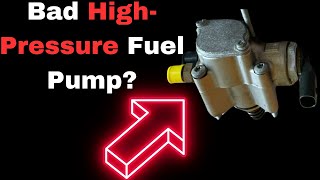
- High-pitched whining noise from the engine bay 🎬 Watch: Common signs and symptoms of a failing HPFP.
- Replacing the fuel pressure sensor (G247) when the issue is a mechanical failure of the cam follower or HPFP.
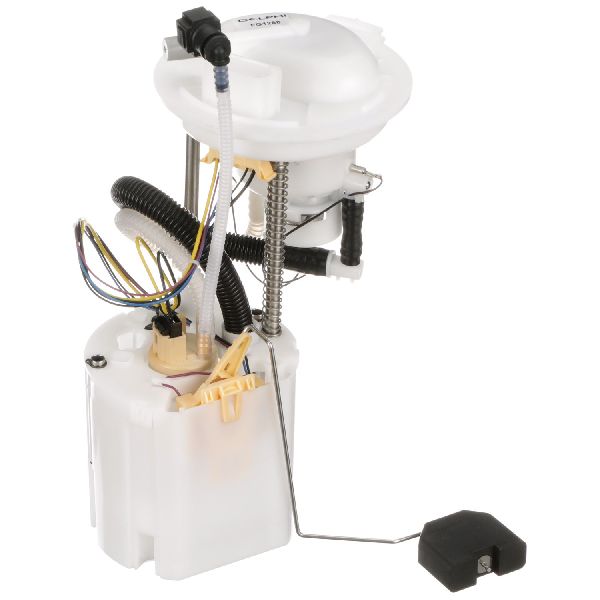
- Replacing the in-tank low-pressure fuel pump when the fault is in the high-pressure circuit. A Rennlist forum thread on a Porsche with a similar engine notes a user replaced the HPFP first, only to find the low-pressure pump was the ultimate cause, highlighting the need for proper diagnosis.
Most Likely Causes
- Worn High-Pressure Fuel Pump (HPFP) Cam Follower 🔴 High Probability → Shop Engine Valve Tappet Applies to the 2.0T TSI engine. The flat tappet design is a known wear item, with a coating that erodes over time. Failure can occur in as few as 20,000 miles, making regular inspection a community-recommended practice.
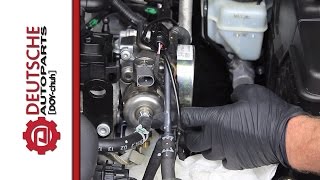
How to confirm: Remove the HPFP from the cylinder head (typically three Torx T30 bolts and two fuel lines). The bucket-shaped follower can then be visually inspected for wear. Look for a hole, deep scoring, or a concave shape on the contact surface. A YouTube video from 'Deutsche Auto Parts' titled 'VW Audi 2.0T FSI - How to (DIY) Check the Cam Follower...' provides a detailed visual guide.
Typical fix: Replace the cam follower. If it has worn through, the HPFP and the intake camshaft lobe must also be inspected for damage and replaced if necessary. This is a common failure mode discussed extensively in owner forums.
Est. part cost: $40-$95 - Stretched Timing Chains 🟡 Medium Probability → Shop Engine Timing Chain Applies to the 3.6L VR6 engine. The timing chains are on the transmission side of the engine, making replacement labor-intensive. Over time, they can stretch, causing camshaft timing to deviate. Since the HPFP is driven by the cams, this puts the pump 'out of time'.
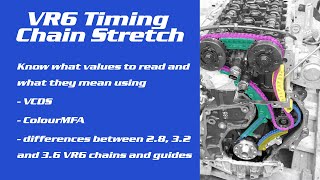
How to confirm: Use a VW-specific scan tool (like VCDS by Ross-Tech) to check camshaft phase adjustment. For non-UDS ECUs (approx. pre-2011), check Measuring Value Blocks (MVB) 208 and 209. For UDS ECUs (approx. 2011+), check Advanced Measuring Values for IDE00182 and IDE00184. A deviation of 8 degrees or more 🎬 See how to check VR6 timing chain stretch using VCDS. indicates the engine is out of time. TSB TT 01-16-05 also notes that excessively high fuel rail pressure at idle (e.g., 125 bar) is a strong indicator.
Typical fix: This is a major repair requiring the replacement of both timing chains, tensioners, and guides. The transmission must be removed for access.
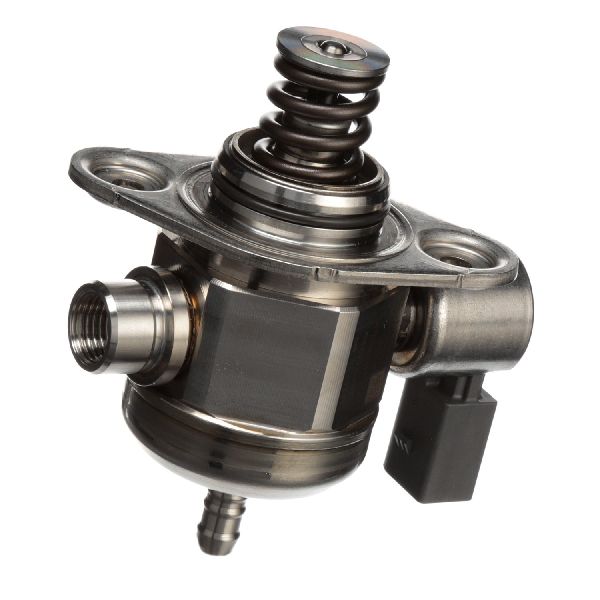
Est. part cost: $500-$1000 - High-Pressure Fuel Pump (HPFP) Failure 🟡 Medium Probability → Shop Fuel Pump The pump can fail internally due to wear or a fault in the integrated N276 regulator valve. On 2.0T engines, this is often a direct result of a neglected, worn-through cam follower destroying the pump's plunger.
How to confirm: After confirming the cam follower (on 2.0T) and timing (on 3.6L) are good, and the low-pressure system is supplying fuel, the HPFP itself becomes the primary suspect. Monitor requested vs. actual fuel rail pressure with a scan tool; a large, persistent discrepancy under load points to the HPFP.
Typical fix: Replace the High-Pressure Fuel Pump.
Est. part cost: $250-$600 - Faulty Fuel Pump Control Module ⚪ Low Probability → Shop Fuel Pump A recall (VW code 20AE, NHTSA ID 17V509) was issued for the fuel pump control module on 2009-2016 CC models. An interruption of electrical power could cause the fuel pump to fail, leading to a stall.
How to confirm: Check the vehicle's VIN for the open recall on VW's website or with a dealer. The recall remedy involves replacing the module and relocating it. If the recall was performed, diagnosis would involve checking power, ground, and signal at the module.
Typical fix: Have the recall service performed by a VW dealer, which is free of charge. If the recall was already done, replace the fuel pump control module.
Est. part cost: $150-$250
Rare But Worth Checking
- Damaged Intake Camshaft Lobe: On 2.0T engines, if a worn cam follower is ignored, it will allow the HPFP's piston to ride directly on the camshaft, destroying the lobe. This requires camshaft replacement and is a direct consequence of not addressing the primary cause.
- Faulty Fuel Pressure Sensor (G247): → Shop Fuel Pressure Sensor The sensor that reads the pressure in the fuel rail can fail and send incorrect data, but this is much less common than the mechanical failures in the system. It's often misdiagnosed when the pump or follower is the real issue.
Diagnosis Steps
- Scan the ECM for fault codes and note any other codes present, such as P0087, P0088, or P053F.
- Identify the engine (2.0T TSI or 3.6L VR6) as the diagnostic path differs significantly.
- For 2.0T TSI: Immediately perform a visual inspection of the HPFP cam follower. This is the most likely point of failure. Remove the HPFP and check the follower for wear or a hole. If worn, also inspect the tip of the HPFP plunger and the camshaft lobe for scoring or damage.
- For 3.6L VR6: Use a VW-specific scan tool to view camshaft adaptation values. Per TSB TT 01-20-05, check Measuring Value Blocks 208 and 209 (non-UDS) or IDE00182/IDE00184 (UDS). If the phase deviation exceeds +/- 8 degrees, the timing chains are the confirmed cause.
- Use a scan tool to monitor 'Fuel Rail Pressure (specified)' vs. 'Fuel Rail Pressure (actual)'. A large discrepancy confirms a pressure regulation problem. For the 3.6L, TSBs indicate that with a timing issue, actual pressure at idle may be extremely high (over 60 bar, sometimes up to 125 bar).
- Verify the low-pressure fuel system is working. Check the pressure from the in-tank pump to ensure it is adequately supplying the HPFP (typically 4-6 bar or 58-87 PSI).
- If the cam follower/timing is good and low pressure is adequate, inspect the wiring and connector for the N276 valve on the HPFP.
- If all other components check out, the HPFP itself has likely failed internally and requires replacement.
Parts You'll Likely Need
- HPFP Cam Follower
(OEM #06D109309C)— This is the most common failure point on the 2.0T TSI engine leading to code P1025. It is a critical preventative maintenance item.
Trusted brands: INA, VW Genuine
OEM price range: $60-$95
Aftermarket price range: $40-$60 - High-Pressure Fuel Pump (HPFP) - 2.0T TSI
(OEM #06J127025K (or newer revisions like L, J, G, F, E, D, C))— The pump itself can fail mechanically or be damaged by a worn cam follower. It contains the N276 valve referenced in the code definition.
Trusted brands: Bosch, Hitachi
OEM price range: $450-$600
Aftermarket price range: $250-$400 - High-Pressure Fuel Pump (HPFP) - 3.6L VR6
(OEM #03H127025E (or older revisions 03H127025/03H127025C))— Primary suspect on the 3.6L engine after timing chain issues have been ruled out.
Trusted brands: Hitachi, VW Genuine
OEM price range: $350-$500
Aftermarket price range: $200-$350 - Timing Chain Kit — For the 3.6L VR6 engine, this is the primary cause of P1025 when the chains stretch.
Trusted brands: Iwis, VW Genuine
OEM price range: $700-$1000
Aftermarket price range: $400-$600
Related Codes That Often Appear With This One
- P0087 — Indicates 'Fuel Rail/System Pressure - Too Low,' a common result of a worn cam follower or failing HPFP.
- P0088 — Indicates 'Fuel Rail/System Pressure - Too High,' which is specifically mentioned in TSBs for the 3.6L engine when timing chains have stretched, causing the HPFP to be out of sync.
- P053F — Indicates 'Fuel Pressure Regulator Control Performance,' directly related to the HPFP's inability to control pressure, often due to being out of sync from stretched timing chains on the 3.6L VR6.
Technical Service Bulletins (TSBs) & Recalls
- TT 01 20 05_4 (also cited as 2060799): Details diagnosis for P1025 and P0088 on 3.6L engines, specifying the >8 degree camshaft deviation check and noting excessively high idle fuel pressure (up to 125 bar) as a symptom of being out of time.
- TT011605_2045487 (also cited as TT 01-16-05): An earlier TSB providing enhanced diagnostics for P0088 and P1025 on the 3.6L engine, also referencing the cam deviation check.
- VW Recall 20AE (NHTSA 17V509): Safety recall for the Fuel Pump Control Module on 2009-2016 CC models due to risk of engine stalling.
Platform-Specific Known Issues
- 2.0T TSI Cam Follower Wear: This engine is known for rapid wear of the HPFP cam follower. Many owners on forums like VWVortex and Reddit perform preventative checks and replacements every 20,000-30,000 miles to avoid catastrophic engine damage.
- Fuel Pump Control Module Recall (20AE): VW issued recall 20
Mechanic-Grade Diagnostic Values
- Low-Pressure Fuel Pump (in-tank) supply to HPFP — expected: 4.0 - 7.0 bar (58 - 101 PSI). Failure: Pressure below this range indicates a failing in-tank pump or control module issue, starving the HPFP.
- High-Pressure Fuel Rail at Idle (engine warm) — expected: Approx. 40-50 bar (580-725 PSI). Failure: Significantly lower pressure suggests a worn cam follower or failing HPFP. Significantly higher pressure (on 3.6L) can indicate stretched timing chains.
- High-Pressure Fuel Rail under load (WOT) — expected: Rises with engine speed, up to 110-170 bar (1600-2465 PSI). Failure: Failure for the pressure to rise significantly above idle pressure points to a mechanical issue with the HPFP or a severe leak.
- G247 Fuel Pressure Sensor Reference Voltage — expected: With ignition on and sensor disconnected, Terminal 3 to Ground should be ~5V.. Failure: A missing 5V reference points to a wiring issue or a fault in the Engine Control Module (ECM).
- G247 Fuel Pressure Sensor Harness Resistance — expected: 1.5 ohms maximum. Failure: Higher resistance indicates an open or corroded wire in the harness between the sensor and the ECM.
Scan Tool Commands That Help
- VCDS (VAG-COM) or equivalent dealer tool (ODIS/PIWIS): Clear Fuel System Adaptations / Throttle Body Adaptation — This function should be performed after replacing the High-Pressure Fuel Pump (HPFP). Failure to reset adaptations can cause a persistent P1025 code to be stored even though the mechanical fault is fixed, as the ECU is still operating on learned values from the old, failing part.
Wiring & Ground Locations
- N276 — This is the Fuel Pressure Regulating Valve, which is an integrated electrical connector on the High-Pressure Fuel Pump (HPFP) itself, mounted on the engine.. The code P1025 directly names this component. Checking its connector for corrosion or damage is a key diagnostic step.
- G247 — The High-Pressure Fuel Sensor, located on the metal fuel rail that supplies the injectors. On the 2.0T engine, it is often under the intake manifold.. This sensor provides the 'actual' fuel pressure reading to the ECM. A fault in its wiring can mimic an HPFP failure.
- J623 — The Engine Control Module (ECM), typically located in the plenum/cowl area at the back of the engine bay.. All wiring for the N276 valve and G247 sensor terminates at the ECM. Final wiring checks for continuity or shorts must be performed at the ECM connector.
- G639 — A primary ground point located in the driver's side footwell, in the left kick panel area or on the A-pillar.. A poor ground at this location can cause intermittent electrical issues with various control modules in the cabin, including those related to the fuel system and onboard diagnostics.
Real Owner Repair Stories
- Rennlist forum user 'Rossi' (Porsche Cayenne (uses similar direct injection technology and fault codes)) — P1025 code appeared as 'pending' immediately after replacing the High-Pressure Fuel Pump (HPFP).
❌ Tried (didn't work) A 'hard reset' by disconnecting the battery and touching the terminals together did not clear the pending code.
✅ What actually fixed it The issue was resolved by taking the vehicle to a specialist who used a dealer-level scan tool (PIWIS) to perform the fuel system adaptation procedure, which is required after an HPFP installation.
When the Usual Fixes Don't Work
- While the most common cause of fuel pressure codes like P0087 and P1025 on the 2.0T engine is a failure in the high-pressure system (cam follower or HPFP), it should not be the only assumption. There are documented cases where both the HPFP and pressure sensor were replaced without fixing the issue, and the root cause was ultimately a weak in-tank low-pressure fuel pump that was not providing adequate supply to the high-pressure side. Proper diagnosis requires confirming low-side pressure (58-101 PSI) before condemning the more expensive high-pressure components.
OEM Part Supersession History
06J127025C, D, E, F, G, J, K→06J127025L (or newer)— Multiple revisions to improve reliability and performance of the 2.0T TSI High-Pressure Fuel Pump.
Heads up: While all are for the TSI engine, it is always recommended to install the latest available revision. Some older revisions may have required different fuel line fittings.1K0906093D, E, F, G→1K0906093H, J, or K— Original Fuel Pump Control Modules were prone to overheating, causing engine stalling. This was subject to recall 20AE / NHTSA 17V509.
Heads up: The recall service replaces the module and relocates it to reduce heat exposure. Part number 1K0906093K often includes an extended wiring harness for this relocation.
Model Year Variations Within This Range
- 2009-2016: The Fuel Pump Control Module recall (NHTSA 17V-509) affects the entire model year range, indicating the vulnerable part and its original location were consistent throughout production.
- 2012-2013: The CC received a major cosmetic facelift for the 2013 model year, updating the front and rear styling. However, the core 2.0T TSI and 3.6L VR6 powertrain options and their related fuel systems remained fundamentally the same, meaning the causes for P1025 did not change.
- Approx. 2011 cutoff: The Engine Control Module (ECU) switched from a non-UDS to a UDS protocol around 2011. This changes the specific commands used in diagnostic software like VCDS to access live data (e.g., Measuring Value Blocks vs. Advanced Measuring Values for camshaft adaptation) but does not alter the physical diagnosis or repair procedures.
Helpful Videos
![[EN] 2.0 FSi/TFSi High pressure fuel pump cam follower replacement](https://img.youtube.com/vi/ubwZZrDEJBE/mqdefault.jpg)
Used OEM Parts in Stock
New Aftermarket Parts Available


The information in this article is provided for general reference and educational purposes only. Vehicle specifications, procedures, and part compatibility can vary by production date, trim level, and region. Always consult your vehicle's factory service manual and verify part numbers before purchasing or performing repairs. Safety-critical components such as airbags, seat belts, and braking systems should be installed by a qualified professional.
- Volkswagen CC:
- 🧭 Diagnostic Flowchart
- 🎬 Helpful Videos
- 🛍️ Shop This Part
- What's Unique About the 2009-2016 Volkswagen CC
- Symptoms You May Notice
- Most Likely Causes
- Rare But Worth Checking
- Diagnosis Steps
- Parts You'll Likely Need
- Related Codes That Often Appear With This One
- Technical Service Bulletins (TSBs) & Recalls
- Platform-Specific Known Issues
- Mechanic-Grade Diagnostic Values
- Scan Tool Commands That Help
- Wiring & Ground Locations
- Real Owner Repair Stories
- When the Usual Fixes Don't Work
- OEM Part Supersession History
- Model Year Variations Within This Range
- 🎟️ Get 5% Off