

P1025 on 2012-2018 Volkswagen Passat 3.6L: Fuel Pressure Fault Causes and Fixes
On a 2012-2018 Passat with the 3.6L VR6 engine, code P1025 almost always points to a serious mechanical issue where the engine's timing has jumped, causing the High-Pressure Fuel Pump (HPFP) to be out of sync. This is a complex and expensive repair involving timing chain replacement, a known issue on this engine platform.
- P1025 on a Passat 3.6L is a serious code indicating a mechanical failure in the high-pressure fuel system.
- The most likely cause is not the pump itself, but stretched timing chains causing the pump to run out of sync.
- Diagnosis requires a VW-specific scan tool to check camshaft adaptation values; this is the most important diagnostic step.
- This is not a DIY-friendly repair for most home mechanics due to its complexity and the need for special tools.
- Do not replace any parts until you have confirmed if the engine timing is correct or not.
What's Unique About the 2012-2018 Volkswagen Passat
On the Passat's 3.6L VR6 engine, this code is very specifically linked to the engine's timing chains. Unlike many fuel codes that point to a simple sensor or pump failure, P1025 is frequently a symptom of stretched timing chains or failed tensioners. This causes the camshafts—and therefore the mechanically-driven high-pressure fuel pump—to go out of sync with the rest of the engine. This de-synchronization is a well-documented failure mode confirmed by multiple VW Technical Service Bulletins (TSBs), leading to dangerously high fuel pressure.
Diagnostic Flowchart
Tap your situation to follow the diagnostic path that matches what you're seeing on this vehicle.
Symptoms You May Notice
- Check Engine Light (MIL) illuminated
- EPC (Electronic Power Control) light may be on
- Engine stalling or shutting off
- Rough or unstable idle
- Reduced engine power or hesitation
- Difficulty starting the engine
- High-pitched whining noise from the engine bay
- Replacing only the fuel pressure sensor without checking engine timing.
- Replacing the in-tank low-pressure fuel pump, which is not related to this high-pressure side fault.
- Replacing the HPFP without first confirming the engine timing is correct, leading to the new pump failing or the code returning.
Most Likely Causes
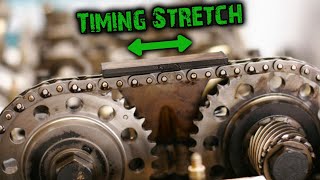
- Stretched Timing Chains or Failed Tensioners 🔴 High Probability → Shop Engine Timing Chain The 3.6L VR6 engine (EA390 family) is known to have issues with timing chain stretch over its lifespan, which directly affects the timing of the camshaft-driven HPFP. This is confirmed by multiple VW TSBs.
How to confirm: Using a VW-specific scan tool (like VCDS), check the camshaft adaptation phase position values. For 2012+ UDS models, check Advanced Measuring Values IDE00182 (Camshaft adaptation intake bank 1) and IDE00184 (Camshaft adaptation exhaust bank 1). For pre-2012 models, check Measuring Blocks 208 and 209. 🎬 See how to check VR6 timing chain stretch using VCDS. If the values exceed +/- 8.0 degrees, the engine timing is off.
Typical fix: Complete replacement of the timing chains, tensioners, and guides. For some earlier model years (pre-2008), TSBs also recommend replacing the oil pump and gears as part of this service. This is a major engine-out or transmission-out service.
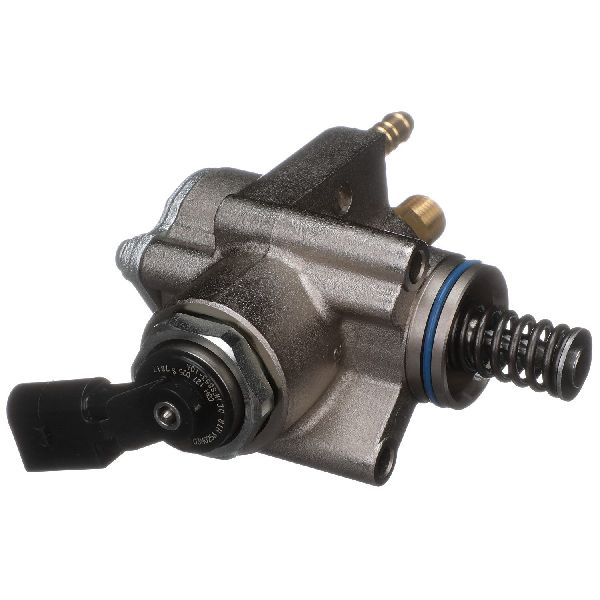
Est. part cost: $500-$1000 for a full timing kit - Failed High-Pressure Fuel Pump (HPFP) 🟡 Medium Probability → Shop Fuel Pump The HPFP can fail internally due to wear or as a result of damage from a timing issue. The extreme pressures it operates under can lead to mechanical failure of its internal regulator (N276).
How to confirm: If timing is confirmed to be correct (cam adaptation values are within spec), but fuel pressure is still excessively high (over 60 bar at idle) or the pump is noisy, the pump itself is the likely culprit.
Typical fix: Replace the High-Pressure Fuel Pump.
Est. part cost: $300-$600 - Faulty Fuel Rail Pressure Sensor (G247) ⚪ Low Probability → Shop Fuel Pressure Sensor
How to confirm: Monitor the fuel pressure readings on a scan tool. If they are erratic, jump to maximum value instantly, or don't change with engine RPM, the sensor may be at fault. This is best confirmed after verifying the timing is correct.
Typical fix: Replace the fuel rail pressure sensor.
Est. part cost: $50-$150
Rare But Worth Checking
- Leaking Fuel Injector: While more likely to cause low pressure codes like P0087, a severely malfunctioning injector could disrupt fuel rail pressure and contribute to control faults.
- Wiring Harness Issue: Damage to the wiring for the fuel pressure regulator valve (N276) or the rail pressure sensor (G247) could cause incorrect signals, but this is much less common than the mechanical failures.
Diagnosis Steps
- Connect a VW-compatible scan tool and check for all stored fault codes. Note the presence of P0088, P053F, or P0087. 🎬 Watch: Diagnostic walkthrough for P0088 high fuel pressure codes.
- Monitor live data for fuel rail pressure at idle. According to VW Technical Tip TT 01-20-05, a pressure reading that is excessively high (over 60 bar, sometimes as high as 125 bar) strongly suggests a timing issue.
- Access the critical diagnostic values for camshaft adaptation. For 2012+ models, check Advanced Measuring Values IDE00182 (Camshaft adaptation intake bank 1) and IDE00184 (Camshaft adaptation exhaust bank 1).
- If either camshaft adaptation value exceeds +/- 8.0 degrees, stop. 🎬 Watch this guide on monitoring timing chain stretch values. The engine has a timing fault. The timing chains, tensioners, and guides must be replaced.
- If the adaptation values read as blank or 0, the fault memory may have been recently cleared. In this case, TSBs advise removing the upper timing cover to physically verify base timing before proceeding.
- If camshaft adaptation values are within the +/- 8.0 degree specification and are not blank, the engine timing is likely correct. The suspicion then shifts to a mechanical failure of the High-Pressure Fuel Pump (HPFP) itself.
- Inspect the wiring and connector at the HPFP's fuel pressure regulator valve (N276) for any visible damage or corrosion.
- If timing is good and wiring appears intact, the HPFP is the most probable failed component.
Parts You'll Likely Need
- Timing Chain Kit — This is the most common root cause for P1025 on the 3.6L engine. A full kit includes chains, tensioners, and guides. Example component part numbers include Upper Guide Rail 066109514A and Upper Timing Chain 03H109503.
Trusted brands: Iwis, INA, Genuine Volkswagen
OEM price range: $800-$1200
Aftermarket price range: $500-$800 - High-Pressure Fuel Pump (HPFP)
(OEM #03H127025 (revisions include 03H127025G))— This is the second most likely cause, either from independent failure or damage caused by a timing issue.
Trusted brands: Bosch, Hitachi, Genuine Volkswagen
OEM price range: $500-$700
Aftermarket price range: $300-$500
Related Codes That Often Appear With This One
- P0088 — Stands for 'Fuel Rail/System Pressure - Too High'. This code is frequently stored with P1025 because the out-of-sync HPFP often generates excessive pressure. VW TSBs list these codes together as part of the same fault condition.
- P053F — Relates to 'Fuel Pressure Regulator Control Performance'. This code can appear as the ECM struggles to control the pressure due to the underlying mechanical fault. It is also listed in TSBs for this issue.
- P0087 — Stands for 'Fuel Rail/System Pressure - Too Low'. Although less common with P1025, it can appear if the HPFP fails in a way that prevents it from building any pressure, or if the timing issue is intermittent. TSBs also group this code with the same fault.
Technical Service Bulletins (TSBs) & Recalls
- TT 01-20-05: The primary technical document from VW that details this exact issue across multiple vehicles using the 3.6L engine. It links DTCs P053F, P0087, P0088, and P1025 directly to the high-pressure fuel pump being out of sync due to engine timing.
- TT 01-16-05: An earlier version of the technical tip that also details the diagnostic process for P0088 and P1025 on the 3.6L engine, focusing on checking cam phase angles when idle fuel pressure is over 60 bar.
Platform-Specific Known Issues
- The Volkswagen Technical Tip TT 01-20-05 (and its revisions) is the key document for this issue. It explicitly states that for the 3.6L engine in the Passat, CC, Touareg, and Atlas, DTCs P1025, P0088, P0087, and P053F can be set because the high-pressure fuel pump is out of time/sync due to a timing chain fault.
- The TSB provides the definitive diagnostic path: if idle fuel pressure is over 60 bar, check camshaft phase deviation. If it exceeds +/- 8 degrees, the timing chains must be replaced.
Mechanic-Grade Diagnostic Values
- High-Pressure Fuel Rail at Idle — expected: Approx. 40-50 bar. Failure: Consistently over 60 bar, often spiking to 120-125 bar, indicates the HPFP is out of time.
- Camshaft Adaptation Phase Position (Intake & Exhaust) — expected: -8.0 to +8.0 degrees. Failure: A value exceeding +/- 8.0 degrees indicates stretched timing chains.
- Fuel Pressure Regulator Valve (N276) Resistance — expected: 1.0 to 5.0 Ohms (at approx. 20°C). Failure: A reading outside this range indicates a faulty regulator coil on the HPFP.
- Fuel Pressure Regulator Valve (N276) Voltage Supply — expected: Battery Voltage. Failure: With the engine running, checking the N276 connector terminal 1 to ground should yield battery voltage. If not, there is a wiring issue, possibly with fuse S-14.
- Low-Pressure Fuel System (In-tank pump output) — expected: 4.0 to 7.0 bar (~58 to 101 PSI). Failure: Pressure significantly below this range indicates a problem with the in-tank pump or its controller, which is not the typical cause for P1025 but should be verified.
Scan Tool Commands That Help
- VCDS (or equivalent VW-specific scanner): Read Advanced Measuring Values (UDS) or Measuring Blocks (KWP2000) — This is the primary diagnostic step after observing high fuel pressure. For UDS (2012+), check IDE00182 and IDE00184 for camshaft adaptation. For KWP2000 (pre-2012), check MVB 208 and 209. Values over +/- 8.0 degrees confirm a timing issue.
- VCDS (or equivalent): Graph Fuel Rail Pressure (Actual vs. Specified) — Use this to visually confirm the fault. With P1025, the 'Actual' pressure will typically be far higher than the 'Specified' pressure at idle.
- VCDS (or equivalent): Heat Soak Pressure Test — To test for leaking injectors or a faulty check valve (which would typically cause low pressure, not high). After running the engine to operating temperature, shut it off and monitor fuel rail pressure for several minutes. On a healthy system, pressure should rise slightly due to heat soak before slowly decreasing. A rapid drop indicates a leak.
Wiring & Ground Locations
- Ground Point 15 — On the cylinder head.. A poor engine ground can cause a variety of sensor and actuator issues. While not a primary cause, ensuring this ground is clean and tight is a fundamental step in any electrical diagnosis.
- Ground Point 652 — Transmission/Engine ground connection.. This is a main ground strap for the powertrain. Corrosion or looseness here can lead to significant and erratic electrical problems for the entire engine management system.
- N276 Connector — The 2-pin electrical connector on the High-Pressure Fuel Pump (HPFP).. This is the direct connection to the valve that controls fuel pressure. A service manual procedure involves checking for battery voltage at terminal 1 (with engine running) and checking continuity from terminal 2 back to the ECM (J623).
Real Owner Repair Stories
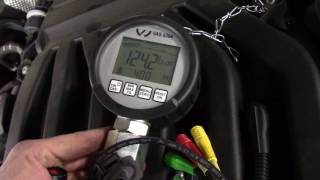
- YouTube channel 'Provo's Garage' (2012 Volkswagen Passat 3.6L) — Check Engine Light and EPC light on, DTC P0088 (Fuel Rail Pressure Too High) stored, with actual pressure at 125 bar (1800 PSI) at idle instead of a specified 40-50 bar.
❌ Tried (didn't work) Initial thought was a bad sensor, but a mechanical gauge confirmed the extreme pressure., Considered a bad HPFP, but further diagnosis was needed.
✅ What actually fixed it The technician found that while the main cam-to-crank timing was correct, the sprocket for the HPFP itself had jumped time on the secondary timing chain. The shaft that drives the pump was visibly misaligned when the engine was at TDC. A full timing chain, guide, and tensioner replacement was performed, which corrected the HPFP timing and resolved the high-pressure fault.
OEM Part Supersession History
03H127025G→03H127025N, then 03H127025R, then 03H127025S— Standard design revisions by the manufacturer to improve reliability or address failure modes.
Heads up: The latest revision, 03H127025S, is the recommended replacement for all previous versions.
Model Year Variations Within This Range
- 2012+ (UDS) vs. pre-2012 (KWP2000): The scan tool procedure for checking camshaft timing differs. Models from 2012 onward use the UDS protocol and require checking Advanced Measuring Values IDE00182 & IDE00184. Older models use KWP2000 and require checking Measuring Value Blocks (MVB) 208 & 209. The pass/fail threshold of +/- 8.0 degrees remains the same.
Helpful Videos
Used OEM Parts in Stock
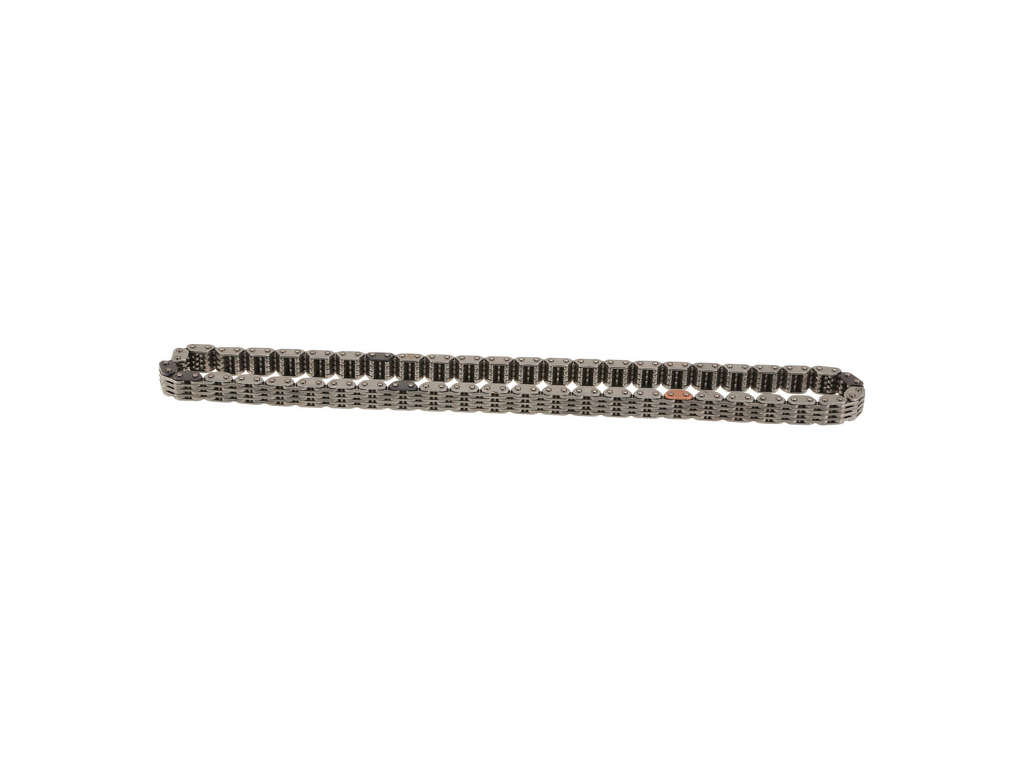
New Aftermarket Parts Available


The information in this article is provided for general reference and educational purposes only. Vehicle specifications, procedures, and part compatibility can vary by production date, trim level, and region. Always consult your vehicle's factory service manual and verify part numbers before purchasing or performing repairs. Safety-critical components such as airbags, seat belts, and braking systems should be installed by a qualified professional.
- Volkswagen PASSAT:
- 🧭 Diagnostic Flowchart
- 🎬 Helpful Videos
- 🛍️ Shop This Part
- What's Unique About the 2012-2018 Volkswagen Passat
- Symptoms You May Notice
- Most Likely Causes
- Rare But Worth Checking
- Diagnosis Steps
- Parts You'll Likely Need
- Related Codes That Often Appear With This One
- Technical Service Bulletins (TSBs) & Recalls
- Platform-Specific Known Issues
- Mechanic-Grade Diagnostic Values
- Scan Tool Commands That Help
- Wiring & Ground Locations
- Real Owner Repair Stories
- OEM Part Supersession History
- Model Year Variations Within This Range
- 🎟️ Get 5% Off