

P1026 on 2020-2023 Ford Explorer 2.3L: Engine Over-Temperature Causes and Fixes
On a 2020-2023 Ford Explorer with the 2.3L engine, code P1026 almost always indicates a faulty Engine Coolant Temperature (ECT) sensor or its wiring, a known issue documented in multiple Ford Technical Service Bulletins (TSBs). The fault often occurs after a cold start, triggering a false overheat warning. The fix is typically replacing the low-cost sensor (Part No. DY-1613). For 2022-2023 models, a blocked degas bottle hose is also a possible cause.
- For a 2020-2023 Explorer 2.3L, P1026 is very likely a faulty Engine Coolant Temperature (ECT) sensor, not an actual overheating engine.
- This is a known issue with multiple Ford Technical Service Bulletins (TSBs) issued, often occurring after a cold start.
- The correct Motorcraft replacement part is typically DY-1613.
- The fix is inexpensive and can be performed by a DIYer with moderate skill, as confirmed by owner forum posts.
What's Unique About the 2020-2023 Ford EXPLORER

The sixth-generation Ford Explorer with the 2.3L engine is particularly known for this issue. Ford has released several Technical Service Bulletins (TSBs) acknowledging that an intermittent check engine light with code P1026 and a false overheating message can occur, especially after a cold start or in cold ambient temperatures. This indicates a recognized pattern of failure related to the Engine Coolant Temperature (ECT) sensor, its associated wiring, or in some cases, a coolant flow issue to the degas bottle, rather than an actual overheating event.
Diagnostic Flowchart

Tap your situation to follow the diagnostic path that matches what you're seeing on this vehicle.
Symptoms You May Notice

- Check Engine Light (Malfunction Indicator Lamp, MIL) is on
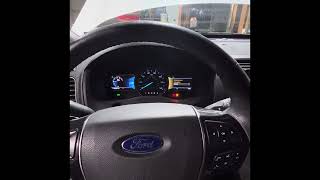
- "Engine Coolant Over Temperature" warning message on the instrument panel
- Engine enters fail-safe or "limp mode" with severely reduced power and throttle response
- Radiator fans running at high speed constantly, even when the engine is cold
- Erratic or inaccurate temperature gauge readings (may shoot to max immediately)
- Symptoms are more likely to occur after a cold engine start, particularly in cold weather
- Replacing the thermostat. While a thermostat can cause overheating, it's not the primary cause for the P1026 code, which points to a sensor performance issue, not a coolant flow problem.
- Replacing the water pump or radiator. Unnecessarily replacing major cooling system components before diagnosing the highly probable and inexpensive sensor is a common and costly mistake.
Most Likely Causes

- Faulty Engine Coolant Temperature (ECT) Sensor 🔴 High Probability → Shop Engine Coolant Temperature Sensor This is a well-documented issue for this platform, as confirmed by multiple Ford TSBs (SSM 49407, SSM 51984, etc.) that point directly to sensor failure as the primary cause for the sensor correlation fault.
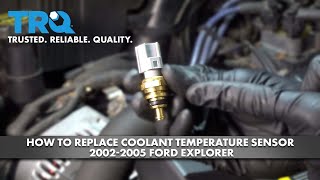
How to confirm: Test the sensor's resistance with a multimeter against factory specifications or monitor its output on a scan tool for erratic readings that don't match ambient or CHT sensor readings on a cold engine. Given the low part cost ($20-$40) and high probability, many opt to replace it preventatively.
Typical fix: Replace the Engine Coolant Temperature sensor. Be prepared to lose some coolant during the swap and have new, correct-spec coolant ready to top off the system.
Est. part cost: $20-$40 - Damaged ECT Sensor Wiring or Connector 🟡 Medium Probability → Shop Engine Coolant Temperature Sensor TSB SSM 49407 explicitly mentions the ECT sensor wiring harness as a potential cause alongside the sensor itself. The sensor's location can expose the wiring to heat and vibration.
How to confirm: Visually inspect the wiring harness leading to the ECT sensor for any signs of fraying, corrosion, rodent damage, or loose connections at the connector. Check for pushed-out pins or corrosion inside the connector.
Typical fix: Repair the damaged section of the wire or replace the connector pigtail. A pigtail connector is readily available (e.g., SMP Part No. 760KY28).
Est. part cost: $15-$50 - Blocked Engine-to-Degas Bottle Hose ⚪ Low Probability TSB SSM 51984 and SSM 51756 introduce this as a possible cause for the 2022-2023 models. A lack of coolant flow can cause temperature discrepancies.
How to confirm: Start and idle the engine while visually inspecting the coolant flow at the top inner (engine side) degas bottle hose port. If there is no coolant flow visible through the semi-transparent top of the bottle, the hose is likely blocked or faulty.
Typical fix: Replace the engine-to-degas bottle hose (Ford Part No. L1MZ-8A365-AAD).
Est. part cost: $30-$60 - Low Engine Coolant Level ⚪ Low Probability
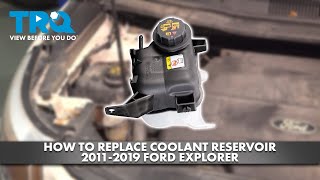
How to confirm: Check the coolant level in the degas bottle (reservoir) when the engine is cold. If it is low, it can cause air pockets and erratic sensor readings before triggering a low coolant light.
Typical fix: Top off the coolant and find and repair the source of the leak (e.g., hose, radiator, water pump).
Est. part cost: $20-$50 for coolant
Rare But Worth Checking
- Faulty Cylinder Head Temperature (CHT) Sensor: → Shop Engine Cylinder Head Since P1026 is a correlation code, a faulty CHT sensor could theoretically cause the issue if the ECT sensor is reading correctly. Some owners replace this sensor as a preventative measure along with the ECT sensor due to its low cost and ease of access.
- Faulty Powertrain Control Module (PCM): This is extremely rare. The PCM should only be considered after all other possibilities, including sensors, wiring, and the cooling system itself, have been exhaustively checked and ruled out. Sometimes a PCM software update is required per a TSB.
Diagnosis Steps
- Verify the coolant level in the reservoir is correct. Do this when the engine is cold.
- Use an OBD-II scanner to confirm the presence of P1026 and any other related codes like P1299.
- On 2022-2023 models, check for coolant flow. Start the engine and observe the degas bottle. If no coolant is flowing into the bottle from the small hose at the top, TSB SSM 51984 suggests replacing the engine-to-degas bottle hose.
- Inspect the wiring and connector for the Engine Coolant Temperature (ECT) sensor. On the 2.3L, it is located on the back of the engine near the firewall, on the passenger side. Look for any visible damage, corrosion, or loose pins.
- Use a scan tool with live data to monitor the ECT and CHT sensor readings on a cold engine. They should be nearly identical and match the ambient air temperature. If the ECT reading is impossibly high (e.g., 250°F on a cold engine) or jumps erratically, the sensor or its circuit is faulty.
- Given the high failure rate and low cost, if the wiring appears intact and coolant flow is good, the most practical step is to replace the ECT sensor (Motorcraft DY-1613).
- Some owners also replace the Cylinder Head Temperature (CHT) sensor at the same time as a low-cost preventative measure.
- After replacing the sensor(s), clear all DTCs with the scanner.
- Top off the engine coolant with the correct Ford-specified type (Motorcraft Yellow VC-13-G) and properly bleed the air from the system. 🎬 See how to properly drain, fill, and purge air from the system.
- Perform a test drive to ensure the code and warning messages do not return.
Parts You'll Likely Need
- Engine Coolant Temperature (ECT) Sensor
(OEM #DY-1613)— This sensor is the primary cause of code P1026 on this vehicle, as documented in multiple Ford TSBs.
Trusted brands: Motorcraft
OEM price range: $20-$35
Aftermarket price range: $10-$25 - Cylinder Head Temperature (CHT) Sensor
(OEM #GK2Z-12A648-A)— Often replaced as a low-cost preventative measure along with the ECT sensor, as P1026 is a correlation code between the two.
Trusted brands: Motorcraft
OEM price range: $20-$40
Aftermarket price range: $10-$25
Related Codes That Often Appear With This One
- P1299 — This code means "Cylinder Head Overtemperature Protection Active." The PCM sets P1299 when it believes the engine is overheating (based on the faulty sensor data that triggers P1026) and puts the vehicle into a protective limp mode.
- P0116, P0117, P0118, P0119 — These are generic codes related to the Engine Coolant Temperature sensor's range, performance, and circuit input (low/high), which are often triggered along with the manufacturer-specific P1026.
- P0217 — This code indicates an "Engine Coolant Over Temperature Condition" has been logged by the PCM, directly related to the data that also triggered P1026.
Technical Service Bulletins (TSBs) & Recalls
- SSM 51984: Intermittent MIL with DTC P1026/P1299 and engine over-temperature message. Affects 2022-2023 models built on or before 20-Jul-2023. Points to checking coolant flow to degas bottle.
- SSM 49407: MIL and/or Engine Coolant Over Temperature warning with multiple DTCs including P1026, pointing to the ECT sensor or wiring on 2020 models. 🎬 Watch: Diagnostic walkthrough for the 2020 Explorer overheat warning.
- SSM 51756: Intermittent MIL with DTC P1026/P1299 and engine over-temperature message after cold start. Also points to checking coolant flow.
- SSM 51333: Intermittent check engine light with DTC P1026/P1299 and over-temperature message after a cold start in cold ambient temperatures.
Platform-Specific Known Issues
- TSB SSM 51984, SSM 51756, SSM 51333: These bulletins all describe an intermittent MIL with DTC P1026 and/or P1299, with an engine over-temperature message, on 2022-2023 Explorers with the 2.3L engine, especially after a cold start. TSB 51984 specifically calls out checking for coolant flow to the degas bottle and replacing the hose (L1MZ-8A365-AAD) if no flow is present.
- TSB SSM 49407: This bulletin for 2020 models also links P1026 with a list of other coolant-related codes and explicitly states the cause may be the ECT sensor or its wiring, advising replacement for 2.3L vehicles.
Mechanic-Grade Diagnostic Values
- ECT/CHT Sensor Resistance (Cold Engine, ~70°F / 21°C) — expected: ~30,000 - 40,000 Ohms (30-40 kΩ). Failure: Reading is significantly outside this range or shows an open circuit (infinite resistance).
- CHT Sensor Voltage (at ~194°F / 90°C) — expected: ~2.03 V. Failure: Voltage does not decrease as expected when the engine warms up.
- ECT/CHT Sensor Live Data (Cold Engine, KOEO) — expected: Both sensor readings should be within a few degrees of each other and the ambient air temperature.. Failure: One sensor reads an implausibly high temperature (e.g., 250°F) while the other reads ambient temperature.
- CHT Sensor Resistance (at ~194°F / 90°C) — expected: ~2.75 kΩ. Failure: Resistance does not drop to this range as the engine warms up.
Scan Tool Commands That Help
- Ford IDS (Integrated Diagnostic System): Datalogger (PID Monitoring) — Use this to simultaneously graph the CHT and ECT sensor voltage/temperature readings from a cold start to operating temperature. This allows for precise identification of when the sensor readings diverge, confirming the correlation fault that sets P1026.
- Ford IDS (Integrated Diagnostic System): KOEO (Key On, Engine Off) and KOER (Key On, Engine Running) Self-Test — Run these self-tests to check for other related DTCs that may not have illuminated the MIL but are stored in the PCM, which can help confirm a circuit-related issue.
Wiring & Ground Locations
- G104 — Engine support ground, typically located on the right side of the engine compartment.. A poor engine ground can cause floating or incorrect voltage readings on various sensors, including the ECT and CHT. Verifying this ground is clean and tight is a crucial step when diagnosing electrical sensor faults.
- ECT Sensor — On the 2.3L engine, the ECT sensor is located on the back of the engine near the firewall, on the passenger side.. This is the primary sensor implicated in TSBs for code P1026. Its location can make it susceptible to heat and vibration, leading to wiring or connector issues.
- CHT Sensor — Installed directly into the cylinder head metal, not in a coolant passage.. This is the second sensor used in the correlation check. Since it measures metal temperature, a discrepancy with the ECT (coolant temp) sensor is what triggers the P1026 code.
Real Owner Repair Stories
- NHTSA TSB SSM 51756 (2022-2023 Ford Explorer 2.3L) — Intermittent MIL with DTC P1026 and/or P1299 and an engine over-temperature message after a cold engine start.
❌ Tried (didn't work) Clearing codes only provided a temporary fix.
✅ What actually fixed it The official procedure is to check for coolant flow in the degas bottle. If no flow is present, replacing the engine-to-degas bottle hose (Part No. L1MZ-8A365-AAD) is the specified repair.
OEM Part Supersession History
L1M3-8A365-AA→L1MZ-8A365-AAD— The original hose may be prone to internal blockage, causing a lack of coolant flow to the degas bottle and triggering the P1026 code on 2022-2023 models. The superseding part is the official fix recommended in TSBs.
Model Year Variations Within This Range
- 2022-2023: These model years may have a blocked engine-to-degas bottle hose, which is not a documented common cause for the 2020-2021 models. TSBs SSM 51984 and SSM 51756 specifically call out checking for coolant flow in the degas bottle and replacing hose L1MZ-8A365-AAD if no flow is present.
Helpful Videos
Used OEM Parts in Stock
New Aftermarket Parts Available


The information in this article is provided for general reference and educational purposes only. Vehicle specifications, procedures, and part compatibility can vary by production date, trim level, and region. Always consult your vehicle's factory service manual and verify part numbers before purchasing or performing repairs. Safety-critical components such as airbags, seat belts, and braking systems should be installed by a qualified professional.
- Ford EXPLORER:
- 🧭 Diagnostic Flowchart
- 🎬 Helpful Videos
- 🛍️ Shop This Part
- What's Unique About the 2020-2023 Ford EXPLORER
- Symptoms You May Notice
- Most Likely Causes
- Rare But Worth Checking
- Diagnosis Steps
- Parts You'll Likely Need
- Related Codes That Often Appear With This One
- Technical Service Bulletins (TSBs) & Recalls
- Platform-Specific Known Issues
- Mechanic-Grade Diagnostic Values
- Scan Tool Commands That Help
- Wiring & Ground Locations
- Real Owner Repair Stories
- OEM Part Supersession History
- Model Year Variations Within This Range
- 🎟️ Get 5% Off