

P1026 on 2015-2020 Ford F-150: ECT Circuit Fault Causes and Fixes
On a 2015-2020 F-150 with the 2.7L EcoBoost, code P1026 is almost always caused by a faulty Engine Coolant Temperature (ECT) sensor, a loose connector, or damaged wiring. For 2018-2020 models, Ford issued TSB 21-2168 with a relocation kit as the permanent fix. For other models, inspecting the wiring and replacing the ECT sensor and/or its pigtail is the most common, inexpensive DIY repair.
- P1026 on a 2015-2020 F-150 almost always points to an electrical issue with the Engine Coolant Temperature (ECT) sensor circuit, not a mechanical cooling problem.
- Before buying any parts, thoroughly inspect the ECT sensor's electrical connector and nearby wiring, as this is a known weak point acknowledged by Ford.
- This code is frequently seen with other codes like P1299 (Cylinder Head Overtemperature Protection), which is often a false alarm triggered by the faulty sensor signal.
- The most common fixes are inexpensive and DIY-friendly: reseating the connector, or replacing the ECT sensor or its pigtail.
- Be aware of multiple Ford TSBs on this issue; if your truck is a 2018-2020 2.7L model, the permanent fix may be a redesigned part that relocates the sensor.
What's Unique About the 2015-2020 Ford F-150

The 13th generation F-150, particularly with the 2.7L EcoBoost engine, is known for this issue. On 2018 and newer models, the ECT sensor is notoriously located in the engine valley, under the intake manifold, making it extremely difficult to access. Ford released multiple Technical Service Bulletins (TSBs) acknowledging that the ECT sensor wiring harness is susceptible to damage or poor connections. For 2018-2020 models, TSB 21-2168 provides a redesigned heater hose assembly that relocates the ECT sensor to a much more accessible and less harsh environment, providing a more permanent solution. Unlike other engines in the F-150 lineup (like the 3.5L or 5.0L) which may primarily use a Cylinder Head Temperature (CHT) sensor to infer coolant temperature, the 2.7L EcoBoost has a dedicated ECT sensor that is the subject of this common failure.
🎬 Watch: Understanding these F-150 codes and the TSB fix.Diagnostic Flowchart

Tap your situation to follow the diagnostic path that matches what you're seeing on this vehicle.
Symptoms You May Notice

- Check Engine Light (Malfunction Indicator Lamp) is on
- Wrench light is illuminated
- "Engine Coolant Over Temperature" warning on the dash
- Temperature gauge reads incorrectly (may peg on hot, then drop to cold)
- Engine enters a reduced power "limp mode"
- Cooling fans run constantly or at high speed, even when the engine is cold
- Poor engine performance or rough idle
- AC compressor may disengage
- Replacing the thermostat. While a thermostat can cause cooling issues, P1026 is specifically an electrical circuit correlation code. A mechanical thermostat failure would typically set codes like P0128 without the associated ECT circuit codes.
- Replacing the Cylinder Head Temperature (CHT) sensor. While P1026 indicates a conflict between the ECT and CHT, the ECT sensor and its wiring are the far more common culprits according to Ford's own service bulletins. Owners have reported replacing the CHT multiple times without resolving the issue, which later turned out to be the ECT circuit.
Most Likely Causes

- Damaged or Poorly Seated ECT Sensor Connector/Wiring 🔴 High Probability → Shop Engine Coolant Temperature Sensor Ford TSBs SSM 47791 and SSM 46906 directly cite this as a primary cause. The wiring harness can be damaged or the connector may not be fully seated. SSM 47791 specifically points to potential wiring damage between connectors C1064 and C1047 on the F-150. The location of the harness can expose it to heat and vibration, leading to intermittent connections. This area is also a known spot for rodent damage.
How to confirm: Visually inspect the ECT sensor's electrical connector for looseness, corrosion, or pushed-out pins. Carefully check the wiring harness leading to the sensor for any signs of chafing, breaks, or heat damage, paying close attention to the harness section near the back of the driver's side valve cover.
Typical fix: Reseat the connector securely. If the connector or wiring is damaged, replace the connector pigtail (e.g., Motorcraft WPT-989) and repair the affected wires using heat-shrink butt connectors.
Est. part cost: $15-$40 - Faulty Engine Coolant Temperature (ECT) Sensor 🔴 High Probability → Shop Engine Coolant Temperature Sensor TSB 21-2168 points to an intermittent voltage drop from the sensor itself as the root cause for 2018-2020 models. Another TSB, SSM 48991, explicitly recommends replacing the ECT sensor and knock sensor harness on some 2.7L vehicles to correct this condition. The sensor's original location on later models is in a high-heat area under the intake manifold, contributing to premature failure.
How to confirm: Use a scan tool to monitor live ECT data. If the temperature reading is erratic, jumps suddenly from normal to max hot, or doesn't match the actual engine temperature, the sensor is likely faulty. A cold engine should not read hot immediately upon startup.
Typical fix: For 2018-2020 models, the official fix is installing the TSB 21-2168 relocation kit (Part No. ML3Z-14A411-H), which includes a new heater hose with a sensor port and a jumper harness. For earlier models or if not using the kit, replace the sensor itself. This is a major job on 2018+ models (8+ hours) if not using the relocation kit.
Est. part cost: $25-$150
Rare But Worth Checking
- Faulty Powertrain Control Module (PCM): This is extremely rare. The PCM should only be considered after all other possibilities, including wiring, connectors, and sensors, have been thoroughly tested and ruled out.
- Low Engine Coolant: While P1026 is an electrical code, severely low coolant could theoretically cause the CHT to read much higher than the ECT, triggering a correlation fault. This is unlikely to be the primary cause without other symptoms like visible leaks.
Diagnosis Steps
- Scan for all DTCs. Note if P1299, P0116, P0117, or P0118 are present with P1026, as this strongly points to the ECT circuit.
- Visually inspect the Engine Coolant Temperature (ECT) sensor and its electrical connector. On 2015-2017 models, it is more accessible on the driver's side of the engine. On 2018-2020 models, the original sensor is buried under the intake manifold, so you will likely only be able to inspect the harness connector at the back of the engine.
- Carefully inspect the wiring harness leading from the firewall to the engine. Per SSM 47791, pay close attention to the wiring between connectors C1064 and C1047, which is near the driver's side rear of the engine bay. Look for chafing, melting, or breaks.
- With a scan tool, observe the live data for the ECT sensor PID. Watch for any sudden drops, spikes, or erratic behavior as the engine warms up. A jump from ~200°F to 250°F+ in one second is a clear sign of a circuit fault.
- If wiring and connector appear intact but the signal is faulty, the sensor has failed. For 2018-2020 models, the recommended repair is installing the TSB 21-2168 relocation kit. This avoids the 8+ hour labor of replacing the sensor in its original location.
- If the issue persists after replacing the sensor/harness, perform a circuit integrity test. Check for 5V reference, proper ground, and signal continuity from the ECT connector back to the PCM.
- After any repair, clear the codes with a scan tool. The P1299 code, in particular, may not clear on its own and will keep the truck in limp mode until it is manually cleared.
Parts You'll Likely Need
- ECT Relocation Kit (TSB 21-2168)
(OEM #ML3Z-14A411-H)— For 2018-2020 models, this is the official Ford fix. It relocates the sensor to an easier-to-access and more reliable location on a new heater hose, and includes a jumper harness. It turns an 8-hour job into a 2-hour job.
Trusted brands: Ford
OEM price range: $120-$160 - Engine Coolant Temperature (ECT) Sensor
(OEM #JL3Z-12A648-A)— This sensor is the most common point of failure in the circuit, causing the intermittent voltage drops that trigger P1026. Required for pre-2018 models or if not using the TSB kit.
Trusted brands: Motorcraft, Delphi, Standard Motor Products
OEM price range: $25-$40
Aftermarket price range: $15-$30 - ECT Sensor Connector Pigtail
(OEM #WPT-989)— If the connector itself is damaged, corroded, or the locking tab is broken, replacing the pigtail is necessary to ensure a secure connection.
Trusted brands: Motorcraft, Dorman
OEM price range: $25-$40
Aftermarket price range: $10-$25
Related Codes That Often Appear With This One
- P1299 — This code means Cylinder Head Overtemperature Protection is active. The PCM triggers this as a failsafe when it receives an unreliable or high-temperature signal from the ECT/CHT circuit, even if the engine isn't actually overheating. This is the most common code to appear with P1026.
- P0116 — Indicates an ECT sensor range/performance issue, directly related to a faulty sensor or wiring.
- P0117 — Indicates the ECT sensor circuit is low, often caused by a short in the wiring.
- P0118 — Indicates the ECT sensor circuit is high, often caused by an open circuit or unplugged sensor.
- P0217 — An Engine Coolant Overtemperature Condition code that can be triggered by a false signal from a failing ECT sensor.
- P0330 — Knock Sensor 2 Circuit Malfunction. This can be set alongside ECT codes because on some 2.7L harnesses, the ECT and knock sensor wiring are bundled together. SSM 48991 addresses this.
Technical Service Bulletins (TSBs) & Recalls
- TSB 21-2168: Recommends replacing the heater hose to relocate the ECT sensor and installing a jumper harness due to intermittent voltage drops.
- SSM 47791: Identifies a non-seated ECT sensor connector or damaged wiring as a likely cause.
- SSM 46906: Also points to a bad ECT sensor connection or wiring.
- SSM 48991: Suggests replacing the ECT sensor and knock sensor harness to correct the condition on 2.7L engines.
Platform-Specific Known Issues
- TSB 21-2168 (for 2018-2020 2.7L): Addresses an intermittent drop in ECT voltage. The official fix is to replace the heater hose with a new design (Part No. ML3Z-14A411-H) that relocates the ECT sensor and install a jumper harness. This is the definitive repair for these model years.
- SSM 47791 (for 2015-2019 2.7L): Points to the ECT sensor connector not being fully seated or having damaged wiring between specific harness connectors (C1064 and C1047 on the F-150). This confirms the issue is often wiring-related.
- SSM 46906 (for 2015+): Similar to SSM 47791, this bulletin also identifies a poorly seated ECT connector or damaged wiring as the cause for P1026 and related codes.
Mechanic-Grade Diagnostic Values
- ECT Sensor Signal Voltage (Key On, Engine Off, Cold Engine) — expected: ~2.8V to 3.5V. Failure: A reading of 5V indicates an open circuit or unplugged sensor. A reading of 0V indicates a short to ground.
- ECT Sensor Signal Voltage (Engine at Operating Temperature) — expected: ~0.5V to 1.0V. Failure: Voltage does not decrease as the engine warms up, or drops out intermittently.
- ECT Sensor Resistance (Cold Engine, ~70°F / 21°C) — expected: ~30,000 - 40,000 Ohms (30-40 kΩ). Failure: Reading is significantly outside this range or shows an open circuit (infinite resistance).
- ECT Sensor Resistance (Hot Engine, ~200°F / 93°C) — expected: ~2,000 - 3,000 Ohms (2-3 kΩ). Failure: Resistance does not drop into this range as the engine warms, or reading is erratic.
- PCM Reference Voltage to ECT Sensor (Sensor Unplugged, Key On) — expected: 5.0V. Failure: Voltage is not present, indicating a wiring issue or a problem with the PCM.
Hidden / Shadow Codes Worth Checking
- Mode $06 Data: While not a specific 'shadow code', Mode $06 on a capable scan tool (like FORScan or Ford's IDS) allows a technician to view the results of non-continuous monitor tests before they trigger a Check Engine Light. A technician could monitor test results for related components, such as misfire counts per cylinder, to see if other issues are developing alongside the P1026 code. (see via A professional scan tool or software like FORScan with Mode $06 capabilities.)
Scan Tool Commands That Help
- Ford IDS (Integrated Diagnostic System): Datalogger — Use this to graph the ECT and CHT sensor PIDs (Parameter IDs) simultaneously. An intermittent fault will show up as a sudden, vertical spike or drop in the ECT voltage/temperature reading that doesn't correspond to a real change in engine temperature.
- Ford IDS (Integrated Diagnostic System): Self Test — This function allows running a targeted diagnostic check on a specific module, such as the Powertrain Control Module (PCM), to retrieve all active and pending codes, which is more thorough than a generic OBD-II scan.
- Ford IDS (or FORScan): Reset KAM (Keep Alive Memory) — After replacing a sensor or repairing wiring, it is good practice to reset the KAM. This clears the PCM's adaptive learning tables and forces it to re-learn values with the new, functioning components, which can resolve lingering performance issues.
Wiring & Ground Locations
- Connector C1047 — Located on the driver's side, at the back of the valve cover/cylinder head area.. TSB SSM 47791 specifically identifies this as a key connector in the ECT circuit. The wiring harness between C1047 and C1064 is a common location for chafing, damage, or poor connections that cause P1026. The harness in this area also contains wiring for the knock sensors.
- Passenger Compartment Fuse Box — Located inside the cab, under the right-hand side of the instrument panel, accessible by removing a kick panel.. While no specific fuse is tied directly to this code in the search results, a technician would check relevant PCM and sensor fuses here as a preliminary step in diagnosing any electrical fault.
- Bank 1 vs Bank 2 — On the 2.7L EcoBoost, Bank 1 (cylinders 1-2-3) is on the passenger side of the engine. Bank 2 (cylinders 4-5-6) is on the driver's side.. This helps in correctly locating components referenced by bank, such as the CHT sensor or knock sensors that share a harness with the ECT sensor.
Real Owner Repair Stories
- Ford F150 Forum (2019 F-150 2.7L EcoBoost, 25,000 miles) — Recurring limp mode, check engine light, and engine temperature gauge pegging hot then dropping to cold. Codes P1026 and P1299 would appear. The issue would sometimes disappear for up to 1,000 miles after clearing the codes.
❌ Tried (didn't work) Dealer replaced the Cylinder Head Temperature (CHT) sensor under warranty., Owner replaced the CHT sensor a second time himself., Owner suspected a third CHT sensor failure before realizing it was unlikely to be the root cause.
✅ What actually fixed it The owner was advised by other forum members that the issue was not the CHT sensor, but rather the classic ECT sensor circuit fault described in Ford's TSBs. The resolution points to inspecting the wiring harness or applying the TSB 21-2168 relocation kit, not repeatedly replacing the CHT sensor. - Reddit (2015 Mustang EcoBoost (same engine family, relevant failure pattern)) — P1026 code appeared. Temperature gauge was reading slightly high (200-210°F).
❌ Tried (didn't work) Replaced the thermostat, assuming it was a mechanical cooling issue.
✅ What actually fixed it Immediately after the thermostat replacement, the car began blasting oil and pushing coolant through the exhaust. The issue was diagnosed as a blown head gasket. This serves as a cautionary tale that while P1026 is usually an electrical fault, it can also be triggered by a real, intermittent overheating condition that, if misdiagnosed as purely electrical, can lead to catastrophic engine failure.
OEM Part Supersession History
JL3Z-12A648-A (Motorcraft DY-1446)→JL3Z-12A648-B (Motorcraft DY-1613)— Unspecified, but part revisions are typically made to improve reliability or address known failure modes.
Model Year Variations Within This Range
- 2018-2020: The ECT sensor was moved to a difficult-to-access location in the engine valley, under the intake manifold. This led Ford to issue TSB 21-2168, which provides a kit to relocate the sensor to an upper heater hose, making future service significantly easier.
- 2015-2020: The 2.7L EcoBoost engine uses a dedicated ECT sensor that is a known failure point for this code. Other F-150 engines (e.g., 3.3L, 3.5L, 5.0L) may not have a traditional ECT sensor and instead use the Cylinder Head Temperature (CHT) sensor to infer coolant temperature, making them not susceptible to this specific P1026 failure mode.
Helpful Videos

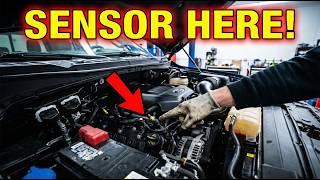
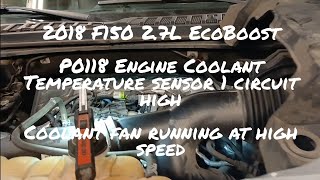
We Have This Part in Stock

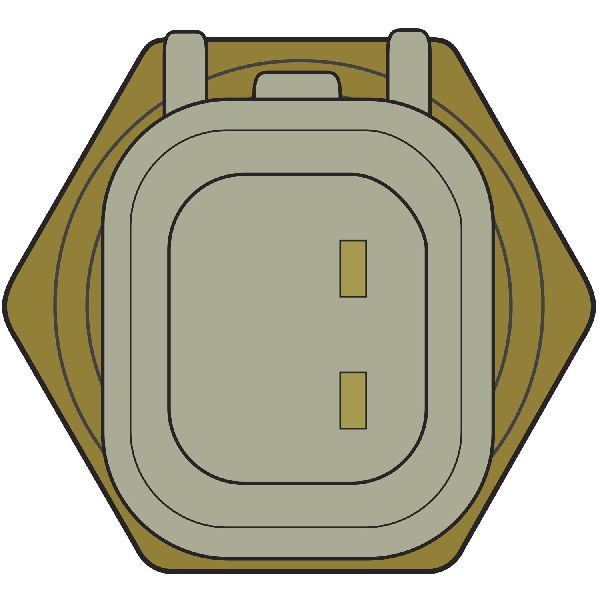
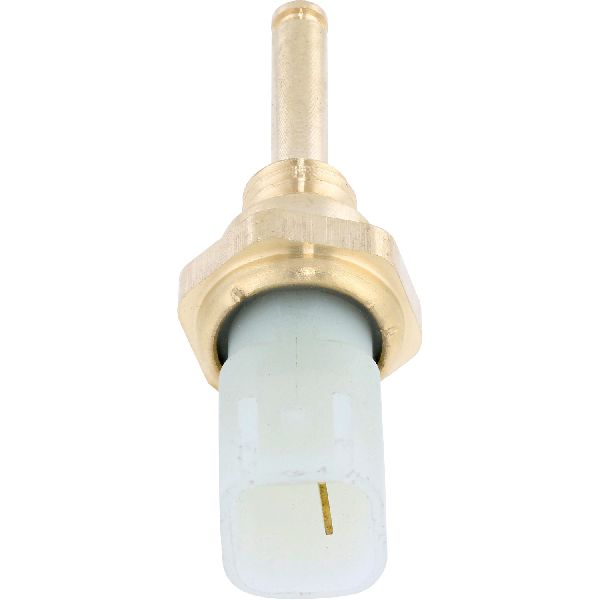

The information in this article is provided for general reference and educational purposes only. Vehicle specifications, procedures, and part compatibility can vary by production date, trim level, and region. Always consult your vehicle's factory service manual and verify part numbers before purchasing or performing repairs. Safety-critical components such as airbags, seat belts, and braking systems should be installed by a qualified professional.
- Ford F-150:
- 🧭 Diagnostic Flowchart
- 🎬 Helpful Videos
- 🛍️ Shop This Part
- What's Unique About the 2015-2020 Ford F-150
- Symptoms You May Notice
- Most Likely Causes
- Rare But Worth Checking
- Diagnosis Steps
- Parts You'll Likely Need
- Related Codes That Often Appear With This One
- Technical Service Bulletins (TSBs) & Recalls
- Platform-Specific Known Issues
- Mechanic-Grade Diagnostic Values
- Hidden / Shadow Codes Worth Checking
- Scan Tool Commands That Help
- Wiring & Ground Locations
- Real Owner Repair Stories
- OEM Part Supersession History
- Model Year Variations Within This Range
- 🎟️ Get 5% Off