

P1026 on 2017-2020 Lincoln Continental: ECT Circuit Fault Causes and Fixes
On a 2017-2020 Lincoln Continental with the 2.7L engine, code P1026 is almost always caused by a bad connection or damaged wiring at the Engine Coolant Temperature (ECT) sensor. Inspect the connector and harness thoroughly before replacing any parts, as a harness repair or replacement is the most common fix documented in multiple Ford Technical Service Bulletins (TSBs).
- P1026 on a 2017-2020 Lincoln Continental is a very specific problem, almost always related to the ECT sensor wiring, not the sensor itself.
- Do not drive the vehicle with this code, as the risk of engine overheating and severe damage is high.
- Before buying any parts, your first step should be a thorough visual inspection of the ECT sensor connector and the nearby wiring harness for damage or a loose connection.
- Referencing TSBs SSM 48991 and SSM 47791 is critical for a correct diagnosis and repair.
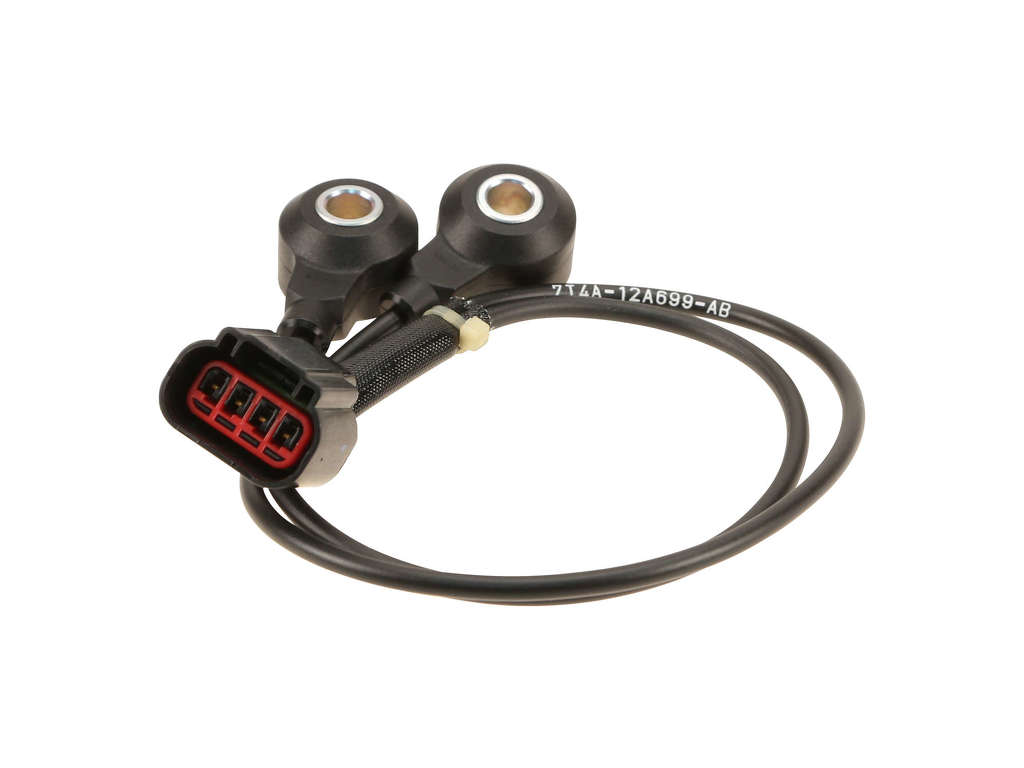
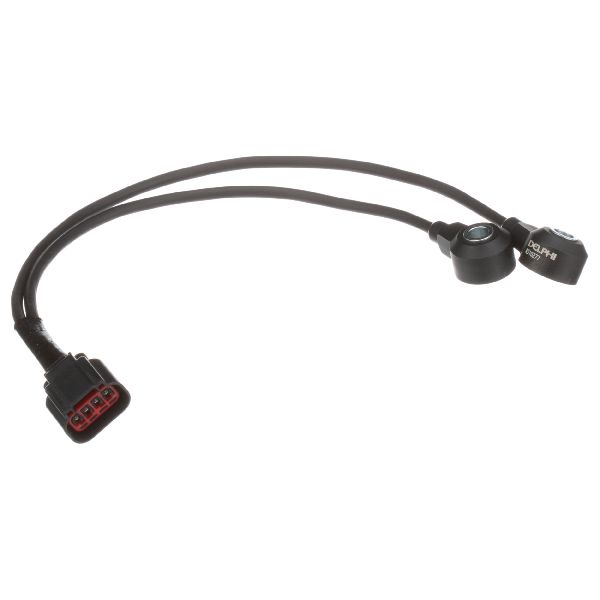
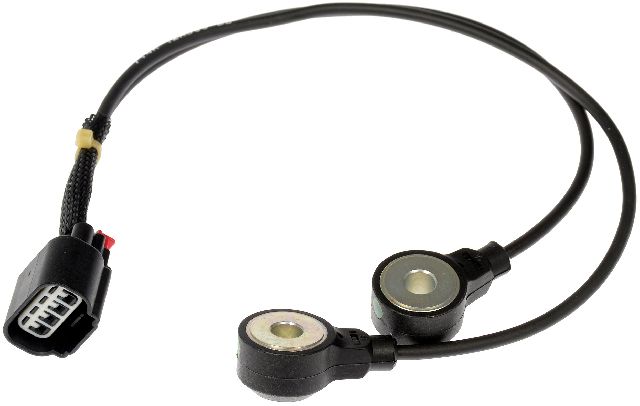
- The most common repair involves fixing the wiring or replacing the ECT/knock sensor harness (part # 12A699).
What's Unique About the 2017-2020 Lincoln CONTINENTAL
The 2017-2020 Lincoln Continental, particularly with the 2.7L EcoBoost engine, is known for this specific issue. Ford issued multiple Technical Service Bulletins (TSBs) over several years addressing P1026 and related codes across various models using this engine. This indicates a pattern failure related to the ECT sensor's wiring harness or connector, making it a much more likely cause than a faulty sensor or a random wiring break. TSB SSM 47791 specifically notes to check for damaged wiring between connectors C1016 and C1168 on the Continental before replacing any sensors.
Diagnostic Flowchart
Tap your situation to follow the diagnostic path that matches what you're seeing on this vehicle.
Symptoms You May Notice
- Check Engine Light (Malfunction Indicator Lamp) is on
- Wrench light may be illuminated on the dashboard.
- "Engine Coolant Over Temperature" warning message.
- Engine cooling fans may run constantly at high speed.
- Potential for the engine to enter a reduced-power 'limp mode'.
- Inaccurate or erratic temperature gauge readings
- Poor fuel economy or rough idling if the condition persists.
- Replacing the Engine Coolant Temperature (ECT) sensor without first thoroughly inspecting the connector and wiring harness. The TSBs strongly indicate the wiring is the most likely culprit.
- Replacing the thermostat. A mechanical thermostat failure would typically set a code like P0128 without the associated ECT electrical circuit codes (P0116-P0119, P1026).
Most Likely Causes
- Engine Coolant Temperature (ECT) Sensor Connector Not Fully Seated 🔴 High Probability → Shop Engine Wiring Harness This specific failure is cited directly in manufacturer TSBs (SSM 47791, SSM 46906) for this vehicle and its platform mates, indicating a common issue due to vibration or improper initial installation.
How to confirm: Visually inspect the ECT sensor connector to see if it is loose, crooked, or not fully clipped in place. Gently try to wiggle the connector to check for a secure fit. The sensor is typically located on or near the thermostat housing.
Typical fix: Firmly push the connector until it clicks into place. Clear the DTC and monitor to see if it returns.
Est. part cost: $0 - Damaged Wiring or Harness for ECT Sensor 🔴 High Probability → Shop Engine Coolant Temperature Sensor All three cited TSBs (SSM 48991, SSM 47791, SSM 46906) point to the wiring harness as a primary cause of the fault. The harness, which also serves the knock sensor, may be subject to stress, heat, or vibration, leading to internal breaks or corrosion. TSB SSM 47791 specifically calls out the wiring between connectors C1016 and C1168 as a potential trouble spot on the Continental.
How to confirm: Carefully inspect the wiring leading to the ECT sensor for any signs of chafing, melting, corrosion, or broken wires. A multimeter can be used to check for continuity between the PCM and the sensor connector. Pay close attention to the harness sections mentioned in the TSBs.
Typical fix: Repair the damaged section of wire or replace the connector pigtail. In many cases, as per TSB SSM 48991, the entire ECT and knock sensor harness assembly (base part 12A699) needs to be replaced 🎬 Watch: Understanding the TSB and how to fix these codes. along with the ECT sensor.
Est. part cost: $20-$150 - Faulty Engine Coolant Temperature (ECT) Sensor ⚪ Low Probability → Shop Engine Coolant Temperature Sensor While possible, TSBs specifically advise against replacing the sensor if damaged wiring is found, suggesting the wiring is the more common point of failure. However, TSB SSM 48991 does recommend replacing the sensor (part 12A648) at the same time as the harness as a complete repair.
How to confirm: After confirming the wiring and connector are good, the sensor itself can be tested by measuring its resistance at different temperatures and comparing it to the manufacturer's specifications. A typical resistance might be around 2000-3000 Ω at 20°C (68°F).
Typical fix: Replace the ECT sensor.
Est. part cost: $30-$80
Rare But Worth Checking
- Faulty Powertrain Control Module (PCM): This is extremely rare. The PCM should only be considered as the cause after all other possibilities, including all wiring and sensor issues, have been exhaustively ruled out by a professional.
Diagnosis Steps
- Scan the vehicle for all DTCs. Note all codes that are present alongside P1026, especially P0116-P0119, P1299, and P0330, as they strongly point to the TSB-identified issue.
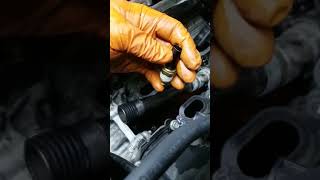
- Visually inspect the Engine Coolant Temperature (ECT) sensor and its electrical connector. The sensor is notoriously difficult to access on the 2.7L engine, located under the intake manifold. 🎬 See this walkthrough on accessing the difficult coolant temperature sensor.
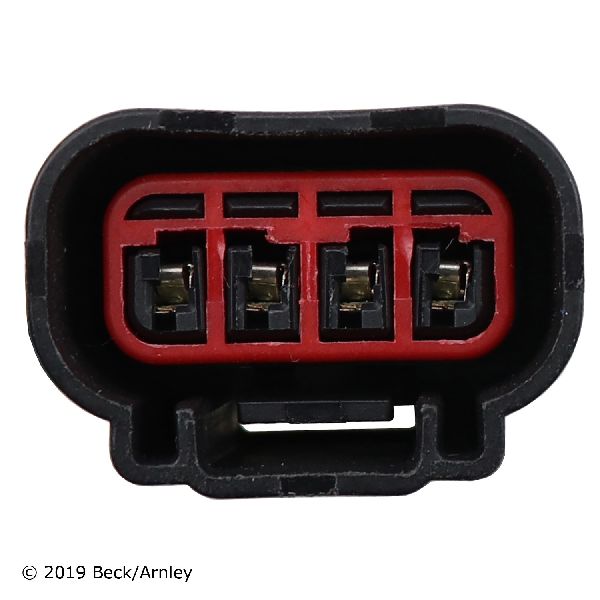
- Check if the connector is fully seated, and look for any obvious signs of damage, corrosion, or loose pins. A loose connection is a primary cause cited in TSB SSM 47791.
- Carefully inspect the wiring harness leading to the ECT sensor for several inches. Look for any signs of chafing, melting, or breaks. Pay special attention to the harness section between connectors C1016 and C1168 as specified in TSB SSM 47791.
- If a visual fault is found, repair the wiring or connector as needed. Clear the codes and test drive the vehicle.
- If no visual fault is found, follow the guidance of TSB SSM 48991, which recommends replacing the entire ECT and knock sensor harness (base part 12A699) and the ECT sensor (base part 12A648) as a complete repair.
- If you wish to test further before replacing parts, use a multimeter to test the continuity of the signal and ground wires from the ECT sensor connector to the PCM connector.
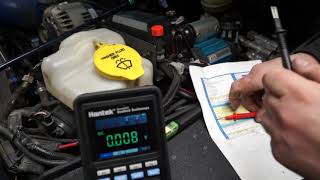
- If wiring is confirmed to be good, test the ECT sensor itself by measuring its resistance at various temperatures. A cold engine at 68°F should show approximately 30,000-40,000 Ω. 🎬 Watch: How to test for high voltage and sensor faults.
Parts You'll Likely Need
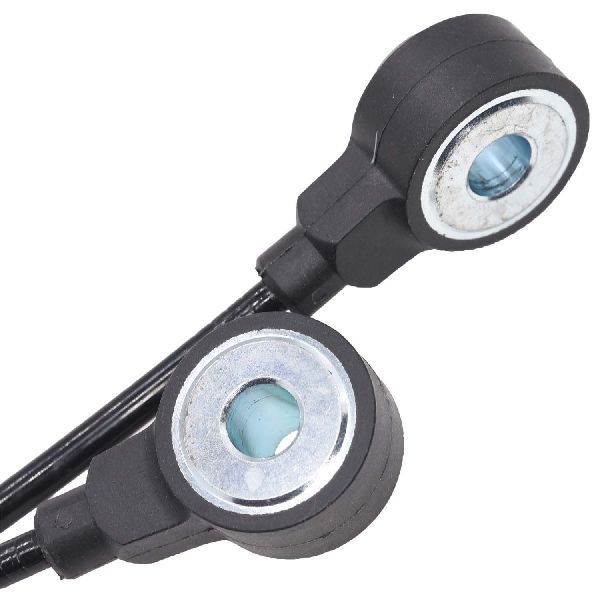
- Engine Coolant and Knock Sensor Wiring Harness
(OEM #12A699 (Base Part Number))— TSB SSM 48991 and SSM 47791 identify this harness as the causal part for the P1026 code. It is the most probable fix.
Trusted brands: Motorcraft
OEM price range: $100-$200
Aftermarket price range: $50-$120 - Engine Coolant Temperature (ECT) Sensor
(OEM #12A648 (Base Part Number))— While less likely to be the root cause than the wiring, TSB SSM 48991 recommends replacing it along with the harness as a complete and preventative repair.
Trusted brands: Motorcraft, Bosch, Delphi
OEM price range: $50-$90
Aftermarket price range: $25-$60
Related Codes That Often Appear With This One
- P0116 — Indicates ECT Sensor Circuit Range/Performance problem, often set together with P1026 due to erratic signals from a bad wire/connector.
- P0117 — Indicates ECT Sensor Circuit Low Input, which can be caused by a short in the wiring.
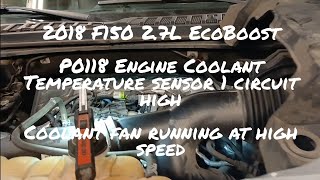
- P0118 — Indicates ECT Sensor Circuit High Input, which can be caused by an open circuit or broken wire.
- P0119 — Indicates ECT Sensor Circuit Intermittent, directly pointing to a loose connection or failing wire.
- P0217 — Indicates an Engine Overtemperature Condition, which can be a real or perceived consequence of the ECT system failing.
- P1299 — Indicates Cylinder Head Overtemperature Protection is active, a fail-safe triggered by the PCM when it detects severe overheating, possibly due to the faulty ECT readings.
- P0330 — Indicates a Knock Sensor 2 Circuit Malfunction. This code is often seen because the ECT and knock sensor share the same faulty wiring harness.
Technical Service Bulletins (TSBs) & Recalls
- SSM 48991: Mentions P1026 on 2.7L engines and advises replacing the ECT and knock sensor wiring harness (12A699) and the ECT sensor (12A648) to correct the condition.
- SSM 47791: Points to a not fully seated ECT sensor connector or damaged wiring between connectors C1016 and C1168 as the cause for P1026 on 2.7L Continentals.
- SSM 46906: An earlier bulletin with the same guidance as SSM 47791, establishing a known pattern of failure over time.
Platform-Specific Known Issues
- A series of Technical Service Bulletins (SSM 48991, SSM 47791, SSM 46906) were released for 2017-2020 Lincoln Continentals with the 2.7L engine due to a high frequency of issues with the ECT sensor wiring. These bulletins confirm that a poorly seated connector or a faulty wiring harness is the expected cause for code P1026 and a group of related cooling system codes. TSB SSM 47791 specifically points to wiring between connectors C1016 and C1168 as a known trouble area on the Continental.
Mechanic-Grade Diagnostic Values
- ECT Sensor Resistance (Cold Engine) — expected: ~30,000 - 40,000 Ohms (30-40 kΩ) at ~70°F / 21°C. Failure: Reading is significantly outside this range or shows an open circuit (infinite resistance).
- ECT Sensor Resistance (Hot Engine) — expected: ~2,000 - 3,000 Ohms (2-3 kΩ) at ~200°F / 93°C. Failure: Resistance does not drop into this range as the engine warms, or the reading is erratic.
- PCM Reference Voltage to ECT Sensor — expected: 5.0 Volts DC at the sensor connector with sensor unplugged, Key On Engine Off (KOEO).. Failure: Voltage is below 4.9V or is not present, indicating a wiring issue or a problem with the PCM.
Hidden / Shadow Codes Worth Checking
- Mode $06 Data: This is not a specific code, but a diagnostic mode that reveals the results of the PCM's self-tests for various components before they have failed enough times to trigger a check engine light. A technician can check the test results for misfire monitoring (TID $51-$53) to see if the incorrect temperature data is causing intermittent misfires that haven't yet set a P030x code. (see via A professional scan tool or software like FORScan is required to access Mode $06 test results.)
Scan Tool Commands That Help
- Ford IDS or FORScan: Datalogger / Live Data PID Monitoring — This is the primary method for diagnosing this intermittent issue. A technician should monitor the ECT sensor voltage (ECT_V) or temperature (ECT) PID while gently wiggling the harness and connector. A sudden drop to -40°F or a spike to an impossibly high temperature indicates the exact moment the fault occurs, confirming a wiring or connection issue.
Wiring & Ground Locations
- ECT Sensor Location — Under the intake manifold. This location is extremely difficult to access and is a high-labor job to replace.. Its location makes visual inspection and replacement very difficult, leading technicians to focus on more accessible parts of the harness first. It also subjects the sensor and connector to significant heat and vibration.
- Connector C1016 and C1168 — These are inline harness connectors for the 2.7L engine on the Continental platform.. TSB SSM 47791 specifically identifies the wiring *between* these two connectors as a known trouble spot for damage that causes P1026. Technicians should inspect this harness section closely for chafing or breaks.
Real Owner Repair Stories
- Ford F150 Forum (2019 Ford F-150 2.7L EcoBoost (platform mate)) — Check engine light, engine in limp mode, temperature gauge pegged on hot, codes P1026 and P1299.
❌ Tried (didn't work) Dealer replaced the cylinder head temp sensor under warranty; the problem returned a month later., Owner replaced the cylinder head temp sensor himself; the problem returned four weeks later.
✅ What actually fixed it The owner's issue was a classic example of misdiagnosis by replacing sensors. Other forum members pointed out that the TSBs indicate the root cause is an intermittent wiring/harness issue, which was being overlooked. The repeated failure of the sensor replacement strongly implies the actual fault was in the harness, as the TSBs suggest. - Ford F150 Forum, referencing TSB 21-2168 (2019 Ford F-150 2.7L EcoBoost (platform mate)) — Rumble noise, Check Engine Light, "Engine Coolant Over Temperature" warning, limp mode.
❌ Tried (didn't work) Problem would temporarily resolve after the vehicle sat overnight, but would return.
✅ What actually fixed it The dealership performed the repair outlined in TSB 21-2168, which involves installing a kit to relocate the ECT sensor to a new, more reliable location on an upper heater hose. The user confirmed this permanently fixed the issue.
OEM Part Supersession History
N/A (Original under-manifold ECT sensor)→ECT Sensor Relocation Kit (e.g., ML3Z-14A411-H for F-150)— The original sensor location on the 2.7L EcoBoost is prone to failure from heat and vibration and is extremely labor-intensive (8+ hours) to replace.
Heads up: While TSB 21-2168 for the relocation kit does not officially list the Lincoln Continental, the engine and the root problem are identical. Awareness of this kit as a repair strategy for platform-mates is critical for mechanics, as it provides a more robust and often cheaper (in labor) long-term solution than repeatedly replacing the sensor in its original, failure-prone location.
Helpful Videos

We Have This Part in Stock


The information in this article is provided for general reference and educational purposes only. Vehicle specifications, procedures, and part compatibility can vary by production date, trim level, and region. Always consult your vehicle's factory service manual and verify part numbers before purchasing or performing repairs. Safety-critical components such as airbags, seat belts, and braking systems should be installed by a qualified professional.
- Lincoln CONTINENTAL:
- 🧭 Diagnostic Flowchart
- 🎬 Helpful Videos
- 🛍️ Shop This Part
- What's Unique About the 2017-2020 Lincoln CONTINENTAL
- Symptoms You May Notice
- Most Likely Causes
- Rare But Worth Checking
- Diagnosis Steps
- Parts You'll Likely Need
- Related Codes That Often Appear With This One
- Technical Service Bulletins (TSBs) & Recalls
- Platform-Specific Known Issues
- Mechanic-Grade Diagnostic Values
- Hidden / Shadow Codes Worth Checking
- Scan Tool Commands That Help
- Wiring & Ground Locations
- Real Owner Repair Stories
- OEM Part Supersession History
- 🎟️ Get 5% Off