

OBD-II Code P1028: Valvetronic Eccentric Shaft Sensor Fault
What P1028 means, why it triggers, and how to fix it, focusing on its most common use in BMW vehicles.
- Code P1028 on BMWs specifically indicates a plausibility fault with the Valvetronic eccentric shaft sensor, disabling variable valve lift.
- Engine oil leaking past a hardened $15 seal and contaminating the sensor's electrical connector causes over 80% of P1028 failures.
- Replacing the sensor requires removing the entire valve cover, pushing typical repair bills between $865 and $1,365 at independent shops.
- You must use a BMW-specific scan tool to perform a mandatory 'Valvetronic limit relearn' after replacing parts, or the P1028 code returns instantly.
What Does P1028 Mean?
P1028 is a manufacturer-specific code. On modern BMWs, it means the engine computer (DME) receives an irrational signal from the Valvetronic eccentric shaft sensor. This sensor monitors the Valvetronic system, which precisely controls intake valve lift to manage engine power and efficiency, replacing the traditional throttle plate.
Technical definition: BMW defines P1028 as 'Valvetronic Eccentric Shaft Sensor Plausibility'. The signal from the sensor does not match the expected position or range anticipated by the engine computer based on commands sent to the Valvetronic motor.
Can I Drive With P1028?
Yes, But With Caution. You can drive, but the engine computer enters a protective 'limp mode' with reduced power, poor fuel economy, and potential stalling. Drive only to a repair facility. Ignoring the fault long-term causes a shorted motor to damage the expensive engine computer (DME) or a seized eccentric shaft to destroy the engine, turning a $1,000 repair into a $5,000+ replacement.
Common Causes
- Failed Eccentric Shaft Sensor and Seal (Very Common) — The sensor is the most frequent failure point, almost always caused by engine oil leaking past a hardened $15 seal and contaminating the internal electronics and connector pins.
- Worn Valvetronic Motor (Common) — The electric servomotor that moves the eccentric shaft wears out, causing slow or erratic adjustments. Heat-related failures are common; the motor works when cold but binds when hot.
- Worn Eccentric Shaft (Less Common) — Over many miles, especially with neglected oil changes, the shaft develops worn spots or seized bearings, causing it to bind and trigger a plausibility fault.
- DME Software Glitch (Rare) — Particularly on vehicles making buzzing noises when off, the fault is sometimes a software issue causing the motor to shudder. A DME software update resolves this.
- Low or Dirty Engine Oil (Rare) — The Valvetronic system relies on clean oil. Sludgy or low oil impedes mechanical movement, causing the system to bind.
- Damaged Wiring or Connectors (Rare) — Engine heat and vibration damage the wiring harness, or moisture corrodes the connector pins, degrading the signal.
- Failed DME Driver Circuit (Rare) — A failing Valvetronic motor draws excessive current (over 40A), overloading and shorting the driver circuit inside the Engine Control Module (DME).
Symptoms
- Reduced Engine Power and 'Limp Mode' — The car feels sluggish, refuses to accelerate quickly, and displays a 'Drivetrain Malfunction' message as it defaults to throttle body control.
- Rough or Unstable Idle — The engine idle fluctuates, shakes, or stalls at stops because valve lift is uncontrolled.
- Difficulty Starting or No-Start — The engine cranks extensively before starting, or fails to start entirely, because the sensor cannot set the proper valve lift for a cold start.
- Increased Fuel Consumption — Gas mileage drops by 10-20% because the engine runs inefficiently without precise Valvetronic control.
- Clicking, Buzzing, or Whirring from Engine — A distinct clicking or binding noise emits from the top of the engine when unlocking the car, indicating the motor is struggling to find its end stops.
- Check Engine Light On (also visible on scanner) — The computer illuminates the check engine light to alert the driver.
Diagnostic Flowchart
Tap your situation to follow the diagnostic path that matches what you're seeing on this code.
Common Fixes & Costs
- Replace Eccentric Shaft Sensor and Seal — Parts: $275-$450, Labor: $600-$1000, ~4.5 hr book time (Professional)
- Replace Valve Cover Gasket Set — Parts: $70-$150, Labor: $400-$800, ~4 hr book time (Intermediate)
- Replace Valvetronic Motor (Servomotor) — Parts: $250-$500, Labor: $800-$1700, ~5 hr book time (Professional)
- Replace Eccentric Shaft, Sensor, and Motor — Parts: $1000-$1600, Labor: $2000-$4000, ~8 hr book time (Professional)
- Repair or Replace DME — Parts: $1200-$2500, Labor: $300-$600, ~2.5 hr book time (Professional)
Used vs. New Parts: Buying Guide
When a used part is worth it: Buying a used Eccentric Shaft Sensor is strongly discouraged due to high failure rates and labor-intensive replacement. A used Valvetronic motor is acceptable only if sourced from a verified low-mileage vehicle.
Donor-vehicle mileage cap: roughly under 60000 miles for the part to have meaningful remaining life.
Donor quality checklist:
- Verify the donor vehicle did not have Valvetronic-related fault codes.
- Never buy a used sensor showing any sign of oil contamination in the connector.
- Match part numbers exactly; OEM revisions are often incompatible.
Decision logic:
- If The part is the Eccentric Shaft Sensor → Buy new from an OEM supplier (VDO/Continental) or Genuine BMW. Never use cheap aftermarket brands.
- If The part is the Valvetronic Motor → A used motor from a donor under 60k miles is a calculated risk; new is highly recommended.
- If The part is the Eccentric Shaft → This part has a low wear rate. A used shaft from a low-mileage engine is an acceptable choice.
Warranty tradeoff: Used parts offer a 30-90 day warranty. New OEM parts range from 1 year to a lifetime warranty. Genuine BMW parts installed by a dealer carry a 2-year/unlimited mileage warranty.
Worst-case if a used part fails: 600-1200 if a used sensor or motor fails, as you pay for the labor a second time.
What Happens If You Wait — Timeline
- 0-1 month: Intermittent symptoms begin. You notice a rougher idle on cold starts, minor hesitation, or a small drop in fuel economy. The Check Engine Light flashes. (MPG impact: 3-5%% · Added cost: $20-50 in wasted fuel.)
- 1-3 months: Symptoms become consistent. The Check Engine Light stays on with code P1028. The engine enters 'limp mode' with reduced power and poor throttle response. (MPG impact: 10-20%% · Added cost: $100-300 in wasted fuel.)
- 3-9 months: The Valvetronic motor strains against a binding shaft or bad sensor data. The motor begins to make noise or fails completely when hot. (MPG impact: 15-25%% · Added cost: $500-1700 to replace the failed Valvetronic motor.)
- 9+ months: A failing motor draws excessive current, shorting out the engine computer (DME). The eccentric shaft seizes, causing internal engine damage. (MPG impact: N/A (Vehicle may not be driveable)% · Added cost: $2500-7000+ for DME replacement or major engine repair.)
Cost of Not Fixing It
- 0-1 month: Reduced fuel economy (10-20% drop), poor throttle response, and potential stalling. The check engine light remains on. (Added cost: 50-150)
- 1-6 months: Increased strain on the Valvetronic servomotor as it struggles against bad sensor data, leading to motor failure and carbon buildup. (Added cost: 500-1700)
- 6+ months: Catastrophic failure. A failing servomotor draws excessive current and damages the engine computer (DME), or a seized eccentric shaft causes major internal engine damage. (Added cost: 2500-7000)
Diagnosis Steps
- Scan for Codes
Use an OBD-II scanner to confirm P1028 is present. Look for related BMW-specific codes like 2A67 (adjustment range), 2A6B (power limitation), or 2E0F (system disabled) for additional context.
Tools: OBD-II Scanner (Beginner) - Inspect the Sensor Connector for Oil
Remove the plastic engine cover. Unplug the round eccentric shaft sensor connector on top of the valve cover. Oil inside the connector is a definitive sign the sensor's internal seal failed and the sensor requires replacement.
Tools: Flathead screwdriver (Beginner) - Perform Valvetronic Limit Relearn
Command the Valvetronic system to perform a 'limit stop' relearn procedure. Listen for binding noises. If the procedure fails or sounds rough, it confirms a mechanical (worn shaft/motor) or sensor problem.
Tools: Advanced BMW-specific Scan Tool (e.g., ISTA, Autel) (Advanced) - Monitor Sensor Data with a Scan Tool
Watch the live data for the eccentric shaft sensor's position. The reading must be smooth as RPMs change. Jumpy, frozen, or non-responsive values point to a bad sensor. Normal range is 0.5 to 180 degrees.
Tools: Advanced OBD-II Scanner with Live Data (Intermediate) - Test Valvetronic Motor Current Draw
Clamp an ammeter around the motor's power wire during a limit relearn. A healthy motor draws under 10A. Spikes above 20-40A indicate high resistance from a binding shaft or a failing motor.
Tools: Clamp-on Ammeter, Advanced Scan Tool (Advanced) - Check the Valvetronic Fuse
Locate the fuse box and check the fuse for the Valvetronic system. A blown fuse points directly to an electrical short in the motor or wiring.
Tools: Fuse puller or pliers (Beginner) - Test Sensor Voltage with a Multimeter
With ignition on, check the wiring. Verify a 5V reference voltage from the DME and a solid ground. Back-probe the signal wire; it must show a variable voltage that changes smoothly with engine RPM.
Tools: Digital Multimeter with back-probe pins (Advanced) - Visually Inspect Internal Components
Remove the valve cover to inspect the eccentric shaft, motor gear, and sensor reluctor wheel. Look for physical damage, worn gear teeth, or scoring marks on the eccentric shaft lobes.
Tools: Socket set, torque wrench, screwdrivers (Professional) - Analyze Waveform with an Oscilloscope
Connect to the sensor's signal wire and ground. A healthy sensor produces a clean analog waveform. Sudden dropouts or noise in the signal are definitive signs of a failing sensor.
Tools: Automotive Oscilloscope (Lab Scope) (Professional)
When This Code Triggers (Freeze-Frame Conditions)
- Engine Coolant Temp: 180-210°F (82-99°C) (The fault sets when the engine is fully warmed up and running in closed-loop.)
- RPM: 700-2500 RPM (The plausibility check fails during idle or steady-state cruising when the DME expects stable sensor readings.)
- Engine Load: 20-50% (Light to moderate load conditions trigger the fault as the system makes small, precise adjustments.)
- Time After Start: 5-15 minutes (The code appears after the engine completes its warm-up phase.)
Related Codes
- 2A67, 2A6B — These BMW codes appear with P1028. 2A67 (adjustment range) and 2A6B (power limitation) point to specific failures in movement or electrical load causing the P1028 plausibility error.
- 2E0F — Means 'Valvetronic system disabled'. The DME sets this code as a result of detecting P1028, confirming the engine is in limp mode.
- P0300-P0306 — Generic misfire codes. The incorrect valve lift from the P1028 issue disrupts the air/fuel mixture, causing poor combustion and misfires.
Climate & Environmental Factors
- Cold Weather: Cold, thick oil strains the Valvetronic motor, exacerbating wear and causing sluggish movement that triggers plausibility faults below 40°F (4°C).
- High Engine Temperature: Heat hardens the sensor's seal, causing oil leaks. The Valvetronic motor also fails when hot, working correctly when cool but binding at operating temperature.
- Humidity / Moisture: Moisture corrodes the connector pins for the sensor or motor, leading to poor electrical contact and signal faults.
How to Talk to a Mechanic About This Code
Say this: "I have a BMW with a P1028 Valvetronic fault. I'd like you to check the eccentric shaft sensor connector for oil contamination before quoting a full repair."
This signals you are an informed customer, directs the technician to the most likely cause, and sets the expectation that you won't approve repairs without a specific diagnosis.
Avoid saying:
- 'My check engine light is on, can you just fix it?'
- 'The car is running rough, do whatever it takes.'
- 'I read online it's the sensor, just replace that.'
Questions to ask before authorizing the repair:
- Did you find oil inside the eccentric shaft sensor connector?
- Did you perform a Valvetronic limit relearn test, and did it complete successfully?
- What was the motor's electrical current draw during the test?
- Are you using a Genuine BMW or OEM VDO/Continental sensor?
- Does your estimate include replacing the full valve cover gasket set and the sensor seal?
Where to Take It: Dealer vs Independent vs Chain
- Dealer:
Recommended for warranty work or complex electrical issues. They have guaranteed access to ISTA and bulletins, but estimates will be high.
Best for: Vehicles under warranty or with SULEV coverage., Complex cases requiring DME software updates or replacement., Owners prioritizing a 2-year/unlimited mileage warranty.
Downsides: Highest labor rates, often 1.5-2x more than independent shops., Defaults to recommending full system replacement (shaft, motor, sensor) when only one component failed. (Typical cost: +50% vs. baseline) - Independent Shop:
Best fit, provided it is a reputable BMW specialist. They offer cost-effective solutions but must possess the advanced diagnostic equipment required for this job.
Best for: Out-of-warranty vehicles where cost is a factor., Accessing experienced, factory-trained technicians.
Downsides: Quality varies; you must find a shop specializing in BMW/German vehicles., General mechanics lack the required BMW-specific scan tools to perform the mandatory Valvetronic relearn. (Typical cost: +0% vs. baseline) - Chain Shop:
STRONGLY AVOID. This is a complex, manufacturer-specific repair. The probability of an incorrect diagnosis or failed repair is extremely high.
Best for: Simple, routine maintenance like oil changes.
Downsides: Technicians lack specialized tools for a Valvetronic repair., High risk of misdiagnosis and unnecessary parts replacement., Use low-quality aftermarket parts prone to immediate failure. (Typical cost: -10% vs. baseline)
When to Walk Away From the Repair
If the estimated repair cost exceeds 50% of the car's current private-party market value, sell the vehicle as-is or trade it in.
- Car worth $7000, fix is $1500: Fix it. This repair is well below the 50% threshold and restores significant performance.
- Car worth $4500, fix is $1800: Borderline. At 40% of the car's value, the decision depends on overall condition. Get a second opinion.
- Car worth $5000, fix is $4500: Walk away. The repair cost is nearly the entire value of the car. It is not economically sensible.
What Scan Tool You Need for This Code
Minimum: A scan tool with BMW-specific software capable of performing the 'Valvetronic limit relearn' service function.
A generic $50 code reader only shows the P1028 code. It CANNOT perform the mandatory 'limit relearn' procedure required after replacing the sensor or motor, resulting in immediate repair failure.
Budget: N/A for full repair (~$0) — Scanners in this range lack the ability to perform the required BMW-specific Valvetronic relearn function.
Mid-range: Foxwell NT510 Elite (with BMW software) (~$180) — The ideal DIY choice. It provides full-system diagnostics and executes the critical 'Learning Valvetronic Limit Positions' service function required to complete the repair.
Professional: Autel MaxiCOM MK808BT (~$600) — Offers professional-level capabilities. It easily performs the Valvetronic relearn procedure and provides detailed live data graphing for diagnosis.
Rent vs buy: You must buy a capable scanner or pay a shop. Free rental tools from auto parts stores cannot perform the mandatory BMW-specific relearn procedure.
How to Clear the Code After You Fix It
- Reconnect the battery if disconnected.
- Use a BMW-capable OBD-II scan tool to clear the P1028 and related fault codes.
- Perform the Valvetronic 'limit stop' relearn procedure using the scan tool. This is mandatory.
- Perform a complete drive cycle to set readiness monitors.
Drive cycle (~30 minutes): 1) Cold start, idle for 3 minutes. 2) Drive at a steady 25 mph for 5 minutes. 3) Drive at a steady 55 mph for 15 minutes, avoiding abrupt throttle changes. 4) Coast down to 20 mph without braking. 5) Idle for 5 minutes.
Readiness monitors affected: Catalyst Monitor, Oxygen Sensor Monitor, EVAP System Monitor, Secondary Air System
Before emissions retest: drive at least 100 miles to fully set monitors.
Watch out for:
- Clearing the code without performing the Valvetronic limit relearn causes the code to return immediately.
- Disconnecting the battery resets all emissions readiness monitors, requiring a full drive cycle before an emissions test.
Will This Fail Emissions / State Inspection?
Yes — this code typically fails an OBD-II emissions inspection.
- California: An active P1028 code is an automatic failure. All readiness monitors must be 'Ready', making a full drive cycle after repair mandatory.
- New York: An illuminated Check Engine Light and an active P1028 code result in an immediate failure during the OBD-II scan.
- Texas: An illuminated Check Engine Light is an automatic fail. After repairs, the vehicle passes with at most one 'Not Ready' monitor for 2001+ models.
Most Commonly Affected Vehicles
- BMW 3-Series (E90, E91, E92, E93) (2006-2013) — Extremely common on models with the N52 engine (328i, 330i).
- BMW 5-Series (F10) (2011-2016) — Affects 6-cylinder N52 models (2011) and 4-cylinder N20 models (2012-2016).
- BMW X3 (E83, F25) (2007-2017) — The N52 engine in the E83 and the N20/N55 engines in the F25 are highly susceptible.
- BMW X5 (E70) (2007-2013) — Both the 6-cylinder N52 and turbocharged N55 engines experience Valvetronic faults.
- BMW 1-Series (E82, E88) (2008-2013) — The 128i with the N52 engine frequently logs this fault.
Manufacturer-Specific Notes
- BMW: P1028 almost always points to the Valvetronic eccentric shaft sensor due to oil leaking past the seal. TSB SI B12 36 15 advises updating DME software after mechanical repairs. TSB SI B11 01 17 addresses buzzing noises fixed by software updates. SULEV models have extended warranties covering this system up to 15 years/150,000 miles in certain states.
- Volkswagen / Audi: P1028 is defined as 'Intake Manifold Air Control Solenoid Short Open Circuit', related to swirl flaps, not the valvetrain.
- Hyundai / Kia: P1028 means 'ECT Sensor Circuit High', pointing to a problem with the engine coolant temperature sensor.
Real Owner Stories
2007 BMW 328i (N52) at 63K miles
Owner noticed serious hesitation, abrupt shifting, and a drop in fuel economy from 28 MPG to 17 MPG. No fault codes were initially present.
Outcome: The owner replaced the eccentric shaft sensor and valve cover gasket, fully restoring performance and fuel economy.
Lesson: Even without a code, poor performance and a sudden MPG drop point to a failing sensor. Visually inspecting the connector for oil is a crucial diagnostic step.
2013 BMW E92 at 74.5K miles
Car experienced a stumbling idle on cold starts and had a persistent 2E0F code ('Valvetronic system deactivated').
Outcome: The calibration fixed the cold-start idle issue and cleared the code, avoiding a costly mechanical replacement.
Lesson: A 'limit relearn' procedure with a proper scan tool must be attempted before committing to thousands of dollars in hard part repairs.
2013 BMW 535i (N55) at 42K miles
Owner heard an engine clicking noise for years before a 'Drivetrain Malfunction' warning appeared, causing the engine to stall immediately after starting.
Outcome: The eccentric shaft itself had worn down and seized. Replacing the eccentric shaft and wiring harness resolved the issue.
Lesson: If replacing the sensor or motor fails to fix the issue, the eccentric shaft itself is likely worn or binding, requiring a major engine repair.
How to Prevent This Code From Triggering
- Perform regular oil changes with high-quality, BMW-approved synthetic oil. (Every 7,500-10,000 miles or annually.) — Clean oil lubricates the eccentric shaft bearings. Neglecting oil changes leads to sludge, causing the shaft to bind and overload the motor.
- Proactively replace the eccentric shaft sensor seal when replacing the valve cover gasket. (Whenever the valve cover is removed (approx. 70k-100k miles).) — The seal hardens with heat and age, leaking oil into the sensor. Replacing this $15 seal prevents a future $1,000 sensor replacement.
- Use only OEM (VDO/Continental) or Genuine BMW Valvetronic sensors and motors. (When replacement is needed.) — Aftermarket sensors have a notoriously high failure rate. Quality parts ensure longevity and prevent paying high labor costs twice.
- Address engine oil leaks promptly, especially from the valve cover gasket. (As soon as they are detected.) — Oil leaks degrade nearby electrical connectors, including the Valvetronic sensor and motor plugs, leading to electrical faults.
Frequently Asked Questions
Can I just unplug the eccentric shaft sensor to fix the problem?
Unplugging the sensor forces the engine into failsafe mode using the throttle body. This is a temporary workaround to drive to a shop, but the engine runs inefficiently with reduced power.
Why is the repair so expensive if the part isn't that much?
The high cost comes from labor. Replacing the sensor requires removing the entire valve cover, a time-consuming job involving disconnecting many components in a tight space.
If there's oil in the connector, can I just clean it out?
Cleaning the oil is a temporary measure. The oil has already damaged the sensitive internal electronics, and the fault returns until the sensor and leaking seal are replaced.
I replaced the sensor, but the code came back. What now?
This happens for three reasons: using a cheap aftermarket sensor, failing to perform the mandatory 'limit relearn' with a scan tool, or underlying mechanical wear on the motor/shaft. Always use an OEM VDO/Continental sensor. If the relearn was done correctly, the motor or shaft requires replacement.
I just replaced my valve cover gasket and now I have a P1028 code. What did I do wrong?
The Valvetronic system is highly sensitive and was likely disturbed during the repair. Check that the eccentric shaft sensor connector is fully seated and free of oil. If connections are secure, perform a 'limit relearn' procedure with a scan tool to re-adapt the system.
What's the difference between a Valvetronic code (P1028) and a VANOS code (2A82)?
Valvetronic (P1028) controls valve lift to manage engine breathing. VANOS (2A82) controls valve timing by adjusting camshaft position. P1028 is specific to the eccentric shaft system.
My Valvetronic motor makes a buzzing noise. Is it broken?
Not necessarily. BMW issued TSB SI B11 01 17 to fix a known software issue causing the motor to shudder after shutdown. If there are no fault codes, a DME software update resolves this.
Do I have to replace the Valvetronic motor at the same time as the sensor?
Not necessarily, but many shops recommend it if the motor is old or strained by a bad sensor. Replacing both at once saves paying high labor costs twice if the motor fails later.
Key Takeaways
- Code P1028 on BMWs specifically indicates a plausibility fault with the Valvetronic eccentric shaft sensor, disabling variable valve lift.
- Engine oil leaking past a hardened $15 seal and contaminating the sensor's electrical connector causes over 80% of P1028 failures.
- Replacing the sensor requires removing the entire valve cover, pushing typical repair bills between $865 and $1,365 at independent shops.
- You must use a BMW-specific scan tool to perform a mandatory 'Valvetronic limit relearn' after replacing parts, or the P1028 code returns instantly.
Helpful Videos
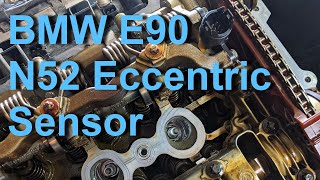
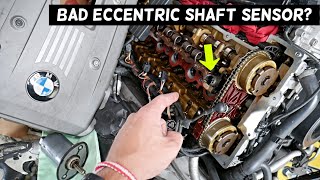
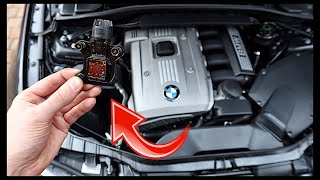
Shop the Parts Behind P1028
Below are the parts most often responsible for code P1028, ranked by how frequently each one is the actual culprit (per the diagnosis above). Tap any to see what we have for your vehicle.


The information in this article is provided for general reference and educational purposes only. Vehicle specifications, procedures, and part compatibility can vary by production date, trim level, and region. Always consult your vehicle's factory service manual and verify part numbers before purchasing or performing repairs. Safety-critical components such as airbags, seat belts, and braking systems should be installed by a qualified professional.
- 🧭 Diagnostic Flowchart
- 🎬 Helpful Videos
- 🛍️ Shop This Part
- What Does P1028 Mean?
- Can I Drive With P1028?
- Common Causes
- Symptoms
- Common Fixes & Costs
- Used vs. New Parts: Buying Guide
- What Happens If You Wait — Timeline
- Cost of Not Fixing It
- Diagnosis Steps
- When This Code Triggers (Freeze-Frame Conditions)
- Related Codes
- Climate & Environmental Factors
- How to Talk to a Mechanic About This Code
- Where to Take It: Dealer vs Independent vs Chain
- When to Walk Away From the Repair
- What Scan Tool You Need for This Code
- How to Clear the Code After You Fix It
- Will This Fail Emissions / State Inspection?
- Most Commonly Affected Vehicles
- Manufacturer-Specific Notes
- Real Owner Stories
- 2007 BMW 328i (N52) at 63K miles
- 2013 BMW E92 at 74.5K miles
- 2013 BMW 535i (N55) at 42K miles
- How to Prevent This Code From Triggering
- Frequently Asked Questions
- Can I just unplug the eccentric shaft sensor to fix the problem?
- Why is the repair so expensive if the part isn't that much?
- If there's oil in the connector, can I just clean it out?
- I replaced the sensor, but the code came back. What now?
- I just replaced my valve cover gasket and now I have a P1028 code. What did I do wrong?
- What's the difference between a Valvetronic code (P1028) and a VANOS code (2A82)?
- My Valvetronic motor makes a buzzing noise. Is it broken?
- Do I have to replace the Valvetronic motor at the same time as the sensor?
- Key Takeaways
- 🎟️ Get 5% Off