

OBD-II Code P1037: Variable Valve Lift Position Sensor Circuit High
What P1037 means, why it triggers, and how to fix it
- Code P1037 requires manufacturer-specific diagnosis, meaning a failed VVEL sensor on a Nissan but a faulty Air/Fuel ratio sensor heater on a Toyota.
- On Nissan and Infiniti vehicles with the VQ37VHR engine, P1037 almost always requires replacing the VVEL position sensor and performing a scan tool relearn.
- Toyota owners must test the upstream Air/Fuel sensor's internal heater resistance; a reading outside the 1.8 to 3.4 ohm range confirms a dead sensor.
- Volkswagen TDI owners should verify their VIN against the 'Dieselgate' Extended Emissions Warranty before paying, as NOx sensor replacements costing over $1,000 are often covered for free up to 162,000 miles.
- Always check engine oil level and condition first on Nissan and Dodge models, as their variable valve systems rely entirely on hydraulic oil pressure to function.
What Does P1037 Mean?
P1037 is a manufacturer-specific code with different definitions based on the car brand. For Nissan and Infiniti, it indicates a 'Circuit High' fault in the Variable Valve Event and Lift (VVEL) system, meaning the engine computer sees an abnormally high voltage from the position sensor. For Toyota, it points to a failed Air/Fuel Ratio sensor heater circuit. You must identify the correct definition for your specific vehicle before attempting any diagnosis.
Technical definition: Variable Valve Lift Position Sensor Circuit High. The Engine Control Module (ECM) detects the voltage signal from the Variable Valve Lift position sensor exceeds the specified maximum range. Depending on the manufacturer, this code alternatively refers to an Air/Fuel Ratio Sensor Heater Circuit (Toyota), a NOx Sensor Circuit (VW), or a Cylinder Oil Supply Solenoid (Dodge).
Can I Drive With P1037?
Yes, But With Caution. Yes, but immediate attention is required. For Nissan/Infiniti, this fault triggers a 'limp mode' with drastically reduced power, making highway driving unsafe. For Toyota/VW, ignoring it causes a rich or lean fuel condition that destroys the catalytic converter over time, a repair costing between $800 and $2,500. It is safe to drive a short distance to a repair shop, but prolonged driving guarantees further damage.
Common Causes
- Failed Variable Valve Lift (VVL) Position Sensor (Very Common) — This is the most frequent cause on Nissan/Infiniti vehicles. The sensor, located in a high-heat engine environment, wears out internally and sends an incorrect high voltage signal to the ECM.
- Failed Air/Fuel Ratio (A/F) Sensor Heater (Very Common) — On Toyota models, the internal heater element inside the upstream A/F sensor fails or develops high resistance, preventing the sensor from reaching operating temperature and triggering the code.
- Damaged Wiring Harness or Connector (Common) — Wires in the sensor circuit can fray, short to a power source, or break from heat and vibration. Connectors also become loose, corroded, or contaminated with oil, creating high resistance.
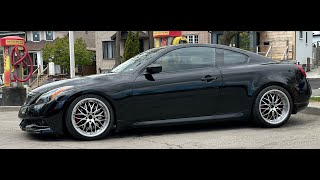
- Failed VVEL Actuator Assembly (Less Common) — On Nissan/Infiniti models, the entire mechanical actuator assembly fails due to internal motor shorts or mechanical binding. This requires replacing the entire unit rather than just the sensor. 🎬 Watch: G37 VVEL sensor fix and repair cost breakdown.
- Low or Dirty Engine Oil (Less Common) — Nissan's VVEL and Dodge's MultiAir systems rely entirely on hydraulic oil pressure. Low, dirty, or incorrect viscosity oil causes mechanical parts to stick, leading to incorrect sensor readings.
- Blown Fuse or Faulty Relay (Rare) — On Toyotas and BMWs, the A/F sensor heater circuit is protected by a dedicated fuse. A blown fuse immediately severs power to the heater, causing a circuit fault code.
- Failed Engine Control Module (ECM) (Very Rare) — The car's main computer fails and misinterprets the sensor's signal. This is the absolute last component to check after ruling out all wiring and sensor possibilities.
Symptoms
- Check Engine Light is On — The ECM illuminates the Check Engine Light immediately upon detecting the out-of-range voltage.
- Reduced Engine Power (Limp Mode) — The vehicle enters 'limp mode' to protect the engine, severely restricting acceleration and capping the engine speed at roughly 2,500 RPM.
- Rough Idle or Stalling — The engine shakes, runs unevenly, or stalls at stops due to locked valve timing or an incorrect air-fuel mixture.
- Decreased Fuel Economy — Because the engine cannot optimize valve timing or fuel delivery, gas mileage drops by 10% to 20%.
- Failed Emissions Test (also visible on scanner) — An inactive A/F sensor or locked valve lift system drastically increases tailpipe emissions, resulting in an automatic inspection failure.
Diagnostic Flowchart
Tap your situation to follow the diagnostic path that matches what you're seeing on this code.
Common Fixes & Costs
- Replace VVL Position Sensor (Nissan/Infiniti) — Parts: $70-$200, Labor: $100-$250, ~1.5 hr book time (DIY)
- Replace Air/Fuel Ratio Sensor (Toyota) — Parts: $150-$250, Labor: $100-$200, ~1.2 hr book time (DIY)
- Replace VVEL Actuator Assembly (Nissan/Infiniti) — Parts: $300-$1200, Labor: $400-$800, ~4.5 hr book time (Advanced)
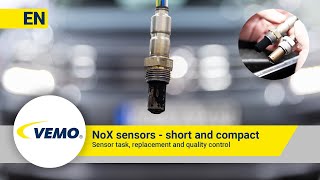
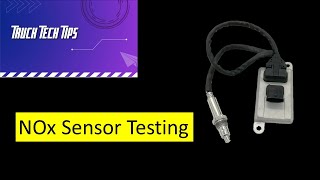
- Replace NOx Sensor (Volkswagen TDI) — Parts: $300-$750, Labor: $150-$300, ~1.5 hr book time (Intermediate)
- Repair Damaged Wiring or Connector — Parts: $10-$30, Labor: $150-$400, ~2.0 hr book time (Intermediate)
- Change Engine Oil and Filter — Parts: $40-$80, Labor: $20-$50, ~0.5 hr book time (DIY)
Used vs. New Parts: Buying Guide
When a used part is worth it: For complex, expensive assemblies like a Nissan VVEL actuator, a used part from a low-mileage donor vehicle is a cost-effective option. Never buy used electronic sensors (A/F, O2, NOx) as their lifespan is limited.
Donor-vehicle mileage cap: roughly under 60000 miles for the part to have meaningful remaining life.
Donor quality checklist:
- Verify the donor vehicle was not scrapped for a related engine or emissions failure.
- Prefer donors from dry climates to avoid corrosion on mechanical parts.
- Match the OEM part number exactly; do not rely on visual similarity.
Decision logic:
- If The part is an electronic sensor (A/F, O2, NOx, VVEL position). → Buy new from an OEM supplier (Denso, Hitachi, Bosch). The risk of premature failure from a used part is too high.
- If The part is a large mechanical assembly (VVEL Actuator) and the new OEM price exceeds $1000. → A used part from a reputable salvage yard with a warranty is a reasonable risk.
- If The vehicle has over 150k miles and you are on a tight budget. → A used part is the only financially viable option, but accept its remaining lifespan is uncertain.
Warranty tradeoff: Used parts typically include a 30-90 day warranty. New aftermarket parts offer 1-year to limited lifetime warranties. New OEM parts carry a 1-year/12,000-mile warranty.
Worst-case if a used part fails: $500-$1000 if a used part fails after the warranty period, requiring repeat labor costs plus another replacement part.
What Happens If You Wait — Timeline
- 0-1 month: Check Engine Light on. Nissan/Infiniti vehicles enter 'limp mode' with no power. Toyota/VW vehicles experience a slight drop in fuel economy. (MPG impact: 5-15%% · Added cost: $20-50 in wasted fuel.)
- 1-4 months: For Toyota/VW, the engine runs consistently rich. Unburned fuel enters the exhaust, raising the catalytic converter's temperature above its normal 1600°F limit. (MPG impact: 10-20%% · Added cost: $50-150 in wasted fuel. Catalytic converter is actively degrading.)
- 4-8 months: Sustained high temperatures melt the precious metal coating on the catalytic converter's internal ceramic honeycomb, rendering it ineffective. Emissions tests fail for catalyst inefficiency. (MPG impact: 15-25%% · Added cost: $1200-$2800 for mandatory catalytic converter replacement.)
- 8+ months: The catalytic converter's internal structure breaks apart or melts completely, creating a physical exhaust blockage. This causes extreme backpressure, severe power loss, and engine stalling. (MPG impact: 25-50%+% · Added cost: $2500+ for catalytic converter and potential internal engine repairs.)
Cost of Not Fixing It
- 0-1 month: Noticeable drop in fuel economy (5-15%) and rough idling. Nissan/Infiniti vehicles remain stuck in 'limp mode' with severely reduced power. (Added cost: Negligible, other than increased fuel consumption.)
- 1-6 months: For Toyota/VW, prolonged driving with a bad A/F or NOx sensor forces the engine to run consistently rich. Unburned fuel dumps into the exhaust, overheating and destroying the catalytic converter. (Added cost: $1200-$2800 for catalytic converter replacement.)
- 6+ months: Severe catalytic converter damage creates excessive backpressure, leading to engine stalling, internal engine damage, or a complete no-start condition. (Added cost: $2500+)
Diagnosis Steps
- Check Engine Oil Level and Condition
For Nissan, Infiniti, or Dodge MultiAir engines, verify the engine oil is clean and at the correct level. Low or dirty oil directly disables the hydraulic operation of these systems. Top off or change the oil before proceeding.
Tools: Rag/Paper Towel (Beginner) - Scan Tool Live Data Analysis
Connect an OBD-II scanner and view the live data stream. For a Nissan VVL fault, the position sensor voltage should sit near 0.5V at idle. A reading stuck at 4.9V-5.0V confirms a sensor or circuit short. For a Toyota, monitor the A/F sensor heater circuit status.
Tools: OBD-II Scanner (Intermediate) - Visual Inspection and Fuse Check
Locate the relevant sensor (VVL on Nissan, A/F on Toyota). Inspect the wiring harness for melted insulation, oil intrusion, or frayed wires. Check the engine bay fuse box for any blown fuses labeled 'A/F Heater' or 'Sensor'.
Tools: Flashlight, Fuse Puller (Beginner) - Test Connector Power and Ground
Disconnect the sensor. Using a multimeter, verify the ECM is delivering the correct reference voltage (5V for position sensors, 12V for heater circuits) and a solid ground to the harness connector.
Tools: Multimeter (Intermediate) - Test Sensor Internal Resistance (Toyota)
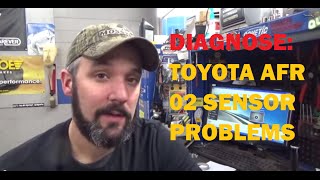
For a Toyota A/F sensor, measure the resistance between the two heater terminals (the two same-colored wires) on the sensor itself. A healthy sensor reads between 1.8 and 3.4 ohms at room temperature. Infinite resistance confirms a blown internal heater.
Tools: Multimeter (Intermediate) - Check for Shorts to Power
With the sensor unplugged and the ignition ON, probe the signal wire on the harness side. It should read 0V. If it shows voltage, the signal wire is shorted to a power source somewhere inside the wiring harness.
Tools: Multimeter (Advanced) - VVEL Mechanical Sync Check (Nissan/Infiniti)
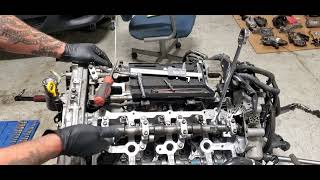
If the sensor and wiring pass, the VVEL actuator lost mechanical synchronization. Remove the valve cover, set the engine to #1 TDC, and measure the distance between the stepper motor housing and the control shaft washer. The target is 1.585 inches (40.26 mm).
Tools: Digital Calipers, Socket Set, Service Manual (Advanced) - VCM Adaptive Reset (Dodge)
When replacing a MultiAir actuator on a Dodge 2.4L, you must perform a 'Reset VCM Adaptives' procedure with a bi-directional scan tool. Skipping this step causes the ECM to register a false failure on the new component and immediately trigger P1037 again.
Tools: Advanced Bi-Directional Scan Tool (Advanced) - Oscilloscope Analysis (A/F Sensor)
Connect an oscilloscope to the Toyota A/F sensor signal wire. A healthy sensor produces a current waveform that shifts smoothly with the air-fuel mixture. A flat line under induced rich/lean conditions confirms a dead sensor element.
Tools: Oscilloscope (Advanced)
When This Code Triggers (Freeze-Frame Conditions)
- Engine Coolant Temp: 175-205°F (Engine fully warmed up.)
- RPM: 1500-3000 (During steady-state cruise or light acceleration.)
- Engine Load: 25-60% (The fault triggers under moderate engine load, rarely at idle or full throttle.)
- Vehicle Speed: 40-65 mph (Most likely to trigger during city or highway cruise conditions.)
Related Codes
- P1031 — The direct opposite code for Nissan/Infiniti, indicating 'VVL Position Sensor Circuit Low'. P1037 points to a short to power, while P1031 points to a short to ground or open circuit.
- P1090 — Relates to the VVEL actuator motor on Bank 1 for Nissan/Infiniti. If P1090 is present alongside P1037, the actuator assembly itself failed, not just the sensor.
- P0300 — Random/Multiple Cylinder Misfire. A faulty VVEL or A/F system disrupts combustion, causing misfires. Always diagnose and fix the P1037 code first, as it is the root cause.
- P0031 — Toyota's code for 'Oxygen (A/F) Sensor Heater Control Circuit Low'. This is the exact opposite fault mode of Toyota's P1037, but both require replacing the same upstream A/F sensor.
Climate & Environmental Factors
- Cold Weather: In freezing temperatures, the heater element within an Air/Fuel ratio or NOx sensor takes longer to reach its 600°F operating temperature. This extended warm-up period exacerbates symptoms like rough idling and hesitation before the code officially triggers.
- High Humidity / Condensation: Excessive condensation in the exhaust system during short trips collects on the NOx sensor element. Rapid exhaust heating causes thermal shock, cracking the sensor's delicate ceramic components and causing premature failure.
How to Talk to a Mechanic About This Code
Say this: "I have a P1037 code on my [Make and Model]. For a Nissan/Infiniti, please check the VVEL position sensor voltage and wiring. For a Toyota, please test the A/F sensor heater circuit resistance. For a VW TDI, please check my VIN for the extended emissions warranty. For a Dodge 2.4L, please inspect the MultiAir actuator."
This proves you know P1037 is manufacturer-specific and directs the technician to the exact cause, preventing unnecessary diagnostic time and parts swapping. Mentioning the VW warranty saves you over $1,000.
Avoid saying:
- 'My check engine light is on.' (Too vague, invites a wide-ranging and expensive diagnostic).
- 'Just fix whatever is wrong.' (Gives the shop a blank check to replace parts without approval).
- 'My friend said it's the O2 sensor.' (Leads to confirmation bias; let the technician diagnose based on evidence).
Questions to ask before authorizing the repair:
- What were the specific test results? (e.g., 'What was the VVEL sensor voltage?', 'What was the A/F heater resistance in ohms?')
- Can you confirm the wiring and connector are undamaged?
- Does this repair require a relearn or reset procedure with a scan tool?
- Is this part covered by any warranty, like the VW dieselgate emissions warranty?
- Will you use an OEM part or an aftermarket equivalent? (Crucial for sensors).
Where to Take It: Dealer vs Independent vs Chain
- Dealer:
Best for: Vehicles under warranty (especially VW TDI emissions warranty)., Complex, manufacturer-specific repairs like Nissan VVEL actuator or Dodge MultiAir replacement., Recalls and software updates.
Downsides: Highest labor rates., Often recommends replacing a whole assembly when a smaller component suffices. (Typical cost: +50% vs. baseline) - Independent Shop:
A good independent specialist is the best choice, but the dealer is mandatory for VW TDI warranty checks and preferable for complex VVEL/MultiAir actuator jobs.
Best for: Out-of-warranty vehicles where cost is a major factor., Straightforward sensor replacements on common vehicles (e.g., A/F sensor on a Toyota)., Finding a brand specialist provides dealer-level expertise at a lower cost.
Downsides: Quality and expertise vary widely; vetting is crucial., May lack expensive, specialized tools for relearn procedures. (Typical cost: +0% vs. baseline) - Chain Shop:
AVOID for diagnosing P1037. They misdiagnose complex issues on Nissan, VW, or Dodge vehicles.
Best for: Simple, unrelated maintenance like oil changes or tires.
Downsides: Technician skill varies dramatically., Lacks the in-depth diagnostic tools for manufacturer-specific codes like P1037., High pressure to upsell common items. (Typical cost: -10% vs. baseline)
When to Walk Away From the Repair
If the estimated repair cost exceeds 40% of the car's private-party value, sell the car as-is or trade it in.
- Car worth $6000, fix is $1700: Fix it. The repair cost for a VVEL actuator on an Infiniti G37 is significant, but well below the 40% threshold.
- Car worth $4000, fix is $1800: Borderline. A nearly $2000 repair on a $4000 car is a tough call. Get a second opinion and assess the car's overall health.
- Car worth $2500, fix is $1700: Walk away. The repair cost is nearly 70% of the vehicle's value. It is not economical to repair.
What Scan Tool You Need for This Code
Minimum: A scanner that reads live data streams for your specific vehicle manufacturer.
A basic $20 code reader only provides the 'P1037' code. Diagnosing it requires live data, like the VVEL sensor voltage on a Nissan or the A/F sensor heater status on a Toyota. Nissan and Dodge repairs require a bi-directional tool for post-repair relearn procedures.
Budget: BlueDriver Pro (~$100) — Reads codes, views freeze-frame data, and graphs live data streams, which is enough to diagnose a stuck sensor voltage.
Mid-range: Foxwell NT510 Elite / Launch CRP129X (~$150-300) — Adds manufacturer-specific diagnostics and some bi-directional controls to perform resets needed for some repairs.
Professional: Autel MaxiCOM MK808S / XTOOL D7 (~$400-600) — Offers full bi-directional control. Mandatory for advanced procedures like the 'Reset VCM Adaptives' on a Dodge or initiating a VVEL position relearn on a Nissan.
Rent vs buy: For a simple Toyota A/F sensor issue, renting a basic scanner from a parts store is enough. For Nissan, Dodge, or complex wiring issues, you need a bi-directional tool. If you do your own repairs regularly, buying a mid-range or pro-level tool is a worthwhile investment.
How to Clear the Code After You Fix It
- Fix the underlying cause of the code.
- Use an OBD-II scan tool to clear the diagnostic trouble code.
- Perform the specific drive cycle for your vehicle to allow readiness monitors to run.
Drive cycle (~30 minutes): A general drive cycle includes a cold start (sit for 8+ hours), 5-10 minutes of idling, 15-20 minutes of mixed city/highway driving (including steady speeds between 40-60 mph), and at least four idle periods.
Readiness monitors affected: Catalyst Monitor, Oxygen Sensor / Air-Fuel Ratio Sensor Monitor, EGR/VVT System Monitor
Before emissions retest: drive at least 100 miles to fully set monitors.
Watch out for:
- Clearing the code without a repair causes it to return immediately.
- Disconnecting the battery clears the code but resets all readiness monitors, resulting in an automatic emissions test failure.
- Failing to follow the manufacturer-specific drive cycle prevents readiness monitors from setting.
Will This Fail Emissions / State Inspection?
Yes — this code typically fails an OBD-II emissions inspection.
- California: An illuminated Check Engine Light is an automatic failure. All readiness monitors must be complete; clearing the code right before the test results in a failure.
- New York: A vehicle with the Check Engine Light on automatically fails the emissions portion. One readiness monitor may be incomplete on 2001+ vehicles and still pass.
- Texas: In counties requiring emissions testing, an active P1037 code causes an automatic failure. The vehicle also fails if the OBD-II readiness monitors are not set.
Most Commonly Affected Vehicles
- Infiniti G37 (2008-2013) — The VQ37VHR engine is notorious for VVEL position sensor failures. Pre-2012 models also suffer from failing rear timing cover oil gallery gaskets, causing low oil pressure that triggers VVEL codes.
- Nissan 370Z (2009-2020) — Shares the VQ37VHR engine with the G37, making it equally susceptible to VVEL sensor and actuator failures.
- Infiniti M37 / Q70 (2011-2019) — Equipped with the VQ37VHR engine, these models frequently experience VVEL sensor failures that force the car into limp mode.
- Toyota Camry, Corolla, RAV4 (1999-2018) — On Toyotas, P1037 indicates an Air/Fuel Ratio Sensor Heater Control Circuit High (Bank 1 Sensor 1). The fix is replacing the upstream A/F sensor.
- Volkswagen Jetta, Golf, Passat (TDI) (2009-2015) — Indicates a 'Nitrogen Oxides (NOx) Sensor Heater Circuit Short To Positive/Ground'. Diagnosis requires checking CAN bus resistance and sensor power/ground.
- Dodge / Jeep / Chrysler Dart, Cherokee, 200 (2013-2017) — On 2.4L 'MultiAir' engines, P1037 means 'Cylinder 1 Oil Supply Solenoid Valve Driver Short To Ground'. The entire MultiAir actuator 'brick' must be replaced.
Manufacturer-Specific Notes
- Nissan / Infiniti: The most common platform for P1037, referring to the Variable Valve Event and Lift (VVEL) system. The fault almost always requires replacing the position sensor on the valve cover and performing a mandatory scan tool relearn procedure.
- Toyota / Lexus: P1037 means 'Air/Fuel Ratio Sensor Heater Control Circuit High'. This is an exhaust system issue, completely unrelated to engine valves. Diagnosis focuses strictly on testing the heater resistance of the upstream A/F sensor.
- Dodge / Jeep / Chrysler: Points to a short in the oil supply solenoid driver for cylinder 1 on 2.4L MultiAir engines. These solenoids are permanently integrated into the MultiAir actuator assembly; the entire $800+ unit must be replaced.
- Volkswagen / Audi: Points to a NOx Sensor Heater Circuit fault on TDI models. Due to the 'Dieselgate' settlement, many of these vehicles have an Extended Emissions Warranty covering the entire exhaust aftertreatment system for up to 10 years or 162,000 miles.
Real Owner Stories
2010 Infiniti G37 at 110K miles with Limp Mode
While driving, the car lost power, entered limp mode (capped at 2500 RPM), and triggered code P1037.
What they tried:
- Replaced the VVEL position sensor on Bank 1, but the code returned immediately.
- A shop misdiagnosed the problem as a failed engine requiring a $4,000 swap.
Outcome: The owner diagnosed a failed VVEL actuator assembly. They purchased a used actuator online for under $200 and replaced it themselves in 6 hours, restoring normal operation.
Lesson: On a G37, P1037 doesn't always mean the sensor is bad. If a new sensor doesn't fix it, the entire VVEL actuator likely failed. This is a viable DIY repair if you are mechanically inclined.
2015 Dodge Dart GT 2.4L with Misfires and P1037
The car misfired and ran rough. A shop replaced the spark plugs, which masked the symptom for three weeks before P1037 returned.
What they tried:
- Replaced spark plugs.
- Diagnosed a P1037 code pointing to the MultiAir system.
Outcome: The MultiAir actuator assembly ('brick') failed. The entire actuator must be replaced as a unit because the internal solenoids are not serviceable. A shop charged $560 in labor to install a customer-supplied part.
Lesson: For Dodge 2.4L MultiAir engines, P1037 points to the entire actuator 'brick'. Replacing spark plugs provides a temporary illusion of a fix but ignores the root cause.
2015 VW Passat TDI with P1037
Check Engine Light illuminated with code P1037, indicating a fault in the NOx sensor heater circuit.
What they tried:
- Received a dealership quote of over $1,000 to replace the NOx sensor.
Outcome: The owner discovered the vehicle was covered under the 'Dieselgate' Extended Emissions Warranty. The dealer performed the $1,000 repair entirely for free.
Lesson: Before paying for emissions repairs on a 2009-2015 VW TDI, check your VIN for Extended Emissions Warranty coverage. Expensive components like NOx sensors are often fully covered.
Toyota Camry with A/F Sensor Heater Code
Check Engine Light on with code P1037 indicating a fault in the Air/Fuel Ratio Sensor heater circuit.
What they tried:
- Tested the resistance of the A/F sensor's heater element using a multimeter.
Outcome: The original sensor measured 4.0 ohms, outside the specified 1.8-3.4 ohm range. Replacing the sensor with a new OEM Denso part resolved the issue.
Lesson: For Toyota P1037, the cause is almost always the heater inside the upstream A/F sensor. Confirm this with a multimeter; resistance must be under 3.5 ohms.
How to Prevent This Code From Triggering
- Use correct, high-quality engine oil and change it on schedule. (Per manufacturer's schedule) — Nissan VVEL and Dodge MultiAir systems depend entirely on clean oil at the correct pressure. Old or incorrect viscosity oil causes actuator sluggishness and triggers P1037.
- Use Top Tier gasoline. (Every fill-up) — High-quality fuels with enhanced detergents prevent carbon buildup on A/F and O2 sensors. Soot insulates the sensor, slowing its response time and causing premature failure.
- Avoid frequent short trips; take longer drives regularly. (Weekly) — Short drives prevent the exhaust system from fully heating up, allowing condensation to build. This moisture damages NOx and A/F sensors through corrosion or thermal shock.
- For VW TDI, use AdBlue/DEF with an anti-crystallization additive. (Every AdBlue/DEF refill) — Diesel Exhaust Fluid forms crystals in the tank and lines, clogging the injector and damaging the SCR system, including the NOx sensors.
- Periodically use a quality fuel system or emissions system cleaner. (Every 5,000-10,000 miles) — Emissions system cleaners remove soot and carbon deposits from A/F and NOx sensors, restoring function and prolonging their life.
Frequently Asked Questions
What does 'Circuit High' actually mean?
It means the car's computer is receiving a voltage signal from the sensor that is higher than the normal operating range (e.g., seeing 4.9V when it expects ~0.5V). This is caused by a short circuit to a power wire, high resistance in the ground circuit, or an internally shorted sensor.
I replaced the VVL sensor on my Infiniti but the code came back. What now?
If a new OEM sensor doesn't fix it, verify you completed the required VVEL scan tool relearn procedure. If the code persists, inspect the wiring harness for a short to power. Finally, the VVEL actuator assembly itself likely failed or lost mechanical sync.
Can I use a cheaper aftermarket sensor to fix this?
Critical sensors require specific OEM calibration to function correctly. An aftermarket part often fails prematurely or causes the ECM to reject the signal and re-trigger the code. Stick with the OEM brand, like Hitachi for Nissan or Denso for Toyota, to guarantee a fix.
Will an oil change fix code P1037?
It is not the direct fix, but it is a critical first step for systems like Nissan's VVEL or Dodge's MultiAir. These systems rely on clean oil at the proper level and pressure to function. Always correct low or dirty oil before performing further electrical diagnosis.
Is P1037 the same as P0137 or P0138?
No, P1037 is a manufacturer-specific code with varying definitions. P0137 and P0138 are universal codes specifically indicating low or high voltage on Oxygen Sensor 2 (downstream). While a Toyota P1037 involves an exhaust sensor, it targets the upstream Air/Fuel sensor's heater circuit.
Why is this code so common on Infiniti G37s?
The VQ37VHR engine's VVEL position sensors sit in a high-heat area on top of the engine. Constant exposure to extreme heat cycles destroys the sensor's internal electronics prematurely.
Can I reset the P1037 code myself?
You can clear the code with a standard OBD-II scanner, but it returns immediately if the underlying fault remains. Replacing a Nissan VVEL sensor requires a specific relearn procedure using an advanced scan tool to recalibrate the system. A simple code clear cannot bypass this calibration step.
Key Takeaways
- Code P1037 requires manufacturer-specific diagnosis, meaning a failed VVEL sensor on a Nissan but a faulty Air/Fuel ratio sensor heater on a Toyota.
- On Nissan and Infiniti vehicles with the VQ37VHR engine, P1037 almost always requires replacing the VVEL position sensor and performing a scan tool relearn.
- Toyota owners must test the upstream Air/Fuel sensor's internal heater resistance; a reading outside the 1.8 to 3.4 ohm range confirms a dead sensor.
- Volkswagen TDI owners should verify their VIN against the 'Dieselgate' Extended Emissions Warranty before paying, as NOx sensor replacements costing over $1,000 are often covered for free up to 162,000 miles.
- Always check engine oil level and condition first on Nissan and Dodge models, as their variable valve systems rely entirely on hydraulic oil pressure to function.
Helpful Videos
Shop the Parts Behind P1037
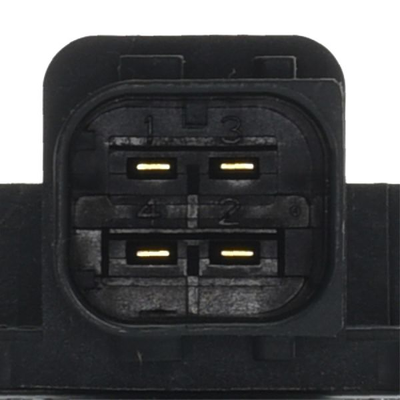
Below are the parts most often responsible for code P1037, ranked by how frequently each one is the actual culprit (per the diagnosis above). Tap any to see what we have for your vehicle.

The information in this article is provided for general reference and educational purposes only. Vehicle specifications, procedures, and part compatibility can vary by production date, trim level, and region. Always consult your vehicle's factory service manual and verify part numbers before purchasing or performing repairs. Safety-critical components such as airbags, seat belts, and braking systems should be installed by a qualified professional.
- 🧭 Diagnostic Flowchart
- 🎬 Helpful Videos
- 🛍️ Shop This Part
- What Does P1037 Mean?
- Can I Drive With P1037?
- Common Causes
- Symptoms
- Common Fixes & Costs
- Used vs. New Parts: Buying Guide
- What Happens If You Wait — Timeline
- Cost of Not Fixing It
- Diagnosis Steps
- When This Code Triggers (Freeze-Frame Conditions)
- Related Codes
- Climate & Environmental Factors
- How to Talk to a Mechanic About This Code
- Where to Take It: Dealer vs Independent vs Chain
- When to Walk Away From the Repair
- What Scan Tool You Need for This Code
- How to Clear the Code After You Fix It
- Will This Fail Emissions / State Inspection?
- Most Commonly Affected Vehicles
- Manufacturer-Specific Notes
- Real Owner Stories
- 2010 Infiniti G37 at 110K miles with Limp Mode
- 2015 Dodge Dart GT 2.4L with Misfires and P1037
- 2015 VW Passat TDI with P1037
- Toyota Camry with A/F Sensor Heater Code
- How to Prevent This Code From Triggering
- Frequently Asked Questions
- What does 'Circuit High' actually mean?
- I replaced the VVL sensor on my Infiniti but the code came back. What now?
- Can I use a cheaper aftermarket sensor to fix this?
- Will an oil change fix code P1037?
- Is P1037 the same as P0137 or P0138?
- Why is this code so common on Infiniti G37s?
- Can I reset the P1037 code myself?
- Key Takeaways
- 🎟️ Get 5% Off