

OBD-II Code P1046: Rocker Arm Oil Supply Solenoid Circuit Overcurrent
The Ultimate 2026 Guide to Diagnosing and Fixing P1046
- On Fiat, Dodge, and Jeep vehicles, P1046 almost exclusively means you need a PCM software update or a $1,500+ MultiAir actuator replacement.
- Check your VIN for Technical Service Bulletins (TSBs) like 18-009-15 before buying parts; a $150 dealer software flash fixes this code 80% of the time.
- P1046 flags a direct electrical short circuit in the cylinder 1 oil supply solenoid, often blowing the 10A F87 fuse under the hood.
- Pulling codes P1046, P1048, P104A, and P104C simultaneously guarantees a PCM software glitch, as four independent solenoids will never fail at the exact same time.
- On VW and Audi models, P1046 indicates a cylinder 4 fuel injector circuit malfunction, requiring a multimeter test of the Bosch injector.
What Does P1046 Mean?
P1046 is a manufacturer-specific code. On Fiat, Dodge, and Jeep MultiAir engines, it means the Powertrain Control Module (PCM) detected an electrical short circuit (overcurrent) in the cylinder #1 oil control solenoid. This solenoid dictates intake valve operation, directly controlling engine performance.
Technical definition: The SAE definition for P1046 is 'Cylinder 1 Oil Supply Solenoid Valve Overcurrent'. VW/Audi uses it for 'Injector 4 Supply Voltage Circuit Malfunction', GM diesels for 'Reductant Purge Valve High Voltage', and Toyota for 'Target/Actual Valvematic Angle Difference'. This guide focuses on the dominant Fiat-Chrysler (FCA) MultiAir definition.
Can I Drive With P1046?
Yes, But With Caution. You can drive short distances, but expect severe hesitation and rough idling. A persistent misfire dumps unburnt fuel into the exhaust, destroying the catalytic converter—a $1,500+ repair. If the check engine light flashes, pull over immediately and shut off the engine.
Common Causes
- Outdated Powertrain Control Module (PCM) Software (Very Common) — FCA's original engine computer software was overly sensitive and falsely triggers P1046. FCA released multiple Technical Service Bulletins (TSBs) with software updates to fix this exact problem.
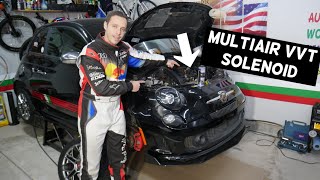
- Failed MultiAir Actuator Assembly ('Brick') (Common) — The oil control solenoid lives inside a non-serviceable unit called the MultiAir actuator. If the internal solenoid shorts out, you must replace the entire $1,500 assembly. 🎬 Watch: See the MultiAir solenoid location and replacement process.
- Blown Fuse (Common) — A shorted solenoid or wire instantly blows the circuit's protective fuse. On the Dodge Dart 1.4L, this is the 10A fuse in slot F87. A blown fuse guarantees an electrical short.
- Wiring Harness or Connector Damage (Less Common) — Engine heat and vibration crack wiring insulation or break the cylinder 1 solenoid connector's locking tab. This creates a short to ground or an intermittent connection.
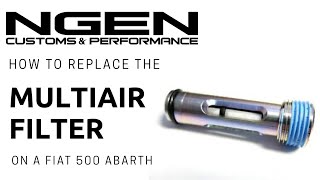
- Clogged MultiAir Oil Filter (Rare) — A small, replaceable mesh filter protects the actuator from oil debris. 🎬 Watch: How to replace the MultiAir oil supply filter. Severe clogs starve the unit of oil pressure, causing erratic solenoid behavior.
- Incorrect Engine Oil Viscosity or Quality (Rare) — Using conventional 5W-30 instead of the required FCA-spec 5W-40 synthetic strains the hydraulic components. This added stress causes premature solenoid failure.
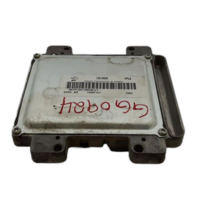
- Failed Powertrain Control Module (PCM) (Very Rare) — The PCM's internal driver circuit responsible for cylinder 1 fails, creating a false overcurrent reading. Consider this only after ruling out all other hardware.
Symptoms
- Check Engine Light is On — The Malfunction Indicator Lamp (MIL) illuminates immediately. It flashes during severe, catalyst-damaging misfires.
- Rough Idle and Knocking — The engine shakes violently or knocks at a stop. The noise often disappears at higher RPMs.
- Hesitation and Poor Acceleration — The vehicle stutters, feels sluggish, and struggles to reach highway speeds.
- Fast Crank, No Start — The engine turns over rapidly but refuses to start, acting like it has zero compression. This happens when the actuator loses its oil prime, especially in cold weather.
- Black Smoke on Cold Start — A puff of black smoke exits the tailpipe during cold starts, indicating a rich fuel condition from improper valve timing.
Diagnostic Flowchart
Tap your situation to follow the diagnostic path that matches what you're seeing on this code.
Common Fixes & Costs
- Reprogramming the Powertrain Control Module (PCM) — Parts: $0, Labor: $150-$250, ~1.0 hr book time (Professional)
- Replacing the MultiAir Actuator Assembly ('Brick')
— Parts: $1100-$1600, Labor: $400-$700, ~4.5 hr book time
(Professional)
: OEM - Replacing a Blown Fuse
— Parts: $1-$5, Labor: $0, ~0.1 hr book time
(DIY)
: OEM - Replacing the MultiAir Oil Filter Screen
— Parts: $15-$30, Labor: $75-$150, ~1.0 hr book time
(Intermediate)
: OEM - Repairing Damaged Wiring — Parts: $10-$50, Labor: $150-$300, ~2.0 hr book time (Intermediate)
Used vs. New Parts: Buying Guide
When a used part is worth it: Given the $1,500+ cost of a new actuator, a used unit from a low-mileage donor is a viable budget option.
Donor-vehicle mileage cap: roughly under 60000 miles for the part to have meaningful remaining life.
Donor quality checklist:
- Verify donor wasn't scrapped for engine failure.
- Match part numbers exactly.
- Avoid damaged electrical connectors.
Decision logic:
- If The TSB for the software update has not been performed → Do not buy any actuator. Get the software updated first.
- If Vehicle is low mileage and you plan to keep it long-term → Buy a new OEM part for maximum longevity and warranty coverage.
- If Vehicle is high mileage (>120k miles) and budget is the primary concern → Buy a used part, but understand it has a significantly shorter lifespan.
Warranty tradeoff: Used parts from salvage yards typically offer a 30-90 day warranty. A new OEM part installed by a dealer carries the manufacturer's parts and labor warranty.
Worst-case if a used part fails: $500-$800 in wasted labor if the used part fails.
What Happens If You Wait — Timeline
- 0-1 month: Rough idle, minor hesitation. (MPG impact: 3-8%% · Added cost: $0-$50)
- 1-3 months: Consistent misfires, flashing MIL. (MPG impact: 10-20%% · Added cost: $50-$150)
- 3-6 months: Catalytic converter melts from unburnt fuel. (MPG impact: 15-30%% · Added cost: $1500-$2500)
- 6+ months: Catastrophic engine damage. (MPG impact: >30%% · Added cost: $3000-$7000)
Cost of Not Fixing It
- 0-1 month: Reduced fuel economy, poor acceleration, and rough idle. (Added cost: $0-$50 in wasted fuel.)
- 1-6 months: Constant misfires dump unburnt fuel into the exhaust, melting the catalytic converter. (Added cost: $1500-$2500)
- 6+ months: Severe valvetrain malfunction causes secondary engine damage like scored cylinder walls. (Added cost: $3000-$7000)
Diagnosis Steps
- Scan for Additional Codes
Use an OBD-II scanner to check for related codes. Finding P1048, P104A, or P104C simultaneously guarantees a software glitch, as four solenoids will never fail at once.
Tools: OBD-II Scanner (Beginner) - Check for Technical Service Bulletins (TSBs)
Search your VIN for TSBs like #18-010-15 (Fiat 500) or #18-009-15 (Dodge Dart). These bulletins confirm a PCM software update is the primary fix.
Tools: Phone or Computer (Beginner) - Inspect the Fuse
Check the MultiAir solenoid circuit fuse (e.g., 10A F87 on a Dodge Dart). A blown fuse confirms a hard overcurrent condition. It will blow again until you fix the short.
Tools: Owner's Manual, Fuse Puller (Beginner) - Perform a Solenoid Connector Swap
Swap the electrical connectors between cylinder 1 and cylinder 2. Clear codes and run the engine. If P1048 appears, the wiring or PCM is bad. If P1046 returns, the cylinder 1 solenoid is dead.
Tools: OBD-II Scanner, Small Screwdriver (Intermediate) - Measure Solenoid Resistance
Disconnect the cylinder 1 solenoid. Measure resistance between its two pins. A healthy FCA solenoid reads 0.5 to 1.0 Ohms. A reading near 0 Ohms confirms a dead short.
Tools: Multimeter (Advanced) - Inspect the Wiring Harness
Visually trace the wiring to the MultiAir actuator. Look for chafing, melted insulation, or broken wires rubbing against the engine block.
Tools: Flashlight (Intermediate) - Active Solenoid Test
Use a bidirectional scan tool to command the cylinder 1 solenoid on. Listen for an audible 'click'. No click confirms a failed solenoid or open wire.
Tools: Bidirectional Scan Tool (Advanced) - Advanced Circuit Analysis
Use a multimeter to verify reference voltage at the connector. Back-probe with an oscilloscope to view the PCM's duty-cycled command signal under load, definitively isolating a bad PCM driver.
Tools: Multimeter, Oscilloscope, Wiring Diagram (Professional)
When This Code Triggers (Freeze-Frame Conditions)
- Engine Coolant Temp: 40-95°C (104-203°F) (During or after warm-up.)
- RPM: 600-1500 RPM (Idle or low-speed driving.)
- Engine Load: 20-40% (Light throttle application.)
- Battery Voltage: > 11V (Normal operating voltage, ruling out low battery issues.)
Related Codes
- P1048 — Cylinder 2 Overcurrent. Finding P1046 and P1048 together guarantees a software or shared power issue, not two simultaneously failed parts.
- P104A — Cylinder 3 Overcurrent. Reinforces a software glitch.
- P104C — Cylinder 4 Overcurrent. Seeing all four solenoid codes guarantees the PCM software is the culprit.
- P0301 — Cylinder 1 Misfire. A direct symptom of P1046. Fix the valve actuation issue to resolve the misfire.
- P061A — Internal Control Module Torque Performance. Often listed in the same FCA TSBs, confirming the root cause is a PCM software glitch.
Climate & Environmental Factors
- Cold Weather: P1046 and crank-no-start symptoms peak in cold weather. Thick, cold oil strains the electro-hydraulic solenoids during startup. FCA released specific software updates to fix cold-weather starting issues.
How to Talk to a Mechanic About This Code
Say this: "I have a P1046 code. Please check my VIN for open TSBs for a PCM update before diagnosing hardware."
Directs the shop to the cheapest fix first, preventing a $2,000 misdiagnosis.
Avoid saying:
- 'Just fix my check engine light.'
- 'The car is running rough, do whatever it takes.'
- 'I think I need a new engine part, the internet said so.'
Questions to ask before authorizing the repair:
- Did you confirm my PCM software is updated?
- What test confirmed the actuator failed?
- Are you aware multiple codes point to the TSB?
- What is the warranty on the proposed repair, for both parts and labor?
Where to Take It: Dealer vs Independent vs Chain
- Dealer:
Highly Recommended for step 1. Only dealers have the wiTECH tools required for the PCM flash.
Best for: Initial diagnosis to check for and perform the TSB software update., Vehicles still under powertrain warranty., Access to proprietary wiTECH diagnostic tools required for PCM flashing.
Downsides: Higher labor rates., May be quick to recommend expensive OEM-only hardware replacement. (Typical cost: +50% vs. baseline) - Independent Shop:
Recommended for step 2. If the actuator is truly dead, a trusted shop saves you $200+ on labor.
Best for: Hardware replacement (MultiAir actuator) *after* the software has been ruled out by a dealer., Out-of-warranty vehicles where cost is a major factor.
Downsides: Less likely to have the expensive subscription for FCA's wiTECH tool needed for the software flash., Quality and experience with complex MultiAir systems can vary widely. (Typical cost: +0% vs. baseline) - Chain Shop:
AVOID. They lack the tools for PCM flashes and will misdiagnose this as a bad spark plug.
Best for: Simple tasks like oil changes and tire rotations.
Downsides: Almost certainly will not have the tools or expertise for a PCM flash or an invasive engine repair like the MultiAir actuator., High likelihood of misdiagnosis, leading to unnecessary replacement of parts like spark plugs or coils. (Typical cost: -10% vs. baseline)
When to Walk Away From the Repair
If the $2,000 actuator replacement exceeds 50% of the car's value, walk away.
- Car worth $3500, fix is $2000: Walk away. The repair cost is over 55% of the car's value. It is not an economically sound repair.
- Car worth $8000, fix is $2000: Fix it. The repair cost is significant but represents less than 35% of the vehicle's value. The car is likely worth repairing.
- Car worth $3000, fix is $250: Fix it. This low cost indicates the problem is likely the software update, which is a very worthwhile repair.
What Scan Tool You Need for This Code
Minimum: Any basic OBD-II code reader that can read and clear codes.
Budget: BlueDriver Pro (~$100) — Reads enhanced FCA codes and freeze-frame data.
Mid-range: Foxwell NT510 Elite with FCA Software (~$220) — Provides bidirectional control to click solenoids.
Professional: Autel MaxiCOM MK808S (~$500) — Full bidirectional control and live data graphing.
Rent vs buy: For a one-time code read, many auto parts stores offer a free loaner tool. However, because the diagnostic path for P1046 can involve multiple steps (like a connector swap), buying a mid-range bidirectional scanner can be a valuable investment for a DIYer to confirm the hardware failure before committing to the expensive repair.
How to Clear the Code After You Fix It
- Use an OBD-II scan tool to clear the Diagnostic Trouble Codes (DTCs).
- Perform the specific FCA drive cycle to allow readiness monitors to run.
- Check readiness monitor status with a scan tool before attempting an emissions test.
Drive cycle (~20 minutes): Cold start. Idle 3 mins. Drive stop-and-go 10 mins. Drive steady 55 mph for 5 mins. Cool down completely.
Readiness monitors affected: Comprehensive Component Monitor, Misfire Monitor, Catalyst Monitor, Oxygen Sensor Monitor
Before emissions retest: drive at least 50 miles to fully set monitors.
Watch out for:
- Disconnecting the battery clears the code but resets all readiness monitors, guaranteeing an emissions failure.
- The code returns immediately if the short circuit or software glitch remains.
- Failing to perform the cam/crank relearn after replacing the actuator causes persistent issues.
Will This Fail Emissions / State Inspection?
Yes — this code typically fails an OBD-II emissions inspection.
- California: Active P1046 automatically fails smog. All monitors must be 'Ready'.
- New York: Illuminated MIL fails the OBD-II scan automatically.
- Texas: Illuminated MIL fails. 2001+ vehicles allow only one 'Not Ready' monitor.
Most Commonly Affected Vehicles
- Fiat 500 (1.4L MultiAir) (2014-2015) — Specifically targeted in TSB #18-010-15 REV. D for overly sensitive PCM software.
- Dodge Dart (1.4L MultiAir Turbo) (2014-2016) — Covered by TSB #18-009-15. Models built before August 21, 2015, require the PCM flash.
- Fiat 500L (2014-2015) — Uses the identical 1.4L engine and suffers the same software sensitivity.
- Jeep Renegade (1.4L/1.3L MultiAir Turbo) (2015-2021) — Susceptible to solenoid and actuator hardware failures. Later 1.3L models present similar issues.
- Fiat 124 Spider (2017-2020) — Utilizes the 1.4L MultiAir Turbo. Experiences hardware failures but is less affected by early software glitches.
- Toyota Auris, Corolla, Avensis (1ZR-FAE VALVEMATIC) (2010-2018) — P1046 means 'Target and Actual Valvematic Angle Difference'. Requires a Toyota GTS scan tool to test the controller assembly.
- Volkswagen Jetta, Golf, Passat (2008-2014) — P1046 means 'Injector 4 Supply Voltage Circuit Malfunction'. Diagnosis focuses entirely on testing the cylinder 4 fuel injector.
- Audi A4, A6 (2009-2015) — P1046 means 'Injector 4 Supply Voltage Circuit Malfunction'. Requires a multimeter test of the Bosch injector.
Manufacturer-Specific Notes
- Fiat-Chrysler (FCA): The most common cause is a software glitch, not a broken part. Replacing the $1,500 actuator before performing the TSB PCM flash is a massive, expensive mistake.
- Fiat-Chrysler (FCA): A class-action lawsuit extended the warranty for MultiAir actuators on 2015-2017 Chrysler 200 PZEV models to 15 years/150,000 miles in specific states (CA, CT, MA, etc.).
- Audi/Volkswagen: P1046 means 'Injector 4 Supply Voltage Circuit Malfunction'. Diagnosis focuses entirely on testing the cylinder 4 fuel injector and its wiring.
- General Motors (GM): On 6.6L diesels, P1046 means 'Reductant Purge Valve High Voltage', related to the DEF emissions system.
- Toyota: Indicates a Valvematic angle discrepancy. Requires a Toyota GTS scan tool to perform an 'Active Test' on the controller assembly.
Real Owner Stories
2013 Dodge Dart 1.4T with multiple codes
Check Engine Light on with P1046, P1048, P104A, and P104C. Car stutters over 65 mph.
Outcome: Forum members identified the software glitch. Dealer flashed PCM per TSB 18-009-15. Fixed.
Lesson: Four simultaneous codes guarantee a software issue.
2014 Fiat 500 with P1046 and misfire
Car had a dead cylinder. Quoted $1,700 for actuator replacement.
Outcome: The DIY replacement using a used part was successful, saving thousands of dollars.
Lesson: Used parts save thousands for advanced DIYers.
2013 Abarth 500 with P106A (actuator failure) and misdiagnosis fears
Dealer diagnosed a failed actuator and quoted $3,700.
Outcome: Owner was left uncertain, weighing an expensive repair against the anecdotal risk of subsequent engine failure.
Lesson: Improper installation (failing to prime oil, wrong torque) destroys engines. Use a MultiAir specialist.
How to Prevent This Code From Triggering
- Use the exact manufacturer-specified engine oil. (Every oil change) — MultiAir requires specific FIAT 9.55535-S2 or Chrysler MS-12991 oil. Incorrect viscosity destroys hydraulic actuators.
- Perform oil changes more frequently than the maximum recommended interval. (Every 4,000-5,000 miles.) — Change every 4,000-5,000 miles. Clean oil is essential for solenoid longevity.
- Replace the small MultiAir actuator oil filter screen. (Every 50,000 miles.) — Replace the $20 mesh filter (Mopar #68189847AA) every 50,000 miles to prevent oil starvation.
- Allow the engine to warm up before aggressive driving. (Daily habit) — Cold, thick oil strains hydraulics. Let the engine warm up before aggressive driving.
- Regularly check the engine oil level. (Every few weeks) — Low oil causes the actuator to lose prime and suffer accelerated wear.
Frequently Asked Questions
Can I just replace the single bad solenoid?
No. FCA MultiAir solenoids are integrated into the actuator assembly (the 'brick'). If one fails, you must replace the entire unit.
Is it safe to keep driving with code P1046?
It is safe for short trips, but expect reduced power and rough idling. If the check engine light flashes, pull over immediately. A flashing light indicates a severe misfire that will quickly melt your catalytic converter.
Why is checking for a software update so important for this code?
FCA's original software was flawed and triggers this code even when parts are perfectly fine. A $150 software update prevents you from wasting $2,000 on an unneeded actuator replacement.
My mechanic replaced the MultiAir brick and the code came back. What now?
This guarantees the initial problem was the PCM software, not the hardware. The mechanic failed to check the TSBs before replacing the part. Take the vehicle to a dealer for the required PCM flash.
Can low or dirty oil cause a P1046 code?
No. Low or dirty oil destroys the MultiAir system mechanically, but P1046 specifically flags an electrical short circuit. However, poor oil maintenance causes premature actuator failure, eventually leading to this electrical fault.
What is the difference between P1046, P1047, and P1048?
P1046 is an overcurrent fault for cylinder 1, while P1048 is for cylinder 2. P1047 indicates a mechanical 'stuck off' fault. Seeing multiple overcurrent codes together strongly suggests a software glitch.
Can I replace the MultiAir actuator myself?
This is an advanced DIY repair requiring valve cover removal. While the service manual requires a special spring compression tool, experienced mechanics often bypass it by carefully loosening bolts in sequence. Professional installation is highly recommended due to the risk of engine damage.
Will a simple oil change fix code P1046?
No. An oil change cannot fix an existing electrical short circuit or software glitch. However, using exact FCA-specified synthetic oil is mandatory to prevent your new actuator from failing.
What are the most common mistakes when diagnosing P1046 on an FCA vehicle?
The biggest mistake is replacing the expensive MultiAir actuator without performing the TSB software update first. The second is replacing spark plugs and coils to fix the rough idle, ignoring the valvetrain root cause.
Key Takeaways
- On Fiat, Dodge, and Jeep vehicles, P1046 almost exclusively means you need a PCM software update or a $1,500+ MultiAir actuator replacement.
- Check your VIN for Technical Service Bulletins (TSBs) like 18-009-15 before buying parts; a $150 dealer software flash fixes this code 80% of the time.
- P1046 flags a direct electrical short circuit in the cylinder 1 oil supply solenoid, often blowing the 10A F87 fuse under the hood.
- Pulling codes P1046, P1048, P104A, and P104C simultaneously guarantees a PCM software glitch, as four independent solenoids will never fail at the exact same time.
- On VW and Audi models, P1046 indicates a cylinder 4 fuel injector circuit malfunction, requiring a multimeter test of the Bosch injector.
Helpful Videos
Shop the Parts Behind P1046
Below are the parts most often responsible for code P1046, ranked by how frequently each one is the actual culprit (per the diagnosis above). Tap any to see what we have for your vehicle.



The information in this article is provided for general reference and educational purposes only. Vehicle specifications, procedures, and part compatibility can vary by production date, trim level, and region. Always consult your vehicle's factory service manual and verify part numbers before purchasing or performing repairs. Safety-critical components such as airbags, seat belts, and braking systems should be installed by a qualified professional.
- 🧭 Diagnostic Flowchart
- 🎬 Helpful Videos
- 🛍️ Shop This Part
- What Does P1046 Mean?
- Can I Drive With P1046?
- Common Causes
- Symptoms
- Common Fixes & Costs
- Used vs. New Parts: Buying Guide
- What Happens If You Wait — Timeline
- Cost of Not Fixing It
- Diagnosis Steps
- When This Code Triggers (Freeze-Frame Conditions)
- Related Codes
- Climate & Environmental Factors
- How to Talk to a Mechanic About This Code
- Where to Take It: Dealer vs Independent vs Chain
- When to Walk Away From the Repair
- What Scan Tool You Need for This Code
- How to Clear the Code After You Fix It
- Will This Fail Emissions / State Inspection?
- Most Commonly Affected Vehicles
- Manufacturer-Specific Notes
- Real Owner Stories
- 2013 Dodge Dart 1.4T with multiple codes
- 2014 Fiat 500 with P1046 and misfire
- 2013 Abarth 500 with P106A (actuator failure) and misdiagnosis fears
- How to Prevent This Code From Triggering
- Frequently Asked Questions
- Can I just replace the single bad solenoid?
- Is it safe to keep driving with code P1046?
- Why is checking for a software update so important for this code?
- My mechanic replaced the MultiAir brick and the code came back. What now?
- Can low or dirty oil cause a P1046 code?
- What is the difference between P1046, P1047, and P1048?
- Can I replace the MultiAir actuator myself?
- Will a simple oil change fix code P1046?
- What are the most common mistakes when diagnosing P1046 on an FCA vehicle?
- Key Takeaways
- 🎟️ Get 5% Off