

P1048 on 2014-2016 Dodge Dart: Cylinder 2 Oil Supply Solenoid Overcurrent Fixes
This code indicates an electrical fault in the cylinder 2 oil control solenoid, which is part of the MultiAir actuator assembly (often called the "MultiAir brick"). The most common fix is replacing the entire MultiAir actuator, as the solenoids are not serviced separately. Expect costs to range from $500 for an aftermarket or used part to over $1,500 for an OEM part from a dealer.
- P1048 is an electrical fault code pointing to a short circuit in the cylinder 2 valve control solenoid.
- The most probable cause is a failed MultiAir actuator assembly (the "brick"), which requires complete replacement.
- Using the correct engine oil and maintaining regular oil change intervals is critical for the health of the MultiAir system.
- While wiring issues are possible, the actuator itself is the most common point of failure for this specific code.
- This repair can be costly, with parts alone often exceeding $500 for aftermarket and $1100 for OEM.
What's Unique About the 2014-2016 Dodge DART
The Dodge Dart uses Fiat-Chrysler's MultiAir technology, which replaces the traditional intake camshaft with an electro-hydraulic system that controls intake valve lift and timing. 🎬 Watch: How the MultiAir system works in your engine. This system is known to be extremely sensitive to oil quality, viscosity, and level. The solenoids that control the system are integrated into a single assembly called the MultiAir actuator or "brick." When one solenoid fails with an electrical fault like overcurrent, the entire unit typically requires replacement, making it a more expensive and complex repair than on engines with conventional VVT systems.
Diagnostic Flowchart
Tap your situation to follow the diagnostic path that matches what you're seeing on this vehicle.
Symptoms You May Notice
- Check Engine Light (MIL) illuminated
- Rough or unstable idle
- Engine sounds like it is knocking at idle, with the noise disappearing off-idle.
- Noticeable loss of engine power and poor acceleration.
- Engine stumbling or hesitating during driving, sometimes described as a 'bucking' sensation.
- Misfires, which may trigger other codes like P0302 (Cylinder 2 Misfire).
- Engine cranks as if it has no compression.
- In some cases, black smoke from the tailpipe on initial startup.
- Replacing only the spark plugs or ignition coils. While a misfire is a common symptom, if P1048 is present, the root cause is in the valvetrain control system, not the ignition system. The misfire is the effect, not the cause.
Most Likely Causes
- Failed MultiAir Actuator Assembly ("Brick") 🔴 High Probability The oil supply solenoids are integrated into this single, non-serviceable unit, which is a known failure point on MultiAir engines. An 'overcurrent' fault strongly points to an internal short circuit within the solenoid coil for cylinder 2. These failures can be accelerated by oil contamination or incorrect oil type.
How to confirm: After verifying the wiring is intact, the most definitive test is to replace the actuator. A technician with an advanced bidirectional scan tool (like wiTECH) can attempt to activate the solenoid and listen for a click. If the solenoid doesn't respond or the scan tool confirms an overcurrent condition, the brick has failed. Resistance can also be checked with a multimeter; a reading of zero or near-zero ohms indicates a shorted coil.
Typical fix: Replacement of the entire MultiAir actuator assembly.
Est. part cost: $500-$1600 - Wiring Harness Short Circuit 🟡 Medium Probability The engine bay environment, with its high heat and vibration, can cause wiring insulation to become brittle, chafe, or melt over time. This can lead to a short to ground, which would cause an overcurrent fault. The wiring harness connector at the MultiAir brick is a common place to check.
How to confirm: Visually inspect the wiring harness between the PCM and the MultiAir actuator for any signs of chafing, melting, or corrosion, paying close attention to the area near the cylinder head and the connector itself. Use a multimeter to check for continuity and a short to ground on the specific wire for the cylinder 2 solenoid.
Typical fix: Repair or replace the damaged section of the wiring harness.
Est. part cost: $10-$200 - Dirty, Low, or Incorrect Engine Oil ⚪ Low Probability The MultiAir system is hydraulic and extremely sensitive to oil pressure and cleanliness. While dirty oil is more likely to cause a mechanical 'stuck' or 'slow response' code, severe sludge or using the wrong oil viscosity (e.g., not using 5W-40 for the 1.4L Turbo) can clog passages, strain the solenoids, and eventually lead to electrical failure and overcurrent faults.
How to confirm: Check the engine oil dipstick for level and inspect the oil's condition. If it is dark, sludgy, or below the minimum mark, it should be changed. Verify the correct oil specification is being used per the owner's manual.
Typical fix: Perform an engine oil and filter change using the manufacturer-specified oil type (e.g., 5W-40 full synthetic meeting Chrysler MS-12991 for the 1.4L Turbo). In some cases, an engine flush may be recommended.
Est. part cost: $50-$100
Rare But Worth Checking
- Failed Powertrain Control Module (PCM): → Shop Engine Control Module (ECM) This is very rare. The internal driver circuit for the solenoid could fail, but all other potential causes, especially the MultiAir actuator itself and its wiring, should be exhaustively ruled out first.
- Clogged MultiAir Oil Filter: There is a small, separate filter screen for the MultiAir brick. If this gets clogged with sludge or debris, it can starve the solenoids of oil, causing operational issues that could potentially lead to electrical failure over time. Many owners recommend cleaning or replacing this filter whenever the MultiAir brick is serviced.
Diagnosis Steps
- Verify the Check Engine Light is on and scan for all DTCs. Note any other codes present, especially misfire or other MultiAir codes.
- Check the engine oil level and condition. Ensure it is full, clean, and of the correct manufacturer-specified viscosity and type. If in doubt, perform an oil and filter change.
- Visually inspect the wiring harness leading to the MultiAir actuator (located on the cylinder head). Look for any signs of damage, melting, chafing against other components, or corrosion on the connectors and wires.
- Disconnect the harness and inspect the pins at both the actuator and the PCM for looseness, corrosion, or damage.
- Using a multimeter set to Ohms (Ω), test the resistance of the cylinder 2 solenoid at the connector. Disconnect the harness and probe the two pins for the cylinder 2 solenoid on the MultiAir brick side. A reading near zero indicates a short circuit. Compare the reading to the other cylinders; they should all be similar. An open circuit (infinite resistance) or a shorted circuit (near-zero resistance) points to a failed solenoid.
- Check the control wire for the cylinder 2 solenoid for a short to ground by placing one multimeter probe on the wire's pin (PCM side of the connector) and the other on a good chassis ground. The reading should be infinite (open loop).
- If an advanced bidirectional scan tool is available (like FCA's wiTECH), command the cylinder 2 solenoid on and off to check for an audible click from the engine. The absence of a click when commanded suggests a failure.
- If the wiring is confirmed to be good and the solenoid has failed resistance tests or is unresponsive to scan tool commands, the MultiAir actuator assembly is faulty and must be replaced.
Parts You'll Likely Need
- MultiAir Actuator Assembly
(OEM #05047980AA (2.4L), 5047871AC (1.4L))— This is the most common cause of failure. The oil supply solenoid is integral to this assembly and cannot be replaced individually. Part numbers may be superseded; always verify with VIN.
Trusted brands: Mopar (OEM)
OEM price range: $1100-$1600
Aftermarket price range: $500-$800 - Valve Cover Gasket Set — Required when replacing the MultiAir actuator, as the valve cover must be removed. The set typically includes spark plug tube seals which should also be replaced.
Trusted brands: Fel-Pro, Mahle
OEM price range: $40-$70
Aftermarket price range: $20-$40
Related Codes That Often Appear With This One
- P0302 — P0302 is a misfire code for cylinder 2. Since P1048 indicates a failure in the valve control for cylinder 2, it directly leads to improper combustion and a resulting misfire.
- P1046, P104A, P104C — These are the corresponding 'Overcurrent' codes for cylinders 1, 3, and 4. Seeing multiple of these codes together strongly suggests a widespread failure of the MultiAir actuator, a major wiring harness problem, or severe oil contamination affecting the entire system.
- P0300 — This indicates a random/multiple cylinder misfire. If the MultiAir brick is failing intermittently across different cylinders, this code may appear alongside specific cylinder codes.
Technical Service Bulletins (TSBs) & Recalls
- 18-009-15 REV G: Mentions P1048 in a list of DTCs that may be found when investigating engine noise or drivability issues on 2015-2016 Darts.
Platform-Specific Known Issues
- The MultiAir actuator is a known weak point on the 1.4L and 2.4L engines used in the Dodge Dart and other FCA vehicles.
- Technical Service Bulletin #18-009-15 REV G specifically lists P1048 as a potential DTC related to engine noise and drivability issues on 2015-2016 models. The TSB's primary fix is a PCM software update, which should be performed, but it may not resolve an existing internal hardware failure in the actuator.
- Failure to use the correct specification engine oil (e.g., 5W-40 synthetic meeting MS-12991 for the 1.4L Turbo) or extending oil change intervals can accelerate the failure of the MultiAir actuator.
- Some owners have successfully replaced the actuator with a used unit from a junkyard to save money, though this carries some risk.
Mechanic-Grade Diagnostic Values
- MultiAir Actuator Retaining Bolt Torque — expected: First pass to 89 in-lbs, second pass to 16 ft-lbs, final pass to 16 ft-lbs.. Failure: Improper torque can lead to oil leaks or damage to the actuator or cylinder head.
Scan Tool Commands That Help
- wiTECH or equivalent advanced bidirectional scanner: Active Test for VVT Solenoids (Cylinder 1, 2, 3, 4) — Use this to individually command each solenoid on and off. A healthy solenoid will produce an audible click from the engine. The absence of a click for cylinder 2, when other cylinders respond, strongly indicates a failed solenoid within the MultiAir brick, assuming wiring is intact.
- wiTECH or equivalent advanced bidirectional scanner: Cam/Crank Variation Relearn — This procedure must be performed after replacing the MultiAir actuator (brick) to ensure the PCM recognizes the new component and adjusts timing parameters accordingly.
Wiring & Ground Locations
- G105 — Left front corner of the engine compartment.. A poor ground at this location can cause a variety of electrical issues and DTCs. While not a direct cause for a single solenoid overcurrent, verifying all engine grounds are clean and tight is a crucial step in diagnosing any electrical fault.
- Main Engine/Transmission Ground — A ground wire runs from the battery, connects to a stud on the driver's side frame rail (behind the wheel well splash guard), and then continues from that stud to a bolt on the transmission case.. This is the primary ground path for the engine and transmission assembly. Corrosion on the frame stud or the transmission bolt is a common issue on Darts, leading to a host of electrical problems, including no-start conditions. A faulty ground can cause unstable voltage and current spikes, potentially contributing to overcurrent codes.
Real Owner Repair Stories
- YouTube user 'Lakes Automotive Diagnostics' (2014 Dodge Dart 2.4L) — No compression, no start. Previously had a broken connector on the MultiAir brick causing a misfire.
❌ Tried (didn't work) The initial problem was a broken electrical connector on the brick. After running for a short time post-repair, the engine died and had no compression.
✅ What actually fixed it The entire MultiAir actuator assembly ('brick') was replaced with a used unit. After installation and a 10-mile test drive, the vehicle ran smoothly with no misfires.
OEM Part Supersession History
05047980AA, 05047980AB, 05047980AC, 05047980AD→5047980AE— Part revision and improvement by the manufacturer.
Heads up: Part number 5047980AE is listed as the replacement for earlier versions for the 2.4L engine. Always verify fitment with the vehicle's VIN before purchasing.
Model Year Variations Within This Range
- 2014-2015: TSB #18-009-15 REV. F notes that for 2014-2015 Darts built on or before July 28, 2015, a PCM flash is available to address multiple drivability issues, including the group of MultiAir overcurrent codes (P1046, P1048, etc.).
- 2016: For 2016 Darts built between July 28, 2015, and August 21, 2015, a similar PCM flash is available per TSB #18-009-15 REV. F. However, the list of addressed DTCs for the 2016 model in this specific TSB version does not explicitly include P1048, focusing on other codes like P0141. Later revisions of the TSB (like REV G) do include P1048 for 2016 models.
Helpful Videos
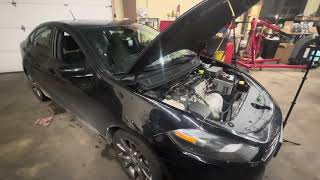
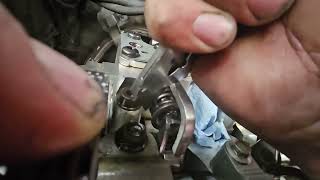
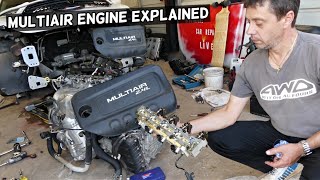
Used OEM Parts in Stock
New Aftermarket Parts Available

The information in this article is provided for general reference and educational purposes only. Vehicle specifications, procedures, and part compatibility can vary by production date, trim level, and region. Always consult your vehicle's factory service manual and verify part numbers before purchasing or performing repairs. Safety-critical components such as airbags, seat belts, and braking systems should be installed by a qualified professional.
- Dodge DART:
- 🧭 Diagnostic Flowchart
- 🎬 Helpful Videos
- 🛍️ Shop This Part
- What's Unique About the 2014-2016 Dodge DART
- Symptoms You May Notice
- Most Likely Causes
- Rare But Worth Checking
- Diagnosis Steps
- Parts You'll Likely Need
- Related Codes That Often Appear With This One
- Technical Service Bulletins (TSBs) & Recalls
- Platform-Specific Known Issues
- Mechanic-Grade Diagnostic Values
- Scan Tool Commands That Help
- Wiring & Ground Locations
- Real Owner Repair Stories
- OEM Part Supersession History
- Model Year Variations Within This Range
- 🎟️ Get 5% Off