

P1052 on 2012-2017 Mazda CX-5 2.2L Diesel: Cylinder 1 Over-Fueling Causes and Fixes
P1052 on a SKYACTIV-D 2.2L engine means the #1 fuel injector is injecting too much fuel. This is often caused by a faulty injector, but the root cause is frequently a failed injector seal leading to carbon buildup. Expect to replace the injector and its seal; inspecting the oil system for carbon is critical.
- P1052 means cylinder #1 is injecting too much fuel.
- The most likely cause is a faulty #1 fuel injector, but the problem is often triggered by a failed injector seal—a known weak point on this engine.
- When replacing the injector, it is absolutely essential to also replace the copper injector seal.
- If the old seal shows signs of leaking (black soot), you must also inspect the oil pump pickup strainer for carbon clogging to prevent future oil pressure problems.
- This is not a simple DIY job; it requires special tools and knowledge of high-pressure diesel systems.
What's Unique About the 2012-2017 Mazda CX-5
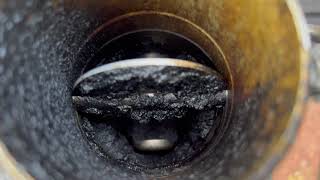
The SH-VPTS 2.2L SKYACTIV-D engine is known for a critical design issue concerning its fuel injector seals (washers). These copper seals can fail, allowing combustion gases to leak into the crankcase. This contaminates the engine oil with soot, creating thick carbon sludge that can clog the oil pump pickup strainer, starving the engine of oil. This oil starvation and contamination can then lead to secondary, catastrophic failures like premature exhaust camshaft wear and turbocharger failure. While P1052 points directly to a fuel injector problem, it is often the first symptom of this much larger, well-documented platform issue. A simple injector swap without addressing the seal and inspecting for carbon buildup is almost guaranteed to result in a recurring problem.
Symptoms You May Notice
- Check Engine Light is on
- Rough or unstable idle
- Engine vibration or shaking
- Reduced engine power and poor acceleration
- Increased diesel engine clatter
- Black smoke from the exhaust under load
- Low oil pressure warning light (if the issue has progressed to clogging the oil strainer)
- Replacing only the fuel injector without replacing the seal and inspecting for carbon buildup. The problem will likely return if the root cause is a leaking seal.
- Cleaning the oil pump strainer without addressing the leaking injector seals that caused the clog in the first place. The strainer will simply clog again.
Most Likely Causes
- Faulty Fuel Injector #1 🔴 High Probability Injectors can fail internally or become fouled by the excessive carbon buildup common to this engine. The piezoelectric internals can wear, leading to improper fuel delivery.
How to confirm: Perform a power balance test with a diagnostic scan tool to confirm cylinder #1 is contributing incorrectly. 🎬 Watch: How to diagnose injector faults using live data. The most definitive test is to swap the #1 injector with another cylinder (e.g., #2) and see if the fault code follows the injector (e.g., changes to P1053 for cylinder 2).
Typical fix: Replace the #1 fuel injector and its corresponding seal/washer. The new injector must be coded to the PCM using a compatible scan tool.
Est. part cost: $250-$500 - Failed Injector Seal (Washer) on Cylinder #1 🔴 High Probability This is a widely documented failure point on the SH-VPTS engine. The original copper seals degrade, allowing combustion blow-by. Mazda later issued revised, more durable seals.
How to confirm: When the fuel injector is removed, inspect the seal and the injector port for black, tar-like carbon deposits ('blow-by'). This is a clear sign of seal failure. The presence of this soot in the valve train area is a definitive indicator.
Typical fix: Replace all injector seals, not just the one on cylinder #1. Mazda introduced an updated seal (part number SH01-13-H51A) and a revised tightening procedure. If the seal has failed, it is critical to also inspect the oil pump pickup strainer for clogging and clean or replace it as needed. 🎬 See this walkthrough on removing and replacing the oil strainer. An oil and filter change is mandatory.
Est. part cost: $5-$20 per seal - Wiring Harness or Connector Issue ⚪ Low Probability Vibration and heat can cause wiring to fray or connectors to become loose over time, though it's less common than mechanical failure of the injector or seal.
How to confirm: With the engine off, inspect the wiring harness and connector for injector #1. Check for any visible damage, corrosion, or loose pins. Wiggle the connector while monitoring injector data on a scan tool (if possible).
Typical fix: Repair the damaged section of the wiring harness or replace the connector pigtail.
Est. part cost: $20-$100
Rare But Worth Checking
- Poor Fuel Quality: Contaminated or low-quality diesel fuel can cause injector issues. The Mazda service manual lists this as a possible cause to investigate.
- Insufficient Engine Compression in Cylinder #1: A base engine mechanical problem, such as worn piston rings or a valve issue, could cause the PCM to misinterpret sensor data and set this code.
- Powertrain Control Module (PCM) Malfunction: This is extremely rare, but the PCM could be at fault. This should only be considered after all other possibilities have been exhaustively ruled out.
Diagnosis Steps
- Connect a diagnostic scan tool (FORScan is highly recommended for Mazdas) and confirm P1052 is the active code. Check for any other codes, especially related to oil pressure (P055F, P0524) or oil deterioration (P253F).
- Using the scan tool, monitor live data for cylinder balance/torque fluctuation. Confirm that cylinder #1 is the outlier.
- Inspect the wiring and connector for fuel injector #1 for any visible damage, corrosion, or looseness.
- If wiring appears okay, the next step is to verify the injector itself. The most reliable method is to swap the #1 injector with the #2 injector.
- Clear the codes and drive the vehicle. If the code returns as P1053 (for cylinder #2), the injector is confirmed to be faulty.
- If the code returns as P1052, the problem lies with the cylinder #1 circuit or a mechanical issue with that cylinder.
- CRITICAL STEP: When removing the injector(s), carefully inspect the copper washer (seal) and the injector bore in the cylinder head. Look for evidence of black soot/carbon 'blow-by', which indicates a failed seal. If found, all seals must be replaced with the updated part.
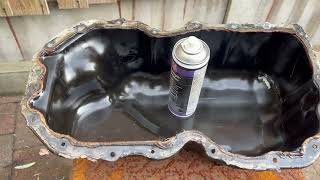
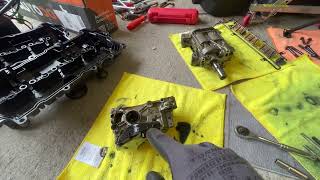
- MANDATORY IF SEAL FAILURE IS FOUND: Remove the oil pan and inspect the oil pump pickup strainer for carbon clogging. It is not sufficient to clean it; replacement is strongly recommended (Part No. SH01-14-240). 🎬 Watch: Pro tips for replacing the oil pump pickup strainer. While the pan is off, inspect for sludge.
- HIGHLY RECOMMENDED IF SEALS FAILED: Remove the valve cover to inspect the exhaust camshaft lobes for wear, as metal particles can contaminate the oil system. Clean any carbon buildup from the valvetrain area.
- After reassembly with new seals (and potentially a new injector, strainer, or camshaft), perform multiple oil changes with an engine flush to remove any remaining contaminants.
- Use a scan tool to code the new injector(s) to the PCM and reset all learned values.
Parts You'll Likely Need
- Fuel Injector
(OEM #SH01-13-H50)— This is the component directly identified by the fault code as over-fueling.
Trusted brands: Mazda OE, Denso (OEM supplier, cross-reference 295900-0260)
OEM price range: $350-$500
Aftermarket price range: $250-$400 - Fuel Injector Seal / Washer
(OEM #SH01-13-H51A)— This is a known critical failure point on the engine. It must be replaced whenever an injector is serviced to prevent combustion gas leaks, carbon buildup, and oil contamination. Use the updated version.
Trusted brands: Mazda OE
OEM price range: $5-$20
Aftermarket price range: $2-$10 - Oil Pump Pickup Strainer
(OEM #SH01-14-240)— Often becomes clogged with carbon sludge as a direct result of failed injector seals, leading to catastrophic oil pressure loss. It must be inspected and likely replaced if injector seals have failed.
Trusted brands: Mazda OE
OEM price range: $40-$70
Aftermarket price range: $30-$50
Related Codes That Often Appear With This One
- P253F — This code indicates 'Engine Oil Deteriorated'. It is often triggered alongside injector codes on this engine because failing injector seals allow fuel and soot to contaminate and degrade the engine oil.
- P055F / P0524 — These codes relate to low or out-of-range oil pressure. They are commonly seen when carbon from leaking injector seals clogs the oil pump pickup strainer, starving the engine of oil.
- P0299 — Turbocharger/Supercharger Underboost. This can be a consequence of turbo damage caused by oil starvation from a clogged oil pickup strainer.
- P0046 — Turbocharger/Supercharger Boost Control Solenoid Circuit Range/Performance. Another code pointing to turbo issues, which are often a secondary effect of the oil contamination problem.
Technical Service Bulletins (TSBs) & Recalls
- 00-001/20 - A general Mazda bulletin noting that fuel injector malfunctions should be repaired by replacement, not cleaning.
Platform-Specific Known Issues
- Widespread issues with injector seal failure leading to combustion gas blow-by, which contaminates the engine oil with soot and creates thick sludge. [1
Mechanic-Grade Diagnostic Values
- Fuel Injector Resistance — expected: Approx. 0.59 ohms at 20°C (68°F). Failure: A reading of 0 ohms (short) or infinite/open loop indicates a failed injector coil. Significant deviation from the specification suggests an issue.
- Injector Hold-Down Bracket Nut Torque — expected: This is a torque-plus-angle procedure. 1) Tighten the left-side nut to 2 Nm, then loosen 90 degrees. 2) Tighten the right-side nut to 2 Nm. 3) Further tighten the right-side nut by 230 degrees.. Failure: Improper or uneven torque can lead to injector seal failure, which is the root cause of many issues on this engine. Not following this specific sequence can cause the injector to sit incorrectly.
- Scan Tool Injector Correction Values (Live Data) — expected: Values should be relatively close to zero and consistent across all cylinders at idle. A small fluctuation is normal.. Failure: A cylinder showing a significantly high positive or negative correction value compared to the others indicates the PCM is attempting to compensate for a fueling issue in that cylinder. For P1052, cylinder #1 would show a large negative correction as the PCM tries to reduce fuel.
Hidden / Shadow Codes Worth Checking
- P1200:00 / P167B:00: These codes are stored if the 'Fuel Injector Injection Amount Correction' (learning procedure) is not completed after replacing an injector or clearing adaptations. The glow plug light will also flash. (see via Standard OBD-II scanner, FORScan, or Mazda M-MDS. They appear after a parts replacement if the necessary relearn procedure is skipped.)
Scan Tool Commands That Help
- Mazda M-MDS (or equivalent like FORScan): Injector Correction Factors / Injector Code Program — This is mandatory after replacing a fuel injector. Each injector has a unique calibration code printed on it that must be programmed into the PCM to ensure accurate fuel delivery.
- Mazda M-MDS (or equivalent like FORScan): Fuel Injector Injection Amount Correction / Learning — This procedure must be run after replacing injectors or performing major engine work. It allows the PCM to learn the fine-tuning characteristics of each injector. Failure to perform this can result in rough running and additional fault codes.
- Mazda M-MDS (or equivalent like FORScan): Fuel Injector Data Reset — Used to clear all learned injector values from the PCM. This is performed before coding new injectors to ensure a clean slate for the learning process.
Wiring & Ground Locations
- Engine Ground Strap — Typically runs from the main wiring harness or a dedicated point on the chassis to a stud on the engine block or transmission case. One key ground is often located below the battery tray, bolted to an engine mount bracket.. A poor ground connection can cause erratic behavior in engine electronics, including the PCM and injector driver circuits. While not a common cause for a single-cylinder code, verifying the main engine grounds is a crucial step in diagnosing any electronic fault.
- Cylinder Head Ground — A smaller ground wire may connect directly from the cylinder head or valve cover to the chassis.. The fuel injectors are seated in the cylinder head. A solid ground is essential for the precise electronic operation of the piezoelectric injectors. Some technicians add a supplementary ground wire from the cylinder head to the chassis to ensure a robust connection.
- Fuel Injector Connector — Directly on top of each fuel injector, under the engine cover.. This is the direct electrical connection to the injector. The terminals for a resistance test are within this connector. The Mazda workshop manual provides a procedure for disconnecting it for testing.
Real Owner Repair Stories
- Mazdas247 Forum user (2013 Mazda 6 2.2L SKYACTIV-D) — Engine light on, flashing glow plug light, failed injector calibration procedure.
❌ Tried (didn't work) Attempting to run the injector calibration with a generic Bluetooth OBD2 scanner failed repeatedly.
✅ What actually fixed it The owner purchased a Vgate vLinker FS OBD2 scanner and used FORScan software. FORScan revealed a misfire on cylinder 4. The owner replaced the faulty injector with a used one from eBay for £30, successfully coded the new injector, and then calibrated all injectors using FORScan. The car then ran smoothly.
OEM Part Supersession History
295900-0260 (Denso)→295900-0261, 295900-0262, 295900-0265, 295900-0267— Standard revisions and manufacturing updates by Denso.
Heads up: These part numbers are generally interchangeable for the specified Mazda models, but it is always critical to verify the correct part for the vehicle's VIN. The Mazda OEM part number SH01-13-H50 corresponds to these Denso numbers.
Diagnostic Flowchart
Other Known Issues on This Vehicle
Issues unrelated to this code that are worth knowing about as an owner of this generation:
- Premature Exhaust Camshaft Wear 🔴 High — Common, particularly on pre-2018 models. Often becomes apparent after 60,000 miles (100,000 km). Caused by metal particles from worn lobes contaminating oil, which can also damage the vacuum pump and turbocharger. (Ref: Mazda issued TSBs regarding updated camshafts (on its 3rd revision) and inspection procedures.)
- Oil Pump Pickup Strainer Clogging 🔴 High — A direct and frequent consequence of injector seal failure. Soot enters the crankcase, turns oil to sludge, and blocks the strainer, leading to catastrophic oil pressure loss.
- Turbocharger Failure 🔴 High — Often a secondary failure caused by either oil starvation from a clogged pickup strainer or abrasion from metallic particles from a wearing camshaft.
- Oil Dilution and Rising Oil Level 🟠 Medium — Commonly occurs due to incomplete DPF regeneration cycles where diesel fuel enters the crankcase, thinning the oil and reducing its lubricating properties. (Ref: Mazda has issued software updates to improve DPF regeneration logic.)
- Cracked Plastic Coolant Bypass Junction 🟠 Medium — A plastic water junction located under the intake manifold is prone to cracking, causing rapid coolant loss and potential engine overheating. Can occur anywhere from 50,000 to 120,000 miles. (Ref: Mazda has released a revised metal replacement part to fix this design flaw.)
- Head Gasket Failure 🔴 High — Less common than other issues but still a significant risk, often triggered by overheating from other cooling system failures or increased cylinder pressures from leaking injector seals.
Used vs. New Parts: Buying Guide for This Vehicle
When a used part is the smart pick: A used fuel injector can be a cost-effective option if sourced from a reputable seller or a low-mileage donor vehicle, as demonstrated in real-world repair stories. Given the high cost of new OEM injectors, a used part can make a repair more affordable, especially for a DIYer with the proper tools (like FORScan) to code and calibrate it.
Donor-vehicle mileage cap: roughly under 60000 miles for the part to have meaningful remaining life.
What to inspect on the donor part:
- Ask for the mileage of the donor vehicle.
- Ensure the seller guarantees the part is functional.
- Inspect the nozzle tip for any signs of physical damage or heavy, caked-on carbon.
- Check that the electrical connector is intact with no bent or corroded pins.
OEM-only on this vehicle (don't cheap out):
- Fuel Injector Seals (Washers): These are single-use, critical components that are extremely cheap. Always use a new, updated OEM seal (SH01-13-H51A) to prevent catastrophic engine failure from blow-by.
- Oil Pump Pickup Strainer: This part is relatively inexpensive and critical for oil pressure. If the old one is clogged with carbon, it's not worth the risk to try and clean it. Always replace with a new OEM part (SH01-14-240).
Aftermarket brands forum-validated for this vehicle:
- Denso: Denso is the Original Equipment Manufacturer (OEM) for Mazda's injectors. Buying a Denso-branded injector (e.g., 295900-0260) is equivalent to getting the Mazda OE part, often at a lower price.
Brands owners have reported issues with on this vehicle:
- Unbranded, no-name injectors from online marketplaces should be avoided. These often lack the precise calibration of OEM/Denso parts, may not have a valid coding number, and can fail prematurely, causing further engine issues.
Real Owner Stories
Aggregated from forums and TSBs cited above. Mileages and costs reflect what owners reported in those sources.
2014 Mazda CX-5 2.2L SKYACTIV-D
Symptoms: Recurring P055F and P0524 codes related to oil pressure.
What fixed it: The discussion identified the root cause as the oil strainer being clogged by carbon from failed injector seals, implying the fix required addressing both the seals and the strainer.
Source hint: Mazdas247 Forum - '2014 CX-5 2.2L Diesel with oil pressure problem'
Mazda CX-5 2.2L SKYACTIV-D
Symptoms: Low oil pressure warning light came on. After cleaning the oil pickup strainer, the issue returned.
What fixed it: The owner's experience highlighted that simply cleaning the strainer is a temporary fix; the root cause, the leaking injector seals, must be replaced to permanently resolve the oil pressure problem.
Source hint: Reddit r/CX5 - 'Mazda CX-5 2.2D oil pressure warning — clean the head or go to Mazda?'
Related OBD-II Codes
Frequently Asked Questions
My mechanic says the injector seals failed on my CX-5. Is it enough to just replace the seals and change the oil?
I'm replacing the injector seals on my 2.2L SKYACTIV-D. Is there an updated part I should use?
I have a P1052 code and I've also been getting a low oil pressure warning. Are these related?
I've confirmed the #1 injector is faulty. Can I just install a new one and be done?
My mechanic wants to clean the fuel injector to fix code P1052. Is this the correct procedure?
Does this P1052 injector seal issue affect other Mazdas besides the CX-5?
Helpful Videos

The information in this article is provided for general reference and educational purposes only. Vehicle specifications, procedures, and part compatibility can vary by production date, trim level, and region. Always consult your vehicle's factory service manual and verify part numbers before purchasing or performing repairs. Safety-critical components such as airbags, seat belts, and braking systems should be installed by a qualified professional.
- Mazda CX-5:
- 🧭 Diagnostic Flowchart
- 🎬 Helpful Videos
- What's Unique About the 2012-2017 Mazda CX-5
- Symptoms You May Notice
- Most Likely Causes
- Rare But Worth Checking
- Diagnosis Steps
- Parts You'll Likely Need
- Related Codes That Often Appear With This One
- Technical Service Bulletins (TSBs) & Recalls
- Platform-Specific Known Issues
- Mechanic-Grade Diagnostic Values
- Hidden / Shadow Codes Worth Checking
- Scan Tool Commands That Help
- Wiring & Ground Locations
- Real Owner Repair Stories
- OEM Part Supersession History
- Other Known Issues on This Vehicle
- Used vs. New Parts: Buying Guide for This Vehicle
- Real Owner Stories
- 2014 Mazda CX-5 2.2L SKYACTIV-D
- Mazda CX-5 2.2L SKYACTIV-D
- Related OBD-II Codes
- Frequently Asked Questions
- 🎟️ Get 5% Off