

P1052 on 2016-2018 Toyota RAV4 Hybrid: Understanding an Invalid or Ghost Code
P1052 is not a recognized or valid trouble code for a 2016-2018 Toyota RAV4 Hybrid according to factory code lists. If your scanner shows this code, it is most likely a scanner error or a communication fault. Do not replace any parts; the first step is to re-scan with a different, high-quality OBD-II scanner.
- P1052 is not a valid trouble code for a 2016-2018 Toyota RAV4 Hybrid.
- Do NOT buy any parts like VVT solenoids or O2 sensors based on this code.
- The most likely cause is an error with your OBD-II scanner.
- Your first step should be to try a different, more reliable scanner.
- Check your 12V auxiliary battery, as low voltage can cause communication errors and ghost codes.
What's Unique About the 2016-2018 Toyota RAV4 Hybrid
The Toyota Hybrid System and its associated ECUs are complex. Unlike a non-hybrid vehicle, communication between the multiple control modules (Engine, Hybrid, Battery, etc.) is constant over the CAN bus. This complexity can sometimes lead to communication errors that manifest as 'ghost codes' on less sophisticated or non-Toyota-specific scan tools. The complete absence of P1052 in official Toyota documentation and common code lists for the RAV4 Hybrid strongly suggests it is not a legitimate fault code for this platform. Real-world examples from other Toyota hybrid owners show that aftermarket devices connected to the CAN bus, like new stereo systems, can introduce interference that generates a cascade of unrelated error codes.
Symptoms You May Notice
- Check Engine Light is on.
- No other discernible drivability symptoms (in most cases where this is a ghost code).
- Replacing the VVT Solenoid (Oil Control Valve)
- Replacing an Air/Fuel Ratio (Oxygen) Sensor
Most Likely Causes
- OBD-II Scanner Error or Incompatibility 🔴 High Probability The complexity of the hybrid system's multiple ECUs can cause communication faults with generic or low-quality scan tools that are not fully compliant with Toyota's specific protocols.
How to confirm: Use a different, higher-quality, or professional-grade scan tool (like Toyota's Techstream) to see if the code reappears. If it does not, the original scanner was the issue.
Typical fix: Disregard the P1052 code and use a reliable scanner to find the true stored code(s).
Est. part cost: $0 - ECU Communication Fault 🟡 Medium Probability A low 12V auxiliary battery or poor electrical connection can disrupt communication between the vehicle's computers and the scan tool, generating erroneous codes. Owners have reported seeing multiple, simultaneous system warnings (e.g., 'Hybrid System Malfunction', 'AWD System Disabled') that were ultimately traced back to a weak 12V battery.
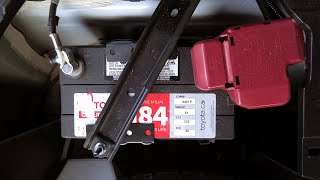
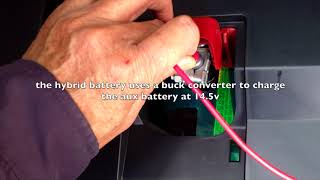
How to confirm: Check the vehicle's 12V battery health and ensure it is fully charged (above 12.4V with the vehicle off). Inspect battery terminals for corrosion and tightness. 🎬 Watch: How to check your RAV4 Hybrid's 12V battery Clear codes, ensure the battery is healthy, and rescan.
Typical fix: Charge or replace the 12V auxiliary battery. Clean or tighten battery terminals.
Est. part cost: $0-$250
Diagnosis Steps
- Verify the code with a second, different OBD-II scanner. If P1052 does not reappear, the issue was with the first scanner.
- If the check engine light is still on, read codes with the second scanner to find the actual trouble code.
- If P1052 reappears on a second scanner, check the vehicle's 12V auxiliary battery voltage. A low battery can cause communication errors. The battery should be above 12.4V with the vehicle off.
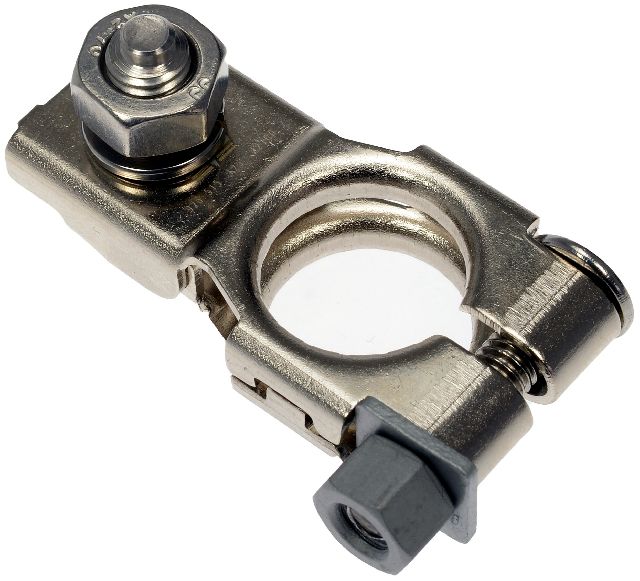
- Inspect the battery terminals for looseness or corrosion. Clean and tighten as necessary.
- Clear the code, ensure the battery is healthy, and perform a new scan. If a different code appears, diagnose that code. If no code appears, the issue was likely a temporary communication glitch, possibly from the battery.
- If the problem persists and the code remains, consider seeking professional help from a technician with a Toyota-specific scan tool (like Techstream) to perform a deeper network diagnostic.
Parts You'll Likely Need
- 12V Auxiliary Battery
(OEM #e.g., 28800-21190, 28800-YZZJ1 (Varies by specific model and region, confirm with VIN))— A weak or failing 12V battery is a common cause of various electrical gremlins and communication faults, which can lead to ghost codes like P1052.
Trusted brands: Toyota TrueStart, Bosch, Interstate, Deka
OEM price range: $200-$300
Aftermarket price range: $150-$250
Technical Service Bulletins (TSBs) & Recalls
- NHTSA 16V215000 / Toyota G0I, GLC: Brake Actuator Internal Defect (Select 2016 models). While unrelated to P1052, this is a critical safety recall for this platform concerning a major electronic component.
Mechanic-Grade Diagnostic Values
- CAN Bus Network Resistance — expected: Approximately 60 Ω. Failure: A reading of 120 Ω indicates one of the two terminating resistors is offline (often within an ECU). A reading significantly different from 60 Ω or 120 Ω suggests a short or open in the wiring.
- CAN Bus Voltage (CAN H and CAN L) — expected: CAN H should toggle between 2.5V and 3.5V. CAN L should toggle between 2.5V and 1.5V. They should be mirror images of each other centered on 2.5V.. Failure: Voltages that are stuck high or low, or do not show clean, opposing square waves indicate a bus communication problem, short to power/ground, or a faulty ECU.
- 12V Auxiliary Battery Voltage (vehicle off) — expected: Greater than 12.4V (ideally ~12.6V for a healthy, fully charged AGM battery).. Failure: Voltage below 12.4V indicates a discharged or failing battery, which is a primary cause of random electronic faults and communication errors on this platform.
Scan Tool Commands That Help
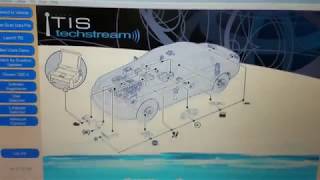
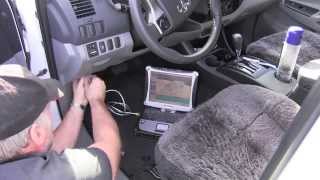
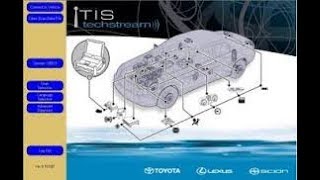
- Toyota Techstream: Health Check — This is the first step a dealer technician would take. It automatically scans all ECUs on all networks (CAN, LIN, etc.) for DTCs. This comprehensive scan is far more reliable than a generic OBD-II reader and will likely reveal the true code if one exists, or show no codes, confirming the P1052 was a ghost.
- Toyota Techstream: CAN Bus Check — This utility is used to verify the integrity of the CAN bus. It checks which ECUs are communicating on the network. If an ECU is missing or there are communication DTCs (U-codes), this tool helps isolate the fault, which could be the root cause of a generic scanner showing a ghost code.
Wiring & Ground Locations
- CAN Junction Connector(s) — The RAV4 uses multiple CAN junction connectors to branch the network to different ECUs. A primary one is often located behind the dashboard/glove box area or in the driver/passenger kick panels. For example, on a similar platform, the No. 2 CAN J/C is located in the front and rear of the vehicle.. Since P1052 is a communication error, a fault at a central junction connector (due to corrosion, a loose connection, or damage) could disrupt the entire network, leading to unpredictable behavior and ghost codes. A technician would use these points to isolate and test different branches of the CAN network.
- DLC3 (OBD-II Port) — Under the driver's side dashboard.. This is the direct interface for the scan tool. Pins 6 (CAN H) and 14 (CAN L) are the relevant terminals. Measuring resistance between these two pins (with the battery disconnected) is the quickest way to check the overall health of the main CAN bus termination resistors.
OEM Part Supersession History
28800-21170→28800-21171, 28800-21172, 28800-37092— Standard part evolution and supplier changes for the 12V auxiliary battery.
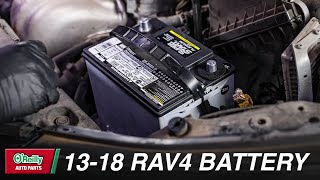
Heads up: While these part numbers supersede each other, always confirm the correct battery type (AGM is required for hybrid models) and physical size (Group S46B24R) for the specific vehicle using the VIN. Installing a standard flooded battery instead of an AGM 🎬 See this step-by-step 12V battery replacement walkthrough can lead to premature failure and electrical issues.
Model Year Variations Within This Range
- 2017-2018: For 2017, Toyota Safety Sense (TSS-P) became standard on all RAV4 Hybrid models. This added more ECUs to the CAN network, including the forward-facing radar and camera. While not a direct cause, a more complex network has more potential points of failure that could manifest as communication errors.
Diagnostic Flowchart
Other Known Issues on This Vehicle
Issues unrelated to this code that are worth knowing about as an owner of this generation:
- Brake Actuator Assembly Failure 🔴 High — A known failure point, especially for 2016 models. Failure can lead to ABS, traction control, and stability control warning lights and a change in brake pedal feel. Replacement is very expensive. (Ref: NHTSA 16V215000 / Toyota Recall G0I, GLC (Affects certain 2016 models for a specific manufacturing defect).)
- Hybrid Inverter Coolant Pump Failure 🟠 Medium — The electric pump for the separate inverter cooling loop can fail, leading to a 'Hybrid System Malfunction' warning and potential system shutdown to prevent overheating of the power electronics.
- Weak 12V Auxiliary Battery Causing Electrical Issues 🟡 Low — A failing 12V battery is a very common cause of a cascade of seemingly unrelated warning lights (Hybrid System Malfunction, ABS, etc.) and ghost codes. The car may still 'start' but the low voltage wreaks havoc on the ECUs during their startup checks.
- High-Voltage Cable Corrosion ('Cablegate') 🔴 High — This is a well-documented issue primarily on the next generation (2019+) RAV4 Hybrid in salt-belt regions, where the high-voltage cable to the rear electric motor corrodes, causing a 'Hybrid System Malfunction'. While not a direct issue for the 2016-2018 models, it highlights a potential vulnerability in the underbody design of Toyota's AWD-e systems. (Ref: Class Action Settlement / Warranty Extension for 2019-2022 models.)
Used vs. New Parts: Buying Guide for This Vehicle
When a used part is the smart pick: Almost never. The 12V auxiliary battery is a consumable wear item with a finite lifespan (typically 3-5 years). The cost savings of a used battery are minimal compared to the high risk of inheriting a weak battery that will soon cause the same electrical issues you are trying to solve.
Donor-vehicle mileage cap: roughly under 5000 miles for the part to have meaningful remaining life.
What to inspect on the donor part:
- Check the date code sticker on the battery; do not purchase if it is more than 6-12 months old.
- Test the voltage with a multimeter; a healthy, charged battery should be at or above 12.6V.
- Inspect terminals for any signs of corrosion, swelling, or physical damage.
OEM-only on this vehicle (don't cheap out):
- 12V Auxiliary Battery (strongly recommended). The hybrid system's charging characteristics are different from a conventional car, and it requires a specific AGM (Absorbed Glass Mat) battery (Group Size S46B24R) to function correctly. Using a standard, cheaper flooded battery can lead to rapid failure and system malfunctions.
Aftermarket brands forum-validated for this vehicle:
- Bosch (AGM)
- Optima (YellowTop, if a direct fit is confirmed)
- NorthStar
- Deka
Brands owners have reported issues with on this vehicle:
- Any conventional 'flooded' lead-acid battery.
- Unknown or generic off-brand batteries with no verifiable reviews for hybrid vehicle applications.
Real Owner Stories
Aggregated from forums and TSBs cited above. Mileages and costs reflect what owners reported in those sources.
2017 Toyota RAV4 Hybrid XLE 2.5L
Symptoms: Received 'Hybrid System Malfunction,' 'AWD Disabled,' and 'Pre-Collision System disabled' warnings all at once.
What fixed it: The issue was resolved after a code reset, though the root cause was identified as a likely weak 12V auxiliary battery causing communication errors.
Source hint: Reddit r/rav4club: '2017 Hybrid XLE, multiple warnings at once'
2012-2017 Toyota Camry Hybrid (2AR-FXE)
Symptoms: Random trouble codes appearing and vehicle systems like regenerative braking being disabled.
What fixed it: Correcting the Canbus decoder settings on an aftermarket Android head unit which was causing network interference.
Source hint: PriusChat: 'Canbus decoder setting off DTCs FIX'
Related OBD-II Codes
Frequently Asked Questions
My 2016 RAV4 Hybrid is showing a 'Brake Actuator Internal Defect' warning; is this related to P1052?
Can a weak 12V auxiliary battery cause P1052 on my 2017 RAV4 Hybrid?
I'm seeing 'Hybrid System Malfunction' and 'AWD Disabled' on my dash along with P1052. What should I check first?
Why does my generic OBD-II scanner show P1052 but the Toyota dealer's tool doesn't?
Could my aftermarket Android head unit be causing this P1052 code?
What type of replacement 12V battery does my RAV4 Hybrid require to avoid these electrical gremlins?
Helpful Videos

We Have This Part in Stock



The information in this article is provided for general reference and educational purposes only. Vehicle specifications, procedures, and part compatibility can vary by production date, trim level, and region. Always consult your vehicle's factory service manual and verify part numbers before purchasing or performing repairs. Safety-critical components such as airbags, seat belts, and braking systems should be installed by a qualified professional.
- Toyota RAV4 Hybrid:
- 🧭 Diagnostic Flowchart
- 🎬 Helpful Videos
- 🛍️ Shop This Part
- What's Unique About the 2016-2018 Toyota RAV4 Hybrid
- Symptoms You May Notice
- Most Likely Causes
- Diagnosis Steps
- Parts You'll Likely Need
- Technical Service Bulletins (TSBs) & Recalls
- Mechanic-Grade Diagnostic Values
- Scan Tool Commands That Help
- Wiring & Ground Locations
- OEM Part Supersession History
- Model Year Variations Within This Range
- Other Known Issues on This Vehicle
- Used vs. New Parts: Buying Guide for This Vehicle
- Real Owner Stories
- 2017 Toyota RAV4 Hybrid XLE 2.5L
- 2012-2017 Toyota Camry Hybrid (2AR-FXE)
- Related OBD-II Codes
- Frequently Asked Questions
- 🎟️ Get 5% Off