

OBD-II Code P1066: Cylinder 1 Oil Control Solenoid Slow Response
What P1066 means, why it triggers, and how to fix it
- Check your engine oil level first; low oil is the #1 trigger for P1066.
- Verify your vehicle has the latest PCM software update, as FCA issued at least 3 Technical Service Bulletins (TSBs) to fix overly sensitive P1066 fault logic.
- Always use full synthetic SAE 0W-20 engine oil meeting the MS-6395 specification to ensure proper MultiAir hydraulic function.
- Stop driving immediately if the check engine light flashes, as this indicates a severe misfire that destroys your catalytic converter within 50 miles.
- Expect to pay between $1,400 and $2,300 to replace the MultiAir actuator assembly if an oil change and software update fail to clear the code.
What Does P1066 Mean?
P1066 means the Powertrain Control Module (PCM) detected the electronic solenoid controlling oil flow to cylinder 1's intake valves is turning off too slowly. Fiat-Chrysler (FCA) 'MultiAir' engines use hydraulic oil pressure instead of a traditional camshaft lobe to control intake valve lift. When this solenoid lags, valve timing fails.
Technical definition: Cylinder 1 Oil Supply Solenoid Valve Switch Off Time Out Of Range
Can I Drive With P1066?
Yes, But With Caution. You can drive short distances, but expect poor acceleration, a rough idle, and bad gas mileage. Driving over 50 miles with a flashing check engine light dumps unburnt fuel into the exhaust, destroying the catalytic converter and adding a $800-$2,500 repair. Service the vehicle immediately to prevent destroying the $1,500 MultiAir actuator.
Common Causes
- Low, Dirty, or Incorrect Engine Oil (Very Common) — The electro-hydraulic MultiAir system requires precise oil pressure. Low oil levels, dirty sludge, or the wrong viscosity (anything other than full synthetic SAE 0W-20 meeting MS-6395) prevents the solenoids from actuating. The 2.4L Tigershark engine consumes excessive oil, making low fluid the #1 trigger for this code.
- Outdated Powertrain Control Module (PCM) Software (Very Common) — FCA released multiple software updates because the original PCM programming was too sensitive and falsely triggered P1066. A dealership software reflash is often the only required fix, as specified in Technical Service Bulletins (TSBs) 18-023-16, 18-022-17, and 18-009-16.
- Failed MultiAir Actuator Assembly ('Brick') (Common) — The oil supply solenoid is permanently integrated into the larger MultiAir actuator assembly. This entire unit is a documented failure point. Because individual solenoids are not sold separately, you must replace the entire assembly if one fails.
- Electrical, Wiring, or Ground Faults (Less Common) — The MultiAir system requires stable voltage. A weak battery, corroded engine ground straps, or poor pin tension at the main PCM connector interrupts the signal, triggering false fault codes.
- Internal Engine Debris and Clogged Filters (Rare) — The MultiAir system uses a dedicated oil filter screen in the cylinder head. Carbon buildup or metal debris from infrequent oil changes clogs this screen, restricting oil flow to the solenoids and causing response time faults.
Symptoms
- Flashing Check Engine Light — Indicates a severe, active misfire that is dumping raw fuel into the exhaust and destroying the catalytic converter.
- Solid Check Engine Light — The Malfunction Indicator Lamp (MIL) illuminates to warn of a valve timing fault.
- Rough or Unstable Idle — The engine shakes, runs unevenly, or surges when stopped in traffic or during cold starts.
- Power Loss and Stalling — The vehicle hesitates during acceleration and stalls unexpectedly at low speeds due to incorrect valve timing.
- Increased Fuel Consumption — Gas mileage drops by 10-20% because the engine is running inefficiently.
Diagnostic Flowchart
Tap your situation to follow the diagnostic path that matches what you're seeing on this code.
Common Fixes & Costs
- Engine Oil and Filter Change — Parts: $70-$120, Labor: $30-$60, ~0.5 hr book time (DIY)
- Powertrain Control Module (PCM) Software Update — Parts: $0, Labor: $100-$200, ~1 hr book time (Professional)
- Replace MultiAir Actuator Assembly ('Brick') — Parts: $800-$1300, Labor: $600-$1000, ~5.5 hr book time (Professional)
- Repair Wiring Harness or Connector — Parts: $20-$150, Labor: $150-$450, ~2 hr book time (Intermediate)
- Clean Battery Terminals and Engine Grounds — Parts: $5-$15, Labor: $25-$75, ~0.5 hr book time (DIY)
DIY vs Professional
- Engine Oil and Filter Change 🟢 Beginner
Tools: Wrench for drain plug, oil filter wrench, drain pan, funnel. - PCM Software Update 🟢 Beginner
Tools: Mopar wiTECH scan tool, stable power supply, dealer network subscription. - Replace MultiAir Actuator Assembly 🟢 Beginner
Tools: Extensive socket set, torque wrench, gasket scrapers, valve spring compressor.
Used vs. New Parts: Buying Guide
When a used part is worth it: A used MultiAir actuator ('brick') from a low-mileage, accident-damaged donor vehicle is a cost-effective alternative to a new OEM part. It makes sense when the budget is tight and the vehicle is older or has high mileage.
Donor-vehicle mileage cap: roughly under 60000 miles for the part to have meaningful remaining life.
Donor quality checklist:
- Verify the donor vehicle was not scrapped due to engine or oil-related issues.
- Obtain the VIN of the donor car to check its service history.
- Match the part number exactly.
- Inspect the part for external damage or sludge in the oil ports.
Decision logic:
- If Vehicle is under warranty or has less than 80,000 miles → Buy a new OEM part to ensure longevity and warranty coverage.
- If Vehicle is over 150,000 miles and budget is the primary concern → A used part is a reasonable gamble, but carries a higher risk of premature failure.
- If The price of a used part plus installation labor is more than 50% of a new part installation → Favor the new part for its warranty and longer expected lifespan.
Warranty tradeoff: Used parts from salvage yards include a 30-90 day warranty covering only the part. New OEM parts installed by a dealer carry a 1-2 year warranty on both parts and labor.
Worst-case if a used part fails: $800-$1500 if a used actuator fails after installation, requiring a second labor charge and a new part.
What Happens If You Wait — Timeline
- 0-1 month: Code sets with a solid Check Engine Light. The driver notices a rough idle on cold starts or minor hesitation when accelerating. (MPG impact: 0-5%% · Added cost: $0-$50 in wasted fuel)
- 1-3 months: Rough idle becomes consistent and power loss is obvious. The Check Engine Light flashes during heavy acceleration, indicating a catalyst-damaging misfire. (MPG impact: 5-15%% · Added cost: $50-$200 in wasted fuel)
- 3-6 months: Persistent misfiring sends unburnt fuel into the exhaust, melting the catalytic converter. The car runs poorly and stalls frequently. (MPG impact: 15-25%% · Added cost: $1,200 - $2,800 for catalytic converter replacement.)
- 6+ months: Operating with a failed solenoid and low oil pressure starves the MultiAir actuator of lubrication, causing complete failure and catastrophic internal engine damage. (MPG impact: 25%+% · Added cost: $2,500 - $7,000+ for replacing the MultiAir actuator and engine.)
Cost of Not Fixing It
- 0-1 month: Fuel economy drops 5-15%, accompanied by a rough idle and poor acceleration. The engine stalls at low speeds. (Added cost: Negligible, besides extra fuel costs.)
- 1-6 months: Persistent misfires from the faulty cylinder overheat and destroy the catalytic converter, forcing a much more expensive repair. (Added cost: $1200-$2800)
- 6+ months: Continued operation with low oil pressure or a failing MultiAir system destroys the MultiAir actuator ('brick') and causes catastrophic internal engine damage requiring engine replacement. (Added cost: $2500-$7000+)
Diagnosis Steps
- Check Engine Oil Level and Condition
Park on level ground with a cold engine and pull the dipstick. The oil level must sit between the 'Full' and 'Add' marks. The oil must be amber and smooth, not black, sludgy, or milky.
Tools: Rag or paper towel (Beginner) - Verify Correct Oil Type
Check your service records to ensure the engine contains full synthetic SAE 0W-20 oil meeting the MS-6395 standard. Conventional oil or incorrect viscosity causes the MultiAir system to fail. If uncertain, perform an immediate oil change.
Tools: Owner's manual, service records (Beginner) - Check for Technical Service Bulletins (TSBs)
Call a dealership with your VIN to check for open TSBs related to P1066. TSBs #18-023-16, #18-022-17, and #18-063-17 require a PCM software update to fix overly sensitive fault logic.
Tools: Phone, VIN (Beginner) - Analyze Scan Tool Live Data
Connect an advanced scan tool and monitor the 'Cylinder 1 Oil Supply Solenoid Valve State' PID. Observe the solenoid state alongside RPM and engine load to see if the solenoid lags or fails to activate compared to cylinders 2, 3, and 4.
Tools: Advanced scan tool (Advanced) - Perform an Active Solenoid Test
Use a bidirectional scan tool to command the Cylinder 1 Oil Supply Solenoid on and off. If the solenoid fails to click audibly or shows no response on the scanner, the solenoid or its circuit is dead.
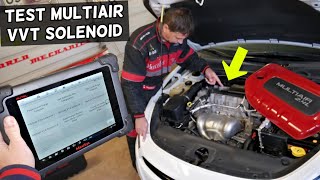
Tools: Advanced bidirectional scan tool (Advanced) - Measure Solenoid Coil Resistance 🎬 Watch: How to test the MultiAir solenoid with a multimeter.
Disconnect the MultiAir actuator connector. Use a multimeter to measure resistance across the pins for the Cylinder 1 solenoid. Expected resistance is 6.7 to 7.9 Ohms at 68°F (20°C). A reading of infinity (OL) confirms an open circuit.
Tools: Multimeter, wiring diagram (Advanced) - Inspect Wiring, Grounds, and Connectors
Visually inspect the wiring harness connecting the MultiAir actuator to the PCM. Look for chafing, melted insulation, or loose connectors. Verify the main engine and battery ground straps are tight and free of corrosion.
Tools: Flashlight, socket set (Intermediate) - Measure Engine Oil Pressure
Connect a mechanical oil pressure gauge. At operating temperature, the 2.4L MultiAir requires a minimum of 4 PSI at idle, rising to 25-80 PSI at 3000 RPM. Pressure below 4 PSI indicates a failing oil pump or worn bearings.
Tools: Mechanical oil pressure gauge, socket set (Professional) - Replace the MultiAir Actuator Assembly
If the oil is correct, software is updated, wiring is intact, and the solenoid fails the resistance test, replace the entire MultiAir actuator 'brick'. Individual solenoids are not serviceable.
Tools: Socket set, torque wrench, valve spring compressor (Professional)
When This Code Triggers (Freeze-Frame Conditions)
- Engine Coolant Temp: 180-210°F (Fully warmed up)
- RPM: 1500-2500 (Steady cruise or light acceleration)
- Engine Load: 25-50% (Moderate load, not idle or full throttle)
- Oil Temperature: 150-200°F (Warmed up, but triggers on cold start if oil is thick/low)
Related Codes
- P1068, P106A, P106C — These are identical 'solenoid switch off time' faults for cylinders 2, 3, and 4. Multiple codes appearing together confirm a systemic issue like low oil or outdated PCM software, rather than a single failed solenoid.
- P0301 — Misfire code for cylinder 1. P1066 is the cause, and P0301 is the effect. The faulty solenoid disrupts valve timing, preventing combustion. Fixing P1066 resolves P0301.
- P0335 — Crankshaft Position Sensor code. When paired with P1066, this confirms a known software glitch detailed in TSB #18-023-16. Do not replace the sensor; update the PCM software.
- P000B — 'B' Camshaft Position Slow Response. Because the MultiAir system controls valve timing hydraulically, a P1066 solenoid fault triggers this mechanical timing code.
Climate & Environmental Factors
- Cold Weather: Cold temperatures thicken engine oil. Old, dirty, or incorrect oil becomes too thick for the MultiAir solenoids to actuate during a cold start, triggering P1066.
How to Talk to a Mechanic About This Code
Say this: "I have a check engine light and the code is P1066. I know the most common causes are oil issues or a software update. I'd like to book a diagnostic appointment. Please start by checking for any available TSBs for a PCM software flash. I want to rule that out before we consider replacing any expensive parts."
This language establishes a clear, cost-effective diagnostic path. It directs the shop to check the cheapest fixes first (oil and software) before jumping to the conclusion that the $1,500 MultiAir 'brick' needs replacement.
Avoid saying:
- 'My check engine light is on, can you look at it?' (Invites a wide-ranging, expensive diagnostic process).
- 'I think I need a new MultiAir brick.' (Never diagnose the car for the mechanic; you will pay for a part you don't need).
- 'Just fix it, whatever it takes.' (Gives the shop a blank check to replace parts without approval).
Questions to ask before authorizing the repair:
- Did you verify the oil is full synthetic 0W-20 and that the level is full?
- Did you check my VIN for TSBs related to P1066, like 18-023-16? Is my PCM software up to date?
- If you are recommending replacing the MultiAir actuator, what specific tests did you run to condemn it?
- Is the replacement MultiAir actuator a new OEM Mopar part? What is the part number?
- What is the warranty on the parts and the labor for this repair?
Where to Take It: Dealer vs Independent vs Chain
- Dealer:
Required for the software update. Start here to check for TSBs and get the PCM flashed. If the software is current, decide whether to let them or an independent shop continue the diagnosis.
Best for: Performing the PCM software update, which requires proprietary wiTECH tools., Vehicles still under powertrain warranty or covered by the oil consumption warranty extension (XB1)., A definitive diagnosis if an independent shop is struggling.
Downsides: Highest labor rates, typically 1.5-2x more than independent shops., May default to replacing the entire MultiAir 'brick' without exploring wiring issues first. (Typical cost: +50% vs. baseline) - Independent Shop:
A good choice for the second step. After confirming the PCM software is current at a dealer, a trusted independent shop is a cost-effective choice for replacing the MultiAir actuator.
Best for: Out-of-warranty vehicles where cost is a major factor., Basic steps like a guaranteed correct oil change and inspecting wiring/grounds., Performing the MultiAir actuator replacement if you provide the new OEM part.
Downsides: Most cannot perform the critical PCM software update., Quality varies greatly; ensure they have experience with FCA MultiAir engines. (Typical cost: +0% vs. baseline) - Chain Shop:
AVOID for diagnosis. Only use for an oil change if you direct the service precisely. Do not let them diagnose a P1066 code.
Best for: Performing a simple oil change if you specify the exact oil required (full synthetic 0W-20, MS-6395).
Downsides: Technicians lack experience with the nuances of the MultiAir system., Lack specialized tools for software updates and bidirectional scanners for proper diagnosis., High pressure to sell parts leads to incorrect recommendations to replace expensive components. (Typical cost: -10% vs. baseline)
When to Walk Away From the Repair
If the estimated repair cost for the MultiAir actuator replacement exceeds 50% of your car's private-party value, seriously consider selling the vehicle as-is or trading it in.
- Car worth $5000, fix is $2500: Borderline. The repair costs 50% of the car's value. Get a second opinion before authorizing, and consider the car's overall health.
- Car worth $12000, fix is $2500: Fix it. The repair is well below the 50% threshold and restores a significant asset.
- Car worth $3000, fix is $2500: Walk away. The repair cost is nearly the entire value of the car. It is not economically viable.
What Scan Tool You Need for This Code
Minimum: A basic OBD-II code reader pulls the P1066 code, but you need a bidirectional tool to command the solenoid and view live data for a real diagnosis.
A $20 reader only tells you the code exists. It cannot determine if the cause is oil, software, wiring, or the actuator itself. You must see live data and command the solenoid to test its function.
Budget: MUCAR BT200 Max (~$90) — This smartphone-based tool offers full system diagnostics and basic bidirectional controls to activate and test the solenoid.
Mid-range: Innova 5610 (~$350) — A powerful handheld scanner with strong Chrysler support. It offers live data graphing and crucial bidirectional controls to command the MultiAir solenoids on and off.
Professional: Autel MaxiCOM MK808BT / XTOOL D7 (~$450-600) — Professional-grade tablets offering full bidirectional control, OEM-level diagnostics, and data logging essential for a confident diagnosis before replacing the MultiAir brick.
Rent vs buy: Renting a basic scanner from an auto parts store is insufficient. If you don't plan to do frequent complex repairs, pay the diagnostic fee at a qualified shop equipped with a bidirectional scanner.
How to Clear the Code After You Fix It
- Fix the root cause (change oil, update PCM, or replace actuator).
- Use an OBD-II scan tool to clear the diagnostic trouble codes.
- Perform a complete drive cycle to allow readiness monitors to run.
Drive cycle (~20 minutes): 1) Cold start and idle for 5 minutes. 2) Drive at a steady speed between 40-60 mph for 8 minutes. 3) Stop and idle for 3 minutes. 4) Drive over 20 mph for 2 minutes. 5) Turn the engine off for 10 minutes.
Readiness monitors affected: Catalyst Monitor, O2 Sensor Monitor, Misfire Monitor
Before emissions retest: drive at least 50 miles to fully set monitors.
Watch out for:
- Clearing the code without fixing the underlying oil or software issue causes the code to return immediately.
- Disconnecting the battery resets all emissions readiness monitors, causing an automatic failure at an emissions testing station.
Will This Fail Emissions / State Inspection?
Yes — this code typically fails an OBD-II emissions inspection.
- California: An illuminated check engine light is an automatic failure. All readiness monitors must be 'Ready', requiring driving after a repair before re-testing.
- New York: An active P1066 code causes an automatic failure during the OBD-II scan.
- Texas: An illuminated check engine light results in an automatic inspection failure in emissions-testing counties.
Most Commonly Affected Vehicles
- Chrysler 200 (2015-2017) — Equipped with the 2.4L MultiAir engine. Frequently cited in TSBs #18-023-16 and #18-022-17 requiring a PCM software update.
- Dodge Dart (2013-2016) — TSB #18-009-16 specifically addresses P1066 for 2016 models. Highly sensitive to oil level and quality.
- Jeep Cherokee (2014-2020) — The 2.4L engine in this model is notorious for high oil consumption, the direct cause of this code. Covered under warranty extension XB1.
- Jeep Renegade (2015-2020) — TSBs #18-061-16 and #18-063-16 specifically address P1066 on these models with a PCM software update.
- Fiat 500X (2016-2018) — Uses the same 2.4L MultiAir engine platform. Included in class-action lawsuits regarding excessive oil consumption.
- Ram ProMaster City (2015-2020) — Uses the 2.4L MultiAir engine and is included in the XB1 warranty extension for oil consumption.
- Alfa Romeo Giulia (2017-2020) — The 2.0T engine uses MultiAir technology and exhibits P1066 due to extreme sensitivity to battery voltage and ground issues.
- Alfa Romeo Stelvio (2018-2020) — Shares the 2.0T MultiAir engine with the Giulia, making it susceptible to identical oil and electrical faults.
Manufacturer-Specific Notes
- Fiat-Chrysler Automobiles (FCA) / Stellantis: This code is exclusive to FCA MultiAir engines. The electro-hydraulic design is uniquely sensitive to oil level, quality, and software calibration. Always check for TSBs #18-023-16, #18-022-17, and #18-063-17.
- FCA / Stellantis Warranty Programs: FCA issued warranty extension XB1 for excessive oil consumption on the 2.4L Tigershark engine, extending coverage to 7 years or 100,000 miles. Dealers perform an oil consumption test under TSB 09-003-23, which results in a free engine replacement if qualified.
Real Owner Stories
2012 Fiat 500 at 142K miles - The Easy Fix
Check engine light came on with no other noticeable symptoms.
What they tried:
- Scanned the code at an auto parts store, returning P1066.
Outcome: The owner checked the oil level and found it dangerously low. An immediate oil change resolved the issue and the code cleared permanently.
Lesson: Always check the engine oil level first. A $100 oil change prevents a $2,000 misdiagnosis.
2015 Chrysler 200 - The Misdiagnosis
Car experienced rough idle, stalling, and threw P1066 along with other MultiAir codes.
What they tried:
- A shop replaced the cylinder head and the MultiAir 'brick' assembly.
Outcome: The $3,000 repair did not fix the problem. The actual root cause was outdated PCM software, which the shop never checked or updated.
Lesson: Never approve the replacement of the MultiAir actuator without ensuring a dealer has updated the PCM software per the relevant TSBs.
2016 Jeep Renegade 2.4L - The Software Glitch
Check engine light on with P1066. Car ran with slightly reduced power but was drivable.
What they tried:
- Verified oil level was full and the correct 0W-20 synthetic oil was used.
Outcome: The dealer performed a PCM software update specified in TSB #18-063-16. The update cost $150 and permanently resolved the code.
Lesson: If the oil is correct, a PCM software update is the definitive next step. TSBs exist specifically to fix these false codes.
2014 Jeep Cherokee 2.4L - The Intermittent Electrical Fault
Vehicle stumbled and misfired at highway speeds, triggering the check engine light.
What they tried:
- Restarting the car temporarily fixed the issue, but it returned under load.
Outcome: Technicians found poor pin tension in the main PCM connector. Repairing the wiring harness fixed the issue without replacing the actuator.
Lesson: Intermittent electrical issues point to a wiring or connector problem. Visually inspect the harness before replacing expensive components.
How to Prevent This Code From Triggering
- Use the correct engine oil, always. (Every oil change) — The hydraulic MultiAir system requires full synthetic SAE 0W-20 oil meeting the MS-6395 spec. Thicker oil causes solenoid actuation delays.
- Perform oil changes more frequently. (Every 5,000 miles) — The 2.4L Tigershark engine is prone to oil consumption and sludge. Shorter intervals keep the hydraulic passages in the MultiAir brick clean.
- Check the oil level manually. (Every other fuel fill-up) — These engines consume over a quart of oil between changes. Relying on the dashboard oil life monitor leads to dangerously low oil levels.
- Maintain a healthy battery and clean electrical grounds. (Annually) — The MultiAir solenoids require stable voltage. A weak battery or corroded ground straps cause voltage drops and trigger false fault codes.
Frequently Asked Questions
Can I just add oil to fix P1066?
Yes, if low oil triggered the code, topping it off with SAE 0W-20 full synthetic oil and clearing the code is a permanent fix. If the code returns, perform a full oil change and check for software updates.
The P1066 code appeared right after an oil change. What went wrong?
The shop likely used the wrong oil viscosity (conventional instead of full synthetic 0W-20) or overfilled the system. Verify the oil type on your service invoice and check the dipstick level immediately.
My mechanic wants to replace the MultiAir 'brick' right away. Is this correct?
No. Replacing the MultiAir actuator is a $1,500+ repair and must never be the first step. Insist the shop verifies the oil type and performs a PCM software update before authorizing parts replacement.
Why does P1066 keep coming back even after an oil change?
If correct oil didn't fix it, your PCM software requires a dealer update to fix overly sensitive fault logic. If the software is current, the MultiAir actuator 'brick' is failing and requires replacement.
Can I replace just the Cylinder 1 solenoid?
No. The oil supply solenoids are permanently integrated into the MultiAir actuator assembly. You must replace the entire unit.
How much does it cost to fix P1066?
Costs range from $100 for an oil change to $200 for a dealer software update. If the MultiAir actuator fails, expect to pay between $1,400 and $2,300 for parts and labor.
What happens if I ignore the P1066 code?
Ignoring P1066 causes persistent misfires that destroy your catalytic converter, adding a $2,000 repair bill. Running the engine with failing oil control also destroys the MultiAir actuator and causes catastrophic internal engine damage.
Key Takeaways
- Check your engine oil level first; low oil is the #1 trigger for P1066.
- Verify your vehicle has the latest PCM software update, as FCA issued at least 3 Technical Service Bulletins (TSBs) to fix overly sensitive P1066 fault logic.
- Always use full synthetic SAE 0W-20 engine oil meeting the MS-6395 specification to ensure proper MultiAir hydraulic function.
- Stop driving immediately if the check engine light flashes, as this indicates a severe misfire that destroys your catalytic converter within 50 miles.
- Expect to pay between $1,400 and $2,300 to replace the MultiAir actuator assembly if an oil change and software update fail to clear the code.
Helpful Videos
Shop the Parts Behind P1066
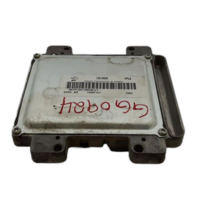
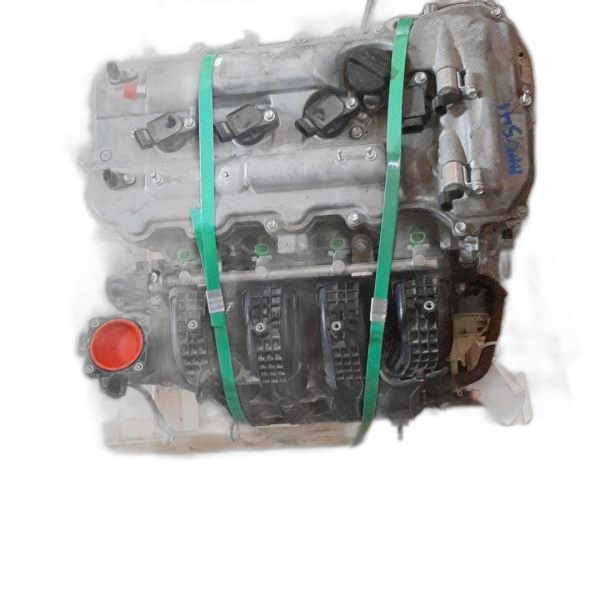
Below are the parts most often responsible for code P1066, ranked by how frequently each one is the actual culprit (per the diagnosis above). Tap any to see what we have for your vehicle.



The information in this article is provided for general reference and educational purposes only. Vehicle specifications, procedures, and part compatibility can vary by production date, trim level, and region. Always consult your vehicle's factory service manual and verify part numbers before purchasing or performing repairs. Safety-critical components such as airbags, seat belts, and braking systems should be installed by a qualified professional.
- 🧭 Diagnostic Flowchart
- 🎬 Helpful Videos
- 🛍️ Shop This Part
- What Does P1066 Mean?
- Can I Drive With P1066?
- Common Causes
- Symptoms
- Common Fixes & Costs
- DIY vs Professional
- Used vs. New Parts: Buying Guide
- What Happens If You Wait — Timeline
- Cost of Not Fixing It
- Diagnosis Steps
- When This Code Triggers (Freeze-Frame Conditions)
- Related Codes
- Climate & Environmental Factors
- How to Talk to a Mechanic About This Code
- Where to Take It: Dealer vs Independent vs Chain
- When to Walk Away From the Repair
- What Scan Tool You Need for This Code
- How to Clear the Code After You Fix It
- Will This Fail Emissions / State Inspection?
- Most Commonly Affected Vehicles
- Manufacturer-Specific Notes
- Real Owner Stories
- 2012 Fiat 500 at 142K miles - The Easy Fix
- 2015 Chrysler 200 - The Misdiagnosis
- 2016 Jeep Renegade 2.4L - The Software Glitch
- 2014 Jeep Cherokee 2.4L - The Intermittent Electrical Fault
- How to Prevent This Code From Triggering
- Frequently Asked Questions
- Can I just add oil to fix P1066?
- The P1066 code appeared right after an oil change. What went wrong?
- My mechanic wants to replace the MultiAir 'brick' right away. Is this correct?
- Why does P1066 keep coming back even after an oil change?
- Can I replace just the Cylinder 1 solenoid?
- How much does it cost to fix P1066?
- What happens if I ignore the P1066 code?
- Key Takeaways
- 🎟️ Get 5% Off