

OBD-II Code P1067: A Comprehensive Guide for BMW, Fiat/Dodge/Jeep, and VW/Audi
What P1067 means, brand-specific causes, and pro-level diagnosis and fixes
- P1067 indicates a Valvetronic motor power fault on BMWs, a Cylinder 2 MultiAir solenoid failure on FCA vehicles, or a Secondary Air Injection fault on VW/Audi/Mercedes.
- For Fiat, Dodge, and Jeep owners, verify the engine contains the exact OEM-specified 5W-40 full synthetic oil before authorizing a $1,500 MultiAir actuator replacement.
- For BMW owners, inspect the eccentric shaft sensor connector for oil contamination; this $300 sensor failure is frequently misdiagnosed as a bad Valvetronic motor.
- Driving an FCA vehicle with an active P1067 code for more than a few days dumps unburnt fuel into the exhaust, risking a $1,200 to $2,800 catalytic converter replacement.
- Expect repair costs to range from $900 to $2,500 due to expensive specialized parts and the 3.5 to 4.5 hours of labor required to access components under the valve cover.
What Does P1067 Mean?
P1067 is a manufacturer-specific code with three distinct meanings. For BMW, the engine computer (DME) detects a power supply problem to the Valvetronic motor, which adjusts intake valve lift. For Fiat, Dodge, and Jeep (FCA) MultiAir engines, it indicates a 'switch on time out of range' fault for the cylinder 2 oil supply solenoid, pointing to a failed electro-hydraulic MultiAir 'brick'. For Volkswagen, Audi, and Mercedes-Benz, it indicates a fault in the secondary air injection system, such as a shorted intake manifold air control solenoid or open air pump relay. In all cases, the ECU defaults to a fail-safe mode, severely degrading performance.
Technical definition: The SAE/ISO definition varies by brand. BMW: 'Valvetronic (VVT) Control Motor Power Supply Malfunction', indicating an electrical fault in the Valvetronic actuator motor circuit. FCA: 'Cylinder 2 Oil Supply Solenoid Valve Switch On Time Out of Range', meaning the cylinder 2 solenoid within the MultiAir system is not responding electrically. VW/Audi: 'Intake Manifold Air Control Solenoid - Short to Ground'. Mercedes-Benz: 'Secondary Air Injection Pump Relay Circuit / Open'.
Can I Drive With P1067?
Yes, But With Caution. Yes, but do not drive for extended periods. The vehicle enters 'limp mode' with severely reduced power and stalls frequently, making it unsafe in traffic. Prolonged driving with a misfiring cylinder (common on FCA vehicles) dumps unburnt fuel into the exhaust, destroying the catalytic converter—an $800-$2,500 repair. Drive only to the nearest repair shop.
Common Causes
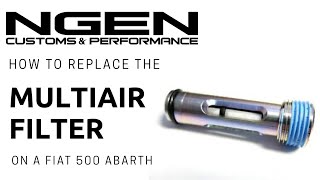
- Incorrect Engine Oil or Low Level (Fiat/Dodge/Jeep) (Very Common) — The MultiAir system relies entirely on engine oil pressure. Using non-specified oil (e.g., anything other than SAE 5W-40 full synthetic for the 1.4L Turbo), low oil levels, or a clogged MultiAir filter screen starves the solenoids 🎬 Watch: How to replace the MultiAir actuator supply filter., triggering this code.
- Faulty MultiAir Actuator Assembly (Fiat/Dodge/Jeep) (Very Common) — The internal solenoid for cylinder 2 fails inside the electro-hydraulic MultiAir actuator assembly (the 'brick'). This requires replacing the entire unit.
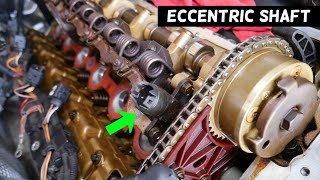
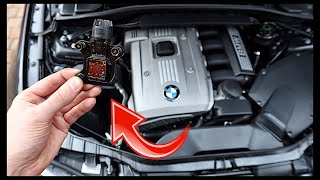
- Failing Eccentric Shaft Sensor (BMW) (Common) — Located under the valve cover, this sensor reports Valvetronic position. Its internal seal frequently fails, allowing oil to wick into the electrical connector and cause shorts misdiagnosed as a motor failure.
- Faulty Valvetronic (VVT) Motor (BMW) (Common) — The electric Valvetronic motor suffers internal wear, electrical shorts, or seizure, causing it to draw excessive current and trigger the power supply fault.
- Faulty Secondary Air Injection Relay or Pump (VW/Audi/Mercedes) 🎬 See how to diagnose the secondary air injection pump system. (Common) — The relay controlling the secondary air pump sticks or fails, or the pump motor itself burns out.
- Damaged Wiring or Corroded Connectors (Common) — Extreme engine bay heat makes the wiring harness to the VVT motor (BMW) or MultiAir actuator (FCA) brittle. Broken wires or corroded connector pins cause a loss of power.
- Blown Fuse (Less Common) — A blown fuse for the Valvetronic, MultiAir, or secondary air injection circuit cuts power and sets this code. It is a mandatory check before replacing expensive components.
- Outdated PCM Software (Fiat/Dodge/Jeep) (Less Common) — On the 2.4L Tigershark engine, overly sensitive PCM software logic triggers false codes. FCA Technical Service Bulletins (TSBs) provide software updates that resolve the issue without parts replacement.
- Failing Engine Control Module (DME/ECU/PCM) (Rare) — The driver circuit within the main engine computer that powers the VVT motor or MultiAir solenoid fails. This is a last-resort diagnosis.
Symptoms
- Reduced Engine Power / Limp Mode — The vehicle feels sluggish with poor acceleration and a limited RPM range as the engine enters fail-safe mode.
- Rough or Unstable Idle — The engine idles erratically or shakes. On FCA vehicles, this feels like a persistent misfire.
- Engine Stalling — The engine shuts off unexpectedly at low speeds or when coming to a stop.
- Delayed or No Start Condition — A severe BMW Valvetronic failure prevents the engine from starting. On FCA vehicles, a no-start occurs after sitting for days as oil drains from the MultiAir brick.
- Audible Noise from Engine (BMW) — A failing BMW Valvetronic motor produces a distinct clicking, whirring, or grinding noise from the top of the engine upon startup or shutdown.
- Increased Fuel Consumption — Engine efficiency drops significantly, leading to noticeably worse gas mileage.
- Check Engine Light On (also visible on scanner) — The Check Engine Light illuminates on the dashboard.
Common Fixes & Costs
- Changing Engine Oil and Filter (Fiat/Dodge/Jeep) — Parts: $50-$120, Labor: $50-$100, ~0.5 hr book time (Beginner)
- Replacing the MultiAir Actuator 'Brick' (Fiat/Dodge/Jeep) — Parts: $800-$1700, Labor: $400-$700, ~4.5 hr book time (Professional)
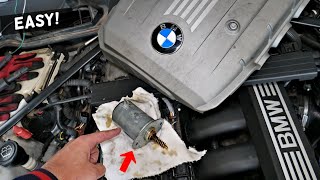
- Replacing the Eccentric Shaft Sensor (BMW) 🎬 Watch: A detailed walkthrough of the eccentric shaft sensor replacement. — Parts: $300-$500, Labor: $300-$600, ~4.0 hr book time (Professional)
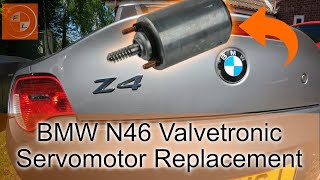
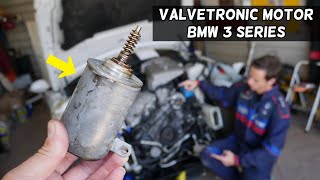
- Replacing the Valvetronic (VVT) Motor (BMW) — Parts: $400-$700, Labor: $300-$600, ~3.5 hr book time (Intermediate)
- Replacing Secondary Air Injection Relay or Pump (VW/Audi/Mercedes) — Parts: $30-$400, Labor: $50-$250, ~1.5 hr book time (Beginner)
- Repairing Damaged Wiring or Replacing Connector — Parts: $20-$150, Labor: $150-$400, ~2.0 hr book time (Intermediate)
DIY vs Professional
- Replacing the MultiAir Actuator 'Brick' (FCA) — Beginner: No
Tools: Full socket set, torque wrench, trim removal tools, hose clamp pliers, MultiAir Spring Compressor (Miller 10259B). - Replacing the Valvetronic Motor (BMW) — Beginner: No
Tools: Socket set with E-Torx sockets, 4mm Allen key, torque wrench, diagnostic scan tool. - Replacing the Eccentric Shaft Sensor (BMW) — Beginner: No
Tools: E-Torx sockets, torque wrench, gasket scrapers. - Changing Engine Oil and Filter (FCA) — Beginner: Yes
Tools: Wrench for drain plug, oil filter wrench.
Used vs. New Parts: Buying Guide
When a used part is worth it: For high-cost components like the FCA MultiAir 'brick' or BMW Valvetronic motor, a used part from a low-mileage, accident-damaged vehicle offers significant savings. Viable for older, high-mileage vehicles.
Donor-vehicle mileage cap: roughly under 70000 miles for the part to have meaningful remaining life.
Donor quality checklist:
- Verify the donor vehicle was not scrapped due to engine or electrical failure.
- Obtain the VIN of the donor car to check its history and mileage.
- Avoid electronic parts from flood-damaged or rust-belt vehicles due to corrosion risk.
- Match the part number exactly, as superseded numbers have different software revisions.
Decision logic:
- If Vehicle is under 100K miles and you plan to keep it long-term → Buy new OEM or from a reputable OEM supplier (e.g., VDO for BMW). The longevity justifies the cost.
- If Vehicle is over 150K miles and budget is the primary concern → A used part is a reasonable gamble, but accept it has a shorter lifespan.
- If The part is known to fail from internal wear (like MultiAir solenoids) → Favor new or remanufactured units, as a used part is close to the end of its service life.
Warranty tradeoff: Used parts come with a 30-90 day warranty covering only the part, not labor. New aftermarket parts offer 1-year to limited lifetime warranties. New OEM parts offer the best warranty.
Worst-case if a used part fails: $600-$1200 if a used part fails after the warranty period, requiring payment for the part and installation labor a second time.
Cost of Not Fixing It
- Immediate: Vehicle enters 'limp mode' with severely reduced power, rough idle, stalling, and a 10-25% drop in fuel economy. Unsafe in traffic. (Added cost: Negligible)
- 1-6 months: On FCA vehicles, the persistent misfire dumps unburnt fuel into the exhaust, overheating and destroying the catalytic converter. (Added cost: $1200-$2800)
- 6+ months: On BMWs, continued operation with a failing Valvetronic system causes excessive wear on the eccentric shaft and intermediate levers. (Added cost: $1500-$3000+)
Diagnosis Steps
- Scan for Codes and Identify Vehicle System
Use an OBD-II scanner to confirm P1067 and identify your system: BMW (Valvetronic), FCA (MultiAir), or VW/Audi/Mercedes (Secondary Air). Note accompanying codes like P1017 (BMW) or P0302 (FCA).
Tools: OBD-II Scanner (Beginner) - Check Engine Oil Level, Condition, and Type (FCA)
For FCA vehicles, verify the engine oil is full, clean, and the exact specified viscosity (e.g., SAE 5W-40 full synthetic). Incorrect oil is the leading cause of FCA P1067 codes.
Tools: Dipstick, Owner's Manual (Beginner) - Inspect Fuses and Relays
Locate and inspect the fuse and relay associated with the Valvetronic motor, MultiAir actuator, or Secondary Air Pump. A blown $2 fuse mimics a $1,500 component failure.
Tools: Owner's Manual, Fuse Puller, Multimeter (Beginner) - Visually Inspect Wiring and Connectors
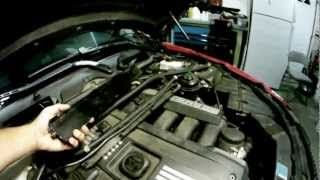
Remove the engine cover and inspect the main electrical connector. On BMWs, unplug the eccentric shaft sensor; if you see oil inside the connector pins, the sensor has failed.
Tools: Flashlight, Trim Removal Tools (Beginner) - Check for Technical Service Bulletins (FCA)
Before replacing FCA parts, have a dealer check your VIN for powertrain software updates. TSB 18-061-16 resolves erroneous P106x codes on 2.4L engines via a simple flash.
Tools: VIN, Access to TSB Database (Intermediate) - Test Component with Scanner Active Test (FCA)
Using a bidirectional scanner, command each MultiAir solenoid to activate (key on, engine off). If cylinder 2 is silent while others click, the MultiAir brick has failed.
Tools: Bidirectional OBD-II Scanner (Advanced) - Check Eccentric Shaft Sensor Signals (BMW)
Use an oscilloscope on the BMW eccentric shaft sensor connector to verify a 5V reference, good ground, and clean digital clock/data signals. Missing signals confirm sensor failure.
Tools: Multimeter, Oscilloscope (Professional) - Test Valvetronic Motor with 12V (BMW)
Disconnect the BMW Valvetronic motor. Apply 12V directly to the two motor pins using jumper wires. No movement or weak spinning confirms a failed motor.
Tools: 12V Power Source, Jumper Wires with Alligator Clips (Advanced) - Measure Valvetronic Motor Resistance (BMW)
Measure resistance between the two BMW Valvetronic motor pins (should be 0-5 Ohms). Measure from each pin to the metal casing (should be infinite/OL). Any resistance to ground indicates an internal short.
Tools: Multimeter (Advanced) - Test Secondary Air Injection System (VW/Audi/Mercedes)
On a cold start, listen for the VW/Audi/Mercedes secondary air pump (sounds like a vacuum cleaner). If silent, check for 12V at the connector. If it has power but doesn't run, replace the pump.
Tools: Assistant, Multimeter (Intermediate)
When This Code Triggers (Freeze-Frame Conditions)
- Engine Coolant Temp: 185-210°F (85-99°C) (The fault logs when the engine is fully warmed up.)
- Engine RPM: 700-1200 RPM (FCA) or 1500-2500 RPM (BMW) (On FCA vehicles, the fault triggers at or just above idle. On BMWs, it sets during steady-state cruising.)
- Engine Load: 20-40% (The code sets under light to moderate engine load, not during heavy acceleration.)
- Vehicle Speed: 0-15 mph or 40-60 mph (Correlates with RPM; the fault triggers shortly after startup at low speed (FCA) or during highway driving.)
Related Codes
- P1062, P106B, etc. (FCA) — These codes point to different cylinders or fault types (e.g., 'stuck' vs. 'out of range') within the MultiAir system. Seeing them together confirms a failing MultiAir brick.
- P0302 (FCA) — This generic 'Cylinder 2 Misfire' code frequently appears with P1067 because a failing MultiAir solenoid prevents intake valves from operating, causing a misfire.
- P1017 (BMW) — Points to a fault with the 'Valvetronic Eccentric Shaft Sensor Plausibility'. It appears with P1067 because a failing sensor causes the motor control system to report power errors.
- 2A67 / 2A6B (BMW Fault Codes) — BMW's internal fault codes that trigger the generic P1067. 2A67 is 'Valvetronic, internal fault' and 2A6B is 'Valvetronic, power limitation, servomotor'.
- P0420 (Catalyst Efficiency) — Appears on FCA vehicles after P1067 has been active. The misfire caused by the MultiAir fault allows unburnt fuel to enter the exhaust, destroying the catalytic converter.
Climate & Environmental Factors
- Cold Weather: On FCA MultiAir engines, temperatures below 50°F exacerbate P1067. Thicker, cold oil drains from the MultiAir brick's hydraulic circuits overnight, causing a lack of valve actuation and a misfire upon startup.
- High Engine Bay Heat: On BMWs, high temperatures in tight engine compartments accelerate the degradation of plastic wiring insulation and rubber gaskets, contributing to Valvetronic motor wiring failure and eccentric shaft sensor oil leaks.
How to Clear the Code After You Fix It
- Use an OBD-II scan tool to clear all diagnostic trouble codes.
- Perform a complete OBD-II drive cycle to allow readiness monitors to run.
- Let the vehicle cool down completely (cold soak for 8+ hours) before starting the drive cycle.
Drive cycle (~30 minutes): From a cold start, idle for 2-3 minutes. Drive at a steady 20-30 mph for 3-5 minutes. Accelerate to and maintain a steady 50-60 mph for 15-20 minutes. Decelerate and idle for 5 minutes.
Readiness monitors affected: Catalyst Monitor, Evaporative System Monitor, Oxygen (O2) Sensor Monitor
Before emissions retest: drive at least 100 miles to fully set monitors.
Watch out for:
- Clearing the code or disconnecting the battery resets readiness monitors to 'Not Ready', causing an immediate emissions test failure.
- The code returns quickly if the underlying mechanical or electrical fault is not repaired.
Will This Fail Emissions / State Inspection?
Yes — this code typically fails an OBD-II emissions inspection.
- California: An illuminated Check Engine Light is an automatic failure. After repair, all readiness monitors must be 'Ready'. For 2010+ models, a permanent DTC causes failure until the vehicle completes a specific drive cycle.
- New York: An illuminated Check Engine Light automatically fails the emissions inspection. After clearing the code, a full drive cycle must be completed before re-inspection.
- Texas: In the 17 counties requiring emissions testing, an active P1067 code causes an automatic failure. The inspection checks for active trouble codes and readiness monitors.
Most Commonly Affected Vehicles
- Dodge Dart (2013-2016) — Extremely common on models with both the 1.4L Turbo and 2.4L 'Tigershark' MultiAir engines.
- Fiat 500 / 500L / Abarth (2012-2019) — Pervasive issue on all models using the 1.4L MultiAir engine, where the code points to a failure in the hydraulic 'brick'.
- Jeep Renegade / Compass (2015-2020) — Models with the 2.4L MultiAir 'Tigershark' engine are known for this code, often related to the MultiAir actuator or outdated PCM software.
- BMW 3-Series (E90, E91, E92, E93) (2006-2013) — Very common on models with the N52 and N55 6-cylinder engines due to Valvetronic motor and eccentric shaft sensor failures.
- BMW X5 (E70) (2007-2013) — The 6-cylinder models (N52/N55 engines) are prone to this failure due to high engine bay heat degrading electrical components.
- BMW 1-Series (E82, E88) (2008-2013) — Affects models like the 128i and 135i that share the N52/N55 powertrains with the 3-Series.
- Jeep Cherokee (KL) (2014-2020) — A common victim of P106x codes on the 2.4L Tigershark engine, often appearing with other codes like P1062.
- Volkswagen Jetta / Golf / GTI (2008-2014) — Indicates a 'short to ground' in the intake manifold air control solenoid, a different system entirely.
- Mercedes-Benz Sprinter (2010-2016) — Indicates an open circuit for the secondary air injection pump relay.
Manufacturer-Specific Notes
- Fiat / Dodge / Jeep: The MultiAir system is extremely sensitive to oil. Using the wrong viscosity, a non-OEM oil filter, or having a low oil level is a leading cause of P1067. Always check oil and the MultiAir filter screen before condemning the actuator.
- BMW: The eccentric shaft sensor's internal seal fails, allowing engine oil to leak into the electrical connector pins. This oil contamination causes electrical faults misdiagnosed as a bad Valvetronic motor. Oil in the connector means the sensor is bad.
- FCA (2.4L Tigershark): Chrysler released software updates (TSBs) for the Powertrain Control Module (PCM) addressing false P106x codes. A dealership checks your VIN for updates, providing a software fix instead of a hardware replacement.
- Volkswagen / Audi / Mercedes-Benz: Do not confuse P1067 on these brands with BMW/FCA definitions. It relates to the Secondary Air Injection (SAI) system. Diagnosis focuses entirely on the SAI pump, relay, and fuse.
- BMW: For vehicles in states adopting California's emissions standards, the Valvetronic motor is covered under the SULEV warranty for 15 years or 150,000 miles. Check with a dealer to see if your vehicle qualifies.
Frequently Asked Questions
I just got an oil change and now my Fiat/Dodge has a P1067 code. Are they related?
Yes. The MultiAir system requires a specific full synthetic oil to function. Incorrect viscosity or conventional oil immediately triggers this fault. Verify the exact oil used against your owner's manual before authorizing other repairs.
What are the most common misdiagnosis mistakes for P1067?
On BMWs, mechanics often replace the Valvetronic motor when the real problem is an oil-leaking eccentric shaft sensor. On FCA vehicles, shops frequently replace the expensive MultiAir 'brick' without first checking the oil level, the MultiAir filter screen, or for PCM software updates.
Can I replace just one bad solenoid in the Fiat MultiAir brick?
No. The solenoids are integrated into the MultiAir actuator assembly ('brick') and are not sold individually. You must replace the entire unit.
On my BMW, should I replace the Valvetronic motor and eccentric shaft sensor at the same time?
Yes, it is highly recommended. Accessing either part requires removing the valve cover, which carries a $300-$600 labor cost. Replacing both simultaneously prevents paying that labor charge twice if the second aging component fails shortly after.
Is fixing a P1067 code expensive?
Yes, it is frequently an expensive repair. The primary replacement parts (MultiAir actuator, Valvetronic motor) are costly, and accessing them is labor-intensive. Expect repair costs to range from $900 to over $2,500 depending on the vehicle.
Can I just clear the P1067 code and keep driving?
You can clear it, but it will return almost immediately. This code indicates a persistent hardware or critical software fault, not a random glitch. Ignoring it leads to continuous poor performance and high risk of destroying your catalytic converter.
Do I need to reprogram the computer after replacing the MultiAir actuator?
No. Replacing the MultiAir actuator does not require a special relearn procedure with a scan tool. It is a direct component swap, though you must crank the engine several times to prime the hydraulic system before it starts.
Key Takeaways
- P1067 indicates a Valvetronic motor power fault on BMWs, a Cylinder 2 MultiAir solenoid failure on FCA vehicles, or a Secondary Air Injection fault on VW/Audi/Mercedes.
- For Fiat, Dodge, and Jeep owners, verify the engine contains the exact OEM-specified 5W-40 full synthetic oil before authorizing a $1,500 MultiAir actuator replacement.
- For BMW owners, inspect the eccentric shaft sensor connector for oil contamination; this $300 sensor failure is frequently misdiagnosed as a bad Valvetronic motor.
- Driving an FCA vehicle with an active P1067 code for more than a few days dumps unburnt fuel into the exhaust, risking a $1,200 to $2,800 catalytic converter replacement.
- Expect repair costs to range from $900 to $2,500 due to expensive specialized parts and the 3.5 to 4.5 hours of labor required to access components under the valve cover.
Helpful Videos
Shop the Parts Behind P1067
Below are the parts most often responsible for code P1067, ranked by how frequently each one is the actual culprit (per the diagnosis above). Tap any to see what we have for your vehicle.



The information in this article is provided for general reference and educational purposes only. Vehicle specifications, procedures, and part compatibility can vary by production date, trim level, and region. Always consult your vehicle's factory service manual and verify part numbers before purchasing or performing repairs. Safety-critical components such as airbags, seat belts, and braking systems should be installed by a qualified professional.
- 🎬 Helpful Videos
- 🛍️ Shop This Part
- What Does P1067 Mean?
- Can I Drive With P1067?
- Common Causes
- Symptoms
- Common Fixes & Costs
- DIY vs Professional
- Used vs. New Parts: Buying Guide
- Cost of Not Fixing It
- Diagnosis Steps
- When This Code Triggers (Freeze-Frame Conditions)
- Related Codes
- Climate & Environmental Factors
- How to Clear the Code After You Fix It
- Will This Fail Emissions / State Inspection?
- Most Commonly Affected Vehicles
- Manufacturer-Specific Notes
- Frequently Asked Questions
- I just got an oil change and now my Fiat/Dodge has a P1067 code. Are they related?
- What are the most common misdiagnosis mistakes for P1067?
- Can I replace just one bad solenoid in the Fiat MultiAir brick?
- On my BMW, should I replace the Valvetronic motor and eccentric shaft sensor at the same time?
- Is fixing a P1067 code expensive?
- Can I just clear the P1067 code and keep driving?
- Do I need to reprogram the computer after replacing the MultiAir actuator?
- Key Takeaways
- 🎟️ Get 5% Off