

OBD-II Code P1068: Comprehensive Diagnostic and Repair Guide
The Ultimate Guide to P1068: What It Means, Why It Triggers, and How to Fix It for Good
- P1068 definitions vary by brand: FCA vehicles indicate a cylinder 2 MultiAir valve failure, while Cadillac models flag a dead Stop/Start ultracapacitor.
- Low or incorrect engine oil causes over 50% of P1068 codes on FCA 2.4L engines, making an immediate dipstick check your mandatory first diagnostic step.
- The cylinder 2 oil control solenoid cannot be replaced individually; a failure requires replacing the entire $1,500 MultiAir Actuator Assembly (the 'brick').
- Limit driving to under 100 miles to prevent the resulting cylinder misfire from destroying your catalytic converter, which adds up to $2,500 in secondary repair costs.
What Does P1068 Mean?
P1068 is a manufacturer-specific code. On Fiat-Chrysler (FCA) vehicles (Jeep, Dodge, Chrysler, Fiat), it signals a failure in the cylinder #2 electro-hydraulic valve control system, known as MultiAir. This system uses engine oil as hydraulic fluid to control intake valves, making it hyper-sensitive to oil level, viscosity, and pressure.
Technical definition: FCA defines P1068 as "Cylinder 2 Oil Supply Solenoid Valve Switch Off Time Out Of Range". The Powertrain Control Module (PCM) commanded the cylinder #2 oil control solenoid to deactivate but did not receive the expected electrical response within the required millisecond window. This indicates a mechanical failure, electrical short, or oil starvation at the solenoid.
Can I Drive With P1068?
Yes, But With Caution. Limit driving to under 100 miles strictly to reach a repair shop. A P1068 fault causes a cylinder misfire that dumps unburnt fuel into the exhaust. This rapidly overheats and destroys the catalytic converter, adding $800 to $2,500 to your final repair bill.
Common Causes
- Low or Incorrect Engine Oil (Very Common) — The MultiAir hydraulic system requires precise oil pressure. Being low by just one quart triggers this code. Using non-synthetic oil or the wrong viscosity (e.g., anything other than SAE 0W-20 for the 2.4L) impedes solenoid function.
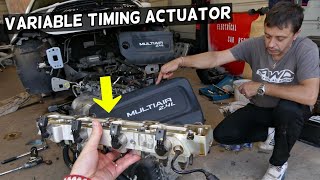
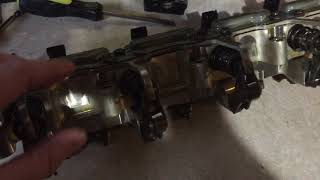
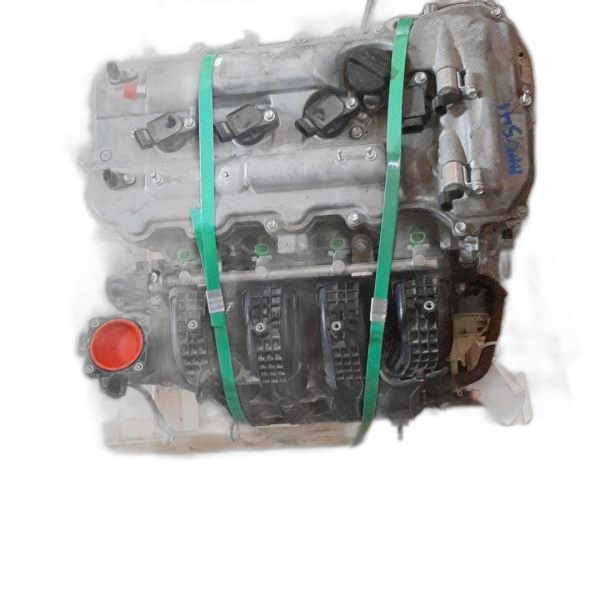
- Failed MultiAir Actuator Assembly ('The Brick') (Common) — The cylinder 2 oil control solenoid is permanently integrated into the MultiAir actuator assembly. If the solenoid fails internally, you must replace the entire $1,500 actuator. 🎬 Watch: How to remove the MultiAir brick control module.
- Incorrect or Clogged Engine Oil Filter (Common) — Non-OEM or budget oil filters often have incorrect bypass valve pressures or poor filtration media. This restricts oil flow to the cylinder head, starving the MultiAir actuator.
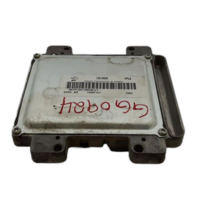
- Outdated Powertrain Control Module (PCM) Software (Less Common) — FCA released PCM software updates via Technical Service Bulletins (TSBs) to widen the acceptable operating parameters of the MultiAir system, preventing false P1068 codes.
- Poor Battery Health or Ground Connection (Less Common) — A failing battery or corroded main engine ground causes unstable voltage, triggering false solenoid fault codes.
- Clogged MultiAir Oil Filter Screen (Rare) — Engines like the 1.4L feature a small, serviceable oil filter screen under the timing cover. Sludge buildup here restricts oil flow to the actuator.
- Wiring or Connector Issue (Rare) — The electrical harness at the MultiAir actuator suffers from heat damage, loose pins, or oil contamination. A single loose pin at the main PCM connector also causes this fault.
- Low Engine Oil Pressure (Rare) — A failing oil pump or clogged oil passages cause systemic low oil pressure. This severe mechanical issue triggers multiple codes and an oil pressure warning light.
Symptoms
- Check Engine Light On — The Malfunction Indicator Lamp (MIL) illuminates immediately upon fault detection.
- Loss of Power and Hesitation — The vehicle stumbles during acceleration due to intake valves failing to open properly.
- Poor Fuel Economy — The engine consumes excess fuel to compensate for the dead cylinder, dropping MPG by 10-15%.
- Engine Stalling — The engine stalls unexpectedly at low speeds or when coming to a complete stop.
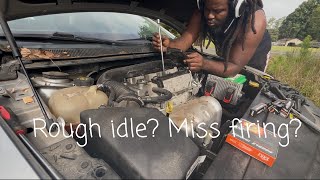
- Rough or Unstable Idle (also visible on scanner) — The engine shakes or vibrates at a stop because cylinder #2 fails to contribute power. 🎬 Watch: Diagnosing a rough idle and misfire on a Chrysler 200.
Diagnostic Flowchart
Tap your situation to follow the diagnostic path that matches what you're seeing on this code.
Common Fixes & Costs
- Engine Oil and Filter Change with OEM Parts — Parts: $60-$100, Labor: $0-$120, ~0.5 hr book time (DIY)
- Powertrain Control Module (PCM) Reprogramming — Parts: $0, Labor: $100-$250, ~1 hr book time (Professional)
- Replace MultiAir Actuator Assembly ('Brick')
— Parts: $900-$1600, Labor: $500-$900, ~5 hr book time
(Professional)
: OEM - Replace Stop/Start Ultracapacitor (GM)
— Parts: $150-$300, Labor: $100-$250, ~1.5 hr book time
(Professional)
: OEM - Repair Wiring Harness or Connector Pins — Parts: $10-$50, Labor: $200-$500, ~2.5 hr book time (Intermediate)
Used vs. New Parts: Buying Guide
When a used part is worth it: A used MultiAir actuator makes sense only if pulled from a verified low-mileage vehicle (under 60k miles) scrapped for a rear-end collision.
Donor-vehicle mileage cap: roughly under 60000 miles for the part to have meaningful remaining life.
Donor quality checklist:
- Verify the donor VIN to ensure it wasn't scrapped for engine failure.
- Inspect photos for heavy oil sludge.
- Match the part number exactly, preferring the latest revision (5047980AE).
Decision logic:
- If The vehicle is a daily driver you plan to keep long-term → Buy a new OEM Mopar part. It offers the best reliability and a 12-month warranty.
- If The vehicle has over 150k miles and your budget is tight → A used part is a reasonable gamble, but carries the risk of premature failure.
Warranty tradeoff: Junkyard parts offer 30-day warranties. New OEM Mopar parts carry a 12-month warranty.
Worst-case if a used part fails: 800-1500. If a used actuator fails, you pay labor costs twice plus the cost of another part.
What Happens If You Wait — Timeline
- 0-1 month: Check Engine Light illuminates. The engine idles roughly when cold. The vehicle remains drivable with minor performance loss. (MPG impact: 3-5%% · Added cost: $20-50 in wasted fuel)
- 1-3 months: Cylinder 2 misfires consistently. The vehicle hesitates during acceleration and suffers significant power loss. (MPG impact: 5-15%% · Added cost: $50-150 in wasted fuel)
- 3-6 months: Unburnt fuel melts the catalytic converter's internal ceramic substrate. Code P0420 (Catalyst System Efficiency Below Threshold) appears. (MPG impact: 15-25%% · Added cost: $1200-2800 (Catalytic converter replacement required))
- 6+ months: The catalytic converter breaks apart, causing a major exhaust blockage. The engine stalls frequently and fails to start. (MPG impact: 25-50%% · Added cost: $3000+ (Engine damage and oxygen sensor replacement))
Cost of Not Fixing It
- Immediate (0-1 month): Fuel economy drops by 15%, accompanied by rough idling and poor acceleration. (Added cost: 50-150)
- Short-Term (1-6 months): Continuous misfires dump unburnt fuel into the exhaust, destroying the catalytic converter and triggering code P0420. (Added cost: 1200-2800)
- Long-Term (6+ months): Extreme exhaust backpressure fouls oxygen sensors and risks internal engine damage. (Added cost: 3000+)
Diagnosis Steps
- Check Engine Oil Level and Condition
Park on level ground, pull the dipstick, and verify the oil level. Top off with the exact manufacturer-specified oil if low. Inspect for milky (coolant) or foamy (aerated) oil. This single step resolves over half of all P1068 faults.
Tools: Rag or paper towel, correct specification engine oil (Beginner) - Verify Correct Oil Type and Filter
Confirm the engine contains full synthetic SAE 0W-20 oil (for 2.4L engines) and an OEM filter. If the vehicle recently received a budget oil change, perform a full oil and filter replacement with OEM parts.
Tools: Owner's manual, OEM oil and filter (Beginner) - Check for PCM Software Updates (TSBs)
Call a dealership with your VIN to check for open Technical Service Bulletins (TSBs) related to P1068. A $150 PCM software reflash frequently fixes the issue without hardware replacement.
Tools: Phone, VIN (Intermediate) - Scan for Other Codes and Perform a Test Drive
Use an OBD-II scanner to check for companion codes. P1066, P106A, or P106C indicate systemic oil issues, while P0302 confirms a cylinder 2 misfire. Clear the codes and test drive to see if P1068 returns.
Tools: OBD-II Scanner (Beginner) - Perform Solenoid Active Test (Pro Tip)
Navigate to the PCM's active test functions using a bidirectional scan tool. Command the 'VVA Solenoid Cylinder 2' on and off. Listen for a distinct click from the top of the engine. A weak or absent click confirms internal solenoid failure.
Tools: Bidirectional Scan Tool (Advanced) - Test Solenoid Circuit Resistance (Pro Tip)
Disconnect the negative battery terminal and unplug the MultiAir actuator. Measure the resistance of the cylinder 2 solenoid pins using a multimeter. A reading of 'OL' (open loop) or near zero ohms confirms a broken or shorted coil.
Tools: Digital Multimeter, vehicle-specific wiring diagram, basic hand tools (Advanced) - Inspect Wiring Harness and Connectors
Visually inspect the connector pins on the harness and MultiAir actuator for corrosion or oil. Gently tug the wires to ensure they are seated. Check the main PCM connector for loose pins.
Tools: Flashlight, magnifying glass (Intermediate) - Monitor Live Scan Tool Data (PIDs)
Monitor engine oil pressure and temperature PIDs with an advanced scan tool. Oil pressure must rise promptly with engine RPM. Inconsistent readings point to a faulty sensor or wiring.
Tools: Advanced OBD-II Scan Tool (Advanced) - Perform an Engine Oil Pressure Test
Connect a mechanical pressure gauge to the engine block. The 2.4L MultiAir requires a minimum of 4 PSI at idle and 25-80 PSI at 3,000 RPM. Lower readings indicate a failing oil pump.
Tools: Oil pressure gauge kit, basic hand tools (Advanced)
When This Code Triggers (Freeze-Frame Conditions)
- Engine Coolant Temp: 185-205°F (85-96°C) (The fault logs when the engine reaches full operating temperature.)
- Engine RPM: 1500-2800 RPM (Occurs under light to moderate acceleration or steady-state cruising.)
- Engine Load: 30-60% (Sets during normal driving when the MultiAir system actively adjusts valve lift.)
- Vehicle Speed: 30-60 mph (50-100 km/h) (Consistent with city or highway cruising speeds.)
Related Codes
- P1066, P106A, P106C — These indicate identical faults for cylinders 1, 3, and 4. Multiple codes confirm a systemic issue like low oil or outdated software, rather than a single dead solenoid.
- P0302 — Indicates a cylinder 2 misfire. P1068 causes P0302 because the intake valves fail to open. Fixing P1068 resolves the misfire.
- P219A — Indicates an air-fuel ratio imbalance. The improper valve operation disrupts combustion, triggering this secondary code.
- P000B — Indicates slow camshaft position response. The PCM misinterprets the MultiAir valve malfunction as a mechanical timing issue.
Climate & Environmental Factors
- Cold Weather: Extreme cold thickens engine oil. Using a higher winter rating (e.g., 10W-30 instead of 0W-20) prevents the MultiAir hydraulic system from operating properly on cold starts, triggering P1068.
- High Altitude: Altitude affects engine vacuum and oil pressure dynamics, exacerbating pre-existing marginal conditions within the MultiAir system.
How to Talk to a Mechanic About This Code
Say this: "I have a P1068 code on my [Vehicle Make/Model]. I've confirmed the engine oil is full and clean. I'd like to schedule a diagnostic to check for PCM software updates, wiring issues, or a failed MultiAir actuator."
This prevents the shop from charging you for a basic oil check. It directs them toward the three actual fixes and shows you are an informed consumer.
Avoid saying:
- 'My check engine light is on, can you look at it?'
- 'I think I need a new MultiAir brick.'
- 'Just fix whatever is wrong.'
Questions to ask before authorizing the repair:
- Did you check for PCM software updates first? What TSB applies?
- If recommending an actuator replacement, did the solenoid active test fail?
- Is the replacement part a new OEM Mopar part or remanufactured?
- What is the warranty on both the part and the labor?
Where to Take It: Dealer vs Independent vs Chain
- Dealer:
Recommended for software updates or warranty work. Reliable but expensive for hardware replacement.
Best for: Vehicles under powertrain or extended warranty., Performing PCM software updates requiring FCA wiTECH tools., Complex cases where independent shops fail to find the root cause.
Downsides: Highest labor rates., May default to replacing the expensive actuator without checking for software updates. (Typical cost: +50% vs. baseline) - Independent Shop:
Best fit for out-of-warranty repairs, provided the shop has bidirectional scanners and MultiAir experience.
Best for: Out-of-warranty vehicles., Shops specializing in FCA vehicles with MultiAir experience., Straightforward actuator replacements.
Downsides: May lack subscription-based tools for PCM updates., Quality varies widely. (Typical cost: +0% vs. baseline) - Chain Shop:
AVOID for diagnosing P1068 beyond a simple oil change.
Best for: Performing the initial oil and filter change.
Downsides: Technicians lack specialized MultiAir training., No bidirectional scanners for active tests., High risk of misdiagnosis. (Typical cost: -10% vs. baseline)
When to Walk Away From the Repair
If the $1,500-$2,500 repair cost for the MultiAir actuator exceeds 40-50% of your car's private-party value, sell the car as-is.
- Car worth $8000, fix is $2400: Fix it. The repair cost is 30% of the vehicle's value.
- Car worth $4500, fix is $2200: Borderline. Get a second opinion and consider selling it as-is to a mechanic.
- Car worth $3000, fix is $2500: Walk away. The repair cost exceeds 80% of the car's value.
What Scan Tool You Need for This Code
Minimum: A basic code reader confirms the P1068 fault but cannot perform the active tests required for diagnosis.
A $20 scanner cannot command the solenoid to confirm its failure. You need a bidirectional tool to diagnose P1068 without guessing, saving you from replacing a $1,500 part unnecessarily.
Budget: BlueDriver Pro (~$100) — Reads and clears the code and provides freeze-frame data. Lacks the specific bidirectional active test for the MultiAir solenoid.
Mid-range: Foxwell NT510 Elite (with FCA software) (~$180) — Provides full bidirectional control to perform the 'VVA Solenoid Active Test'. This is the most affordable DIY option for confirming a failed actuator.
Professional: Autel MaxiCOM MK808 / MK808Z (~$500) — Offers full bidirectional control and includes AutoAuth for FCA's Secure Gateway (SGW) on 2018+ vehicles, necessary for clearing codes on newer models.
Rent vs buy: Auto parts stores read codes for free but cannot perform active tests. Buying a midrange bidirectional scanner like the Foxwell NT510 Elite is a mandatory investment for diagnosing this code.
How to Clear the Code After You Fix It
- Reconnect the negative battery terminal.
- Use an OBD-II scan tool to erase the diagnostic trouble codes.
- Perform a complete drive cycle to reset readiness monitors.
Drive cycle (~30 minutes): Cold start and idle for 3 minutes. Drive in stop-and-go traffic for 15 minutes. Drive at a steady 60 mph for 10 minutes. Allow the vehicle to cool completely.
Readiness monitors affected: Catalyst Monitor, Oxygen (O2) Sensor Monitor, Misfire Monitor
Before emissions retest: drive at least 100 miles to fully set monitors.
Watch out for:
- Disconnecting the battery clears the code but resets all monitors to 'Not Ready', guaranteeing an emissions test failure.
- The code returns immediately if you clear it without fixing the underlying oil or actuator issue.
Will This Fail Emissions / State Inspection?
Yes — this code typically fails an OBD-II emissions inspection.
- California: An active Check Engine Light causes an automatic smog check failure. You must complete a full drive cycle after repairs before re-testing.
- New York: The NYS DMV OBD-II scan fails any vehicle with an active P1068 code.
- Texas: In the 17 emissions-testing counties, an illuminated Check Engine Light blocks registration renewal until repaired.
Most Commonly Affected Vehicles
- Jeep Cherokee (KL) (2016-2020) — The 2.4L MultiAir engine consumes oil heavily, triggering this fault. Check for warranty extensions (code XB1 or CSN W80) covering oil consumption.
- Jeep Renegade (2016-2020) — Shares the 2.4L MultiAir engine and extreme sensitivity to oil levels.
- Dodge Dart (2013-2016) — Early 2.4L MultiAir applications suffer high rates of actuator 'brick' failure.
- Chrysler 200 (2015-2017) — Prone to oil-related actuator faults. Always check for PCM update TSBs first.
- Fiat 500X (2016-2020) — Mechanically identical to the Jeep Renegade with the same failure points.
- Cadillac CTS, ATS (2016-2017) — P1068 means 'Capacitor Life Exceeded'. Clean trunk ground G400/G402 per TSB PI1519D before replacing the ultracapacitor.
- Audi S5 (2008-2012) — P1068 indicates an open circuit in the intake manifold runner control (IMRC) system.
- Subaru WRX (2004-2008) — P1068 points to a low input on the Tumble Generated Valve Sensor #2.
Manufacturer-Specific Notes
- Fiat-Chrysler (FCA): FCA defines P1068 as a cylinder 2 MultiAir solenoid failure. Ask your dealer about TSB 18-061-16 REV. C and Extended Warranty code XB1 for excessive oil consumption.
- General Motors (Cadillac): GM defines P1068 as 'Capacitor Life Exceeded'. TSB PI1519D mandates cleaning the G400/G402 ground connections in the trunk before replacing the Stop/Start ultracapacitor.
- Audi / Volkswagen: Audi defines P1068 as an open circuit in the intake manifold air control solenoid.
- Subaru: Subaru defines P1068 as a low input fault on the Tumble Generated Valve Sensor #2.
Real Owner Stories
2014 Dodge Dart SXT at 122K miles - The Easy Fix That Wasn't Enough
Check Engine Light illuminated with code P1068. The code cleared itself intermittently but always returned.
What they tried:
- Performed an engine oil and filter change and cleared the code.
Outcome: The code returned within a week. The owner ultimately paid $2,100 to replace the failed MultiAir actuator assembly.
Lesson: An oil change is the correct first step, but a returning code confirms a hard mechanical failure of the MultiAir actuator.
2015 Chrysler 200 with multiple P106x codes - The Misdiagnosis
Check Engine Light appeared with P1066, P1068, P106A, and P106C, indicating faults across all four cylinders.
What they tried:
- The dealership attempted a PCM software update based on a TSB.
Outcome: The codes returned immediately. The dealer then replaced the entire MultiAir actuator assembly, permanently resolving the problem.
Lesson: Multiple cylinder codes suggest a systemic issue like software or oil pressure, but total actuator failure remains a primary cause.
2016 Cadillac ATS - An Unusual Root Cause (Not the Actuator)
P1068 triggered, disabling the engine's Stop/Start feature. On GM vehicles, this code means 'Capacitor Life Exceeded'.
What they tried:
- Owner prepared to buy a $250 replacement ultracapacitor module.
Outcome: Following GM TSB PI1519D, the owner cleaned the G400/G402 ground connections in the trunk to bare metal. This zero-cost fix permanently cleared the code.
Lesson: Always check TSBs and clean electrical grounds before replacing expensive modules on GM vehicles.
How to Prevent This Code From Triggering
- Use only manufacturer-specified full synthetic oil and an OEM-quality filter (Every oil change) — The MultiAir hydraulic system demands precise oil viscosity and cleanliness. Conventional oil or cheap filters cause solenoid failure.
- Perform oil changes every 6,000 miles (Every 6,000 miles or once a year) — The 2.4L MultiAir engine consumes oil. Shorter intervals prevent the oil level from dropping low enough to starve the hydraulic actuator.
- Check the engine oil level with the dipstick (Every other fuel fill-up) — Frequent checks catch low oil levels before they trigger a P1068 fault or permanently damage the MultiAir system.
- Replace the secondary MultiAir oil filter screen (Every 50,000 miles) — On engines equipped with this screen (like the 1.4L), replacing it prevents sludge from restricting oil flow to the actuator.
Frequently Asked Questions
Why is checking the engine oil the first step for code P1068 on my Jeep/Dodge/Fiat?
The MultiAir system uses engine oil pressure to actuate the intake valves. Low oil level is the single most common reason the system malfunctions. Correcting the oil level resolves the issue in a majority of cases.
Can I just replace the bad solenoid instead of the whole 'brick'?
No. The individual oil control solenoids are permanently integrated into the MultiAir Actuator Assembly. If a single solenoid fails, you must replace the entire assembly.
What is the MultiAir 'brick' everyone talks about?
The 'brick' is the nickname for the MultiAir Actuator Assembly. It sits atop the cylinder head and houses the solenoids that control the intake valves.
Will an oil change guarantee the P1068 code goes away?
Not always. While an oil change is the correct first step, the code also triggers from outdated software or a failed actuator. If the code returns after an oil change, further diagnosis is required.
What is the difference between P1068 and a misfire code like P0302?
P1068 is the cause, and P0302 is the effect. Because the cylinder 2 intake valves fail to open correctly, the cylinder cannot combust properly, triggering a misfire code (P0302). You must fix the P1068 valve issue to resolve the misfire.
Can I clean the MultiAir solenoids with an engine flush?
Potentially. Running a quality engine flush product right before an oil change frees up solenoids stuck by sludge. This is a low-cost step to try before replacing hardware.
What if the code returns after replacing the MultiAir 'brick'?
If you replaced the actuator and changed the oil, the fault is electrical. Inspect the wiring harness for continuity and check for loose pins at the main engine computer (PCM) connector.
Can a bad gas cap cause a P1068 code?
No. P1068 is not related to the evaporative emissions (EVAP) system. A loose gas cap triggers an EVAP code like P0457.
Why did my P1068 code appear after a battery change or jump-start?
Sudden voltage changes cause sensitive modules to set false codes. Clear the code with a scanner and perform a drive cycle; if it stays off, it was a temporary glitch.
Is it safe to keep driving with the P1068 code active?
No. Driving with this code causes unburnt fuel to destroy the catalytic converter. Limit driving to essential trips to a repair shop.
Key Takeaways
- P1068 definitions vary by brand: FCA vehicles indicate a cylinder 2 MultiAir valve failure, while Cadillac models flag a dead Stop/Start ultracapacitor.
- Low or incorrect engine oil causes over 50% of P1068 codes on FCA 2.4L engines, making an immediate dipstick check your mandatory first diagnostic step.
- The cylinder 2 oil control solenoid cannot be replaced individually; a failure requires replacing the entire $1,500 MultiAir Actuator Assembly (the 'brick').
- Limit driving to under 100 miles to prevent the resulting cylinder misfire from destroying your catalytic converter, which adds up to $2,500 in secondary repair costs.
Helpful Videos
Shop the Parts Behind P1068
Below are the parts most often responsible for code P1068, ranked by how frequently each one is the actual culprit (per the diagnosis above). Tap any to see what we have for your vehicle.



The information in this article is provided for general reference and educational purposes only. Vehicle specifications, procedures, and part compatibility can vary by production date, trim level, and region. Always consult your vehicle's factory service manual and verify part numbers before purchasing or performing repairs. Safety-critical components such as airbags, seat belts, and braking systems should be installed by a qualified professional.
- 🧭 Diagnostic Flowchart
- 🎬 Helpful Videos
- 🛍️ Shop This Part
- What Does P1068 Mean?
- Can I Drive With P1068?
- Common Causes
- Symptoms
- Common Fixes & Costs
- Used vs. New Parts: Buying Guide
- What Happens If You Wait — Timeline
- Cost of Not Fixing It
- Diagnosis Steps
- When This Code Triggers (Freeze-Frame Conditions)
- Related Codes
- Climate & Environmental Factors
- How to Talk to a Mechanic About This Code
- Where to Take It: Dealer vs Independent vs Chain
- When to Walk Away From the Repair
- What Scan Tool You Need for This Code
- How to Clear the Code After You Fix It
- Will This Fail Emissions / State Inspection?
- Most Commonly Affected Vehicles
- Manufacturer-Specific Notes
- Real Owner Stories
- 2014 Dodge Dart SXT at 122K miles - The Easy Fix That Wasn't Enough
- 2015 Chrysler 200 with multiple P106x codes - The Misdiagnosis
- 2016 Cadillac ATS - An Unusual Root Cause (Not the Actuator)
- How to Prevent This Code From Triggering
- Frequently Asked Questions
- Why is checking the engine oil the first step for code P1068 on my Jeep/Dodge/Fiat?
- Can I just replace the bad solenoid instead of the whole 'brick'?
- What is the MultiAir 'brick' everyone talks about?
- Will an oil change guarantee the P1068 code goes away?
- What is the difference between P1068 and a misfire code like P0302?
- Can I clean the MultiAir solenoids with an engine flush?
- What if the code returns after replacing the MultiAir 'brick'?
- Can a bad gas cap cause a P1068 code?
- Why did my P1068 code appear after a battery change or jump-start?
- Is it safe to keep driving with the P1068 code active?
- Key Takeaways
- 🎟️ Get 5% Off