

P1068 on 2013-2016 Dodge DART: Cylinder 2 Oil Solenoid Fault Causes and Fixes
On a 2013-2016 Dodge Dart with the 2.4L engine, code P1068 almost always points to a problem within the MultiAir valve control system, often requiring the replacement of the entire MultiAir actuator assembly (or 'brick'). This is an expensive repair, often costing over $2,000. Before condemning the actuator, it's critical to verify the engine oil is the correct type and level, and to check if a PCM software update is available, as both can also trigger this code.
- P1068 on a 2.4L Dart is a serious code related to the complex MultiAir valve control system.
- Before condemning expensive parts, always check engine oil level and quality first.
- Ask your mechanic to check if a Powertrain Control Module (PCM) software update is available, as this is a known fix from the manufacturer.
- The most common fix is replacing the entire MultiAir actuator assembly (the 'brick'), which is a very expensive repair.
- This is not a DIY-friendly repair due to its complexity and the need for special tools and procedures.
What's Unique About the 2013-2016 Dodge DART

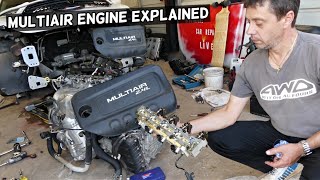
The Dodge Dart's 2.4L engine uses Fiat's MultiAir technology, which is unique and complex. 🎬 Watch: See how the MultiAir system works and controls valves. Instead of a typical camshaft opening the intake valves, it uses electro-hydraulic solenoids to control them. This system is very sensitive to oil quality, level, and pressure. The individual solenoids are integrated into a single component often called the "MultiAir brick" or actuator. A failure of one solenoid, like the one for cylinder 2 indicated by P1068, often necessitates replacing the entire expensive assembly because the solenoids are not individually serviceable.
Diagnostic Flowchart

Tap your situation to follow the diagnostic path that matches what you're seeing on this vehicle.
Symptoms You May Notice

- Check Engine Light (MIL) illuminated
- Rough or irregular idle, sometimes described as aggressive shaking or vibration
- Engine hesitation, stumbling, or lack of power, especially during acceleration
- Engine misfires, which may trigger other codes like P0302 (Cylinder 2 Misfire)
- Reduced fuel efficiency
- In severe cases, a complete loss of compression and a no-start condition after a brief run time.
- Replacing only the spark plug or ignition coil for cylinder 2. While a misfire may be present, the root cause is the valve control issue, not ignition.
- Replacing a standard VVT solenoid. The MultiAir system is different, and the solenoids are not individually replaceable like on other engines.
Most Likely Causes

- Failing MultiAir Actuator Assembly ('Brick') 🔴 High Probability The individual oil supply solenoids are integrated into this single, complex assembly. A failure of one internal solenoid often requires replacement of the entire unit. This is a widely documented failure point on this engine across multiple vehicle platforms.
How to confirm: A diagnostic scan tool with manufacturer-specific capabilities can be used to perform an active test on the cylinder 2 solenoid. If the solenoid does not respond or clicks weakly compared to others, it confirms the failure. A mechanic will typically confirm oil pressure and wiring integrity before condemning the actuator.
Typical fix: Replace the entire MultiAir actuator assembly and the valve cover gasket.
Est. part cost: $1100-$2100 - Low, Contaminated, or Incorrect Engine Oil 🟡 Medium Probability The MultiAir system is a hydraulic system that relies on clean, correct-viscosity engine oil to function. Low levels, aerated oil, or the wrong type of oil (specifically not meeting MS-6395 spec) can cause the solenoids to act sluggishly or fail to operate correctly. There is also a small, secondary MultiAir oil filter that can become clogged.
How to confirm: Check the engine oil level on the dipstick and verify the vehicle's service history to see if the correct oil type (SAE 0W-20 meeting MS-6395) was used. Inspect the oil for signs of contamination or aeration (foam).
Typical fix: Perform an oil and filter change using the manufacturer-specified oil. Consider using an engine flush product to clean potential deposits from the solenoids. Clear the codes and see if the issue returns.
Est. part cost: $50-$100 - Outdated PCM Software ⚪ Low Probability Manufacturer TSBs were issued to update PCM software to address false or premature setting of this and related codes by widening the acceptable sensor parameters.
How to confirm: A dealership or qualified shop with a wiTECH scan tool can check the current software version against the latest available version from the manufacturer by referencing TSBs like 18-022-17 REV. A and 18-023-16 REV. D.
Typical fix: Reprogram the Powertrain Control Module (PCM) with the latest software. Note that some TSBs also require the Transmission Control Module (TCM) to be updated at the same time.
Est. part cost: $0-$200
Rare But Worth Checking
- Wiring or Connector Issue: While less common than actuator failure, the wiring harness to the MultiAir actuator can be damaged or the connector can become loose, leading to an open or shorted circuit. This should be visually inspected before replacing expensive parts.
- Low Engine Oil Pressure: A failing oil pump or other internal engine issue causing low oil pressure can starve the MultiAir system and trigger this code. This is a serious mechanical issue that would likely be accompanied by other symptoms and potentially a low oil pressure warning light.
- Clogged MultiAir Oil Filter: A small, often overlooked oil filter screen for the MultiAir system is located under the timing cover. If this filter becomes clogged with sludge or debris, it can restrict oil flow to the actuator and cause solenoid-related codes.
- Poor Engine Ground: Corroded or loose ground straps are a known issue on the Dodge Dart. The main engine ground goes from the passenger side of the engine head to the passenger strut tower, and another grounds the battery to the chassis behind the driver's side wheel well. A poor ground can cause a variety of electrical issues, including erratic sensor and actuator behavior.
Diagnosis Steps
- Verify the engine oil level and condition. Ensure it is full, clean, and of the correct viscosity per the owner's manual (SAE 0W-20 meeting MS-6395).
- Connect a professional scan tool to read all active and stored DTCs. Note any other codes that accompany P1068.
- Check for available PCM software updates. Use a tool like wiTECH to compare the current software to the latest versions mentioned in TSBs 18-022-17 REV. A and 18-023-16 REV. D. If an update is available, perform the flash procedure first.
- Using the scan tool's active test function, command the cylinder 2 oil supply solenoid on and off. Listen for an audible click from the top of the engine. Compare the sound to the other cylinders. A weak or absent click points to a faulty solenoid.
- If the solenoid test is inconclusive, visually inspect the wiring harness and connector at the MultiAir actuator. Check for damage, corrosion, or a loose connection.
- Inspect engine ground connections, particularly the strap from the passenger side head to the strut tower and the battery ground points in the driver's side fender area.
- If the oil is correct, the software is up-to-date, the wiring is intact, and the solenoid fails the active test, the MultiAir actuator assembly ('brick') is faulty and needs to be replaced.
- Before replacing the actuator, consider checking the secondary MultiAir oil filter for blockages if accessible.
- After replacement, a cam/crank variation relearn procedure must be performed with a scan tool.
Parts You'll Likely Need
- MultiAir Actuator Assembly
(OEM #5047980AE (supercedes 5047980AD, 5047980AC, etc.))— This is the primary cause of failure for code P1068. The solenoid is integrated into this assembly and is not sold separately.
Trusted brands: Mopar
OEM price range: $1400-$2100 - Valve Cover Gasket — This must be replaced when the MultiAir actuator is serviced.
Trusted brands: Mopar, Fel-Pro
OEM price range: $40-$70
Aftermarket price range: $25-$50
Related Codes That Often Appear With This One
- P1066 — This is the same fault for the Cylinder 1 Oil Supply Solenoid. Failures in the MultiAir brick often affect multiple cylinders.
- P106A — This is the same fault for the Cylinder 3 Oil Supply Solenoid.
- P106C — This is the same fault for the Cylinder 4 Oil Supply Solenoid.
- P0302 — This code indicates a misfire on cylinder 2. If the intake valves on cylinder 2 are not opening correctly due to the P1068 fault, it will cause a misfire.
- U1424 — Improper valve operation can lead to unexpected engine torque, causing the PCM to log this code for 'Implausible Engine Torque Signal Received'. This code is frequently mentioned alongside the P106x codes in related TSBs.
Technical Service Bulletins (TSBs) & Recalls
- 18-022-17 REV. A - For 2013-2015 Dart and 2015 Chrysler 200 with 2.4L engine. Recommends a PCM software update to address P1066, P1068, P106A, P106C and a host of other potential codes.
- 18-023-16 REV. D - For 2013-2015 Dart and 2015 Chrysler 200 with 2.4L engine. Also recommends a PCM software update for P106x codes and other driveability improvements.
- 18-063-16 REV. A - For 2015 Jeep Renegade with 2.4L engine, showing the same P106x codes are addressed with a PCM flash on platform mates.
Platform-Specific Known Issues
- The 2.4L MultiAir engine in the Dodge Dart is known for failures of the MultiAir actuator, often referred to as the 'brick'. This is a well-documented issue in owner forums and among mechanics.
- Chrysler issued multiple Technical Service Bulletins (TSBs) to update the PCM software, which could sometimes incorrectly trigger this code. Checking for an available software flash is a crucial diagnostic step.
Mechanic-Grade Diagnostic Values
- MultiAir Solenoid Coil Resistance — expected: 0.2 to 1.0 ohms. Failure: An open circuit (infinite resistance) or a reading outside the specified range indicates a failed solenoid coil.
Scan Tool Commands That Help
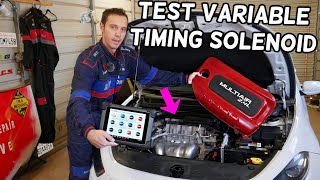
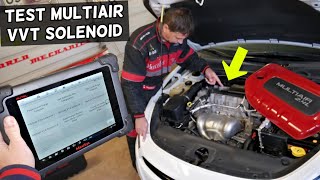
- wiTECH or equivalent professional scanner: Active Test: VVT Solenoid 1-4 — This is a primary diagnostic step to confirm solenoid failure. The command allows the technician to individually activate each of the four solenoids in the MultiAir brick with the engine off (key on). A healthy solenoid will produce an audible click. A weak or silent solenoid for cylinder 2 strongly suggests a fault within the brick.
- wiTECH or equivalent professional scanner: Cam/Crank Variation Relearn — This procedure is mandatory after replacing the MultiAir actuator or performing any significant valvetrain service. It allows the PCM to learn the new mechanical tolerances and positions of the camshaft and crankshaft, ensuring proper timing and engine operation.
Wiring & Ground Locations
- Engine Head to Chassis Ground — A braided ground strap located on the passenger side of the engine, connecting the cylinder head to the passenger side strut tower.. This is a primary engine ground. Corrosion or looseness here can cause unstable voltage to sensors and actuators, including the MultiAir brick, potentially leading to erratic operation and fault codes.
- Battery to Chassis Ground — The main negative battery cable grounds to the chassis in the driver's side wheel well area, sometimes behind the splash guard.. A poor main ground connection can cause a host of electrical problems throughout the vehicle. On the Dart, this ground point is known to corrode, leading to issues from no-starts to flickering gauges and unpredictable module behavior.
- MultiAir Actuator Connector — The main electrical connector for the entire MultiAir brick is located on the back side of the engine, under the plastic engine cover.. Before condemning the expensive actuator, it's crucial to inspect this connector for a secure connection, pushed-out pins, or any signs of corrosion or damage to the harness.
Real Owner Repair Stories
- Reddit user on r/dodgedart (Dodge Dart (engine specified as 1.4L, but experience is directly applicable to 2.4L MultiAir brick replacement)) — Stumbling during driving, a completely dead cylinder at times (code P1067 for cylinder 2), and rough running. In a later comment, a user with a similar issue reported no compression on the affected cylinder.
❌ Tried (didn't work) The user drove with the code for some time before the failure became critical.
✅ What actually fixed it The user replaced the entire MultiAir actuator ('brick'). They sourced a used part from a salvage yard for about $300. Critically, they confirmed that the replacement can be done without the expensive special spring compression tool by carefully loosening the final two bolts to let the assembly rise evenly.
OEM Part Supersession History
5047980AA, 5047980AB, 5047980AC, 5047980AD→5047980AE— Part revisions to improve reliability and address failure modes. Later part numbers often incorporate design or material improvements.
Heads up: While the latest part (5047980AE) is generally the correct replacement for all years, it's crucial to verify fitment with a VIN. There are notes on some parts sites indicating different part numbers for vehicles built before and after March 1, 2014.
Model Year Variations Within This Range
- 2013 - Early 2014: Vehicles built up to February 28, 2014, may have used an earlier revision of the MultiAir actuator. The current replacement part, 5047980AE, supersedes all previous versions, but the changeover date suggests a potential design update was implemented in production around that time.
- 2016: A specific TSB (18-009-16 REV. B) was issued for the 2016 model year Dart to address the P106x codes with a PCM software update, indicating that even the latest model year in the range was subject to software-related fixes for this issue.
Helpful Videos
Used OEM Parts in Stock
New Aftermarket Parts Available

The information in this article is provided for general reference and educational purposes only. Vehicle specifications, procedures, and part compatibility can vary by production date, trim level, and region. Always consult your vehicle's factory service manual and verify part numbers before purchasing or performing repairs. Safety-critical components such as airbags, seat belts, and braking systems should be installed by a qualified professional.
- Dodge DART:
- 🧭 Diagnostic Flowchart
- 🎬 Helpful Videos
- 🛍️ Shop This Part
- What's Unique About the 2013-2016 Dodge DART
- Symptoms You May Notice
- Most Likely Causes
- Rare But Worth Checking
- Diagnosis Steps
- Parts You'll Likely Need
- Related Codes That Often Appear With This One
- Technical Service Bulletins (TSBs) & Recalls
- Platform-Specific Known Issues
- Mechanic-Grade Diagnostic Values
- Scan Tool Commands That Help
- Wiring & Ground Locations
- Real Owner Repair Stories
- OEM Part Supersession History
- Model Year Variations Within This Range
- 🎟️ Get 5% Off