

P1068 on 2016 Fiat 500X: Cylinder 2 Oil Solenoid Causes and Fixes
On a 2016 Fiat 500X, code P1068 is most often caused by low or incorrect engine oil. Before major repairs, check your oil and ask a dealer if your vehicle needs a PCM software update per TSB #08-010-16 REV. D. If those are fine, the expensive MultiAir actuator 'brick' has likely failed.
- First, check your engine oil. Low, old, or incorrect oil is the #1 cause of code P1068 on this engine.
- Ask a Fiat dealer to check if TSB #08-010-16 REV. D applies to your VIN; a simple software update may be the fix.
- If the check engine light is on with rough running and power loss, avoid long trips until the issue is diagnosed.
- If oil and software are correct, the likely cause is a failed MultiAir actuator ('brick'), which is a costly repair.
What's Unique About the 2016-2016 Fiat 500X
The 2016 Fiat 500X uses the 2.4L Tigershark engine, which features the unique MultiAir electro-hydraulic valve control system. This technology is highly sensitive to engine oil level, viscosity, and cleanliness across all vehicles it was used in, including Jeeps, Dodges, and Chryslers. The Tigershark engine platform is also known for having higher-than-normal oil consumption, which can starve the MultiAir system and trigger codes like P1068 if the oil level is not checked regularly. A specific Technical Service Bulletin (#08-010-16 REV. D) was issued for this model that can resolve the fault with a software update, indicating the original factory calibration was sometimes too sensitive for vehicles built before mid-October 2015.
Diagnostic Flowchart
Tap your situation to follow the diagnostic path that matches what you're seeing on this vehicle.
Symptoms You May Notice
- Check Engine Light is on
- Rough or unstable idle
- Noticeable loss of engine power and slow acceleration
- Engine hesitation or stumbling, especially under load
- Engine misfires, which may feel like a shudder or judder
- Vehicle may enter 'limp mode' with significantly reduced performance
- Replacing only the spark plugs or ignition coils for a related misfire (P0302) without addressing the underlying P1068 fault.
- Replacing camshaft or crankshaft position sensors, as the issue is with the valve actuation system, not the primary engine timing sensors.
Most Likely Causes
- Low, Contaminated, or Incorrect Engine Oil 🔴 High Probability The 2.4L MultiAir engine is notoriously sensitive to oil level and quality, and is also known for consuming oil between changes. A low oil level is the most common trigger for this fault.
How to confirm: Turn the engine off and wait 5-10 minutes. Check the oil level on the dipstick on level ground. Inspect the oil for proper color and consistency. Ensure the correct oil type (as specified in the owner's manual) is being used.
Typical fix: Perform an oil and filter change using the manufacturer-specified full synthetic oil and a high-quality OEM or equivalent filter. In some documented cases, owners have resolved the code immediately after discovering the oil was low and topping it off.
Est. part cost: $50-$100 - Outdated Powertrain Control Module (PCM) Software 🟡 Medium Probability → Shop Engine Control Module (ECM) Fiat issued TSB #08-010-16 REV. D for 2016 500X models (built on or before Oct 16, 2015) to update the PCM, TCM, and BCM software to correct this and other diagnostic issues. This indicates the factory logic was too sensitive.
How to confirm: A Fiat dealership or a well-equipped independent shop can check your vehicle's VIN to see if this TSB is applicable and if the software update has been performed.
Typical fix: Reprogramming (flashing) the Powertrain Control Module, Body Control Module, and Transmission Control Module with the latest software version per the TSB.
Est. part cost: $0-$200 - Failing MultiAir Actuator Assembly ('Brick') ⚪ Low Probability The oil supply solenoids are integrated into this single assembly. If the solenoid for cylinder 2 fails internally, the entire unit must be replaced as the solenoids are not sold separately. This is a widely reported failure point across all 2.4L MultiAir platforms.
How to confirm: This is typically diagnosed after ruling out oil issues and software updates. A technician may use an advanced scan tool to monitor solenoid commands versus actual valve lift data. Replacement is costly; one owner of a related vehicle was quoted over $3,700 for parts and labor.
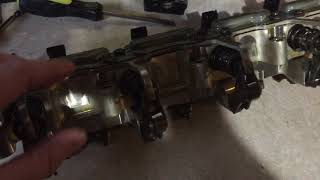
Typical fix: Replacement of the entire MultiAir actuator assembly. This requires a special spring compressor tool (10259A/B) and a 'Cam/Crank Variation Relearn 🎬 See how to properly install the actuator and use the tools.' procedure with a scan tool.
Est. part cost: $800-$1500
Rare But Worth Checking
- Incorrect or Clogged Oil Filter: Using a low-quality or incorrect oil filter can restrict oil flow to the MultiAir system, causing pressure-related faults.
- Wiring or Connector Issue: Damage to the wiring harness or a loose connection at the MultiAir actuator can interrupt the signal to the solenoid. A visual inspection is warranted before replacing parts. On early 500X models, there are owner reports of water ingress into the main ECU harness causing various random electrical faults.
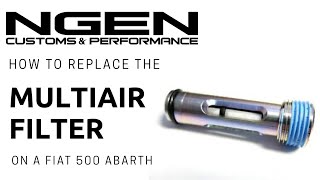
- Clogged MultiAir Oil Filter Screen: The MultiAir actuator has its own small, often-overlooked filter screen that can become clogged with debris from infrequent oil changes, starving the unit of oil.
Diagnosis Steps
- Connect an OBD-II scanner to confirm P1068 is the primary code. Note any other codes, especially misfire codes (P030x) or other MultiAir codes (P1066, P106A, etc.).
- Check the engine oil level and condition. If the level is low or the oil is old/dirty, perform an oil and filter change with the correct OEM-specified oil (e.g., SAE 5W-40 full synthetic meeting FCA specs) and a quality filter. Clear codes and test drive, as this is a very common fix.
- Contact a Fiat dealer with your VIN to determine if TSB #08-010-16 REV. D is applicable (for vehicles built on or before Oct 16, 2015) and has been performed. If not, having the PCM, BCM, and TCM updated is a critical step.
- Clear the codes and perform a thorough test drive to see if the code returns.
- If the code persists, visually inspect the wiring harness and connector going to the MultiAir actuator on top of the engine for any signs of damage, corrosion, or looseness. Also check the main ECU harness for any signs of water intrusion.
- If all the above steps fail to resolve the issue, the MultiAir actuator assembly is the most likely failed component and will require replacement. This is considered a complex job often requiring special tools.
Parts You'll Likely Need
- MultiAir Actuator Assembly
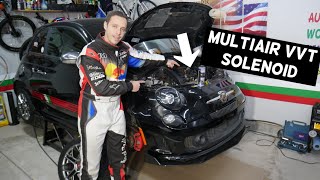
(OEM #5047980AE (replaces 05047980AD, 5047457AD, 5047457AE, 5047980AA, 5047980AB, 5047980AC))— This assembly, often called the 'brick', contains the non-serviceable solenoid for cylinder 2. When the solenoid fails, the entire unit must be replaced. 🎬 Watch: Step-by-step walkthrough of the MultiAir brick replacement. This is the ultimate fix if oil and software are not the cause.
Trusted brands: Mopar
OEM price range: $1100-$1500
Aftermarket price range: $800-$1200 - Engine Oil and Filter — The MultiAir system is highly dependent on correct oil level and quality. An oil change is the first and most important diagnostic step and often the fix itself.
Trusted brands: Mopar, Pennzoil, Mobil 1
OEM price range: $70-$120
Aftermarket price range: $50-$90
Related Codes That Often Appear With This One
- P0302 — This code indicates a misfire on cylinder 2. If the MultiAir system fails to properly open the intake valves for cylinder 2, it will directly cause a misfire.
- P1066 — This is the same fault but for cylinder 1. It is common for multiple cylinders to log faults at the same time, often pointing to a systemic issue like low oil or a needed software update, and they are listed together in TSBs.
- P106A — This is the same fault but for cylinder 3, appearing for the same reasons as other cylinder faults.
- U1424 — This code for 'Implausible Engine Torque Signal Received' can be triggered when improper valve operation from the P1068 fault causes the engine to produce unexpected torque levels. It is also listed as a code addressed by related TSBs.
Technical Service Bulletins (TSBs) & Recalls
- 08-010-16 REV. D - Flash: Diagnostic And System Improvements. Involves updating the PCM, BCM, and TCM software to correct a range of issues, including the P1066, P1068, and P106A codes on vehicles built on or before October 16, 2015.
Platform-Specific Known Issues
- The 2.4L Tigershark engine has a documented history of oil consumption, which can lead to low oil levels that trigger this fault. Owners should check oil levels more frequently than on other vehicles.
- TSB #08-010-16 REV. D was released specifically for the 2016 Fiat 500X to address this code (and others) with a three-part software update (PCM, BCM, TCM), indicating a known calibration issue from the factory for vehicles built before mid-October 2015.
Mechanic-Grade Diagnostic Values
- MultiAir Solenoid Coil Resistance — expected: 0.2 to 1.0 ohms. Failure: An open circuit (infinite resistance) or a reading outside this range indicates a failed solenoid coil. Note: Some sources cite a higher range of 5-20 ohms for similar VVT solenoids, but 0.2-1.0 ohms is more commonly referenced for this specific MultiAir unit.
- Engine Oil Pressure (2.4L MultiAir) — expected: Minimum 4 PSI at hot idle; 25-80 PSI at 3000 RPM.. Failure: Pressure below the minimum at idle or pressure that doesn't rise with RPM can indicate a weak oil pump or clogged passages, which will starve the MultiAir actuator.
Scan Tool Commands That Help
- wiTECH, Autel, or equivalent professional scanner: Active Test: VVA Solenoid Cylinder 2 (or VVT Solenoid 2) — After verifying oil level and software, this is the primary test to confirm if the solenoid inside the MultiAir actuator is functional. With the key on and engine off, activating the solenoid should produce an audible click. A silent or weak click indicates the actuator has failed and must be replaced.
- wiTECH, Autel, or equivalent professional scanner: Cam/Crank Variation Relearn — This procedure is mandatory after replacing the MultiAir actuator assembly. Failure to perform this relearn can result in rough running, misfires, or other performance issues even with the new part installed.
Wiring & Ground Locations
- MultiAir Actuator Connector — On the back side of the engine (towards the firewall), under the plastic engine cover. There are four individual connectors for the solenoids.. This is the direct connection point for the solenoids. Before condemning the actuator, these connectors and the associated harness should be inspected for a secure fit, pushed-out pins, corrosion, or damage.
- Engine Ground Straps — Key locations include a strap from the passenger side cylinder head to the strut tower, and the main battery ground point under the battery tray, which is known to corrode.. A poor or corroded engine ground can cause a weak or unstable voltage supply to various components, including the PCM and its drivers for the MultiAir solenoids, leading to erratic behavior and fault codes.
- PCM Connector C2, Pin 1 (VT wire) — At the Powertrain Control Module (PCM) in the engine bay. This specific pin is the return circuit for the cylinder 2 VVA solenoid on related platforms.. If the solenoid tests bad at the component, a continuity or voltage drop test at this pin can determine if the fault is in the wiring harness between the PCM and the actuator, or within the PCM itself.
Real Owner Repair Stories
- Composite of multiple owner experiences on forums for 2.4L MultiAir engines (2015+ Dodge Dart / Jeep Renegade / Fiat 500X with 2.4L MultiAir) — Check engine light on with P1068 and often P0302 (Cylinder 2 Misfire). Engine runs rough, hesitates on acceleration, and has poor power.
❌ Tried (didn't work) Replacing only the spark plug and ignition coil for cylinder 2., Clearing the codes without addressing the cause (code returns quickly).
✅ What actually fixed it For many, the issue was resolved after discovering the engine oil was 1-2 quarts low and performing an oil change with the correct full synthetic 0W-20 or 5W-40 oil. For others, the fix required a dealer to perform the software update outlined in TSBs. When neither of those worked, the final repair was the replacement of the entire MultiAir actuator assembly ('brick'), which resolved the code and the misfire simultaneously.
OEM Part Supersession History
5047980AD, 5047457AD, 5047457AE, 5047980AA, 5047980AB, 5047980AC→5047980AE— Component revisions and improvements to address reliability issues.
Model Year Variations Within This Range
- 2016 (built on or before Oct 16, 2015): These vehicles may have overly sensitive diagnostic software from the factory. TSB #08-010-16 REV. D was released to update the PCM, BCM, and TCM software to prevent false P1068 (and related) codes. This is a critical diagnostic step before replacing hardware on these earlier builds.
Helpful Videos

The information in this article is provided for general reference and educational purposes only. Vehicle specifications, procedures, and part compatibility can vary by production date, trim level, and region. Always consult your vehicle's factory service manual and verify part numbers before purchasing or performing repairs. Safety-critical components such as airbags, seat belts, and braking systems should be installed by a qualified professional.
- Fiat 500X:
- 🧭 Diagnostic Flowchart
- 🎬 Helpful Videos
- What's Unique About the 2016-2016 Fiat 500X
- Symptoms You May Notice
- Most Likely Causes
- Rare But Worth Checking
- Diagnosis Steps
- Parts You'll Likely Need
- Related Codes That Often Appear With This One
- Technical Service Bulletins (TSBs) & Recalls
- Platform-Specific Known Issues
- Mechanic-Grade Diagnostic Values
- Scan Tool Commands That Help
- Wiring & Ground Locations
- Real Owner Repair Stories
- OEM Part Supersession History
- Model Year Variations Within This Range
- 🎟️ Get 5% Off